Why Durability Matters
A custom canvas wine carrier for hotel retail has more jobs than a normal small tote. It is packaging, brand collateral, a shelf display piece, and a guest carry item. Before it leaves the property, it may pass through receiving, storage, boutique merchandising, front desk teams, event staff, room service, distributors, and finally the guest. Each handoff adds friction: lifting, stacking, folding, shelf placement, label checking, repacking, and walking with a filled bottle.
That is why an empty sample is not enough. Empty canvas often looks sharp in a photo. Add a real bottle and the weaknesses show quickly: the front panel bows, the logo tilts, the base twists, the divider pulls, or the handle seam puckers under load. None of those issues may break the bag immediately, but they can make a hotel retail item look cheap or unsafe.
Procurement does not need to overbuild every wine carrier. A short-life promotional sleeve, a sellable boutique carrier, a two-bottle tasting set, and a reusable premium gift bag all need different strength levels. The important step is to define the intended use before suppliers quote. Otherwise one factory may price a reinforced retail carrier while another prices a lightweight giveaway sleeve, and the unit prices will not mean the same thing.
Durability also protects operations. If weak handles, dirty canvas, crushed packing, crooked logos, or unstable bases are discovered after delivery, the hotel may face sorting labor, discounting, rushed replacement orders, or last-minute substitutions. A written testing checklist moves the discussion from preference to measurable acceptance criteria.
- Classify the carrier first: promotional sleeve, sellable retail item, room amenity, event gift, or reusable guest bag.
- Approve the sample with the intended bottle inside, not only as an empty flat bag.
- Treat handle strength, divider security, base stability, print durability, and shelf presentation as separate checks.
- Write pass/fail criteria into the RFQ so suppliers quote the same construction level.
- Keep one approved loaded reference sample available for inspection and reorder comparison.
Bottle Fit Comes First
The bottle profile drives the pattern. A Bordeaux bottle, Burgundy bottle, champagne bottle, sparkling wine bottle, and spirits bottle can differ in height, shoulder width, base diameter, maximum body diameter, and filled weight. Those dimensions affect the top opening, gusset depth, handle drop, divider spacing, and the way the front logo sits once the carrier is loaded.
Buyers should give suppliers real measurements whenever possible. Include bottle height, maximum diameter, base diameter, shoulder shape, and expected filled weight. Many filled 750 ml glass wine bottles are roughly 1.2 kg to 1.5 kg depending on glass weight, closure, and liquid volume. Champagne and sparkling bottles can be heavier. For testing, use the real bottle or an equivalent weight with a similar diameter. An empty bottle hides the strain that appears during real carrying.
For a single-bottle carrier, the opening should be generous enough for quick insertion without scraping the paper label, foil, wax seal, or neck tag. Too tight, and staff fight the bag at checkout. Too loose, and the bottle leans, the base looks unstable, and the logo panel may distort. A few millimeters matter more than they seem on a narrow format.
Two-bottle carriers need an even tougher fit review. Test the largest and heaviest bottle combination first. Then check that smaller bottles do not shift excessively. A divider that works for two straight-sided wine bottles may perform poorly with a rounded Burgundy bottle next to a heavier sparkling bottle.
Logo placement belongs in the bottle-fit review. A mark that looks centered on an empty panel may ride low, curve around the bottle, or fall into a crease after loading. Approve the logo on a filled carrier standing upright at normal retail viewing distance.
- Ask for maximum bottle diameter and usable interior height, not only finished outside bag dimensions.
- Test the heaviest and largest bottle combination for mixed hotel programs.
- Check that staff can insert bottles without scraping labels, foils, wax seals, or neck tags.
- Review logo position after loading because bottle shape can curve the print panel.
- Record the exact bottle used for development so reorders are tested against the same profile.
Fabric And Finish
For most hotel retail wine carriers, 10 oz to 12 oz cotton canvas is the practical starting point. That is approximately 270-340 GSM, although the exact relationship between ounce weight and GSM can vary by weave and finishing. This range usually gives enough body for one or two filled bottles without making the carrier too bulky to sew, fold, or carton pack.
An 8 oz canvas can be acceptable for a short-life promotional sleeve, especially if the carrier is not sold as a premium item. For a hotel boutique product, however, it may sag around the base, show hard bottle outlines, wrinkle after tight packing, and feel less substantial in hand. If 8 oz is used, reinforcement and load testing should carry more of the risk control.
At the other end, 14 oz canvas can create a premium hand feel, but it is not automatically better. Heavier canvas can mean thicker seam build-up, slower sewing, larger carton volume, higher material cost, and more needle or puckering issues around reinforced joints. Buyers should choose it because the retail positioning requires it, not because heavier sounds safer.
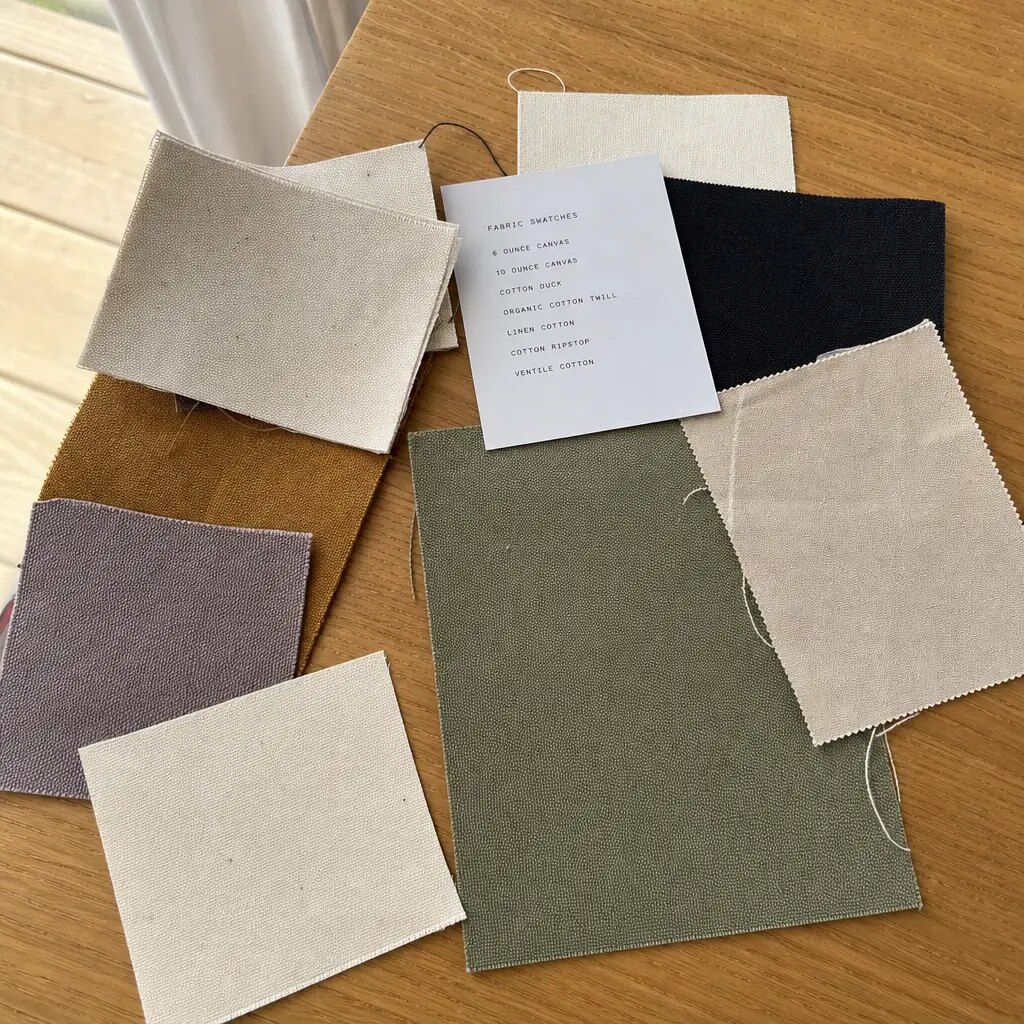
Fabric finish also matters. Natural canvas can show cotton seed flecks and shade variation, which may suit vineyard, resort, rustic, or farm-to-table retail programs. Bleached canvas looks cleaner but can show dirt more easily. Dyed canvas supports brand colors, but it needs lab dip approval, bulk shade control, shrinkage review, and dry and wet rub checks. Washed, preshrunk, recycled cotton blend, organic cotton, and blended canvas can all behave differently in cutting, printing, and sewing.
Do not rely on catalog names such as medium canvas, heavy canvas, or duck canvas. Ask for the weight in both oz and GSM, then confirm the production fabric lot before cutting. If the sample lot and bulk lot differ, stiffness, shrinkage, ink absorption, finished measurements, and shelf appearance can change.
- Use 10 oz natural cotton canvas as a common baseline for cost-sensitive single-bottle retail carriers.
- Use 12 oz canvas for stronger two-bottle carriers, premium gifting, or improved shelf body.
- Use 14 oz canvas only when the buyer accepts bulkier seams, higher freight volume, and higher sewing cost.
- Specify fabric weight in oz and GSM, then confirm the actual bulk lot before production cutting.
- For dyed canvas, approve lab dip, bulk shade, dry rub, wet rub, and shrinkage behavior.
- For natural canvas, define acceptable cotton flecks and shade variation before inspection.
Sewing Construction
Wine carriers fail where stress concentrates. The most important points are handle attachments, top seams, side seams, bottom gussets, divider joins, and lower corners. A filled bottle creates a narrow vertical load into the base, unlike a normal tote where the weight spreads across a wider area. Review the construction as a load-bearing pattern, not just a neat retail silhouette.
Handles deserve the closest attention. Self-fabric handles look cohesive and are common for hotel retail. Cotton webbing can add strength and a more utilitarian look. Either style should have an agreed reinforcement method, such as box-X stitching, bar tacks, or an equivalent construction suitable for the fabric. A simple straight stitch may look clean on an empty sample but leave too little margin for repeated lifting, swinging, or staff carrying multiple loaded bags during an event.
Thread and stitch quality are easy to overlook. Ask the factory to identify the thread type and approximate ticket size if available, then inspect stitch density at stress points. Loose tension, skipped stitches, broken thread, and enlarged needle holes are warning signs. Decorative neatness is not the same as load-bearing security.
The base should help the carrier stand upright on shelves, checkout counters, minibar displays, or event tables. A squared gusset with reinforced bottom seams is usually more stable than a soft pointed base. A removable board insert can improve display stability, but it adds cost, packing labor, and another inspection point. If the insert is required, specify the material, thickness, size, and whether it ships inserted or loose.
For two-bottle formats, the divider must do real work. A center panel attached only near the top may not stop two filled bottles from knocking together at the base. The divider should be sized to the bottle diameter and secured so it resists pulling during insertion, carrying, and removal.
- Specify handle material, width, length, drop, stitch pattern, thread type, and reinforcement location.
- Use box-X stitching, bar tacks, or equivalent reinforcement at handle joints for retail-grade carriers.
- Inspect stitch density, tension, skipped stitches, broken thread, and enlarged needle holes at stress points.
- For two-bottle carriers, check divider height, bottom attachment, side attachment, and bottle clearance.
- Confirm the loaded carrier stands upright without severe leaning, twisting, or base collapse.
- Inspect inside seams for rough edges or loose threads that could catch bottle labels.
Durability Test Protocol
A useful durability test can be simple, but it cannot be vague. At minimum, it should include an empty measurement check, loaded static hold, repeated lift cycles, gentle swing cycles, upright stand test, bottle removal check, and after-test inspection. The RFQ should state the test weight, hold time, cycle count, and failure conditions before factories price the job.
A common B2B target is a short static hold at 1.5 to 2.0 times the expected loaded weight, followed by movement testing at the actual loaded weight. For example, if a single filled bottle is expected to weigh 1.3 kg, the static hold may use roughly 2.0 kg to 2.6 kg depending on the buyer's risk tolerance. For two-bottle carriers, both bottle compartments should be loaded. A single centered weight does not reproduce the stress of two moving bottles.
Pass/fail criteria should include appearance, not just breakage. A handle that stays attached but leaves stretched fabric, large needle holes, or severe puckering may still fail a hotel boutique standard. A base that does not tear but collapses sideways may fail shelf presentation. A print that survives carrying but cracks across a fold line may fail retail appearance.
Document the test. Ask for photos before loading, during the static hold, after lift cycles, and after bottle removal. For higher-value or multi-property programs, a short video can prevent disputes about how the test was performed. If a third-party lab is required by internal policy, confirm sample quantity, test method, lead time, and cost before the purchase order.
- Static hold: loaded carrier hangs for the agreed time with no seam popping, tearing, or handle detachment.
- Lift cycle: repeated counter-height lifts test normal checkout, storage, and event handling.
- Swing cycle: gentle side-to-side movement checks handle joints, side seams, divider security, and base control.
- Stand test: loaded carrier sits on a flat surface without severe twist, lean, or base collapse.
- Removal test: bottle comes out without catching on loose thread, divider edges, or rough seam allowance.
- After-test check: no broken thread, open seams, fabric rupture, major distortion, print cracking, or unacceptable puckering.
Logo And Decoration
Decoration should be approved on the final fabric and on a loaded carrier. Screen printing is usually the most practical choice for solid hotel logos, property names, one to three color artwork, and repeat private-label programs. It offers good cost control when the artwork has enough line thickness and the ink works well with the canvas texture.
Screen print approval should cover color, opacity, edge sharpness, ink hand feel, and placement. Canvas is textured, so very fine lines may not reproduce as sharply as they do on a digital proof. If the logo is placed near a seam, gusset, or fold line, small sewing variations will be more visible.
Heat transfer can handle fine detail and multi-color artwork, but it needs its own durability review. Check edge lift, adhesion after folding, surface feel, and heat sensitivity. If carriers will be stored in warm back rooms, shipped in hot containers, or folded tightly, transfer performance deserves extra caution.
Embroidery can work well for small crests, premium boutique marks, or limited-run hotel gifts. It is less forgiving on lighter canvas if the stitch density is high. Puckering, backing, thread ends, and rough reverse-side stitching can affect both appearance and bottle-label protection. For large logos, embroidery may become expensive and visually heavy.
The loaded view is the deciding view. A logo that looks perfect on a flat sample may bend around the bottle or disappear into a crease. Approve placement with the bag filled, upright, and viewed from the distance a guest would see it on a retail shelf or counter.
- Screen print: best for bold marks, solid logos, simple slogans, and repeat hotel retail orders.
- Heat transfer: useful for detailed artwork, but test edge lift, fold resistance, hand feel, and heat sensitivity.
- Embroidery: suitable for small premium marks when stitch density, backing, and puckering are controlled.
- Check print position with a bottle inside the carrier and the bag standing upright.
- Avoid critical logo details directly on hard fold lines or unstable gusset edges.
- For dark dyes or dark inks, check rub transfer onto tissue, labels, adjacent bags, and white retail surfaces.
Sampling And Approval
A strong sampling process separates development approval from production approval. The first development sample can confirm bottle fit, overall shape, handle drop, divider spacing, logo scale, and basic appearance. The pre-production sample should confirm the actual fabric, actual print method, actual thread, actual reinforcement, actual labels, and actual packing.
If the supplier changes any of those details after approval, the risk changes too. A different canvas lot can alter stiffness and shrinkage. A new print method can affect adhesion. A small handle-width change can affect comfort and load strength. Treat substitutions as approval items, not as routine factory adjustments.
Measure samples the same way every time. Record height, width, gusset depth, opening width, handle length, handle drop, divider height, divider width, and logo placement from fixed reference points such as top edge, side seam, or bottom seam. For many canvas wine carriers, +/- 5 mm on body dimensions is practical. Logo placement and divider fit may need +/- 3 mm where the appearance or bottle clearance is tight.
Approve the carrier under real retail conditions. Load the bottle. Set the carrier on a shelf or counter. View the logo from normal distance. Carry it by the handle. Remove the bottle. Fold it the way bulk goods will be packed and check how the logo panel and handles recover. A beautiful flat sample may still become a poor retail item if it wrinkles badly, leans when loaded, or makes staff struggle during bottle insertion.
Keep one sealed reference sample and one working sample. The sealed sample supports final inspection and dispute resolution. The working sample can be used for internal handling checks, buyer sign-off, sales presentations, and packing review. Photos are helpful, but they cannot replace physical review of canvas stiffness, print feel, shade, and sewing quality.
- Approve fabric, print, handle reinforcement, divider, stitching, label, and packing before bulk cutting.
- Measure the loaded sample as well as the empty sample if bottle shape changes the front panel noticeably.
- Record approved deviations in writing so final inspection is not based on memory.
- Use normal retail lighting for color and logo approval, not only factory office lighting.
- Keep a sealed reference sample for QC and a working sample for load and packing checks.
- Do not treat a substitute-fabric sample as final durability approval.
MOQ And Quote Structure
MOQ is shaped by fabric, construction, decoration, packing, and artwork splits. It is not only a question of total pieces. Stock natural canvas with a one-color screen print can often support lower minimums than dyed canvas, custom webbing, embroidery, custom labels, individual retail packaging, or multiple logo versions. If the buyer requests a custom Pantone fabric color, the dyeing batch may control MOQ more than sewing capacity does.
Compare quotes against the same specification. A low price may come from lighter canvas, narrower handles, fewer bar tacks, simpler stitching, thinner ink, no pre-production sample, looser inspection, or basic packing. Ask for price breaks at realistic levels such as 500, 1000, 3000, and 5000 pieces while keeping fabric weight, reinforcement, divider, decoration, and packing constant.
Break out cost components where possible. Useful lines include blank bag, decoration, setup or screen charge, sample cost, custom label, hangtag, barcode, inner packing, export carton, and estimated logistics data. This helps procurement compare landed cost and spot whether one supplier included services that another quoted separately.
Hotel groups should pay close attention to artwork splits. An order of 2000 pieces across four property logos may not price like 2000 pieces with one logo. Screens, embroidery setup, sorting, carton marks, packing labels, inspection records, and overage control all multiply. If blank bag production can be combined and decoration separated later, confirm that plan in writing before purchase order approval.
Lead time should also be tied to the quote. Ask what starts the clock: deposit, artwork approval, fabric approval, sample approval, or receipt of bottle dimensions. Dyed fabric, custom labels, lab testing, and artwork changes can extend the schedule even when sewing capacity is available.
- Confirm whether MOQ applies per artwork, fabric color, construction, shipment, or total combined order.
- Ask for price breaks using the same fabric weight, stitch reinforcement, divider, print method, and packing plan.
- Separate sample fees, setup charges, screen charges, and unit prices for cleaner landed-cost comparison.
- Include carton quantity, carton size, gross weight, and CBM in the quote request.
- Clarify whether barcode labels, hangtags, kraft bands, tissue, or individual polybags are included.
- Ask what specification changes trigger requoting, especially fabric dyeing, artwork splits, and divider revisions.
Packing And Logistics
Packing can damage an otherwise well-made carrier. Crushed handles, hard fold lines through thick ink, wrinkled logo panels, and over-compressed gussets can make goods look unsellable even when the sewing is structurally sound. Canvas wine carriers are often shipped flat, so fold direction and carton pressure matter.
A practical packing plan should define the unit folding method, inner pack quantity, export carton quantity, carton dimensions, gross weight, estimated CBM, shipping marks, and artwork separation method. Hotels may prefer smaller cartons that are easier to store back-of-house. Distributors may prefer carton efficiency. Buyers should review this before production because a 12 oz two-bottle carrier can ship very differently from a 10 oz single-bottle carrier.
Inner packing should match the receiving environment. Kraft bands reduce plastic and keep counts organized, but tight bands can leave pressure marks. Individual polybags protect cleanliness, but add cost and material. Tissue can protect print surfaces, but it adds labor and may shift if packing is inconsistent. There is no single best method; the right answer depends on presentation, storage, sustainability targets, and distributor handling.
For first orders, request a packing sample, carton photo, or short packing video before mass packing. This small checkpoint can catch crushed handles, overfilled cartons, mixed artwork, missing labels, and fold-line problems before the full order is sealed. When multiple properties or logos are involved, carton marking needs to be clear enough for receiving teams that were not part of the procurement process.
- Protect the front logo from hard fold pressure where possible.
- Confirm inner pack quantity, carton quantity, carton dimensions, gross weight, and CBM before freight booking.
- Avoid over-compressed cartons that bend handles, flatten gussets, or mark printed panels.
- Specify barcode, hangtag, care label, retail sticker, or property label placement before packing approval.
- Mark cartons clearly by artwork version, property, color, and purchase order reference.
- Check packed goods with a loaded-bottle verification during final inspection.
Inspection Plan
Inspection should not wait until every carton is sealed. A better plan includes incoming fabric review, cutting or print setup checks, inline sewing inspection, pre-packing appearance review, final AQL-style inspection, measurement checks, and loaded-bottle verification. The inspection level can vary by order value and buyer policy, but the approved sample and written tolerances should control decisions.
Fabric inspection should cover shade variation, stains, weaving flaws, odor, excessive slubs beyond the approved natural-canvas character, and incorrect GSM. Dyed fabrics should be checked for shade consistency and rub risk before cutting because color problems become expensive after panels are printed and sewn. Natural canvas should be judged against an approved reference so normal cotton flecks are not treated as defects.
Sewing inspection should focus on stress points. Check handle reinforcement, skipped stitches, broken thread, loose tension, seam allowance, gusset alignment, divider attachment, loose threads, needle damage, and top opening consistency. For two-bottle carriers, inspect both compartments. For printed carriers, check logo position after sewing because panel movement and seam variation can shift the final appearance.
Final inspection needs both empty and loaded checks. Measure finished dimensions against tolerance. Compare print color and position to the sealed sample. Load selected units with the specified bottle or test weight and place them upright. Then review packing: carton strength, inner count, artwork separation, shipping marks, moisture damage, and compression. The purpose is simple: catch defects before they become hotel receiving problems.
Defect classification should be written before inspection begins. Critical defects may include handle detachment, unsafe construction, wrong artwork, open load-bearing seams, or severe contamination. Major defects may include crooked logos, skipped stitches at stress points, poor print adhesion, unstable base, or shade mismatch beyond approval. Minor defects may include small loose threads or slight cosmetic variation within the agreed standard.
- Use the sealed approved sample as the reference for fabric, color, construction, logo, and packing.
- Set measurement tolerances before production: body, gusset, handle drop, divider, opening width, and logo placement.
- Define critical defects such as handle detachment, open seams, wrong artwork, severe stains, and unsafe construction.
- Define major defects such as crooked logo, skipped stitches at stress points, poor print adhesion, and unstable base.
- Define minor defects such as small loose threads or slight cosmetic variation within the approved standard.
- Require loaded verification from packed goods, not only empty-bag visual inspection.
Specification comparison for buyers
| Spec decision | Recommended option | When it fits | Buyer risk to check |
|---|---|---|---|
| Fabric weight | 10 oz to 12 oz cotton canvas, approximately 270-340 GSM, verified on the production lot | Most hotel retail carriers for one or two 750 ml bottles where shelf appearance and handling strength both matter | Under 8 oz can sag and show bottle outlines; over 14 oz can create bulky seams, larger cartons, slower sewing, and higher needle breakage risk |
| Finished size tolerance | +/- 5 mm on body width, height, and gusset for standard fabric carriers; +/- 3 mm where logo placement or divider fit is critical | Useful for repeat hotel programs, retail shelf sets, and multi-property orders that need consistent presentation | Loose tolerances can create mixed shelf height, uneven logo position, tight bottle insertion, or unstable bases |
| Bottle format | Single-bottle carrier for retail add-ons; two-bottle carrier with stitched divider for tasting packs, welcome gifts, and paired sets | Single format suits fast checkout; two-bottle format suits premium hotel retail and event programs | A divider attached only at the top can allow bottle impact near the base and may tear when two filled bottles shift during walking |
| Handle construction | Self-fabric or cotton webbing handles with box-X stitching and bar tacks at stress points | Best balance of appearance, cost, and strength for guest-facing canvas wine bags | Decorative straight-stitch handles may pass a quick static hold but fail during repeated lift, swing, or staff handling |
| Base construction | Squared gusset base with reinforced bottom seam; removable board insert only when specified for display stability | Needed when the carrier must stand on shelves, checkout counters, minibar displays, or event tables | Soft or twisted bases make the bag lean, distort the logo panel, and increase bottle movement inside cartons or guest bags |
| Print method | Screen print for solid one to three color logos; heat transfer for detailed artwork; embroidery for small premium marks | Screen print is usually the most economical repeatable option for hotel logos and private-label retail programs | Heavy ink across fold lines can crack; transfers may lift at edges; dense embroidery can pucker lighter canvas |
| Dyed fabric control | Natural canvas for fastest development; dyed canvas only after lab dip, bulk shade approval, shrinkage check, and rub test | Natural canvas suits short timelines and understated hotel retail; dyed canvas supports property-specific branding | Dark dyed canvas can transfer color to bottle labels, tissue, white shelves, guest clothing, or adjacent bags if rub fastness is poor |
| MOQ logic | Quote by fabric color, construction, decoration method, artwork version, and packing style, not only total pieces | Helpful when comparing 300, 500, 1000, 3000, and 5000 piece price breaks | Low MOQ may hide limited fabric choice, no pre-production sample, lighter reinforcement, simplified packing, or higher per-logo setup cost |
| Packing method | Flat packed with protected logo panels, organized inner packs, and export cartons sized to avoid handle crushing | Works for hotel back-of-house storage, boutique retail receiving, distributor repacking, and shelf replenishment | Over-tight cartons can crease handles and wrinkle front panels, reducing sellable presentation even if the bags are structurally sound |
Buyer checklist before sampling
- Define the exact bottle profile before quoting: Bordeaux, Burgundy, champagne, sparkling wine, standard spirits bottle, or a mixed set. Provide height, maximum diameter, shoulder shape, and expected filled weight.
- State the target load test in the RFQ, including number of bottles, test weight, safety factor, static hold time, lift cycles, swing cycles, and pass/fail conditions.
- Specify fabric in both oz and GSM, and require confirmation from the production fabric lot instead of relying only on catalog names such as medium canvas or heavy canvas.
- Identify the canvas finish: natural, bleached, dyed, washed, preshrunk, recycled cotton blend, organic cotton, or blended canvas, because shrinkage, shade, and rub risks differ.
- Require handle reinforcement details: handle material, width, stitch pattern, thread type, stitch density, bar tack location, and acceptable visual distortion after load testing.
- For two-bottle carriers, require a stitched divider sample and test it with two filled bottles or equivalent test weights in the correct positions.
- Approve decoration on the final fabric, not only on a paper proof, digital mockup, substitute fabric swatch, or blank sample.
- Check logo placement after the carrier is loaded, because bottle shape can curve the panel and shift the visible print area.
- Confirm top opening width, usable interior depth, and handle drop so staff can insert bottles without scraping labels or fighting the bag.
- Request a packing sample, carton photo, or short packing video before mass packing to verify fold direction, inner pack count, and handle creasing.
Factory quote questions to send
- What exact canvas weight will be used in oz and GSM, and will bulk production use stock fabric or a made-to-order fabric lot?
- What are the measured finished dimensions, including height, width, gusset depth, handle length, handle drop, divider height, divider width, and seam allowance where relevant?
- Which bottle profile was used for pattern development and load testing, and what is the maximum bottle diameter and height the carrier can accept?
- Which seams receive reinforcement, and are handle joints box-stitched, cross-stitched, bar-tacked, or only straight-stitched?
- What thread specification is planned, including fiber, approximate ticket size if available, color, and whether thread is matched to fabric, logo, or contrast design?
- Which print method is quoted, how many colors are included, what ink or transfer type is used, and what is the maximum printable area on the finished loaded bag?
- Is the quoted MOQ based on blank bags, printed bags, dyed fabric, one artwork version, one shipment, or total quantity across several hotel logos?
- How many development samples and pre-production samples are included, and what sample lead time applies after artwork, fabric, and bottle dimensions are approved?
- Which tests can be performed in-house, which require a third-party lab, and what documentation, photos, or reports will be shared before production?
- What is the mass production lead time after deposit and sample approval, and which materials or approvals can delay that schedule?
Quality-control points to confirm
- Agree finished size tolerances before production. For most canvas wine carriers, +/- 5 mm on body height, width, and gusset is practical; logo placement and divider fit may need +/- 3 mm.
- Confirm fabric weight from the production lot. A buyer may accept a small fabric variance, but the agreed range should be written, such as target GSM with an allowed tolerance.
- Use the intended bottle weight plus a safety margin for load testing. A common buyer target is 1.5 to 2.0 times expected loaded weight for a short static hold, followed by movement testing.
- Handle attachments should show no seam popping, broken thread, fabric tearing, enlarged needle holes, or unacceptable puckering after the agreed test sequence.
- Two-bottle divider seams should remain secure after both bottle positions are loaded, lifted, gently swung, placed down, and unloaded repeatedly.
- Bottom gusset corners should not twist open, collapse sharply, or cause the loaded carrier to lean severely when placed upright on a flat surface.
- Print adhesion should be checked with rub, fold, and tape-pull style checks suitable for the ink or transfer type and the buyer's appearance requirement.
- Dyed fabric should pass dry and wet rub checks before bulk cutting, especially for dark colors used near white shelves, tissue, bottle labels, or guest apparel.
- Inspection should cover cleanliness, oil marks, needle marks, loose threads, skipped stitches, logo position, shade variation, fabric flaws, panel alignment, and carton marking against the approved sample.
- Final inspection should include a loaded-bottle verification from packed goods, because some defects appear only when the carrier is under real weight.