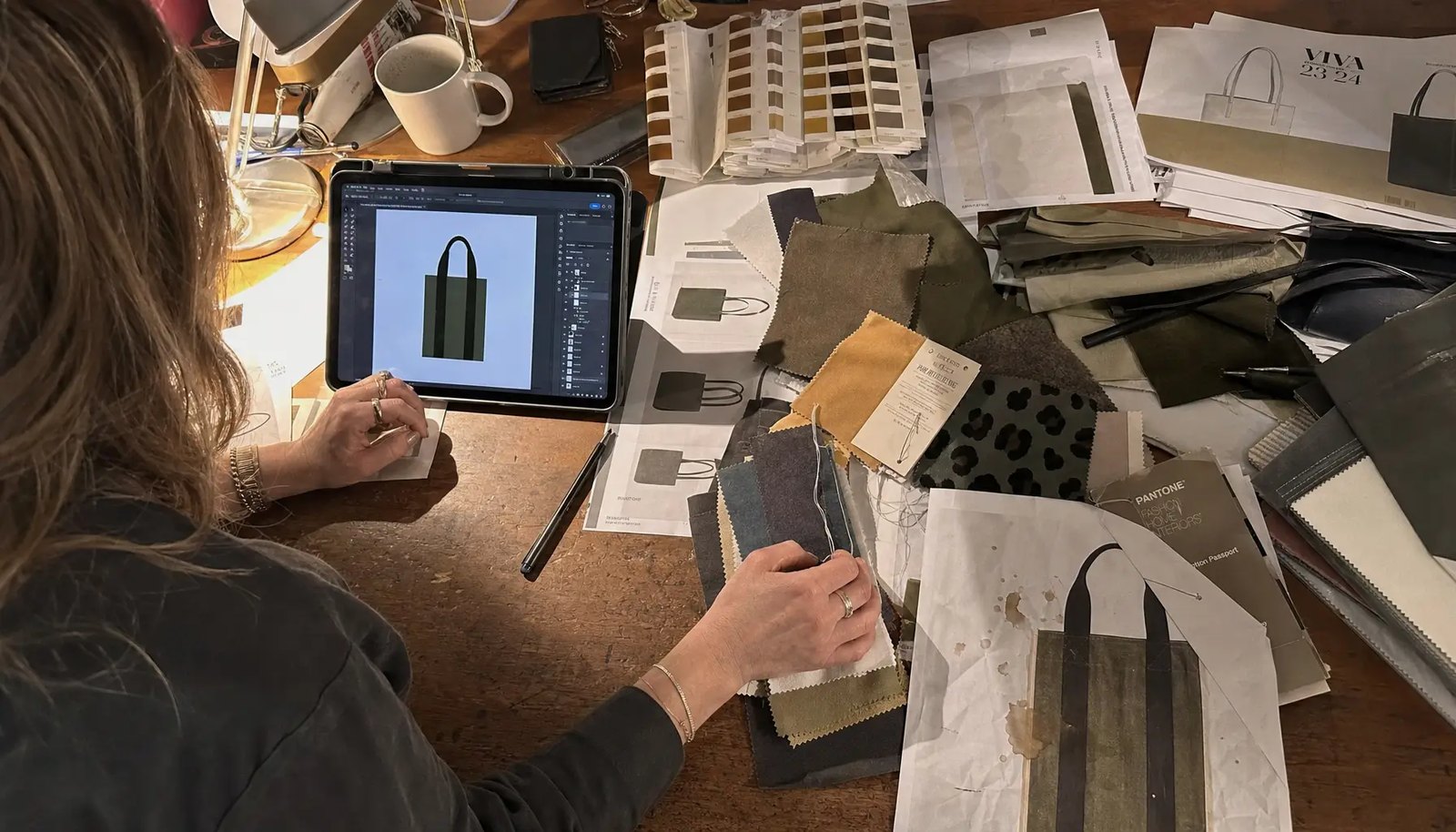
Define the Use Case First
A canvas wine carrier for a wellness studio is not only decorative packaging. It may hold glass wine, olive oil, kombucha, mineral water, botanical syrup, or a retreat welcome-kit item. It may be packed by event staff, displayed on a spa retail shelf, shipped in an e-commerce parcel, and reused by the customer after the first purchase.
The sourcing risk is concentrated in a small product. A filled 750 ml glass bottle commonly weighs about 1.2-1.5 kg, depending on glass weight and liquid. A two-bottle carrier can place 2.5-3.5 kg on the handle roots before swinging, shelf handling, or parcel movement. That is why a good RFQ starts with load and use, not only color and logo size.
Before asking factories for price, define whether the carrier is a one-time gift sleeve, a reusable retail item, or a premium two-bottle set. Each version needs different fabric, handle construction, bottom support, testing, and packing. If this is unclear, one supplier may quote a light promotional bag while another quotes a reusable carrier, and the comparison will be misleading.
- Treat the carrier as a small load-bearing package, not just branded wrap.
- State whether the product is for gifting, retail resale, e-commerce shipment, or repeat consumer use.
- Define one-bottle or two-bottle layout before costing.
- Use the same bottle and loaded-use test when comparing suppliers.
- Separate visual approval from performance approval.
Build the RFQ Around the Bottle
The bottle controls the carrier. A Bordeaux wine bottle, Burgundy bottle, sparkling bottle, olive oil bottle, and kombucha bottle can vary in height, maximum diameter, shoulder shape, base diameter, and filled weight. A pocket that fits one style may strain the side seam or distort the logo when another bottle is inserted.
Give suppliers the physical bottle whenever possible. If that is not practical, provide a dimensioned drawing with height, maximum diameter, shoulder width, base diameter, filled weight, and closure details. If the studio may use several bottle types, sample against the largest and heaviest realistic option rather than a generic 750 ml bottle.
Fit should include all packing accessories. Tissue wrap, a hangtag string, a neck card, or a paper sleeve can make the pocket tighter. Staff preparing retreat gifts should be able to insert bottles quickly without forcing seams or scraping printed panels. The loaded sample should also show whether the bag stands upright, hangs straight, and presents the logo cleanly.
- Provide bottle height, maximum diameter, shoulder shape, base diameter, and filled weight.
- Include tissue wrap, tags, neck cards, and inserts in the fit test.
- Sample against the largest bottle expected in the program.
- Check loaded standing, hanging balance, and logo position.
- For two-bottle carriers, require a divider that prevents glass-to-glass contact.
Choose Canvas by Performance and Cost
For many reusable canvas wine carriers, buyers often start with 12 oz to 16 oz cotton canvas, roughly 380-540 GSM after finishing. This range should be treated as a commercial baseline to confirm with the supplier, not a universal rule. Yarn size, weave density, finishing, washing, dyeing, moisture content, and fabric source all affect stiffness, shrinkage, and tear behavior.
A 12 oz canvas may be suitable for a single bottle if the handle roots and bottom seam are reinforced. A 14 oz canvas is often a practical starting point for wellness retail because it gives more body without becoming too bulky for flat packing. A 16 oz canvas can improve structure for heavier bottles or two-bottle sets, but it also increases material cost, sewing effort, carton weight, and freight exposure.
Natural canvas usually supports the calm, organic look wellness brands prefer and may offer lower MOQ than custom dyed fabric. It also brings visible slubs, seed flecks, and shade variation. Dyed canvas gives stronger brand control but adds lab dip approval, dye-lot monitoring, possible fabric MOQ, and print opacity checks. Approve the fabric swatch before approving the bag.
- Use ounce weight and approximate GSM together, supported by a signed swatch.
- Ask whether canvas is stock, dyed, washed, pre-shrunk, or otherwise finished.
- Approve acceptable limits for slubs, seed flecks, shade variation, and stiffness.
- Avoid choosing heavier canvas as a substitute for proper handle reinforcement.
- Confirm whether dyed fabric changes MOQ, sample timing, and reorder consistency.
Make Dimensions Inspectable
Sewn canvas products need practical tolerances. They will not measure like molded parts, but the buyer still needs clear limits for fit, balance, and appearance. Vague approval language such as “same as sample” is not enough if the bottle pocket becomes tight, the handle drop changes, or the logo shifts on the loaded carrier.
Common buyer-agreed tolerances for this type of sewn bag may be around +/-0.5 cm for body width, height, gusset, bottom depth, and pocket opening, plus around +/-1.0 cm for handle drop. Tighter tolerances may be possible, but they can raise rejects and cost. The specification should focus on measurements that affect bottle insertion, shelf presentation, and carrying comfort.
Measure the sewn sample before and after loaded testing. A carrier may look correct when flat but stretch at the handle root, sag at the bottom, or twist when filled. Also check logo placement on the loaded bag. A mark that is centered on the flat front panel can appear low, high, or curved once the round bottle fills the pocket.
- List finished width, height, opening width, side gusset, bottom depth, divider width, and handle drop.
- Define tolerances in the PO, approved sample record, and inspection checklist.
- Measure with the intended bottle, not only with the empty bag flat on a table.
- Check dimensions again after static hanging and lift-cycle tests.
- Approve logo position on both flat and loaded samples.
Test Loaded Use Before Bulk Cutting
The most useful durability testing checklist for canvas wine carriers focuses on real failure points: handle roots, top hem, bottom seam, side gusset, divider seam, and printed surface. Empty sample approval does not prove much because the load changes the shape and stress pattern.
A practical factory-level check is a static loaded hang at 1.5-2.0 times expected filled weight, when suitable for the project. For example, if the bottle and carrier weigh 1.5 kg, the buyer and supplier may agree to test at 2.25-3.0 kg for a defined time. The safety factor, duration, sample quantity, and pass criteria should be written down before production. These are commercial test conditions, not a replacement for any formal lab certification required by the buyer.
Repeated handling matters too. Lift the carrier, set it down, remove and reinsert the bottle, pull it from a shelf, and let it hang with the bottle centered. Inspect for thread breakage, seam opening, handle elongation, fabric creep, top-hem separation, and bottom distortion. For two-bottle carriers, test with two filled bottles, not one bottle and one empty pocket.
- Static hang: agree load, duration, sample quantity, and pass criteria.
- Lift cycle: repeat carrying motions to expose weak handle roots and loose stitches.
- Insertion test: confirm staff can pack bottles without forcing seams.
- Shelf test: confirm the loaded carrier stands upright if retail display matters.
- Divider test: load both pockets in two-bottle styles.
- Post-test inspection: record seam, handle, bottom, divider, and print condition.
Engineer the Handle Clearly
Handle construction is where many quote differences hide. A narrow handle uses less material but concentrates stress. A handle trapped only in a shallow top fold can look clean in a sample photo and still pull loose under load. For a glass bottle, the handle is the main load-bearing component.
Self-fabric handles, cotton webbing, and rope can all work if the attachment is engineered for the expected weight. Self-fabric handles give a quiet natural look. Cotton webbing may feel stronger and more comfortable for heavier bottles. Rope can look premium but may concentrate stress around holes, eyelets, or knots.
The RFQ should define handle material, width, total length, drop, attachment depth, and reinforcement pattern. Box-X stitching, bar tack, multiple rows, or an approved equivalent is usually more dependable than one straight line of stitching. The reinforcement should extend below the top hem and be visible enough for inspection.
- Specify handle material, width, length, drop, attachment depth, and stitch pattern.
- Require reinforced stitching at the handle base, not only a neat top hem.
- Check loaded balance so the bottle hangs straight and the front panel does not twist.
- For rope handles, define rope diameter, eyelet or patch material, knot method, and pull check.
- Confirm handle color and texture against the approved fabric swatch.
Control Seams, Bottoms, and Dividers
The bottom seam supports the bottle every time the carrier is lifted. The side gusset decides whether the bottle fits naturally or strains the fabric. The top hem affects appearance and handle security. If these details are left open, factories may choose a faster sewing route that is not suitable for repeated loaded use.
Specify lockstitch sewing with appropriate internal finishing such as overlock or binding. A stitch density target such as 8-10 stitches per inch can be a useful buyer-supplier baseline for many canvas bag constructions, but it should be confirmed against the approved sample and fabric thickness. Heavy seam intersections may need adjustment to prevent skipped stitches or excessive perforation.
Two-bottle formats need extra attention. The divider should be centered, correctly sized, and secured into the side and bottom seams. A divider attached only at the top can twist or collapse, allowing bottles to strike each other. If a bottom insert is used, define whether it is removable or sewn in, and consider moisture exposure, foldability, washing claims, carton volume, and recycling language.
- Define seam type, internal finishing, stitch density target, thread color, and reinforcement points.
- Inspect tension, skipped stitches, loose loops, back-tacking, raw edges, and trimming.
- Test bottom seam strength with actual bottle weight.
- Require centered dividers secured into side and bottom seams for two-bottle styles.
- Choose double-layer canvas, removable board, sewn-in board, or no insert deliberately.
Match Branding to Canvas and Packing
Wellness studios often prefer understated branding: a one-color logo, neutral ink, small woven label, or simple patch. The simplicity helps, but canvas is textured and absorbent, so logo testing still matters. A digital proof cannot show ink opacity, hand feel, edge sharpness, or behavior after folding.
Water-based or pigment screen printing is often a strong option for simple bulk branding because it keeps a natural canvas look and controls cost. Heat transfer may help with fine detail or small runs, but adhesion should be tested on the chosen canvas. Embroidery adds texture but can pucker lighter panels. Woven labels offer a clean premium finish, though label MOQ and lead time may affect the order plan.
Packing can damage branding even when printing looks good at the factory table. Printed panels need proper curing before folding and stacking. If ink-to-ink contact, tight compression, humidity, or warm transit conditions are expected, test the packed format before bulk shipment. Tissue or interleaving may be worthwhile for dark ink, thick ink, or premium retail presentation.
- Approve logo on production-equivalent canvas, not only on a digital mockup.
- Check ink color, opacity, edge sharpness, hand feel, curing, and rub resistance.
- Fold and compress printed samples as packed, then inspect for transfer or blocking.
- Confirm woven label, patch, or hangtag MOQ separately from bag MOQ.
- Review logo placement on the loaded carrier because the bottle changes the panel shape.
Compare MOQ, Lead Time, and Packing Risk
The lowest unit price is not always the lowest-risk order. MOQ can come from fabric, dyeing, labels, webbing, rope, patches, hangtags, barcode labels, printed cartons, or packing accessories. A supplier may offer low sewing MOQ while the dyed canvas or woven label has a much higher minimum.
For a first wellness retail launch, stock natural canvas with standard handles may reduce inventory risk and speed sampling. For a repeat program, custom dyed fabric, custom labels, or branded cartons may be worthwhile because volume supports the setup work. Ask suppliers to quote quantity breaks such as 500, 1,000, 3,000, and 5,000 pieces, with setup costs shown separately.
Packing should be specified before final price approval. Flat packing reduces freight volume, but uncontrolled folding can crease canvas, bend handles, or press ink into another panel. Cartons should not be over-compressed, and moisture control may be needed for humid routes. The approved packing method should be tested with a printed, loaded, production-equivalent sample whenever possible.
- Ask which MOQ controls the project: canvas, dyeing, label, print, handle, carton, or sewing.
- Separate setup cost, sample cost, unit price, packing cost, and freight-sensitive carton volume.
- Request quantity breaks and lead-time differences for stock versus custom materials.
- Define flat folding, interleaving, inner packing, carton size, carton weight, and moisture control.
- Include packing simulation in pre-production approval before releasing bulk shipment.
Approve Samples as Control Documents
Sample approval should create a working production reference, not only a pretty photo. For most custom canvas wine carriers, buyers should approve construction, logo, loaded performance, and packing. Some stages can be combined for small orders, but the final pre-production sample should match bulk fabric, thread, handle, logo method, divider, bottom structure, label, and packing.
Measure and photograph the sample with the intended bottle inside. Record pocket width, gusset, opening, bottom shape, handle drop, loaded balance, shelf standing, and logo position. If the pocket is too tight, packing becomes slow and seams are stressed. If it is too loose, the bottle tilts and the retail presentation feels unstable.
Keep one sealed approval sample with the factory and one with the buyer, importer, or inspection team. The approval record should include swatch, measurements, tolerances, stitch construction, print details, packing method, and any accepted exceptions. If the supplier changes fabric source, thread, handle material, logo process, divider construction, label supplier, or packing style, request re-approval before production continues.
- Approve the final sample with bulk-equivalent fabric, thread, handle, logo, and packing.
- Photograph flat, loaded, hanging, and shelf-standing views.
- Keep signed samples at both factory and buyer side.
- Use the sample record for incoming inspection and dispute resolution.
- Require change approval for material, construction, logo, or packing substitutions.
Specification comparison for buyers
| Specification choice | Typical commercial tradeoff | MOQ / lead-time impact | Buyer risk to control |
|---|---|---|---|
| Stock natural canvas, 12-14 oz | Good balance of cost, availability, natural wellness look, and foldable packing | Usually lower MOQ and faster sampling than dyed fabric, subject to mill stock | Natural slubs, seed flecks, shade variation, and stiffness must be approved by swatch, not judged after bulk delivery |
| Heavier canvas, 16 oz or above | More structure and stronger shelf presence, but higher material cost and sewing complexity | May require longer sourcing time, stronger needles, slower sewing, and higher carton weight | Over-specifying fabric can increase price without fixing weak handles, poor bottom seams, or bad fit |
| Custom dyed canvas | Better brand color control than natural canvas | Often higher fabric MOQ, lab dip approval, dye-lot control, and longer pre-production timeline | Shade mismatch between sample and bulk, print opacity issues, and color variation across reorders |
| Single-bottle construction | Lowest construction risk and usually the best first-run option | Lower sewing time, easier inspection, and simpler packing | Pocket still must match the exact bottle height, diameter, shoulder shape, and filled weight |
| Two-bottle construction | Higher gift value but more load, balance, and glass-contact risk | Higher sewing cost; divider and bottom reinforcement add time and material | Divider must be secured into side and bottom seams, and the loaded carrier must not twist or sag |
| Self-fabric handles | Consistent natural look and easy color matching | Moderate cost if cut from the same fabric; more labor than basic webbing in some factories | Handle roots need box-X, bar tack, multiple rows, or equivalent reinforcement below the top hem |
| Cotton webbing handles | Comfortable, clean, and often stronger for heavier bottles | Stock webbing can be quick; custom color webbing may add MOQ and lead time | Webbing width, thickness, color, shrinkage, and attachment depth must be stated in the RFQ |
| Screen printed logo | Cost-effective for simple wellness branding and repeat orders | Screen setup affects small orders; curing time must be built into production flow | Poor curing or carton pressure can cause tackiness, cracking, blocking, or ink transfer |
| Woven label or patch | Subtle premium branding with less print-surface risk | Label or patch MOQ may exceed the bag order; extra application time needed | Label placement, edge sewing, color matching, and lead time should be quoted separately |
Buyer checklist before sampling
- Confirm the exact bottle or container before sampling: 750 ml Bordeaux wine, Burgundy bottle, sparkling wine, olive oil, kombucha, mineral water, syrup bottle, or mixed gift set.
- Record bottle height, maximum diameter, shoulder shape, base diameter, closure type, filled weight, and whether tissue wrap, a neck card, hangtag, or insert must fit inside the carrier.
- Specify canvas by agreed ounce weight and approximate GSM after finishing; treat ranges such as 12-16 oz or 380-540 GSM as commercial baselines to confirm by swatch and sample, not universal standards.
- Define finished measurements and tolerances for body width, height, opening width, side gusset, bottom depth, divider width, handle width, handle drop, and logo placement.
- Set the expected use load and agreed test load, such as filled weight plus a 1.5x or 2.0x safety factor when practical for the program.
- Require reinforced handle attachment using box-X stitching, bar tack, multiple rows, or an approved equivalent that extends below the top hem.
- Confirm whether self-fabric handles, cotton webbing, rope, or another handle type is acceptable, including width, thickness, color, hand feel, and attachment depth.
- Decide whether the loaded carrier must stand upright on a retail shelf; this affects canvas weight, gusset depth, bottom reinforcement, and carton packing.
- Approve the logo method on production-equivalent canvas, including ink color, opacity, curing, rub resistance, fold behavior, and placement on the loaded carrier.
- Test a pre-production sample while loaded: static hang, repeated lifting, bottle insertion and removal, shelf standing, handle balance, print rub, and packing compression.
Factory quote questions to send
- What canvas weight are you quoting in ounces and approximate GSM after finishing, and what production tolerance will be written into the purchase specification?
- Is the fabric stock natural, bleached, dyed, washed, pre-shrunk, enzyme washed, or otherwise finished, and can you provide a bulk-equivalent swatch before sample approval?
- What fabric MOQ, dye MOQ, color approval step, and lead-time difference apply if we choose custom dyed canvas instead of stock natural canvas?
- What finished dimensions and sewn tolerances are included for height, width, pocket opening, side gusset, bottom depth, divider, handle width, and handle drop?
- What bottle size, shoulder shape, and filled weight did you assume when costing the carrier, and have you tested insertion using that bottle or a matching dummy?
- What handle material, width, total length, drop, attachment depth, and reinforcement stitch pattern are included in the quoted price?
- What thread type, stitch density target, seam finishing, back-tacking, and reinforcement method are used at handle roots, side seams, bottom seams, and divider seams?
- What static load, hanging time, lift-cycle, bottle insertion, shelf-standing, and post-test inspection do you perform, and how many pieces are checked per lot?
- Does the price include divider panel, double-layer bottom, board insert, internal binding, woven label, hangtag, barcode label, inner bag, export carton, and moisture-control materials?
- Which logo method is included, how many colors are allowed, what setup costs apply, and how long must printed panels cure before folding and packing?
Quality-control points to confirm
- Fabric weight should match the approved swatch within the contracted GSM tolerance; a target such as +/-5% is a commercial agreement, not an automatic standard.
- Fabric shade, weave, slub level, seed flecks, surface finish, stiffness, and odor should match the signed swatch closely enough for retail acceptance.
- Finished dimensions should stay within agreed sewn tolerances, commonly around +/-0.5 cm for key body measurements and +/-1.0 cm for handle drop when accepted by buyer and supplier.
- Handle attachment must show no seam opening, stitch breakage, abnormal elongation, fabric tearing, needle-hole cracking, or top-hem separation after loaded checks.
- Handle placement should be symmetrical so the loaded bottle hangs straight, the front panel does not twist, and the logo remains visually centered.
- Bottom seam and gusset should remain flat and closed after bottle insertion, lifting, table placement, shelf display, and packing-compression simulation.
- Divider panel, if used, must be centered, correctly sized, secured into side and bottom seams, and free from twisting, loose stitching, or short seam allowance.
- Stitch density, thread tension, back-tacking, reinforcement pattern, thread color, trimming, and internal seam finishing should match the approved production sample.
- Print should match the approved color standard and show no tackiness, smearing, blocking, obvious cracking, pinholes, poor opacity, edge lift, or transfer after curing and packing simulation.
- Logo placement should be checked on both the flat bag and the loaded bag because bottle diameter and shoulder shape can change the visual center.