Why salon chains need a cost breakdown before comparing quotes
Canvas wine carriers often get treated as simple promotional packaging, but for a salon chain they sit somewhere between retail merchandise, gift packaging, and brand presentation. The bag might be used for holiday gift sets, VIP membership rewards, product launch bundles, local event giveaways, or wine-and-beauty collaborations. Each use case has a different tolerance for cost, durability, print quality, and delivery risk. A bag that feels premium in a high-end urban salon may be over-specified for a high-volume suburban promotion, while a budget carrier that fails during a customer's walk to the car damages the brand more than the savings are worth.
A low quote can hide important omissions: lighter fabric than expected, no reinforced handle stitching, print setup charged later, weak export cartons, or a production MOQ that only works for one logo. Procurement teams should break the price into material, sewing, printing, packing, sampling, inland logistics, and supplier risk. This turns a vague request like "canvas wine bag with logo" into a quote that can be compared line by line. Without this breakdown, two suppliers quoting $1.20 and $1.80 may actually be offering different fabric weights, handle constructions, and packing standards, making the comparison meaningless.
For multi-location chains, the cost breakdown must also account for distribution complexity. A single warehouse receiving one SKU is straightforward. Twenty salons each needing 50 branded carriers with different location logos is a different procurement problem. The cost of sorting, labeling, and separate carton marks can exceed the unit price difference between suppliers if not quoted transparently.
- Use cost breakdowns when more than one salon location, brand sub-line, or seasonal logo is involved.
- Separate product cost from freight cost because wine carriers are small but canvas weight and carton cube still affect landed cost.
- Do not compare a plain stock bag quote with a custom reinforced carrier quote; they are not the same product.
- Treat sample accuracy as part of cost control, not as a design formality.
The base product cost starts with canvas weight and construction
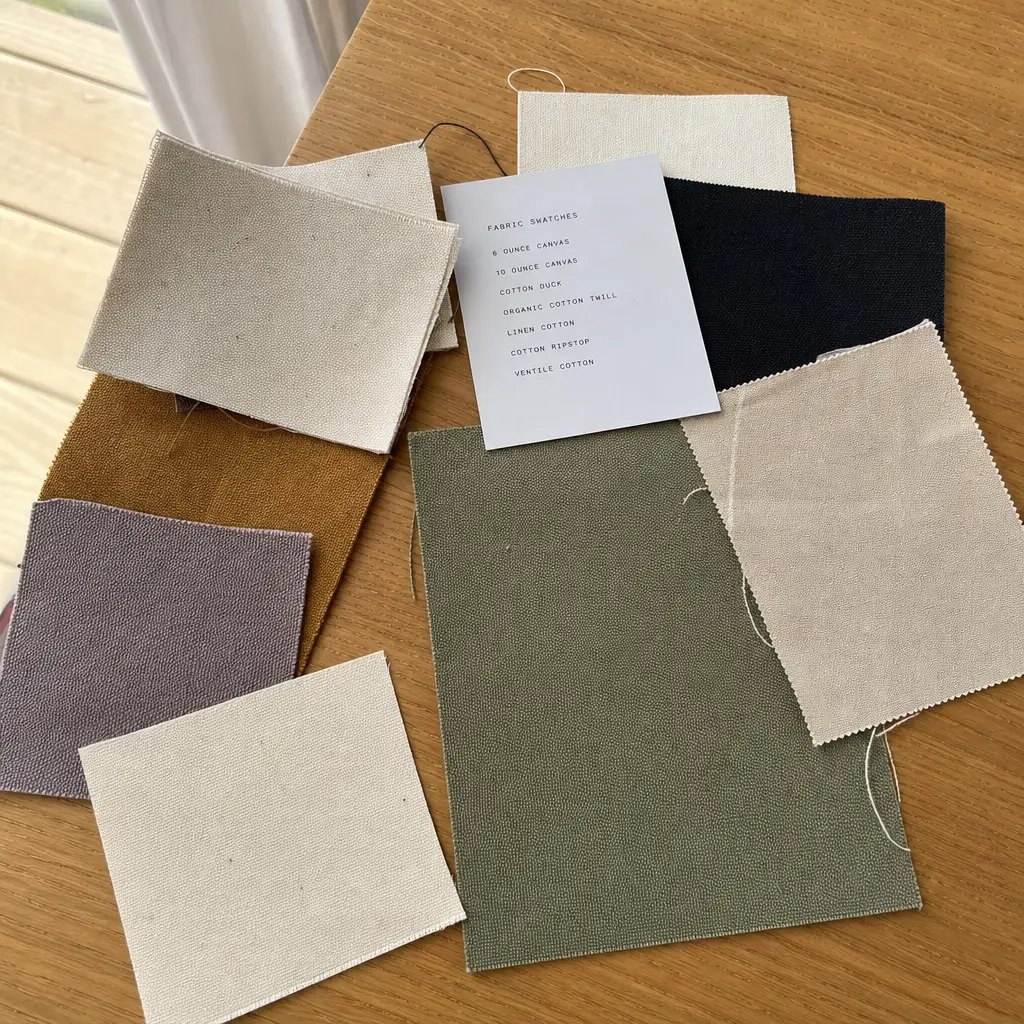
For most salon chain programs, 10 oz to 12 oz cotton canvas is the practical center point. In GSM terms, this is roughly around 340 to 410 GSM depending on yarn and finishing. It is strong enough for a 750 ml bottle, has a more retail-grade feel than thin cotton, and still folds reasonably flat for shipping and storage. Lighter 6 oz or 8 oz fabric can work for short-term promotional giveaways, but it usually feels less premium and may show bottle corners or seam stress. The fabric weight directly drives material cost per piece, cutting efficiency, sewing needle wear, and carton weight, so it is the single largest cost lever in the specification.
Going to 14 oz or 16 oz canvas can improve hand-feel, but the buyer should be clear why the upgrade is needed. Heavier canvas increases fabric cost, needle wear, sewing difficulty, carton weight, and freight. If the wine carrier will be given free with a service package, the extra material may not be recovered. If it will be sold as a premium reusable gift bag, heavier fabric may be justified, but the RFQ should still request a side-by-side quote. A 16 oz carrier can cost 15-25% more in fabric alone compared with a 12 oz version, and the freight difference on a full container can add another 3-5% to the landed unit cost.
Beyond weight, the canvas finish matters. Greige (unfinished) canvas is the most economical but may have a rougher hand-feel and natural color variation. Bleached canvas gives a cleaner, brighter appearance. Dyed canvas in black, navy, or brand colors adds cost and usually requires higher MOQ per color. Washed canvas has a softer drape and vintage look but can shrink differently and may need size compensation in the pattern. Buyers should specify the finish type in the RFQ and confirm that the sample uses the same finish as bulk production.
- Budget tier: 8 oz canvas for short campaign giveaways where reuse is not the main promise.
- Balanced tier: 10-12 oz canvas for most salon chain gift and retail programs.
- Premium tier: 14-16 oz canvas only when the bag is a visible retail item or part of a higher-value set.
- Important RFQ line: state whether canvas is natural, bleached, dyed, washed, or laminated, because finishing changes both price and appearance.
Single-bottle versus two-bottle carriers changes more than material usage
A single-bottle canvas carrier is usually the lowest-risk format for salon chains. It is easier to store behind reception, easier to hand to customers, and simpler to print. The construction normally needs a front panel, back panel, side or bottom gusset depending on design, and handles. The cost is mainly controlled by fabric consumption, handle length, stitch density, and logo printing. A typical single-bottle carrier might consume 0.25-0.35 square meters of fabric depending on panel dimensions and gusset depth.
A two-bottle carrier looks more premium but adds production complexity. It may require a center divider, reinforced bottom, wider gusset, and stronger handles. If the divider is not fixed correctly, bottles hit each other during carrying. If the bottom is not reinforced, the fabric can sag and distort the print panel. For a two-bottle design, buyers should not accept a quote that only doubles the single-bottle size without explaining reinforcement. The center divider alone can add 15-30 seconds of sewing time per piece and creates an additional inspection point for seam alignment.
Bottle dimensions also matter. A standard 750 ml wine bottle has a diameter of approximately 75-80 mm and height around 290-300 mm. Champagne bottles are wider, typically 85-90 mm. Some salon chains use the carrier for prosecco, olive oil, or haircare product bottles, which have different proportions. The factory should confirm the bottle dimensions used for pattern making. If the salon will pack non-wine items such as 500 ml haircare bottles, the carrier height and gusset width may need adjustment to prevent the bottle from sliding out or the bag from looking oversized.
- Single-bottle carrier: best for gift-with-purchase, holiday reception gifts, and low storage volume.
- Two-bottle carrier: best for premium bundles, membership gifts, or local partnership packages.
- Ask for bottle dimensions used by the factory during fitting; not all wine, champagne, and wellness bottles have the same diameter.
- If the salon will pack non-wine items such as haircare bottles, confirm height and cap clearance before approving size.
Printing cost depends on logo complexity, placement, and repeatability
For canvas wine carriers, screen printing is usually the most economical and reliable method for one-color or two-color salon logos. It gives decent coverage on textured cotton canvas and is efficient once the screen is prepared. The buyer should include logo size, print position, print color, number of print sides, and Pantone reference. Without these details, two suppliers may quote different assumptions while appearing to offer the same product. A one-color screen print on one side might add $0.15-0.30 per piece at moderate volumes, while a two-color two-sided print could add $0.50-0.80 or more depending on registration complexity.
Heat transfer, digital print, embroidery, woven labels, and leather patches can also be used, but each changes the cost structure. Heat transfer can reproduce gradients and small details but may feel less natural on canvas and can peel after repeated use. Digital print works for photorealistic designs but has higher per-piece cost and may not bond as durably to heavy canvas without pretreatment. Embroidery looks premium, yet it can pucker lighter fabric and is not ideal for large solid logos on small panels; a 5 cm embroidered logo might cost $0.40-0.70 while a 15 cm version could exceed $1.50. A woven side label is often a clean choice for multi-location chains because it keeps the bag universal while allowing the main print to remain simple.
Print position also affects cost and quality risk. Printing across a seam or gusset fold increases the chance of distortion and registration errors. Printing too close to the top edge may interfere with handle attachment stitching. The artwork should include clear placement measurements from fixed reference points, such as "centered on front panel, 5 cm below top edge, print area 8 cm wide by 6 cm high." This level of detail prevents the factory from making assumptions that lead to batch rejection.
- One-color screen print: lowest setup complexity for repeat orders.
- Two-color screen print: workable when brand standards require it, but registration tolerance must be approved.
- Embroidery: better for small marks than large filled artwork on bottle carriers.
- Woven side label: useful when the bag may serve multiple salon locations without changing the main body print.
- Avoid approving artwork from a PDF only; require a print proof or actual pre-production sample on the selected canvas.
MOQ logic: the lowest unit price may force the wrong order size
MOQ for canvas wine carriers is not only a total piece count. Factories often calculate minimums by fabric color, print design, print color, and cutting efficiency. A supplier may say the MOQ is 1,000 pieces, but if a salon chain wants five location logos, the real minimum could become 500 or 1,000 pieces per logo. This is where procurement teams accidentally create excess stock for small branches. A chain with 30 locations averaging 40 carriers per location needs 1,200 pieces total, but if the factory requires 500 per logo, five logo versions would force a 2,500-piece order with significant overstock.
A better RFQ separates the order into common body specification and variable branding. For example, the chain may use one natural canvas body and one master logo across all salons, then add small hangtags or carton sorting labels for locations. If store-specific logos are essential, request a price ladder by logo quantity, such as 300, 500, 1,000, and 2,000 pieces per design, including any screen setup charge for each version. Screen setup charges typically range from $30-80 per color per design, so five logo versions with two-color prints could add $300-800 in setup fees alone.
Fabric color MOQ is another hidden constraint. Natural canvas usually has the lowest minimum because it is a stock fabric for many factories. Dyed canvas in a specific brand color may require a dye lot minimum of 500-1,000 meters, which could translate to 2,000-4,000 carriers depending on fabric consumption per piece. If the chain only needs 800 carriers in a custom color, the fabric MOQ may force a larger order or a higher per-unit fabric cost to cover the minimum dye lot.
- Clarify MOQ per fabric color, not just total order MOQ.
- Clarify MOQ per print design when multiple salon locations need different logos.
- Request price breaks at realistic order levels rather than only the supplier's preferred quantity.
- Consider one universal carrier plus variable paper hangtag if location-specific printing creates overstock.
- Include reorder assumptions if the same artwork will be repeated within the year.
Sample costs are small compared with a bad chain-wide rollout
A sample should prove the production method, not only the look. For a canvas wine carrier, the sample must use the intended fabric weight, handle construction, print method, logo size, and approximate finished dimensions. If the factory sends a stock sample in similar canvas, it is useful for hand-feel reference but not enough for approval. Procurement should label it as a reference sample, not a production approval sample. A pre-production sample typically costs $50-150 including courier, which is negligible compared with the cost of rejecting or reworking a 2,000-piece order that arrived with the wrong handle drop or print coverage.
The main sample risks are fabric substitution, inaccurate handle drop, weak stitching at load points, and print appearance on textured fabric. A salon buyer may approve a logo on screen, then find that the actual ink coverage looks uneven on natural canvas. The sample stage is the right time to decide whether to slightly thicken logo lines, reduce print size, change ink color, or move the artwork away from seam distortion. Handle drop—the distance from the top of the handle to the top of the bag—is a common failure point; a 2 cm difference can make the carrier awkward to carry or cause the bottle to sit too low.
The sample approval process should include a documented checklist. Measure finished width, height, gusset depth, and handle drop against the spec sheet with a tolerance of +/- 0.5 cm for small dimensions and +/- 1 cm for larger ones. Load the sample with the intended bottle weight (approximately 1.3 kg for a full 750 ml wine bottle) and hang it for at least 10 minutes to check handle attachment and seam stress. Fold the printed area as it will be packed and check for cracking, ink transfer, or visible crease damage. Review the carrier under normal salon lighting—typically warmer and dimmer than factory inspection light—to ensure the print and fabric color read correctly in the actual use environment.
- Measure finished width, height, gusset, and handle drop against the spec sheet.
- Load the sample with the intended bottle weight and hang it for a practical stress test.
- Fold the printed area as it will be packed and check for cracking, ink transfer, or visible crease damage.
- Review the carrier under normal salon lighting, not only under bright factory inspection light.
- Keep one signed sample with the buyer and one with the factory as the production standard.
Packing and carton data affect landed cost and store handling
Canvas wine carriers are usually flat packed to control freight cube. Depending on size and fabric weight, a carton may hold 50 to 100 pieces, but the correct quantity depends on whether the bag has a gusset, divider, heavy handles, individual polybags, or hangtags. A supplier quote without carton dimensions and gross weight is incomplete for importers and distributors because freight forwarders cannot calculate reliable cost from unit price alone. For example, 1,000 single-bottle carriers in 12 oz canvas might occupy 0.3-0.5 CBM when flat packed, while the same quantity in 16 oz canvas with gussets and dividers could occupy 0.6-0.8 CBM, nearly doubling the freight cost per piece.
Salon chains also need to think about downstream handling. If bags are distributed to many locations, carton marks, inner bundles, barcode labels, and store allocation lists may matter more than saving a few cents on packing. However, overpacking can add cost and waste. Individual polybags protect against dirt and moisture but add $0.02-0.05 per piece and may not fit a sustainability position. Paper bands or bulk bundles may work if the warehouse and salons can keep the bags clean. For chains with centralized receiving and store-level distribution, inner carton labels showing location code, quantity, and SKU can prevent mis-shipment and reduce labor cost at the warehouse.
Moisture protection is a specific risk for canvas carriers shipped during humid seasons or through tropical ports. Canvas can absorb moisture and develop mold if packed in non-ventilated cartons without desiccants. Export cartons should be at least 5-ply corrugated for stacking strength, and buyers shipping during June-September in the Northern Hemisphere should request moisture-resistant cartons or inner polybag lining. The cost difference is small—typically $0.03-0.08 per piece—but the cost of mold-damaged goods arriving at a salon chain's warehouse is a full order write-off.
- Request carton length, width, height, gross weight, net weight, and pieces per carton.
- State whether bags can be folded through the logo area or must avoid hard creases on the print.
- Use moisture-resistant export cartons or inner liners when shipping during humid seasons.
- If distributing by store, request carton marks or inner bundle labels by location.
- Confirm whether packing materials are included in the quote or charged separately.
Lead time risk comes from fabric, printing, and approval delays
A realistic schedule starts after artwork confirmation, sample approval, and deposit, not after the first email. For a standard canvas wine carrier, sampling may take 7-14 working days once artwork and fabric are clear. Bulk production time depends on fabric availability, cutting queue, printing capacity, sewing line load, inspection, packing, and export booking. A typical production run of 2,000-5,000 pieces might take 20-35 working days after sample approval, but this can extend to 45-60 days during peak promotional seasons when multiple brands are ordering for holiday campaigns.
Salon chains often need these bags for holiday campaigns, anniversary events, or retail launch dates. The costly mistake is approving the sample late and then expecting the original delivery date to remain unchanged. The RFQ should require the supplier to state lead time in stages: sample lead time, buyer approval deadline, bulk production days, inspection window, and shipping handover date. This makes schedule risk visible before the order is placed. A supplier who quotes "30 days" without breaking it down may be assuming fabric is in stock, artwork is approved immediately, and no inspection is required—none of which may be true.
Fabric availability is the most common lead time bottleneck for dyed or non-standard canvas. Natural 10-12 oz canvas is usually a stock item, but a specific brand color may require dyeing time of 10-20 days before cutting can begin. Printing capacity can also be a constraint during peak seasons; a factory with two manual screen print tables may process 500-800 pieces per day, so a 5,000-piece order with two-color printing could tie up print capacity for 6-10 working days. Buyers should ask whether the factory has dedicated print capacity or shares it across multiple orders.
- Freeze artwork before sampling; repeated logo changes reset the production clock.
- Reserve fabric early if using dyed canvas or non-standard color.
- Build in time for pre-shipment inspection, especially for first orders or multi-logo programs.
- Do not rely on air freight as the rescue plan for heavy canvas orders; it can erase the margin.
- For fixed event dates, request a production timeline with milestone dates in the supplier's proforma invoice.
How to compare supplier quotes on real landed cost
A canvas wine carrier quote should be compared on the same Incoterm and the same specification. EXW, FOB, CIF, DDP, and warehouse-delivered prices are not interchangeable. A low EXW price may exclude inland transport to port, export handling, customs documents, and local delivery. A higher FOB price from a more organized factory may become cheaper once rework, delays, and freight data accuracy are considered. For a typical order of 3,000 carriers, the difference between EXW and FOB might be $150-300 in local charges, while the difference between FOB and DDP could be $400-800 depending on destination duties and broker fees.
Build a comparison sheet with unit price, setup charges, sample charges, MOQ, carton data, estimated CBM, payment terms, lead time, inspection support, and defect responsibility. If one supplier refuses to provide fabric GSM, carton dimensions, or stitching details, that is not a small communication issue; it is a sourcing risk. The best supplier for a salon chain is usually the one that can repeat the same color, print, and construction across seasonal orders without forcing unnecessary redesign. Consistency matters more than a $0.05 unit price difference when the chain needs to reorder the same carrier for next year's holiday promotion.
Payment terms also affect the real cost of the order. A supplier offering 30% deposit and 70% before shipment at a slightly higher unit price may be less risky than one demanding 100% upfront at a lower price. If quality issues arise, the buyer has more leverage when the balance is unpaid. Similarly, a supplier who accepts a third-party inspection report as a condition for balance payment is demonstrating confidence in their quality control, which reduces the buyer's risk of receiving substandard goods.
- Normalize all quotes to the same specification before negotiating price.
- Add screen setup charges across the expected order quantity to see the true unit cost.
- Estimate freight using carton CBM and gross weight, not only piece count.
- Include inspection and sample courier cost in the landed-cost model.
- Give more weight to suppliers who provide measurable data and stable sample-to-bulk control.
Common cost-saving changes that do not damage the product
Cost reduction should protect the customer experience first. For salon chains, the customer notices fabric feel, logo appearance, handle comfort, and whether the carrier holds the bottle safely. They usually do not notice hidden seam complexity, unnecessary internal dividers, excessive packaging, or small changes in logo size. Good value engineering removes cost from low-visibility areas while keeping the bag dependable and on-brand. The goal is to reduce the cost per bag by $0.10-0.30 without any customer noticing the difference.
The safest savings often come from simplifying color and print variables. Natural canvas with one-color print is usually easier to source and repeat than dyed canvas with multi-color artwork. A universal body with a removable hangtag can support multiple store campaigns without creating separate production lots. Reducing fabric weight from 16 oz to 12 oz may also save cost if load testing still passes and the hand-feel remains acceptable. Other proven savings include reducing handle length by 2-3 cm (less fabric, same function), eliminating interior dividers in single-bottle designs, and switching from individual polybags to bulk packing with paper interleaving.
Print simplification offers some of the largest savings without visible quality loss. Moving from two-sided printing to one-sided can save $0.15-0.40 per piece. Reducing a two-color logo to one color saves the second screen setup charge and the second print pass labor. Shrinking the logo size from 15 cm wide to 10 cm wide may not affect brand visibility but reduces ink consumption and print time. These changes should be tested on a sample to confirm the brand impact is acceptable before committing to bulk production.
- Use 12 oz instead of 16 oz canvas when the carrier is promotional but still needs a sturdy feel.
- Keep the main logo to one-color screen print when brand rules allow it.
- Use a common bag body for all locations and vary hangtags, carton labels, or inserts.
- Avoid two-sided printing unless both sides are visible during actual salon use.
- Remove internal dividers from single-bottle designs where they add no functional value.
- Choose flat bulk packing instead of individual premium packaging unless the bag is sold as a retail SKU.
Specification comparison for buyers
| Spec decision | Recommended option | When it fits | Buyer risk to check |
|---|---|---|---|
| Fabric weight | 10-12 oz cotton canvas, approximately 340-410 GSM | Most salon retail gifting, loyalty promotions, and holiday wine packs where the bag must feel reusable but not overbuilt | Very light 6-8 oz canvas may collapse under bottle weight; very heavy 16 oz canvas increases freight and sewing cost without always improving customer value |
| Bottle capacity | Single-bottle carrier for broadest store use; two-bottle version only when retail bundle value supports it | Single bottle suits gift-with-purchase, service upgrades, and local store events; two-bottle works for holiday sets or premium memberships | Two-bottle bags need stronger handle reinforcement and better bottom support; otherwise seam failure risk rises sharply |
| Handle construction | Self-fabric handles with box-X or reinforced cross stitching | Best balance for salon chains needing a clean natural canvas look and dependable carrying strength | Thin webbing or decorative stitches may pass a photo review but fail loaded testing with 750 ml bottles |
| Print method | 1-2 color screen print for standard logos; heat transfer only for fine gradients or short runs | Screen print is cost-effective for repeat orders and simple salon branding | Low-grade ink can crack on heavy canvas; heat transfer can feel plastic-like and may not suit a premium natural fabric position |
| Interior support | Basic divider or reinforced center seam only when carrying two bottles; no divider for single-bottle carrier | Keeps cost controlled while matching the actual retail use | Unnecessary dividers add sewing minutes and defect points; missing divider in a two-bottle carrier causes bottle clinking and customer complaints |
| MOQ structure | Negotiate MOQ by fabric color and print setup, not only total pieces | Useful when the chain wants several salon location logos or seasonal colorways | A supplier may quote 1,000 pieces total but require 500 pieces per color or per logo; this changes real buying cost |
| Packing method | Flat packed in export cartons, 50-100 pieces per carton depending on fabric weight and size | Best for warehouse receiving and lower freight cube compared with shaped or stuffed packing | Over-compressed packing can crease heavy canvas and distort handles; loose packing wastes carton volume |
| Sample approval | Pre-production sample using actual fabric GSM, handle stitching, logo size, and packing fold | Necessary before chain-wide rollout or multi-location distribution | A showroom sample made from substitute fabric may hide shrinkage, print hand-feel, or loaded strength issues |
| Quote basis | Request unit price, print setup, sample cost, carton data, production lead time, and Incoterm in one quote sheet | Allows procurement to compare suppliers on landed cost instead of unit price only | A low EXW price can become expensive after inland transport, export handling, carton volume, and rework risk are included |
Buyer checklist before sampling
- Define whether the carrier is for single bottle, two bottles, or mixed bottle formats before asking for price.
- State fabric weight in oz or GSM, and require the quote to mention tolerance, such as 12 oz canvas with practical production variation of +/- 5%.
- Provide finished size, seam allowance expectation, handle length, handle width, and whether the bag must stand when empty.
- Lock the logo method, logo size, print position, Pantone references, and whether the print is one side or both sides.
- Separate MOQ by fabric color, print design, salon location logo, and shipment batch to avoid hidden minimums.
- Require a loaded carry test using a filled 750 ml bottle or equivalent weight before mass production.
- Approve a pre-production sample made from production fabric, not a similar stock canvas.
- Request carton dimensions, pieces per carton, gross weight, and net weight for freight comparison.
- Confirm flat packing direction and acceptable crease level if the bags will be displayed in salons.
- Include defect acceptance criteria for broken stitches, print offset, stains, loose threads, size tolerance, and odor.
Factory quote questions to send
- What canvas weight are you quoting in oz and GSM, and what is the normal production tolerance?
- Is the fabric greige, bleached, dyed, or washed canvas, and will the sample use the same batch type as bulk production?
- What is your MOQ per fabric color, per logo design, and per print color?
- What print method are you including, and does the price include screen setup, film, or plate charges?
- What stitch type and reinforcement are used at the handle attachment points?
- What loaded weight test do you use for a single-bottle or two-bottle wine carrier?
- What are the sample cost, sample lead time, and courier charge, and can sample cost be refunded after bulk order?
- What is the production lead time after sample approval and deposit, not after first inquiry?
- What are the export carton dimensions, pieces per carton, gross weight, and estimated CBM for 1,000 pieces?
- Are polybags, hangtags, barcode labels, carton marks, or store-location sorting included or quoted separately?
Quality-control points to confirm
- Fabric weight should match the approved standard, with no obvious thin areas, oil marks, weaving defects, or strong chemical odor.
- Finished size should remain within agreed tolerance, commonly about +/- 0.5 cm for small panels and +/- 1 cm for height or handle drop depending on construction.
- Handle attachment must pass a loaded hanging test with bottle-equivalent weight and should show no torn fabric, popped stitches, or seam slippage.
- Print position should follow the approved artwork layout, with color matched to agreed Pantone or approved sample under consistent light.
- Screen print should not show heavy bleeding, pinholes in the logo, poor coverage on canvas texture, or cracking after light folding.
- Seams must be straight enough for retail presentation, with no open seams, skipped stitches, major puckering, or loose thread clusters.
- Bottom corners and side seams should be reinforced where the bottle weight rests, especially for two-bottle constructions.
- Packing must keep bags clean and dry, with carton strength suitable for export stacking and no direct contact between printed faces if ink transfer risk exists.
- Random cartons should be opened during inspection to verify piece count, color mix, logo mix, and any store-specific sorting instructions.
- Final goods should be checked for mold risk if shipped during humid seasons; canvas wine carriers should be fully dry before carton sealing.