Make carton packing part of the specification
For canvas wine carriers, carton packing is not a warehouse afterthought. It changes how the product looks, how it is counted, how it travels, and how quickly a coffee roaster can put it into use. A carrier may pass artwork review and sewing inspection, then still disappoint the buyer because the print is scuffed, the handles are crushed, the divider is bent, or the cartons arrive with uneven quantities.
Coffee roasters often buy canvas bottle bags for holiday gift sets, coffee-and-wine collaborations, bottled cold brew launches, tasting events, retail shelves, and corporate gifting. In each of those uses, the carrier is part of the customer-facing presentation. If the roaster's team has to wipe lint, separate tangled handles, steam creases, re-count mixed cartons, or replace damaged inner packs, the low unit price has already started to lose its advantage.
The carton packing plan should be approved with the product sample, not added after production. At minimum, it should state fold direction, folded unit size, inner packing, units per master carton, carton dimensions, estimated net and gross weight, carton marks, SKU labels, barcode placement, and whether mixed cartons are allowed. For higher-presentation programs, also show how the logo face is protected and how handles are positioned inside the stack.
This is where quote comparison gets tricky. One supplier may include tissue wrap, lower carton count, and printed carton marks. Another may assume loose master-carton packing with a higher count and no inner protection. The two offers are not the same, even if the body size, canvas weight, and logo look similar on the quotation sheet.
- Treat carton packing as a controlled product specification.
- Approve fold direction, inner packing, carton count, carton size, gross weight, and marks before bulk packing.
- Compare quotes by total content: fabric, sewing, decoration, packing labor, carton material, inspection readiness, and freight impact.
- Request packing photos or a simple diagram with the pre-production sample.
- Avoid accepting standard export packing unless the supplier documents what that phrase includes.
Start with the bottle, then design the carrier
A good canvas wine carrier starts with the bottle, not the bag sketch. Procurement teams should send the supplier the bottle height, maximum diameter, shoulder shape, loaded weight, and intended neck exposure. A standard 750 ml wine bottle, tall sparkling bottle, cold brew bottle, syrup bottle, liqueur bottle, and two-bottle gift set can all require different body height, gusset depth, divider placement, and handle drop.
The use case matters just as much as the bottle. A low-cost event giveaway can use a simpler body than a retail-ready holiday gift carrier. A carrier sold empty as branded merchandise should open cleanly and look structured after unpacking. A carrier used for warehouse gift assembly should be easy to count, fast to open, and consistent in orientation. A carrier going into a finished consumer gift kit may need paper wrap, a barcode label, or an insert to control movement.
Do not assume that a generic wine carrier fits every bottle in a coffee roaster's program. A body that looks fine when empty may strain at the seams once loaded. A handle drop that works on a slim bottle may feel cramped around a tall neck. A divider that lies flat in a loose sample may twist after carton compression if the fold method is not tested.
For multi-location or seasonal programs, one standardized carrier body can reduce errors and cost. The same canvas body, handle, fold direction, and carton count can serve several logo versions if all bottle formats fit. Branding can then change through screen print, woven label, hangtag, or barcode label while the packing plan remains stable.
- Provide bottle height, maximum diameter, shoulder shape, loaded weight, and target presentation use.
- Confirm whether the carrier is for retail sale, promotion, gift assembly, event use, or e-commerce fulfillment.
- Test the sample with the real bottle or accurate bottle forms before bulk approval.
- Standardize one body across SKUs only after every intended bottle format is checked.
- Tell the supplier whether the bag must stand empty, stand loaded, or simply carry the bottle securely.
Specify canvas weight in comparable terms
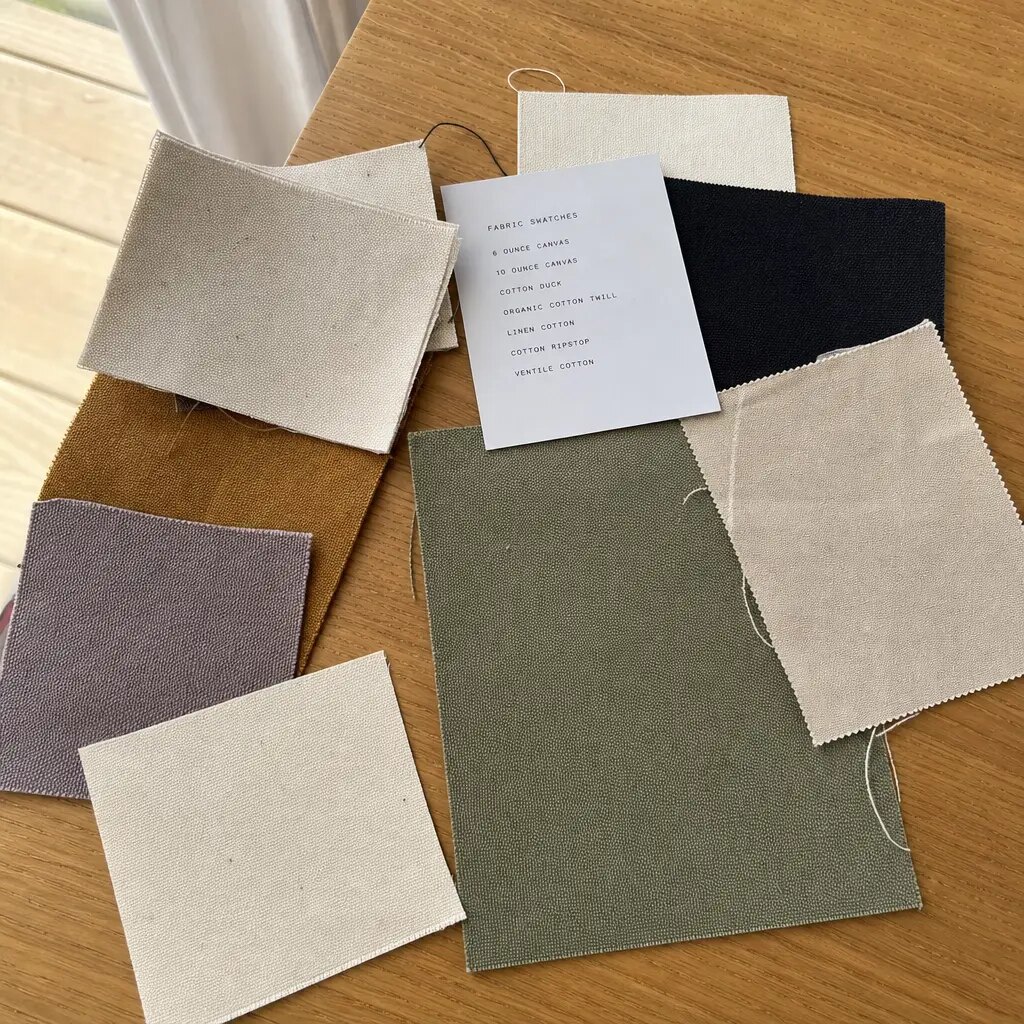
Canvas weight affects structure, sewing behavior, folded thickness, carton weight, freight volume, and cost. For most canvas wine carriers for coffee roasters, the practical range is 12 oz to 16 oz cotton canvas. Because suppliers may use different weight references, ask for both ounce weight and GSM, and ask whether the number is measured before or after dyeing, washing, coating, or other finishing.
A 12 oz canvas can work well for promotions, event giveaways, and cost-sensitive programs where a firm retail shape is not essential. It folds easily and can reduce carton weight. The tradeoff is that it may wrinkle more under compression and feel less substantial beside premium coffee bags, glass bottles, or gift boxes. Buyers choosing 12 oz should pay close attention to handle reinforcement and post-unpacking appearance.
A 14 oz canvas is often the balanced choice for branded gift and retail programs. It usually has better body than 12 oz without the added bulk, sewing resistance, and carton weight of 16 oz. It can support a clean one-color screen print, carry a bottle well when stitched correctly, and recover reasonably after carton packing if the fold direction is controlled.
A 16 oz canvas gives a heavier hand feel and a stronger shelf presence. It may suit premium reusable merchandise, limited-release gifts, or higher-value bottle sets. The tradeoff is practical: thicker fabric increases folded unit height, carton volume, gross weight, needle resistance, and seam bulk. The carton count approved for a 12 oz carrier should not be reused automatically for a 16 oz version.
Write the fabric tolerance into the specification. Depending on the mill and finishing route, buyers may accept a practical production tolerance around +/-5% for fabric weight, but the exact range should be agreed with the supplier. Also define acceptable natural slubs, cottonseed flecks, shade variation, odor, and shrinkage if washing is involved.
- Ask for canvas weight in both oz and GSM, measured at the same production stage.
- Use 12 oz for simpler promotions, 14 oz for most retail gift programs, and 16 oz for a firmer premium product.
- Confirm whether sample fabric and bulk fabric come from the same source and finish.
- Set written tolerances for fabric weight, shade, and finished dimensions.
- Do not approve price until fabric weight, finish, and packing impact are clear.
Define dimensions, tolerances, and load strength
A canvas wine carrier is a load-bearing textile product, so the specification needs more than a front view and logo size. Record finished body height, body width, bottom gusset, side gusset if any, divider dimensions, handle width, handle drop, seam allowance if critical, and placement of reinforcement stitches. Key finished dimensions often use practical tolerances such as +/-5 mm, but the buyer and supplier should confirm what is realistic for the fabric and sewing method.
Handle construction deserves a close look. Cotton webbing handles are common, often in widths around 2.5 cm to 3.8 cm depending on the style and expected load. Reinforcement may use bar-tacks, box stitching, box-X stitching, or another approved pattern. The best option depends on fabric weight, handle width, bottle load, and appearance standard. A quote that says strong handle is not specific enough for procurement comparison.
A simple loaded check is useful and easy to understand. The supplier can place the intended bottle weight, or an agreed test load above intended use, into the carrier and lift or suspend it for a defined time. The goal is not to create a laboratory certification unless one is required. The goal is to catch slipping handles, broken thread, torn fabric, and seam distortion before cartons are sealed.
If the carrier holds two bottles, the strength check must reflect the higher load and the way the bottles move. The divider should keep bottles apart without forcing stress into the side seams. The handle should still feel balanced when the carrier is lifted. A beautiful sample is not enough if it tilts, twists, or pulls unevenly when loaded.
Seam quality affects both strength and presentation. Inspectors should check stitch density, straightness, skipped stitches, loose thread nests, open seams, twisted gussets, divider alignment, and top-edge finish. A natural canvas product can look warm and tactile while still being neatly controlled.
- Specify finished dimensions and realistic tolerances for body, gusset, divider, handle drop, and logo position.
- Define handle width, webbing material, stitch pattern, thread color, and reinforcement location.
- Use loaded lift or pull checks based on the actual bottle weight and number of bottles.
- Inspect stress points at handle attachment, top opening, gusset corners, and divider seams.
- Reject vague handle descriptions unless the construction is shown in sample photos or drawings.
Choose decoration after checking the fabric surface
Most coffee roaster branding works well as a one-color screen print on natural canvas. It is economical, easy to inspect, and suitable for solid logos, simple typography, and clean front-panel visibility. The purchase order should state artwork file version, print size, ink color or Pantone reference, print position from top and side edges, and placement tolerance. A common practical print placement tolerance may be around +/-3 mm to +/-5 mm, depending on the process and factory control.
Canvas is not a flat paper label. Fine roast notes, small serif text, thin line art, QR codes, gradients, and tiny certification marks may not reproduce cleanly on textured fabric. Buyers should request an actual print strike-off or pre-production sample instead of relying on a digital mockup. Ink coverage, edge sharpness, and color appearance can change between natural canvas, black canvas, and dyed canvas.
Woven labels can be efficient for multi-SKU coffee roaster programs. A shared carrier body can be decorated with different side labels, front patches, or hangtags while fabric, sewing, folding, and carton count remain the same. Buyers should still confirm label MOQ, label lead time, sewing position, label orientation, fraying standard, and whether the label creates pressure marks when folded.
Embroidery can look premium, but it should be tested with the actual canvas weight and fold method. Dense embroidery can pucker the panel, stiffen the logo area, and create a raised surface that should not be crushed in the carton. Heat transfer can provide sharper detail than screen print on some artwork, but it needs adhesion and scuff testing on the approved fabric finish.
Decoration and packing should be approved together. A logo that looks clean on a flat sample may scuff if printed faces rub inside the carton. A fold line through ink may leave a permanent crease. A raised label or embroidery area may mark adjacent units. The carton packing plan is part of logo protection, not separate from it.
- Use screen print for solid logos and simple one-color branding.
- Use woven labels when one body must support several roaster SKUs or seasonal versions.
- Use embroidery only after checking thread density, puckering, and fold pressure.
- Avoid tiny text, QR codes, gradients, and thin lines unless they are proven on actual canvas.
- Approve the decoration and fold direction at the same time.
Understand MOQ and version splitting
MOQ is rarely controlled by total order quantity alone. The real minimums may come from fabric purchase, dyeing, cutting, print setup, label weaving, embroidery digitizing, insert production, packaging material, or carton mark changes. A 3,000-unit order may look efficient on paper, but if it splits into six logos, three fabric colors, two insert types, and two packing methods, each version may fall below an efficient production quantity.
Natural canvas with one-color decoration is often the cleanest route for coffee roaster programs. It avoids custom dye approval, reduces color-lot risk, and makes it easier to keep one carton plan. If the buyer needs several locations, seasonal labels, or collaboration versions, changing the print, hangtag, or woven label is usually simpler than changing the fabric body.
Dyed canvas requires more control. Ask whether the supplier uses stock dyed fabric or custom dyeing. Custom dyeing may require lab dip approval, fabric MOQ, additional lead time, and a written shade tolerance. Dark colors may also affect lint visibility, print opacity, and inspection standards. If the fabric color changes, confirm that folded thickness and carton count still match the approved plan.
A useful quote separates the price logic instead of hiding it inside one unit price. It should show body MOQ, MOQ per logo, setup charges, label MOQ, insert MOQ, packing material cost, carton count, and price breaks at realistic bands such as 1,000, 3,000, and 5,000 units. This prevents a low headline price from becoming a revised price after final artwork and packing instructions are issued.
- Ask for MOQ by fabric color, logo version, label version, insert type, and packing format.
- Use one body specification across multiple programs when bottle fit allows it.
- Request price breaks that match likely reorder quantities, not only the first order.
- Confirm whether setup charges repeat for each artwork version.
- Do not approve custom dyed fabric until MOQ, lead time, shade tolerance, and carton impact are clear.
Build the carton plan from the folded unit
The carton packing plan should start with an actual folded unit, not a guessed carton count. The factory should fold the approved sample in the proposed way, measure folded length, width, and thickness, then calculate the master carton size and units per carton. The aim is a stable carton that protects presentation and supports receiving, not the highest possible count squeezed into the smallest box.
Three numbers should control the plan: folded unit volume, carton internal dimensions, and acceptable gross weight. A 16 oz carrier with a divider may need fewer units per carton than a 12 oz single-bottle carrier. A carton that is too full can create hard creases, distorted handles, and print pressure marks. A carton that is too empty allows movement unless void fill or layer control is specified.
Ask the supplier for the carton math before bulk packing. The answer should include units per carton, number of layers if relevant, carton dimensions, estimated net weight, estimated gross weight, total carton quantity, board strength if specified, sealing method, carton marks, barcode label location, and whether cartons are single-SKU or mixed. For most procurement teams, single-SKU cartons reduce receiving errors and inventory confusion.
Inner packing should match the business need. Individual polybags keep units clean and easy to count, but add plastic and labor. Paper or tissue wrap can protect presentation while supporting plastic-reduction goals, but it needs a repeatable wrap size and fold. Belly bands help retail handling and barcode placement. Loose master-carton packing reduces material cost, but it increases the risk of lint, scuffing, and inconsistent orientation.
When the specification changes, the carton plan should be checked again. A divider, thicker canvas, wider handle, belly band, hangtag, or individual bag can all change folded thickness and carton count. Procurement should treat carton quantity as a controlled figure tied to the final product, not a flexible packing-line decision.
- Measure folded unit size before locking master carton count.
- Control carton count by folded thickness, carton dimensions, and gross weight target.
- State whether cartons are single-SKU or mixed, and avoid mixed cartons when receiving accuracy matters.
- Include carton dimensions, net weight, gross weight, marks, sealing method, and barcode label position.
- Re-check carton count if fabric weight, divider, insert, or inner packing changes.
Protect print, handles, and dividers in the fold
The fold sequence determines how the carrier looks after unpacking. A sharp fold through a front print can leave a crease, scuff, or cracked ink edge. Handles compressed at an awkward angle can open with a bent shape. A divider folded off-center can make a two-bottle carrier lean or fail to separate the bottles properly. These issues often happen during packing, after the sewing line has already produced acceptable goods.
For a simple single-bottle carrier, the supplier may fold the body flat, align the handles, and stack units in the same direction. If the print is on the front panel, the approved fold should avoid the most important artwork whenever the pattern allows. For bottom-gusset carriers, the gusset should be folded consistently so the carrier opens the same way each time. If the product must stand in a retail setting, fold memory should be checked after unpacking.
Two-bottle carriers need extra attention. A sewn divider should lie flat without twisting. A removable insert should not be crushed at the corners. If the divider or insert is packed separately, the carton plan must state whether it is inserted at the factory, bundled with the bag, or supplied in a separate carton. Each option affects warehouse labor and counting accuracy.
Print faces should not rub against rough carton walls or other printed faces if appearance matters. Tissue sheets, paper wrap, or a controlled face-to-face and back-to-back stack pattern can reduce scuffing. The packing instruction should be simple enough for the packing team to repeat: fold gussets inward, align handles flat, keep the print face protected as approved, stack a fixed count per layer, apply the inner wrap, and seal with approved carton marks.
- Avoid hard fold lines through key logo areas whenever the pattern allows it.
- Keep handles flat and parallel so they recover neatly after unpacking.
- Check dividers and inserts after carton compression, not only during sewing inspection.
- Use tissue, paper wrap, belly bands, or controlled stack direction when print scuffing is a risk.
- Write the packing sequence in operational language the factory packing team can repeat.
Set inspection criteria before production
A practical QC plan should be measurable. Inspectors should verify fabric weight, finished dimensions, handle construction, seam quality, decoration placement, cleanliness, odor, packing count, carton marks, and carton gross weight. A loose visual comparison to a sample is not enough for a load-bearing, branded textile product that may sit in a retail or gift environment.
Fabric inspection should match the presentation level. Natural cotton canvas may include small slubs, cottonseed flecks, or modest shade variation, but obvious oil marks, water stains, mildew odor, heavy lint, or inconsistent dye patches are not acceptable for coffee roaster gift programs. For dyed fabric, compare bulk goods to the approved lab dip or sample under consistent lighting. For natural canvas, define the level of woven irregularity the buyer accepts.
Sewing inspection should focus on stress points. Check handles, top opening, side seams, bottom gusset, divider attachment, and any label stitching. Bar-tacks or box stitches should be in the approved position, with no broken thread, skipped stitches, or fabric tearing. A loaded lift check using the intended bottle weight, or an agreed inspection load, can reveal problems that a flat table inspection misses.
Decoration inspection should compare bulk goods to the signed sample. Check print position, ink color, opacity, edge clarity, adhesion, dry rub, and scuffing after the approved fold. Woven labels should be straight, correctly oriented, and securely stitched. Embroidery should be checked for puckering, loose threads, and backing issues. Heat transfers should be checked for adhesion after handling and folding.
Carton inspection is just as important as product inspection. Open random cartons to verify units per carton, SKU version, inner packing, fold direction, carton marks, barcode placement, and gross weight. Packing mistakes often happen after the carrier itself has passed sewing inspection, so inspection must continue through sealed carton review.
- Use written tolerances for dimensions, print placement, fabric weight, and carton gross weight.
- Inspect fabric for weight, shade, odor, stains, lint, and unacceptable surface defects.
- Test handle strength with the intended bottle load or agreed inspection load.
- Check decoration after folding, rubbing, and unpacking, not only on a flat panel.
- Open random cartons to confirm count, SKU, fold condition, inner pack, and carton marks.
Approve the sample as a packed product
Many sourcing errors start with approving only a loose sample. A canvas wine carrier may look excellent when freshly made, pressed, and placed on a desk. The same carrier may look unacceptable after being folded, stacked, wrapped, compressed, and shipped. For B2B procurement, the approved sample should represent the finished packed product as closely as possible.
The pre-production sample should use final fabric, final color, final decoration, final handle construction, final divider or insert, final label or hangtag, and the proposed inner packing. If producing a full master carton is not practical at the first sample stage, request a packed sample set showing the actual fold direction, wrap method, stack orientation, and carton marks. For larger or retail-critical programs, approve one pilot packed carton before the factory packs the full order.
Review the sample the way the receiving team will. Open the carton, remove the unit, inspect the print face, check handle recovery, insert the real bottle, and confirm whether the carrier stands or carries as intended. If the order includes dividers, test two bottles or accurate bottle forms. If the carrier will be scanned or sold retail, check barcode position, hangtag visibility, and whether the inner pack slows down assembly.
Sample approval should leave a clear record. Keep the approved physical sample, sample photos, measurement sheet, artwork file, packing diagram, carton mark layout, and purchase order specification together. State which comments are closed and which changes remain open. This reduces disputes if bulk goods differ from the sample or if the packing line tries to change carton count late in production.
The strongest purchase orders connect product, packing, and QC in one place. That is the heart of a useful canvas wine carriers for coffee roasters carton packing plan: the bottle fits, the branding survives handling, the carton count is predictable, and the receiving team knows exactly what to expect.
- Approve final fabric, final decoration, final handles, final accessories, and final packing together.
- Request photos of folded units, inner packing, layer arrangement, sealed carton, and carton labels.
- Test the packed sample with the real bottle size before mass production approval.
- Approve one packed carton before full packing for large or high-presentation orders.
- Keep approval records connected to the purchase order and inspection checklist.
Specification comparison for buyers
| Spec decision | Recommended option | When it fits | Buyer risk to check |
|---|---|---|---|
| Source route | Factory or managed supplier that controls sewing, decoration approval, and carton packing instructions | Useful when the carrier must arrive retail-clean, with fixed carton count and repeatable logo placement | A quote that only says standard export packing may exclude inner wrapping, carton marks, barcode labels, or stable units-per-carton |
| Canvas weight | 12 oz, 14 oz, or 16 oz cotton canvas, also stated in GSM for comparison | 12 oz for promotional use, 14 oz for most branded gift programs, 16 oz for a firmer premium feel | Suppliers may quote different ounce systems or fabric before finishing; confirm actual bulk fabric weight and tolerance |
| Fabric color | Natural canvas for efficient sourcing; black or dyed color only with lab dip and tolerance approval | Natural works well for coffee roaster gift bundles and reduces dye-lot risk | Custom dyeing may require higher MOQ, longer lead time, shade approval, and stricter stain inspection |
| Body sizing | Pattern based on real bottle height, diameter, shoulder, neck exposure, and loaded weight | Needed for wine, cold brew, syrup, liqueur, or two-bottle collaboration packs | A generic 750 ml size may not fit tall bottles, wide shoulders, or bottle-plus-insert use |
| Handle construction | Cotton webbing handle, typically 2.5 cm to 3.8 cm wide, reinforced with box stitch, X stitch, or bar-tack as approved | Appropriate for repeated handling, retail sale, event gifting, and bottle loading | Weak stitch density, short handle drop, or poor placement can fail loaded lift checks |
| Decoration | One-color screen print, woven label, embroidery, or heat transfer selected after artwork review | Screen print fits solid logos; woven label fits multi-SKU programs; embroidery fits simple premium marks | Fine text, QR codes, gradients, and small roast notes may blur on textured canvas or fail after folding |
| Bottle retention | Flat body, gusseted base, sewn divider, or removable insert based on bottle count and movement risk | Use dividers or inserts for two-bottle carriers and higher-value gift kits | Extra structure increases sewing time, folded thickness, carton volume, and packing complexity |
| Inner packing | Loose carton pack, paper or tissue wrap, belly band, individual polybag, or retail sleeve | Choose based on cleanliness target, plastic policy, scanning needs, and unpacking labor | Loose packing can cause lint, print rub, handle crush, and inconsistent receiving count |
| Carton count | Fixed units per master carton based on folded unit size, carton internal dimensions, and gross weight target | Best for importers, distributors, and coffee roaster warehouses that need predictable receiving | Overfilled cartons deform seams and handles; underfilled cartons allow shifting unless void control is specified |
Buyer checklist before sampling
- Confirm bottle type, height, maximum diameter, shoulder shape, neck height above carrier, loaded bottle weight, and whether one carrier must fit multiple bottle formats.
- Specify finished bag dimensions, bottom gusset, side gusset, divider type, insert need, and acceptable finished-size tolerance such as +/-5 mm for key dimensions unless the product requires tighter control.
- Define canvas weight in oz and GSM, fabric composition, weave appearance, color, shade tolerance, shrinkage expectation if washed, and whether natural slubs or cottonseed flecks are acceptable.
- Set handle material, handle width, handle drop, attachment position, stitch pattern, thread color, bar-tack or box-stitch details, and minimum loaded lift or pull-test requirement.
- Provide vector artwork and confirm print method, print size, Pantone or ink reference, print position from edges, placement tolerance, and whether artwork may cross folds, seams, or gussets.
- Decide whether the order needs a sewn divider, removable cardboard insert, hangtag, barcode sticker, belly band, paper wrap, individual polybag, or plastic-free packing.
- Request a pre-production sample using final fabric, final decoration, final handle construction, final divider or insert, and the proposed folded packing method.
- Approve a carton packing plan showing folded unit size, fold direction, inner pack, layer count if relevant, units per master carton, carton dimensions, net weight, gross weight, carton marks, and barcode placement.
- Clarify MOQ by fabric color, logo version, woven label version, embroidery file, print color, insert style, inner packing format, and carton mark version before comparing prices.
- Agree inspection checkpoints for fabric weight, dimensions, stitching, handle strength, print adhesion, stains, odor, divider alignment, carton quantity, carton marks, and packing consistency.
Factory quote questions to send
- What is the exact canvas weight in oz and GSM, and is it measured before or after dyeing, washing, coating, or other finishing?
- What tolerance will you apply for fabric weight, finished bag dimensions, logo placement, handle drop, and carton gross weight?
- Can you confirm the recommended finished bag size after checking our bottle height, diameter, shoulder shape, neck exposure, and loaded bottle weight?
- What fabric color options are available at the quoted MOQ, and how will natural canvas shade variation or custom dyed canvas shade tolerance be approved?
- Does the quote include screen setup, ink mixing, woven label production, embroidery digitizing, heat-transfer setup, hangtags, barcode stickers, belly bands, inserts, and carton marks?
- What handle material, width, drop length, thread, stitch density, reinforcement method, and attachment tolerance are included in the quoted construction?
- What loaded handle test can you perform on the pre-production sample and during inspection, and what test weight and hold time do you recommend for our bottle weight?
- What carton packing format is included: loose master carton, paper or tissue wrap, individual polybag, belly band, inserted divider, retail sleeve, or other inner packing?
- How many units are packed per master carton, what are the carton dimensions, and what are the estimated net weight and gross weight per carton?
- Can you provide photos or a packing diagram showing fold direction, handle position, layer arrangement, print protection, and carton sealing?
Quality-control points to confirm
- Canvas weight should match the approved specification within the written tolerance, with no unapproved lighter substitute, coating change, weave change, or bulk fabric lot change after approval.
- Finished carrier dimensions should be checked against approved measurements, especially body width, height, gusset depth, divider width, handle drop, and logo location.
- Fabric should be clean, dry, and gift-appropriate, with no oil stains, water marks, mildew odor, excessive lint, heavy slubs in prominent areas, or inconsistent dye patches beyond the agreed standard.
- Handle attachment must match the approved reinforcement method; loaded lift or pull checks should show no slipping, tearing, broken thread, seam distortion, or handle detachment under the specified test load.
- Body seams, gusset seams, divider seams, and top edges should be straight and secure, with no open seams, skipped stitches, loose thread nests, severe twisting, exposed raw edges where not approved, or incorrect seam allowance.
- Divider or insert alignment should be checked with the intended bottle size or test forms so bottles do not clash, lean excessively, or strain the carrier body.
- Print placement should remain within the agreed tolerance, and logos should not drift onto gussets, seams, handle stitch zones, or fold lines unless that was approved in the artwork and sample.
- Decoration should pass practical handling checks after the approved fold method, including dry rub, light scuff review, adhesion review, label stitching review, and inspection for embroidery puckering where relevant.
- Carriers should recover to the approved presentation level after unpacking, without permanent hard creases through artwork, crushed handles, collapsed gussets, or distorted divider panels.
- Carton counts must match the packing list and purchase order, with no mixed counts, missing inner packs, wrong SKU, wrong logo version, or unapproved substitution during random carton checks.