Why carton packing matters for spa retail wine carriers
A canvas wine carrier can look like a simple sewn item, but it becomes a retail-quality product only when the specification, packing method, and inspection standard work together. Spa retailers often use wine carriers as part of a gifting experience: resort welcome bags, wellness retreat add-ons, membership rewards, holiday wine-and-candle kits, boutique shelf merchandise, or collaborations with nearby wineries. In these uses, the bag is not disposable wrapping. It is part of the customer’s first impression of the gift set.
Carton packing affects that impression before the customer ever sees the product. A natural canvas carrier can arrive with carton dust on the face, hard creases through the printed logo, compressed handles, distorted gussets, or a musty odor from damp storage. These problems are expensive because they usually appear at the warehouse or store, not during quote negotiation. The buyer may then need to steam, wipe, re-sort, re-pack, or reject goods close to the sales window.
For B2B sourcing, the risk is rarely that a supplier cannot sew a basic bag. The risk is that the factory quotes a generic wine bag without controlling bottle fit, fabric weight, print curing, reinforcement, carton compression, carton labeling, and final packing data. Spa retail presentation standards are also stricter than many promotional programs. A small mark that might pass for a giveaway can be unacceptable beside robes, oils, candles, skincare, fragrance, or premium food gifts.
- Treat packing as part of the product specification, not as a last-minute warehouse decision.
- Protect the logo face, handle shape, gusset structure, and cleanliness of natural or light canvas.
- Require cartons that are easy to count, identify, open, reseal, palletize, and allocate by SKU or store.
- Control odor, moisture, dust, and print transfer as commercial quality issues, not minor cosmetic details.
- Ask for final carton data before shipment so freight, receiving, and 3PL teams can prepare accurately.
Start the RFQ with bottle size and selling format
The most common RFQ error is asking for a “canvas wine carrier” without defining the bottle or gift set. Standard 750 ml bottles are not identical. A Bordeaux bottle is usually narrower and straighter than a Burgundy bottle. Champagne and sparkling wine bottles are wider and heavier. Riesling-style bottles may be taller. Some spa retailers also use cider bottles, mineral water, olive oil, or branded beverage bottles. A bag that looks correct when empty can be too tight at the shoulder, too short at the neck, or unstable when placed on a counter.
The buyer should specify the selling format before the pattern is made. A single-bottle carrier for a premium wine add-on can be slim and elegant. A two-bottle carrier needs a stronger base and a divider that prevents glass-to-glass contact. A wine plus spa product set may need one bottle compartment and one wider compartment for a candle, massage oil, tea tin, bath salts, or folded towel. If the factory builds a wine-only pattern, the final kit may not load cleanly at the 3PL.
A simple dimension table is more useful than a long written description. List the largest bottle height, maximum body diameter, base diameter, shoulder width, and whether the bottle will be wrapped in tissue, sleeve, ribbon, or protective netting. Then define the preferred finished size, gusset depth, handle drop, and whether the neck should be exposed or mostly covered. For a retail shelf item, also say whether the carrier must stand upright when loaded.
- Single-bottle finished size example: about 10-11 cm W x 35-38 cm H x 9-10 cm gusset, adjusted to the approved bottle.
- Two-bottle finished size example: about 20-22 cm W x 35-38 cm H x 10 cm gusset, with a measured center divider.
- Allow practical ease of about 0.5-1.0 cm around rigid bottles so store staff can insert and remove them smoothly.
- Size the carrier from the wrapped presentation if the final gift includes tissue, sleeve, ribbon, tag, or protective wrap.
- For mixed-product kits, provide dimensions and weight for every item, not only the bottle.
Specify canvas fabric with sourcing accuracy
Canvas weight drives appearance, sewing performance, carton behavior, and landed cost. For many spa retail programs, 10 oz to 12 oz cotton canvas, approximately 340-407 GSM, is a practical starting point. It gives more structure than light cotton while still packing efficiently when shipped flat. A buyer should ask for both oz and GSM because suppliers in different regions may describe fabric weight differently, and the same marketing label can hide meaningful variation.
Lighter cotton, such as 6 oz to 8 oz, can work for budget promotions or simple bottle sleeves, but it is more likely to wrinkle, collapse around the bottle, and show compression marks after carton storage. Heavier canvas, such as 14 oz or 16 oz, can look premium and durable, but it increases material cost, sewing time, needle and thread requirements, carton bulk, gross weight, and visible fold memory. For a spa boutique, heavier is useful only if the finished presentation improves enough to justify the freight and handling tradeoff.
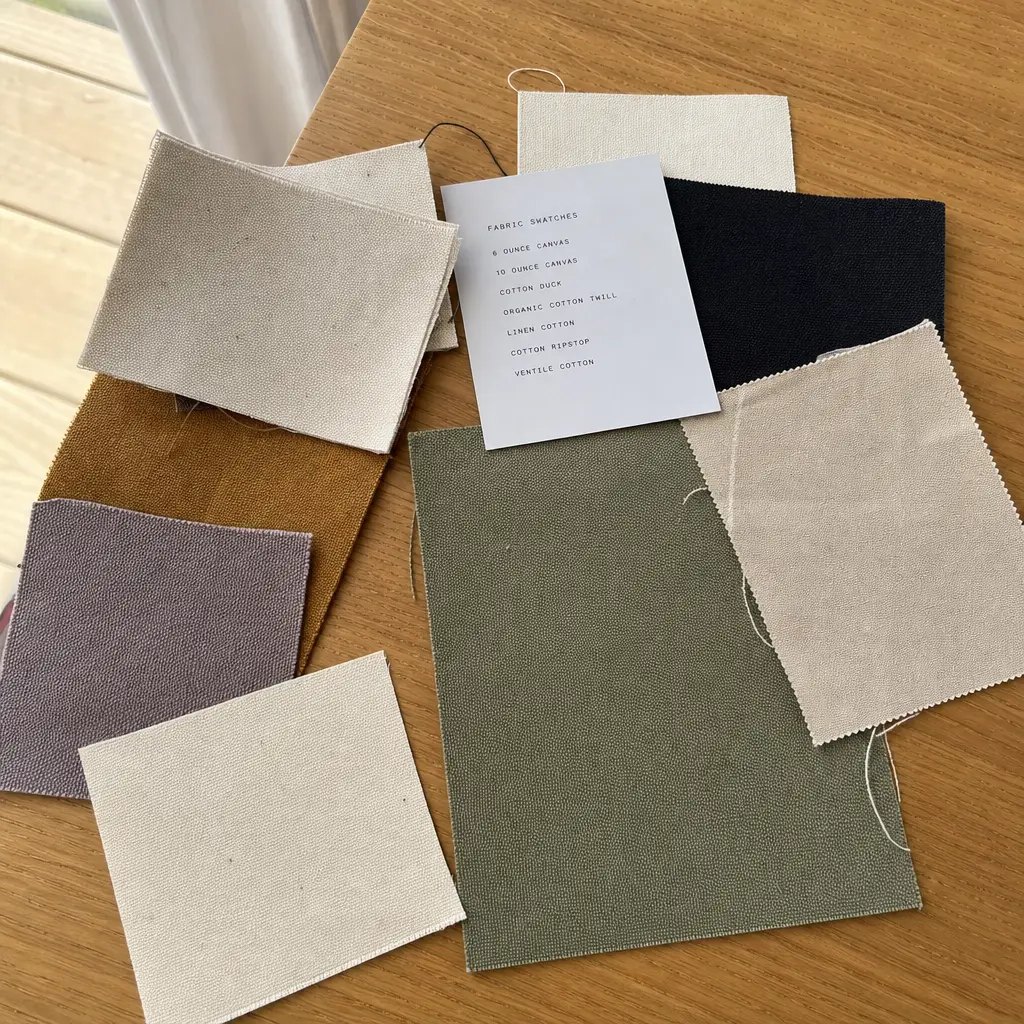
Fabric appearance must also be defined. Natural greige canvas often includes cotton seed flecks, shade variation, and a slightly rustic face. Some spa brands value that natural look; others need a cleaner surface near skincare and fragrance products. Bleached, dyed, washed, recycled-content, or certified cotton may be requested, but each can affect MOQ, lead time, shrinkage, hand feel, and color control. If certification matters, clarify whether the buyer needs fiber certification, fabric documentation, transaction certificates, or only supplier declarations.
- 8 oz: acceptable for cost-sensitive promotions, but less structured and more vulnerable to carton wrinkles.
- 10 oz: balanced choice for many private-label single-bottle spa wine carriers.
- 12 oz: stronger shelf presence and better support for two-bottle or higher-value gift programs.
- 14 oz and above: premium and durable, but increases CBM, carton weight, sewing complexity, and fold memory.
- Write fabric GSM tolerance into the PO, commonly +/-5% unless tighter control is required.
- Approve natural flecks, shade range, and surface slubs on a physical fabric swatch, not only in a digital image.
Handle, divider, seam, and bottom construction
Wine carriers fail at stress points, not across the middle of the canvas panel. A filled 750 ml wine bottle often weighs roughly 1.2-1.5 kg depending on bottle glass weight and contents. A two-bottle carrier can therefore carry about 2.4-3.0 kg before adding tags, inserts, or spa products. The construction must support that load at the handle joints, bottom seam, gusset corners, and divider attachment.
Handle specification should include material, width, drop, reinforcement, thread, and stitch density. Self-fabric handles give a consistent natural look. Cotton webbing handles can be stronger and more dimensionally consistent. Box stitch, cross stitch, bartack, or reinforcement patches are common solutions, but the buyer must approve the actual sample. A short handle may look neat but feel uncomfortable when loaded. A long handle may fold across the logo in the carton unless the packing direction is controlled.
Divider choice determines both usability and packing bulk. A sewn canvas divider feels premium and reusable, but it adds labor and thickness. A kraft board divider can be economical and may protect bottles during handling, but it is less durable for repeated use. A removable nonwoven or board insert can be useful when the same outer carrier is used for several seasonal kits. The divider height should prevent contact but still allow easy bottle insertion.
- Load test the sample using the actual bottle or equivalent dead weight, not an empty bag.
- Check whether handle stitching pulls, opens, or distorts after carrying and holding under load.
- For two-bottle carriers, confirm the divider stays centered when only one bottle is inside.
- Inspect bottom gusset corners because they carry concentrated bottle weight.
- Specify thread color, trimming standard, seam allowance, stitch density, and whether seam binding is required.
- If handles fold into the bag for packing, confirm they do not press a permanent mark into the logo panel.
Logo method, curing, and print-protection rules
Spa branding often uses muted colors, fine typography, botanical marks, and natural materials. Screen printing is usually practical for one to three solid colors on cotton canvas because it gives stable cost and good coverage at volume. Woven labels are useful for subtle branding and avoid large-area ink issues. Embroidery can feel premium for small logos, but it may pucker lighter canvas and can create thread backs inside the bag. Heat transfer can reproduce gradients and small details, but it needs adhesion and edge-lift testing on textured canvas.
The print method must be matched to carton packing. If screen-printed bags are stacked before the ink is fully cured, the logo can offset onto the next bag. If printed faces rub directly against carton walls, abrasion can dull the ink. If the bag is folded across the logo, the carrier may arrive with a crease through the brand mark. The artwork proof should show size, position from top and side edges, color reference, orientation, and whether the print face will touch another print face in the carton.
Request a print strike-off on the actual production canvas before bulk printing. Natural canvas changes perceived ink color, and heavier texture can affect edge sharpness. The approved standard should include acceptable color range, registration for multi-color artwork, ink coverage, dry rub, light wet rub, and offset resistance. For large front-panel logos, the packed-sample review is as important as the loose sample.
- Screen print: best for solid logos, short text, simple icons, and medium-volume private-label programs.
- Woven label: clean, subtle, and less vulnerable to fold-line cracking.
- Embroidery: premium for small marks but can pucker thin canvas and increase lead time.
- Heat transfer: useful for fine detail, but approve adhesion, hand feel, edge lift, and wash/rub behavior.
- Keep logos away from forced fold lines, seam bulk, and bottom gusset areas hidden when loaded.
- State logo placement tolerance, commonly +/-3 mm for standard bag production.
Carton packing methods for empty canvas wine carriers
Most canvas wine carriers are shipped empty and flat because this reduces CBM and keeps freight practical. Flat packing works only when the factory aligns handles, avoids hard folds through the printed panel, and does not over-compress the carton. The top and bottom layers need extra attention because they receive pressure from flaps, stacking, pallet movement, and warehouse handling. A clean carton liner plus top and bottom sheets can reduce dust transfer and rubbing on natural or light canvas.
Individual polybags are sometimes useful, but they are not automatically the best answer. They improve cleanliness and unit handling for direct-to-store shipments, but they add material cost, packing labor, carton volume, plastic use, and unpacking work. For many spa retailers using a central warehouse or 3PL, bundles of 10 or 20 pieces are more efficient. Bundling improves counting speed and allocation while using less packaging than individual bags.
Packing method should match the receiving process. A 3PL doing gift assembly may want clean counted bundles with scannable carton labels. A boutique chain may want store-specific cartons with retail tags already attached. A distributor may require no mixed cartons and clear PO marks. Once the packing method is approved, it should be frozen because it affects labor, carton count, CBM, inspection, and landed cost.
- Bulk flat pack: efficient and low material use, but needs clean handling and liner protection.
- Bundle pack: practical for counting, SKU control, and store allocation.
- Individual polybag: cleaner for shelf-ready goods, but adds cost, plastic, CBM, and unpacking labor.
- Paper band or kraft wrap: lower-plastic option for count control if the band does not mark the canvas.
- Stuffed or shaped packing: best presentation, but usually too high in CBM for large import orders.
- Retail tag at factory: useful for ready-to-sell programs, but tags must be protected from bending and abrasion.
Carton specification, weight limits, and pallet planning
Factories may try to maximize pieces per carton to reduce carton count, but the buyer should control carton weight and compression. For manual handling, many importers prefer cartons around 15-20 kg gross weight, unless the receiving warehouse has approved a different limit. A carton that is too heavy is more likely to be dropped or dragged. A carton that is too tightly packed can flatten handles, distort gussets, and create hard creases across the logo panel.
For ocean freight or long inland handling, a 5-ply corrugated export carton is usually safer than a light 3-ply carton, especially for heavier two-bottle carriers or stacked pallets. The buyer can also specify carton liner, inner poly liner, top and bottom sheets, moisture protection, carton sealing method, and pallet pattern. Carton strength should be chosen for the handling route, not for appearance. A clean-looking weak carton can still crush at corners and damage the first layer of bags.
CBM affects landed cost, but so does rework. Excessive compression may reduce freight slightly while creating steaming, sorting, or rejection costs at the spa warehouse. The RFQ should request estimated pieces per carton, carton dimensions, net weight, gross weight, carton material, total carton count, and CBM. After the approved sample and packing method are finalized, the supplier should update the packing list with final data.
- Use 5-ply export cartons for sea freight, heavier carriers, long storage, or multiple handling points.
- Top flaps should close naturally without workers forcing the carton down.
- Set maximum gross weight according to the buyer’s warehouse rule, commonly 15-20 kg for manual handling.
- Avoid mixed SKUs, colors, or print versions unless the receiving team approves the exact rule.
- Print carton marks on at least one long side and one short side for pallet visibility.
- Confirm pallet footprint, maximum pallet height, stacking direction, stretch wrap, and corner board requirements if palletized.
- Require final packing data before shipment, not after the container is loaded.
Sample approval should include a packed-sample review
A canvas wine carrier is not fully approved until the buyer has seen how it packs. Many defects appear only after folding, stacking, pressure, and carton contact. A loose sample may look clean on a table, while the packed version shows logo creasing, handle dents, divider distortion, or print rubbing. For meaningful approval, request one loose sample for construction review and one packed sample or packing simulation for fold direction, layer layout, bundle count, carton liner, and label format.
The approved sample record should include fabric weight, finished size, bottle fit, divider type, handle length, thread color, print method, print color, print position, packing method, carton quantity, and carton label. Changing any one of these can change cost and quality. Moving from 10 oz to 12 oz canvas may reduce pieces per carton. Adding individual polybags may increase CBM and labor. Changing a kraft divider to a sewn divider may change thickness and compression behavior.
First production should be checked before the full order is completed. Ask the factory to send photos of fabric rolls, cut panels, first sewn pieces, handle reinforcement, divider construction, logo printing, curing area, bundle packing, and carton marks. This does not replace final inspection, but it catches interpretation errors early. For holiday launches, resort openings, or membership events, early correction is much cheaper than discovering problems after cartons are sealed.
- Insert the actual bottle into the sample and check balance, mouth opening, and bottom support.
- Carry the loaded sample by the handles and observe handle joint distortion.
- Fold the bag in the planned mass-packing direction and review the logo after 24 hours under light pressure.
- Place printed faces against each other after curing to check offset risk.
- Insert and remove bottles several times to test divider position and seam stress.
- Review a packed sample or photo sequence showing bag orientation, bundle count, liner, top sheet, bottom sheet, and carton marks.
- Keep one approved sample with the supplier and one with the buyer or third-party inspector.
Lead time, MOQ, and cost drivers beyond unit price
Lead time includes more than sewing. Fabric sourcing, dyeing, washing, print strike-off approval, screen setup, curing, divider production, retail tags, barcode labels, inspection booking, and packing can all affect the schedule. A natural canvas single-bottle carrier with one-color screen print is usually simpler than a dyed two-bottle carrier with sewn divider, woven label, swing tag, individual polybag, and store-specific carton allocation.
MOQ is linked to material and process. Common natural canvas in a standard GSM may allow more flexible MOQ because the fabric is easier to source. Custom dyed canvas, unusual GSM, special webbing, certified cotton, metal hardware, custom labels, printed liners, or special cartons can raise MOQ. Printing may also have setup costs per color and design. If multiple spa locations need different logos or store labels, clarify whether the factory treats each artwork as a separate MOQ.
A useful quote should show what is included. One supplier may quote low based on thinner canvas, no divider, bulk packing, simple marks, and no liner. Another may include 12 oz canvas, reinforced handles, screen print, bundle packing, carton liner, desiccant, and accurate carton labeling. Procurement should compare like-for-like specs and calculate landed cost, not just unit price.
- Separate sample lead time, approval time, material time, production time, inspection time, and shipping time.
- Custom dyed or washed canvas can add time for lab dips, dyeing, shrinkage control, and shade approval.
- Screen printing requires setup, strike-off approval, curing, and possible rework time if color is rejected.
- Dividers, reinforced handles, seam binding, and high trimming standards increase sewing labor.
- Individual polybags, barcodes, retail tags, liners, and store allocation add packing labor and control points.
- Cost comparison should include fabric, labor, print setup, packing material, carton strength, inspection, inland freight, international freight, duty, and rework risk.
Pre-shipment inspection criteria for product and cartons
Final inspection should review both the product and the packing system. It is not enough to count bags on a table. Inspect cartons from different pallet positions and pull bags from top, middle, and bottom layers. Compression and rubbing are not equal across a carton. The top layer may show flap pressure, the middle may show compression, and the bottom may reveal dampness, corner crushing, or dirty contact if storage was poor.
Product inspection should focus on function and retail appearance. The carrier must fit the approved bottle, stand reasonably when loaded, carry the intended weight, and present the logo cleanly. Loose threads, skipped stitches, oil marks, dirty canvas, crooked dividers, and misaligned handles are serious issues when the product is sold in a premium spa environment. Agree on critical, major, and minor defect definitions before production starts. For many consumer goods inspections, buyers use AQL sampling, but the exact AQL level and defect classification should be specified by the buyer or importer.
Carton checks should be recorded with carton number, SKU, quantity, visible condition, and nonconformity details. If liners, desiccant, top sheets, barcodes, store labels, or mixed-carton rules are required, the inspector should verify them. A useful inspection report includes product measurements, bottle-fit photos, handle-load checks, print rub checks, odor notes, packing photos, carton labels, and final packing list consistency.
- Measure finished width, height, gusset, mouth opening, and handle drop against the approved tolerance.
- Check bottle insertion, removal, standing balance, bottom support, and divider position.
- Test handle strength using actual loaded weight or the agreed dead-weight method and hold time.
- Review logo clarity, color, placement, registration, curing, dry rub, light wet rub, and offset risk.
- Inspect divider seams, bottom seams, handle joints, skipped stitches, broken stitches, loose threads, and trimming quality.
- Open multiple cartons and verify carton number, SKU, quantity, bundle count, liner, desiccant, label accuracy, and carton condition.
- Check for odor, dampness, mildew risk, dust, oil marks, dye contamination, dirty fold lines, and print transfer.
- Segregate cartons with crushed corners, water marks, heavy bulging, wrong labels, or unauthorized mixed SKUs until the buyer approves disposition.
Specification comparison for buyers
| Spec decision | Recommended option | When it fits | Buyer risk to check |
|---|---|---|---|
| Fabric weight | 10 oz to 12 oz cotton canvas, approximately 340-407 GSM, with fabric weight tolerance stated on the PO, commonly +/-5% unless tighter control is agreed | Most private-label spa retail carriers, wine add-on packaging, resort gift programs, reusable bottle bags, and boutique displays needing structure without excessive freight volume | Below 8 oz may collapse around bottles and show carton wrinkles; above 14-16 oz can increase sewing difficulty, CBM, carton weight, needle breakage risk, and fold memory |
| Finished bottle fit | Pattern based on the largest approved bottle height, body diameter, shoulder width, base diameter, and any tissue, sleeve, ribbon, or hang-tag allowance | Single 750 ml wine carriers, two-bottle carriers, wine plus candle/oil kits, sparkling wine gifts, and resort welcome bundles | If the pattern is based on an unspecified 750 ml bottle, Champagne-style bottles may be too wide, Riesling-style bottles may be too tall, and wrapped bottles may jam at the mouth |
| Finished size tolerance | Typical sewn canvas tolerance: width/height +/-0.5 cm, gusset +/-0.5 cm, handle drop +/-0.5 cm, logo placement +/-3 mm, adjusted if design needs tighter control | Bulk orders where inspection must compare real production against an agreed standard rather than subjective appearance | Unstated tolerances cause disputes at inspection; canvas shrinkage, cutting spread, sewing tension, and pressing can change finished measurements |
| Divider design | Sewn canvas divider for reusable premium use; kraft board divider for lower-cost separation; removable insert when kitting changes by season | Two-bottle wine bags, wine and olive oil sets, wine and spa product bundles, or any carrier where products must not knock together | No divider or weak divider seams can allow glass-to-glass impact, crooked loading, customer complaints, and distorted bag shape after carton compression |
| Handle construction | Self-fabric or cotton webbing handles with box stitch, cross stitch, bartack, or buyer-approved reinforcement; handle width and drop specified | Retail checkout carry, event gifting, membership pickup, hotel room delivery, and customers walking with loaded bottles | Strong canvas does not compensate for weak handle joints; verify stitch density, thread, seam allowance, reinforcement size, and load test method |
| Recommended load test | Test with the intended filled bottle load plus buyer-agreed safety margin; for a two-bottle 750 ml wine carrier, test at no less than the real loaded weight and preferably with additional dead-weight stress if the program requires reuse | Any program where the bag will be carried loaded rather than only used as decorative packaging | Empty-bag inspection misses failures at handle joints, divider seams, bottom corners, and gusset seam intersections |
| Logo method | Screen print for 1-3 solid colors; woven label for subtle branding; embroidery for premium but small marks; heat transfer only after adhesion and edge-lift testing | Natural canvas spa branding, botanical marks, membership logos, private-label boutique programs, and medium-volume orders | Ink offset, poor curing, cracking on fold lines, embroidery puckering, registration shift, and heat-transfer edge lift can create retail rejects |
| Carton packing style | Flat-packed with aligned handles and protected print face; bundles of 10-20 pcs when count control or store allocation matters; individual polybags only when retail-readiness justifies it | Empty carrier imports where the spa retailer, distributor, or 3PL will assemble gift sets locally | Over-compression creates permanent creases, handle dents, distorted gussets, print transfer, and poor shelf presentation |
| Export carton specification | 5-ply corrugated export carton for ocean freight, heavier carriers, long inland handling, or stacked pallets; 3-ply only for light domestic movement and small cartons | Importers consolidating wine carriers with spa retail packaging, displays, paper gift boxes, or multi-SKU shipments | Weak cartons crush corners and mark the first/last bag layers; specify carton material, max gross weight, closure method, and pallet stacking expectation |
Buyer checklist before sampling
- Measure and name the bottle range before sampling: Bordeaux, Burgundy, Champagne/sparkling, Riesling, cider, spa beverage bottle, or bottle with sleeve, tissue, ribbon, label collar, or protective wrap.
- Define the sales use: wine-only boutique item, wine and spa product kit, retreat welcome gift, membership reward, holiday set, winery collaboration, 3PL kitting item, or direct-to-store retail shelf item.
- State finished bag dimensions, gusset depth, mouth opening, handle drop, handle width, divider type, bottom construction, and whether the carrier must stand upright when loaded.
- Select canvas weight by appearance, structure, sewing performance, and carton behavior. For most spa retail programs, quote 10-12 oz; use lighter canvas only for promotions and heavier canvas only when the premium look justifies freight and fold-memory tradeoffs.
- Specify fabric condition: natural greige, bleached, dyed, washed, recycled-content, organic cotton, or certified material if required. Ask whether certification covers fiber, fabric, factory, or finished product documentation.
- Approve bottle fit on a physical sample, including insertion, removal, standing balance, divider position, handle comfort, bottom support, and appearance after the bottle is removed.
- Define tolerances in writing: fabric GSM, finished size, handle drop, logo placement, carton quantity, carton weight, and acceptable shade variation for natural canvas.
- Confirm artwork method, logo size, placement, PMS or color reference, print curing time, rub test expectation, and whether printed faces may touch during carton packing.
- Approve the actual packed sample or a detailed packing simulation, especially for two-bottle carriers, heavy canvas, large front logos, retail tags, barcodes, or light-colored canvas.
- Specify whether bags ship flat, folded once, unfolded, stuffed, individually polybagged, paper-banded, bundled, retail tagged, barcoded, inner-cartoned, or store allocated.
Factory quote questions to send
- What exact canvas weight are you quoting in oz and GSM, and what tolerance will you guarantee in production?
- Is the fabric natural greige, bleached, dyed, washed, recycled-content, organic, or certified? If certification is requested, what document can be supplied and at what stage?
- What bottle dimensions did you use for the pattern: maximum bottle height, body diameter, base diameter, shoulder width, neck height, and any tissue or sleeve allowance?
- What are the finished bag dimensions, gusset depth, mouth opening, handle drop, handle width, bottom construction, seam allowance, and stitching method?
- Is the quoted design single-bottle, two-bottle, or mixed-product capacity, and what maximum recommended loaded weight are you using for construction?
- Which divider is included in the unit price: sewn canvas divider, kraft board divider, nonwoven divider, removable insert, or no divider? What is the divider thickness or fabric weight?
- What reinforcement is used at the handle joint: box stitch, cross stitch, bartack, extra patch, folded seam, or another method? What thread type and stitch density are planned?
- Which logo method is included, how many colors are included, what is the maximum print area, and are screen setup, embroidery digitizing, label mold, or strike-off charges separate?
- Can you provide a print strike-off on actual production canvas before bulk printing, and what curing time is required before stacking or packing printed bags?
- How will the bags be packed: bulk flat, bundled, individual polybag, paper band, retail tag, barcode label, inner carton, store allocation carton, or master carton?
Quality-control points to confirm
- Fabric GSM tolerance should be defined in writing, commonly around +/-5% for commercial cotton canvas unless tighter tolerance is agreed and costed.
- Finished size tolerance should reflect sewn canvas reality: often +/-0.5 cm for width and height, +/-0.5 cm for gusset and handle drop, with actual acceptance based on bottle fit and visual alignment.
- Logo placement tolerance should be stated, commonly around +/-3 mm for standard screen print, with separate limits for skew, registration, ink coverage, and color deviation against the approved strike-off.
- Handle pull strength should be tested using the intended filled-bottle load or agreed dead weight. Check handle joints, bottom seam, divider seam, and gusset corners, not only the handle strap itself.
- For a two-bottle 750 ml wine carrier, test with the real combined load of two filled bottles plus any gift inserts; if the product is marketed as reusable, define an additional safety margin and hold time.
- Print should pass dry rub and light wet rub checks after curing, with no obvious offset onto adjacent bags, tissue, liner sheets, polybags, retail tags, or carton walls.
- Divider position and seam strength must be checked by inserting and removing actual bottles several times. A flat divider measurement alone is not enough.
- Cartons should normally stay within the buyer’s handling limit, often 15-20 kg gross weight for manual warehouse handling unless the receiving warehouse has approved heavier cartons.
- Inspect product from top, middle, and bottom layers of cartons for crushed corners, hard creasing, dirty fold lines, dust, dampness, mildew odor, odor absorption, print transfer, and distorted gussets.
- Carton labels must match PO, SKU, style, color, artwork version, quantity, carton number, gross weight, destination, and any store allocation. Avoid mixed cartons unless approved and clearly marked.