Start With the Studio Use Case
A canvas wine carrier for a yoga studio has a different job from a winery gift bag or a generic promotional tote. It may sit on a narrow front-desk shelf, be handed out during a retreat, hold a sponsor bottle at a wellness event, or become part of a holiday member bundle with tea, candles, or recovery products. The right bulk order starts by naming that use case before discussing fabric, price, or MOQ.
For a retreat welcome kit, the buyer usually cares about neat presentation, easy staging, and dependable carrying for one event weekend. For front-desk retail, the same bag needs better finish, cleaner packing, barcode or hang-tag support, and an aesthetic that matches the studio's calm visual identity. For wine-and-yoga events, speed matters: staff may need to pack 100 bags in one afternoon without fighting wrinkled carriers, tangled drawstrings, or mixed carton contents.
The practical question is not whether the bag is 'premium.' It is whether the construction, branding, and packing match how the studio will actually use it. A natural canvas carrier with a small tonal logo may be right for a boutique wellness brand, while a bold one-color print may be better for an event sponsor. If the program includes retail resale, treat the carrier as merchandise, not packaging.
- Retreat gifting: prioritize tidy packing, soft wellness-brand colors, and reliable one-time presentation
- Retail shelf: prioritize consistent folding, hang tags or barcode labels, clean stitching, and upright display
- Member bundles: confirm the carrier can hold the selected bottle plus any insert card, tag, or small add-on item
- Event quantities: ask for carton counts that match how staff will stage tables or assemble gift bags
- Sponsor programs: confirm logo hierarchy before production if both studio and sponsor branding appear on the bag
Build the Spec Around Bottle Fit
Bottle fit is the first technical decision because it controls the pattern. A standard 750 ml wine bottle is not one universal shape. Bordeaux bottles are usually straighter, Burgundy bottles are wider through the body, and sparkling wine or champagne bottles often need more base width and height clearance. If your studio sells or gifts a specific bottle, send its diameter, height, and filled weight with the quote request.
A single-bottle canvas carrier normally needs enough gusset depth to let the bottle sit flat without stretching the side seams. Instead of treating a 4-inch gusset as a fixed rule, use it as a common starting point for many 750 ml bottles and confirm against the actual bottle. Wider bottles may need more depth, while a slim bottle can work in a narrower carrier if the buyer is optimizing for shelf space.
Shelf constraints matter for yoga studios. Front desks and boutique retail walls often have limited depth, and bulky carriers can look messy when stacked. Ask the supplier to provide finished dimensions, carton packing orientation, and a standing photo with the intended bottle. For retail, also ask whether the carrier can be folded flat without creating hard creases across the logo.
- Send bottle diameter, height, and filled weight with the RFQ
- Ask for a standing photo or video using the intended bottle size
- Confirm finished bag width, height, gusset depth, and handle drop
- For sparkling wine or larger bottles, request a revised pattern instead of forcing a standard wine-bag size
- For retail shelves, compare packed width and display orientation before approving the final pattern
Choose Canvas Weight Without Overclaiming
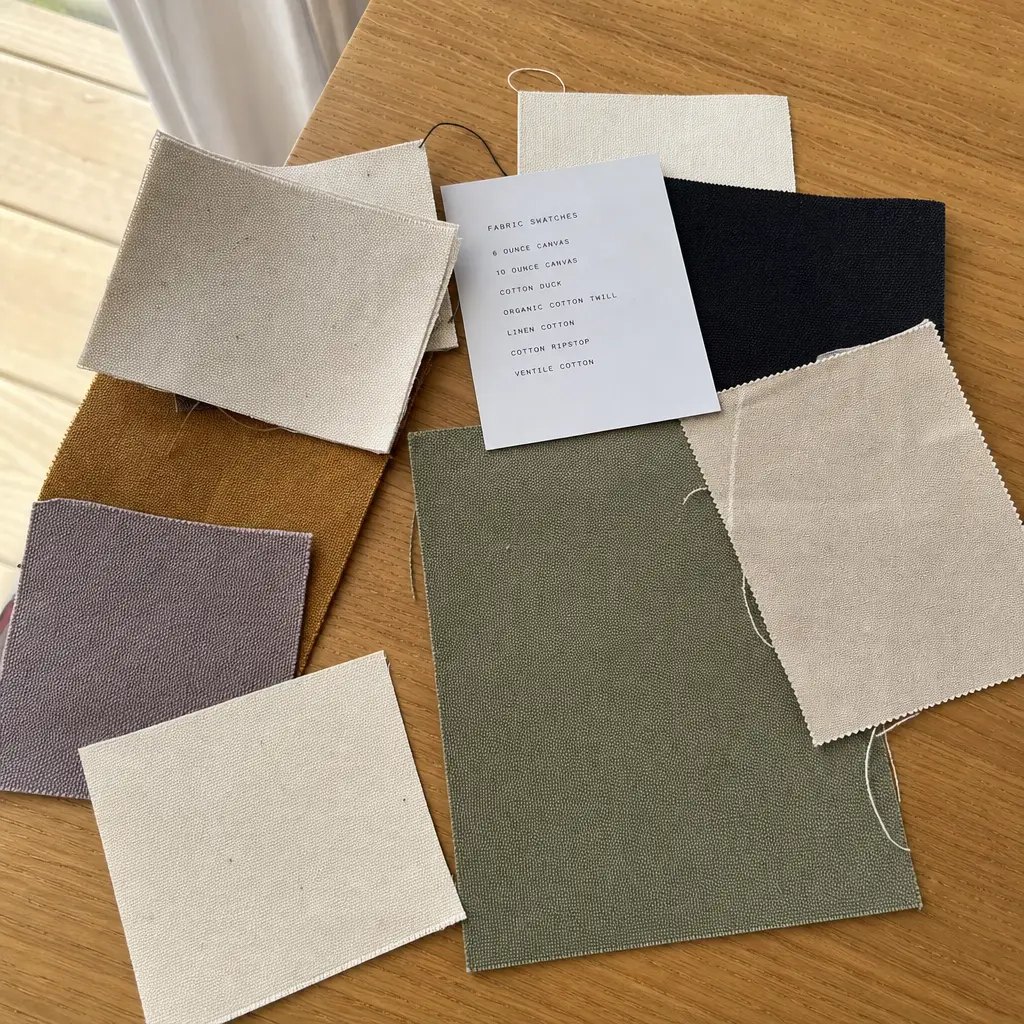
Canvas weight affects hand feel, sewing strength, print appearance, and landed cost. Many buyers discuss canvas in oz/yd2, while many factories quote GSM. Heavier canvas generally feels more substantial and gives stitching more material to grip, but it also increases fabric cost, shipping weight, and sometimes minimum order constraints. Lighter canvas can be acceptable for simple event giveaways if the bag is not expected to be reused often.
A practical range for many reusable single-bottle carriers is often around midweight cotton canvas, but the exact number should be confirmed by sample testing rather than treated as a universal minimum. The weave, yarn quality, finishing, and seam construction can matter as much as the headline weight. A well-sewn medium canvas may outperform a heavier fabric with poor seam allowance or weak handle attachment.
Ask suppliers to quote two fabric options: a cost-conscious option for event gifting and a more substantial option for retail or repeat-use programs. Require the same dimensions, logo method, closure, and packing in both quotes so the difference is truly fabric-driven. During sample review, compare stiffness, wrinkling, stitch pull, print clarity, and whether the carrier still looks aligned after carrying a filled bottle.
- Do not approve fabric weight from a quote line alone; review a swatch or sample
- Compare event-grade and retail-grade fabric options using the same construction spec
- Check weave tightness and surface smoothness if the logo has fine lines
- Avoid making fabric lighter to save pennies if the bag will be sold as merchandise
- Record the approved fabric weight, color, and hand feel in the signed sample notes
Handles and Stress Points
The handle is where a wine carrier usually proves whether it was engineered or only styled. A full bottle concentrates weight into a small stitched area, especially when a member carries it from a studio event to a car or hotel room. The attachment method matters more than the handle shape alone.
Self-fabric handles can look clean and match the canvas body. Cotton webbing handles can add strength and a slightly more utility-driven look. Cord handles may suit a minimal gift-bag design, but they can be less comfortable when carrying heavier bottles. None of these options is automatically correct; the buyer should match handle type to the channel, price point, and brand aesthetic.
For reusable retail carriers, request reinforced stitching at handle stress points, such as double rows, box stitching, or bartacks depending on the pattern. Ask for inside photos of the sample so you can see the seam allowance and reinforcement, not only the polished outside view. If the carrier will be bundled with a bottle and another item, test the combined weight rather than the bottle alone.
- Ask how the handle is attached and reinforced, not only what material it uses
- Request inside photos of handle stitching on the approved sample
- Test with the heaviest expected bundle weight
- Confirm handle drop is comfortable but not so long that the bottle swings excessively
- Use the same handle construction in the approved sample and bulk order
Branding That Fits Wellness Retail
Yoga studios often need quieter branding than liquor stores or large event sponsors. Natural canvas, off-white, black, sage, terracotta, or muted seasonal colors can work well, but the final choice should match the studio's mats, apparel, signage, and retail fixtures. A wine carrier that feels disconnected from the rest of the wellness retail environment is harder to merchandise, even if it is technically well made.
For most simple logos, screen printing is the usual bulk method on canvas because it gives clear color at practical volume. Water-based or pigment inks can create a softer hand, while plastisol-style prints may feel heavier. Embroidery can look elevated but may be costly on small panels and can distort fine lettering. Woven labels, cotton labels, hang tags, or a small side-seam label are useful when the studio wants subtle branding.
Logo placement should be tested on the actual front panel, not a mockup borrowed from a tote bag. Bottle carriers are narrow, so small text can become unreadable and large logos can feel cramped. Ask the supplier for a print area template and a pre-production photo with a ruler or reference marks. If the bag will sit folded on a shelf, confirm the fold does not run through the logo.
- Use smaller, cleaner artwork for narrow wine-carrier panels
- Ask for minimum line width and smallest readable text before sending final art
- Request a strike-off or printed sample on the actual canvas when color accuracy matters
- Consider woven labels or hang tags for a softer wellness-brand look
- Confirm logo visibility in the display position: upright, flat-packed, or bundled
MOQ, Quantity Planning, and Timing
MOQ is not only a supplier rule; it is tied to fabric purchasing, cutting efficiency, screen setup, sewing-line changeover, and packing labor. Custom wine carriers often become more economical once the quantity is high enough to spread these setup costs, but the threshold varies by supplier, fabric color, print method, and current factory workload. Treat any advertised MOQ as a starting point, then ask what changes if you adjust fabric, logo, or packing.
Yoga studios should plan quantities around real program needs. A retreat may need 80 to 150 pieces plus extras for staff, speakers, and damaged goods. A holiday member bundle may need 300 to 1,000 pieces depending on membership size and sales forecast. A retail program may be better ordered in smaller replenishment lots if cash flow and storage space are tight, even if the unit cost is higher.
Ask for tiered pricing at practical breaks such as 250, 500, 1,000, and 2,000 pieces if those quantities are relevant to your program. Also ask whether unused sample screens, fabric stock, or labels can support a repeat order. For event-driven orders, build the calendar backward from the in-hand date and include sample revision time, inspection, shipping, customs, and receiving.
- Forecast quantity by program, not by the supplier's preferred MOQ alone
- Include extras for sample archives, staff use, event overage, and possible defects
- Ask for tiered pricing only at quantities you could realistically buy
- Confirm whether MOQ applies per fabric color, print color, logo version, and packing style
- Do not start bulk production until the event date, shipping method, and inspection window are workable
Packing for Retail, Retreats, and Storage
Packing is often where a good product becomes hard for a studio team to use. Bulk-packed carriers may be fine for an internal event where staff will assemble everything backstage. Retail-ready carriers need cleaner presentation, SKU separation, and protection from dust. If a studio has limited storage, carton size and folding method become just as important as unit price.
Individual plastic bags are not automatically the best answer for every wellness brand. They protect against dust and handling marks, but some studios prefer paper belly bands, tissue wrap, or bulk cartons with inner bags to reduce visible plastic. The right choice depends on retail expectations, sustainability positioning, and how long the goods will sit in storage before use.
Ask the supplier to quote packing options separately. Useful details include pieces per inner pack, pieces per master carton, carton dimensions, gross weight, carton marks, SKU labels, and whether hang tags or barcode stickers are applied at the factory. For retreat kits, request carton counts that match event assembly: for example, cartons of 50 may be easier for staff than mixed cartons of 83.
- Bulk pack: lowest cost, suitable for internal event assembly
- Individual bag: cleaner for retail, storage, and third-party fulfillment
- Paper band or hang tag: useful for wellness brands that want less visible plastic
- SKU separation: important when ordering multiple colors, logo versions, or bundle types
- Carton planning: match carton count to how the studio will receive, store, and stage the bags
Supplier Comparison and Quote Control
A low unit price is not useful unless you know what it includes. Two quotes can look similar while using different fabric weights, different handle reinforcement, different logo methods, different packing, and different shipping terms. For procurement buyers, the goal is to normalize the quote before negotiating price.
Send the same spec sheet to each supplier and require them to identify exceptions. If one supplier quotes a lower price, ask whether the difference comes from fabric, print, closure, packing, MOQ, payment terms, or freight. Do not let the quote bundle everything into one vague line if you need to compare suppliers side by side.
The strongest supplier for a yoga studio is often the one that can translate brand and event requirements into production details: subtle logo placement, clean retail packing, small-batch sample support, and clear lead-time milestones. For first orders, responsiveness during sampling is a meaningful signal. If the supplier cannot answer construction and packing questions before payment, defect resolution after shipment is unlikely to be easier.
- Normalize quotes by fabric, size, print method, closure, packing, MOQ, and trade term
- Ask each supplier to list assumptions and exclusions in writing
- Compare sample capability and revision process, not only bulk price
- Check whether the supplier supports third-party inspection before balance payment
- Keep FOB product cost separate from freight so landed cost is visible
Quality Control Before Shipment
Quality control should be built into the order before production starts. A useful PO names the approved sample, dimensions, materials, print placement, packing method, carton marks, inspection standard, and defect remedies. Without those details, a dispute becomes a matter of opinion.
For first orders or larger quantities, a third-party inspection can check finished goods before the balance payment is released. The inspection does not need to be complicated, but it should cover the risks that matter for a bottle carrier: fit, handle strength, bottom stability, print alignment, closure function, visible sewing defects, and packing accuracy. AQL levels can be used when appropriate, but the buyer should also define critical defects that are not acceptable, such as a handle pulling loose under a reasonable load test.
Receiving inspection at the studio or warehouse is still valuable. Open cartons from different positions in the shipment, confirm count and SKU labels, check for moisture or odor, and compare random pieces to the approved sample. Photograph defects immediately and keep carton labels visible in the photos. Fast documentation improves the chance of a practical resolution.
- Keep one signed approved sample with procurement or operations
- Define critical defects before production starts
- Inspect handle attachment, bottom gusset, print position, closure, and packing
- Open cartons from different parts of the shipment during receiving
- Document defects with photos, quantities, carton numbers, and measurements
Landed Cost and Margin Reality
The factory unit price is only one part of the buying decision. A studio also needs to account for sample fees, artwork setup, packing upgrades, inspection, inland transport, ocean or air freight, duties, customs brokerage, bank fees, receiving labor, storage, and any local tagging or bundling work. Duty rates and classifications should be confirmed with a customs broker or freight forwarder because material, construction, and destination can change the outcome.
Avoid relying on universal freight multipliers or fixed duty percentages. Instead, ask for carton dimensions, gross weight, pieces per carton, FOB price, and estimated freight as separate lines. Then calculate a landed cost per unit for the actual shipping method and destination. Air freight may be justified for a small urgent event order, but it can overwhelm margin on a bulky low-unit-price product.
For retail programs, compare landed cost to the planned selling price and the labor needed to merchandise the item. For member gifts, compare landed cost to the total bundle budget. For sponsor-funded events, clarify whether the sponsor is paying for logo setup, co-branded samples, or rush shipping. The best order is not always the cheapest unit price; it is the spec that arrives on time, fits the bottle, looks right in the studio, and leaves enough margin or budget room to make the program worth repeating.
- Calculate landed cost before approving the PO, not after shipment
- Confirm duty classification with a broker or forwarder when importing
- Separate product cost, freight, inspection, packing, and local handling in your budget
- Model event, retail, and member-gift economics differently
- Leave contingency for sample revisions, rush freight, or small replacement quantities
Specification comparison for buyers
| Supplier option | What to verify | Commercial advantage | Buyer risk to control |
|---|---|---|---|
| Direct sewing factory | fit-test photos with reference bottle, bottom reinforcement close-up, handle load proof, and final carton photo set | Better sample-to-bulk control and faster production feedback | May be weaker on export paperwork or branded packing unless checked early |
| Trading company | Factory name, production photos, trim-source proof, and who owns QC decisions | Can coordinate small mixed orders and extra services | Markup can hide real factory capability and slow defect decisions |
| Specialized bag workshop | bottle fit, bottom reinforcement, handle or cord strength, divider option, seam allowance, and upright stability | More practical for detailed construction, trims, and repeat programs | Capacity may be limited during peak seasons |
| Low-price general supplier | cotton canvas, jute, felt, nonwoven, or laminated paper sized to bottle diameter, weight, and condensation risk | Useful for simple promotional runs with loose specs | Material downgrades, weak packing, and vague inspection scope can erase savings |
| Retail-ready supplier | upright or flat packing, bottle-protection insert, carton count, moisture control, and retail display orientation | Can handle labels, SKU separation, carton marks, and receiving rules | Higher unit cost must be compared against reduced warehouse work |
| Compliance-focused supplier | Fabric records, labeling review, test plan, and production traceability | Safer for retail programs and repeat brand orders | Documentation claims need evidence, not only sales language |
| Local sample room plus bulk factory | Signed sample, bulk factory handoff, first-piece photos, and deviation owner | Good for complex branding before large production | Sample room quality may not match bulk line unless handoff is controlled |
Buyer checklist before sampling
- Define the studio use case first: retreat welcome gift, front-desk retail item, wine-and-yoga event takeaway, holiday member bundle, or sponsor gift
- Send bottle dimensions in the RFQ, including diameter, height, and whether the program includes Burgundy, Bordeaux, champagne, or non-wine bottles
- Request fabric weight in GSM or oz/yd2, plus a swatch or fabric record; choose the weight based on reuse expectations, not only price
- Approve a sewn pre-production sample with your actual logo, closure, handle, gusset, and packing before bulk cutting starts
- Fit-test the sample with the heaviest bottle you expect to use and confirm it stands upright on the type of shelf, counter, or gift table you use
- Check handle attachment from the inside of the bag; require reinforced stitching or bartack at stress points when the carrier is intended for reuse
- Confirm logo size and placement against the real front panel width so the design reads cleanly without looking oversized on a narrow bottle bag
- Choose packing by channel: bulk pack for back-office event staging, individual polybag or paper band for retail, and SKU labeling for multi-style programs
- Ask for sample, production, inspection, and shipping dates as separate milestones instead of one broad lead-time promise
- Quote FOB and freight separately, then add duties, inspection, receiving labor, packaging, and any labeling work before setting retail or bundle pricing
Factory quote questions to send
- Which canvas weights do you normally use for single-bottle carriers, and can you quote two options with GSM or oz/yd2 stated clearly?
- Can you make the carrier to fit our bottle dimensions, and will you provide a photo or video of the sample standing upright with that bottle size?
- What is your MOQ per design, per fabric color, and per print color? Are stock canvas colors available at a lower MOQ?
- What sample types are available: blank construction sample, printed sample, and sealed pre-production sample? What is the cost and timing for each?
- How are handles attached, and can you send inside and outside photos of the reinforcement on the approved sample?
- Which branding methods do you offer for canvas: water-based screen print, pigment print, embroidery, woven label, hang tag, or heat transfer?
- What artwork limits should we know before finalizing the logo, including minimum line width, smallest readable text, print area, and color matching method?
- What packing choices can you quote for studio use and retail use, including bulk pack, individual bag, paper belly band, hang tag, barcode label, and inner carton?
- Can you provide a lead-time breakdown for material purchase, cutting, printing, sewing, packing, final inspection, and shipment release?
- What quality standard do you use for final inspection, and will you allow our inspector or agent to inspect before balance payment?
Quality-control points to confirm
- Confirm finished dimensions against the approved sample, including height, width, gusset depth, handle drop, and closure position
- Measure fabric weight when practical using a GSM cutter or agreed test method; investigate material that is materially lighter than the approved swatch
- Check bottle fit with the buyer's stated bottle dimensions and verify the carrier stands upright on a flat surface without severe leaning
- Inspect handle stitching from inside and outside; look for skipped stitches, loose bartacks, weak seam allowance, or fabric tearing near stress points
- Perform a practical load test using the heaviest expected filled bottle or an agreed test weight for a short carry and hang period
- Check the bottom gusset for flat sewing, balanced corners, and seam strength; reject obvious twisting that prevents stable standing
- Measure logo placement from the top edge and side seams; use the approved sample tolerance instead of relying on visual judgment only
- Review print quality for cracking, heavy ink hand, bleeding, poor coverage, wrong color, or unreadable small text
- Open and close the closure several times to check button security, drawstring movement, snap alignment, or hook-and-loop grip if used
- Check that packing matches the PO: bulk count, individual bags, hang tags, barcode labels, carton marks, SKU separation, and moisture-control instructions