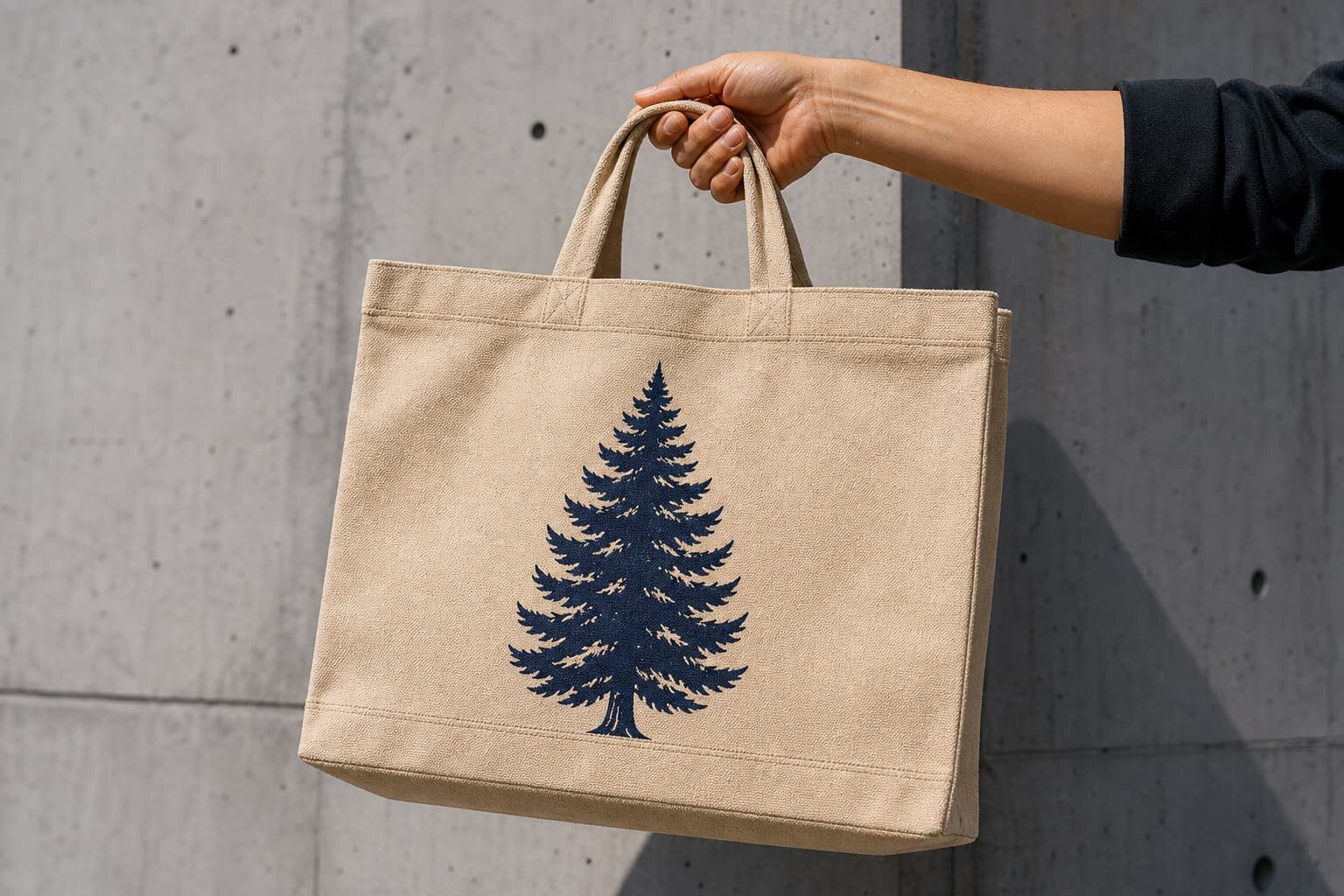
Why reorder planning matters for trade show totes
A canvas trade show tote reorder looks simple until the buyer has to match last season's bag, meet an event warehouse deadline, and split quantities across several show locations. The common mistake is treating the reorder as a normal promotional item purchase. In factory terms, a reorder still depends on fabric availability, dye or natural canvas shade, printing setup, sewing line capacity, carton packing, and export timing.
For procurement teams, the main buying problem is not only price. It is continuity. A visitor who receives a weaker bag this year notices the difference. A distributor who receives mixed cartons without clear marking loses time before the event. A brand owner who approves artwork too late pays for air freight or accepts a rushed print. Reorder planning gives the factory enough information to repeat the product while giving the buyer enough control to compare quotes fairly.
- Treat the reorder as a controlled production repeat, not a casual restock.
- Base the schedule on the event receiving date, not only the public opening date.
- Keep one approved reference sample from the last order for fabric, print, and sewing comparison.
- Separate design decisions from production decisions so artwork approval does not block fabric purchasing.
Start with usage rate, not attendee count
Many buyers calculate trade show tote quantity from the official attendee number. That is usually too broad. Some events have multiple badge types, repeat visitors, VIP kits, sponsor bags, booth staff packs, press packs, and distributor samples. A better reorder forecast starts with the actual issue rate from the previous event or a realistic distribution plan for the next event.
If the last order was 5,000 pieces and 4,200 were used at the show, the real issue rate may be closer to 84 percent of available stock, not the full attendee count. If the next event adds a larger booth, a co-sponsor insert, or a catalog-heavy campaign, the bag may be issued more actively. If the brand is switching from open giveaway to qualified lead giveaway, the quantity may drop but the bag quality expectation often increases.
- Record how many bags were shipped to the venue, how many were handed out, and how many returned.
- Add separate lines for staff kits, VIP gifts, sales samples, and damaged or lost cartons.
- Plan a practical overage, often 5 to 10 percent, when the event deadline cannot tolerate shortages.
- Avoid ordering exact quantities when cartons are packed in fixed counts such as 50 or 100 pieces.
Keep the canvas specification repeatable
Canvas tote buyers often compare quotes using only the term 10 oz, 12 oz, or heavy canvas. That is not enough for a controlled reorder. Different mills and factories may describe fabric weight differently, and finished feel also depends on yarn count, weave density, washing, bleaching, and finishing. For trade show totes, 10 oz to 12 oz canvas, roughly 280 to 340 GSM, is a practical range for a bag that needs to feel substantial without becoming expensive or bulky to ship.
If the first order used natural cotton canvas, shade variation is normal, but the buyer should still define an acceptable range. Natural canvas can look cream, beige, or slightly speckled depending on cotton source and finishing. If the bag carries a clean corporate logo, small shade changes may affect perceived brand color. The reorder specification should identify body GSM, handle material, fabric color, and whether the bag is unwashed, washed, bleached, dyed, or coated.
- Ask for both oz and GSM because suppliers may convert fabric weight differently.
- Specify whether the handles must use the same canvas as the body or a different webbing.
- Keep a physical swatch or retained sample in the buying office for quote comparison.
- Do not approve a cheaper canvas unless the finished bag weight and hand feel are still acceptable.
Define the bag structure before asking for a lower price
A quote can drop quickly if the supplier changes the tote from gusseted to flat, shortens handles, removes reinforcement, or uses thinner handle fabric. Those changes may not show clearly in a one-line quotation. For trade show use, the structure affects how the bag sits on a visitor's shoulder, how many catalogs it can hold, and whether it survives a full day on the exhibition floor.
A common specification for event distribution is a bag around 38 x 42 cm with an 8 to 10 cm bottom gusset and shoulder-length handles. This is not a universal rule, but it gives enough capacity for brochures, small sample boxes, notebooks, and personal items. If the event content is light, a flat tote may be acceptable. If the bag must carry catalogs, wine-size gifts, or retail samples, the gusset and handle reinforcement become more important than saving a few cents on fabric.
- State finished width, height, gusset depth, and handle drop in the RFQ.
- Define the handle attachment method, such as box stitch with cross reinforcement.
- Ask whether the bottom corners are squared, folded, or simply sewn flat.
- Check whether seam allowance and shrinkage are included in the pattern calculation.
Choose print method based on reorder stability
For most canvas trade show tote reorders, screen printing is the practical choice for solid logos and campaign graphics. It gives stable unit cost at volume, good opacity on natural canvas, and repeatable placement when the factory keeps the screen artwork file. If the artwork has gradients, photographic detail, or many small colors, heat transfer or digital printing may be considered, but the buyer should check hand feel, edge durability, and cost at the target quantity.
The key reorder risk is color and position drift. A logo printed 20 mm lower than last season may not matter to a casual user, but it matters to a brand team comparing samples. The RFQ should include logo size, print location from top edge and side seam, Pantone reference, print method, and whether the reverse side is blank or printed. For repeat orders, ask the factory to confirm if the same screen, film, or digital file can be reused or if setup is charged again.
- Use screen print for solid 1 to 3 color trade show logos when artwork is not highly detailed.
- Request a printed strike-off when changing ink color, canvas shade, or artwork scale.
- Check ink curing because under-cured print can block, smell, crack, or transfer during packing.
- Avoid approving artwork only by digital mockup; physical placement on the actual bag matters.
Understand MOQ logic before splitting designs
MOQ is not only a factory sales number. For canvas tote reorders, MOQ is affected by fabric purchasing, cutting efficiency, sewing line setup, print setup, and packing separation. A buyer may request 10,000 pieces total, but if that is split into ten artwork versions of 1,000 pieces each, the production complexity is closer to ten small runs than one large run.
This matters for distributors and regional marketing teams. If each region wants a separate event logo, the buyer should ask the factory to quote the shared blank bag body and each print version separately. Sometimes the most efficient method is to produce one common bag and use a smaller secondary print, woven side label, or removable event insert. The best option depends on branding requirements, timing, and whether leftover stock can be used at future events.
- Ask for MOQ by fabric color, bag size, print design, and carton mark.
- Confirm whether setup charges apply per print color and per artwork version.
- Group regions under one base specification when possible to protect price and lead time.
- Do not hide split-shipment requirements until after the supplier quotes one bulk delivery.
Build a reorder timeline from the receiving deadline backward
The safest reorder schedule starts from the date the goods must be received, counted, and prepared by the event warehouse. That date is usually earlier than the trade show opening date. Event kit packing, booth shipment, customs clearance, inland trucking, and warehouse booking can all consume time before the first visitor receives a bag.
A practical timeline includes artwork confirmation, sample approval, fabric preparation, cutting, printing, sewing, trimming, inspection, packing, export documentation, freight, customs, and final delivery. For repeat orders, some steps may be shorter because the specification is already known. However, if the buyer changes fabric color, increases print complexity, or splits delivery destinations, the reorder should not be treated as a simple fast repeat.
- Set the purchase order deadline based on factory production time plus freight and receiving buffer.
- Approve artwork and print placement before fabric cutting if panel printing is required.
- Allow extra time around major holiday periods, peak promotional seasons, and port congestion.
- Keep a decision log so late changes are visible to sales, procurement, and the factory.
Sample checks that prevent repeat-order surprises
A repeat order does not always need a full development sample, but it does need a reference control. If the factory is using the same material, same pattern, same logo, and same print method, a retained sample and updated confirmation photos may be enough for low-risk reorders. If any material, print, size, or packing detail changes, the buyer should request the appropriate sample before bulk production.
The most useful sample checks are not complicated. Measure the bag, weigh it, compare fabric hand feel, fold the printed area, inspect handle stitching, and test the bag with realistic event contents. If the sample is approved only for appearance, hidden problems may show up after 5,000 pieces are packed in cartons. For a trade show deadline, discovering a print cracking problem after shipment is far more expensive than spending time on a proper strike-off.
- Use a blank sample to confirm size, fabric, handle length, and sewing construction.
- Use a print strike-off to confirm ink color, logo scale, registration, and curing.
- Use a pre-production sample when changing any approved component or factory process.
- Keep one signed or labeled approved sample at the factory and one with the buyer.
Packing decisions affect event handling costs
Packing is often treated as a back-end detail, but for trade show totes it affects carton count, warehouse labor, print condition, and booth setup speed. Flat packing in 50 or 100 pieces per export carton is common because it is easy to count and distribute. Individual polybags may improve cleanliness for retail-style gifting, but they add cost, plastic use, and unpacking labor at the venue.
The buyer should confirm carton size, gross weight, pieces per carton, carton marks, and whether mixed artwork versions are separated. Over-compressed cartons can create hard fold lines across the print. Loose cartons can increase freight volume and cause messy presentation. If the totes are going into booth kits, the packing plan should match the kit builder's receiving process rather than only the factory's default carton standard.
- Ask for carton dimensions and gross weight in the quote stage, not after production.
- Mark cartons by artwork version, event city, sponsor, or distribution group when needed.
- Avoid mixed cartons unless the warehouse has agreed to that receiving method.
- Confirm whether inner polybags, paper bands, or carton liners are required.
Quote data that makes supplier comparison fair
A canvas tote quote should be specific enough that another supplier can quote the same product. If one quote includes 12 oz canvas, long handles, two-side screen print, export cartons, and inspection support, while another quote lists only canvas tote with logo, the lower number may not be the better offer. Procurement teams should ask suppliers to break down the main assumptions so commercial comparison is based on the same product.
The quote does not need to expose every factory cost, but it should identify the specification, MOQ, sample charge if any, setup charge, packaging, production lead time, payment terms, trade terms, and validity period. For reorder programs, ask whether the supplier can keep the approved production file and repeat the same pattern. This reduces the chance that the next purchasing cycle starts from zero with a new interpretation of the bag.
- Include fabric GSM, bag size, gusset, handle length, print method, print colors, and packing in the RFQ.
- Ask suppliers to state what is excluded, such as testing, individual bags, palletizing, or destination delivery.
- Compare lead time after final artwork approval, not from the date of first inquiry.
- Use the same incoterm when comparing freight-sensitive quotes.
Specification comparison for buyers
| Spec decision | Recommended option | When it fits | Buyer risk to check |
|---|---|---|---|
| Fabric weight | 10 oz to 12 oz canvas, usually about 280 to 340 GSM | Most trade show giveaways, sponsor bags, catalog inserts, and moderate booth traffic use | Do not compare only by ounce label; ask for GSM, yarn feel, and finished bag weight |
| Bag size | Around 38 x 42 cm with 8 to 10 cm bottom gusset | Fits brochures, small boxes, apparel samples, water bottle, and event handouts | Flat tote quotes may look cheaper but reduce capacity and perceived value |
| Handle construction | Self-fabric canvas handles, cross-stitched at stress points | Better for loaded event bags and repeat visitor use | Ask whether handle GSM matches body fabric or uses thinner substitute material |
| Print method | Screen print for solid 1 to 3 color logos; heat transfer only for detailed artwork | Screen print suits most reorder programs because color matching and unit cost are stable | Check ink hand feel, cracking after folding, and registration on repeat print runs |
| Reorder MOQ | Use the factory MOQ by color, size, and print design, not only total quantity | Useful when several event regions share one bag body but need different logo panels | Small split designs can trigger setup charges, print plate charges, and packing complexity |
| Packing method | Flat pack 50 or 100 pieces per export carton with inner polybag only if required | Best for distributor receiving, warehouse counting, and booth kit preparation | Vacuum or over-compressed packing can crease print panels and slow event preparation |
Buyer checklist before sampling
- Confirm the event calendar, warehouse receiving deadline, and booth kit packing date before asking for production lead time.
- Calculate reorder quantity from actual previous issue rate, not only registered attendee count.
- Lock one approved bag size, fabric GSM, handle length, print position, and carton packing standard for all repeat orders.
- Ask the factory to quote body fabric, handle fabric, printing, packing, inland transport, and export terms clearly enough to compare suppliers.
- Request a pre-production sample or retained sample reference when changing fabric lot, print color, or bag size.
- Approve the print proof with logo dimensions, Pantone reference, print distance from top edge, and tolerance.
- Check carton dimensions, gross weight, pieces per carton, and pallet loading if the goods go through a 3PL or event warehouse.
- Build extra stock for sample pulls, internal requests, distributor shortages, and last-minute sponsor additions.
- Use a reorder trigger point based on production lead time plus freight time plus receiving buffer.
- Keep a specification sheet and inspection criteria from the first order so the second quote is not treated as a new custom project.
Factory quote questions to send
- What is the exact fabric weight in oz and GSM for the bag body and handles, and can you provide a cutting or swatch for approval?
- Is the quoted canvas natural, bleached, dyed, recycled blend, or organic cotton, and does the price change by color?
- What is the MOQ by bag size, fabric color, print design, and shipment lot?
- Which print method are you quoting, and what is included for screen setup, color matching, sample print, and repeat setup?
- What are the standard size tolerances after sewing and pressing, especially for width, height, gusset, and handle drop?
- How many pieces per export carton, what are the carton measurements and gross weight, and can the packing be adjusted for event kit distribution?
- What sample types are available before bulk production: blank sample, printed strike-off, pre-production sample, or top-of-production sample?
- What is the production lead time after deposit and artwork approval, and what part of the schedule is fabric preparation versus printing and sewing?
- Can you keep the same approved sample or production file for future reorders, including fabric GSM, handle pattern, sewing method, and print position?
- What information do you need in the purchase order to avoid treating the reorder as a new development?
Quality-control points to confirm
- Measure finished bag width, height, gusset, and handle drop against the approved tolerance, not only against the paper pattern.
- Check fabric GSM with a cutting sample or approved swatch because canvas weight variation changes bag hand feel and load performance.
- Inspect handle attachment for box stitch or reinforced cross stitch, skipped stitches, loose threads, and uneven handle length.
- Rub test the print area lightly after curing and folding to check ink adhesion, cracking, and excessive tackiness.
- Compare print color against approved Pantone or physical strike-off under consistent light, especially for repeat events.
- Load test representative samples with expected event contents such as catalogs, bottles, and samples, then inspect handle seams and bottom corners.
- Verify carton quantity, inner packing, carton marks, and mixed design separation before shipment.
- Check whether natural canvas shade variation is within the approved range before printing all panels.