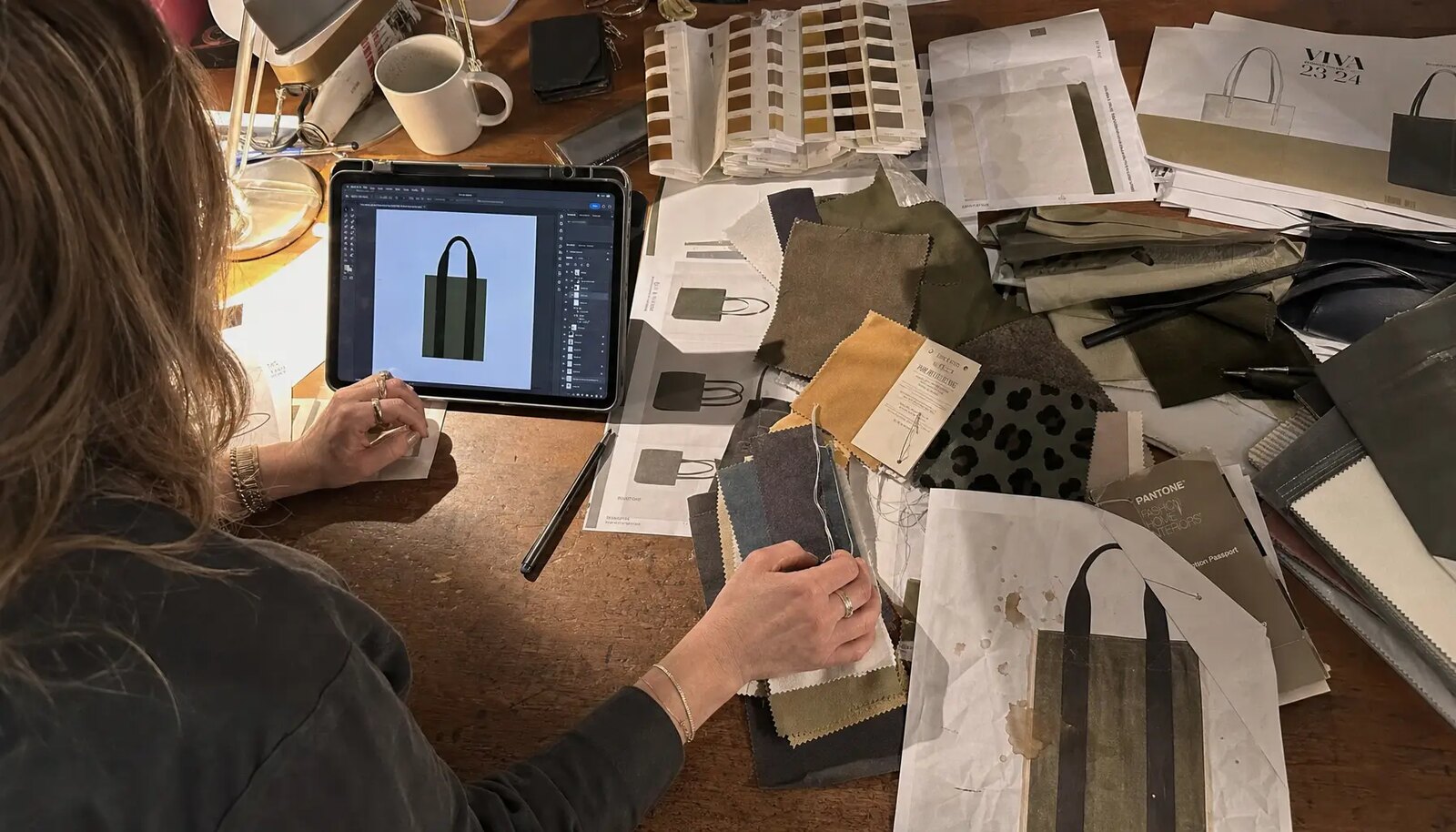
Start With the Retail Job, Not the Fabric Weight
For hotel retail, a canvas tote is not just a carry bag. It is a shelf product, a margin item, and often a brand object. A tote sold in a resort gift shop has to look intentional under retail lighting, fit a price point guests will accept, and still survive real use. A tote used as a welcome amenity has a different job: it may need a softer fold, lower landed cost, cleaner packing, and less bulk in the room or back office.
That is why the first decision should be the use case, not the ounce number. A paid souvenir bag, a grocery shopper, a spa boutique carrier, an in-room amenity, and an event handout each push the spec in different directions. The same bag can be too stiff for amenity distribution and too soft for retail display. If the brief starts with a vague phrase like heavy canvas grocery tote, suppliers will fill in their own assumptions and the quotes will not compare cleanly.
The buyer should also decide how the bag will be merchandised. A tote hanging on a wall hook needs handle length and shape consistency. A tote folded on a shelf needs predictable creasing and a front panel that still looks clean after packing. A tote handed out with guest materials needs low odor and a compact footprint. Those commercial details should drive the fabric weight, gusset depth, handle choice, and packing format.
- Paid retail: prioritize shelf presence, print consistency, stronger finishing, and barcode-ready packing.
- Amenity use: prioritize compact fold, cost control, clean branding, and low odor.
- Grocery use: prioritize gusset stability, handle comfort, seam strength, and load performance.
- Boutique merchandise: prioritize visual finish, label detail, and repeat-order consistency.
- Multi-property programs: prioritize reorder control and simple packing logic.
Read Oz and GSM the Same Way Every Time
Canvas weight is commonly discussed in ounces, while mills and inspectors often work in GSM. For procurement, both matter. Roughly speaking, 8 oz canvas often lands around 270 GSM, 10 oz around 340 GSM, 12 oz around 400 GSM, 14 oz around 475 GSM, and 16 oz around 540 GSM. Those are working ranges, not fixed conversions. Yarn count, weave density, finishing, washing, and moisture can move the reading.
The purchase order should state both units and the measurement stage. A fabric can read differently before washing, after dyeing, after enzyme treatment, or once it has been pre-shrunk. If the supplier quotes 12 oz but the inspection standard says 400 GSM finished fabric, both sides need to agree on whether the number applies to greige cloth, post-process cloth, or the cut panels used for inspection.
Avoid vague language like thick, premium, or heavy-duty unless the spec also carries numeric thresholds. A loosely woven 12 oz canvas may feel softer than a tighter 10 oz canvas. A washed fabric may feel more premium but can shrink and shift shade. For hotel retail, the best fabric is the one that matches the use case and the approved sample, not the one with the highest number on a brochure.
- Quote both units so mills, factories, and inspectors are reading the same spec.
- Define the stage: raw, dyed, washed, pre-shrunk, or finished fabric.
- Use one method across suppliers so comparisons stay clean.
- Approve handfeel separately because GSM alone does not define stiffness or drape.
- Check opacity if contents or internal seam shadows may show through lighter canvas.
Choose a Weight Band That Fits the Store Format
The practical range for custom canvas grocery totes in hotel retail is usually narrower than the full market of canvas weights. An 8 oz to 10 oz tote can work well for welcome amenities, lightweight gift shop items, or lower-priced retail. It folds easily, packs efficiently, and keeps both unit cost and freight impact lower. The tradeoff is visible: it can look soft or underbuilt when displayed empty, and it may feel too casual if the hotel positions the bag as a premium reusable shopper.
A 10 oz to 12 oz tote is the most common starting point for hotel market grocery bags. It offers more body than entry canvas without pushing freight, sewing difficulty, or carton weight too far. For resort shops, boutique retail, and souvenir programs, this range usually gives the best balance of perceived value, printability, and manageable landed cost. In many buyer programs, this is the least risky place to start sampling.
A 12 oz to 14 oz tote fits better when the bag must carry bottled drinks, packaged food, books, folded apparel, or heavier retail bundles. It supports a more premium feel, but it also asks more from handles, seams, and packing. A 14 oz to 16 oz tote should be specified only when the durability story and the retail price both justify the added stiffness, weight, and carton bulk. In practice, a lighter bag with stronger construction often outperforms a heavier bag with weak handles.
- 8-10 oz: economical, foldable, and acceptable for light use, but less structured.
- 10-12 oz: balanced choice for most hotel grocery tote programs.
- 12-14 oz: better for heavier loads and a stronger premium impression.
- 14-16 oz: only when durability is part of the retail value proposition.
- Weight alone is not enough; compare the finished bag loaded, folded, and displayed.
Build the Tote Around the Load Path
A lot of tote failures are construction failures, not fabric failures. A strong canvas panel will not save the program if the handle attachment is weak, the seam allowance is too narrow, the stitch density drifts, or the gusset shape collapses after loading. The spec should describe the finished bag as a product, not just as fabric weight plus logo size.
For grocery use, the gusset matters as much as the canvas weight. A bottom gusset gives volume for boxed goods, folded apparel, and bottles without turning the tote into a flat sleeve. A side gusset can improve capacity, but wide gussets on light canvas may sag when the bag is full. If shelf standing matters, ask the factory to show the tote empty and loaded, because the shape change is often where a cheap-looking bag reveals itself.
Handle specs should include material, width, length, drop, and reinforcement. A 2.5 to 4.0 cm handle width is usually more comfortable for hotel retail than a narrow strap, especially if guests may carry the bag for a longer distance. Self-fabric handles can look clean and consistent with the body, while cotton webbing handles usually feel more durable in the hand. Box stitching or box-X reinforcement is generally safer than a single line of stitching when the tote will be used repeatedly.
- State width, height, and gusset separately so the pattern is not guessed.
- Define handle width, drop, placement, and reinforcement in the drawing.
- Require a top hem that looks retail-ready rather than purely utilitarian.
- Ask for the seam type and internal edge finish so fraying is controlled.
- Review a loaded sample with real hotel retail items, not only with loose fabric weight.
Match Print, Labels, and Color to Canvas Texture
Screen printing is still the default choice for most custom canvas grocery totes when the logo is one to three solid colors. It is efficient at scale and works well for hotel names, simple icons, and retail graphics. The limitation is texture. Heavy or loosely woven canvas can break fine lines, reduce edge sharpness, and make small text harder to read. If the logo has thin type or tight details, the canvas itself can become the limiting factor.
Heat transfer can be useful for more complex artwork, gradients, or short runs that do not justify a full screen setup. It should only be accepted after testing on the actual canvas weight. Buyers should look at edge feel, crack risk, folding behavior, and how the graphic holds up on natural versus dyed fabric. Embroidery can look premium for a small mark, but on a large grocery tote it may add stiffness and can distort lighter fabric.
The best protection is to turn the brand standard into a production standard. Include vector art, Pantone targets or approved color references, logo size, placement from the top and side edges, and a minimum line thickness. On dark canvas, ask whether an underbase is needed. For large solid areas, ask about ink handfeel and curing. A strike-off on actual bulk fabric is not a formality; it is the step that prevents expensive rework.
- Screen print: best starting point for solid hotel logos and repeat bulk orders.
- Heat transfer: useful for complex artwork, but test folding and edge durability.
- Embroidery: good for small premium marks, less suitable for large front graphics.
- Woven label: useful for subtle branding and repeatable color control.
- Set minimum text size and line thickness so the factory is not guessing.
Compare Quotes Like-for-Like
Canvas tote quotes are often misleading because suppliers build different assumptions into the price. One factory may quote stock natural 10 oz canvas, a single-row handle stitch, and bulk packing. Another may quote 12 oz dyed fabric, box-X handle reinforcement, woven labels, hangtags, barcode stickers, and stronger cartons. The second quote may look higher, but it may be closer to the actual hotel retail requirement.
Procurement should issue one controlled spec so each factory prices the same finished product. At a minimum, the brief should lock dimensions, fabric weight and tolerance, composition, finish, color, print method, print size, handle construction, seam details, label or hangtag, packing method, carton requirements, incoterm, inspection expectation, and lead time after approval. If a supplier suggests an alternate, it should be shown as a separate option rather than blended into the base quote.
The quote also needs to separate one-time charges from unit cost. Screen charges, label setup, hangtag printing, barcode stickers, sample fees, lab dips, special packing, and carton marking can change the real project cost. Request quantity breaks at realistic volumes such as 300, 500, 1,000, 3,000, and 5,000 pieces. At those points, the best fabric or print choice can change, and the landed cost may move more than the base unit price suggests.
- Compare only after size, GSM, print, handles, and packing are aligned.
- Keep incoterm, port, payment terms, and lead time the same across bids.
- Ask for carton data: pcs/carton, carton dimensions, gross weight, and CBM.
- Separate setup fees from unit price so low quotes do not hide one-time charges.
- Require any alternate spec to be quoted as an alternate line, not the base.
Set MOQ and Reorder Rules Early
MOQ is not just a factory preference. It is shaped by fabric availability, dyeing minimums, cutting efficiency, print setup, label production, packing labor, and sewing-line planning. Stock natural canvas usually supports lower quantities than custom dyed canvas or a special GSM cloth. A supplier may accept a smaller order but source fabric from an available market lot, which can create shade and weight variation that is hard to control on repeat orders.
Buyers should ask for the MOQ of the exact specification, not a generic tote MOQ. A natural 10 oz tote with one-color print and bulk packing may have a very different MOQ from a 12 oz dyed tote with box-X handles, woven labels, hangtags, barcode stickers, and individual packing. The real issue is not whether the factory says yes. It is whether the bag can be repeated later without the hotel program drifting.
For hotel groups, reorder planning matters. If multiple properties reorder at different times, ask how the supplier will control fabric shade, GSM, print color, and label consistency after the original lot is gone. A sealed approved sample, a written tolerance sheet, and a clear note on what can vary on reorder reduce disputes later. If repeatability matters more than custom color, stock base fabric is often the safer route.
- Stock natural canvas: lower sourcing complexity and usually faster sampling.
- Custom dyed canvas: needs lab dip approval and more process control.
- Special GSM fabric: may require dedicated sourcing and a higher MOQ.
- Private labels can carry their own MOQ separate from the tote body.
- Reorders need the same references for shade, weight, print, and packing.
Approve Samples in Three Steps
A fabric swatch is useful, but it is not enough to approve a hotel retail tote. It confirms surface texture, shade, odor, and approximate handfeel. It does not show how the canvas behaves after cutting, sewing, printing, folding, or packing. The approval path should move from swatch to print strike-off to full pre-production sample.
The strike-off should be made on the approved canvas or the closest available bulk fabric if the final lot is not yet produced. It should show the agreed ink, logo size, placement intent, color target, and coverage. This is where fine lines, weak opacity on dyed canvas, excessive ink handfeel, and color mismatch usually show up before the complete sample is sewn.
The full sample should represent the retail product, not just the bag shell. Review finished dimensions, gusset shape, handle comfort, seam finishing, print placement, label position, hangtag, barcode, and packing method. Load the tote with realistic hotel retail items such as bottled drinks, boxed snacks, folded apparel, or guest merchandise. Photograph the approved sample, seal it if practical, and reference it in the purchase order so the factory is not guessing at the end.
- Swatch approval: shade, weave, odor, surface defects, and finish.
- Strike-off approval: print color, opacity, line clarity, placement, and adhesion.
- Full sample approval: dimensions, handles, seams, gusset, labels, and packing.
- Load check: test the bag with real hotel retail items before bulk approval.
- Keep one sealed buyer sample and one factory reference sample if possible.
Write QC Around Real Failure Modes
Quality control works best when the factory knows the pass or fail criteria before production starts. For canvas grocery totes, the inspection sheet should include numeric tolerances where possible. Common checkpoints include GSM, finished dimensions, handle drop, handle width, print placement, stitch density, seam quality, shade, odor, stains, labels, packing, and carton marks. If the buyer wants a retail-ready bag, the inspection needs to treat presentation defects seriously, not just structural ones.
A practical starting point is to allow slightly wider tolerance on the body dimensions than on logo placement. Buyers often accept small variation in the sewn body, but a logo that sits too high, too low, or off-center is obvious on a shelf. Use the sealed sample and a measurement sheet to define what is acceptable. If the tote is meant to be sold, not only handed out, the front presentation deserves tighter control than a back-of-house bag.
Handle performance should be tested against the intended use. If the bag is meant for groceries or retail purchases, suspend a loaded sample for a short hold at the agreed target load and check for stitch failure, seam opening, fabric tearing, or visible distortion. Print QC should include color, registration, opacity, and folding behavior after curing. If the tote is washed or pre-shrunk by claim, test that lot using the agreed wash method instead of assuming the finish will behave.
- Use an agreed inspection standard such as AQL 2.5 for major defects and 4.0 for minor defects, or the buyer's stricter standard.
- Set body dimension tolerance and logo placement tolerance separately.
- Reject holes, oil stains, broken stitches, obvious fraying, and misaligned handles.
- Check for loose threads, needle damage, puckering, and uneven seam allowance.
- Verify pack count, barcode readability, and carton condition before release.
Pack for Merchandising and Freight
Packing affects landed cost, warehouse labor, retail condition, and sustainability targets. Bulk packing is efficient for back-of-house distribution and reduces packaging materials. Individual polybags protect the tote during handling, but they increase material cost, labor, plastic use, and unpacking time. Paper bands, kraft sleeves, hangtags, and barcode stickers can improve boutique presentation, but they add artwork, approvals, and a few more points of failure.
Heavier canvas changes freight economics quickly. A 14 oz tote with a wide gusset and individual packing can use more carton space and have a noticeably higher gross weight than a 10 oz tote packed in bulk. Procurement should request pieces per carton, carton dimensions, net weight, gross weight, and CBM per 1,000 pieces for each quote. Those figures make it possible to compare landed cost rather than only factory unit price.
Hotel receiving requirements should also be part of the brief. Multi-property orders may need property codes, carton marks, barcode labels, size or color assortments, and packing lists that match the distributor system. If the tote is sold at retail, folded presentation matters. A thick canvas bag packed too tightly can arrive with hard creases or crushed graphics, which lowers shelf appeal and makes the bag look cheaper than it is.
- Bulk carton packing: lowest packaging complexity for amenity and back-of-house use.
- Individual packing: useful for boutique resale, barcode control, or property distribution.
- Paper band or hangtag: improves presentation but needs artwork and barcode approval.
- Request carton data so freight can be compared on a real landed-cost basis.
- Match packing style to the hotel's plastic policy and merchandising format.
Specification comparison for buyers
| Spec decision | Recommended option | When it fits | Buyer risk to check |
|---|---|---|---|
| Entry retail or amenity fabric weight | 8 oz to 10 oz cotton canvas, about 270-340 GSM before washing | Welcome bags, light gift shop items, lower price-point merchandise, compact folded display | Can look limp or slightly transparent; require a clear GSM method, opacity review, and reinforced handles |
| Core hotel retail fabric weight | 10 oz to 12 oz cotton canvas, about 340-400 GSM before washing | Most hotel grocery totes, resort market bags, spa boutiques, and souvenir programs | A sample may look fine empty but sag under bottles; load-test the finished bag and review gusset recovery |
| Premium boutique fabric weight | 12 oz to 14 oz cotton canvas, about 400-475 GSM before washing | Higher perceived value, heavier retail bundles, wine or packaged food, premium reusable merchandise | Higher freight weight and stiffer folds; verify carton gross weight, print clarity, and sewing-line suitability |
| Heavy-duty fabric weight | 14 oz to 16 oz cotton canvas, about 475-540 GSM before washing | Durability-led programs, structured shelf display, heavier pantry loads, premium reusable bags | Often too heavy for standard hotel retail; confirm the price point can absorb the added cost and bulk |
| Fabric composition | 100% cotton canvas, cotton-poly canvas, recycled cotton canvas, or certified organic cotton if documentation is required | Natural appearance, brand storytelling, and predictable print behavior | Claims need support documents; recycled yarn can bring shade variation, slubs, and wider lot tolerance |
| Fabric finish | Greige natural, dyed, washed, enzyme-washed, or pre-shrunk finish with process declared | Natural looks for speed, dyed for brand color, washed for softer handfeel, pre-shrunk for dimensional control | Finishing changes shade, GSM, shrinkage, and handfeel; approve the post-process sample, not only the swatch |
| Construction style | Flat tote with bottom gusset, optional side gusset, double-fold top hem, and internal seam finishing | Grocery items, boxed snacks, bottled drinks, folded apparel, and hotel market merchandise | A wide gusset on light canvas can sag; set finished dimensions and loaded-shape expectations |
| Handle specification | Self-fabric or cotton webbing handles, 2.5-4.0 cm width, 25-30 cm shoulder drop, box or box-X reinforcement | Reusable shopper comfort and higher guest handling at POS | Thin handles cut into the hand; weak attachment can fail before the fabric does |
| Print method | Screen print for solid 1-3 color logos; heat transfer or DTG-style methods only after testing on actual canvas | Hotel logos, resort names, simple icons, retail graphics, and limited-run artwork | Canvas texture can break fine lines; define minimum line thickness, Pantone target, placement tolerance, and adhesion testing |
Buyer checklist before sampling
- Define the tote's job first: paid retail item, welcome amenity, grocery shopper, event gift, or merchandise carrier.
- Specify fabric weight in both oz and GSM, and state whether the number is before washing, after washing, or on finished fabric.
- Write a GSM tolerance in the purchase order, such as +/-5% for standard canvas, and only tighten it if the supplier can prove control.
- Confirm fabric composition, recycled content claim, organic claim, dyeing method, and whether third-party documentation is required.
- List finished dimensions: width, height, bottom gusset, side gusset if any, top hem width, handle width, and handle drop.
- Define construction: seam type, seam allowance, internal edge finish, stitch density, top hem fold, corner treatment, and handle reinforcement.
- State the target load for review, such as light carry, 5 kg grocery use, or heavier hotel market use.
- Send vector artwork, Pantone or approved color references, print size, placement from top and side edges, and minimum line thickness.
- Request a fabric swatch, a print strike-off on actual bulk fabric, and a full pre-production sample before bulk cutting.
- Ask whether the quoted fabric is stock, custom woven, dyed to order, washed, pre-shrunk, organic, recycled, or blended.
Factory quote questions to send
- What exact canvas weight are you quoting in oz and GSM, and is the GSM measured before washing, after washing, or on finished fabric?
- What weight tolerance, shade tolerance, and shrinkage tolerance can you commit to in the purchase order?
- Is the material stock natural canvas, custom woven canvas, dyed canvas, washed canvas, recycled cotton canvas, organic cotton canvas, or a blend?
- What documents can you provide for composition, recycled content, organic claim, or another material claim if the hotel needs them?
- What are the finished bag dimensions after sewing: width, height, bottom gusset, side gusset, top hem width, handle width, and handle drop?
- What seam construction will be used: single needle, double needle, overlock, bound seam, French seam, or another finish?
- What handle reinforcement is included: single row, cross stitch, box stitch, box-X, bartack, or rivet?
- What stitch density will be used on main seams and handle attachments, and what thread type is quoted?
- Which print method do you recommend for this artwork, what is the maximum print area, and what minimum line thickness is safe on this canvas?
- Can you provide a print strike-off on the actual bulk fabric before the full pre-production sample is approved?
Quality-control points to confirm
- Check fabric GSM from bulk fabric or cut panels using the agreed purchase-order method, not by handfeel.
- Verify fabric composition against the approved specification, especially when recycled cotton, organic cotton, or blended yarn is claimed.
- Check shade against the approved swatch under consistent lighting, and keep mixed fabric lots separate before cutting.
- Measure finished width, height, gusset depth, top hem, handle width, and handle drop against the sealed sample and tolerance sheet.
- Confirm shrinkage when washed or pre-shrunk fabric is specified, using the agreed wash method and measurement points.
- Pull-test handle attachments to the buyer's expected load level, with no thread breakage, seam opening, fabric tearing, or visible distortion beyond the agreed limit.
- Inspect main seams for skipped stitches, loose thread, broken thread, puckering, raw edges, needle cuts, and uneven seam allowance.
- Check stitch density at main seams and handle attachments against the agreed production standard.
- Review print color, placement, coverage, registration, ink opacity, and edge sharpness against the approved strike-off.
- Test print adhesion by dry rub, tape pull where appropriate, light scratch, and folding after curing.