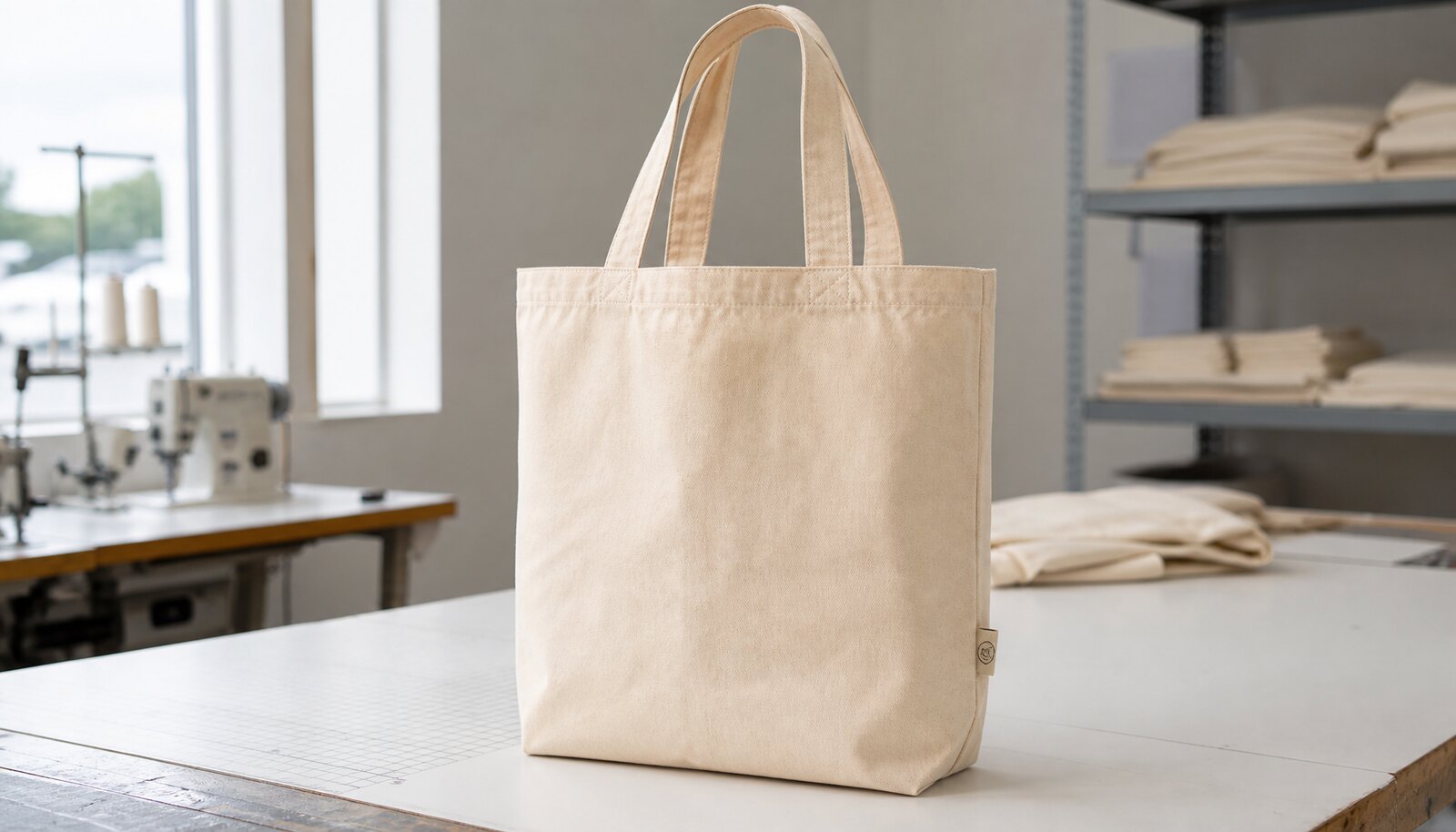
Start with the use case, not the tote
For procurement, the first question is not what the bag looks like. It is what the tote must do in the supply chain. A canvas bag used as a subscription-box insert has to pack quickly, survive carton compression, and arrive clean enough to sit beside other branded items. A tote used as an event giveaway has a different profile: it may need faster filling, stronger handles, more visible branding, and enough structure to look good in a crowded booth or conference hall.
Treat those as different products even if the base material is the same. A hybrid order is where teams get into trouble, because the spec tries to satisfy both storage and marketing goals at once. If the bag will be folded inside another box, the priority may be low bulk, low labor, and stable print. If the bag will be handed out empty at an event, the priority may be visual impact, quick access, and repeat use after the event. The buying brief should state which of those is primary and which is secondary.
- Define the actual contents: flat inserts, boxed kits, bottles, apparel, or a mixed promotional bundle.
- Set the maximum fill weight and the shape of the heaviest item, because rigid corners stress seams differently than paper goods.
- State where the bag enters the workflow: factory pack-out, warehouse insertion, booth handout, or retail shelf.
- Write the failure mode into the brief: torn handles, crushed print, dirty packing, or a bag that will not fit the contents.
Turn the brief into a measurable spec sheet
A useful tote spec is more than a product name and a logo file. It should read like a small engineering sheet. At minimum, it needs fabric weight, weave type, bag body dimensions, gusset depth, handle length, handle width, seam allowance, print area, and packing format. If a supplier has to infer any of those points, the quote will drift and the sample will probably need correction.
The easiest way to keep quotes comparable is to lock the spec before price discovery starts. For example, a 38 x 42 cm tote with a 10 cm gusset is not interchangeable with a flat 38 x 42 cm bag when the insert pack includes a boxed item. A bag with a 60 cm handle drop is not the same as one with a short shoulder carry. Even a few centimeters can change how the bag packs, how it hangs, and how much freight volume it consumes.
- Write dimensions in both finished size and tolerance, not just a nominal catalog size.
- State whether the tote needs to stand upright, fold flat, or stay soft for easy insertion.
- Call out handle drop and handle width so the supplier does not substitute a cheaper construction.
- Specify any label location, barcode position, or inside marking before sample approval.
Choose fabric weight, weave, and finish with the downstream process in mind
Canvas weight is the most visible cost/performance tradeoff in the order. A 10 oz or about 340 gsm bag can be the right answer for lightweight subscription inserts and budget-conscious giveaways. It generally keeps cost lower and still gives the buyer a natural-fiber look. A 12 oz or about 405 gsm bag has a firmer hand, usually looks more premium, and tends to tolerate repeated use better. Heavier weights can be appropriate when the tote carries boxed goods or when the brand wants the bag to feel closer to retail merchandise.
The weight alone does not tell the full story. Fabric consistency matters just as much. Buyers should ask whether the canvas has visible slubs, whether the roll was pre-shrunk, and whether the finish is likely to shed lint or carry odor. Natural canvas can show weave variation, which is acceptable if the buyer expects a rustic look, but it should not create thin spots that distort the print or change the bag shape. If the program is sensitive, ask the factory to cut the sample from the same roll or at least from the same lot.
- Use 10 oz for lower-cost inserts when the contents are light and the bag is not expected to carry heavy reuse.
- Use 12 oz when the bag must feel more substantial, survive repeated customer handling, or carry a boxed product.
- Request a weight tolerance and ask how the factory checks fabric before cutting begins.
- If the branding depends on a clean surface, ask about lint, odor, dye migration, and color transfer before approval.
Match the print method to the artwork, not the other way around
The right decoration method depends on the art file, the color count, and the expected usage of the bag. Screen printing is usually the default for bold logos and one or two spot colors because it handles opaque coverage well on natural canvas and is often the strongest option for predictable unit cost at volume. DTF or heat transfer becomes more useful when the design is detailed, multicolor, or needed in a shorter run, but it must be tested on the exact canvas surface. Embroidery works best for a small badge, crest, or premium mark where texture is part of the design language.
A good artwork review catches problems before the factory starts charging for rework. Fine strokes, small reverse type, and delicate gradients can disappear on rough canvas. As a rule, very thin lines and tiny letters should be avoided unless the supplier can prove the print will hold up on the approved material. Ask for a strike-off or print proof, and compare the proof under both daylight and indoor light. For a procurement team, the question is not whether the artwork looks right in a PDF. It is whether the production method can reproduce it consistently on a textured substrate.
- Set a minimum line thickness and minimum text size for the logo so the supplier knows what is too fine to print reliably.
- Ask for Pantone targets or a defined reference if the brand needs color consistency across lots.
- Confirm curing method and ask how adhesion is verified after printing.
- If the bag will be reused, ask for a practical rub and fold test on the printed area before bulk approval.
Use the comparison table as a commercial filter, not just a spec cheat sheet
The table is most useful when it separates design choices from the commercial consequences of those choices. A low-looking unit price may be attached to a quote that assumes a lighter fabric, simpler handles, blank packing, or a smaller carton count. That is not the same product. Likewise, a higher price may actually be the safer deal if it includes accurate sample control, carton labels, and a packing method that fits the buyer's warehouse process.
When procurement reviews two offers, the goal is to normalize every row before comparing the total. If one supplier gives a price for a 10 oz bag and another quotes 12 oz, the unit cost is not meaningful until the fabric difference is translated into cost, freight, and expected durability. The same logic applies to print method, sample turnaround, and lead time. If a vendor cannot state the MOQ or the bulk lead time for the exact specification, the offer is not ready for final comparison.
- Ask each supplier to fill the same row headings: fabric, print, handles, packing, MOQ, sample timing, and lead time.
- Compare the cost delta between options, not just the absolute unit price.
- If carton size or packing format differs, convert the quote to landed cost before choosing a vendor.
- Use the table to eliminate hidden assumptions before they become sample revisions.
Ask RFQ questions that expose hidden assumptions
A weak quote usually sounds confident but omits the details that matter most. The right RFQ questions force the supplier to declare exactly what is being priced. Ask whether the bag is based on greige canvas, dyed canvas, or any pre-shrunk treatment. Ask whether the quoted handle reinforcement uses box-X stitching, bar-tacks, or a simpler seam. Ask whether the printed price includes screens, plates, heat-press time, or artwork revisions. These are the places where a quote can look competitive and then expand after sample approval.
The same discipline should apply to packing and logistics. A supplier should state the units per carton, carton size, gross weight, pallet plan, and any extra charges for labels or carton marks. If the order needs a barcode, a hangtag, or a colored inner wrap, those are not small details. They affect labor and can change the production flow. For a procurement buyer, the real goal is to make every hidden assumption visible before the PO is issued.
- Ask for the exact material and construction, not a broad product description.
- Separate setup charges from unit pricing so you can see whether the design is expensive to start or expensive to repeat.
- Request the sample type in writing and confirm whether the sample is representative of the final production route.
- Ask what is excluded from the quote, especially labeling, packing, pallet wrap, and export documentation.
Build a sample approval process that tests the bag in real use
A tote sample should be judged by handling, not only by appearance. Start with the right sample type. A hand sample can help early design review, but it is not enough for final approval. A pre-production sample should match the final fabric weight, print method, handle construction, and packing format. Once that sample is approved, keep it sealed and label it clearly so later production can be checked against the exact approved version.
Then test the bag as it will actually be used. Put the planned insert pack inside it. Check whether the gusset opens naturally, whether the handles sit at the right height, and whether the bag distorts when loaded. If the bag will sit inside another carton, verify how much space it consumes. If it will be given away directly at an event, verify that it looks clean after handling and that the print remains legible when the bag is folded or carried. The approved sample should be a working reference, not a display object.
- Use the actual content pack, not a generic weight test that does not reflect real use.
- Check the tote in daylight and indoor light to catch print issues that are hard to see in a photo.
- Record the approved sample against the same spec version that appears on the PO.
- If the sample fails, revise one variable at a time so the cause of the defect is clear.
Write acceptance criteria before mass production starts
QC is stronger when it is measurable. Set a fabric weight tolerance, a stitch density target, a handle reinforcement pattern, a print placement tolerance, and a dimensional tolerance before the order begins. For many buyers, a practical way to manage this is to write a defect list into the PO: open seams, skipped stitches, wrong print position, ink bleed, mixed carton counts, and incorrect labels. When the supplier knows what counts as a defect, inspection stops being subjective.
AQL-style inspection is useful for tote programs because it gives both sides a common threshold. Many buyers use AQL 2.5 for major defects and AQL 4.0 for minor defects unless the program needs something stricter. Major defects usually include torn seams, failed handles, wrong print location, or anything that makes the bag unusable. Minor defects may include slight thread tails, light cosmetic print variation, or minor packing issues that do not affect use. The key is to define these categories in advance so the factory does not argue about standards after the goods are produced.
- Set stitch density targets and reinforce them with a visual reference sample.
- Define a handle pull-test load that matches the intended use of the bag.
- Set print-position tolerance and a simple rub check for adhesion.
- Use AQL or another formal inspection standard and write the chosen level into the PO.
Packing and cartonization change the real cost of the order
Packing often gets ignored because it looks like a minor detail. It is not. Bulk packing is usually the best choice when the bag will be inserted into another box or re-packed downstream. It lowers labor and keeps carton volume down. Individual polybags or tissue wrap make sense when presentation is important or when the bag could pick up dust during transport, but those choices add labor and increase carton size. In a subscription-box program, the wrong packing method can create a fulfillment bottleneck even if the tote itself is cheap.
Carton planning matters just as much as unit pricing. Ask for carton dimensions, units per carton, gross weight, and stackability. A carton that is too heavy slows manual handling and may require palletizing. A carton that is too large can waste freight volume even when the tote is flat. For event giveaways, you also want a packing format that is easy for the venue team to open and count. If the bags will be shipped ocean freight, ask whether moisture protection or inner liners are needed to avoid odor or surface issues when the cartons arrive.
- Keep master cartons within a manual-handling range unless your warehouse has a different standard.
- Confirm the exact count per carton and the label position before mass packing starts.
- Ask whether the supplier will palletize, stretch-wrap, or add moisture protection for the shipment.
- If the tote is part of a subscription pack, measure how the carton choice affects warehouse labor, not just freight.
Lead time, supplier choice, and the point where you should walk away
A realistic lead time is staged, not single-number. Sample approval, pre-production confirmation, bulk sewing, print curing, packing, and export-ready loading each take time. If a supplier gives one fast number for the entire project without separating the steps, the schedule is too loose to be trusted. For event work, build reverse from the ship date and leave room for artwork corrections, sample revision, and freight booking. For subscription-box inserts, the timetable should also include the production window of the box program so the tote does not become the late item in a combined pack-out.
Direct factory sourcing is usually the strongest option when the tote spec is stable and repeatable. It gives better visibility into the cloth, sewing method, and print process. A trading company can be useful when the buyer is consolidating several products or needs help coordinating across categories, but the commercial gain should be visible in the quote. Walk away when the supplier cannot name the exact fabric, refuses to state carton size, or treats sample control as optional. Those are not minor gaps; they are signs that the project will cost more time later.
- Ask for a production calendar by stage and compare it against your event date or subscription cutoff.
- Prefer direct factory sourcing when the tote spec will repeat across future runs.
- Use a trading layer only when it clearly reduces complexity or consolidates multiple SKUs.
- If the supplier cannot quote the same spec twice, the quote is not stable enough for bulk approval.
Specification comparison for buyers
| Spec decision | Recommended option | Commercial impact | What to confirm in quote |
|---|---|---|---|
| Fabric weight | 10 oz / 340 gsm for low-cost inserts; 12 oz / 405 gsm for repeated-use or premium feel | Heavier cloth usually adds 5-15% to bag cost and can raise freight by weight and carton stiffness; lighter cloth can wrinkle or distort after print | Ask for gsm, yarn count, weave type, and the actual tolerance on the approved roll |
| Print method | Screen print for 1-2 spot colors; DTF or heat transfer for short runs or detailed art; embroidery for a small premium mark | Screen printing has setup cost but usually better unit economics at volume; DTF/transfer can run 10-30% higher on small runs; embroidery raises sew time | Confirm setup fees, color count pricing, minimum run per design, and whether curing or heat-press labor is included |
| Handle construction | Self-fabric handles or 2.5-3 cm webbing with box-X or bar-tack reinforcement | Reinforced handles add sewing cost but reduce failure risk during fill, carry, and customer reuse | Request the stitch pattern, handle drop length, and the pull-test target used for approval |
| Bag size and gusset | About 38 x 42 cm with 8-12 cm gusset for mixed inserts and event packs | Oversizing by a few centimeters can increase carton volume by 5-12% and may change shipping class | Ask for a packed sample with the actual contents inside, not just an empty bag |
| Packing format | Bulk pack for warehouse insertion; individual polybag or tissue only when presentation or dust control matters | Individual packing can add roughly 0.03-0.12 USD per bag in labor and can increase carton volume by 10-25% | Confirm unit packing, carton count, inner separators, and max gross carton weight |
| MOQ by configuration | Quote MOQ against the exact fabric weight, size, print area, and handle spec | A second color, second artwork version, or second fabric weight usually creates a new MOQ and new setup charge | Ask the supplier to state MOQ by final spec, not by generic product family |
| Sample turnaround | Reference sample 3-7 working days; pre-production sample 7-14 working days | Faster sampling usually means fewer options and tighter artwork control; courier charges may add to early-stage cost | Confirm sample type, number of revisions included, and who pays shipping |
| Bulk lead time | Simple specs often need 20-35 days after approval; complex print or custom packing adds 5-10 days | Rush orders often push the shipment toward air freight, which can multiply landed cost | Require a stage-by-stage schedule: sample, pre-production, bulk, packing, and ship-ready date |
| Cartonization and freight density | Target cartons that are easy to lift manually and efficient to stack, with a clear units-per-carton count | Carton size and pack count affect CBM more than the tote unit price does; poor carton planning can erase a low factory quote | Ask for carton dimensions, gross weight, pallet count, and estimated CBM per 1,000 units |
Buyer checklist before sampling
- Write one use case per RFQ: subscription-box insert, event giveaway, retail resale, or hybrid. Do not let one brief cover all four.
- Specify fabric weight in gsm or oz, weave type, color, and acceptable tolerance. Ask the supplier to confirm the actual tested weight, not just a catalog description.
- Lock bag dimensions, gusset depth, handle drop, and the maximum fill weight the tote must carry without seam distortion.
- State the print method, artwork file format, Pantone targets, minimum line thickness, and whether the design must hold up to reuse or only a single event cycle.
- Define the packing format: bulk, individual polybag, tissue wrap, inner divider, barcode label, master carton mark, and whether palletizing is required.
- Request a sample built from the same fabric weight, same handle construction, and same print method you plan to buy. Do not approve a substitute material.
- Ask for a separate quote line for fabric, cutting, sewing, printing, sample fees, packing labor, cartons, labeling, and any carton or pallet charges.
- Set the inspection standard in advance, including AQL target, dimensional tolerance, stitch quality, print quality, and defect definitions.
- Ask for the production calendar by stage: sample, pre-production, bulk sewing, print curing, packing, and export-ready date.
- Keep one sealed reference sample and one working sample with the approved artwork, carton label, and packing method so future inspections have a baseline.
Factory quote questions to send
- What exact fabric weight, yarn count, and weave are you quoting for this tote, and what tolerance do you allow versus the approved sample?
- Is the quote for blank bags or printed bags, and what is the setup charge per color, per screen, or per artwork version?
- What MOQ applies to this exact combination of size, fabric weight, handle construction, print method, and packing format?
- What type of sample will you send first: hand sample, blank proto, pre-production sample, or production reference sample?
- How long will the sample take, how many revision rounds are included, and who pays courier charges?
- What stitch density and reinforcement pattern are used on the main seams and handle attachment points?
- What pull-test target do you use for handle approval, and how many test pieces are pulled from the first lot?
- What is the acceptable print registration tolerance, and how do you check ink adhesion after curing?
- How will the bags be packed for shipment, what is the units-per-carton count, and what are the carton dimensions and gross weight?
- Which charges are excluded from the quoted unit price: labeling, barcode stickers, tissue, polybags, carton marks, pallet wrap, or export documents?
Quality-control points to confirm
- Fabric weight should match the approved specification within about +/-5%, with no obvious thin streaks, weak weave zones, or panel-to-panel mismatch.
- Main seams should use consistent stitch density, typically around 7-9 stitches per inch on body seams and 8-10 stitches per inch on handle attachment, unless the spec calls for something different.
- Handle reinforcement should follow the approved pattern, such as box-X or bar-tack, and the handle should pass the agreed pull test without seam breakage, stitch splitting, or visible tearing.
- Loose thread tails should be trimmed; do not accept open corners, skipped stitches, seam puckering, or needle damage that changes bag shape or weakens the load path.
- Print placement should stay within the agreed tolerance, commonly about +/-3 mm for critical placements, with no off-register lines, pinholes, ink bleed, or soft edges that flatten the logo.
- Cured print should survive a practical rub check: for example, 10 firm dry-rub passes with a white cloth without obvious transfer, and a 90-degree fold should not produce immediate cracking.
- Bag dimensions should stay within about +/-1 cm on body length and width, and tighter tolerance should be set for gusset or handle drop if the insert pack is fit-sensitive.
- For premium programs, check for odor, lint, and color transfer on both the inside and outside surfaces, especially if the tote will sit directly against printed matter or soft goods.
- Carton inspection should confirm exact count, no mixed SKUs, clean carton marks, correct barcodes, undamaged corners, and a gross weight that your warehouse can handle safely.
- Use an AQL standard in the PO, such as AQL 2.5 for major defects and AQL 4.0 for minor defects, unless your internal policy is stricter.