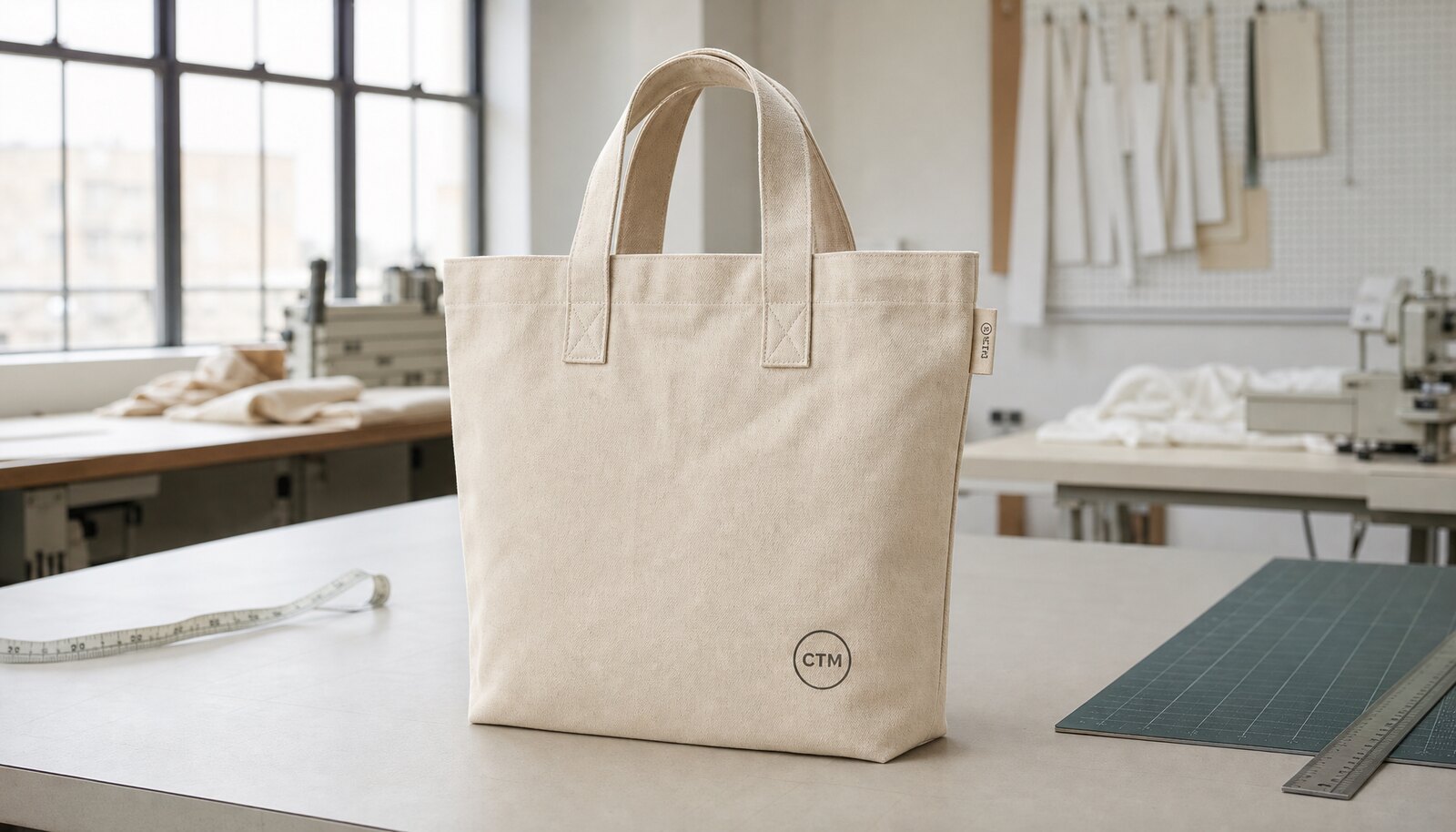
Why Hotels Buy Canvas Totes as a Procurement Item
Canvas totes for hotels are usually bought for more than one job. A single bag may be used as a welcome gift, amenity carrier, spa bag, retail item, beach tote, or housekeeping delivery bag. That is why hotel buyers should not treat the purchase like a simple souvenir order. The same bag has to look right in a guest room, carry enough weight without sagging, and survive enough handling that the hotel does not receive complaints after the first few uses.
For procurement teams, the commercial question is not whether the bag is fashionable. It is whether the bag supports the intended operating scenario with acceptable unit cost, defect risk, and replenishment stability. A tote that looks good in a catalog can fail in real hotel use if the handles are too narrow, the print rubs off, the body collapses flat, or the carton pack arrives wrinkled and hard to stage.
The best hotel tote programs start with a use-case decision. If the bag is for a premium room drop, buyers should care more about shape retention and finish quality. If it is for spa retail or beach service, load-bearing and repeat-use durability matter more. If it is for a short opening or pilot, speed and repeatable supply may matter more than custom construction.
From a sourcing perspective, that means the RFQ should describe the operating role, not just the product name. “Canvas tote” is too broad. “Canvas tote for in-room welcome kit, one-color logo, folded flat, bulk packed, repeat order expected” is a procurement brief that suppliers can actually quote against. Buyers who define the use early tend to get cleaner pricing and fewer sample cycles.
- Treat the tote as an operational item, not a generic promo product.
- Define where the tote will be used: room, spa, beach, retail, or VIP gifting.
- Write the use case into the RFQ so suppliers quote the right build and pack format.
- A hotel tote should be judged on presentation, repeat handling, and replenishment ease, not only on artwork appeal.
Fabric Weight, Weave, and Body Shape: What Actually Changes the Bag
Fabric choice is where many tote programs go wrong because buyers see only a weight number, while the supplier thinks in terms of hand feel, weave density, and finished structure. For light amenity use, a canvas in the 8 to 10 oz range may be acceptable if the bag is small and the contents are low load. For more visible guest-facing use, many hotel buyers move to roughly 10 to 12 oz because the bag stands better, feels more substantial, and resists looking limp after unpacking. If the bag will carry bottled items, folded resortwear, or boxed amenities, a heavier canvas may be worth the cost.
Weight alone is not enough. Two bags with the same nominal ounce or GSM can behave differently if one is a looser weave and the other is a denser duck-style cloth. Ask for the actual weave type, yarn count if available, and whether the fabric is pre-shrunk, enzyme-washed, or raw. Pre-shrunk or washed canvas can reduce surprise shrinkage and help the tote keep its approved dimensions after handling or light cleaning.
Finished dimensions matter more than cut size in procurement because the final sewn product is what the guest sees. A bag that is specified at 40 x 42 cm but delivered at 38 x 41 cm after sewing can look smaller, sit differently on a shelf, and reduce usable volume. Put the finished size, gusset depth, seam allowance, and any shrink allowance into the spec. If the bag needs to stand upright, ask for a structure note: bottom gusset, boxed corner, double-layer base, or internal reinforcement.
Failure mode to watch: a supplier may quote a heavier fabric but soften the build elsewhere, for example with thin handle tape, low stitch density, or a simplified base seam. The result is a bag that feels expensive in hand but fails under load. If the tote will be used repeatedly, balance fabric weight with handle structure and seam reinforcement rather than buying weight alone.
- Use finished size and gusset depth in the spec; do not rely on cut size.
- Ask for weave type and whether the canvas is pre-shrunk or washed.
- Match the fabric weight to the heaviest real-use scenario, not the lightest.
- Heavier cloth does not automatically mean a stronger tote if handles and seams are weak.
Construction Details That Separate a Premium Hotel Tote from a Commodity Bag
The easiest way to improve hotel tote quality is to specify the construction details that guests notice and operators rely on. Handle type is the first one. A narrow self-fabric handle can be fine on a small bag, but for guest carry or retail use, wider cotton webbing or a folded, reinforced strap is usually safer and more comfortable. Handle width, handle drop, and stitch pattern should all be listed in the RFQ so the supplier cannot substitute a cheaper strap without disclosure.
Attachment method matters as much as handle material. At the stress points where the handle meets the body, ask the supplier to state whether the reinforcement is a bar-tack, box stitch, X-box stitch, or multiple stitch rows. For hotel use, the buyer should not accept vague wording like “reinforced handle” without a stitch description. If the tote is likely to carry bottles or heavier amenity packs, the anchor points should be visibly reinforced and aligned on both sides.
Open-top bags are the fastest and least expensive to produce, which is why many hotel programs use them. But there are cases where a zipper, snap, or magnetic closure is worth the added cost. A closure makes sense when the contents are small, when the bag is sold at retail, or when the hotel wants a more finished presentation in the room. The tradeoff is more assembly and more QC points, so the quote should separate the closure cost from the body cost.
Internal structure deserves attention too. A lining can improve appearance and keep the inside clean, but it adds steps and can hide seam issues unless the factory is disciplined. Pockets are useful for retail or spa use, but they introduce alignment risk and more labor. Binding, piping, and edge tape can sharpen the look, yet they also create more places for poor stitching to show. Procurement should add these features only when they serve a real operational reason.
Failure modes here are predictable: handles that twist, seams that pucker, closures that fail to close cleanly, and a body that sags after one week of use. The quote should therefore name the exact construction rather than assuming the factory will “do standard quality.” Standard to whom? That needs to be written down.
A good rule for hotel programs is to define one premium feature, not five. If the bag already has heavier canvas, a premium print, and a shaped gusset, the supplier should not also be asked to add complex pocketing unless there is a clear usage benefit. Simpler bags are often easier to keep consistent across reorders.
- Specify handle width, handle drop, and reinforcement pattern.
- Ask for the exact stitch method at stress points instead of generic wording.
- Use closures only if they solve a real use problem.
- Every extra detail increases assembly and inspection risk, so only keep features that justify the cost.
Print and Decoration Methods: Choosing the Right Finish for Hotel Use
Decoration should be chosen by artwork complexity, quantity, desired appearance, and durability needs. For most hotel tote programs with a simple logo, screen printing is still the most practical method because it gives solid coverage on canvas, is cost-effective at scale, and produces a clean brand mark. If the artwork is only one or two colors, screen print usually gives the best balance of price and visual impact.
Heat transfer can work when the logo has fine detail, multiple colors, or a lower quantity that does not justify screens. The buyer should still ask about edge lift, wash resistance, and abrasion behavior, because not every transfer print holds up the same way on a textured canvas surface. For a hotel bag that will be handled a lot, a transfer that looks crisp on day one but cracks at the edges after use is not a good value.
Embroidery gives a premium touch, but it is not always the right answer on lighter canvas. Dense embroidery can pucker the fabric, add stiffness in the logo area, or distort a soft bag body. That can be acceptable on heavier cloth or for a small badge-style mark, but procurement should request a stitched sample if embroidery is being considered. The sample needs to show the actual fabric response, not just the thread color.
Digital methods may be appropriate in limited cases, especially when the artwork has tonal detail or the order is small. But for hotel buyers, the key question is not whether the method can print the logo; it is whether the finish looks intentional after packing, shipping, and first use. A decoration method that creates a brittle surface or a visible mismatch in placement is a QC risk.
For print approval, the buyer should inspect three things on the sample: placement, edge definition, and opacity. Placement should be centered or aligned as specified, with a measurable tolerance. Edge definition should not feather more than the approved sample. Opacity should cover the canvas texture enough that the mark is readable under normal hotel lighting. If the tote uses a side label or woven brand tab instead of a large front print, that choice should be deliberate and costed separately.
A useful sourcing benchmark is to require the supplier to print the first article using the same equipment and ink system intended for bulk production. If the sample is made in a different room or by a different process, the approval value is weak. The buyer should also confirm whether artwork scaling, pantone matching, and print screens are saved for repeat orders.
- Screen print is usually the best default for simple hotel logos on canvas.
- Use heat transfer only after checking edge durability and surface wear.
- Ask for a stitched sample if embroidery is being proposed.
- Approve print placement and opacity on an actual sewn sample, not only on artwork files.
- Request that the sample use the same production process as the bulk order whenever possible.
How to Read a Quote and Compare Suppliers Without Mixing Apples and Oranges
A procurement-friendly quote is one that allows a clean comparison across suppliers. If the offer only lists a unit price, buyers do not know whether they are comparing the same fabric, the same print method, or the same packing format. For canvas tote bags for hotels, the quote should identify the exact fabric weight, weave, handle build, size, decoration method, carton count, sample charge, production lead time, and incoterm. When those fields are missing, the cheapest price often hides the weakest spec.
The most important comparison rule is like-for-like only. A lighter canvas, smaller print area, fewer stitch reinforcements, and bulk packing can all reduce price, but they also change the product. A hotel buyer should compare only when the same fabric, same size, same artwork count, and same carton spec are being quoted. If one supplier is giving a stock blank and another is giving a custom cut-and-sew tote, the numbers are not directly comparable.
Cost drivers are usually predictable. Higher fabric weight, complex patterning, lining, zippers, pockets, multiple print colors, and lower MOQ all push up the unit cost. Carton volume can matter more than expected because a tote that folds bulky can raise freight and warehouse handling costs even if the piece price looks attractive. Ask suppliers to quote carton dimensions, gross weight, and packed quantity so logistics is not a surprise later.
Sample charges should be read carefully. A waived sample fee can be fine, but buyers should confirm whether that cost is absorbed into tooling, artwork setup, or mass pricing. It is also worth asking how many revisions are included. One free sample with three unpaid correction rounds is not actually free if the schedule slips.
A strong quote should also separate one-time and recurring costs. One-time items can include screen setup, pattern development, logo plate work, and sample development. Recurring items should include fabric, cutting, sewing, printing, QC, packing, and carton labels. If the supplier cannot separate those costs, it becomes harder for procurement to predict reorder economics.
In hotel programs, the low bid is often the one that is easiest to price but hardest to repeat. Pay attention to whether the quote includes the exact packing method, because packing affects damage risk and warehouse efficiency. A tote packed flat and cleanly folded is often worth more than a slightly cheaper bag that arrives wrinkled or inconsistently packed.
- Compare only the same product definition across vendors.
- Ask for carton dimensions and gross weight because freight can change the real landed cost.
- Separate one-time setup costs from repeat production costs.
- If sample revisions are not capped, the schedule can become the hidden cost.
Supplier Types and Decision Matrix: Which Route Fits the Hotel Program
The best supplier route depends on the order profile, not on habit. A local decorator working from stock blanks is usually the fastest route when the opening date is close or the order is small. This route can be attractive for short runs or pilot programs, but the buyer gives up control over exact fabric weight, panel size, and sometimes handle consistency. If the hotel wants the same tote for every property over time, stock blanks can become a repeatability problem.
A direct factory cut-and-sew supplier gives procurement more control over the bag structure. That matters when the tote must match a room standard, carry heavier items, or stay identical across multiple orders. The tradeoff is that the buyer needs clearer artwork, tighter spec control, and more disciplined sample approval. For chain programs, this route is often the most sustainable because the supplier can store the approved pattern and reorder reference.
Trading companies and sourcing agents can add value when the tote is only one item in a larger hotel program. They can coordinate multiple SKUs, manage mixed shipments, and consolidate communication. The risk is that procurement may lose visibility into the real factory, especially if the quote does not identify where cutting, printing, and packing actually happen. For compliance-driven buyers, that lack of clarity can be a problem.
Amenity packers and kitting partners are useful when the tote is shipped with inserts, promotional material, or companion items. In those programs, the bag is only one part of the deliverable. The buyer should make sure the kitting partner owns the pack-out standard, missing-item checks, and final carton count. Otherwise, a bag quality issue can be misattributed to the wrong party.
A good decision matrix for hotel tote buying should weigh cost, lead time, risk, and repeatability together. If the project is urgent and the order is small, speed may outweigh exact spec control. If the program is chainwide and repetitive, repeatability matters more than a small savings on the first quote. If sustainability claims are part of the marketing brief, the buyer may need a supplier that can document materials, inks, and packaging more rigorously than a generic blank-bag source can provide.
One practical sourcing rule: choose the simplest supplier model that can still protect the brand standard. More layers are not automatically better. If a factory can meet the spec directly, adding unnecessary intermediaries can slow approvals and increase the chance of message loss between quote and production.
- Use stock blanks for speed; use custom cut-and-sew for repeatability and brand control.
- Ask who actually cuts, sews, prints, and packs the tote.
- Use an intermediary only when it solves a real coordination problem.
- For chain programs, repeatability is usually more valuable than a small first-order discount.
Sample Approval and QC: What to Check Before Bulk Production Starts
The sample should be treated as the production reference, not as a rough idea. Procurement should inspect the sewn sample on a table with a ruler, not in hand only. Measure finished length, width, gusset depth, handle drop, and print placement. Compare the sample to the approved drawing or specification sheet. If the size has drifted or the logo sits too high or too low, those issues are easier to correct before bulk fabric is cut.
The visual inspection should include symmetry, stitch quality, edge finishing, and fabric condition. Handles should be even and aligned. Side seams should not twist. Corner construction should be neat, with no puckering or loose thread. If the tote has a lining or pocket, check that the inside finish is as clean as the outside because guests and staff both notice sloppy interiors when using the bag.
It helps to classify defects in advance. Critical defects are things the hotel cannot accept at all: seam separation, broken handles, major print misplacement, contamination, mold, heavy staining, or incorrect size that affects use. Major defects are issues that can make the bag look unfit for guest presentation, such as crooked print, visible distortion, or an obvious color mismatch. Minor defects are small thread tails or slight appearance differences that do not affect use or brand presentation if they remain within an agreed tolerance.
AQL guidance should be written into the purchase order or QC plan. For many hotel tote programs, buyers use a standard inspection framework such as AQL 2.5 for major defects and AQL 4.0 for minor defects, with critical defects at zero acceptance. The exact level should be based on brand sensitivity and order risk, but the important point is to define the rule before production, not after a problem appears. If a supplier cannot work to a stated AQL, that is a signal to slow down and clarify expectations.
Acceptance criteria should be operational. Instead of saying “good quality,” specify measurable conditions: print placement within a stated tolerance, no more than an agreed number of loose threads per bag, handle attachment fixed and symmetric, no visible oil stain or fabric damage, and carton labels matching the PO. If the bag is to be displayed in rooms, add a presentation criterion: it should stand or fold as approved without obvious wrinkling or print damage.
The first bulk run should also include a pre-shipment check against the approved sample and spec sheet. That protects buyers from a common failure mode: the sample was approved, but bulk goods drifted because a different operator, material lot, or packing method was used. The factory should confirm the same fabric lot where possible or disclose any material change before full shipment.
- Measure the sample with tools, not by eye alone.
- Define critical, major, and minor defects before bulk production starts.
- AQL 2.5 for major defects and 4.0 for minor defects is a common starting point for hotel tote programs; critical defects should be zero acceptance.
- Make print placement, handle symmetry, and seam integrity part of the written acceptance criteria.
- Reject bulk substitutions that change the approved feel or appearance without written approval.
Packing, Cartons, and Labeling: Protect the Tote and the Receiving Team
Packing is often the difference between a good product and a bad arrival. A canvas tote that is packed too tightly can develop hard creases, especially if it carries a printed logo or structured gusset. A bag that is packed too loosely can arrive dusty or shape-damaged. For hotel use, the pack format should protect presentation while staying efficient for warehouse handling and room replenishment.
The RFQ should state how the bag is folded, whether it is polybagged, how many pieces go in a master carton, and whether any insert cards or hangtags are required. If the property wants minimal presentation, bulk pack may be sufficient. If the bag will be displayed in-room or handed to VIP guests, a clean fold and a protective bag may be worth the extra cost. The key is to avoid vague packing instructions, because those lead to inconsistent cartons and more receiving labor.
Carton specification matters more than many buyers expect. Ask for master carton dimensions, gross weight, carton count per pallet if relevant, and the target quantity per carton. A carton that is too large can crush tote shape; a carton that is too small can create packing inefficiency and higher freight. Hotel buyers should also ask for carton strength suitable for the route, especially if the shipment will be stored before issue or transferred through multiple warehouses.
A useful example is to request a master carton with a consistent count, such as 50 or 100 pieces, with outer labeling that shows PO number, color, size, quantity, country of origin, and carton number. If the bags are sorted by color or artwork version, that should be visible on the label. This reduces receiving errors and makes it easier for the hotel or distributor to allocate inventory to the right property.
The failure modes are familiar: mixed counts, crushed corners, dirty polybags, unreadable labels, and fold orientation that does not match the approved presentation. Buyers should ask the supplier to send a packing photo or packing sample, especially if the bag is intended for a premium room setting. That small step often prevents disputes after arrival.
If sustainability is part of the brand brief, the packing method should also be reviewed. Excessive overpacking, unnecessary plastic, or unlabeled inserts can conflict with the hotel’s message. The most efficient solution is usually the one that protects the product with the least waste and the fewest handling steps.
- Specify fold method, pack count, and whether each tote is bagged individually.
- Request master carton dimensions and gross weight before final price approval.
- Use clear carton labels so receiving teams can sort inventory without opening every box.
- Ask for packing photos or a packing sample when presentation matters.
- Avoid overpacking; it increases waste and can damage the tote’s appearance.
Lead Time, Replenishment, and Repeat-Order Control
Lead time should be separated into three parts: sample lead time, production lead time, and transit time. Buyers lose schedule control when these are bundled into one vague promise. A supplier may be able to produce a sample quickly, but bulk cutting, printing, final inspection, carton allocation, and shipping booking can still take time. For hotel openings, the safest approach is to build a schedule buffer around artwork approval and sample correction, not just around the factory’s best-case promise.
For repeat orders, the bigger risk is not delay alone; it is drift. The second order can differ from the first if the supplier changes fabric lot, print screen, handle tape, or packing method. To reduce that risk, the buyer should store the approved sample, the measured spec sheet, the artwork file in production format, and the carton specification in one control record. If possible, ask the factory to keep the same reference sample on file and to confirm material continuity before each reorder.
Procurement teams should also ask how the supplier manages reorders during peak season. If the tote is a recurring hotel item, the supplier needs to know whether replenishment is expected every month, quarter, or only seasonally. That affects raw material planning and can prevent unexpected delays. A supplier that cannot explain reorder continuity is a risk for properties that need the same bag to be available throughout the year.
A practical replenishment plan includes minimum stock coverage, reorder trigger levels, and a documented fallback spec if the exact material is temporarily unavailable. That fallback should not be automatic; it should require approval. In a hotel setting, a material substitution that changes the color, texture, or print behavior can be more damaging than waiting a few extra days for the right supply.
If the tote is used in multiple properties, procurement should also decide whether every location receives the same program or whether certain sites have slightly different pack requirements. Standardization reduces purchase complexity and helps maintain brand consistency. Variation should be intentional, not accidental.
The best repeat-order control is simple: lock the spec, lock the artwork, lock the sample, and require sign-off on any change. If a supplier proposes a “small improvement,” that change should still go through the same approval path as the original order. That discipline prevents quiet spec drift over time.
- Separate sample time, production time, and transit time in the project plan.
- Store the approved sample, spec sheet, artwork, and carton spec together.
- Require approval for any material or construction change on repeat orders.
- Use reorder trigger levels so hotel inventory does not run out unexpectedly.
How to Build the RFQ So Suppliers Quote the Same Tote
A good RFQ removes ambiguity before pricing starts. For hotel tote programs, the request should include the finished size, canvas weight, weave type, color reference, handle dimensions, reinforcement method, decoration method, decoration size, packing format, carton requirements, destination, and incoterm. If any of those items are missing, different suppliers will fill the gaps in different ways, and the comparison becomes unreliable.
The RFQ should also state the intended use. A tote for spa retail may need a more premium finish and stronger presentation. A tote for welcome kits may need better packing efficiency. A tote for beach service may need a sturdier base and stronger handles. This context helps suppliers quote the right construction and helps internal buyers justify why a slightly higher cost may actually be the lower-risk choice.
Attach the artwork file in a print-ready format and identify the approved color standard if there is one. If the logo must stay within a precise placement window, state the measurement from the bag edge or seam. Ask suppliers to return a line-item quote rather than a single blended number. The best quotes separate fabric, sewing, print setup, packing, sample charge, and freight assumptions so procurement can compare hidden cost drivers.
An operational RFQ also asks for proof of process. Request the proposed QC checklist, the inspection standard, and the expected AQL level. If the supplier will not quote against a measurable standard, the risk is that production quality becomes subjective. For a hotel program, subjectivity is expensive because the bag must satisfy both guest perception and purchasing control.
If the tote is intended for multiple properties or a long-term program, add a reorder requirement to the RFQ. Ask the supplier to explain how they will preserve the approved reference and how they will handle future fabric availability if the exact cloth is discontinued. That question sounds small, but it can save a lot of trouble later when the first replenishment order is due.
In practice, the best RFQs are not long; they are complete. Buyers do not need pages of marketing language. They need the supplier to quote the same product definition, the same packaging, and the same acceptance criteria so that the commercial decision is based on facts rather than assumptions.
- State the intended hotel use so the supplier can choose the right build.
- Attach artwork and measurement references in the RFQ, not in a separate follow-up.
- Ask for line-item pricing and QC terms instead of a single blended quote.
- Include reorder expectations so the supplier can plan material continuity.
- The goal is not a longer RFQ; it is a clearer one.
Specification comparison for buyers
| Spec decision | Recommended option | When it fits | Buyer risk to check |
|---|---|---|---|
| Direct factory cut-and-sew | Best control over fabric, size, handle build, and decoration | Chain programs, repeat orders, and branded hotel standards | Confirm the quoted factory is the actual producer and not a broker passing along assumptions |
| Stock blank plus local decoration | Fastest route for openings and short replenishment cycles | Urgent launches, pilots, and low-MOQ tests | Inspect blank quality, handle strength, and whether the decoration method reduces durability |
| Trading company / sourcing agent | Useful when several SKUs or ancillary items must be coordinated | Mixed amenity programs, multi-country rollouts, or consolidated buying | Request the real factory name, inspection ownership, and change-control process |
| Offshore factory direct | Usually the best unit economics at scale | Seasonal programs and chainwide purchases with stable specs | Watch carton volume, freight impact, communication timing, and sample-to-bulk drift |
| Amenity packer / kitting partner | Best when bags ship pre-packed with inserts or companion items | Welcome kits, spa sets, and retail-ready presentation | Clarify who owns missing-item claims and what pack-out accuracy target applies |
| Fully custom size and trim | Best when the tote is part of the hotel brand experience | Premium properties, VIP gifting, and resale programs | Expect longer sample cycles, tighter tolerances, and more re-approval points |
| Sustainable-material specialist | Useful when the property has a formal materials policy or sustainability claim | Brands that must document fiber source or recycled content | Ask for actual material composition and supporting documents, not just a green label |
| Reorder from locked reference sample | Best for consistency across multiple shipments | Properties that need identical replenishment over time | Store the approved sample, artwork file, and measured spec in one control file |
Buyer checklist before sampling
- Finished bag size, not cut size, with tolerance stated in millimeters or inches
- Fabric composition, weave type, and weight in GSM or oz/yd²
- Handle length, handle drop, width, and reinforcement method
- Print method, print size, number of colors, placement, and approved artwork file
- Closure style, lining, pockets, binding, and any internal finish
- Carton pack count, fold method, polybag rule, and carton label content
- Target MOQ by color, fabric, and artwork version
- Approved sample standard with measurement and appearance tolerances
- Required test expectations for seam strength, handle attachment, print adhesion, and carry load
- Delivery window, replenishment plan, destination, and incoterm
Factory quote questions to send
- What is the exact fabric composition, weave, and finished weight of the canvas?
- Is the size quoted the finished sewn size, and what tolerance do you guarantee on length, width, and gusset?
- Which print method is included, what is the maximum print area, and what are the setup charges by color?
- How are handle anchors reinforced, and how many stitch rows or bar-tacks are used at each stress point?
- What is the MOQ per color and per artwork version, and does the MOQ change with print color count?
- Can you quote sample lead time separately from mass production lead time, and what is the sample charge?
- What packaging is included: bulk pack, individual polybag, insert card, hangtag, or carton label?
- What carton dimensions, inner pack count, master carton count, and palletization rules do you use?
- Which QC checks are performed before shipment, and can you state the AQL level and defect criteria?
- What exactly is included in the unit price, and what is excluded, such as freight, duty, taxes, labeling revisions, or testing?
Quality-control points to confirm
- Fabric weight must match the approved spec within an agreed tolerance, and substitutions to lighter cloth should be rejected unless formally approved.
- Finished dimensions should be checked after sewing, not from a pattern sheet, and should stay within the agreed tolerance band for length, width, and gusset depth.
- Handle stitching should be even, tight, and reinforced at anchor points with no skipped stitches, loose thread tails, or crooked handle placement.
- The bag opening and side seams should sit square; visible twisting, skew, or a bag that leans on a flat surface should be treated as a quality issue.
- Print registration should be clean, with no fuzzing, pinholes, bleeding, or drifting placement across cartons or lots.
- Carry-load performance should be validated against the intended hotel use case, with no seam pop, handle separation, or excessive distortion under normal loading.
- All measurement checks should be taken on production goods, not on pre-production templates or untrimmed prototypes.
- Packing should prevent crushing, moisture marks, and abrasion; logo surfaces must not arrive creased to the point that first presentation looks damaged.
- Carton marks, barcodes, PO numbers, and destination labels must match the shipping document set and packing list exactly.
- Color consistency should stay within the approved shade band across production lots, and obvious dye-lot variation should trigger review.