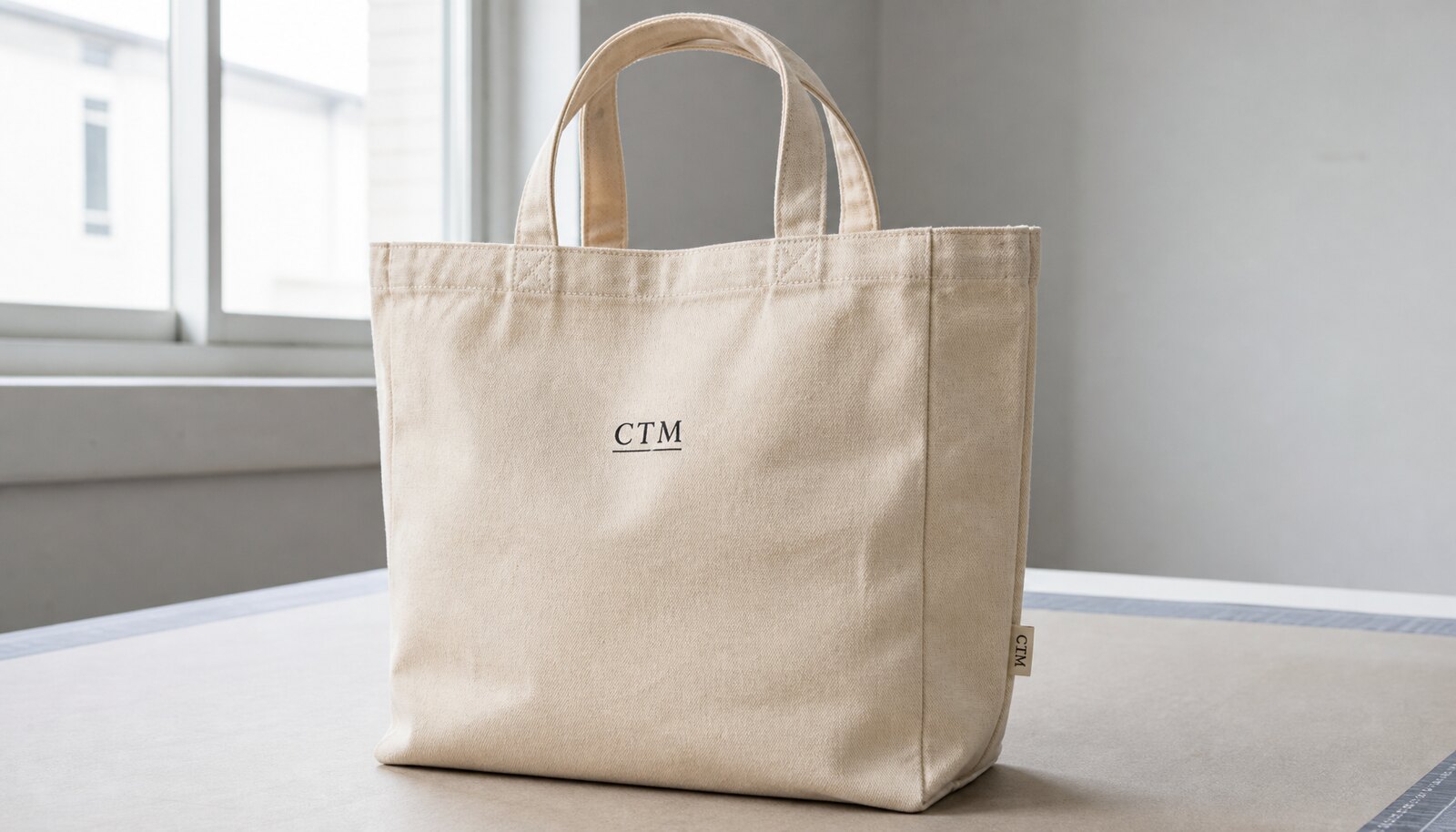
Why gift-shop tote sourcing should start with the carton, not end with it
Canvas tote bags sold through gift shops behave like retail products, not generic giveaways. The buyer is usually balancing shelf presentation, repeat replenishment, destination branding, and warehouse handling at the same time. That means the bag itself and the way it ships are both part of the product. If carton planning is left until the end, procurement can end up with a bag that looks fine in a sample room but performs poorly in receiving, pallet storage, or store replenishment.
The most common mistake is to treat packing as a back-office detail. In this category, folding state, carton count, and carton dimensions affect the commercial outcome just as much as the fabric and print. A slightly different fold can change pack count. A carton that is too tall or too heavy can complicate manual handling. A box that is too large can raise freight cost even when the bag price looks good. Buyers who source for gift shops need both product and packing locked before the PO is issued.
This is especially important for exhibition and destination retail programs, where the buyer may need multiple artwork versions under the same base bag construction. If the pack format is not standardized, each reorder can drift in cost and handling behavior. The safest approach is to approve the tote in its retail-visible state and in its carton-ready state at the same time. That keeps commercial comparison clean and avoids surprises when the shipment lands.
- Treat the packed format as part of the product specification.
- Compare suppliers on landed cost, not only on unit bag price.
- Lock fold method, carton count, and carton dimensions before production begins.
Build the bag spec around the retail channel you actually sell into
A museum shop, airport gift shop, exhibition stand, and tourist attraction may all buy canvas tote bags, but the buying logic is not the same. A museum or premium destination store often cares more about visual finish, clean seam lines, and consistent print placement because the tote sits beside other retail goods. An exhibition buyer may care more about pack efficiency, quick handling, and predictable carton counts because the bags move through event logistics. A chain gift shop may need the most disciplined carton labeling and reorder consistency because the same tote will be replenished through a distribution center.
That difference should show up in the RFQ. Instead of asking for a generic tote, define the channel: shelf resale, impulse checkout item, event giveaway, bundled souvenir insert, or chain replenishment. Then state what matters most. If shelf presentation matters, specify tighter shade control, cleaner trimming, and a print method that looks crisp after folding. If the bags will be moved through a DC, prioritize fold consistency, carton count accuracy, and label clarity. If the order is seasonal or destination-based, ask the supplier how they will handle SKU segregation so artwork variations do not get mixed during packing.
Channel clarity also helps you compare quotes fairly. The same bag body can be quoted with different handle lengths, reinforcement methods, print placement, and pack counts depending on use. When buyers describe the channel up front, the supplier can recommend a spec that actually fits the retail motion. That produces a quote you can use instead of a quote that only looks complete.
- Define the channel before the factory suggests fabric or packing.
- Use shelf-grade finish standards for visible retail programs.
- Use DC-friendly carton and label rules for replenishment programs.
Choose canvas weight and construction with a condition, not as a slogan
For many gift-shop tote programs, a medium-weight cotton canvas is a sensible starting point because it gives enough body for shelf presentation and repeat use without pushing freight and handling too high. One practical benchmark buyers often test first is around 10 oz canvas, which commonly sits in the neighborhood of 340–380 GSM depending on weave and conversion. That is not a universal rule. It is only a workable test point when the goal is retail appearance plus reasonable shipping efficiency. If the bag is expected to carry heavier souvenirs, books, or bottle-shaped items, a heavier canvas may be justified. If it is a light promotional handout, a lighter cloth may be enough, but the bag may look less substantial on the shelf.
Handle design should be specified as carefully as body fabric. Same-fabric handles are common in retail totes because they look cohesive, but the buyer still needs to define reinforcement. Ask whether the supplier will use bartacks, an X-box pattern, folded-end stitching, or another reinforcement method. Ask where the handle joins the body, how much seam allowance is used, and whether the load-bearing stitch will be single or double needle. Those details matter because handle failure is a visible defect and a frequent return point in retail use.
Decoration should be matched to the bag surface and the reorder pattern. One- or two-color screen print is often the most economical and durable option for simple gift-shop graphics. Embroidery can add texture and a premium feel, but it also changes cost, lead time, and carton behavior. Heat transfer or digital transfer may work for more detailed artwork or shorter runs, but the buyer should confirm how the print behaves after folding. A good sample set will show whether the artwork creases, offsets, or loses clarity once the bag is packed.
- Use canvas weight as a starting condition, not a fixed rule.
- Specify the handle reinforcement method and stitch pattern.
- Approve decoration in the folded state, not only on a flat sample.
Write the RFQ so the supplier quotes the real cost drivers
In tote sourcing, the headline bag price can be misleading. Fabric weight, print setup, handle length, reinforcement, inner packing, carton size, label application, and freight cube all affect what the buyer actually pays. A supplier may offer a lower unit price but recover margin through a less efficient carton or through extra charges for folding, barcode labels, or moisture protection. Procurement teams need the RFQ to expose those variables so the quotes can be compared on the same basis.
The cleanest approach is to separate the cost components. At minimum, ask for the bag body, printing, packing labor, inner packaging, export carton, and any retail or barcode label charges. If the supplier cannot break out every item, ask for a packed-unit price and a carton specification sheet that shows dimensions and pack count. That gives you enough to estimate freight and warehouse handling. It also helps you spot when one quote looks cheaper only because the carton is larger, heavier, or less efficient to palletize.
It is also worth asking which changes affect cost most. If changing from one print color to two changes the setup or labor cost, you want that in writing. If extending the handle changes fabric usage or sewing time, you want that noted too. The more the supplier explains the pricing logic, the more useful the quote becomes for procurement. Transparent quotes are easier to defend internally and easier to compare across suppliers.
- Request separated pricing for bag body, print, packing, carton, and labels.
- Ask for carton dimensions with the quote so freight can be estimated immediately.
- Require the supplier to state which design changes move cost and which do not.
Use a sourcing comparison that actually helps you decide who should own packing
The best supplier is not always the one with the lowest unit price. The better question is who can repeat the same packed result at the same cost on the next order. For gift-shop totes, the source route matters because the packing plan is part of the value. A direct factory is usually strongest when you need custom carton specs, stable reorders, and tighter control over production and packing. A trading company can be useful for small trials or when the buyer needs faster coordination, but the buyer should confirm who is responsible for approving the carton and who owns final packing errors. A packaging-capable factory is often the best fit when retail labels, inner packs, and export cartons all need to be aligned under one QA process.
The procurement decision is easier when the comparison is structural instead of broad. Ask each supplier how they would handle: fabric lot control, fold method control, carton count control, SKU separation, label placement, and pallet pattern. If one supplier can explain all six clearly and another cannot, that tells you more than a low first price. This is especially important for gift-shop assortments because reorders may be seasonally staggered and artwork variants may sit in the same carton family. A supplier that cannot keep the pack format stable will create hidden cost later.
If the order is test-sized, some variability is acceptable. But if the bag is part of a repeat retail line, the supplier should be able to hold the packed outcome steady. That is the real commercial test.
- Direct factory: best when carton engineering and reorders matter.
- Trading company: acceptable for trials if packing ownership is clear.
- Packaging-capable factory: strongest when retail labels and outer cartons must stay synchronized.
Approve a sample in open, folded, and packed form
A sample that looks good on a table can still fail in shipment. The tote should be approved in at least three states: open, folded, and packed. Folded-state approval matters because seam lines, handle position, and print placement can shift once the bag is compressed. Packed-state approval matters because carton fit, scuff risk, and label placement are only visible once the bag is inside the box. If the bag will sit in gift-shop stock or on a distribution-center shelf, the packed sample should also show whether the carton opens and closes cleanly without crushing the product.
The sample set should use the final fabric, final print method, final handle construction, and the final folding sequence. A bag-only sample is not enough. Ask the supplier for photos of the sample packed into the intended carton with the intended count. If the order needs barcode stickers, SKU labels, or hanging inserts, include those in the sample too. That is the easiest moment to catch wrong label placement, upside-down branding, or a fold that covers the artwork.
Approval should also be tied to a reference sample number or signed sample photo set. For canvas, subtle shade differences can happen between rolls and lots, so procurement should identify the approved reference rather than relying on memory. That helps later if a shipment arrives with a slightly different tone or a different level of surface texture.
- Approve one bag open, one bag folded, and one bag packed in carton.
- Use the sample to test print crease risk and fold alignment.
- Tie approval to a named reference sample or signed photo record.
Plan the carton around pieces, gross weight, and pallet efficiency
Carton planning is where tote sourcing becomes operational. The goal is not simply to fit bags into a box. The goal is to create a carton that can be counted quickly, stacked safely, and shipped without wasting cube. For canvas tote bags, a flat fold is usually the most practical packing format because it keeps the content predictable and reduces handling damage. But the fold should be built around the approved artwork and bag dimensions. A bag with a front print near the upper panel may need a different fold than a blank tote or a bag with a centered logo.
The carton should be planned around three linked inputs: pieces per carton, gross weight per carton, and carton dimensions. Many buyers aim for a gross carton weight that their receiving team can handle without awkward lifting; a common operating range is often around 15–18 kg gross, but the right target should be set by the receiving site, labor rules, and pallet handling equipment. The point is not to force a universal number. The point is to avoid cartons that are so heavy they are slow to unload or so light that they create too many touchpoints.
Palletization should be discussed before the quote is final. Ask how many cartons fit on a layer, how many layers are safe, and what the finished pallet height will be. Also ask whether the carton can be oriented one way only. Some cartons stack better lengthwise, while others are more stable when turned. If the shipment goes by sea and then into a warehouse, pallet stability matters. If it goes by air, carton cube becomes even more important because you are paying for volume. A carton plan that looks fine in isolation can become expensive once freight and receiving are added.
- Set pack count, gross weight, and carton dimensions together.
- Ask for pallet layer count and finished pallet height before production release.
- Make the fold sequence part of the carton design, not an afterthought.
Use carton math that procurement can actually apply to an RFQ
You do not need a complex model to compare tote quotes, but you do need the right inputs. Start with the folded size of one bag, the proposed carton inner dimensions, the planned pack count, and the estimated gross weight. Then ask how many cartons fit per pallet and whether the carton works with your destination warehouse. That one set of numbers usually exposes whether the quote is efficient or just inexpensive on paper.
Here is the logic in plain terms. If a bag folds in a way that takes more volume, the supplier may reduce the carton count. That means more cartons for the same order quantity, more labels, more handling, and more freight cube. A lower unit bag price can disappear quickly if the packing is inefficient. The reverse can also happen: a slightly higher unit bag price may win once the carton is denser and the pallet pattern is better. Procurement should compare landed output, not just production input.
A simple RFQ exercise can help. Ask two suppliers to quote the same bag with the same final fold and the same carton target. If one offers 24 pieces per carton at 16.5 kg gross and another offers 18 pieces per carton at 15.8 kg gross, the difference is already operationally meaningful. Add freight cube and pallet count, and the totals can diverge further. The commercial comparison becomes much clearer when the carton math is visible.
- Compare folded size, carton count, gross weight, and pallet count together.
- Use the same fold and carton target across all supplier quotes.
- Do not treat the lowest bag price as the lowest landed cost.
Write QC checkpoints that match how this product is handled in real life
Retail totes need visual and functional QC. The checklist should be specific enough that a factory inspector can actually use it. Start with size tolerance, seam appearance, handle symmetry, print placement, shade consistency, thread trimming, and carton count accuracy. If the supplier only says 'good quality,' that is not enough. The inspection standard should be written so that a buyer can verify it from photos, samples, and carton records.
For defect control, separate major and minor issues. A major defect can include a broken seam, missing or blurred print, torn handle, wrong artwork, heavy stain, or carton count mismatch. A minor defect can include a loose thread tail, slight trim residue, small print speck, or slight fold inconsistency that does not affect use or shelf appearance. Many buyers use AQL 2.5 for major defects and AQL 4.0 for minor defects as a practical framework, but the exact numbers should be confirmed in writing. The real value is not the AQL number alone; it is the clarity of the defect definitions.
Inspection should also cover the packed carton. Ask the factory to check whether the bag print is scuffed by the fold, whether the handles sit flat without bulging the box, whether the carton lid closes squarely, and whether label placement is consistent across cartons. For this category, a bag can pass sewing QC and still fail packing QC. The buyer should ask for first-off photos, in-process packing photos, and final packed carton photos before release when possible. That catches errors before they travel.
- Define major and minor defects in writing before production starts.
- Inspect the tote both as a bag and as a packed carton.
- Request photo evidence from first-off and final packing stages.
Use a packing checklist that protects the bag, the carton, and the receiving team
A useful packing checklist should be short enough for the factory to follow and detailed enough for procurement to verify. Start with the fold sequence, then the inner pack method, then the carton count. Confirm whether the bag is polybagged, tissue-wrapped, tied, or left unwrapped. Then define the carton sealing method, carton label position, and any moisture protection needed for the route. If the packing method changes from the sample, the buyer should be told before shipment.
Moisture control matters for cotton canvas, especially on humid sea routes or when cartons sit in a warm warehouse before distribution. A carton liner, barrier pack, or other protective measure can reduce odor and dampness risk, but the buyer should choose the minimum protection that fits the route. Excessive plastic can add labor, cost, and environmental burden. The better decision is the one matched to the transit risk, not the one that simply feels safest.
Labeling should support receiving, not just shipping. At minimum, cartons should show style number, color, size, piece count, carton number, and destination. If the buyer uses barcodes or internal SKU formats, those should be placed in the exact location and format the DC expects. Small label mistakes can slow inbound processing more than a minor sewing issue would. For gift-shop buyers, the carton is part of the retail system, not just the transport container.
- Define fold sequence, inner pack, master carton count, and sealing method in writing.
- Use moisture protection only to the level required by the shipping route.
- Label cartons for both warehouse operations and retail receiving compliance.
Specification comparison for buyers
| Buying path | Best fit | What to control in the quote | Main risk to watch |
|---|---|---|---|
| Direct factory | Repeat gift-shop programs, private label, and custom carton specs | Confirm fabric GSM, handle build, fold method, carton count, carton dimensions, and pallet pattern in one offer | If carton planning is left vague, the factory may quote the bag correctly but pack it inefficiently |
| Trading company | Small trials, faster sampling, or limited internal sourcing bandwidth | Ask who owns final packing approval, who inspects cartons, and who can change labels or insert cards | A good first price can hide packaging markups or unclear ownership of packing errors |
| Factory with packaging line | Retail-ready gift shop supply and chain replenishment | Request one approved packed sample, carton label proof, and photo evidence of the final packed state | Usually better for consistency, but only if the packing line follows the same approved fold every run |
| Commodity supplier | Price-led promotions, short campaigns, or low-expectation giveaways | Lock the carton spec in writing and test packed samples before PO release | Low unit price can turn expensive if the carton count, print quality, or shade control is unstable |
| OEM/private-label supplier | Branded gift-shop assortments and multi-SKU programs | Specify artwork versioning, SKU labels, barcodes, and reorder rules by design | Good for brand consistency, but only if the supplier can keep spec discipline across repeats |
| Material decision | Cotton canvas, recycled cotton, or blends based on use case and target price | Compare fabric weight on the same basis and state whether the bag is for shelf resale or event distribution | Mixing fabric claims makes quotes hard to compare and can distort landed cost |
| Construction decision | Size, gusset, handle drop, seam allowance, and reinforcement style | Require the exact stitch pattern and reinforcement method, not a general promise of strength | Weak handle anchoring is a common source of returns and failed inspections |
| Decoration decision | Screen print, embroidery, woven label, or transfer decoration | Approve placement, color count, and packed-state appearance before bulk production | The wrong decoration method can crease, crack, or look off-center once the bag is folded and cartoned |
Buyer checklist before sampling
- Define the finished bag size, fabric weight, handle length, seam allowance, and print area before requesting quotes.
- State the end use clearly: shelf resale, museum shop, destination store, exhibition giveaway, or bundled souvenir set.
- Ask for packed-unit photos, not only flat-bag photos, so you can see folding geometry and whether the print is protected in transit.
- Require a quote that separates bag cost, printing cost, sample cost, inner pack cost, export carton cost, and any barcode or label charges.
- Specify your target pack count per carton and the maximum carton weight your warehouse or store DC can receive.
- Ask the supplier to confirm carton dimensions, gross weight, pallet pattern, and estimated cartons per pallet before sample approval.
- Request a pre-production sample with final fabric, final print method, final fold, and final carton count, not a bag-only sample.
- Set acceptance tolerances for size, shade, stitch appearance, print position, thread trim, carton compression, and packaging damage.
- Confirm whether the supplier will run final AQL inspection, or whether you need a third-party inspection before shipment release.
- Clarify the shipping mode early: sea freight, air freight, or mixed-mode replenishment, because carton dimensions and moisture protection should differ by route.
Factory quote questions to send
- What fabric weight do you recommend for this gift-shop use, and what GSM tolerance can you hold from roll to roll and within the same order?
- Can you quote the tote bag separately from printing, folding, inner packing, export carton, and barcode label application?
- What is the proposed carton size, how many bags per carton, and what gross weight do you expect per carton after all inserts and labels are added?
- How many cartons fit on one pallet in your standard packing pattern, and what pallet height will the shipment reach with our target carton count?
- Will the pre-production sample use the same fabric lot, same thread color, same print method, and same folding method as bulk production?
- What is your standard inspection method for seam strength, print registration, carton count accuracy, and packaging appearance?
- What is your normal production lead time after sample approval, and what is the longest step in the schedule?
- If we change artwork color count, handle length, or carton count, which price elements change and which remain fixed?
- Can you provide packed sample photos and one carton dimension mock-up before we release the PO?
- If the shipment is humid-route sea freight, what moisture protection do you recommend and why?
Quality-control points to confirm
- Fabric weight should stay within the agreed GSM tolerance band, and the same batch should not show visibly thin spots, shade breaks, or slub clusters in retail-facing areas.
- Use a measurable seam standard: even stitch density, no skipped stitches on load-bearing seams, no loose thread tails longer than the approved trim limit, and no crooked topstitching along the opening edge.
- Handle reinforcement should pass a documented pull test on both handles, with special attention to the X-box or bartack area and the top seam where tearing is most likely to begin.
- Print registration should stay within the approved placement tolerance on both front and back panels, and the print should not crack excessively when the bag is folded to carton shape.
- Measure finished dimensions after packing and after unpacking a carton sample, because some canvas bags relax or distort after compression.
- Carton count must match the packing list exactly, and the actual carton dimensions should stay close enough to the approved size that pallet pattern and freight calculations do not shift.
- Carton compression should not crush corners, warp the panel print, or force the carton lid to bow upward under stacking pressure.
- Set an AQL plan before production; for many retail programs, buyers use AQL 2.5 for major defects and AQL 4.0 for minor defects, but the standard should be confirmed in writing with the supplier and inspection agency.
- For retail resale, reject mixed shade lots inside the same carton if color consistency matters to shelf presentation.
- Require carton drop and compression readiness appropriate to the shipping route: at minimum, an inner-pack and outer-carton check, plus a documented drop test or equivalent stack test if the shipment will travel long-distance by sea or through multiple DC touches.