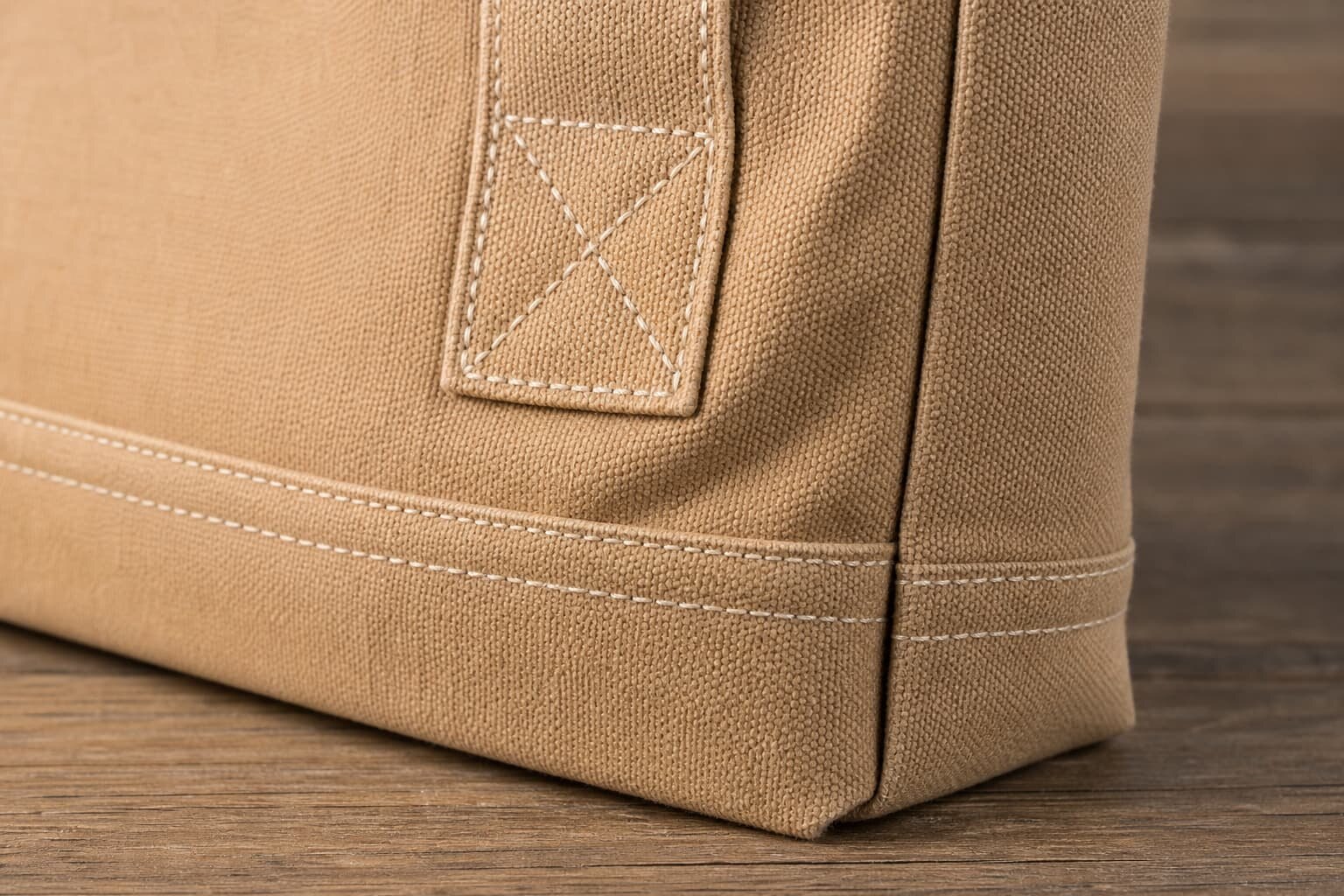
Why a Replenishment File Matters for Canvas Tote Bags
A canvas tote bag wholesale replenishment file is not a marketing document. It is a working control file for repeat orders where the buyer expects the second, third, and fifth shipment to match the first approved delivery. Without it, a supplier may quote from memory, use a similar fabric, change the print ink system, or pack the goods differently because the RFQ only says natural canvas tote bag with logo.
Canvas totes look simple, but repeat order drift is common. A 10 oz canvas may be replaced by a lighter finished fabric. A handle drop can change by 2 cm and still look acceptable in a photo. A print can move lower because the sewing line folds the top hem differently. These small changes create real problems for retail display, brand consistency, warehouse receiving, and customer returns.
- Use the file to preserve approved specifications between buying seasons.
- Use it to compare quotes from the same cost base, not from supplier assumptions.
- Use it to brief new factories when an existing supplier is full or prices increase.
- Use it to record previous production problems so they are not repeated.
- Use it to connect purchasing, merchandising, artwork, QC, and logistics in one source.
Define the Exact Replenishment Problem Before Requesting Prices
The first page of the file should state what kind of replenishment order this is. A same-SKU reorder from the same factory is different from a supplier-transfer replenishment, a new color refill, or a distributor stock program. Each scenario needs different quote controls. If you treat them all as a normal RFQ, the factory will optimize for unit price and speed, not for matching.
For canvas tote bags, the buying problem is usually consistency under time pressure. The sales team needs inventory back in stock, but the buyer still needs proof that fabric, construction, artwork, packing, and lead time match the previous program. Your file should make it easy for a factory sales engineer to quote accurately without asking ten rounds of basic questions.
- Same factory repeat order: confirm whether old fabric, screens, jigs, and carton specs are still available.
- New factory replenishment: send physical reference samples and require matched counter samples before price approval.
- New SKU under same program: lock shared specs such as fabric, handles, print method, and packing before adding color or size changes.
- Urgent replenishment: ask what can be made from stock fabric and what must be adjusted if exact matching is impossible.
- Multi-country distribution: define carton labels, language warnings, and barcode needs before the factory quotes packing.
Fabric Weight, GSM, and Hand-Feel Control
Fabric weight is one of the most misunderstood items in canvas tote bag replenishment. Many suppliers quote canvas in ounces, but buyers may compare it with GSM from another supplier. The problem is that oz and GSM can refer to different measuring bases depending on market habit, finishing, and fabric construction. A quote for 10 oz canvas is not enough unless the file also states finished GSM tolerance and the approved hand-feel.
For most wholesale canvas tote replenishment programs, 8 oz may fit light event giveaways, 10 oz is common for retail and promotional bags, and 12 oz or heavier works for premium merchandise or repeated shopping use. The heavier fabric increases cost, sewing resistance, carton weight, and freight CBM. It may also need stronger needles and more careful folding to avoid bulky seams.
- Record both quoted fabric weight and finished GSM, for example 10 oz canvas with an agreed finished GSM range.
- State natural, bleached, dyed, washed, or enzyme-washed fabric because finishing changes shade and hand-feel.
- Define acceptable shade tolerance using an approved swatch or physical sample, not only a color name such as natural cotton.
- Ask whether the fabric is open-width inspected and whether fabric defects are cut around before sewing.
- Confirm shrinkage tolerance if the tote may be washed by end users or if the brand has care label claims.
Construction Details That Affect Repeat Order Matching
Canvas tote construction should be described with measurements and sewing requirements, not with words like standard or regular. Width, height, gusset, seam allowance, top hem height, handle width, handle length, and handle drop all affect how the bag looks and performs. A replenishment file should show where each dimension is measured and whether the measurement is taken before or after finishing.
Handle construction is a common source of complaints. A tote can use self-fabric handles, cotton webbing, or canvas tape. Each option has a different look, strength, and cost. For repeat orders, the safest approach is to match the previous handle material and reinforcement shape. If a supplier proposes a substitution, the buyer should ask for a strength sample and a cost comparison before approving.
- Specify handle drop because it controls whether the tote feels like a hand-carry bag or a shoulder bag.
- Define reinforcement type: cross-stitch, box stitch, bar tack, or double row stitching.
- State stitch density, thread color, thread type, and whether contrast stitching is intentional.
- Record the bottom construction, including flat bottom, gusseted bottom, boxed corners, or simple side gusset.
- Keep close-up photos of the top hem, inside seam finish, handle attachment, and bottom corners in the file.
Print Method and Artwork Data for Reorders
A replenishment order should not restart artwork discussion from zero. The file needs the approved artwork version, print size, position, print method, color standard, and print acceptance criteria. If the old order used screen printing, a new quote based on heat transfer or digital printing is not directly comparable. The unit price, hand-feel, durability, and sampling process will all change.
Screen printing is usually the practical option for solid logos and medium to high volume canvas tote orders. Heat transfer can work for detailed images, gradients, or small runs, but it may change the surface feel and requires careful adhesion checks. Embroidery can add a premium appearance, but it may pucker lighter canvas and increase cost. Woven labels or side labels are useful when the front panel must stay clean, but label MOQ and sewing position must be controlled.
- Attach vector artwork and a low-resolution placement proof so factory prepress does not guess the layout.
- State print size in centimeters or millimeters, not only percentage of bag width.
- Define print placement from the top edge and side seam after sewing.
- Confirm Pantone reference or approved ink drawdown for spot-color screen print.
- Require a first printed panel or pre-production sample before bulk printing.
- Ask for rubbing, scratch, folding, and curing checks if the print is large or heavily inked.
MOQ Logic for Wholesale Replenishment
MOQ is not only a total quantity. In canvas tote bag production, MOQ is affected by fabric color, fabric procurement, dyeing batch, print setup, label ordering, packing style, and carton label changes. A supplier may accept 500 pieces, but that does not mean the price is efficient or that every color can be made at the same cost. Your replenishment file should separate each driver so the quote is transparent.
Procurement teams should also decide whether they want a clean repeat order or a mixed replenishment program. A clean repeat order uses the same fabric, logo, packing, and carton rules. A mixed program combines several SKUs into one production window. Mixed programs can reduce stockout risk but usually increase line change, print setup, counting, and packing complexity.
- Ask MOQ per fabric color, because dye lots and stock fabric availability may control feasibility.
- Ask MOQ per print design and color count, because screens and setup time affect cost.
- Ask MOQ per label type if woven labels, hangtags, or UPC stickers are used.
- Ask whether small replenishment quantities can use existing stock fabric without shade matching risk.
- Ask for price breaks by quantity so the buyer can compare urgent refill against economic replenishment.
Quote Data That Should Be Captured in the File
A useful quote is more than a unit price. For repeat canvas tote bag sourcing, the quote should show what the factory included, what it assumed, and what it excluded. This protects both sides. The buyer can compare suppliers fairly, and the factory can avoid absorbing requirements that were not in the RFQ.
The replenishment file should keep the quote history by date and version. Fabric, cotton yarn, freight, exchange rate, and labor costs can change, so a higher price is not automatically unreasonable. What matters is whether the factory is quoting the same specification. If one supplier includes inner bundles, barcode labels, and heavier export cartons while another quotes loose bulk packing, the lower price may not be the lower landed cost.
- Record incoterm, currency, quote validity, payment terms, and whether tax or export charges are included.
- List fabric specification, print method, label items, accessories, and packing included in the unit price.
- Record sample charges, screen charges, artwork handling fees, testing fees, and courier charges separately.
- Ask for estimated carton quantity, gross weight, net weight, carton size, and total CBM.
- Track quote assumptions such as stock fabric availability, approved artwork status, and target delivery date.
- Keep supplier comments in the file instead of rewriting them into vague internal notes.
Sample Checks Before Releasing Bulk Production
A replenishment order still needs samples. The level of sampling depends on risk. If the same factory is repeating the exact same SKU with the same fabric lot and print setup, a short confirmation sample may be enough. If the factory, fabric color, print process, or packing has changed, the buyer should require a full pre-production sample and keep it sealed as the bulk reference.
Photos are useful for speed, but they do not replace a physical sample when hand-feel, fabric body, print thickness, or handle comfort matters. For canvas totes, a buyer should touch the fabric, fold the bag, pull the handles, and check how the print behaves across the natural canvas texture. The file should state who signs off the sample and what cannot be changed after approval.
- Check finished bag size against the spec sheet using a flat surface and consistent measuring method.
- Compare fabric shade with the approved sample in daylight or a controlled lightbox if available.
- Pull the handles firmly and inspect whether the reinforcement stitches distort or loosen.
- Rub the print with a dry white cloth and inspect for ink transfer after curing.
- Fold the printed area the same way it will be packed and check for cracking or sticking.
- Confirm inner label, side label, hangtag, barcode, and carton label before bulk packing starts.
Packing, Carton, and Warehouse Receiving Controls
Packing changes can damage a good canvas tote order. If the bags are folded too tightly, prints may crease. If cartons are too heavy, warehouse teams may reject or repack them. If carton marks change, distributors may misroute inventory. The replenishment file should treat packing as part of the product, not as a final detail after production.
For wholesale replenishment, common packing is flat folded or half folded in inner bundles of 25 or 50 pieces, then placed in export cartons. Individual polybags may be required for retail cleanliness, but they add cost, labor, plastic compliance questions, and carton volume. If the buyer wants plastic-free packing, the file should state acceptable alternatives such as paper bands, tissue, or bundle straps.
- Define pieces per inner bundle and pieces per master carton.
- Set maximum carton gross weight based on warehouse handling rules.
- Confirm whether bags are flat packed, folded once, folded twice, or individually packed.
- State carton mark layout, SKU code, purchase order number, quantity, country of origin, and barcode needs.
- Ask for pre-shipment carton photos and a packing list before container loading or courier pickup.
- Record total CBM because replenishment freight cost can change the landed cost more than a small unit price difference.
Lead Time Planning and Replenishment Workflow
Lead time should be broken into steps. A factory may say 25 to 35 days, but that can mean after deposit, after artwork approval, after fabric arrival, or after pre-production sample approval. For procurement planning, those differences matter. A replenishment file should show the timeline trigger clearly so sales and inventory teams do not assume stock will arrive earlier than possible.
The workflow should also include approval buffers. Fabric approval, print approval, sample courier time, inspection booking, packing list review, and freight handover can each add days. Urgent replenishment is possible only when the buyer has clean artwork, fast approval, realistic specs, and a factory with fabric or capacity ready. If one of those conditions is missing, the file should show the risk before the purchase order is placed.
- Separate sample lead time, material lead time, bulk production time, inspection time, and export handover time.
- Ask whether the production line has available capacity for the target week.
- Confirm whether fabric is in stock, reserved, or still waiting for weaving and dyeing.
- Set a deadline for artwork approval because print screens and samples cannot start without it.
- Add buffer time for public holidays, peak season, vessel delays, or warehouse appointment limits.
- Record the buyer decision owner for urgent approvals so production is not waiting on unclear internal feedback.
Specification comparison for buyers
| Spec decision | Recommended option | When it fits | Buyer risk to check |
|---|---|---|---|
| Fabric weight | 10 oz or 12 oz cotton canvas, confirm finished GSM | Retail shopping totes, bookstore bags, brand merchandise, distributor stock | Suppliers may quote greige fabric weight, not finished GSM after washing, dyeing, or finishing |
| Bag construction | Self-fabric handles with cross-stitch reinforcement | Repeat replenishment where handle strength must match previous store delivery | Handle length, stitch density, and reinforcement size can drift between production batches |
| Print method | Screen print for solid logos; heat transfer only for detailed small-color artwork | Most wholesale replenishment orders with fixed brand marks and stable colors | Ink hand-feel, cracking test, and Pantone tolerance must be approved before bulk |
| MOQ logic | MOQ by fabric color, print setup, and carton configuration, not only total pieces | Programs with multiple SKUs, store allocations, or repeat monthly orders | A low MOQ quote may hide fabric surcharge, setup cost, or mixed-carton labor |
| Packing method | Flat packed 25 or 50 pcs per inner bundle, export carton with carton mark | Warehouse receiving, distributor relabeling, and store replenishment | Over-compressed cartons can crease prints and change carton CBM assumptions |
| Sample approval | Keep one sealed production reference sample per SKU | Repeat orders where factory, fabric lot, or print operator may change | Photos alone are not enough to judge fabric body, handle drop, shade, or ink thickness |
Buyer checklist before sampling
- Attach the last approved sample photo and the physical reference sample location before sending the replenishment RFQ.
- Record fabric type, fabric weight, finished GSM, color standard, shrinkage tolerance, and whether the cloth is dyed, natural, bleached, or washed.
- Confirm bag dimensions with tolerance: width, height, gusset, handle width, handle length, and handle drop measured after finishing.
- List print method, artwork size, Pantone or CMYK reference, print position from bag edges, ink hand-feel, and curing requirement.
- Separate MOQ by SKU, fabric color, print color count, and packing format so supplier quotes can be compared correctly.
- Include carton size, pieces per carton, gross weight limit, inner bundle requirement, polybag policy, carton mark, barcode label, and pallet preference if needed.
- Ask for a quote validity date, fabric stock status, sampling lead time, bulk lead time, and capacity window for replenishment timing.
- Define the approval path: counter sample, pre-production sample, bulk fabric swatch, first printed panel, inline inspection, and final inspection.
- Keep the previous order problems in the file, including shade drift, print offset, broken stitches, carton crush, late booking, or warehouse relabeling issues.
- Request that every supplier quote states assumptions clearly instead of only giving a unit price.
Factory quote questions to send
- Is the quoted canvas weight based on greige fabric, finished fabric GSM, or oz per square yard, and what tolerance will you accept in bulk?
- Do you have current stock of the requested fabric color, or will the fabric be newly woven and dyed for this replenishment?
- What is your MOQ by fabric color, print design, and packing format, and what surcharge applies below standard MOQ?
- Which print method are you quoting, and what tests do you perform for adhesion, rubbing, washing, or cracking?
- Can you match the previous approved sample if we send a physical bag, and how will you control fabric shade and handle feel?
- What sample steps are included in the quoted lead time, and how many days do you need after artwork and fabric confirmation?
- What carton size, carton weight, and estimated CBM are included in the quote, and can they match our warehouse receiving rules?
- Are inner bundles, hangtags, UPC labels, suffocation warnings, or individual polybags included or charged separately?
- Will the same sewing line and print process be used for all replenishment SKUs, or will production be split between lines or subcontractors?
- What quote items are excluded, such as mold fees, screen charges, lab testing, palletizing, inspection support, or special documents?
Quality-control points to confirm
- Check finished fabric GSM from random panels instead of relying only on supplier fabric descriptions.
- Measure bag width, height, gusset, handle length, and handle drop on at least five pieces per SKU before packing approval.
- Compare bulk fabric shade against the approved sample under consistent light, not only under warehouse yellow lighting.
- Inspect handle attachment with pull testing, cross-stitch shape, stitch density, skipped stitches, and loose thread trimming.
- Check print placement from fixed edges, print size, ink coverage, curing, rubbing resistance, and whether the print is centered after sewing.
- Review seam allowance, bottom corner shape, gusset symmetry, inside overlock, and whether the bag stands or folds as expected.
- Confirm packing count, inner bundle count, barcode label, carton mark, carton strength, carton tape, and total CBM before shipment.
- Keep production photos and inspection notes in the replenishment file for the next reorder comparison.