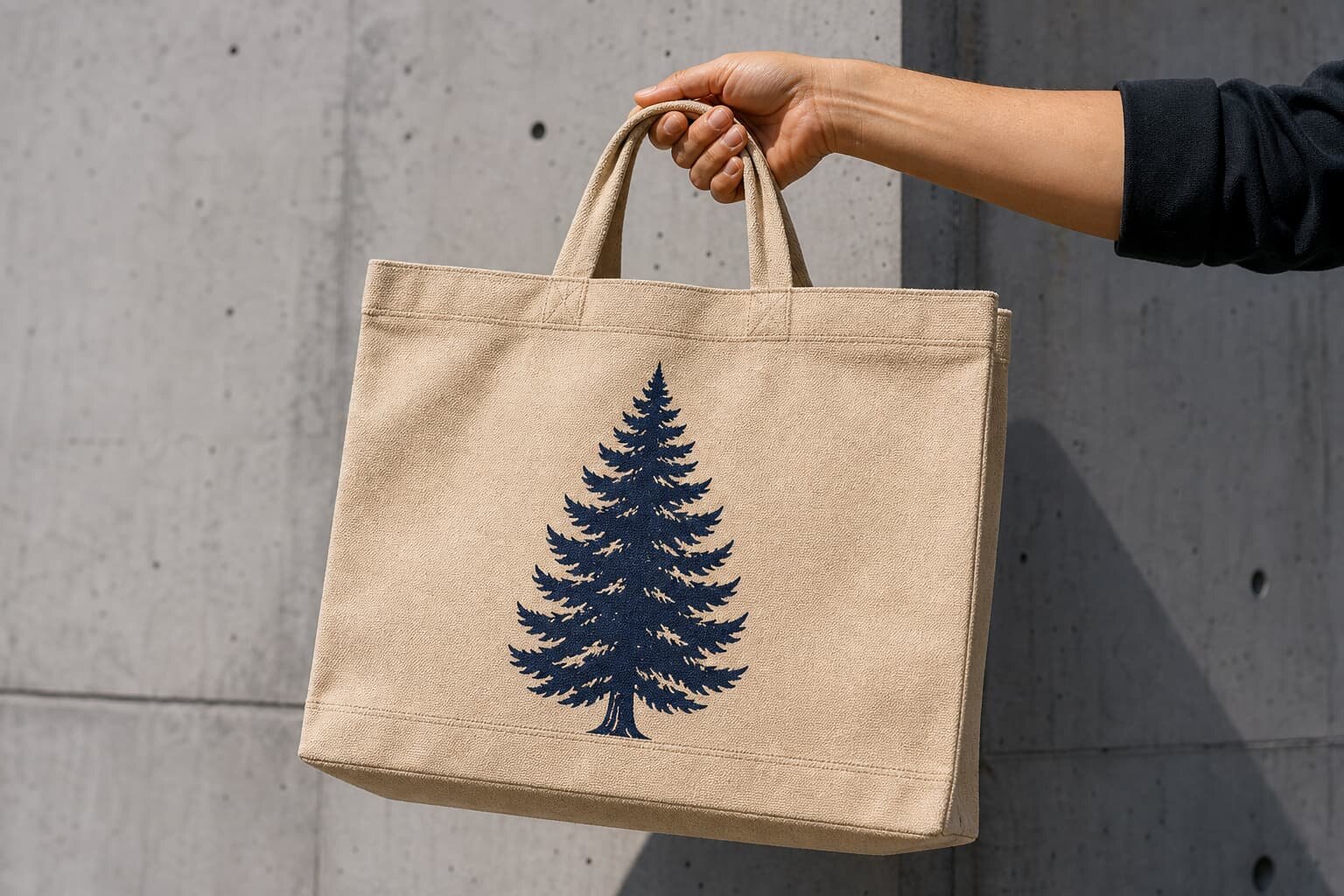
1. Start With a Quote That Describes the Same Bag
A useful canvas tote bag wholesale quote should prove that the supplier understood the same finished product the buyer intended to buy. Three offers cannot be compared if one supplier assumed 8 oz natural canvas, another assumed 10 oz dyed canvas, and a third included individual polybags and FOB freight while the others quoted only ex-factory unit price.
The first job is to turn the tote into a controlled specification: finished size, gusset, fabric weight, fabric color, handle construction, print method, print area, MOQ, sample process, packing, inspection standard, payment term, and incoterm. This does not need to become a long technical manual, but it must cover the decisions that move cost, quality, and delivery risk.
This canvas tote bag for brand owners wholesale quote guide is written for practical procurement work: preparing an RFQ, reading factory offers, approving samples, normalizing freight and payment assumptions, and handing a final PO to production without leaving key details open to interpretation.
- Use finished dimensions, not only a photo reference or a similar online product.
- Request fabric weight in both oz and GSM because suppliers may describe canvas differently.
- Separate unit price, screen charge, sample charge, label charge, packing upgrade, inspection cost, and freight estimate.
- Clarify whether lead time starts from deposit, artwork approval, sample approval, material arrival, or label arrival.
- Compare EXW, FOB, CIF, and DDP quotes only after normalizing the delivery term and destination.
2. Define Construction Before Negotiating Price
A flat document tote, a shopping tote with bottom gusset, a boxed-bottom retail tote, and a reinforced daily-use tote may all be called canvas tote bags. They do not cost the same. Fabric consumption, cutting loss, sewing time, reinforcement, carton volume, and defect risk change with construction.
Use finished size as the base: width x height x gusset. A 38 x 42 cm flat tote is not the same product as a 38 x 42 x 10 cm gusset tote. The gusset improves capacity for retail items, groceries, gift packaging, and boxed goods, but it increases fabric use and can create more inspection points at the corners.
Handle details are equally important. A short hand-carry tote, a shoulder tote, and a long-drop shopper can look similar in a product photo. The RFQ should define handle drop, handle width, handle fabric, seam allowance, stitch pattern, thread color, and reinforcement size.
- Flat tote: lower cost, thinner cartons, useful for folders, catalogues, books, and event giveaways.
- Bottom gusset: better capacity and retail function, with higher fabric use and larger carton CBM.
- Side gusset: useful when more volume is needed while keeping a clean front print panel.
- Boxed bottom: stronger shelf shape, but more sewing work and higher risk of uneven corners.
- Inner pocket, zipper, snap, lining, or piping: adds value but changes MOQ, sample time, unit price, and QC checks.
3. Treat Fabric Weight as a Cost and Brand Decision
Canvas weight is one of the largest price drivers in a wholesale tote order. Buyers often request "heavy canvas" or "good quality canvas" and then receive quotes based on different weights. Those quotes should not be compared as equal. An 8 oz tote may be right for a one-day event; a 12 oz tote may be better for a paid merchandise item.
As a working reference, 8 oz is often around 270 GSM, 10 oz around 340 GSM, and 12 oz around 407 GSM. Exact conversion and finishing loss should be confirmed with the supplier. Heavier fabric usually improves structure and perceived value, but it also raises material cost, sewing resistance, carton weight, and freight cost.
Fabric color changes both price and risk. Natural canvas usually shows cotton seeds, slubs, and shade variation. Dyed, bleached, washed, recycled, or organic fabrics may require lab dips, additional minimums, or longer preparation. If the brand needs a clean luxury look or a strict color, approve swatches before bulk cutting.
- 8 oz / around 270 GSM: lower cost, lighter cartons, easier folding, but less structure and opacity.
- 10 oz / around 340 GSM: balanced option for reusable shopping bags, corporate gifts, and brand merchandise.
- 12 oz / around 407 GSM: stronger hand feel and better structure, with higher material and freight impact.
- Natural canvas: seed marks and slubs may be normal unless the buyer defines a cleaner fabric standard.
- Dyed canvas: needs lab dip approval, bulk shade control, and tolerance under consistent lighting.
4. Match Print Method to Artwork, Quantity, and Durability Risk
Print method affects unit price, setup charges, sample time, defect rate, hand feel, and durability. Screen printing is often the stable choice for solid logos, simple illustrations, and medium to large wholesale runs. It can give strong opacity on canvas, but each color may require a screen, setup, registration control, drying, and curing checks.
DTF, heat transfer, and digital printing are useful for gradients, full-color artwork, low MOQ programs, and seasonal graphics. They are not automatically better or worse than screen print. The right method depends on the artwork, fabric surface, order size, and durability expectation. Rough canvas can reduce fine detail; large transfers can change the hand feel of the bag.
For accurate quoting, send final vector artwork, Pantone references, print size, placement, print side, and expected use. A 30 cm full-panel print on two sides is not the same commercial requirement as an 8 cm one-color logo on one side.
- Screen print: strong for spot colors, repeat orders, larger runs, and solid logo opacity.
- DTF or heat transfer: useful for complex colors and lower MOQ, but test edge lift, adhesion, cracking, and rub resistance.
- Digital print: helpful for detailed artwork, with sharpness affected by canvas texture and fabric color.
- Embroidery: premium for small marks, but can pucker lighter fabric and is inefficient for large filled graphics.
- Two-side print: confirm whether both panels, different artworks, and all setup charges are included.
5. Read MOQ by Layer, Not Only by Total Quantity
Canvas tote MOQ is not only a sewing-line question. The true minimum may come from fabric purchase, dyeing, printing setup, woven label production, barcode labels, hangtags, cartons, or packing materials. Standard natural canvas with one-color print may allow a lower MOQ than custom dyed fabric with multiple labels and retail packaging.
For multi-SKU programs, ask whether MOQ applies per order, per fabric color, per bag size, per artwork, per print color, per label, or per packing style. A 3,000-piece order split across six artworks is not as efficient as one 3,000-piece artwork. It creates more screens, more sorting, more QC separation, and more carton mark control.
Price breaks should be read against the real buying plan. A 5,000-piece quote can look attractive, but it may not help if the actual launch requires 1,000 pieces across five stores, colors, or designs. Ask for price breaks that match the likely PO quantities.
- Natural canvas with standard handles usually gives the most flexible MOQ.
- Custom dyed fabric may require mill minimums, lab dips, and longer preparation time.
- Multiple artworks can add screen charges, setup time, curing checks, and separate QC sorting.
- Custom woven labels may have their own MOQ independent of bag quantity.
- Retail hangtags, barcodes, individual polybags, and printed cartons may change labor cost and packing MOQ.
6. Use Samples to Lock Specification and Approval Workflow
Sampling should remove uncertainty before bulk production. A plain sample confirms construction, size, fabric weight, handle drop, gusset shape, and sewing quality. A printed pre-production sample confirms artwork scale, ink color, print position, curing, and how the graphic behaves on the actual canvas. For a new supplier, new fabric, new artwork, or retail program, a digital proof is not enough.
Measure the sample the same way final inspection will measure production. Check finished width, height, gusset depth, handle drop, print size, print placement, label position, stitch density, seam allowance, and carton packing if a packing mockup is provided. If the tote must carry books, bottles, gift kits, or retail goods, define the expected load before approval.
Small corrections are normal at sample stage. The key is documenting them. If the handle is too long, the logo sits too low, or the gusset corner needs cleaner folding, the change should appear in the revised specification and sample approval note. Keep one sealed sample at the factory and one buyer-side reference for inspection.
- Approve fabric swatch or lab dip before bulk cutting when color, weight, or hand feel matters.
- Request a print strike-off on the same canvas color and GSM planned for production.
- Measure logo placement from fixed points such as top seam, side seam, gusset fold, or center line.
- Approve trim placement, barcode readability, hangtag position, and packing style before mass packing.
- Record approval status clearly: rejected, approved with changes, or approved for bulk production.
7. Build QC Around Measurable Acceptance Criteria
Quality control for canvas tote bags should not rely on general comments such as "good stitching" or "clean print." A stronger PO defines measurable tolerances, defect classes, and inspection timing. Common checkpoints include fabric GSM, finished size, handle drop, print placement, print durability, stitch density, seam allowance, load strength, label accuracy, carton count, and carton condition.
For measurement, agree practical tolerances before production. Many simple totes can be controlled around plus or minus 1 cm for width and height, but the right tolerance depends on size, fabric, washing, and construction. Print placement may need tighter control when the logo is centered or aligned to a pocket, label, or seam.
Defect classification helps avoid subjective disputes. Critical defects may include safety hazards, sharp objects, mold, wrong logo, or severe contamination. Major defects may include open seams, broken handle reinforcement, serious print cracking, wrong size beyond tolerance, unreadable barcode, or wrong carton quantity. Minor defects may include small loose threads or slight slubs within the approved natural-canvas standard.
- Set AQL or sampling plan before inspection; for many consumer textile orders, buyers use separate critical, major, and minor limits.
- Check stitch density at handles, top hem, side seam, and gusset; define expected stitches per inch or centimeter where needed.
- Run a practical load test, such as hanging a defined weight for a defined time, based on the bag's intended use.
- Check print with dry rub, light wet rub where relevant, tape/adhesion check if suitable, and visual cracking inspection after flexing.
- Inspect before final shipment while rework, replacement, sorting, or repacking is still possible.
8. Packing and Carton Data Affect Landed Cost
Packing affects freight, warehouse handling, retail presentation, inspection access, and product appearance. A bundle-packed tote without individual polybag can reduce plastic use and keep cartons efficient, but it needs clean bundling and carton protection. Individual polybags improve presentation and SKU handling, but add material, labor, packing time, and waste considerations.
Ask for packing data at quote stage: units per carton, carton dimensions, gross weight, net weight, and estimated total CBM. A 12 oz gusset tote with a low unit price may still have a higher landed cost than a 10 oz flat tote because cartons are heavier and less space-efficient. Tight packing can crease prints, distort boxed bottoms, or make arrival inspection difficult.
Carton quality should also be defined. Export cartons need adequate strength for stacking and handling. For long routes, humid seasons, or mixed warehouse handling, discuss carton thickness, inner poly liner if needed, tape method, moisture protection, palletization, and whether cartons must pass a reasonable drop or handling check.
- No individual polybag: lower material cost and less plastic, with more need for clean bundling.
- Individual polybag: cleaner presentation and easier SKU handling, with added labor and material cost.
- Bundle pack: practical for wholesale cartons, but bundle quantity must be consistent and stated.
- Carton marks: include PO number, SKU, quantity, gross weight, net weight, carton number, and destination details.
- Pallet option: useful for warehouse handling but changes CBM, freight basis, and sometimes carton stacking plan.
9. Normalize Incoterms, Freight, Payment, and Quote Validity
The lowest unit price may not be the lowest landed cost. One supplier may quote EXW from factory, another FOB port, and another DDP to the buyer's warehouse. These are different commercial offers. Before awarding the order, normalize the incoterm, origin point, destination, currency, freight assumptions, duties, insurance, and documentation responsibility.
For freight planning, request carton dimensions, total cartons, gross weight, net weight, and CBM at target quantity. If the supplier provides freight, ask whether it is based on sea, air, courier, LCL, FCL, or door-to-door service, and how long the freight quote remains valid. If the buyer controls freight, the factory still needs to provide accurate packing data for the forwarder.
Payment terms also belong in quote comparison. A lower price with 100% advance payment may not be preferable to a slightly higher price with deposit and balance after inspection. Common B2B structures vary by supplier relationship, order value, and market, so do not assume. Confirm deposit, balance timing, bank fees, currency, invoice requirements, and whether final payment is linked to inspection release or shipment documents.
- EXW: buyer carries more local handling and export coordination responsibility.
- FOB: commonly used for export comparison because product is delivered to the named port under agreed responsibility.
- CIF/CFR: includes ocean freight to destination port but not all local destination costs.
- DDP: useful for landed delivery comparison, but confirm duties, taxes, delivery address, and exclusions.
- Quote validity: confirm how long fabric price, exchange rate, and freight estimate are held.
10. Compare Supplier Quotes and Hand Off a Complete PO
A quote comparison sheet should show the same rows for every supplier: fabric composition, GSM, finished size, gusset, handle drop, reinforcement, print method, print size, setup fees, sample fees, label cost, packing method, carton data, MOQ, lead time basis, payment term, and incoterm. Missing data is not a small clerical issue; it means the quote is not ready for approval.
For example, Supplier A may quote a lower unit price using 8 oz natural canvas, bundle pack, and EXW terms. Supplier B may quote a higher unit price using 10 oz canvas, one-color screen print setup, individual polybag, carton marks, and FOB terms. Supplier C may quote 10 oz canvas but omit carton CBM and screen charges. The buyer cannot choose correctly until each offer is converted to the same product and delivery basis.
When savings are needed, ask which specification changes reduce cost without damaging the real use case. Moving from 12 oz to 10 oz, reducing a gusset from 12 cm to 8 cm, using natural instead of dyed canvas, limiting print size, or choosing bundle pack instead of individual polybag may produce cleaner savings than simply pushing for a lower margin.
The final PO should include the approved specification, artwork revision, swatch or lab dip reference, approved sample status, packing instructions, carton marks, inspection standard, lead time trigger, payment term, incoterm, shipment documents, and contact points for approvals. The strongest canvas tote bag wholesale quote is not just cheap; it is complete enough to sample, produce, inspect, pack, and ship as the same bag the buyer approved.
- Normalize fabric weight, construction, handle details, print method, packing, payment term, and incoterm first.
- Compare total order cost and landed-cost implications, not only the visible unit price.
- Treat missing GSM, carton size, lead time basis, setup charge, or inspection standard as unresolved quote risk.
- Attach approved artwork, size spec, sample comments, packing guide, barcode list, and carton mark file to the PO.
- Confirm who signs off final sample, who books inspection, who releases shipment, and what happens if rework is required.
Specification comparison for buyers
| Spec decision | Recommended option | When it fits | Landed-cost and buyer risk to check |
|---|---|---|---|
| Budget fabric weight | 8 oz / around 270 GSM cotton canvas | Trade shows, inserts, light giveaways, mailer gifts, and campaigns where unit cost is the main constraint | Lower fabric and freight weight, but weaker structure and possible show-through. Confirm opacity, shrinkage, print opacity, and whether the quote is based on finished GSM or nominal mill weight. |
| Balanced fabric weight | 10 oz / around 340 GSM cotton canvas | Retail merchandise, reusable shopping bags, corporate gift programs, bookstore totes, and mid-weight promotional orders | Often the best balance of hand feel, durability, and freight cost. Request GSM tolerance, approved swatch, fabric composition, carton CBM, and print test on the actual canvas. |
| Premium fabric weight | 12 oz / around 407 GSM cotton canvas | Paid retail totes, brand stores, heavier daily-use bags, gift-with-purchase programs, and premium merchandise | Higher material cost, carton weight, sewing resistance, and freight impact. Confirm needle size, stitch density, seam reinforcement, carton strength, and whether heavier fabric changes MOQ or lead time. |
| Handle construction | Self-fabric handles with box-and-cross reinforcement | Most brand-owner programs needing a clean same-fabric appearance and predictable strength | Define finished handle drop, strap width, seam allowance, reinforcement size, thread color, and load expectation. Long handles increase fabric use and may change carton packing. |
| Bottom shape | Flat tote or 8-10 cm bottom gusset | Flat for documents and events; gusseted for shopping, retail packaging, boxed goods, and higher capacity | Gusset changes fabric consumption, sewing time, carton volume, and landed cost. Quote must state finished dimensions, not cutting size. |
| Print method | Screen print for solid logo colors | One to four spot colors, repeat orders, and artwork requiring stronger opacity on canvas | Good for larger runs, but screen/setup charges and curing checks must be visible. Require Pantone references, strike-off approval, registration tolerance, and rub/adhesion checks. |
| Print method | DTF, heat transfer, or digital print for complex graphics | Full-color artwork, gradients, photo-style graphics, lower MOQ programs, and seasonal campaigns | May reduce setup barriers but can add hand-feel, edge-lift, or durability risk. Test adhesion, cracking, wash/rub performance, and print feel on the selected canvas. |
| Brand trims | Woven side label, inner care label, hangtag, or barcode label | Retail programs needing brand detail, compliance information, SKU separation, or warehouse scanning | Trim MOQ may differ from bag MOQ. Confirm placement, fold direction, material, label colorfastness, barcode readability, and who supplies label artwork. |
| Packing | Bundle pack, individual polybag, retail-ready pack, or palletized export cartons | Importer, distributor, marketplace, and wholesale orders where freight, warehousing, and presentation matter | Packing affects labor cost, plastic use, carton CBM, inspection access, and warehouse handling. Request units per carton, carton size, gross weight, net weight, CBM, pallet plan, and carton drop/handling standard. |
Buyer checklist before sampling
- State finished tote size in width x height x gusset, not fabric cutting size or approximate photo size.
- Specify fabric composition, canvas weight in oz and GSM, color, washing status, and acceptable GSM tolerance.
- Confirm whether the quoted fabric is natural, bleached, dyed, washed, unwashed, recycled cotton, organic cotton, or blended canvas.
- Define handle width, finished handle drop, handle material, seam allowance, stitch density, thread color, and reinforcement stitch pattern.
- Send artwork with vector file, Pantone references, print size, print position, print side, and acceptable placement tolerance.
- Separate bag unit price from screen charge, sample charge, lab dip charge, label charge, packing upgrade, inspection cost, and freight estimate.
- Request MOQ by fabric color, bag size, print artwork, label type, and packing method instead of only total order quantity.
- Confirm packing method, bundle quantity, carton quantity, carton dimensions, gross weight, net weight, CBM, and pallet option if needed.
- Ask for sample lead time, bulk lead time after approval, and the cut-off date for artwork, deposit, labels, trims, and packing instructions.
- Define inspection standards for fabric stains, slubs, loose threads, print defects, seam strength, size tolerance, load test, carton marks, and carton condition.
Factory quote questions to send
- Which canvas weight are you quoting in both oz and GSM, and what fabric weight tolerance will you accept in bulk?
- Is the fabric natural cotton canvas, recycled cotton, organic cotton, polyester-cotton blend, or another composition?
- Are the bag dimensions finished size after sewing, and what tolerance do you use for width, height, gusset, and handle drop?
- What handle drop, handle width, seam allowance, stitch density, thread type, and reinforcement method are included in the quoted price?
- Which print method is included, how many colors are priced, what print size is assumed, and are screen, setup, or film charges included?
- Can you quote the same bag in 8 oz, 10 oz, and 12 oz canvas so we can compare product feel, unit cost, carton weight, and freight impact?
- What is the MOQ for natural fabric, dyed fabric, custom fabric color, each print artwork, custom labels, individual packing, and printed cartons?
- What sample types do you recommend before bulk production, and which sample charges are refundable after order confirmation?
- What measurable tests do you use for load strength, print rub resistance, print adhesion, stitch quality, and finished size control?
- What packing is included: no polybag, bundle pack, individual polybag, inner carton, master carton, pallet, or retail-ready packing?
Quality-control points to confirm
- Fabric GSM checked against the approved swatch or specification with tolerance agreed before bulk cutting.
- Finished bag size measured after sewing, including width, height, gusset depth, and handle drop, using the same measurement method defined in the PO.
- Fabric color compared under consistent light against approved lab dip, swatch, or sealed sample, with shade lots separated if needed.
- Print color, registration, curing, adhesion, cracking, pinholes, and dry/wet rub resistance checked on the actual canvas fabric.
- Logo placement measured from fixed points such as top edge, side seam, gusset fold, or center line, with an agreed placement tolerance.
- Handle seam strength checked by a defined pull or hanging load test suitable for the intended carry load and bag construction.
- Box-and-cross reinforcement checked for skipped stitches, loose threads, uneven shape, broken stitches, needle damage, and broken needle control records where applicable.
- Side seams, bottom seams, and gusset corners checked for puckering, open seams, raw edges, uneven folding, and insufficient seam allowance.
- Stitch density and seam allowance checked at critical points such as handle attachment, top hem, side seam, and bottom gusset.
- Stains, oil marks, shade variation, slubs, yarn knots, weaving defects, and visible contamination classified before packing.