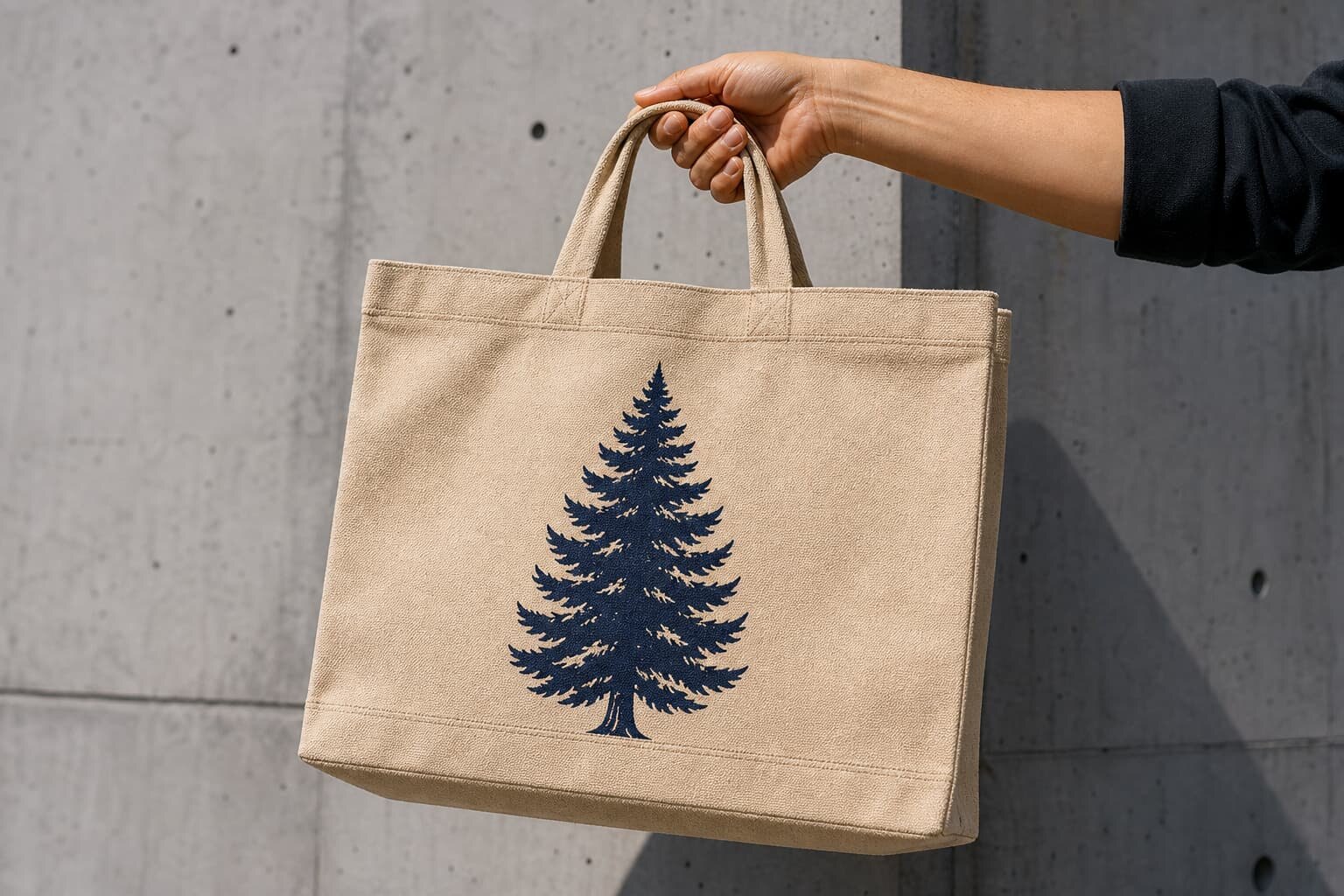
1. Start with the buying use case, not only the bag description
A useful quality control plan for wholesale canvas tote bags begins with the commercial use case. A giveaway bag for a one-day conference, a retail tote sold at a museum shop, a grocery carry bag, and a branded packaging insert may look similar in a photo, but they need different fabric weights, stitching strength, logo durability, and packing controls. Procurement should define the intended use before asking suppliers to quote, because the same bag dimensions can be produced at very different quality and cost levels.
Write the purpose into the RFQ in plain language: expected load, expected life, how the bag will be displayed, whether it will be washed, and whether the logo is decorative or brand-critical. If the tote will be sold at retail, cosmetic defects and barcode accuracy matter more. If it will hold heavy event materials, handle reinforcement and seam strength matter more. If it is a packaging item inserted into cartons, fold consistency and carton count may be the highest-risk points.
The plan should also define the buyer’s approval path. Many tote bag delays come from unclear ownership: purchasing approves price, marketing approves artwork, operations approves packing, and quality approves inspection. When these roles are not assigned, suppliers move forward using assumptions. A 10-point plan works best when each item has a target, tolerance, evidence requirement, and named approver.
Avoid using the keyword phrase as a repeated instruction inside supplier emails. Instead, use natural procurement language: “Please quote wholesale canvas tote bags against the attached 10-point quality control plan.” This tells the supplier that price, sample, production, inspection, and packing will all be judged against the same document.
- Define use case, load expectation, display method, and required service life before comparing quotes.
- Name the approver for fabric, artwork, sample, packing, inspection result, and shipment release.
- State whether the order is promotional, retail, grocery, event, hospitality, corporate merchandise, or packaging.
- Mark each requirement as mandatory, preferred, or supplier-recommended so cost tradeoffs are visible.
2. Convert canvas material into measurable specifications
Canvas should never be quoted only as “cotton canvas” or “heavy canvas.” Buyers need fiber content, weave, weight, color, finish, and sourcing status. Common tote fabrics may be described by ounces per square yard, such as 8 oz, 10 oz, 12 oz, or 14 oz, or by GSM depending on the supplier’s market. The exact conversion is less important than using one agreed reference and verifying that the approved sample and bulk fabric match it.
Fabric weight affects price, hand feel, opacity, structure, and durability. Lighter canvas can work for simple giveaways or light packaging, but it may not support heavy books or grocery loads. Heavier canvas usually looks more premium and supports structure better, but it costs more, takes more sewing effort, and may limit decoration options if the surface is rough. Natural canvas can show seed flecks and shade variation; bleached or dyed canvas needs clearer color tolerance and may require higher MOQ.
Ask the supplier to state whether the material is stock fabric, custom dyed fabric, recycled cotton blend, organic cotton, or another special material. If certification is required, confirm the documentation before sampling rather than after bulk production. Do not assume that a sample made from available fabric can be repeated at bulk quantity unless the supplier confirms the fabric source and booking status.
For QC, incoming fabric checks should include weight, color, surface defects, stains, odor, moisture risk, and roll consistency. Buyers can request simple evidence: swatch photo, roll label, GSM or weight test photo, color comparison under consistent lighting, and a statement that the bulk fabric is the same specification used for sampling.
- Specify fiber content, canvas weight, weave, color, finish, and whether the fabric is stock or custom made.
- Set color tolerance using Pantone, approved swatch, lab dip, or signed physical sample rather than a screen image.
- Ask whether natural flecks, slubs, or shade variation are acceptable and define the visible limit.
- Require incoming fabric inspection before cutting, especially for dyed, printed, recycled, or certified materials.
3. Define construction details where tote bags usually fail
Most buyer complaints on canvas totes are not caused by the general shape of the bag; they come from stress points. Handles pull out, seams open, corners pucker, the gusset is uneven, or the bag twists because panels were cut or sewn inconsistently. A strong wholesale quality control plan turns these risks into measurable construction details before the first bulk piece is sewn.
The RFQ should include finished width, height, gusset depth, handle width, handle length, handle drop, seam allowance, stitch density, and reinforcement method. For handle attachment, ask whether the factory will use bartack, box stitch, cross stitch, double stitching, or another reinforcement. The best choice depends on design and budget, but the method must be visible on the sample and repeated in bulk production.
Soft textile products need realistic dimensional tolerances. A buyer may set tight tolerances for logo placement, handle position, and carton count, while allowing slightly wider tolerances for finished width or height because fabric relaxes after sewing and packing. The key is to write the tolerance clearly. For example, state finished size plus or minus a specific amount, handle placement tolerance from side seam, and logo placement tolerance from top edge or center line.
The supplier should also confirm inside finishing. Raw edges may be acceptable for some low-cost promotional bags if they are clean and secure; bound or overlocked seams may be preferred for retail-quality bags. Loose threads should not be treated as a vague cosmetic issue. State whether threads must be trimmed flush, whether thread color must match fabric or artwork, and whether inside seams require photo approval.
- Measure finished width, height, gusset, handle length, handle drop, handle width, and handle placement.
- Define seam type, stitch density, thread color, reinforcement method, and inside finishing standard.
- Require close-up photos of handle attachment, bottom seam, side seam, gusset corner, and inside seam.
- Include a handle pull or load test so construction strength is verified, not only visually inspected.
4. Match decoration method to fabric and brand risk
Logo quality is often the most visible part of a canvas tote order. The right decoration method depends on fabric texture, artwork complexity, quantity, budget, and durability expectation. Screen printing is common for simple artwork and larger runs. Heat transfers can handle certain detailed designs but must be checked for adhesion and cracking. Embroidery can create a premium look, but dense stitching on lighter canvas may pucker. Woven labels, patches, and hangtags shift part of the quality risk from print durability to placement and attachment.
Buyers should supply artwork files with version numbers, dimensions, color references, and placement instructions. Placement should be measured from fixed points such as top edge, side seam, center line, or handle base. Avoid approving a logo only from a flat digital mockup; the logo may appear different once the bag has gussets, seams, folds, or fabric texture. If the bag will be folded through the logo area, ask the supplier to check whether folding can create cracking, transfer marks, or heavy creases.
A logo strike-off is a low-cost risk control compared with correcting bulk production. The strike-off should use the actual fabric or a confirmed equivalent. Review edge sharpness, coverage, color, registration, hand feel, and whether the decoration sits straight on the weave. For multi-color prints, check registration drift. For embroidery, check thread tension, backing, and puckering. For labels or patches, check alignment, stitch security, edge finishing, and whether corners lift.
Decoration QC should include both visual inspection and simple durability checks. Depending on the method and buyer requirement, use dry rub, wet rub, tape pull, or wash testing. Not every promotional tote needs a formal lab test, but every order should have a clear acceptance standard: no obvious cracking, no severe color transfer, no missing ink, no misregistered artwork beyond tolerance, and no logo placed outside the approved zone.
- State decoration method, artwork version, logo size, color reference, and placement tolerance.
- Approve a strike-off before bulk decoration, especially for new artwork or textured canvas.
- Check for ink bleed, cracking, poor coverage, embroidery puckering, label lifting, and crooked placement.
- Define whether rubbing, washing, folding, or handling durability is required for the product’s use case.
5. Build a sample approval workflow that prevents bulk surprises
A sample is not just a sales photo. It is the reference that production, inspection, and claims will use later. For first-time orders, new materials, custom colors, retail programs, or strict brand artwork, the buyer should use a staged sample workflow: digital mockup, material swatch, logo strike-off, construction sample, and pre-production sample. Repeat orders may not need every step, but changes to fabric, logo method, size, handle, or packing should trigger a new approval.
Each sample should carry a version number and date. If the buyer accepts a deviation, write it down. Examples include “handle drop approved at 280 mm instead of 300 mm,” “natural canvas flecks accepted as part of material,” or “logo color approved against physical print, not screen rendering.” Without a deviation note, the final inspector may reject something the buyer already accepted, or the supplier may ship something the buyer never intended to approve.
For B2B procurement, at least one physical approved sample is recommended for first orders or brand-sensitive programs. Photos are useful for speed, but they do not show hand feel, fabric body, true color, handle comfort, or seam bulk. If photo approval is unavoidable, ask for ruler photos, daylight and indoor lighting photos, close-ups of seams and logo, inside-out photos, and a short video showing bag structure and handle attachment.
The sealed sample should be retained by the supplier and, when practical, by the buyer. Final inspection should compare bulk goods against this sample and the written specification. If there is conflict between the sample and the specification, the buyer should decide which one controls before production starts.
- Use sample stages based on risk: swatch, strike-off, construction sample, pre-production sample, and sealed approval sample.
- Record sample number, date, artwork version, fabric reference, and approved deviations.
- Do not release bulk cutting until material, logo, dimensions, construction, and packing are approved or formally waived.
- Keep sample photos organized by front, back, inside, seam, handle, logo, label, fold, and carton view.
6. Compare suppliers on total landed risk, not just unit price
Wholesale tote bag quotes can look deceptively similar. One supplier may quote 10 oz canvas with reinforced handles and final inspection included. Another may quote lighter fabric, simple stitching, no sample rework, and basic bulk packing. If procurement compares only the unit price, the weaker quote looks attractive until problems appear during receiving or customer use.
Ask every supplier to separate the same cost lines: unit price, fabric surcharge, setup or screen charge, embroidery digitizing if applicable, sample fee, custom label cost, individual polybag cost, barcode or hangtag cost, carton cost, inspection or testing cost, and freight handover term. This makes quote comparison fair and shows where the supplier is absorbing or excluding work.
MOQ should also be broken down by driver. Blank stock bags may have a low MOQ if the supplier already carries fabric and standard sizes. Custom printed bags often require a logo setup minimum. Custom dyed canvas can require higher MOQ because fabric dyeing has batch requirements. Custom labels, metal trims, special packaging, and retail barcode work can each create a different minimum. Buyers should ask for realistic ranges and the reason behind each minimum rather than pushing for a single number without understanding the constraint.
Lead time should be quoted in stages: sample time, sample approval time, fabric booking, bulk cutting, sewing, decoration, QC, rework buffer, packing, and shipment handover. A supplier who gives only one production lead time may be hiding the schedule risk. For new programs, build time for sample revision and re-inspection; the cheapest schedule is not useful if there is no room to correct defects.
- Compare quotes only after fabric weight, construction, logo method, packing, and inspection scope match.
- Request separate line items for setup, sampling, labels, cartons, barcodes, inspection, and special packing.
- Ask what MOQ changes when fabric color, logo colors, trim, label, or packing changes.
- Evaluate whether the supplier can explain risks clearly; vague answers are a capability warning, not only a communication issue.
7. Use AQL inspection rules and defect classes before production starts
A practical quality control plan needs more than the phrase “final inspection required.” Buyers should define sampling approach, inspection level, defect classes, acceptance limits, and rework rules before production. Many B2B buyers use ANSI/ASQ Z1.4 or ISO 2859-1 sampling concepts. For standard consumer textile items, general inspection level II is a common starting point for final random inspection, but the buyer can choose stricter or lighter inspection depending on order risk, customer requirement, and budget.
AQL is not a guarantee that every unit is perfect. It is a statistical sampling method used to decide whether a lot is acceptable based on defects found in the sample. The buyer should state acceptable quality limits for critical, major, and minor defects. A common principle is zero tolerance for critical defects, a tighter limit for major defects, and a more lenient limit for minor cosmetic defects. Exact AQL values should be selected by the buyer or quality team based on product risk and customer requirements.
Defect classification must be specific to canvas tote bags. Critical defects may include mold, contamination, sharp metal fragments, wrong product, wrong artwork that cannot be sold, severe odor, or structural failure that creates a safety concern. Major defects may include open seams, broken handles, wrong fabric weight, large stains, logo outside tolerance, severe print cracking, incorrect carton quantity, or mixed SKUs. Minor defects may include small loose threads, tiny marks in non-prominent areas, slight shade variation within approved range, or small creases caused by normal folding.
Inspection timing matters. Incoming fabric inspection catches material problems before cutting. In-line inspection catches sewing and decoration issues before the entire order is finished. Final inspection should happen when 100% of units are produced and at least most goods are packed, so cartons, labels, and packing count can also be checked. If final inspection fails, the plan should state whether the supplier must sort, rework, replace, or request buyer deviation approval.
- State inspection standard, inspection level, sample size method, defect classes, and acceptance rules in the PO or specification.
- Use zero tolerance for critical defects such as mold, unsafe contamination, wrong artwork, or severe structural failure.
- Classify open seams, handle failure, wrong dimensions, wrong logo placement, and major stains as major defects unless buyer policy says otherwise.
- Require re-inspection after sorting or rework; do not release shipment based only on a promise that defects were corrected.
8. Add functional tests for load, seams, handles, print, and color
Visual inspection alone is not enough for wholesale canvas tote bags. A bag can look acceptable on a table and still fail when filled. The quality plan should include functional checks matched to expected use. A promotional tote carrying brochures may need a lighter requirement than a retail grocery tote, but both should have some evidence that seams and handles will survive normal handling.
Load testing should state the test weight, duration, and pass/fail criteria. For example, the buyer may require the sample to hold a defined weight for a defined time without handle tearing, seam opening, thread breakage, or permanent distortion beyond an agreed limit. The actual weight should be chosen based on the intended use; do not copy a heavy test requirement into a low-cost giveaway program unless the budget supports the construction needed to pass it.
Handle pull testing focuses on the stress points where handles join the bag body. The inspector should check reinforcement placement, stitching density, thread breakage, fabric tearing, and whether the handle stretches or twists. Seam strength review should include side seams, bottom seam, gusset corners, and any inside binding. These checks are especially important when the bag has long handles, large capacity, heavy canvas, or narrow handle webbing.
Decoration and color tests depend on the logo method. Dry rub and wet rub checks help identify color transfer or weak ink. Tape pull can reveal poor adhesion on some prints. Wash or shrinkage testing should be used when the product will be marketed as washable or when the buyer expects repeated cleaning. If the bag is not washable, say so in the product notes to avoid unrealistic customer expectations.
Testing records should be simple but specific: sample quantity, test condition, weight or method, duration, result, and photos. If a supplier says a test is unnecessary, ask them to explain why based on use case and construction. The goal is not to over-test every order; it is to test the failure modes that would create returns, complaints, or brand damage.
- Define load test weight, duration, and failure criteria according to the bag’s intended use.
- Check handle attachment, seam opening, thread breakage, fabric tearing, and permanent distortion after testing.
- Use dry rub, wet rub, tape pull, folding simulation, or wash testing when relevant to the decoration method.
- Keep test photos or videos with the sample approval file and final inspection report.
9. Treat packing, labeling, and warehouse receiving as quality items
A canvas tote can pass product inspection and still fail the buyer’s operation if the packing is wrong. Mixed SKUs, unclear carton marks, overfilled cartons, missing barcodes, crushed folds, and incorrect counts create receiving delays and chargebacks. Packing should be part of the quality control plan, not a note added after production.
Start with the fold method. Some buyers want flat folded totes to protect print appearance. Others prefer compact bulk packing to reduce freight volume. If the logo area must not be heavily creased, state that in the packing rule. If individual polybags are required, specify bag size, warning text if needed, ventilation holes if applicable, barcode placement, and whether the polybag is buyer-branded or plain. If the buyer wants reduced plastic, confirm acceptable alternatives such as paper bands or bulk bundles.
Carton rules should include units per carton, inner bundle count, carton dimensions, gross weight limit, carton material, carton mark format, PO number, SKU, color, quantity, country of origin marking if required, and destination details. For warehouse programs, barcode readability and carton label position should be verified before shipment. A photo of one carton is not enough if the order has multiple SKUs or destinations; require representative photos for each SKU or carton mark type.
Moisture control is also relevant for cotton canvas. Suppliers should avoid packing damp goods, storing cartons directly on wet floors, or sealing goods before decoration is fully cured. Depending on route and season, buyers may request desiccant, inner liner, or moisture inspection. These are not always necessary, but the risk should be considered for long ocean shipments or humid storage conditions.
- Specify fold style, bundle count, polybag or no-polybag rule, carton count, carton dimensions, and gross weight limit.
- Verify carton marks, SKU separation, barcode readability, PO number, color, size, and quantity before shipment.
- Protect printed areas from heavy creasing, sticking, or transfer marks during packing.
- Include packed-carton photos and packing list match as required shipment release evidence.
10. Set release rules, deviation control, and repeat-order records
The final step in a 10-point plan is shipment release. Before balance payment or cargo handover, the buyer should have a final inspection result, defect summary, measurement table, functional test evidence if required, packed carton photos, carton label photos, packing list, and any approved deviation records. This evidence protects both sides. The supplier can show that goods matched the agreed standard, and the buyer can receive against a known file instead of scattered emails.
Deviation control is important because real production sometimes produces small differences. The buyer may accept a minor shade variation, a small dimension difference, or a packing adjustment to protect the delivery date. But accepted deviations must be written with scope, quantity affected, photos, and approver name. Never allow “approved by message” to remain buried in a chat thread without attaching it to the order file.
Release rules should be clear: pass, fail, rework, sort, re-inspect, ship with approved deviation, or hold shipment. If the lot fails for major defects, the supplier should propose a corrective action with timing and evidence. If the issue is cosmetic and the buyer wants to accept it, the buyer should document the commercial decision. This prevents the same point from becoming a claim after goods arrive.
For repeat orders, the final file becomes a stronger RFQ than any new verbal description. Keep the approved specification, artwork, sample photos, supplier quote, production notes, inspection results, packing rules, and claim history. On the next order, ask the supplier to confirm what has changed: fabric source, dye lot, print process, sewing line, carton rule, or subcontracted step. Repeatability is one of the main benefits of building a clear wholesale canvas tote bags quality control plan in the first place.
- Collect final inspection report, defect photos, measurement evidence, packing list, carton photos, and deviation approvals before release.
- Use clear decisions: pass, fail, sort, rework, re-inspect, hold, or ship with approved deviation.
- Attach all approvals to the PO file, not only to chat messages or email threads.
- For repeat orders, require the supplier to confirm whether fabric, artwork, construction, packing, or production location has changed.
Specification comparison for buyers
| Procurement decision | Buyer-ready specification to request | Typical cost or risk tradeoff | QC evidence before approval |
|---|---|---|---|
| Canvas grade | Natural, bleached, dyed, recycled, or organic cotton canvas; state 8 oz, 10 oz, 12 oz, 14 oz, or GSM equivalent; confirm weave, hand feel, shrinkage expectation, and color tolerance | Lower oz/GSM reduces price but can feel flimsy, show dark contents, and fail load expectations; dyed or certified materials may need higher MOQ and longer booking time | Swatch card, fabric weight test record, color reference, fabric roll photos, and approved bulk fabric sample |
| Bag construction | Finished size, gusset depth, handle length and width, seam type, stitch density, bartack or cross-stitch reinforcement, seam allowance, inside finishing, and label position | Simple seams and narrow handles are cheaper, but stress failures usually appear after filling or repeated carrying; reinforced handles add labor but reduce complaint risk | Measured sample photos, seam close-ups, stitch count, handle pull check, and approved pre-production sample |
| Decoration method | Screen print, heat transfer, embroidery, woven label, leather patch, or hangtag; state artwork size, color references, placement, registration tolerance, and durability requirement | Large prints and multi-color logos increase setup time; embroidery can pucker lighter canvas; transfers may crack if poorly matched to fabric texture | Strike-off, logo placement photo with ruler, rub test result, wash or handling note if required, and approved artwork file version |
| MOQ and price breaks | Separate MOQ for blank stock, custom print, custom dyed fabric, custom labels, and retail packing; ask for price at two or three quantity levels | A low MOQ may use available fabric colors and standard cartons; custom-dyed canvas or bespoke trim can push MOQ higher because fabric mills and trim suppliers have minimums | Quote showing unit price, setup fees, sample fees, packing cost, lead time, and what changes at each price break |
| Sample workflow | Digital mockup, material swatch, logo strike-off, fit/construction sample, pre-production sample, and sealed approval sample where needed | Skipping samples saves days but increases risk of wrong hand feel, weak logo adhesion, or incorrect dimensions; a physical sample is strongly preferred for first orders | Signed sample approval form, sample version number, known deviation list, and front/back/inside/logo/handle photos |
| AQL inspection plan | Use general inspection level II for normal final inspection unless risk requires stricter sampling; define critical, major, and minor defects; set acceptance rules before production | No inspection lowers upfront cost but increases receiving claims; stricter inspection may add time and inspector cost but catches problems before shipment | Inspection report with sample size, defect count by class, measurements, photos, carton selection record, and pass/fail decision |
| Functional tests | Load test, handle pull test, seam strength check, stitch density check, print rub test, colorfastness review, shrinkage review if washable, and carton drop or compression review when relevant | More tests add time, but bags used for retail, grocery, events, hospitality, gifting, or resale need evidence that they can handle normal use | Test photos or videos, test weight and duration, measured results, and rework decision for failed samples |
| Packing specification | Fold method, individual polybag or no polybag, bundle count, inner pack, carton quantity, carton dimensions, gross/net weight limit, moisture protection, barcode, SKU separation, and shipping marks | Retail-ready packing costs more and takes longer; bulk packing is faster but can crease prints, mix SKUs, or slow warehouse receiving if not labeled well | Packed sample photo, carton mark proof, carton count, barcode scan check if required, and packing list matched to PO |
| Supplier capability | Confirm factory or trading role, canvas sourcing process, in-house or outsourced decoration, needle/printing capacity, QC team, rework process, and export packing experience | A supplier can quote aggressively by outsourcing steps, but handoffs increase color, logo, and schedule risk unless ownership is clear | Supplier capability answers, production schedule, subcontracted process disclosure, and named contact for QC decisions |
Buyer checklist before sampling
- Write the bag use case first: promotional giveaway, retail resale, grocery carry, packaging insert, event kit, hospitality amenity, or corporate merchandise. The load, appearance, and packing standard should follow the use case.
- Specify finished dimensions with tolerance, including width, height, gusset depth, handle length, handle drop, handle width, seam allowance, and logo placement from fixed reference points.
- Define canvas material by fiber content, color, weave, oz/GSM weight, finish, shrinkage expectation, and whether the fabric is stock, custom dyed, recycled, organic, or certification-dependent.
- Request fabric evidence: swatch, bulk roll photo, weight check, color reference, and a statement that the quoted price uses the same material as the approved sample.
- Choose construction details: stitch type, stitch density, reinforcement at handle joins, bartack or cross-stitch method, bottom seam style, inside seam finishing, label placement, and loose-thread standard.
- Set logo requirements by method, artwork version, size, color reference, placement tolerance, hand-feel expectation, rub resistance, and whether folding can touch the printed area.
- Use a sample sequence appropriate to risk: mockup, fabric swatch, logo strike-off, pre-production sample, then sealed approval sample for first-time or retail-facing orders.
- Define inspection timing: incoming material check, in-line inspection after first bulk pieces, and final random inspection when at least 80% of goods are packed and 100% are finished.
- State AQL rules before production, including inspection level, sample size standard, critical/major/minor defect limits, and who approves rework or shipment release.
- Add functional checks: load test, handle pull, seam strength review, stitch density, print rub, color transfer risk, metal accessory check if any, and carton drop/handling review where relevant.
Factory quote questions to send
- Which canvas fabric is included in your price: fiber content, weave, oz/GSM, stock or custom color, finish, and shrinkage expectation?
- Is the quoted fabric from stock, or does it require dyeing or mill booking? What MOQ and lead time change if we change the canvas color or weight?
- What finished-size tolerances can you hold for width, height, gusset, handle drop, and logo placement? Please state them in millimeters or inches.
- What stitch density, seam type, and handle reinforcement are included? Will you use bartack, box stitch, cross stitch, or another method at handle stress points?
- Which decoration method do you recommend for this artwork and fabric weight, and what are the risks for ink bleed, cracking, puckering, registration, or color variation?
- Can you provide a logo strike-off and one physical pre-production sample before bulk cutting? What sample cost and sample lead time should we plan?
- What is your normal MOQ for blank bags, printed bags, custom dyed canvas, custom labels, individual polybags, barcode labels, and retail-ready packing?
- Do you perform incoming fabric inspection, in-line inspection, and final inspection? Which records or photos can you share at each stage?
- Can you inspect to AQL general inspection level II, and what critical, major, and minor defect limits do you recommend for this order?
- What load test do you normally perform for tote bags of this size and fabric weight? Please state the test weight, duration, and failure criteria.
Quality-control points to confirm
- Incoming material: verify canvas weight against the approved spec, compare color to the approved swatch or Pantone reference, check stains, holes, weaving slubs beyond the agreed limit, odor, moisture risk, and roll consistency.
- Cutting: confirm panel size, grain direction, gusset pattern, handle length, allowance for shrinkage if relevant, and separation of colors or SKUs to prevent mixed production.
- Sewing: measure stitch density, seam allowance, straightness, skipped stitches, loose threads, puckering, handle alignment, bartack or reinforcement position, and inside seam finishing.
- Dimensions: measure a statistically meaningful set against finished tolerance, commonly allowing tighter tolerances for logo placement and wider tolerances for soft fabric dimensions if agreed in writing.
- Functional strength: perform load test and handle pull test using agreed weight and duration; check for seam opening, thread breakage, handle tearing, fabric distortion, and reinforcement failure.
- Decoration: inspect artwork version, color match, registration, edge sharpness, print coverage, embroidery tension, backing, label alignment, heat-transfer adhesion, cracking, bleed, and contamination.
- Durability checks: use dry rub, wet rub, tape pull, wash or shrinkage test when the bag is sold as washable, and folding simulation when the printed area will be folded in cartons.
- Defect classification: treat safety hazards, mold, wrong artwork, wrong material, and severe structural failure as critical or shipment-stopping; classify visible print defects, open seams, major stains, and wrong dimensions as major; classify trim threads and small cosmetic marks as minor when within agreed limits.
- Packing inspection: verify fold style, bundle count, SKU separation, polybag warning if used, barcode readability, carton quantity, carton weight, carton marks, packing list match, moisture protection, and mixed-carton rules.
- Release control: record sample size, inspected quantity, defect count by class, rework action, re-inspection results, buyer-approved deviations, final pass/fail decision, and photo evidence with date and PO reference.