Why a Price Variance Memo Matters
A canvas tote bag wholesale price variance memo is not an accounting form. For a procurement team, it is the document that explains why one supplier quotes lower, why another quote looks safer, and which specification changes are driving the gap. Canvas totes look simple on a website, but the price can move quickly when fabric weight, handle construction, printing, packing, and MOQ are not locked in the same way.
The most common buying mistake is comparing unit prices before comparing build details. One factory may quote 8 oz natural cotton with one-color screen print and bulk packing. Another may quote 12 oz dyed canvas with inner pocket, individual polybag, and reinforced handles. Both may call the item a canvas tote bag. The variance memo forces all quotes into the same structure so the buyer can decide whether a lower price is a true saving or only a weaker specification.
- Use the memo before PO approval, not after a cost dispute appears.
- Attach it to the RFQ file, sample approval file, and reorder history.
- Write reasons for variance in production language, not vague notes such as 'supplier A cheaper'.
- Separate cost variance caused by specification from variance caused by factory margin or efficiency.
Start With a Fixed Reference Specification
Before asking three factories to quote, create one fixed reference specification. This is the base style that all suppliers must price. If the specification is incomplete, each factory will fill the gaps differently. A factory that assumes thinner fabric, smaller print, and simple bulk packing will naturally appear more competitive, but the quote will not protect your buying decision.
For a standard canvas tote, the reference spec should include fabric, size, gusset, handle drop, print, trims, packing, inspection, and shipment terms. Do not rely on a product photo alone. A photo does not show fabric GSM, seam allowance, print ink type, carton packing, or whether the handle is self-fabric or webbing. A good variance memo begins with one approved target, then records every supplier deviation from that target.
- Body size: finished width, finished height, bottom gusset, side gusset if any.
- Fabric: cotton canvas weight in oz and GSM, color, shrinkage requirement, and dye method if dyed.
- Handle: material, width, length, drop, reinforcement stitch, and load expectation.
- Print: method, color count, artwork size, position, tolerance, and ink finish.
- Packing: folding method, pieces per inner bundle, polybag requirement, carton marks, and carton quantity.
Fabric Weight Is Usually the Largest Hidden Driver
Fabric is often the biggest reason for quote variance. A tote described as canvas can be 6 oz, 8 oz, 10 oz, 12 oz, 14 oz, or heavier. In metric terms, buyers should also ask for GSM because oz labels are sometimes used loosely in export conversations. A 10 oz canvas and a 12 oz canvas may look similar in a thumbnail photo, but material consumption, sewing behavior, carton weight, and final handfeel are different.
The buyer should also clarify whether the weight is greige fabric weight, finished fabric weight, dyed fabric weight, or washed fabric weight. Dyeing and finishing can change handfeel and shrinkage. If a quote says '12 oz canvas' but the sample feels light, weigh the finished bag and compare it with a known approved sample. The memo should record supplier-stated fabric data and buyer-verified sample observations.
- 6-8 oz: suitable for light promotional use, but may feel too thin for retail positioning.
- 10 oz: common balanced option for brand totes, event merchandise, and general retail use.
- 12 oz: stronger handfeel and better perceived value, with higher material and freight impact.
- 14 oz and above: premium or heavy-duty applications, but sewing, folding, and carton volume must be checked.
- Dyed canvas: adds shade control risk, crocking risk, and possible MOQ pressure compared with natural canvas.
Print Method Changes More Than Decoration Cost
Print cost is not only the price of ink. It affects sample time, bulk speed, reject rate, and how the bag can be packed after printing. Screen print is usually the practical choice for solid logos and repeat orders. Digital print can support gradients and multiple colors, but the buyer must check color fastness, handfeel, and unit cost at the target quantity. Heat transfer may look clean on a sample, yet it can change the textile feel and may not suit every brand position.
A proper variance memo records print method, number of colors, print size, location, ink type, and setup charges. If one quote includes a one-color print and another includes a three-color print, the variance is not a price problem; it is a scope problem. If the logo crosses seams or sits close to a gusset fold, the factory may need slower handling or a different print sequence. This should be written before approval.
- Spot-color screen print: efficient for solid logos, repeatable colors, and moderate to large production.
- Water-based ink: softer handfeel, but fabric color and absorbency affect final appearance.
- Plastisol or heavier ink: stronger coverage on some fabrics, but handfeel may be thicker.
- Digital print: useful for complex artwork, but confirm bulk cost and durability, not only sample appearance.
- Embroidery: premium look but adds thread density, puckering risk, and production time on lighter canvas.
MOQ Logic Behind Different Unit Prices
MOQ is not just a sales rule. It comes from fabric sourcing, dyeing minimums, cutting efficiency, printing setup, labor planning, and packing line productivity. A lower MOQ usually carries a higher unit price because setup work is spread across fewer bags. A higher MOQ may reduce the unit price, but only if fabric and printing can be run efficiently without creating excess inventory or shade variation.
Ask suppliers to quote several quantity levels using the same specification. The variance memo should show whether the price drop is meaningful or only cosmetic. For example, moving from 500 to 1,000 pieces may reduce setup burden, while moving from 3,000 to 5,000 pieces may not reduce much if the fabric roll consumption and labor flow are already efficient. This helps buyers avoid pushing volume that the sales plan cannot absorb.
- Small quantity variance: often driven by sample handling, print setup, and cutting room inefficiency.
- Mid-volume variance: usually reflects better fabric purchasing and stable sewing line planning.
- Large-volume variance: may depend on fabric mill MOQ, dye lot planning, and cartonized shipment efficiency.
- Custom dyed fabric MOQ: can be much different from natural stock fabric MOQ.
- Private label trims: woven labels, hangtags, and barcode stickers may each carry their own MOQ.
Construction Details That Create Quote Gaps
Two canvas tote bags can have the same size and fabric but different sewing cost. Flat totes are faster to cut and sew than gusseted totes. Self-fabric handles can look more integrated than webbing handles but require fabric cutting, folding, and stitching. Inner pockets, zipper closures, snaps, bound seams, and reinforced bottoms all add handling steps. The memo should state which construction is included, not only that the bag is 'with handle'.
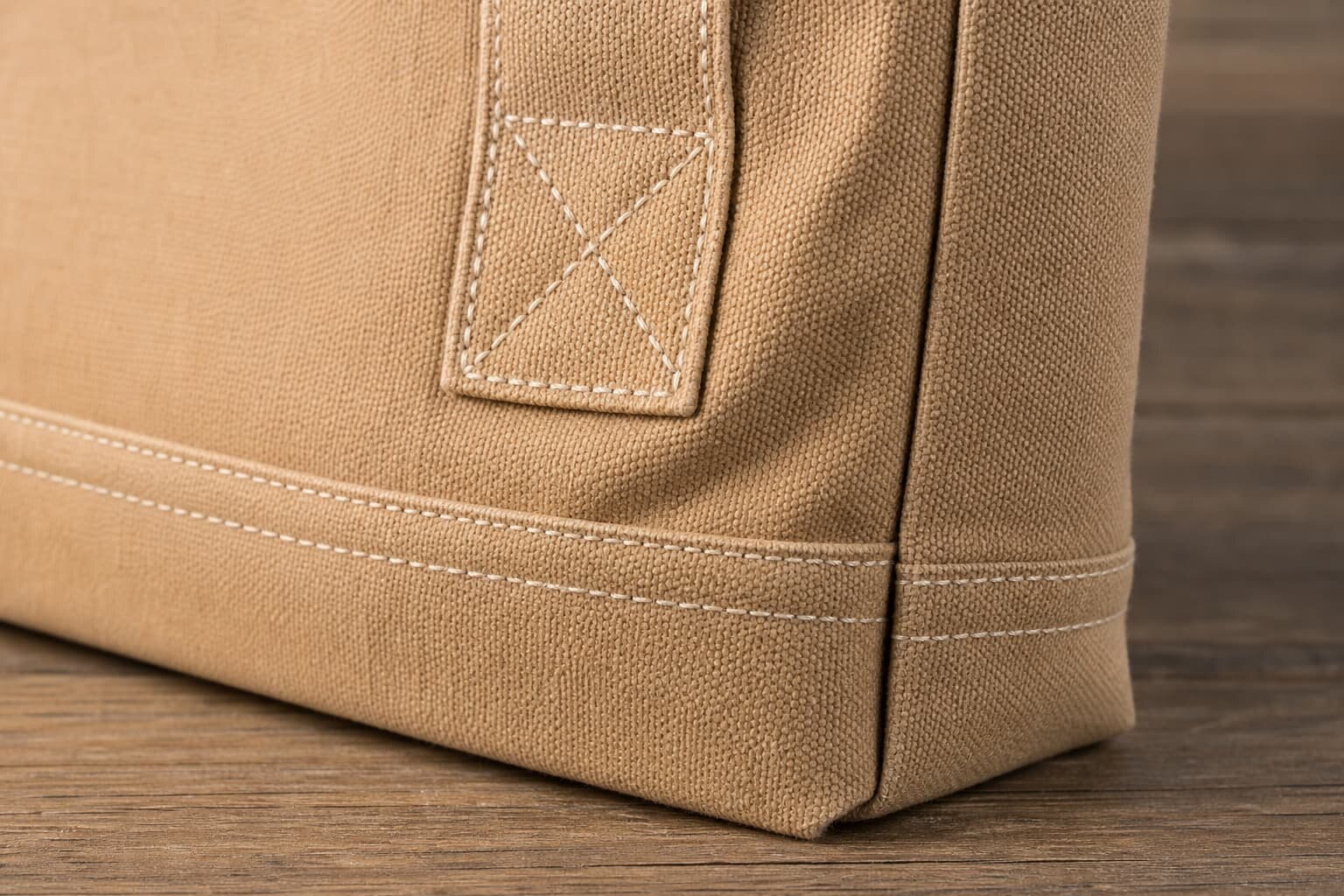
Handle reinforcement deserves special attention because it is a common failure point. A cheaper quote may use short bar tacks, fewer stitches, narrow seam allowance, or lighter thread. A stronger construction may use box stitching, cross stitching, and wider attachment. If the tote is intended for books, groceries, bottled products, or retail use, handle strength is not an optional upgrade. It should be part of the quoted requirement.
- Flat tote: lower sewing cost and thinner packing profile.
- Bottom gusset: improves carrying shape but increases fabric consumption and sewing tolerance control.
- Side gusset: better capacity, more complicated folding and finishing.
- Inner pocket: useful for retail value, but requires pocket fabric, extra sewing, and position checking.
- Zipper top: increases material cost and requires alignment inspection.
Packing and Freight Effects Buyers Often Miss
Packing can change the landed cost even when the FOB unit price looks attractive. Bulk flat packing is usually the lowest cost and uses carton space efficiently. Individual polybags protect bags from dust and simplify distribution, but add material, labor, inspection, and sometimes compliance checks. Retail-ready packing with hangtags, barcode labels, size stickers, or shelf cartons must be stated in the RFQ.
Canvas is heavier and bulkier than thin non-woven material, so carton planning matters. A 12 oz gusseted tote with individual polybag may create larger cartons than a flat 8 oz tote in bulk bundles. If a distributor sells by carton, the master carton quantity affects warehouse receiving and pick-pack cost. The price variance memo should include carton dimensions, gross weight, net weight, and packing ratio whenever quotes are compared.
- Bulk bundle packing: lower cost, practical for repacking or event distribution.
- Individual polybag: cleaner handling, but more labor and material.
- Retail hangtag: adds branding value and requires position and barcode checks.
- Export carton: confirm carton ply, tape method, carton mark, and maximum weight.
- Palletization: may reduce damage risk but affects container loading and local handling.
How to Read Quote Data Without Being Misled
A useful supplier quote should not be a single line with a unit price. It should identify what is included and what is excluded. Procurement teams should request a quote sheet that separates base bag cost, print cost, label or trim cost, packing cost, sample charge, screen or setup charge, and any inland freight or document cost if applicable. This makes negotiation cleaner because each variance has a source.
Also check the trade term. A quote under EXW, FOB, CIF, or DDP is not directly comparable unless the logistics scope is understood. The memo should record currency, validity period, payment terms, lead time, port, and assumptions. Cotton fabric, dyeing, labor, and freight conditions can move. If a buyer delays approval for several months, a previous quote may no longer match the factory's material cost.
- Unit price: confirm quantity, specification, currency, and trade term.
- Setup cost: screen, plate, artwork adjustment, sample, or testing cost may be separate.
- Validity: record how long the quote is held and what raw material assumptions apply.
- Lead time: clarify whether it starts after deposit, artwork approval, fabric approval, or PPS approval.
- Exclusions: testing, inspection, barcode setup, special carton, and local delivery should be visible.
Sample Checks Before Accepting the Variance
A lower price is not useful if the sample does not match the buying purpose. Before accepting a supplier's price variance, ask for a sample that represents the quoted construction. If the bulk quote is for 10 oz canvas with screen print and self-fabric handles, do not approve a sample made with available 12 oz fabric, substitute webbing, or temporary digital print unless the deviation is clearly recorded.
The pre-production sample should be checked like a production control item. Measure the finished size, weigh the bag, inspect the print, pull the handles by hand, and compare the fabric with the swatch. If the sample is approved with comments, the comments must be converted into measurable criteria. A note such as 'make print better' is weak. A note such as 'print centerline must be within plus or minus 5 mm from bag center' is usable.
- Sample weight: compare finished bag weight with the expected fabric and construction.
- Size tolerance: set realistic tolerance for width, height, gusset, and handle drop.
- Print tolerance: define position from top edge, side seam, or centerline.
- Color approval: keep fabric swatch and print strike-off under buyer-approved lighting conditions.
- Sewing review: check skipped stitches, seam puckering, loose thread, and handle attachment strength.
Writing the Memo for Internal Approval
The final memo should help a manager approve the right supplier without reading every email thread. Keep it factual. State the target specification, the suppliers compared, the quantity level, and the main reasons for price difference. Then mark which differences are acceptable, which require requote, and which need sample confirmation. This is especially useful when merchandising, procurement, quality, and finance teams all review the same order.
Do not hide risk to make a lower price look easier. If the low quote depends on lighter fabric, simpler packing, or no barcode labeling, say so. If the higher quote includes better seam finishing, stronger carton, or verified print method, say so. The memo is not a sales argument; it is a decision record. When reorder season comes, the same file helps prevent accidental downgrades and supplier misunderstandings.
- Decision line: selected supplier, selected price basis, and approved specification version.
- Main variance: fabric, print, construction, packing, MOQ, lead time, or trade term.
- Commercial impact: unit price, setup cost, packing cost, and landed-cost concern if known.
- Quality impact: sample status, open risks, and inspection focus points.
- Reorder note: what must not change without buyer approval.
Specification comparison for buyers
| Spec decision | Recommended option | When it fits | Buyer risk to check |
|---|---|---|---|
| Body fabric weight | 10 oz or 12 oz cotton canvas, measured before washing if not pre-shrunk | Retail giveaway, bookstore tote, lifestyle brand launch, moderate load use | Supplier may quote lighter 8 oz fabric while describing it as canvas; request GSM or oz/sq yd and actual sample weight |
| Handle construction | Self-fabric canvas handles with cross stitch or reinforced box stitch | Brand bags where handle feel and strength are visible to the end user | Webbing handles may reduce cost but change appearance; weak stitch density can fail even when fabric is strong |
| Print method | Spot-color screen print for 1-3 solid colors on natural or dyed canvas | Most logo totes, event merchandise, distributor programs, and reorderable retail styles | Digital print or heat transfer may be quoted cheaper for samples but behave differently in bulk wash and rub tests |
| Bag structure | Flat tote for lowest cost, bottom gusset for better shelf and packing shape | Flat tote for promotional quantity; gusseted tote for grocery, retail, or product bundles | A gusset changes cutting consumption, sewing time, carton volume, and tolerance control |
| Inner finishing | Overlocked seams for standard orders; bound seams for premium retail presentation | Overlock for practical wholesale programs; binding when interior is inspected by retail buyers | Two quotes may look close outside but have different inside seam finishing and labor cost |
| Packing method | Flat pack 25 or 50 pieces per inner bundle with master carton marks | Warehouse receiving, distributor repacking, or retail DC inspection | Individual polybags, hangtags, barcodes, and carton strength add cost and lead time; they must be stated in the RFQ |
Buyer checklist before sampling
- Record the quoted fabric as oz and GSM, not only as 'canvas' or 'heavy canvas'.
- Attach the supplier's bag size drawing with width, height, gusset, handle drop, and seam allowance notes.
- Confirm whether fabric weight is greige, dyed, washed, or finished weight.
- Compare print method, number of colors, print size, print position tolerance, and ink type.
- Separate sample cost, bulk unit cost, mold or screen charge, label cost, packing cost, and inland freight if quoted.
- Ask each factory to quote the same MOQ levels, such as 500, 1,000, 3,000, and 5,000 pieces, so the price curve is comparable.
- Check if the quoted lead time starts after deposit, artwork approval, fabric arrival, or pre-production sample approval.
- List all trims: zipper, snap, pocket, woven label, hangtag, care label, barcode sticker, and reinforced handle stitching.
- Require carton dimensions, gross weight, net weight, packing ratio, and whether cartons are export grade.
- Keep the variance memo with the approved sample file so future reorders are not negotiated from incomplete memory.
Factory quote questions to send
- What exact fabric weight are you quoting in oz and GSM, and is it natural, dyed, washed, or finished canvas?
- Is the quoted fabric stock fabric or custom woven/custom dyed fabric, and what MOQ applies to that material?
- What is the cutting size and finished size tolerance for the tote body, gusset, and handle drop?
- Which print method is included in the quote, and how many colors, print positions, and print dimensions are covered?
- Are screen setup, digital proof, strike-off, and pre-production sample charges included or listed separately?
- What stitch type and stitch density are used on side seams, bottom seams, and handle reinforcement?
- Does the quote include individual polybag, inner bundle, master carton, hangtag, barcode label, or retail price ticketing?
- What is the MOQ for the quoted unit price, and how does the price change at lower or higher quantities?
- What production lead time is realistic after all approvals, and which approval is the lead-time start point?
- Which inspection standard, defect limit, and sample retention process will be used before shipment?
Quality-control points to confirm
- Measure finished bag width, height, gusset, and handle drop against the approved size chart using at least a small random sample from bulk.
- Weigh one finished bag and compare it with the approved sample; a large difference may signal fabric substitution or construction change.
- Check canvas handfeel, shade, slub level, and shrinkage behavior against the approved fabric swatch.
- Inspect handle reinforcement stitches for skipped stitches, loose thread, broken needle marks, and uneven box or cross stitching.
- Test print adhesion with rub, scratch, and light fold checks, especially on dark dyed canvas or heavy ink coverage.
- Check print position tolerance from top edge, side seam, and bag centerline instead of judging by eye only.
- Open interior seams to inspect overlock coverage, raw-edge exposure, and seam allowance consistency.
- Confirm pocket size, zipper smoothness, snap alignment, label position, and barcode scan accuracy if these are included.
- Review carton packing ratio, carton marks, polybag warning text if required, and carton strength for export handling.
- Retain one approved pre-production sample and one sealed bulk sample from inspection for reorder comparison.