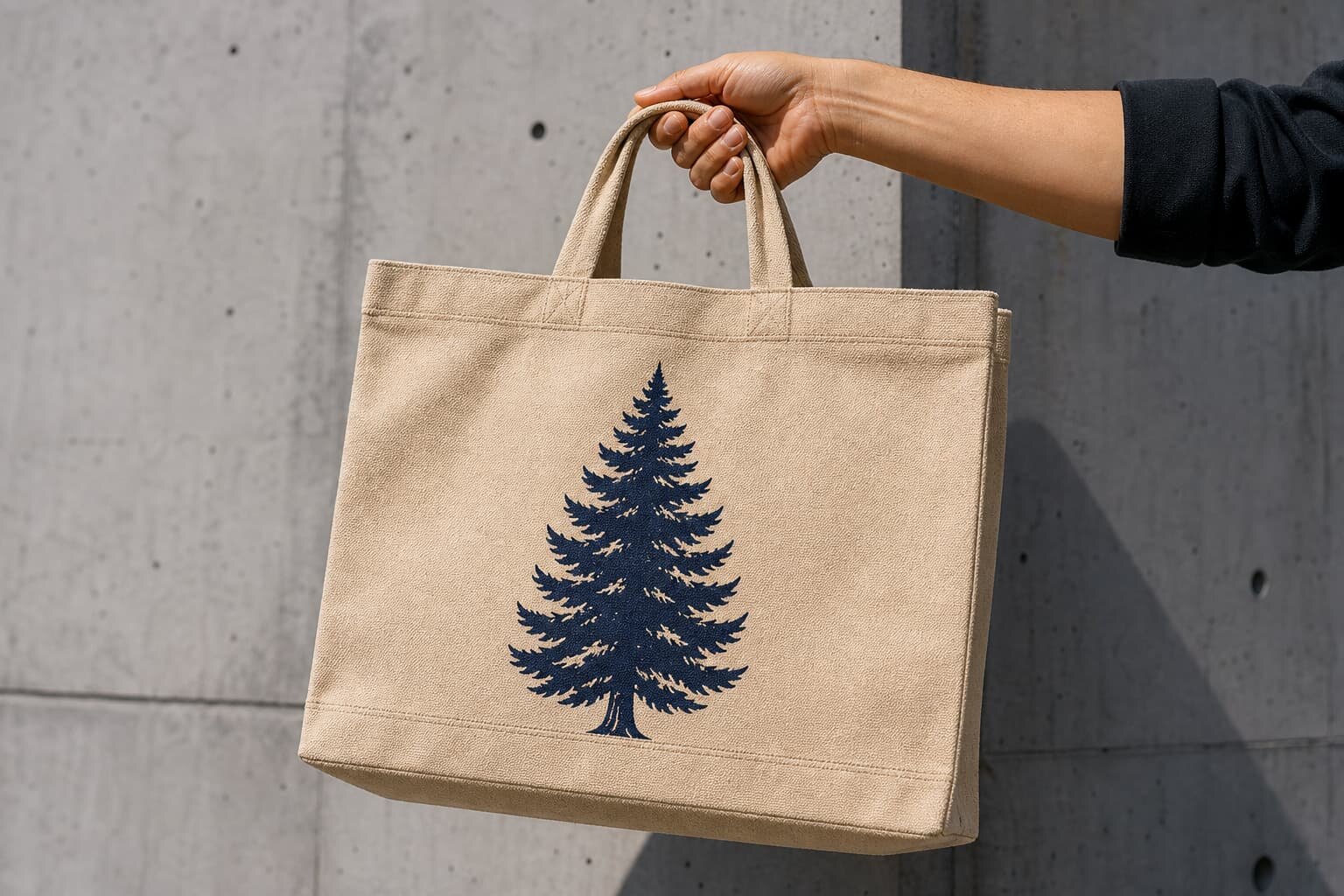
Start With the Launch Risk, Not the Bag Name
A canvas tote bag wholesale launch usually fails in small details, not because the buyer forgot to request a tote bag. The common problems are unclear fabric weight, artwork that cannot be printed as quoted, handles that feel too weak for the intended load, cartons that are too heavy for the distributor, or a sample approved by marketing that production cannot repeat at scale. Your checklist should turn a general product idea into manufacturing instructions that a factory can price, sample, and inspect.
Before sending an RFQ, decide what the launch must achieve. A low-cost event tote, a bookstore retail tote, and a premium canvas shopping bag may all look similar in a presentation deck, but they need different fabric weights, handles, print methods, and packing. If these are not stated early, suppliers will quote different assumptions and the cheapest price may be the least comparable.
- State the sales channel: wholesale distribution, retail resale, promotional giveaway, ecommerce bundle, or corporate merchandise.
- State the expected contents: light papers, apparel, bottles, groceries, books, or mixed retail goods.
- State whether the bag must stand upright, fold flat, carry heavy weight, or show a premium hand feel.
- State the target launch date and whether approval delays are already built into the timeline.
- State whether the factory should prioritize lowest landed cost, stronger construction, better print finish, or retail-ready packing.
Translate Fabric Weight Into Usable Specifications
Canvas tote bag buyers often ask for 8 oz, 10 oz, 12 oz, or 14 oz canvas, but quotes can still be inconsistent. Some suppliers refer to ounces per square yard, some convert to GSM, and some quote from available stock without confirming actual measured weight. Natural cotton canvas also changes after bleaching, dyeing, washing, or finishing, so the fabric named in the quote should match the fabric used in the sample.
For most wholesale launches, 10 oz to 12 oz canvas is a practical starting point. It has enough structure for retail and brand use while keeping sewing, folding, and freight costs reasonable. Lighter fabric may suit mass giveaways, but print coverage and perceived value can suffer. Heavier fabric can improve durability, but it increases unit cost, carton weight, needle wear, and sometimes MOQ if the mill must produce the fabric specially.
- 8 oz canvas: useful for budget promotions, lightweight mailers, and large-quantity events where cost and pack volume matter.
- 10 oz canvas: common for branded tote programs that need better hand feel without moving into premium cost.
- 12 oz canvas: suitable for retail totes, bookstore bags, heavier contents, and stronger perceived value.
- 14 oz and above: better for premium or utility bags, but check sewing capability, folded packing thickness, and freight effect.
- Natural canvas: expect cotton seed flecks and shade variation unless the buyer specifies tighter cosmetic limits.
- Dyed canvas: request lab dip or color standard approval before bulk dyeing, especially for brand colors.
Lock the Bag Construction Before Comparing Quotes
A quote for a canvas tote bag is not complete unless the construction is clear. A flat tote with no gusset, a bottom-gusset tote, a side-and-bottom gusset tote, and a boxed-bottom shopper can all use similar fabric but behave differently in use. They also consume different material, require different sewing operations, and change carton quantity. If one supplier prices a simple flat tote while another prices a gusseted retail bag, the comparison is not valid.
Finished measurements should be specified, not only approximate visual size. Include width, height, gusset, handle width, handle total length, and handle drop. For example, a 38 x 42 cm flat tote with 65 cm handles is a different product from a 38 x 42 x 10 cm gusset tote with the same handle length. The gusseted version has more capacity, higher fabric consumption, different folding behavior, and may require a stronger bottom seam.
- Flat tote: lowest sewing complexity, easy to fold, good for events and printed promotions.
- Bottom gusset tote: more useful for retail, books, groceries, and boxed goods; moderate cost increase.
- Side-and-bottom gusset tote: better capacity and shape, but more sewing and size-control points.
- Boxed-bottom tote: more structured appearance, but higher labor and more inspection risk at corners.
- Self-fabric handles: visually consistent, but may stretch or twist depending on fabric and sewing.
- Cotton webbing handles: stable, strong, and common for wholesale programs that need repeatable quality.
Choose the Print Method Based on Artwork and Volume
Printing is one of the most common reasons a canvas tote launch slips. Buyers may approve a logo in a PDF without checking whether it is suitable for screen printing, digital printing, heat transfer, or embroidery. A small serif mark, fine line pattern, gradient, or large solid ink area can change cost and reject rate. Ask the factory to recommend the print method after reviewing the actual artwork, not only the logo size.
Screen printing is usually the most economical for solid-color logos and medium to large production runs. It gives a strong, direct print on canvas when the ink is properly cured, but each color normally requires setup. Digital printing can handle more color detail, but the fabric surface and pretreatment affect sharpness. Heat transfer can work for short runs or complex graphics, but buyers should check hand feel, edge durability, and cracking after folding.
- Screen print: best for one to four solid colors, clear logos, larger repeat orders, and cost-controlled wholesale runs.
- Digital print: useful for gradients, small batches, full-color graphics, or launch testing with multiple artworks.
- Heat transfer: useful for complex artwork on smaller runs, but check film edge, wash behavior, and fold cracking.
- Embroidery: premium look for smaller logos, but not suitable for very fine detail or large filled areas on thin canvas.
- Discharge or pigment effects: only use when the factory can provide a realistic strike-off on the actual fabric.
Build MOQ Around Real Production Constraints
MOQ is not just a number a supplier chooses to block small buyers. For canvas tote bags, MOQ depends on fabric availability, fabric color, print setup, cutting efficiency, packing format, and whether accessories such as hangtags, labels, or special webbing are custom-made. A buyer may ask for 1,000 pieces total, but if that total includes five bag colors and six artwork versions, the factory is managing many small production lots.
When preparing a canvas tote bag wholesale launch checklist, separate total order quantity from SKU quantity. A 5,000-piece order in one natural canvas color with one screen print is very different from 5,000 pieces split across ten retailer-specific designs. The first can be cut, printed, sewn, and packed efficiently. The second needs more screens, more approvals, more line changeovers, higher counting risk, and more warehouse control.
- Ask for MOQ by fabric color, not only by total order.
- Ask for MOQ by print design, because screen setup and color matching are artwork-specific.
- Ask for MOQ by packing type if some units are bulk packed and others are retail packed.
- Ask whether the factory can combine artwork versions on the same fabric batch without shade risk.
- Ask what price changes at 500, 1,000, 3,000, 5,000, and 10,000 pieces so the buyer can see the cost curve.
- Ask which component creates the highest MOQ: fabric, webbing, label, print setup, carton printing, or packing material.
Use Samples to Approve Production, Not Just Appearance
A good sample process prevents expensive misunderstandings. A photo sample may confirm the concept, but it cannot prove fabric hand feel, print curing, handle strength, folding bulk, or carton fit. For a wholesale launch, the most useful sample is a pre-production sample made with actual fabric, actual print method, actual handle material, actual label, and final packing components. If substitutions are unavoidable, the factory should identify them in writing.
Do not approve a sample only by visual impression. Measure it, load it, rub the print, fold it, smell it, and compare it against your RFQ. Canvas can have natural marks, but oil stains, mildew odor, severe shade panels, and visible needle damage should not be accepted as normal. If the bag will be sold at retail, the packed sample should also be reviewed by the merchandising or warehouse team.
- Blank fabric swatch: confirms fabric weight, weave, color, stiffness, and surface before sample sewing.
- Print strike-off: confirms ink color, print size, edge sharpness, opacity, and curing on actual canvas.
- Fit sample: confirms dimensions, gusset, handle drop, seam type, and general construction.
- Pre-production sample: confirms final approved specification before bulk cutting.
- Packed sample: confirms folding method, barcode, hangtag, carton count, and retail handling.
Ask for Quote Data That Makes Suppliers Comparable
A low unit price is not useful if the quote hides assumptions. Procurement teams should request quote data in a structure that shows what is included and what is not. For canvas tote bags, the quote should identify fabric weight, fabric color, finished size, handle specification, print method, number of print colors, packing, carton data, sample cost, mold or screen cost if any, lead time, and trade term. Without this, buyers compare guesses instead of offers.
The quote should also show the cost impact of key alternatives. Asking for one price can force suppliers to make their own choices. Asking for controlled options helps the buyer make a sourcing decision. For example, quote the same bag in 10 oz and 12 oz canvas, with bulk packing and individual packing, and with one-color screen print versus full-color transfer. This creates a practical cost map for launch planning.
- Unit price by quantity tier and SKU split.
- Fabric specification with oz, GSM, color, finish, and whether stock fabric is used.
- Printing charge separated from base bag price where possible.
- Setup charges for screen, plate, artwork adjustment, or sampling.
- Packing cost for bulk pack, individual polybag, paper band, barcode, or hangtag.
- Carton dimensions, carton quantity, net weight, gross weight, and estimated CBM.
- Lead time after deposit, after artwork approval, and after sample approval.
- Payment term, trade term, loading port, and quote validity period.
Control Packing Before It Becomes a Freight Problem
Packing is often left until the end, but it affects cost, carton strength, warehouse efficiency, retailer acceptance, and freight planning. A canvas tote bag can be folded in several ways, and the folding method changes the visible print crease, individual pack size, carton count, and labor cost. If the print is large or thick, folding through the ink area may create marks or cracking. Decide packing during sampling, not after bulk production.
For wholesale distribution, bulk packing may be enough if the bags go to events or repacking centers. For retail or ecommerce, individual packing may be required for barcode control and clean handling. However, individual polybags add cost, plastic, and labor. Some buyers use paper bands, belly bands, or master polybags to reduce plastic while keeping units organized. Whatever the format, the factory needs the instruction before carton planning.
- Confirm whether bags are packed flat, half-folded, tri-folded, rolled, or individually packed.
- Set maximum carton gross weight so cartons are safe for warehouse handling.
- Confirm carton ply, carton marks, SKU labels, purchase order number, and destination code.
- Check whether printed areas are protected from abrasion during carton movement.
- Avoid over-compression that creates deep fold marks on heavy canvas.
- Request packed carton photos and random carton opening photos before shipment.
Plan Lead Time With Approval Gates
A canvas tote bag wholesale launch schedule should not be written as one production lead time. It should be written as a sequence of approval gates. Fabric sourcing, dyeing, sample making, artwork adjustment, print strike-off, buyer approval, bulk cutting, panel printing, curing, sewing, trimming, inspection, packing, and export handover each take time. If the buyer takes five days to approve a sample, that delay belongs in the launch calendar.
The highest-risk timing points are usually custom fabric color, complicated artwork, accessory approval, and late packing changes. Natural stock canvas with a one-color print can move faster than dyed canvas with multiple print versions and retail labeling. Buyers should ask suppliers to identify the critical path instead of accepting a vague delivery promise. A realistic schedule is more valuable than an optimistic one that fails during launch week.
- Material booking: confirm whether fabric and webbing are in stock or need production.
- Sample stage: allow time for sample making, internal factory check, courier transit, and buyer review.
- Artwork stage: allow time for file correction, color matching, print strike-off, and approval.
- Bulk stage: separate cutting, printing, curing, sewing, trimming, inspection, and packing.
- Shipment stage: include booking, customs documents, origin handling, and buyer warehouse appointment if needed.
- Buffer: add time for re-sampling if the bag is retail-facing or has strict brand color requirements.
Prevent the Most Common Launch Mistakes
Most canvas tote bag problems can be traced to unclear approvals. A buyer approves a nice-looking sample but never confirms that the bulk fabric weight is identical. A factory prints from a low-resolution file because the vector artwork arrived late. Cartons become too heavy because the buyer changed from 8 oz to 12 oz fabric without revising packing. These are not unusual defects; they are process gaps.
A useful checklist should assign responsibility. The factory should control production feasibility, bulk consistency, and workmanship. The buyer should control artwork accuracy, launch quantity, packing rules, and approval speed. When both sides know what must be signed off, the order is easier to quote and safer to produce.
- Do not approve fabric color from a screen photo; use a physical swatch or clear color standard.
- Do not compare quotes unless fabric weight, size, handle, print, and packing are the same.
- Do not let the print area be decided only by design; confirm it fits sewing and folding limits.
- Do not change packing after carton calculation unless freight and warehouse teams approve the update.
- Do not skip a packed sample for retail programs with barcode or shelf presentation requirements.
- Do not assume all natural canvas marks are acceptable; define what level of slub, seed speck, or stain is allowed.
Specification comparison for buyers
| Spec decision | Recommended option | When it fits | Buyer risk to check |
|---|---|---|---|
| Fabric weight | 10 oz to 12 oz cotton canvas for standard retail and promotion use | Good balance between hand feel, print surface, cost, and carton weight | Confirm whether the supplier quotes oz per square yard or GSM, and request actual measured fabric weight after washing or finishing |
| Bag construction | Flat tote or bottom-gusset tote with reinforced handle cross stitch | Flat totes suit giveaways and folded retail packs; gusset totes suit grocery, books, and heavier contents | Check finished size tolerance after sewing, not only cutting size, because canvas shrinkage and seam allowance change capacity |
| Handle material | Same fabric handles or 2.5 cm to 3 cm cotton webbing handles | Webbing handles improve strength and consistency for wholesale programs | Ask handle length, width, GSM, reinforcement stitch pattern, and pull test target instead of accepting a generic handle description |
| Print method | Screen print for solid logos; heat transfer or digital print for gradients and small multi-color runs | Screen print is economical for bulk, while transfer or digital helps complex artwork and launch testing | Confirm print size, color count, ink type, curing, rub resistance, and whether print cost includes setup or screen charges |
| MOQ logic | Base MOQ on fabric color, print method, and packing style, not only total bag quantity | Useful when launching several SKUs, colors, or regional artwork versions | A low MOQ quote may hide higher unit cost, shared fabric stock limitations, or no lab dip control |
| Packing format | Bulk pack for promotional distribution; individual polybag or paper band for retail handover | Bulk pack reduces cost and plastic; retail pack improves barcode and store handling | Confirm folding method, carton quantity, carton size, gross weight, barcode position, and any retailer packaging restrictions |
Buyer checklist before sampling
- Define the final bag use: retail resale, event giveaway, grocery program, employee kit, subscription box insert, or branded merchandise.
- Confirm finished size, gusset depth, handle drop, seam position, and measurement tolerance in the RFQ.
- Specify fabric in both oz and GSM where possible, plus natural, bleached, dyed, washed, or recycled cotton requirements.
- Attach artwork in vector format and state print size, print position, color references, and acceptable color tolerance.
- Ask the factory to separate unit price, printing charge, setup charge, sample charge, packing cost, and inland delivery or export handling where relevant.
- Request a pre-production sample using actual fabric, actual handles, actual print method, and final packing components before bulk cutting.
- Set sample approval checkpoints for fabric hand feel, print registration, handle strength, stitching, odor, stains, folding, and barcode readability.
- Confirm MOQ by SKU, artwork, fabric color, and packing format rather than accepting one headline MOQ.
- Agree lead time stages: material booking, sample making, sample transit, approval window, bulk cutting, printing, sewing, inspection, packing, and vessel or air handover.
- Define carton marks, carton strength, inner packing, humidity protection, and maximum carton weight before production begins.
Factory quote questions to send
- What fabric weight are you quoting in oz and GSM, and is it greige, bleached, dyed, washed, or finished canvas?
- Is the quoted fabric from current stock or new weaving/dyeing, and what is the MOQ for each fabric color?
- What is the finished bag size tolerance, handle length tolerance, and expected shrinkage after finishing?
- Which print method is included in the price, and how many colors, screens, or setup charges are included?
- Can you quote the same bag with 10 oz, 12 oz, and 14 oz canvas so we can compare cost, weight, and performance?
- What sample types can you provide: blank fabric sample, printed strike-off, full pre-production sample, and packed sample?
- How many pieces per carton, what carton dimensions, and what estimated gross weight are used in the quote?
- Does the unit price include individual packing, barcode sticker, hangtag attachment, carton labels, and export carton marks?
- What is your normal production lead time after artwork approval and deposit, and what are the longest-risk materials?
- What in-line and final inspection points do you control for handle strength, print curing, stains, needle damage, and quantity accuracy?
Quality-control points to confirm
- Measure finished bag width, height, gusset, and handle drop against the approved sample and tolerance sheet.
- Check fabric weight with actual cut fabric and compare against the quoted GSM or oz specification.
- Inspect print position, color, registration, edge sharpness, ink coverage, curing, crocking, and cracking after folding.
- Pull-test handles or review reinforcement stitching for cross stitch density, skipped stitches, loose threads, and uneven handle placement.
- Review seam strength at side seams, bottom corners, gusset joins, and handle attachment points.
- Check natural cotton canvas for black specks, slubs, stains, oil marks, water marks, and unacceptable shade variation.
- Confirm packing count per inner pack and carton, folding direction, barcode placement, carton marks, and carton gross weight.
- Open random cartons after packing to verify mixed SKU control, correct artwork version, and no wet or musty odor.
- Keep approved pre-production sample, print standard, packing sample, and inspection photos together in the order file.