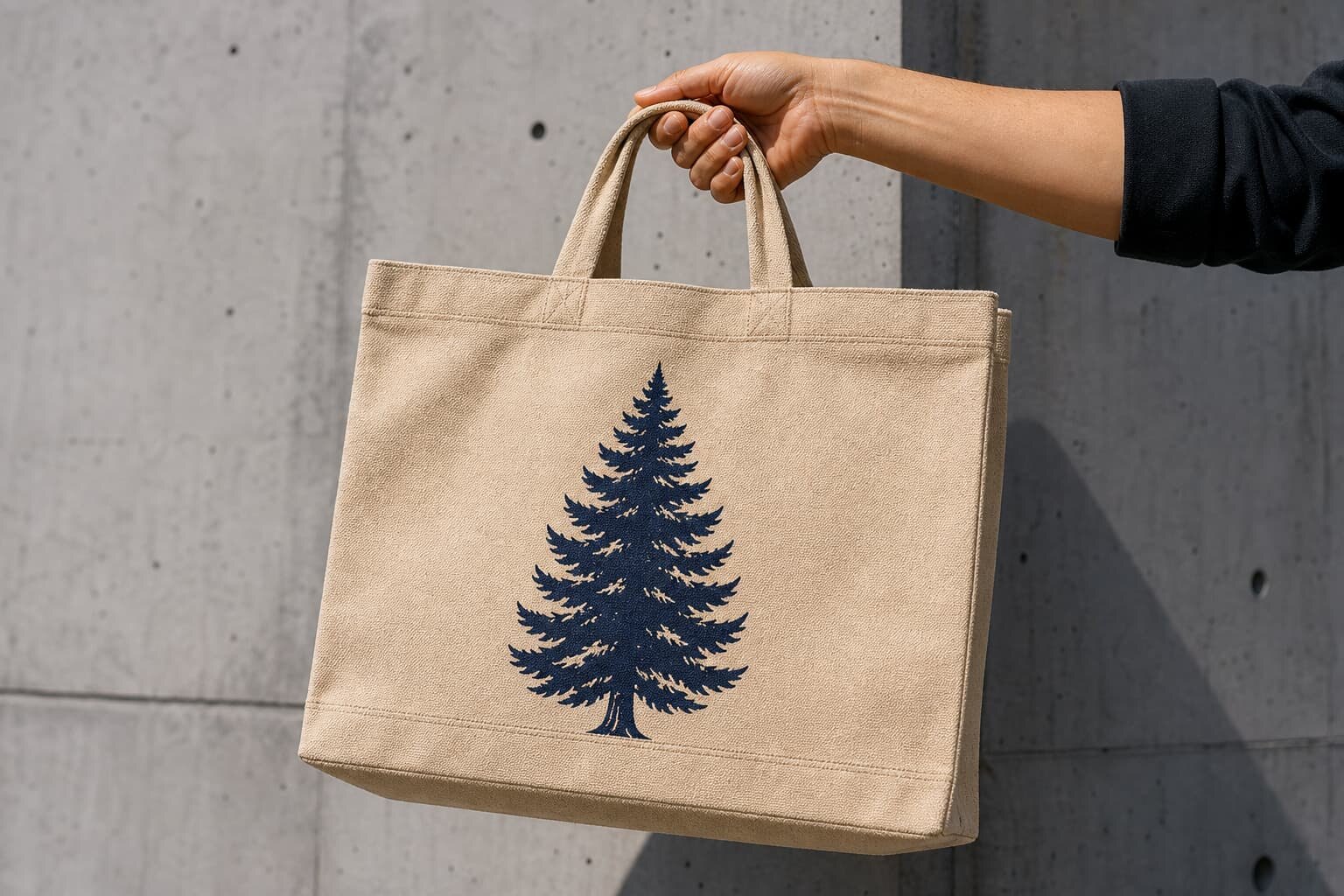
Why Canvas Tote Quotes Look Similar But Are Not
Most canvas tote bag quotes are only comparable on the surface. Two factories can offer the same outer size and the same logo, yet one is quoting a 10 oz body fabric with light stitching and a bulk polybag, while the other is quoting heavier cloth, reinforced handles, and a packed retail insert. If the RFQ does not force every supplier to answer the same spec, the cheapest offer is usually just the one that left out the most detail. That is why a canvas tote bag vendor comparison checklist has to start with the quote structure, not the price column.
A good comparison should separate the bag itself from the work around the bag. The body fabric, the handle build, the print method, the sample stage, and the packing spec all change cost. Lead time also changes when a factory needs new fabric, new print screens, special labels, or carton packing. If you compare vendors without lining up those variables, you are not comparing suppliers. You are comparing assumptions. The goal is to make each factory quote answer the same buying problem in the same language.
- Do not compare a blank sample quote with a final production quote.
- Treat packaging, labeling, and carton marks as quote items, not afterthoughts.
- Make each supplier confirm what is included and what is excluded in writing.
Set The Fabric Spec Before You Ask For Price
Fabric weight is the first place tote quotes drift apart. Many buyers say canvas bag, but that can mean a light promotional tote or a heavy retail carry bag. Ask the factory to quote both oz and gsm, because some vendors think in one unit and some in the other. A 10 oz tote may be fine for events or lightweight merchandising, but retail programs often need 12 oz or higher so the bag holds shape, prints cleanly, and feels like a real product instead of a giveaway. If you expect the bag to carry bottles, books, or dense daily goods, the fabric spec must match that use.
The fabric finish matters almost as much as the weight. Natural cotton, bleached cotton, dyed canvas, and recycled blends can all behave differently in print, shrinkage, and hand feel. Ask whether the quote is based on raw fabric, finished fabric, or a post-wash result. A supplier that only quotes the cloth weight without confirming shrinkage may give you a bag that comes back shorter, narrower, or badly warped after finishing. For buyer use, the quote should state the fabric type, the weave style if relevant, the target weight, and the acceptable tolerance.
- Confirm fabric weight in oz and gsm on the same line item.
- Ask whether the quoted size is cut size or finished size.
- Require the expected shrinkage range if the bag will be washed or stonewashed.
- Check whether the canvas is natural, bleached, dyed, or recycled.
Compare Print Methods By Artwork, Not By Habit
Print method changes the whole quote. Screen print is often the best option for simple logos, solid colors, and repeat runs because it is efficient and consistent once the setup is locked. Heat transfer can make sense for short runs or artwork with gradients, but it may wear differently, especially on a bag that will be folded and handled often. Embroidery can look premium on some totes, but it adds cost, changes the feel of the fabric, and is not always the right choice for a large graphic. A quote that does not name the print method is incomplete.
Buyers should also ask how print cost is calculated. Is the quote based on one side or two sides, one color or multiple colors, one screen set or several, and does it include a white underbase on dark fabric? The sample should show exact placement, logo size, and color reference. For repeat orders, ask whether the factory keeps screens, plates, or digital files and whether there is a re-setup charge. These details matter more than a generic per-unit print number because artwork structure drives both cost and rework risk.
- Match print method to order volume and artwork complexity.
- Ask how many colors are included in the quoted price.
- Confirm whether a white underbase is needed on colored fabric.
- Lock artwork position with a measured mock layout, not a verbal promise.
Read MOQ And Unit Price Tiers Without Getting Misled
MOQ is one of the most misunderstood lines in a tote quote. A supplier may offer a low headline MOQ, but that number can apply only to stock fabric, one print color, one side, and simple packing. If you need a custom color, a larger logo, a side label, or retail packing, the real MOQ may be much higher. The right comparison is not which factory says yes to the smallest number. It is which factory explains how the minimum is built. That tells you whether the supplier understands production reality or is just sending a sales-friendly answer.
Unit price also needs tier logic. Ask for pricing at multiple volumes, such as the planned launch quantity, the expected replenishment quantity, and a stretch volume. If the vendor gives a flat number with no tier break, you cannot tell whether the quote reflects the real cost curve. Also ask what happens when one part of the order changes, such as switching fabric color, adding a woven label, or moving the print from one side to two. A clean quote should show how each spec choice changes the total, not hide the cost inside a single lump sum.
- Ask for MOQ by fabric color, print design, and packing format.
- Request unit prices at more than one volume tier.
- Have the supplier separate setup cost from running cost.
- Check whether special labels or inserts trigger a new MOQ.
Use The Sample Stage To Catch Cost Traps Early
A sample is not just a visual approval. It is your best chance to catch production mistakes before bulk fabric is cut. Ask for a pre-production sample made with final fabric, final stitching, final print, and final packing spec. If the sample arrives as a hand-made demo with temporary materials, it may look fine but fail to reveal the real cost or quality issues. The sample should prove that the factory can repeat the product, not just imitate it once in a room with extra attention. For RFQ comparison, the most useful sample is the one that matches the final production line as closely as possible.
The buyer should inspect the sample with a short acceptance list. Check logo placement, print clarity, stitch symmetry, handle length, opening width, and whether the bag sits flat or wrinkles badly. If the tote includes a pocket, snap, zipper, or lining, inspect those parts too because small components often create the biggest surprises. Ask the factory to confirm whether the sample is for artwork approval only or for full material approval. If those two approvals are mixed together, the final order is more likely to drift from the agreed spec.
- Approve the sample only if it uses final fabric and final artwork.
- Check measurements, not just appearance.
- Inspect pocket, lining, zipper, or label details if they are part of the order.
- Keep a signed sample reference with date, version, and approval notes.
Packing And Cartons Can Change The Real Landed Cost
Packing is a commercial issue, not just a warehouse detail. Some canvas totes are packed loose in bulk cartons to keep cost down, while others need individual polybags, inserts, barcodes, or retail-ready folding. Each choice changes labor, carton count, and shipping efficiency. If your quote only gives a unit price but no pack spec, you do not yet know the landed cost. A vendor that quotes a low bag price but leaves packing undefined may later add charges for polybags, barcode stickers, carton marking, or inner pack changes. That is where many buyer disputes begin.
Ask for the exact carton pack format and the master carton dimensions. Carton count affects freight density and warehouse handling. If the bags are folded too tightly, the canvas may crease badly and hurt shelf presentation. If they are folded too loosely, carton usage rises and freight cost follows. For retail programs, confirm whether each bag needs a hangtag, care label, side label, or sticker applied by the factory. Those details should be priced up front so the comparison is based on an actual supply chain plan, not a bare unit price that will be inflated later.
- Confirm inner pack count, master carton count, and carton size.
- Ask whether polybags, inserts, and barcode labels are included.
- Check if the factory can support retail folding and presentation requirements.
- Make sure packing instructions match the destination warehouse rules.
Lead Time Should Be Broken Into Real Production Steps
Lead time is often quoted as one number, but buyers need the breakdown. A tote order may require artwork approval, screen or plate setup, sample signoff, fabric booking, production, packing, and final inspection. If the factory gives only one calendar number, you cannot tell where the risk sits. A supplier that is fast on paper may still be slow if the sample stage is not included. A supplier that looks slower may actually be safer if they state each step clearly and can show where the schedule starts and ends. For procurement, that distinction matters more than a single promised date.
Ask what could move the schedule. The answer should include fabric availability, printing complexity, peak season congestion, and changes after sample approval. If the factory says the lead time is fixed no matter what, be cautious. Real production moves when materials, approvals, or artwork move. A reliable quote should say when the clock starts, what approvals are required, and whether the quoted lead time assumes no revisions. That is how you compare vendors on delivery risk instead of on a headline number that may not survive the first revision.
- Separate sample lead time from bulk production lead time.
- Ask when the production clock starts: deposit, artwork approval, or sample approval.
- Check whether peak season affects fabric booking or printing capacity.
- Confirm what counts as a delay on the buyer side versus the factory side.
Build A Side-By-Side Quote Sheet That Exposes Gaps
The fastest way to compare suppliers is to force every response into the same quote sheet. Use one line for fabric weight, one for finished size, one for handle construction, one for print method, one for packing, and one for lead time. Add separate lines for sample fee, tooling, setup, and any extra label work. If a vendor refuses to break out the numbers, that is a signal. It usually means either the factory does not have enough control over the process or it wants flexibility to add charges later. A clear quote is a production document, not a sales brochure.
When the offers are lined up side by side, the hidden differences become obvious. One supplier may be cheaper because the quote excludes reinforcement stitching. Another may be slower because it includes a proper pre-production sample. A third may look expensive until you see that the packing and barcode work are already included. This is why the best buyer comparison is not a simple price ranking. It is a spec-to-spec comparison that shows which vendor is quoting the real scope and which one is quoting only the easiest part of the job.
- Use one RFQ template for every supplier.
- List each charge separately: sample, setup, print, packing, and carton work.
- Mark any assumptions in the quote sheet and ask the supplier to confirm them.
- Compare the same currency, the same incoterm, and the same delivery point.
Choose The Lowest Risk Vendor, Not Just The Lowest Number
The final decision should weigh price against quote clarity, sample quality, and production discipline. If two suppliers are close on cost, the better choice is usually the one that documented the spec more clearly and responded more carefully to the RFQ. That is because clarity at quoting stage usually predicts fewer mistakes in bulk. A supplier that gets the fabric weight wrong, ignores the print method, or avoids packing questions is not a safe low-cost option. The buyer may save a little on paper and lose much more in rework, freight waste, or delayed launch timing.
A practical rule is to reject any quote that leaves out one of the core drivers of tote cost and quality. Those drivers are fabric, construction, print, sample, packing, and lead time. If a vendor cannot explain one of those areas, the order is not ready to award. For retail buyers, distributors, and import teams, the best canvas tote bag vendor comparison checklist is the one that makes non-compliance visible early. Once the numbers are aligned and the sample passes, the award decision becomes much easier and much less risky.
- Favor the quote that shows the fewest assumptions.
- Walk away from suppliers that will not document exclusions.
- Use sample approval as the final check before order release.
- Award to the vendor that can repeat the spec, not just quote it.
Specification comparison for buyers
| Spec decision | Recommended option | When it fits | Buyer risk to check |
|---|---|---|---|
| Fabric weight | 10 to 12 oz for light retail use; 12 to 16 oz for heavier daily carry | Choose by bag size, load weight, and brand position | Some vendors quote oz while others quote gsm; confirm finished fabric weight and tolerance |
| Handle construction | Reinforced self-fabric handles or webbing handles with X-box or bar-tack stitching | Best for grocery, event, or retail carry bags | Check handle drop, attachment length, stitch density, and whether both handles are made the same |
| Print method | Screen print for simple logos and repeat runs; heat transfer for short runs or complex art | Use based on color count, artwork detail, and volume | Ask how many print colors are included and whether a white underbase is needed |
| MOQ logic | Quote MOQ by fabric color, print setup, and packaging type | Works when buyers need the real order trigger, not a marketing number | A low headline MOQ can hide a higher minimum per color, per design, or per carton pack |
| Sample stage | Pre-production sample with final fabric, print, trims, and packing spec | Needed before bulk approval | Do not approve only a blank sample or a hand-cut mock sample |
| Packing format | Bulk polybag plus master carton for wholesale; retail pack only when required | Fits distributor and import programs focused on cost control | Confirm carton count, inner pack count, barcode placement, and moisture protection |
| Lead time | Separate sample lead time from bulk production lead time | Use when comparing multiple factories fairly | Quotes often exclude artwork proofing, sample approval, or booking delays |
Buyer checklist before sampling
- Confirm finished bag size, seam allowance, and allowed tolerance before asking for a price.
- State fabric weight in both oz and gsm, plus whether the fabric is natural, bleached, dyed, or recycled cotton.
- Define handle style, handle length, reinforcement method, and target load use.
- Specify print method, print size, Pantone targets, and number of print colors on each side.
- Ask for MOQ by fabric color, artwork, and packing format instead of accepting one general MOQ.
- Request a pre-production sample built with final materials, final print, and final packing.
- Confirm carton quantity, inner pack count, barcode needs, and shipping marks.
- Ask the factory to separate sample fee, tooling, print setup, packing cost, and unit price.
- Check the production lead time start point: order confirmation, deposit, artwork approval, or sample approval.
- Compare quotes only after every supplier answers the same spec sheet and packing instructions.
Factory quote questions to send
- What fabric weight are you quoting in oz and gsm, and what tolerance do you allow?
- Is your quoted unit price based on the finished size, pre-shrink size, or cut size?
- What print method are you using, how many colors are included, and what is the setup charge?
- Is the MOQ per style, per color, per print design, or per packing configuration?
- Does the quote include handles, reinforcement stitching, lining, pocket, zipper, or any other trim?
- What is included in the sample fee, and will the sample reflect final fabric and final artwork?
- How are the bags packed per inner pack and per master carton, and what is the carton size?
- What lead time does the quote assume, and what event starts the clock?
- Which charges are extra for artwork revision, label changes, barcode stickers, or inspection?
- Can you confirm what will be checked on the pre-production sample before bulk approval?
Quality-control points to confirm
- Measure fabric weight on the approved cloth and compare it with the quoted oz or gsm.
- Check finished dimensions, handle length, and bag depth against the approved spec sheet.
- Inspect handle attachment, bar-tacks, seam allowance, and stitch consistency at stress points.
- Verify print registration, color match, edge sharpness, and cure quality for screen print or transfer.
- Confirm the bag stands and carries as intended when loaded to the buyer's agreed test weight.
- Review sample packing, inner pack count, carton count, and shipping marks before bulk release.
- Check barcode placement, hangtag placement, and retail presentation if the program needs them.
- Open random cartons to confirm there is no mix-up by color, size, or print version.