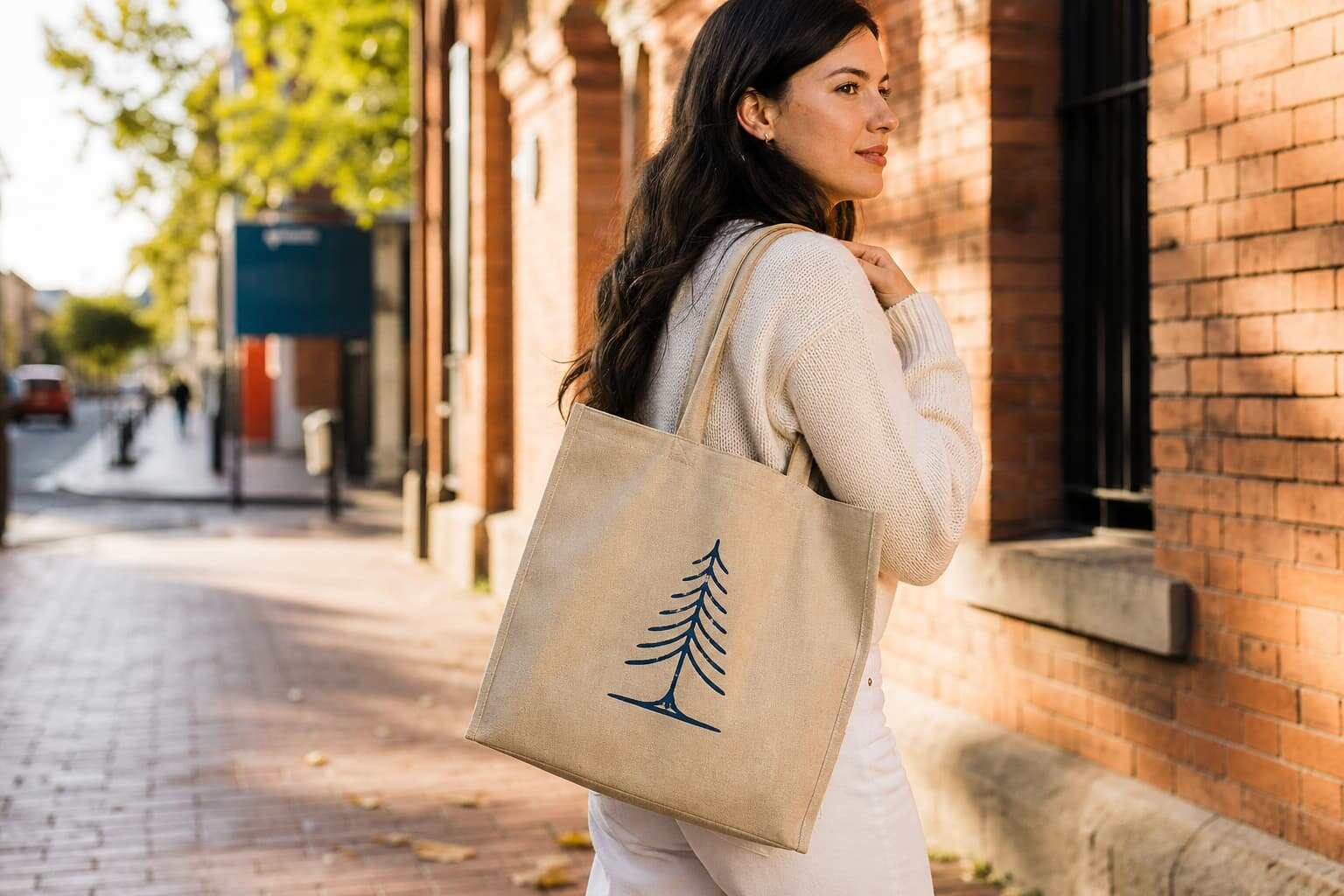
Why the top hem fold needs a buyer memo
The top hem fold on a canvas tote bag is a small construction detail with a large procurement impact. It affects the opening width, the visible quality of the bag mouth, the usable body height, the strength near the handles, and the safe zone for artwork. When the fold is vague in an RFQ, suppliers fill in the blanks differently. One factory may quote a narrow single fold. Another may quote a deeper double fold with two stitch rows. A third may use the same words but a lighter canvas, looser stitch, or different pressing method. Those differences often stay hidden until the approval sample or, worse, the first bulk inspection.
A canvas tote bag top hem fold approval memo prevents that drift. It gives the supplier a repeatable construction target and gives the buyer a clear standard for comparing quotes, approving samples, and checking bulk. The memo does not need to be long. It should define the finished fold depth, construction method, stitch layout, raw edge standard, print clearance, handle relationship, tolerance, sample evidence, and packing condition. For B2B buyers managing multiple factories or seasonal reorders, this memo becomes a practical control document rather than a design note.
- Use the memo before quoting, not after the first sample is already made.
- Treat the fold as a construction spec tied to fabric, print, handle, and packing.
- Attach the memo to the RFQ, sample approval, PO, and inspection checklist.
Define the fold in measurable production language
The first decision is how the fold will be measured. Buyers should request a finished fold depth in millimeters, measured after sewing and final pressing. Measuring from the loose cut edge creates confusion because canvas thickness, pressing pressure, stitch tension, and operator handling can change the final result. For many unlined 10 oz canvas totes, a finished double fold around 20 mm is a practical starting point. For 12 oz or heavier canvas, 22 to 25 mm may give the opening a cleaner, more stable look. For lightweight promotional bags, a narrower fold may be acceptable if cost is the main driver and the raw edge is still hidden.
The memo should also state the allowed tolerance. A useful standard for standard tote bags is plus or minus 2 mm across the top edge, but the buyer should confirm this with the supplier based on fabric thickness and order volume. Measure left, center, and right across both front and back panels. If the bag has side gussets, measure the gusset top transition as well, because that is where fold distortion often appears. The key is not to overcomplicate the spec; it is to make the finished result inspectable.
- State finished fold depth in mm, measured after pressing.
- Record canvas weight in oz and GSM to avoid supplier interpretation gaps.
- Use three-point measurement on front and back panels for sample and bulk checks.
- Set a tolerance that inspection can apply consistently.
Choose the construction level for the order type
Not every tote bag needs the same top hem construction. A low-cost event giveaway may only need a clean single topstitch and a basic hidden raw edge. A retail tote, bookshop bag, museum bag, corporate merchandise bag, or reusable grocery tote usually needs a more polished opening because the customer sees and touches the top edge first. A double fold with two rows of topstitching often improves perceived quality and helps the mouth of the bag hold shape, especially with heavier canvas.
The trade-off is cost and bulk. Wider folds use more fabric allowance, add sewing time, and create more thickness where the handles meet the bag body. Double topstitching also gives quality inspectors more to measure: stitch spacing, parallel alignment, thread tension, and seam balance. Buyers should choose the construction level based on how the bag will be sold and used. The cheapest fold is not automatically wrong, but it must be chosen intentionally and written into the quote so every supplier prices the same construction.
- Use single topstitch when the program is price-led and the buyer accepts a simpler finish.
- Use double topstitch when the bag is retail-facing, heavier, or expected to be reused often.
- Ask suppliers to price any wider fold, edge overlock, or second stitch row as a defined requirement.
- Reject quotes that only say “standard top hem” without construction details.
Protect print, label, and embroidery placement
Top hem approval is closely connected to artwork approval. A logo may look well placed on a flat artwork file but sit too close to the folded edge once the bag is sewn. Screen print, heat transfer, embroidery, woven labels, and patches all need clearance from the final fold line. A practical clearance range is 15 to 25 mm below the folded edge for many canvas tote programs, but this should be confirmed on the actual sample because handle position, bag size, and artwork scale can change the safe zone.
Buyers should avoid approving artwork and construction separately. If artwork is near the upper body panel, the approval sample should show the print after the hem is folded, stitched, and pressed. Embroidery needs even more attention because needlework near a thick hem can distort the fabric or create stiffness. Woven labels and patches can also look crooked if they are aligned to the cut panel instead of the finished opening. The approval memo should tell the factory whether artwork position is measured from the top folded edge, the side seam, the bottom seam, or the bag centerline.
- Measure artwork clearance from the final folded edge, not from the raw fabric edge.
- Require photos of the full front, full back, inside hem, and handle area when artwork is near the top.
- Confirm whether print occurs before or after sewing and whether pressing may affect the decoration.
- Keep label placement rules in the same memo as the hem specification.
Control the handle and top-edge interaction
Handles are one of the main reasons top hems fail in bulk. If cotton webbing or self-fabric handles are caught into the hem fold, the operator must sew through multiple layers at the same time. This can cause bulky ridges, stitch skipping, broken needles, uneven corners, or a top opening that is higher near the handle than between the handles. If the handles are attached below the fold, the top edge may look cleaner, but the reinforcement pattern must still be strong enough for the intended use.
The RFQ should ask the supplier to state the handle sequence. Are handles inserted into the folded hem? Are they sewn to the body before the top fold is closed? Are they attached after the hem is complete? Is there a box stitch, cross stitch, bartack, or simple rectangular reinforcement? These details change labor cost and quality risk. For a reusable tote, procurement buyers should not approve the hem without checking the handle attachment at the same time. A clean fold is not enough if the strap area creates stress or distortion.
- Ask the factory to describe the handle sewing sequence in the quote.
- Check whether the fold remains level where it crosses handle attachment points.
- Confirm reinforcement type and thread strength for the intended load.
- Inspect the inside view so hidden bulk or exposed raw edge is not missed.
Build a quote comparison that exposes real cost drivers
A fair RFQ should make every supplier quote the same bag. That means the buyer should provide bag size, fabric weight, canvas finish, fold depth, fold construction, stitch count, handle type, print method, packing method, and inspection expectation. Without those details, a low price may simply reflect a narrower fold, lighter canvas, fewer stitches, looser QC, or cheaper packing. The top hem fold is not the largest cost in the bag, but it is often where suppliers quietly simplify construction to win price-sensitive quotes.
Ask for pricing at several quantities, such as 1,000, 3,000, and 5,000 pieces, so MOQ logic becomes visible. Also ask which operation changes the price most if the fold specification changes. Some factories will say fabric yield, others sewing labor, others pressing or packing. That answer helps the buyer understand how the supplier plans production. A strong quote does not need to reveal confidential factory costing, but it should state enough assumptions that procurement can compare risk as well as price.
- Require each quote to include fold method, stitch rows, fabric weight, print method, and packing assumptions.
- Ask whether the quote includes sample revisions and measured approval photos.
- Compare supplier assumptions before comparing unit prices.
- Flag any quote that changes fabric weight or fold construction without a separate note.
Approve the sample with evidence, not impressions
A clean approval sample should be reviewed in the same condition expected for bulk. It should be sewn with the correct fabric, folded to the agreed depth, stitched with the correct thread, decorated with the final print method if possible, pressed using the intended production process, and packed in the proposed packing format. Approving an unpressed sample can be misleading because pressing can sharpen the fold, reduce visible width, shift the print relationship, or flatten thick handle areas.
The evidence package should include a physical sample and a short photo set. Useful photos include a ruler shot across the fold, inside view of the raw edge enclosure, close-up of stitch rows, front and back views of artwork clearance, handle attachment close-up, and a photo after unpacking from the proposed carton or polybag. The buyer should keep one sealed sample internally and ask the factory to keep one line reference sample. Both should carry the same style number, PO number, date, and revision note.
- Do not approve from a beauty photo alone.
- Measure the pressed fold at multiple points and record the result.
- Keep ruler photos and close-ups with the approval email or system record.
- Seal the approved sample and use it as the standard for bulk inspection.
Set QC acceptance points before bulk starts
Quality control for the top hem should be simple enough for inspectors to apply on the production floor. The most important checks are fold depth, stitch alignment, raw edge enclosure, thread condition, handle transition, artwork clearance, and packing effect. For each check, define what is acceptable and what is rejectable. For example, a fold that varies within tolerance may be acceptable, but exposed fray at the inside opening should be rejectable. A slightly soft press may be acceptable for a casual washed tote, but a twisted top opening may not be acceptable for a retail display bag.
Bulk inspection should compare production pieces against the approved sample, not against memory or a generic tote standard. Inspectors should pull pieces from different cartons and different positions in the carton because compression can affect the top hem. If the order uses multiple sewing lines, the inspector should check pieces from each line. The memo should also state how defects will be classified. Critical defects may include broken stitches at the handle or open seams. Major defects may include exposed raw edge, severe top-line waviness, or artwork entering the fold. Minor defects may include small thread ends if trimming is otherwise clean.
- Classify exposed raw edge, skipped stitches, and handle stress as serious issues.
- Check carton-top, carton-middle, and carton-bottom pieces for packing-related distortion.
- Compare each inspected piece to the sealed sample and written tolerance.
- Require corrective action before bulk continues if early inspection shows repeated hem variation.
Lock packing so the approved fold survives shipment
Packing can undo good sewing. A tote bag with a clean top hem can arrive with a crushed, twisted, or permanently creased opening if the packing method compresses the fold too aggressively. This matters for retail, e-commerce, corporate gifting, and distributor programs where the bag must present well immediately after unpacking. The approval memo should therefore include packing details: whether the bag is flat packed or folded, whether it is individually polybagged, whether an insert is used, how many pieces go into each carton, and whether the top edge is under pressure.
The buyer should ask for a packed sample or at least a packing photo set before bulk release. If an insert card is used, it should not press into the top hem or bend the opening. If the carton count is high, the factory may save shipping cube but create crease memory at the mouth of the bag. A slightly larger carton or adjusted folding method may be cheaper than warehouse rework, buyer claims, or discounted retail presentation. Packing approval is part of top hem approval because the buyer is approving the condition in which the product will actually arrive.
- Review the bag after unpacking, not only before packing.
- Confirm insert height, folding direction, polybag fit, and carton count.
- Avoid carton plans that rely on crushing the top edge to save space.
- Add unpacking appearance to the final inspection checklist.
Use a concise approval memo format
The best memo is short, specific, and easy for the factory to translate into production. It should not repeat broad procurement language. It should list the decisions that change the finished bag: fabric, fold depth, fold type, stitch layout, handle sequence, artwork clearance, tolerance, sample evidence, QC standard, and packing method. If any item is still open, mark it as open instead of assuming the factory will use the buyer’s preferred method.
A practical memo might read: “Canvas tote bag top hem fold approval: 10 oz natural canvas, finished double fold 22 mm after pressing, tolerance plus or minus 2 mm measured left-center-right. Raw edge fully enclosed. Two rows of topstitch, thread matched to body, stitch line parallel to top edge. Print to remain minimum 20 mm below final folded edge. Handles attached below hem with reinforced box stitch. Approval requires physical sample, ruler photos, inside fold photo, and packed/unpacked photo. Packing must not create permanent crease at top opening.” That level of detail is enough to guide quoting, sampling, bulk sewing, and inspection without making the document hard to use.
- Keep the memo to construction decisions and acceptance points.
- Use finished measurements, not assumptions from the pattern table.
- Include sample evidence and packing approval in the same record.
- Update the revision date if the fold, fabric, handle, or print position changes.
Specification comparison for buyers
| Spec decision | Recommended option | When it fits | Buyer risk to check |
|---|---|---|---|
| Finished fold depth | 20 to 25 mm finished double fold, measured after pressing | Most 10 to 12 oz unlined canvas tote bags where the opening must look clean and stable | If measured before pressing, the delivered opening may be narrow, uneven, or different from the approved sample |
| Fold construction | Double fold with raw edge hidden; overlock only if fabric frays heavily | Retail, reusable, and brand programs where the inside opening is visible to the end user | A single fold can expose lint or fray if the canvas is loosely woven or handled often |
| Topstitch layout | Single row for value orders; two parallel rows for premium or heavier bags | Single row for promotional use; double row for thicker canvas, retail shelves, and repeated carrying | Extra stitching can pucker the mouth if thread tension, stitch length, or pressing is not controlled |
| Stitch distance from top edge | Keep first stitch line consistent, commonly 2 to 4 mm from the folded edge unless the design calls for a wider reveal | Clean visible construction where the top line is a quality signal | A wandering stitch line makes the opening look cheaper even when the fabric and print are correct |
| Print and label clearance | Keep artwork, woven labels, and heat transfers at least 15 to 25 mm below the final folded edge, then verify on the sewn sample | Screen print, heat transfer, embroidery, hang label, or brand patch near the upper body panel | Artwork can disappear into the fold, look crowded under the handle, or shift after pressing |
| Handle interaction | Confirm whether handles are caught into the hem fold or attached below it with reinforcement stitching | Bags with cotton webbing handles, self-fabric handles, or long shoulder straps | Thick handle stacks can create bulges, broken needles, uneven top lines, or weak attachment points |
| Fabric weight basis | Quote the same fold on the same canvas weight, weave, and finish; record oz and GSM together | RFQs comparing several factories or several canvas grades | A supplier may quote a cheaper lighter cloth while keeping the same top hem description |
| Packing method | Approve folding, polybag, insert, and carton count after checking the top hem after unpacking | Retail, e-commerce, gift, and distributor orders where presentation matters | Over-compressed cartons can permanently crease the top edge or distort the opening |
| Approval evidence | Physical sealed sample plus measured ruler photos, inside fold photos, and approved spec sheet | Orders with repeat production, multiple suppliers, or inspection at origin | Photo-only approval can miss fold thickness, raw edge exposure, stitch tension, and carton damage |
Buyer checklist before sampling
- Confirm canvas weight, GSM, weave, finish, and shrinkage expectation before approving the top hem fold.
- Specify finished fold depth in millimeters and state that it is measured after final pressing.
- Measure the fold at left, center, and right; record the tolerance, commonly plus or minus 2 mm for standard tote programs.
- Confirm whether the hem is single fold or double fold and whether the raw edge must be fully hidden.
- Lock stitch count, stitch distance from the folded edge, thread color, stitch length, and acceptable tension.
- Verify print, embroidery, woven label, and heat-transfer clearance from the final folded edge, not from the cut panel edge.
- Check handle placement and reinforcement where the strap meets or passes through the hem area.
- Inspect inside fold photos, corner transitions, and the handle zone before releasing bulk.
- Approve packing method, insert size, carton quantity, and compression level before final production.
- Keep one sealed buyer sample and one factory line sample tied to the PO, style number, and revision date.
Factory quote questions to send
- What finished top hem fold depth are you quoting, and is it measured after pressing or before pressing?
- Is the hem single fold or double fold, and will the raw edge be fully enclosed inside the fold?
- How many topstitch rows are included, what stitch length will you use, and what is the thread specification?
- Will the handle be sewn into the hem fold, under the hem, or attached separately below the top edge?
- How far below the final folded edge should our print, embroidery, woven label, or patch be placed?
- Does the quoted price assume 8 oz, 10 oz, 12 oz, or another canvas weight, and can you state the equivalent GSM?
- Will pricing change if we require overlock before folding, double topstitching, or a wider finished fold?
- Which sample stages are included: proto sample, pre-production sample, production seal sample, or shipment sample?
- What photos and measurements will you provide with the approval sample before bulk cutting?
- What packing method is included in the quote: flat bulk pack, individual polybag, insert card, carton divider, or retail fold?
Quality-control points to confirm
- Finished top hem depth matches the approved sample and stays within the agreed tolerance at left, center, and right.
- Inside raw edge is fully enclosed with no visible fray, lint buildup, loose yarn, or rolled edge breakout.
- Topstitch rows run parallel to the folded edge and remain consistent across front, back, and side transitions.
- Thread tension is balanced with no puckering, skipped stitches, broken threads, needle chewing, or seam grin.
- Folded opening is level when the bag is laid flat and does not twist after light handling or unpacking.
- Artwork, logo, embroidery, woven label, or patch remains clear of the fold zone and centered after pressing.
- Handle attachment points are secure and do not create bulky ridges, uneven corners, or stress at the top opening.
- Corner transitions are clean, with no raw canvas exposed where the side seam meets the top hem.
- Bulk pieces match the approved seal sample in fold depth, stitch count, thread color, and edge appearance.
- Carton packing does not crush the top hem, create permanent crease marks, or distort the opening shape.