Why thread color becomes a buying problem
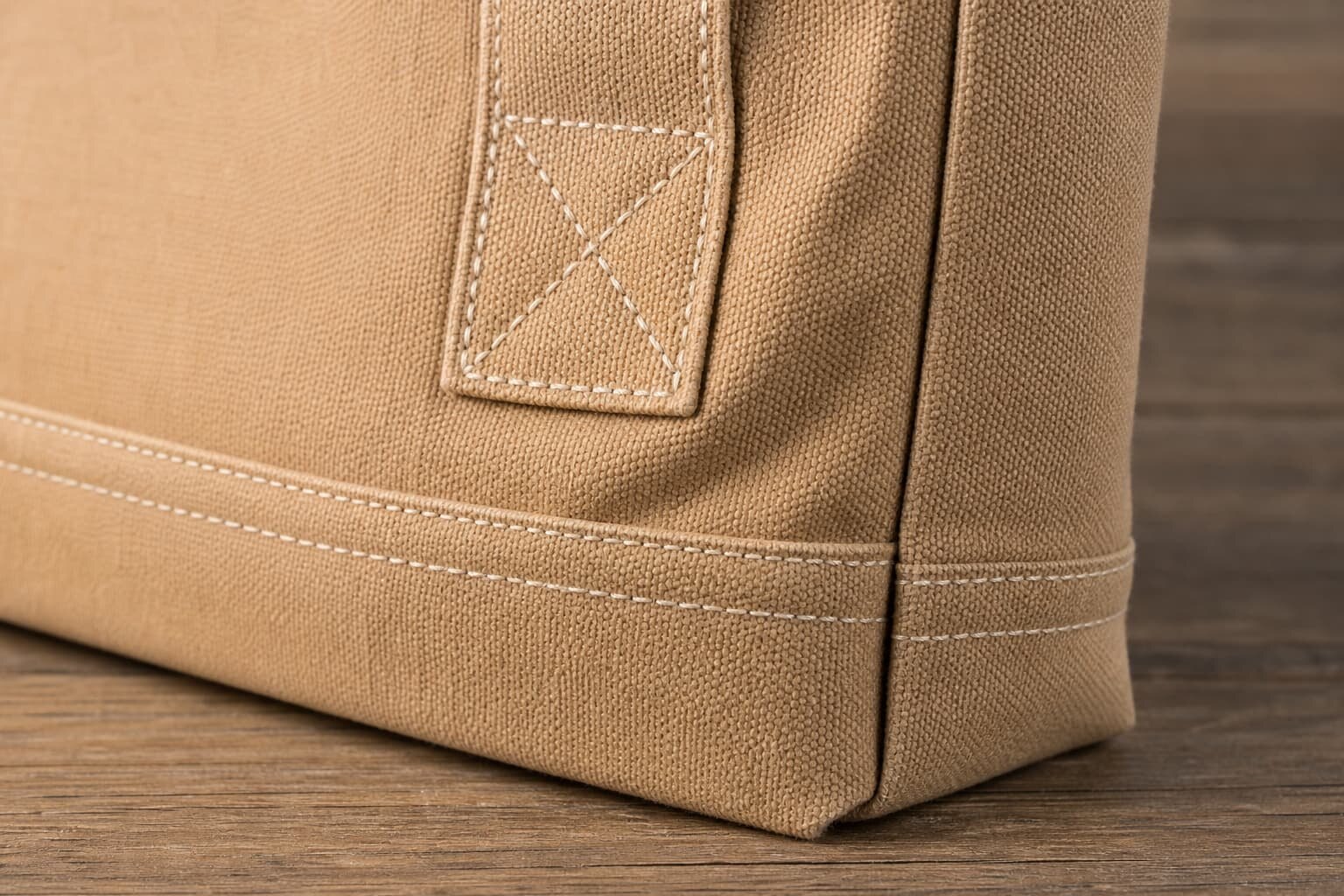
On a canvas tote bag, thread is not a background detail. It runs across the most visible parts of the product: the top edge, handle reinforcement, gusset, pocket opening, and bartacks. On a natural 10 oz canvas body, roughly in the 280 to 320 gsm range, even a small shift in thread shade can stand out because the weave is open enough to catch light. Buyers often discover this only after sample approval, when the bulk bags arrive with a slightly different cone or a different machine setting.
For procurement teams, the issue is commercial, not cosmetic. A thread mismatch can trigger a hold at receiving, extra inspection labor, or a full rework if the retail team rejects the visual finish. If the spec does not say whether the stitch should blend, match the logo, or intentionally contrast, the factory will usually default to stock thread that is convenient for production. That is where the audit needs to start: with a clear visual target, not a vague request for a good match.
- Visible seam zones matter more than hidden internal stitching.
- Natural canvas shows thread shifts more clearly than tightly finished coated fabric.
- The same thread can look different on body seams, bartacks, and label attachment.
Define the match standard before you ask for quotes
A buyer should never ask for thread color matching without a physical standard. Send an approved sewn sample, a fabric swatch, and a photo taken under the same light source you want used for approval. A Pantone or TCX reference helps, but it does not replace the sewn sample because canvas absorbs and reflects light differently from paper or plastic color chips. If the body fabric is natural, dyed, or washed, the same thread may read warmer, cooler, or duller on each version.
Put the acceptance standard into the RFQ, not only into the sample note. State whether the thread must be visually indistinguishable at normal retail viewing distance, whether bartacks may be one shade darker, and whether the stitch must disappear on the front panel or only on the main body seams. If you want a tighter control point, add the thread ticket size, thread fiber type, and acceptable sheen level. That keeps the conversation on measurable production details instead of subjective arguments.
- Use one named master sample and mark it as the only color reference.
- State the viewing distance and lighting condition for acceptance.
- Define whether reinforcement stitching is allowed to differ from decorative topstitching.
Match thread to fabric weight and stitch load
Fabric weight changes how thread color looks and how thread behaves. A lighter 8 oz canvas, often around 230 to 250 gsm, may need a lower-profile thread so the seam does not dominate the bag face. A heavier 12 oz canvas, often around 340 to 360 gsm, can take a stronger thread, but the thicker thread will also be easier to see. If the tote will carry books, bottled goods, or daily retail shopping loads, the thread choice must support strength first and appearance second, but it should still be locked to the visual spec.
Polyester thread is usually the practical choice for most canvas tote bags because it handles abrasion and moisture better than cotton thread. Cotton thread can suit a more heritage or natural look, but it may fuzz or fade faster, especially if the bag will be washed or stored in humid lanes. Stitch density matters as well: a tighter stitch line creates more visible points of color, while a looser line can look uneven if the cone shade is even slightly off. That is why thread color and construction cannot be separated in the quote.
- 8 oz canvas: keep the thread low-sheen and avoid oversized stitches.
- 10 to 12 oz canvas: inspect handle tops, side seams, and bartacks under strong light.
- Heavy-load totes: confirm the same ticket size across all machines and all seam types.
Use a clear comparison rule for thread strategy
There are only a few practical thread strategies for a canvas tote bag, and each one fits a different buying goal. A body-matched thread is the safest choice for a clean retail look because it reduces visual noise. A slightly darker thread can hide seam irregularity on natural canvas and is often more forgiving when the weave is coarse. A contrast thread works only when the brand wants the stitch to be part of the design, because then the buyer is no longer trying to hide the seam; the seam becomes a visible style element.
The key is not to mix strategies casually inside one purchase order. If the sample uses a body-match thread but the bulk run switches to a stock brown or off-white cone, the product may still be functionally correct but visually wrong. The same is true for different thread choices on the handle box and the body seam. Once the thread strategy is fixed, the factory should follow it line by line, and the audit should confirm that the same rule appears on the spec sheet, the sample sign-off, and the line ticket.
- Match the thread strategy to the visual goal, not only to the sewing machine's stock.
- Do not let the factory change from blend to contrast without written approval.
- Keep one rule for the body seam and one rule for reinforcement seams if both are needed.
Build a sample approval that survives the factory floor
A useful sample approval locks more than size and print. It should record the thread brand or approved equivalent, ticket size, shade code, stitch path, and which sample is the master. Ask the supplier to show the front, back, side, handle close-up, and label close-up under the same lighting condition. Keep one sealed copy at the buyer side and one sealed copy at the factory so there is no argument later about what was approved.
Do not approve from a loose thread card alone. Thread on a cone can look acceptable in the hand but wrong once it runs through canvas, especially on a natural weave that absorbs light differently from the thread spool. If the supplier changes fabric lot, repeat the visual check even when the thread code stays the same, because body shade and thread sheen interact. For a buyer audit, the sample room is where the spec becomes real and the production risk becomes visible.
- Verify the sample on the actual bag fabric, not on a generic swatch.
- Review top edge, handle box, bartack, and label stitching separately.
- Take photos in daylight and in inspection light before sign-off.
- Freeze one reference sample and one written approval sheet for future reorders.
Audit the sewing line, not just the preproduction sample
The biggest risk starts after sample approval, when one approved bag moves to a whole line of machines. Different operators can set different tension, and one cone change can shift shine or shade just enough to create a visible mismatch. In a factory audit, check which cones are on each machine, note the batch number, and compare the first 20 pieces with the signed sample before the order runs too far. That is the point where a small color drift is still cheap to correct.
Walk the line with the factory QC team and inspect the points that show wear and stress first. Thread mismatch usually appears on the handle top, corner turn, bartack, or final backstitch. If the first-piece sample is correct but the second machine is off, the factory should stop and reset before more cartons are sewn. The buyer should not wait until final packing to discover that one operator used a different cone lot or tension setting from the approved sample.
- Check every sewing machine against the same thread spec before bulk starts.
- Record cone lot numbers, machine settings, and the time of the first-piece approval.
- Recheck after lunch breaks, cone swaps, or operator changes.
- Treat early shade drift as a line issue, not only a final inspection issue.
Ask for quote data that reveals hidden cost
A serious quote should show more than a single bag price. Ask the supplier to break out the body fabric GSM, thread type, number of thread colors, print method, and any extra setup needed for the sample approval. One extra dyed thread color may add only a small amount per bag, but it can also trigger a cone minimum, a separate sourcing step, or a different machine setup. If the supplier only gives one flat number, you cannot see where the cost pressure is coming from.
MOQ logic matters here. Some factories can hold the same MOQ if they already stock the requested thread shade, but others will raise MOQ because the thread has to be dyed or sourced specially. That is why the quote should say whether the price assumes stock thread, dyed thread, or an approved equivalent. If the supplier cannot explain the difference, the later invoice often hides it as a surcharge, a sample fee, or a delay claim.
- Ask for a line item for body fabric, sewing thread, print, packing, and sample work.
- Ask whether the sample fee is credited back on bulk orders.
- Ask whether unused thread cones are included in the quote or charged separately.
- Ask for the lead time impact if the thread is not already in stock.
Protect the match in packing and carton handling
Thread color can look worse after production if packing damages the surface. Heavy compression, moisture, and lint can make a good seam look dull or dirty, especially on light canvas or white thread. If the tote ships folded, ask the factory to keep the visible stitch face from rubbing against rough carton walls, dark inserts, or printed inner packaging. Packing is not only a logistics step; it is part of visual quality control.
Packing can also change the buyer's first impression at carton opening. If you need retail-ready appearance, specify the same fold method for all cartons, the same inner pack style, and the same carton label location. A standard bulk order may still fit within a normal lead time, but a controlled thread spec can add days if the factory needs to source special cones, adjust folding boards, or redo a packed carton after inspection. That schedule risk should be visible before the PO is issued.
- Confirm fold direction so the most visible seam is not crushed against the carton wall.
- Specify inner pack material if lint transfer or scuffing is a risk.
- Check that carton labels do not cover the sample photo or buyer mark on the QA pack.
- Allow time for repacking if audit findings require carton reopening.
Common buyer mistakes in thread color audits
The most common mistake is approving thread in isolation instead of on the actual tote. A thread cone may look right on the rack, but the same thread on natural canvas can read warmer or darker because the weave changes the optical effect. Another mistake is relying on screen images only. A phone photo can hide both sheen and tension, and factory fluorescent lights can push the color in a direction that daylight will not forgive. If the buyer never checks both lighting conditions, the approval is incomplete.
A second common failure is split approval. The sample is approved from one cone lot, but bulk production switches to another lot after the first carton. Buyers also forget that interior seams can be visible when the bag is opened, so the inside stitching deserves the same attention as the face seam if the product will be displayed in stores. If your brand has no rule for thread substitutions, the factory will assume small differences are acceptable. That assumption is usually where the dispute starts.
- Do not approve from a photo alone when the product is a visible retail tote.
- Do not leave cone brand or equivalent unspecified in the RFQ.
- Do not ignore handle reinforcements, pocket openings, and inside seam visibility.
- Do not allow a shade swap after sample sign-off without written buyer approval.
Accept, rework, or reject with one clear rule
A buyer needs a simple decision rule before the bags arrive. If the thread mismatch is visible at normal retail viewing distance in daylight, treat it as a nonconformance. If it is only visible under close inspection and does not affect the front panel, logo area, or key handle seam, you may classify it as a controlled deviation if your internal policy allows it. That rule should be written before inspection day, not invented on the spot.
When a problem shows up, document it with photos, seam location, cone lot, machine line, and the number of affected bags. If the issue is limited, rework may still be possible before final packing. If the issue crosses multiple lots, a partial remake may cost less than sorting every bag by hand. The purpose of the audit is to force the factory to show its thread plan before the order is sewn, so the buyer is not debating shade after shipment has already left the building.
- Use one acceptance distance and one light source for the final call.
- Record the first affected carton and stop the line if the defect repeats.
- Keep the signed golden sample attached to the inspection record.
- Escalate any cone change before more pieces are stitched.
Specification comparison for buyers
| Spec decision | Recommended option | When it fits | Buyer risk to check |
|---|---|---|---|
| Lock thread color to a sewn reference sample | Use a physical master sample with the approved seam construction | Best for repeat orders and retail programs that need stable appearance | Risk: the reference sample must use the same fabric lot and lighting standard |
| Lock thread color to Pantone or TCX only | Use a color code plus a stated thread ticket size and sheen level | Best when the supplier buys dyed thread in advance | Risk: the color code alone does not control visibility on canvas weave |
| Use one thread for main seams and another for bartacks | Keep reinforcement thread separate but documented on the spec sheet | Best for heavy-duty totes with visible load points | Risk: mixed cones can create line errors if the sewing team is not briefed |
| Allow intentional contrast thread | Approve a visible stitch color as part of the design language | Best for workwear, promotional, or vintage-style totes | Risk: a small shade shift becomes a defect instead of a style choice |
Buyer checklist before sampling
- Confirm canvas weight or GSM, weave type, and finished bag size on the RFQ before asking for color match.
- State whether thread must blend with the body, match the logo, or contrast intentionally.
- Approve a sewn reference sample under daylight and factory inspection light, not from a loose thread card.
- Lock the thread brand or an approved equivalent, plus ticket size, shade code, and sheen level.
- Check the first-piece, mid-run, and end-run bags from the same bulk fabric lot.
- Inspect the handle box, top edge, side seam, pocket top, and bartack color on the actual bag.
- Confirm folding, polybagging, and carton handling will not rub or scuff the visible stitch line.
- Require written approval for any thread lot, machine setting, or shade substitution after sign-off.
Factory quote questions to send
- Which thread brand, ticket size, and shade code are you quoting for this tote bag?
- Is the thread based on stocked inventory, or does it require a dyed-to-order purchase?
- What MOQ applies if we lock one thread color across the whole order?
- Will the preproduction sample use the same thread lot and machine setup as bulk production?
- Which seams use the matching thread, and which seams use reinforcement thread only?
- What lead time changes if we require a sewn sample approval before bulk cutting starts?
- Are print, woven label, embroidery, and packing priced separately from the sewing thread spec?
- How do you handle a shade substitution request if the original thread is out of stock?
Quality-control points to confirm
- Compare thread color on the actual canvas bag body, not on a thread card alone.
- Check the seam under daylight and under the factory's inspection light, then record both results.
- Pull samples from the start, middle, and end of the sewing run to catch cone changes.
- Inspect handle reinforcement, bartacks, top edge stitching, and any pocket top that stays visible in retail use.
- Verify that all sewing machines on the line use the same approved thread lot.
- Watch for tension differences that make the same thread look shinier, flatter, or darker.
- Check packed bags for lint, rub marks, or fold pressure that can distort the visual match.
- Keep one sealed golden sample and one signed audit sheet at both buyer and factory level.