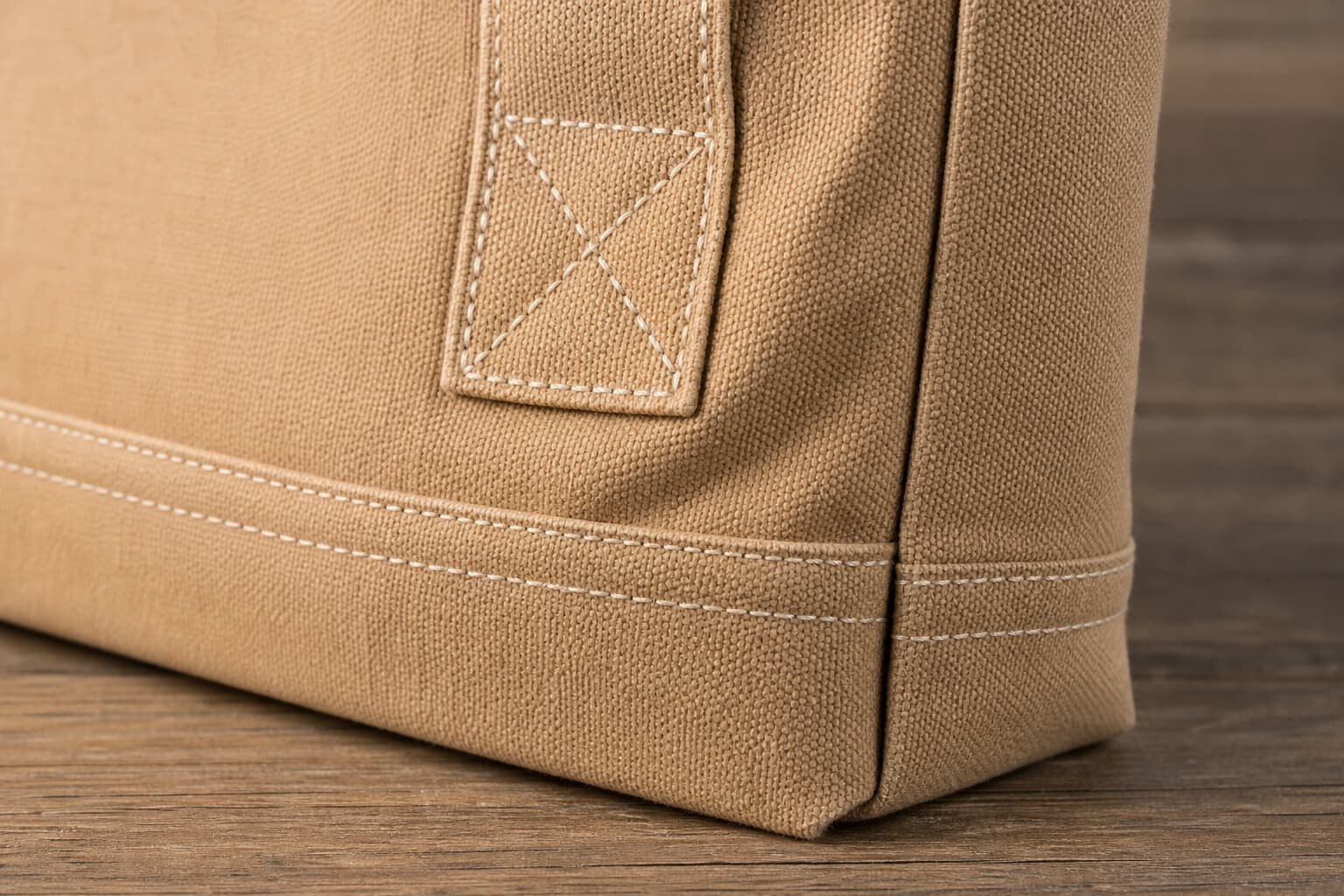
Start With the Close File, Not the Price
A canvas tote bag supplier action close signoff file is the last controlled document set before bulk. It should show what changed, what was approved, what is still open, and who owns each action. If you request quotes before that file exists, every supplier will assume a different fabric weight, print method, handle length, and packing standard.
The result is predictable: one quote looks cheap because it uses lighter cloth, another includes screen setup you did not expect, and a third assumes loose packing that inflates carton count. A good close file forces one spec, one sample reference, and one approval date. That lets procurement compare suppliers on the same basis instead of arguing after the order is placed.
- Track the latest approved sample and revision number.
- List every open issue with owner, due date, and status.
- Freeze any item that changes cost, lead time, or print setup.
- Attach the artwork, pack spec, and carton mark in one file.
Lock the Bag Geometry Before You Ask for Cost
Start with finished size, gusset, handle drop, and top hem. For a standard shopper, small changes of 10-15 mm in width or height can change fabric yield, seam position, and carton count. A supplier that quotes from a rough sketch may not be wrong, but the price will be built on assumptions you may not share.
Write the spec as a buyer control line, not a marketing description. Use finished dimensions, whether the bag is self-fabric or lined, where the handle is attached, and whether the bottom is boxed, flat, or gusseted. If the tote will carry books or groceries, add a load target in the RFQ so the factory can confirm stitch density and reinforcement.
- State finished size in mm instead of general size labels.
- Define handle width, drop, and attachment method.
- Confirm bottom style and gusset depth.
- Add a target load or use case so the factory can size reinforcement.
Choose the Canvas Weight by Use, Not by Habit
Canvas weight is where quote drift starts. A supplier may say 12 oz, but one mill may mean a lighter weave than another. For buyer planning, think in finished cloth feel and target use. Roughly, 10 oz or 280-300 gsm suits giveaways, 12 oz or 330-350 gsm covers mainstream retail, 14 oz or 380-420 gsm gives more structure, and 16 oz plus or about 450 gsm works when the bag must stand up and carry more weight.
Heavier is not automatically better. A 16 oz bag can look premium but may slow sewing, raise waste, and need wider seam allowances or stronger needles. If your retailer wants a soft hand feel and a low shelf price, a well-made 12 oz or 14 oz fabric often wins. Ask the supplier to quote the same bag in two weights only when the change is commercially relevant, otherwise you will lose time comparing different constructions.
- Confirm whether GSM refers to finished cloth or greige cloth.
- Ask for shrinkage expectation after pre-wash or finishing.
- Check whether dyed fabric carries a color variance risk.
- Match fabric weight to product claims and load expectations.
Treat Print Method as a Cost and Durability Choice
For canvas totes, decoration is not just artwork. Screen print is usually the most economical for simple logos and one or two spot colors. Heat transfer works better for detailed art or short runs, but can age less gracefully on heavy-use bags. Embroidery looks premium on small placements, yet it adds stitch density and can distort lightweight cloth. Woven or sewn labels are useful when the brand mark is small and the bag itself should stay clean.
The quote must state color count, print area, placement, and cure method. A supplier who knows the print size can tell you whether the same art needs one screen or four, and whether the logo will sit over a seam or flat panel. If the bag has a natural cotton base, ask for ink opacity guidance; dark inks may cover well, but pale inks can look weak unless the print system and underbase are planned correctly.
- Ask for print area in cm, not just front logo or back logo.
- Confirm whether the color match is Pantone-based or visual only.
- Require a note on hand feel, cure method, and rub resistance.
- State whether the same art repeats on the back panel or gusset.
Build the Quote So Each Cost Has a Name
A clean supplier quote should break out the bag body, handles, print setup, sample fee, packing, carton cost, and any label or hangtag charge. If those items are buried inside one lump sum, you cannot tell whether a price difference comes from fabric waste, labor, or extra pack-out work. That is where procurement loses leverage.
MOQ logic matters just as much as unit price. A lower MOQ often means the supplier is spreading setup, cutting waste, and machine changeover across fewer units. If you ask for 500 pieces with four print colors, the quote may jump because screens, alignment checks, and labor do not scale linearly. Better to ask the factory to show price at two or three quantity tiers so you can see where the real break is.
- Request unit price at 500, 1,000, and 3,000 pieces if the program is scalable.
- Separate sample fee from bulk price.
- Ask whether carton cost is inside or outside the unit price.
- Check whether overrun or underrun tolerance is included.
Use Samples to Catch the Problems You Can Still Fix
The pre-production sample should be treated as the first legal version of the bag, not as a casual prototype. Check the measurement sheet, fabric hand feel, stitch quality, print placement, and packing format. If the supplier sends a sample that looks right but differs in handle drop, hem width, or print scale, write the correction on the sample report and resend it for confirmation.
Do not approve a sample on appearance alone. Measure the bag flat and filled, check whether it stands as expected, and compare the sample against the signed swatch or reference photo under the same light. If the logo sits too close to the seam, or the top line drifts after pressing, those issues are cheap to fix now and expensive once bulk begins. The signoff file should only close after every correction is either approved or intentionally waived.
- Measure finished size, handle drop, and gusset depth on the sample.
- Check logo position against the approved artwork and print window.
- Confirm seam alignment and top hem symmetry.
- Record any waiver in writing before bulk starts.
Set Acceptance Criteria Before Inline QC Starts
Once bulk starts, the factory needs clear acceptance criteria, not vague instructions. Define what counts as a reject for broken stitches, crooked handles, weak bar-tacks, print smudge, oil marks, loose threads, and dirt. If you expect the bag to carry catalogs or groceries, ask for pull testing or at least a reinforced handle anchor with a clear stitch count and bar-tack size.
An experienced supplier will know that canvas can hide issues until the bag is loaded. A side seam may look fine empty but twist under weight. A print may pass visual check but crack if the curing temperature is wrong. Put these risks in the file so the inline QC team checks the same points every time. If the factory has an AQL process, use it as a reference point, but still keep the buyer-specific defect list in the signoff pack.
- Define stitch defects, print defects, and stain limits.
- Set handle reinforcement and bar-tack expectations.
- Ask for defect photos from first-off production.
- Require a written correction plan for repeat defects.
Compare Packing Options Before They Distort the Quote
Packing changes cost and shipping efficiency more than many buyers expect. A bag folded with tissue in a polybag costs more labor than a bulk inner pack, but it can protect a retail presentation better. If the tote ships with inserts, care cards, barcode stickers, or hangtags, make sure the supplier quotes each item separately so the invoice matches the physical pack-out.
Carton data matters as much as the bag itself. Ask for carton count, inner pack count, gross weight, carton dimensions, and the shipping mark layout. A quote that ignores carton optimization may look fine until freight is booked and the cube is too high. For export, confirm whether the outer carton needs moisture protection, edge guards, or pallet details. Even a simple cotton tote can become expensive if the packaging spec is left vague.
- State inner pack count per polybag or master carton.
- Confirm barcode placement and readable format.
- Ask for carton dimensions before final approval.
- Check whether packing changes the quoted lead time.
Close the File With Change Control, Not Verbal Reassurance
The close signoff file should end with a list of open actions, the owner for each action, the due date, and the exact document version that was approved. If the buyer says okay by email but the file still shows an open print alignment note, that note becomes the source of future disputes. The cleaner the closeout, the fewer surprises in bulk.
Good change control protects both sides. If the buyer changes artwork after signoff, the factory should re-quote the time and setup impact. If the factory changes fabric source or packing, the buyer should see the difference before shipment. A disciplined file reduces arguments over what was promised and lets procurement audit the order against one final reference package.
- Archive the approved sample photos and measurement sheet.
- Attach final artwork, pack spec, and carton mark.
- List every open action with status and date.
- Require a fresh approval for any post-signoff change.
Plan Lead Time From Sample Freeze to Bulk Dispatch
For most canvas tote programs, the lead time starts running only after the fabric, print method, pack-out, and sample are frozen. A practical plan might allow 7-14 days for sampling, then 25-45 days for bulk after approval, depending on fabric availability, print complexity, and carton work. If dyed cloth, multiple colors, or special labels are involved, the schedule can stretch quickly.
Tell the factory which date is fixed and which date is flexible. If the retail launch is fixed, the supplier can recommend a safer fabric weight, simpler print method, or earlier sample cutoff. If the launch is flexible, procurement may be able to save money by using existing fabric stock or reducing setup. The close file should show the final schedule, not just the original request date, so everyone knows when the order became real.
- Separate sample lead time from bulk lead time.
- Confirm whether fabric is stock or mill-ordered.
- Ask what changes restart the production clock.
- Freeze the file before production fabric is cut.
Specification comparison for buyers
| Spec decision | Recommended option | When it fits | Buyer risk to check |
|---|---|---|---|
| 10 oz canvas | Lightweight promo tote | Event giveaways, mailers, low-cost brand inserts | May feel thin; ask for opacity, seam strength, and print coverage |
| 12 oz canvas | Mainstream retail tote | General retail, bookstore, and lifestyle brand programs | Supplier may quote a looser weave; verify true finished GSM and shrinkage |
| 14 oz canvas | Heavier retail tote | Reusable grocery, premium merch, and higher perceived value | Needs stronger handles and wider stitch margin to avoid twist |
| 16 oz+ canvas | Structured premium tote | Luxury retail, heavy carry, and long-use programs | Higher MOQ, slower sewing, and more shrinkage control required |
Buyer checklist before sampling
- Final artwork is in vector format and matched to one approved color reference.
- Finished size, handle drop, gusset depth, and load target are written in mm.
- Fabric weight/GSM is stated with a note on whether the cloth is washed or pre-shrunk.
- Print method, print area, and number of colors are frozen before quoting.
- The approved sample is labeled with revision number and photo reference.
- MOQ is confirmed by size, color, and artwork version, not just by bag style.
- Packing spec includes inner pack count, carton count, and shipping mark layout.
- Lead time is split into sample time and bulk time after final approval.
- Inspection rules define reject points for stitch, print, odor, and carton errors.
- Any post-signoff change triggers a new quote and a new approval cycle.
Factory quote questions to send
- What fabric weight and finished GSM are you pricing, and is it stock cloth, dyed cloth, or mill-ordered cloth?
- Which print method are you using, how many colors are included, and what setup costs are extra?
- What is the MOQ by size, color, and artwork version, and how does the price change at higher quantity tiers?
- What finished dimensions, handle drop, and seam allowance are assumed in your quote?
- What sample stages are included, what are the sample fees, and which sample becomes the approved reference?
- What packing format is included in the unit price, including polybag, insert, barcode, and carton cost?
- What carton dimensions, carton count, and gross weight are assumed for export planning?
- What tolerances do you allow on size, stitch, print placement, and handle attachment?
- What is the lead time after sample approval and deposit, and what events restart the clock?
- What costs will change if we adjust artwork, packing, fabric source, or label placement after signoff?
Quality-control points to confirm
- Fabric GSM and weave match the signed swatch and approved sample.
- Finished size, gusset depth, and handle drop stay within the agreed tolerance.
- Top hem, side seams, and handle bar-tacks are even, reinforced, and free of loose thread.
- Print registration, color match, and cure quality pass rub and visual checks.
- No oil stains, odor, needle damage, or visible lint contamination on finished bags.
- Label placement, care marks, and barcode position match the pack spec.
- Inner pack count, carton count, and shipping marks match the signoff file.
- Any defect found at first-off inspection has a written correction and recheck record.