The Buying Problem for Salon Chain Tote Programs
A salon chain does not buy canvas tote bags the same way a single boutique buys a few promotional bags. The bags may be sold at reception, used to bundle retail shampoo and conditioner, handed out at grand openings, or packed into training kits for stylists. That means the tote must look like a brand item, carry weight without handle failure, and arrive in the right cartons for multiple stores or distribution centers.
The main sourcing mistake is treating the item as a simple printed cotton bag. For salon use, the buyer has to control material hand feel, logo clarity, handle comfort, carton allocation and repeat-order consistency. A low quote that omits fabric weight, packing details and sample approval can create expensive problems later: weak handles, inconsistent natural canvas shade, misaligned logos, cartons too heavy for store receiving, or a reorder that does not match the first launch.
- Use a retail-ready specification when the tote is sold or bundled with premium haircare products.
- Use a promotional specification only when the bag is a short-life giveaway and small variation is acceptable.
- Separate salon store distribution requirements from factory production requirements in the RFQ.
- Keep one approved master sample for the procurement team and one for the factory production file.
Choose the Supplier Route Before Comparing Unit Prices
Supplier type changes what is included in the quote. A direct canvas tote bag factory can usually control cutting, sewing, print placement, carton packing and production records more tightly. A promotional distributor may quote faster from catalog styles but may not provide detailed construction choices. A local decorator can solve urgent timing but may use blank bags from different sources, which makes repeat consistency harder.
For a salon chain rollout, procurement should compare sourcing routes using total risk, not only piece price. If the launch involves multiple store openings, barcode labels, regional allocation, and reorder planning, a supplier with a repeat-order system is usually safer than the cheapest marketplace listing. If the program is only a small event giveaway, a domestic blank plus local print may be commercially reasonable even if unit price is higher.
- Direct factory: best control over fabric, stitching, print and export packing.
- Trading company: useful for multi-category orders, but factory transparency must be verified.
- Local printer with blanks: fast for low quantities, weaker for construction customization.
- Distributor: convenient for standard styles, limited control over technical details.
- Marketplace supplier: acceptable for initial benchmarking, not enough for final qualification without evidence.
Fabric Weight and Construction That Fit Salon Products
Canvas weight should be written in oz and preferably cross-checked with GSM. Common choices for tote bags include about 10 oz canvas around 280 to 300 GSM, 12 oz around 340 to 380 GSM, 14 oz around 400 to 450 GSM, and 16 oz around 480 to 540 GSM. Exact conversion varies by yarn and weave, so the factory should provide a fabric swatch and finished sample rather than relying only on a catalog description.
For salon chains, 10 oz can work for simple giveaways or lightweight retail receipts, but it may feel too soft for premium product bundles. A 12 oz canvas is often the practical middle ground for a branded tote that carries several bottles without looking bulky. A 14 oz or 16 oz tote gives a more structured retail feel, but the higher material cost, sewing difficulty, shipping weight and folding volume should be included in the landed-cost comparison.
- Natural canvas: good for earthy or clean beauty positioning, but shade can vary between fabric lots.
- Bleached canvas: gives a cleaner logo background, but dirt marks are more visible during handling.
- Dyed canvas: stronger brand color effect, but higher MOQ and color approval risk.
- Washed canvas: softer hand feel, but size shrinkage and color variation must be controlled.
- Gusseted bottom: better for bottles and box sets than a flat tote, but requires accurate carton packing.
Handle Design, Bag Size and Load Performance
Salon retail products are heavy for their size. Two 1-liter bottles plus smaller styling items can stress the handle seams more than the buyer expects. Handle length should be chosen by carry method. A hand-carry tote may use shorter handles, but most salon customers prefer shoulder carry, usually requiring longer handles with enough drop to clear a coat or uniform.
The RFQ should define finished dimensions and handle reinforcement, not just an approximate bag photo. For example, a tote for retail bottles may need a bottom gusset so bottles stand upright. Handle attachment can use cross stitch, box stitch, bartack reinforcement, or an extra canvas patch depending on style and load requirement. Reinforcement looks minor on a spec sheet, but it is one of the first areas to fail when a bag is used repeatedly.
- State finished size as width x height x gusset, measured flat after sewing.
- Define handle width, handle length and handle drop, not only total strap length.
- Use box stitch or cross stitch for standard retail totes; add bartack or patches for heavier loads.
- Request a simple load test using representative salon products or equivalent weight.
- Avoid handles sewn too close to the side edge, which can twist under load and look uneven on display.
Logo and Decoration Choices for Salon Branding
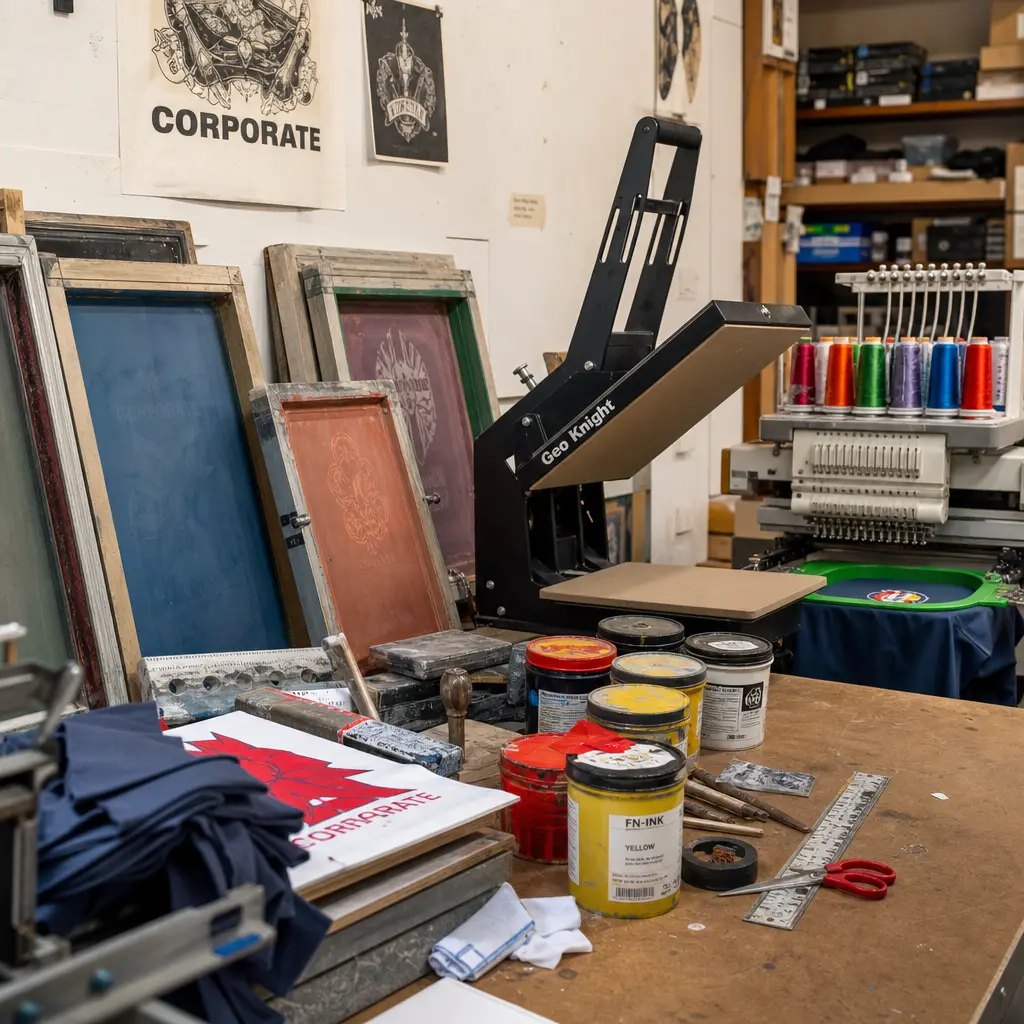
Most salon chain tote programs use screen printing because it is durable, cost-efficient and suitable for solid brand logos. Screen print works best when artwork has clear shapes and limited colors. The buyer should provide vector artwork and Pantone references, but also understand that ink on natural cotton canvas will not look exactly like ink on coated paper. A print drawdown or printed sample is more useful than a digital approval image.
Heat transfer can reproduce gradients, small type and photo-like effects, but it changes the surface hand feel and must be tested for edge lifting and cracking. Embroidery gives a premium look but can pucker lighter canvas and is not ideal for very large logos. Woven labels or side labels work well for understated salon branding and reorders because the label can stay consistent even if the fabric shade changes slightly.
- Screen print: best for bold salon logos, solid text and repeat production.
- Heat transfer: useful for gradients, but test bonding and flexibility on canvas.
- Embroidery: premium effect, but watch puckering and backside thread finish.
- Woven label: good for subtle branding and premium retail positioning.
- Inside care label or side label: useful when the front logo needs a clean, minimal look.
MOQ Logic and Cost Drivers Behind Supplier Quotes
MOQ is not only a supplier preference. It comes from fabric buying, dyeing, printing setup, cutting efficiency, sewing line setup, packing labor and export carton preparation. Natural canvas with a standard handle color usually has a lower MOQ than dyed canvas with custom webbing, custom labels and individual retail packing. A buyer can sometimes reduce MOQ by using a standard fabric and standard handle while keeping the logo custom.
Unit price should be compared only after the same cost items are included. A quote that excludes screen charges, sample cost, individual polybags, hangtags, barcode labels, carton marks or store allocation labor may look cheaper but will not match the real order. For salon chains, packing and allocation can become a meaningful cost driver because small store cartons require more handling than bulk cartons for a central warehouse.
- Fabric weight increase raises material cost, cutting weight, sewing time and freight weight.
- Custom dyed fabric or handles may require higher MOQ and longer lead time.
- Large solid ink coverage can increase print cost and curing risk.
- Multiple logo positions add setup, alignment time and inspection points.
- Individual retail packing adds labor, material and carton volume.
- Store allocation packing increases complexity even when the total quantity is unchanged.
Sample Approval Should Simulate the Bulk Order
A beautiful sample made from available fabric is not enough if bulk fabric, handle tape and print ink will change later. The sampling plan should move from a blank size sample to a printed sample, and then to a pre-production sample using bulk-confirmed material. For higher-risk programs, the buyer should seal a master sample before bulk cutting begins. That sample becomes the reference for factory QC and buyer inspection.
Sample approval should include measurable points. Do not approve only by photo if the bag is a retail item. Measure width, height, gusset, handle length, print placement and logo size. Load the bag with actual or equivalent salon retail products. Fold it the way it will be packed and confirm whether the print cracks, the bag creases badly, or the hangtag position interferes with store display.
- Approve fabric shade with a physical swatch, especially for natural, bleached or dyed canvas.
- Measure printed logo position from fixed points such as top edge and side seam.
- Review handle feel on shoulder, not only appearance on a table.
- Check thread color, seam finish, loose threads and inside cleanliness.
- Confirm final folded size if bags ship in individual polybags or store kits.
- Sign and date the master sample, then reference it on the purchase order.
Packing and Carton Planning for Multi-Store Rollouts
Packing is often where a good tote bag order becomes difficult for a salon chain. Bulk packing 100 pieces per carton may be efficient for the factory, but it may create cartons that are too heavy, too large, or unsuitable for store-level receiving. If the chain distributes directly to stores, the factory may need carton labels showing store code, SKU, quantity, purchase order number and carton sequence.
Retail packing choices also affect cost and sustainability targets. Individual polybags protect light-colored canvas from dust but add plastic and labor. Paper belly bands create a retail look but can shift during transit. Hangtags help paid retail sales but require accurate string placement and barcode data. The buyer should define whether bags are packed flat, folded once, folded into thirds, or bundled, because folding can mark canvas and affect the customer’s first impression.
- Set maximum carton gross weight if stores or distribution centers have handling limits.
- Provide carton mark artwork and data fields before production packing begins.
- Use moisture protection for sea freight, especially with natural cotton canvas.
- Avoid over-compressed cartons that create deep creases or distorted gussets.
- Match packing list quantities with store allocation files before final inspection.
- Keep a photo record of approved packing method for repeat orders.
Lead Time, Schedule Risk and Reorder Control
A realistic schedule starts after artwork, sample and material approval, not after the first email inquiry. Standard natural canvas totes with one-color screen print can move faster than custom dyed fabric, custom handles and retail labeling. Peak season, public holidays, fabric mill capacity and print shop workload can all add time. Procurement should build a timeline with decision gates instead of relying on a single promised ship date.
Reorders are easier when the first order file is disciplined. Keep the approved fabric card, Pantone ink reference, print film or digital artwork file, label layout, carton mark template and inspection report. Salon chains often reorder by region, by new store opening, or by seasonal gift program. Without retained standards, the same supplier may still produce a bag that differs in shade, handle length or logo position because factory workers follow the latest production sheet, not memory.
- Material booking should start only after the buyer accepts fabric and color direction.
- Pre-production sample approval should be a mandatory gate before bulk cutting.
- Inline inspection is useful when the order includes custom stitching, multiple prints or store packing.
- Final inspection should happen before cartons are sealed for export.
- Air freight can rescue timing but may destroy the economics of a heavy canvas program.
- For reorders, reference the previous purchase order and master sample, not only the same SKU name.
Quote Data Needed for a Clean Landed-Cost Comparison
A useful quote for canvas tote bags should show more than unit price. Procurement teams need enough data to compare suppliers on the same basis and to estimate landed cost. The RFQ should request bag size, fabric weight, decoration method, packing method, carton quantity, carton dimensions, gross weight, net weight, lead time, MOQ, sample time, payment terms and trade term. If these fields are missing, the buyer cannot compare freight, duty basis, inspection cost or distribution handling accurately.
The quote should also separate optional costs. For example, a 12 oz natural canvas tote with one-color screen print in bulk pack is not the same commercial product as the same tote with two-sided print, woven side label, hangtag, individual polybag and store allocation cartons. Salon chains should request a base quote plus option lines. This prevents the supplier from averaging costs into an unclear number and helps the buyer choose which features are worth paying for.
- Base unit price: bag, standard handle, one print position and standard export carton.
- Decoration adders: extra print color, second print position, embroidery, woven label or heat transfer.
- Packing adders: individual polybag, paper band, hangtag, barcode label, store carton sorting.
- Setup costs: screen charge, sample fee, print proof fee or label setup fee.
- Logistics data: pieces per carton, carton size, gross weight and estimated CBM.
- Commercial data: MOQ by spec, payment term, trade term, production lead time and sample lead time.
Specification comparison for buyers
| Supplier option | What to verify | Commercial advantage | Buyer risk to control |
|---|---|---|---|
| Direct sewing factory | fabric swatch, approved sample, seam close-ups, logo test photos, packing pilot, and final inspection evidence | Better sample-to-bulk control and faster production feedback | May be weaker on export paperwork or branded packing unless checked early |
| Trading company | Factory name, production photos, trim-source proof, and who owns QC decisions | Can coordinate small mixed orders and extra services | Markup can hide real factory capability and slow defect decisions |
| Specialized bag workshop | bag size, gusset, handle drop, seam allowance, stitch density, reinforcement patch, and loading expectation | More practical for detailed construction, trims, and repeat programs | Capacity may be limited during peak seasons |
| Low-price general supplier | 8-12 oz cotton canvas, 120-220 gsm cotton, recycled cotton, or blended fabric selected by use case and target price | Useful for simple promotional runs with loose specs | Material downgrades, weak packing, and vague inspection scope can erase savings |
| Retail-ready supplier | fold method, inner bundle, carton count, carton mark, moisture protection, SKU separation, and warehouse receiving needs | Can handle labels, SKU separation, carton marks, and receiving rules | Higher unit cost must be compared against reduced warehouse work |
| Compliance-focused supplier | Fabric records, labeling review, test plan, and production traceability | Safer for retail programs and repeat brand orders | Documentation claims need evidence, not only sales language |
| Local sample room plus bulk factory | Signed sample, bulk factory handoff, first-piece photos, and deviation owner | Good for complex branding before large production | Sample room quality may not match bulk line unless handoff is controlled |
Buyer checklist before sampling
- Define the bag use case: free gift, paid retail tote, salon opening kit, product bundle, staff training material, or loyalty program gift.
- State required bag size in width x height x gusset, with measurement tolerance and whether the bag must hold retail shampoo bottles upright.
- Specify canvas fabric weight by oz and GSM, not only the word canvas; request actual fabric swatch or sample weight verification.
- List handle length, handle width, handle material, and reinforcement method; salon buyers often need shoulder carry, not only hand carry.
- Decide natural canvas, bleached canvas, dyed canvas, or washed canvas before artwork approval because fabric shade changes logo appearance.
- Provide Pantone references for print colors and note whether exact matching or commercially acceptable matching is required on cotton canvas.
- Choose print method based on artwork: screen print for solid logos, heat transfer for gradients, embroidery or woven labels for premium detail.
- Confirm whether the supplier quotes plain bulk pack, individual polybag, paper belly band, hangtag, barcode label, or store allocation carton.
- Set carton weight limits, carton dimensions, carton marks and pallet preference if distribution centers have receiving rules.
- Require pre-production sample approval before bulk cutting, especially when custom fabric dyeing, handle color, or multi-position printing is involved.
Factory quote questions to send
- Are you the factory sewing the canvas tote bags, or are you quoting through another producer? Which processes are in-house: fabric cutting, printing, sewing, inspection and packing?
- What canvas weights can you supply for this style, and what are the approximate GSM values for 10 oz, 12 oz, 14 oz and 16 oz options?
- Can you make the requested bag size and gusset without distorting the side seams when the bag is loaded with two or three retail haircare bottles?
- What is the MOQ for natural canvas, dyed canvas, custom handle color, screen printing, heat transfer printing, woven labels and individual retail packing?
- Which print method do you recommend for our artwork, and what are the expected limitations on fine lines, gradients, metallic colors or printing over seams?
- What sample types are available: blank size sample, printed sample, pre-production sample using bulk material, and sealed master sample?
- How do you control print curing or heat transfer bonding so the logo passes rub, wash or handling tests suitable for retail use?
- What handle reinforcement do you normally use for heavier salon retail products: cross stitch, box stitch, bartack, or extra canvas patch?
- What is your normal AQL standard for canvas bags, and what defects do you classify as critical, major and minor?
- How many pieces per export carton do you recommend for our bag size, and what gross weight will that create?
Quality-control points to confirm
- Fabric weight should be checked against the approved sample; allow a practical tolerance agreed in advance, such as plus or minus 5%, instead of accepting an undefined canvas description.
- Finished bag size should be measured flat at top width, height and gusset, with a written tolerance such as plus or minus 1 cm for most standard tote styles.
- Handle length and handle position must match the approved sample; uneven handles are a visible retail defect and affect shoulder carry comfort.
- Handle reinforcement stitches should be complete, balanced and free from skipped stitches, loose threads or weak thread tension.
- Print placement should be measured from top edge or side seam, not judged only by eye; define acceptable placement deviation before production.
- Logo color should be compared under consistent light against approved print drawdown or master sample, with realistic allowance for natural cotton shade variation.
- Print adhesion or rubbing resistance should be tested on production pieces, especially for dark prints, heat transfers and large solid ink areas.
- Interior seams and bottom corners should be checked for fraying, open seams and raw edges that may fail when carrying bottled products.
- Carton count, inner packing method, carton marks and barcode labels should match the packing list and store allocation file.
- Random load testing should reflect salon use, for example filling the tote with several retail bottles and carrying it by the handles for a defined period.