Why museum shops need a different tote bag sourcing brief
Museum shop tote bags sit between merchandise and publishing. They are not usually disposable giveaway bags, and they are not fashion totes with wide tolerance for changing materials. A museum buyer may need sharp artwork reproduction, reliable stock feel, and a retail-ready finish because the bag carries institutional branding, artist licensing, exhibition dates, collection graphics, or membership identity. That combination changes how you evaluate suppliers. A cheap canvas source can work for a one-off promotion, but it often fails on print consistency, handle uniformity, or packing accuracy when the bag is sold as a paid retail item.
The practical buying problem is simple: many supplier quotes look similar on the first page and hide major differences in fabric weight, decoration assumptions, sample process, and carton efficiency. A museum shop team comparing offers only by unit price can choose a source that looks competitive but creates extra cost in resampling, delayed launches, or retail complaints. Your RFQ needs to separate souvenir-grade bags from retail-grade museum totes before suppliers price the job. If the bag is meant to sit next to books, prints, and other gift items, the tote should feel like it belongs in that assortment, not like an event handout that wandered into the shop.
Museum retailers also face a different replenishment pattern. Exhibition tote bags may sell hard for a short window and then need either a clean reprint or a fast exit. Permanent collection totes may run in smaller but steadier volumes. That means a buyer needs to think beyond the first purchase order. A supplier that is convenient for the launch order but weak on repeatability can cause problems when the museum wants the same canvas shade, print placement, and packing rules six months later. For procurement, the right question is not only can you make this bag but can you make it again the same way.
This is why the sourcing brief should read like a retail specification, not a marketing note. It should tell suppliers what the bag must do on shelf, in hand, and in warehouse receiving. It should also tell them what matters most: price, print fidelity, capacity for replenishment, sustainability claims, or premium presentation. Once those priorities are explicit, supplier comparison becomes much cleaner and much less exposed to hidden assumptions.
Start with the tote specification that matches how the shop will sell it
For museum shops, the right canvas tote starts with retail use, not with supplier stock shapes. If the bag will sit near books, paper goods, and printed guides, a flatter body with a modest gusset may display better on hooks and shelves. If it is intended for heavier gift assortments, catalogs, or boxed items, a wider gusset and stronger handle reinforcement matter more than saving a few cents on fabric. Buyers should separate at least three use cases in the RFQ: lightweight souvenir tote, standard all-purpose museum tote, and premium collection tote. A supplier can only price correctly if the load expectation is stated clearly.
Fabric weight is the first filter. In practical terms, 8 oz to 10 oz canvas suits lower-cost, softer bags with a casual drape. Around 10 oz to 12 oz is the most common range for museum shop retail because it balances structure, printability, and freight efficiency. At 14 oz to 16 oz, the bag feels more substantial and can justify a higher retail price, but the extra weight increases freight cost and bulk carton size. GSM and oz must be written clearly in the RFQ because some factories quote only one unit and some will use an approximation that is not meaningful to the buyer unless it is anchored to an approved sample.
Construction should be defined alongside fabric weight. A bag quoted as canvas tote can still vary widely in handle feel, seam finish, and stability. If the tote will carry books or framed items, a buyer should ask about handle width, handle drop, seam allowance, top edge finish, and whether the handle is self-fabric or cotton webbing. Self-fabric handles reduce complexity but can twist more. Webbing handles can feel firmer and more retail-ready, but they may change the bag’s look and require a different cost structure. The key is to write the intended carrying use into the brief so the factory is not guessing.
The finished size should be written in a way that prevents dispute later. Use width by height by gusset, and state whether the measurement is taken flat after sewing or as cut size before sewing allowance. For museum programs, the same nominal size can feel very different if one supplier builds in a deep gusset and another keeps the body flatter. If the tote must fit a standard retail rack or a shelving cubby, those external dimensions should be noted. A good specification turns the tote into a measurable retail product instead of a generic bag shape.
Natural canvas shade also deserves an early decision. Unbleached or greige canvas can feel authentic and practical, but shade variation is part of the material. If the museum wants a cleaner, more controlled premium look, a bleached or dyed base may be better. That choice affects not only appearance but also how much defect tolerance is reasonable during inspection. Buyers should not let the factory decide this by habit. The shade should match the story the museum wants the bag to tell.
Choose fabric and construction before discussing artwork
Many museum tote projects begin with artwork, but fabric and construction decide whether the final bag feels like a souvenir or a collectible product. Canvas weight alone is not enough. Two bags both quoted as 12 oz can perform differently if one uses a looser weave fabric, narrow handles, or low stitch density. Construction details should include handle width, handle drop, seam allowance, gusset build, reinforcement type, and the expected carrying load. These are standard line items for a factory, but if left unspecified they become silent substitutions inside the quote.
Natural cotton canvas is still the most practical base for museum shops because it prints well and supports a wide range of artwork styles. Dyed canvas can work for stronger visual programs, but then shade control and colorfastness become part of the approval process. Recycled-content canvas is increasingly requested, though buyers should make sure the supplier states exact composition and how that affects print surface and hand feel. Recycled blends can show more surface variation, which is acceptable if the product story supports it, but not if the museum expects a clean premium finish. Procurement teams should ask how the supplier defines the recycled claim and whether the claim appears on the product, hangtag, carton, or only in sales communication.
It helps to split the spec into body, handle, and reinforcement. For the body, state canvas weight, weave type if known, and whether pre-shrinking or washing is included. For handles, state width, length, drop, and material. For reinforcement, require the stitch pattern and where it appears. Box stitch or cross stitch at handle roots is common, but the buyer should still define it because a supplier might otherwise substitute a lighter tack stitch. Museum bags are handled often, hung on racks, and repeatedly opened and loaded. Handle failure is not a theoretical issue; it is one of the fastest ways a retail tote gets returned or downgraded by staff.
Premium museum programs may also need extra structural features. A bottom board, inner pocket, lining, magnetic snap, or zipper can turn a basic tote into a higher-value retail product. Those additions should be treated as separate quote items because they affect sewing time, material sourcing, and inspection complexity. If the shop is comparing standard and premium lines, the supplier should quote both so the buyer can see where the cost moves. Otherwise, teams often assume an accessory is cheap simply because it is small, when in fact it drives process changes that alter price and lead time.
The best practice is to approve fabric and construction first and artwork second. Once the base bag is fixed, print, label, and packaging decisions become much easier to compare across suppliers. That sequence also reduces rework if the museum decides to change a design after seeing the sample.
Print method should follow artwork style, not supplier habit
Museum shops often sell totes with artwork that has educational, archival, or artistic value. That means decoration choice should follow the graphic, not the printer's cheapest standard method. Screen printing remains the default for solid artwork, text, logos, and medium-coverage designs. It gives good opacity and durability on canvas, especially for one to four colors. Water-based inks usually give a softer hand and a more natural textile feel, while plastisol may provide stronger opacity on dark fabrics but can feel heavier. Buyers should ask which ink system is being used because the answer affects hand feel, durability, and the way the image sits on canvas.
Digital printing suits artwork with gradients, fine tonal detail, or many colors, but it requires a suitable fabric surface and a clear expectation on color variance versus screen print. If the exhibition artwork includes painterly textures or complex illustration, digital may preserve more of the original graphic language. But it also introduces different approval questions: how much color drift is acceptable, whether the print should sit on the surface or sink into the fiber, and whether the fabric’s natural texture will interrupt fine detail. A buyer should not approve digital printing simply because the artwork is intricate. The fabric and the print target still need to be compatible.
Heat transfer can be acceptable for short runs or special effects, though it should be reviewed carefully for hand feel and edge visibility. It is often more appropriate for a controlled small batch than for a core museum retail staple that will be reordered. Embroidery and woven labels add value on premium museum collections, but they should support the design rather than compete with the artwork. A woven label on the side seam or inside seam can be useful for brand identification without taking over the front panel. If the supplier suggests a mixed decoration approach, ask why each method is being used and what part of the final product each method is meant to solve.
The quote should not say only print included. It should state print method, number of colors, number of print positions, artwork size, and any setup charges. For a two-sided tote, front and back may be priced differently. For dark canvas, ask whether an underbase is included and how it changes the hand feel. If exact Pantone matching matters, the buyer should ask whether the supplier will use ink mixing, lab-dip reference, or a prior production standard. This is especially important for institutional branding, where a color shift can make a product look unofficial even if the bag itself is well made.
A practical procurement rule is to define print success in the RFQ. For example, the museum can say that artwork should remain legible at arm’s length, registration should stay within a stated tolerance, and color should match the sealed sample within an agreed range. That kind of instruction makes quote comparison and final inspection much more consistent.
MOQ logic is usually driven by fabric, print setup, and packing complexity
Museum buyers often hear one MOQ number and assume it applies to the full program. In practice, tote MOQ is rarely that simple. A factory may quote 500 pieces, but that might mean 500 pieces per fabric color, per artwork, or per size. If your program includes one permanent collection bag and three exhibition variants, the usable MOQ can be much higher than it first appears. MOQ also changes when custom dyed fabric, webbing color, inside labels, barcode stickers, or individual inserts are added. Procurement teams should treat MOQ as a system of constraints, not a single line in a quote.
Understanding MOQ logic lets you reduce cost without weakening the product. For example, keeping one body size and one base fabric across multiple artworks can lower total setup burden while still allowing design variety. Another common approach is to share carton specs and handle construction across SKUs so only artwork changes. That makes the order more manageable for the supplier and easier to receive in the museum warehouse. For exhibition programs, a buyer may accept a higher sample fee or a slightly higher unit price on a smaller first run if the supplier can preserve approved specs for future replenishment.
The most useful question is not what is your MOQ but what is the MOQ by variable. Ask for the minimum by fabric color, by artwork, by size, and by label type. A woven label may have one MOQ while the bag body has another. If the museum wants both a seasonal bag and a permanent collection bag, the supplier should explain which components can be shared and which components require separate runs. This matters even more when different departments inside the museum want different artwork versions but the same base bag. Without a clear component map, the quote can look affordable while the actual order structure is not.
Low MOQ offers should also be checked for hidden tradeoffs. A supplier may be able to accept a small run by using stock fabric, simplified packing, or merged production lots, but that can reduce control over shade consistency and reprint accuracy. That is not automatically a problem if the museum only needs a short promotional run. It is a problem if the bag is supposed to become a standard retail item. Buyers should match MOQ to the commercial life of the tote, not just to the immediate launch budget.
For procurement planning, a mixed-SKU order often works best when all variants share one fabric weight, one handle spec, and one carton format. Then the only variable is artwork, which is the easiest part to control.
How to compare supplier quotes beyond the unit price
A usable museum tote quote should let you compare not only the bag price but also what is actually included. Two suppliers can both quote a similar price for a 12 oz canvas tote, yet one includes thicker handles, one print position, ironing, and individual barcode stickers while the other excludes all four. The result is that the cheaper quote on paper becomes more expensive once the missing items are added back. This is where buyers need a normalized quote sheet that lists the same cost assumptions across all suppliers.
At minimum, compare quotes in five blocks: material specification, decoration method, packaging, sample charges, and shipment data. Shipment data matters because folded volume and carton size can change freight cost materially, especially for higher-GSM gusseted totes. If the supplier cannot provide estimated carton dimensions and gross weight at quote stage, the landed-cost comparison is incomplete. For museum chains or distributor supply, carton mark accuracy can also save internal handling cost later. The buyer should know whether the supplier is quoting ex-works, FOB, or another trade term and what is excluded from that price.
Material specification should not stop at canvas weight. It should include fiber content, weave type if known, finish, pre-shrink process, and color basis. Decoration should specify print method, number of colors, print area, print positions, and whether setup costs are separate. Packaging should describe fold method, bag-in-bag or not, polybag thickness if applicable, carton quantity, and labeling. Sample charges should distinguish digital mockup, strike-off, pre-production sample, and courier cost. Shipment data should include packed carton dimensions and estimated gross weight. If any of these fields are missing, the quote is not yet ready for procurement comparison.
It is also worth asking for repeat-order economics. A first-order quote often includes setup charges that will not recur on the next run. That is useful to know because museum shops often reorder successful designs. If the supplier gives a first-run price but cannot estimate repeat pricing once screens or approvals are already in place, the buyer cannot forecast margin accurately. For retail planning, repeat economics matter as much as launch economics. A tote that sells well but is too expensive to replenish can become a one-season item by mistake.
The cleanest approach is to send a quote sheet with fixed fields and ask each supplier to fill it out in the same format. That makes differences obvious and reduces the chance that one quote looks cheap only because it omitted work that another supplier included.
Sample approval should catch retail issues, not only factory compliance
Museum shop sample approval is where many preventable problems either get solved or get locked into production. A pre-production sample should be judged as a retail object, not only as a manufacturing reference. The bag needs to be reviewed for front-facing appearance, shelf impression, handle feel, fold quality, and how accurately the artwork reads at normal shopping distance. A bag can technically match measurements and still feel weak in-store if the canvas is too limp or the print sits too low. For a museum shop, the customer experience starts before the bag is purchased, when the shopper sees it hanging beside books and other merchandise.
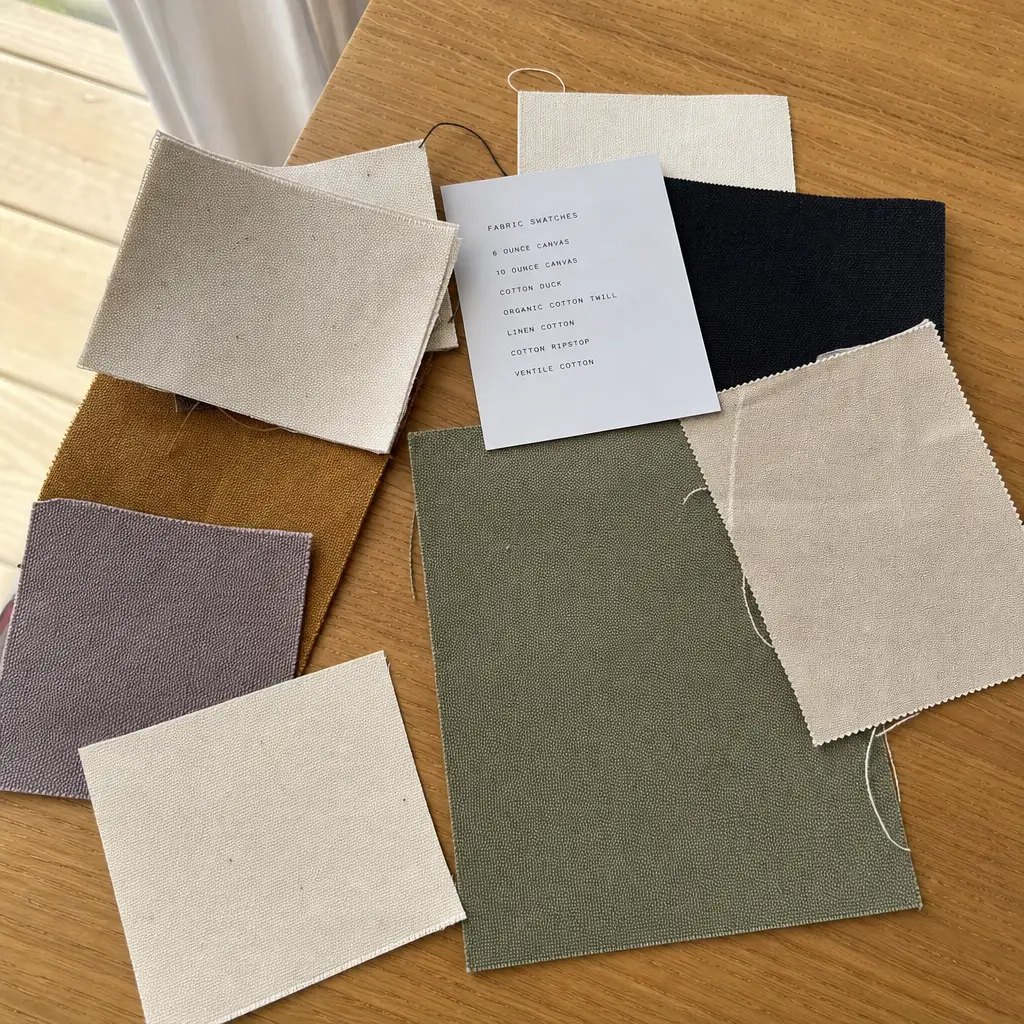
A good approval flow usually includes a digital artwork placement proof, fabric swatch or stock swatch confirmation, print strike-off if color is sensitive, and one sewn pre-production sample made to the final specification. If multiple internal stakeholders approve museum retail products, put the approval criteria in one document. Otherwise, buyers end up giving contradictory feedback on handle drop, print size, or interior finishing, which slows production and makes it easier for details to be lost between sample and bulk. Procurement should define who signs off on dimensions, who signs off on visual brand accuracy, and who signs off on warehouse packing. Those are not always the same person.
The sample should be inspected in the same conditions as the retail use case. Hang it, fold it, fill it with representative weight, and check whether the handle length feels balanced on the shoulder and in the hand. Ask whether the print remains centered when the bag is filled, not just when it is empty. If the museum sells bags alongside books or framed prints, the sample should be loaded with similar items so handle stress and gusset performance are visible. This is a practical test, not a lab exercise, but it catches real weaknesses early.
If color accuracy matters, do not rely on a monitor image alone. Request a print strike-off or lab-dip reference and make the supplier mark the approved version date on the sample tag. If there are multiple artwork versions, label them clearly so the factory does not confuse front and back graphics or mix a seasonal design with a permanent collection design. A sealed sample set is worth keeping because it gives both sides a common reference if production questions appear later.
For suppliers, sample feedback should be specific and actionable. Instead of saying make it better, say increase handle drop by 2 cm, move the print 1 cm higher, or change the label placement from side seam to interior seam. Clear instructions shorten the revision cycle and reduce the risk that a factory corrects the wrong detail.
QC thresholds that matter for museum retail programs
Final inspection for canvas totes should focus on what the museum shopper will actually notice first: print placement, body shape, cleanliness, and carrying comfort. Retail complaints usually come from crooked prints, uneven handles, visible dirt on natural canvas, or bags that feel weaker than the displayed sample. These are not difficult issues to inspect, but they must be visible in the QC checklist before bulk starts. A generic pass-fail review is not enough for museum-store merchandise, especially when the tote is tied to an exhibition opening or a branded retail launch.
QC thresholds should also reflect natural-material reality. Canvas is not molded plastic, so some variation is normal. The practical approach is to define what variation is acceptable and what is not. For example, moderate natural specking may be acceptable on unbleached canvas if approved in the sample, while oil marks, severe panel shade mismatch, and print skew are not. The factory should know whether the museum buyer prioritizes a natural handmade look or a cleaner premium look because those lead to different acceptance standards. A premium museum line usually needs tighter visual cleanliness than a lower-priced souvenir line.
A useful QC plan has three layers. First, incoming material checks: canvas weight, color, and obvious defects. Second, in-process checks: cutting accuracy, print placement, reinforcement stitching, and label location. Third, final inspection: bag count, carton marks, packing method, and random sample review. If the supplier only reports a final inspection, you may still miss issues that are difficult to correct late in production. Canvas tote work is straightforward, but once one of these layers is skipped, defects move quickly into finished goods.
Critical defects should be defined in writing. Typical critical failures include wrong artwork, wrong barcode, wrong origin marking, or broken handle stitching. Major failures may include print off-center beyond tolerance, large stains, handle mismatch, or wrong fabric weight feel versus the approved sample. Minor failures may include small loose threads or slight natural specking if that was approved. The point is not to overcomplicate the inspection; it is to make the acceptance rule consistent. That helps both the museum and the supplier avoid arguments after the goods arrive.
A final QC report should include photos that show the front print, side seam, inside seam, handle attachment, and packed carton condition. If the buyer is working with a new supplier, ask for first-piece approval photos before the full run continues. That gives the museum one more chance to stop a problem before it becomes a bulk issue.
Packing details affect both retail readiness and freight cost
Packing is often treated as an afterthought, but for museum totes it affects presentation, warehouse handling, and landed cost. A bulk fold that minimizes carton volume may create deep creases across the artwork, especially on heavier canvas or large front prints. On the other hand, overly protective packing can add cost with little retail benefit. The correct packing method depends on how quickly the product moves from inbound carton to shelf and whether the shop team has time to steam or reshape bags. This is why packing should be part of the RFQ, not something added after the bag spec is approved.
Museum buyers should decide whether each tote needs an individual polybag, paper belly band, barcode sticker, hangtag attachment, or simple bulk inner pack. For some museum shops, a naked packed bag is acceptable if dust risk is low and staff unpack quickly. For others, especially where the tote is sold as a gift item, a cleaner individual presentation is worth the added cost. Carton fill also matters. Overpacked cartons distort handles and create seam stress, while underfilled cartons waste freight space. The buyer should ask the supplier how many bags per carton are recommended for both shape retention and handling safety.
Fold direction should be specified if artwork placement makes front creasing a problem. If the print is large or centered high on the front panel, a poor fold can leave a visible line across the design. The carton spec should also include units per carton, carton dimensions, gross weight, and whether moisture protection is needed. In humid shipping lanes or long transit chains, a simple moisture barrier or cleaner inner wrap may be worth the extra unit cost. That is especially true for unbleached canvas, which can show storage marks more readily than a finished fabric.
Barcode and carton mark control are part of packing quality, not an afterthought. If the museum receives stock into a warehouse or stockroom, the outer carton should carry SKU, color, size, quantity, and order reference in the format the receiving team expects. If the buyer uses polybags, the barcode placement should be fixed so scanning is quick. These details reduce labor later. For procurement buyers, the value of good packing is not only protection during shipment. It is also speed and accuracy in receiving, storage, and shelf replenishment.
If the tote is meant to be sold folded, you should check the folded silhouette on shelf. If it is meant to be displayed on a hook, the fold should not obscure the artwork or distort the handle drop. The best supplier is the one who understands that the packed bag is part of the retail presentation, not just a shipping unit.
Lead time risk is usually hidden in approvals and material timing
Museum tote launches often align with exhibition openings, seasonal gift periods, or member campaigns. In those cases, the formal production lead time is only part of the schedule. The real risk usually sits before bulk production starts: artwork freeze, material approval, print strike-off, and final sample sign-off. If those steps drift, a supplier with an honest 35-day production plan can still miss the retail window because the order was not actually production-ready when the clock started. The buyer should separate planning time from factory production time so the schedule reflects reality.
For standard stock-fabric canvas totes with simple screen print, bulk lead time may be relatively manageable once approval is complete. Custom dyed canvas, multiple artwork versions, special labels, or premium packaging each add another timing layer. Buyers should separate milestone dates instead of asking one broad question about delivery. When comparing suppliers, request stage timing for sample, approval revision, bulk production, and packing. That reveals whether a low quote depends on optimistic assumptions the factory may not control. A supplier that gives stage timing in writing is usually easier to manage than one that only gives a final delivery estimate.
The release point matters too. Ask whether lead time starts from deposit date, artwork approval, sample approval, or final confirmation of all packaging components. For museum work, labels and packaging often arrive later than the bag body if they are managed separately, which can hold up final packing even if sewing is complete. If the tote launch is tied to a fixed event date, build buffer for internal approval loops and any holiday closures at either end of the supply chain. A one-week delay in approvals can easily become a missed launch if the schedule was built with no margin.
It is also useful to ask what usually extends the lead time. The factory’s answer tells you where the real risk sits. If the most common delay is fabric sourcing, you may want to pre-approve base canvas. If the delay is print strike-off comments, you may need a faster internal approval path. If the delay is packing material, you should lock those components earlier. This kind of question is practical because it helps procurement move one variable at a time instead of treating all delays as the supplier’s problem.
For exhibition-specific programs, the best practice is to set a latest acceptable ship date rather than only a target date. That gives both sides clarity on what happens if one milestone slips.
Specification comparison for buyers
| Supplier option | What to verify | Commercial advantage | Buyer risk to control |
|---|---|---|---|
| Direct sewing factory | fabric swatch, approved sample, seam close-ups, logo test photos, packing pilot, and final inspection evidence | Better sample-to-bulk control and faster production feedback | May be weaker on export paperwork or branded packing unless checked early |
| Trading company | Factory name, production photos, trim-source proof, and who owns QC decisions | Can coordinate small mixed orders and extra services | Markup can hide real factory capability and slow defect decisions |
| Specialized bag workshop | bag size, gusset, handle drop, seam allowance, stitch density, reinforcement patch, and loading expectation | More practical for detailed construction, trims, and repeat programs | Capacity may be limited during peak seasons |
| Low-price general supplier | 8-12 oz cotton canvas, 120-220 gsm cotton, recycled cotton, or blended fabric selected by use case and target price | Useful for simple promotional runs with loose specs | Material downgrades, weak packing, and vague inspection scope can erase savings |
| Retail-ready supplier | fold method, inner bundle, carton count, carton mark, moisture protection, SKU separation, and warehouse receiving needs | Can handle labels, SKU separation, carton marks, and receiving rules | Higher unit cost must be compared against reduced warehouse work |
| Compliance-focused supplier | Fabric records, labeling review, test plan, and production traceability | Safer for retail programs and repeat brand orders | Documentation claims need evidence, not only sales language |
| Local sample room plus bulk factory | Signed sample, bulk factory handoff, first-piece photos, and deviation owner | Good for complex branding before large production | Sample room quality may not match bulk line unless handoff is controlled |
Buyer checklist before sampling
- Define the selling use case first: souvenir carry bag, premium gift item, exhibition-specific product, or membership merchandise.
- State exact finished size in W x H x gusset format and whether measurements are taken flat or after stitching.
- Specify fabric weight in GSM or oz canvas, and note whether tolerance of plus or minus 5 percent is acceptable.
- Clarify fabric type: cotton canvas, recycled canvas blend, dyed canvas, or natural greige canvas.
- List handle construction: self-fabric or cotton webbing, handle width, drop length, cross stitch or box stitch reinforcement.
- Describe print method by panel: screen print, digital print, heat transfer, embroidery, woven label, or mixed decoration.
- Provide artwork count, print coverage size, Pantone references, and whether exact color match is critical.
- State lining, zipper, inner pocket, bottom board, snap, or gusset requirements if the tote is sold as a premium item.
- Define sample stages needed: digital mockup, pre-production sample, print strike-off, and sealed production sample.
- Set packing rules including folding method, individual polybag yes or no, barcode placement, and units per carton.
Factory quote questions to send
- What canvas weight are you quoting in GSM and oz, and is the fabric plain weave cotton canvas or another construction?
- Is the quoted bag size based on finished sewn dimensions or cutting dimensions before sewing tolerance?
- What are the handle width, finished handle drop, and reinforcement stitch pattern included in the price?
- Does the price include pre-shrinking, washing, or ironing, and what dimensional change should be expected after production?
- Which print method is assumed for this artwork, and how many colors and print positions are included?
- Are print setup charges, screen charges, or digital proof charges included separately or inside the unit price?
- What is the MOQ by fabric color, by artwork, and by size, not only the total order quantity?
- Can mixed SKUs share one fabric lot and one carton mark program to hit MOQ more efficiently?
- What sample stages are chargeable, and can the sample fee be credited back to bulk production?
- What is the standard production lead time after sample approval and deposit, and what events usually extend it?
Quality-control points to confirm
- Fabric weight should match approved range; for example, 12 oz canvas should not arrive feeling closer to 10 oz after finishing.
- Finished size tolerance should be defined, commonly around plus or minus 1 cm for body dimensions depending on bag size.
- Handle drop and pair symmetry should be consistent so bags hang evenly on retail hooks and on the shoulder.
- Reinforcement stitches at handle roots should be complete, back-tacked, and free from skipped stitches.
- Print position should stay within approved tolerance, commonly around plus or minus 5 mm from artwork centerline.
- Print surface should show no major pinholes, ghosting, blurred edges, color contamination, or cracking after cure.
- Canvas panels should be free from oil stains, loom defects, slubs beyond approved natural-character level, and obvious shade variation.
- Inside seam trimming should be clean enough that loose threads do not fall onto dark garments or gift packaging.
- Gusset depth and bottom alignment should allow the bag to stand or fold as intended by the approved sample.
- Packing count, barcode placement, and carton marks should match the packing list exactly, not only the product itself.