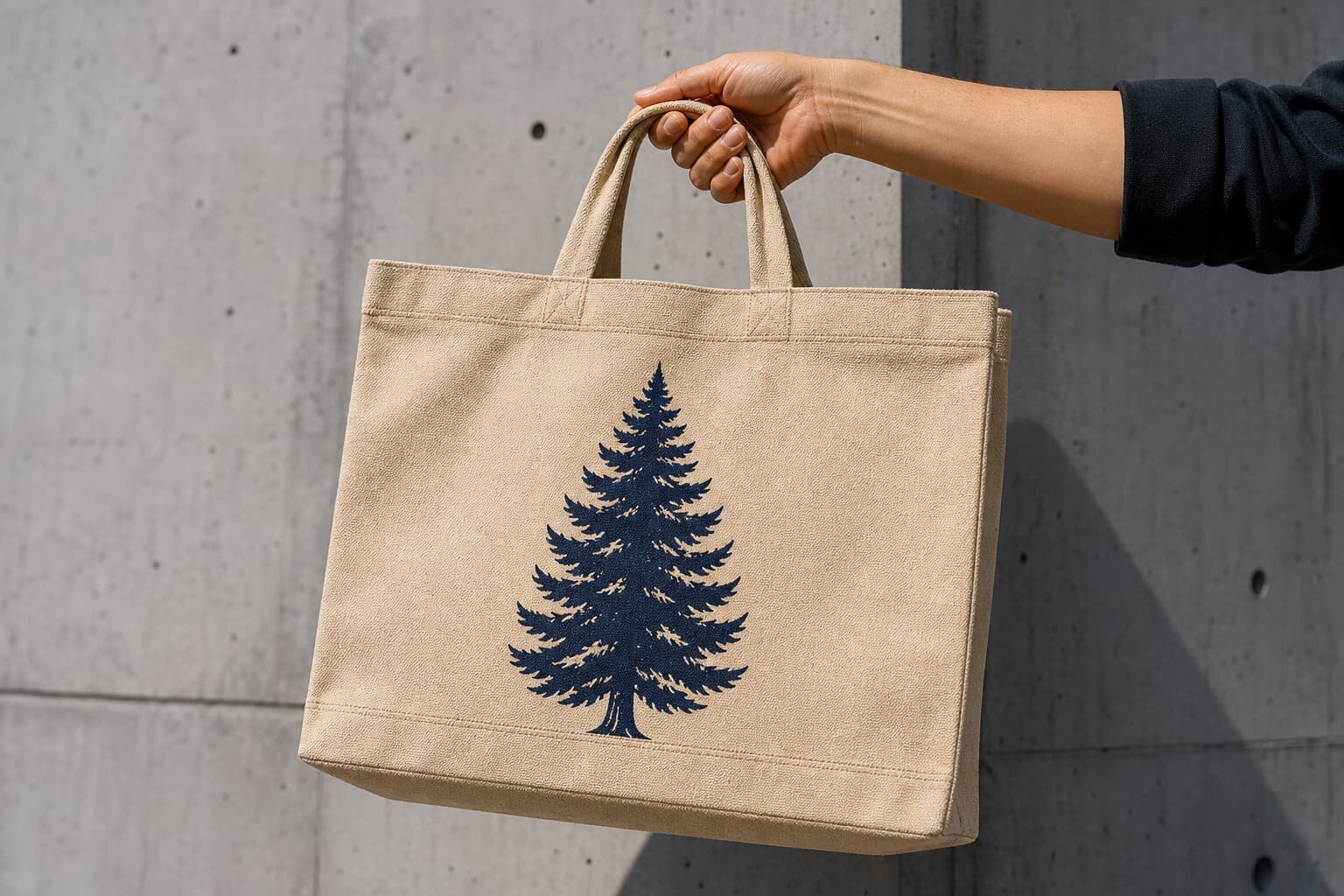
1. Why Subscription Orders Need a Different Quality Lens
A canvas tote for a subscription program is not the same as a one-off event giveaway. It is often part of a recurring customer experience, so the buyer is protecting brand consistency, pack-out efficiency, and repeat-order stability at the same time. A tote that looks fine on a sample table can still create problems if it varies in shade from one month to the next, folds awkwardly in the warehouse, or feels lighter than the approved version.
The procurement challenge is repetition. A January launch may be 2,000 pieces, followed by a replenishment run, then a seasonal artwork change. If the factory is not controlling fabric lot, print setup, and sewing method tightly, the product drifts. For this type of order, inspection should measure the bag against the approved standard, not just against generic tote expectations.
- Treat repeatability as a product requirement, not a nice-to-have.
- Check how the bag behaves in the subscription box, not only how it looks in isolation.
- Watch for slow drift in shade, handle length, and fold pattern across repeat runs.
- Keep the approved sample tied to the purchase record for every artwork version.
2. Start With a Finished Spec, Not a Reference Photo
A reference image is useful for style, but it is not a manufacturing brief. If the RFQ says only similar to the attached tote, each supplier will fill in the missing details differently. One may quote a lighter fabric, another may shorten the handles, and a third may simplify the print method. The prices will look different, but the products are not actually comparable.
Write the bag like a production item. Give the finished dimensions, fabric weight, composition, weave, color, print area, handle width, handle length, handle drop, seam finish, and packing format. If you are still deciding between two constructions, ask for both as controlled options in the quote so you can compare the real tradeoff instead of guessing. This is where procurement becomes useful: one clear spec, one clear comparison.
- Example size: 380 mm width x 420 mm height x 100 mm gusset, with tolerance stated separately.
- Example handle: 30 mm self-fabric handles, 600 mm total length, sized for comfortable hand carry or shoulder carry.
- Example print: one-color screen print, centered on the front panel, with placement tolerance defined in millimeters.
- Example pack: flat folded, 50 pieces per carton, with carton marks and barcode location written into the spec.
3. Fabric Control: Weight, Shade, Shrinkage, and Handfeel
For a canvas tote bag for subscription brands, fabric is the first quality gate. Most programs land in the 10 oz to 12 oz range, or about 280-340 GSM, because that gives a solid handfeel without making the carton too bulky. Lighter canvas can work for low-load inserts, but it often reads as promotional rather than retail-grade. Heavier canvas can look premium, but it increases freight, fold bulk, and packing labor.
Do not accept a quote that only says heavy cotton canvas. Ask for GSM or oz, composition, weave type, finish, and the normal tolerance by batch. Natural canvas needs shade control because cotton fiber is not perfectly uniform. Dyed canvas needs shade-band review and colorfastness checks. If the bag is supposed to look clean and calm in a subscription box, the buyer should also ask about pre-shrink or finishing treatment, because uncontrolled shrinkage changes both size and appearance after the first handling cycle.
- Ask for a fabric swatch or cut piece from the bulk roll before cutting starts.
- Compare bulk shade to the approved sample under daylight and indoor warehouse light.
- Define the acceptable range for fabric weight, not just the target number.
- If the canvas is dyed, ask how the supplier checks lot-to-lot shade consistency.
4. Construction Details That Actually Affect Complaints
Most customer complaints about canvas totes come from the same place: handles and seams. The body fabric can be perfectly acceptable, yet the bag still fails if the handle attachment is weak or the bottom corners open under load. Heavier fabric helps, but it does not replace good construction. A poorly reinforced 12 oz tote can fail sooner than a well-built 10 oz tote.
Ask the factory to name the actual reinforcement method, not just to say reinforced. Box-X stitching, bartacks, or reinforced cross stitching at the handle joint are common solutions. The buyer should also ask for stitch density, seam allowance, thread type, and backstitch control, because these details determine whether the bag holds up after repeated packing and unboxing. If the tote is meant to carry books, bottles, cosmetics, or bundled merchandise, the stress points deserve more attention than the front logo ever will.
- Check handle symmetry so left and right sides match within the agreed tolerance.
- Inspect bottom corners for fraying, weak backstitching, and exposed thread ends.
- Make sure the seam allowance is wide enough for the fabric weight and expected load.
- Confirm the handle joint is tested on the same construction that will go to bulk, not a nicer lab sample.
5. Decoration Control: Screen Print, Transfer, or Embroidery
Decoration is where a lot of tote bags quietly become procurement problems. Screen printing is usually the simplest path for solid logos and short text because it gives stable coverage on canvas and is relatively easy to inspect. Heat transfer can handle more complex art, but it needs cleaner process control to avoid edge lift, gloss mismatch, or a brittle feel. Embroidery can read as premium, yet it can also pucker lighter fabrics or create a stiff spot if the backing and stitch density are not managed well.
The inspection standard has to match the method. A screen print should be checked for registration, coverage, pinholes, smudging, curing, and cracking after folding. A transfer should be checked for edge adhesion, flattening, and rub resistance. For large artwork areas, ask for a strike-off on the actual bulk fabric before approval. A design that looks crisp on a paper proof can change character once it meets real canvas texture.
- Approve print placement in millimeters, not only by eye.
- Check the logo color on the production fabric, since natural canvas shifts how ink reads.
- Ask the factory how it verifies curing or adhesion before packing.
- If the artwork will sit under a fold line, test the print after the tote is packed the way your warehouse will pack it.
6. Sample Approval and the Golden Reference
Pre-production approval is the single most important control in this category. A sample made with substitute fabric, alternate thread, or a different print method is a visual reference only; it is not a reliable production promise. The buyer should ask for a production-matched sample that uses the actual fabric, ink or transfer system, handle construction, and folding method planned for bulk shipping. If anything is substituted, the supplier should label it clearly and provide the final matched sample before mass production starts.
When you approve the sample, treat it like a release document. Measure it, photograph it, load it with expected contents, and fold it the way the fulfillment team will fold it. Keep one signed sample at the factory and one with the buyer or inspection agent. For repeat orders, compare each new sample to the last approved run so slow drift does not become a sourcing habit.
- Keep the approval note tied to one artwork, one fabric lot, and one packing method.
- Record the allowed tolerance for logo placement and finished size on the sample card.
- Check the tote after 24 hours in a closed carton or polybag to catch odor or blocking issues.
- Do not release bulk cutting until the factory confirms the production sample matches the quote.
7. Defect Categories and a Practical AQL Plan
A useful inspection plan starts with a defect map. Critical defects are the ones that make the tote unusable or wrong for the order, such as the wrong artwork, a broken handle on sample pull, contamination, or a major sizing error that would stop the bag from fitting the intended pack-out. Many buyers set critical defects to zero acceptance. Major defects are functional or visible failures that would cause rejection or rework, such as a weak seam, serious misprint, or large shade mismatch. Minor defects are cosmetic issues that do not block use but still lower the product standard, like loose threads, slight trim marks, or small print irregularities.
For a lot-based inspection, many procurement teams use AQL 2.5 for major defects and AQL 4.0 for minor defects, with no critical defects accepted. The exact plan should be written into the PO or QC instruction before production starts. If your order has multiple artwork versions or fabric colors, inspect each lot or colorway separately so a passing color does not hide a failing one. That is a small administrative step that saves real money later.
The inspection report should name the sampling standard, lot size, sample size, and reject decision clearly. If the supplier says it passed, that statement is only useful when it is tied to the actual numbers and defect definitions you agreed in advance.
- Critical: wrong logo, broken handle in sample pull, or contamination that prevents shipment.
- Major: seam opening, print misregistration beyond tolerance, serious shade mismatch, or wrong size outside tolerance.
- Minor: loose thread, slight print speck, or trim mark that does not affect function.
- Inspect each colorway and artwork version separately when the order is split across months.
8. Packing for Fulfillment Centers and Retail Receipt
Packing is part of the product for a subscription brand. A tote that arrives folded in the wrong direction slows the warehouse team down. A carton that is too heavy or too soft creates receiving friction. A bag that is compressed too tightly can hold a permanent crease or transfer ink to the fold line. That is why the packing spec should be treated as a procurement item, not a last-minute logistics note.
Decide early whether the bags should ship in polybags. Some brands want to avoid plastic where possible, while others need polybags for moisture protection, barcode control, or cleaner retail presentation. If polybags are used, define the bag thickness, warning text requirement, barcode position, and fold orientation. If you are bulk packing, write the unit count per carton, carton dimensions, gross weight target, and carton marks into the order. This keeps freight estimates and warehouse receiving aligned with the actual goods.
- Confirm the folding direction with the fulfillment team before mass packing starts.
- Check the first carton and the last carton from the run, not just one middle sample.
- Match carton size to warehouse handling limits and freight cost, not to habit.
- If the bags sit in transit for a long time, add moisture control appropriate to the shipping lane.
9. Documentation, Tests, and the Shipment Release Package
Good procurement does not stop at the bag itself. The factory should be able to hand over a clear release package that shows what was inspected and what was approved. At minimum, that package should include a measurement table, defect photos, carton photos, quantity result, and the name of the inspection standard used. If your brand has compliance or market-specific requirements, ask for the related declarations or test references before shipment is released.
You do not need to overcomplicate the file, but you do need enough evidence to compare orders and resolve disputes later. Ask for the production date, fabric lot reference, print method, packing style, and carton count on the report. For repeat programs, store the report next to the approved sample record so the next reorder has a clean trail. That is how you protect the program from becoming a series of vague recollections instead of a repeatable supply chain.
- Keep the inspection report linked to the exact PO and artwork version.
- Ask for defect photos that show both the issue and the context.
- Record measured bag size, handle drop, and print placement on the report.
- Store the final carton dimensions and gross weight for freight planning on the next reorder.
10. Comparing Quotes Without Losing the Real Spec
The cheapest tote quote is often the one that leaves something important out. One supplier may be pricing 12 oz canvas with reinforced handles and detailed packing, while another is quoting 8 oz fabric, simpler stitching, and loose bulk pack. Those are not the same product, and they will not perform the same way in a subscription program. The buyer should compare quotes against the same fabric, same print method, same construction, same packing, and same inspection assumptions.
Ask each supplier to separate the quote into fabric, decoration, sewing, packing, sample cost, and logistics assumptions. Then compare lead time, MOQ, repeat-order policy, and their ability to hold the approved standard for later drops. A slightly higher unit price can be the better procurement choice if it reduces sorting, rework, or customer complaints after fulfillment. That is the part of the decision sheet that finance will eventually care about, even if the quote line looks a little sharper at first glance.
- Compare finished size, fabric weight, and construction before unit price.
- Ask whether print setup is included or charged per artwork version.
- Confirm carton data and labeling so freight and warehouse costs are not guesswork.
- Check whether the supplier can support repeat orders without changing the approved fabric or print process.
Specification comparison for buyers
| Spec decision | Recommended option | When it fits | Buyer risk to check |
|---|---|---|---|
| Fabric weight | 10 oz to 12 oz cotton canvas, about 280-340 GSM | Recurring box inserts, member gifts, and medium-value merch | Below 8 oz can feel thin; above 14 oz raises freight and packing volume |
| Fabric finish | Natural, bleached, or dyed canvas with pre-shrink control | Brands that care about look, reuse, and repeat-drop consistency | Natural shade variation and dye lot drift need an agreed tolerance |
| Decoration method | Screen print for solid logos, heat transfer for complex art, embroidery for small premium marks | Most subscription brand artwork and seasonal graphics | Large ink areas can stiffen the front panel and transfers can lift if curing is weak |
| Handle construction | Self-fabric handles or webbing with box-X or bartack reinforcement | Bags that may carry books, bottles, or mixed box contents | Weak handle attachment is a common complaint even when the body fabric is fine |
| Seam finish | Overlocked seams with secure backstitching at stress points | Standard reusable tote programs | Loose threads and skipped stitches show up fast after folding and repeated handling |
| Packing method | Flat-folded or half-folded master carton pack, polybag only if needed | Fulfillment centers that kit monthly drops at speed | Over-compression can crease the bag or block the print |
| Sample type | Pre-production sample made with production fabric, production print, and final packing method | Any repeat program, launch box, or strict brand-color order | Photo approval alone misses handfeel, shrinkage, odor, and seam strength |
Buyer checklist before sampling
- Write one finished spec sheet that covers size, gusset, handle length, handle drop, fabric GSM or oz, composition, weave, color, print area, seam type, and packing.
- Ask the supplier to state tolerance ranges for size, fabric weight, shade, and logo placement instead of using vague terms like standard or normal.
- Approve a pre-production sample made with the actual bulk fabric, thread, ink or transfer system, handle construction, and carton pack planned for shipment.
- Confirm the tote works in your real packing flow by folding it the way the fulfillment team will fold it and placing it beside the other box contents.
- Set the inspection plan before cutting starts: lot size, sampling standard, critical and major defect definitions, photo report requirements, and sign-off owner.
- Request a fabric swatch or cut piece from the bulk roll so you can compare shade, finish, and weight to the approved sample.
- Check handle attachment, side seams, and bottom corners under load, not only the flat appearance on a table.
- Review the first packed carton for count accuracy, fold direction, barcode readability, and carton strength before the rest of the order is sealed.
- Confirm carton dimensions, gross weight, and units per carton early so freight and warehouse receiving costs are based on actual data.
- Keep one signed approval sample at the factory and one on your side to control repeat orders and dispute resolution.
Factory quote questions to send
- What exact canvas will you use: composition, weave, weight in GSM or oz, finish, and normal tolerance by batch?
- Is the quoted fabric stock available now, or does it require custom weaving, dyeing, or a longer procurement lead time?
- Which decoration method is included, how many colors are covered, what is the maximum print area, and what curing or adhesion control is used?
- Will the pre-production sample use the same fabric, print method, thread, and packing style as bulk production?
- What is the MOQ per fabric color, per artwork, and per shipment if the order is split across monthly drops?
- What seam construction is included for handles, side seams, bottom seams, and gusset stress points? Are bartacks or box-X reinforcements included?
- What packing is included: individual polybag or bulk pack, folded size, carton quantity, carton dimensions, barcode labels, and carton marks?
- What is the realistic timeline for sample, material prep, printing, sewing, inspection, and export packing?
- What inspection standard do you use, and can you support AQL 2.5 for major defects and 4.0 for minor defects, with zero critical defects?
- What quote items are fixed and what are estimated: fabric surcharge, print setup, sample charge, carton cost, and inland freight?
Quality-control points to confirm
- Set the defect plan before inspection starts: zero acceptance for critical defects, AQL 2.5 for major defects, and AQL 4.0 for minor defects unless your brand standard is stricter.
- Use a named sampling plan such as ANSI/ASQ Z1.4 or your own procurement standard, and record the lot size, sample size, and pass or fail result on the report.
- Measure finished width, height, gusset, handle length, handle drop, and print placement against the approved tolerance on sampled units.
- Check fabric weight from production roll cuttings, not just from the sales sample or lab dip, and compare it to the agreed GSM or oz range.
- Inspect for weaving flaws, slubs, oil marks, dye streaks, uneven natural cotton shade, and any odor or moisture before packing.
- Run a practical handle and seam pull test that matches the expected carry load; reject tearing, stitch rupture, bartack failure, or permanent deformation.
- Check stitch density, skipped stitches, thread tension, loose ends, and seam allowance consistency at the handle joints and bottom corners.
- Test print adhesion, registration, rubbing, edge lift, and cracking after folding; screen print and transfer prints need different acceptance checks.
- Review the first carton, middle carton, and last carton for fold direction, count, barcode legibility, carton marks, and moisture smell.
- Ask for a report with defect photos, measurement table, carton photos, and a clear statement of accepted quantity and any rework or sorting completed.