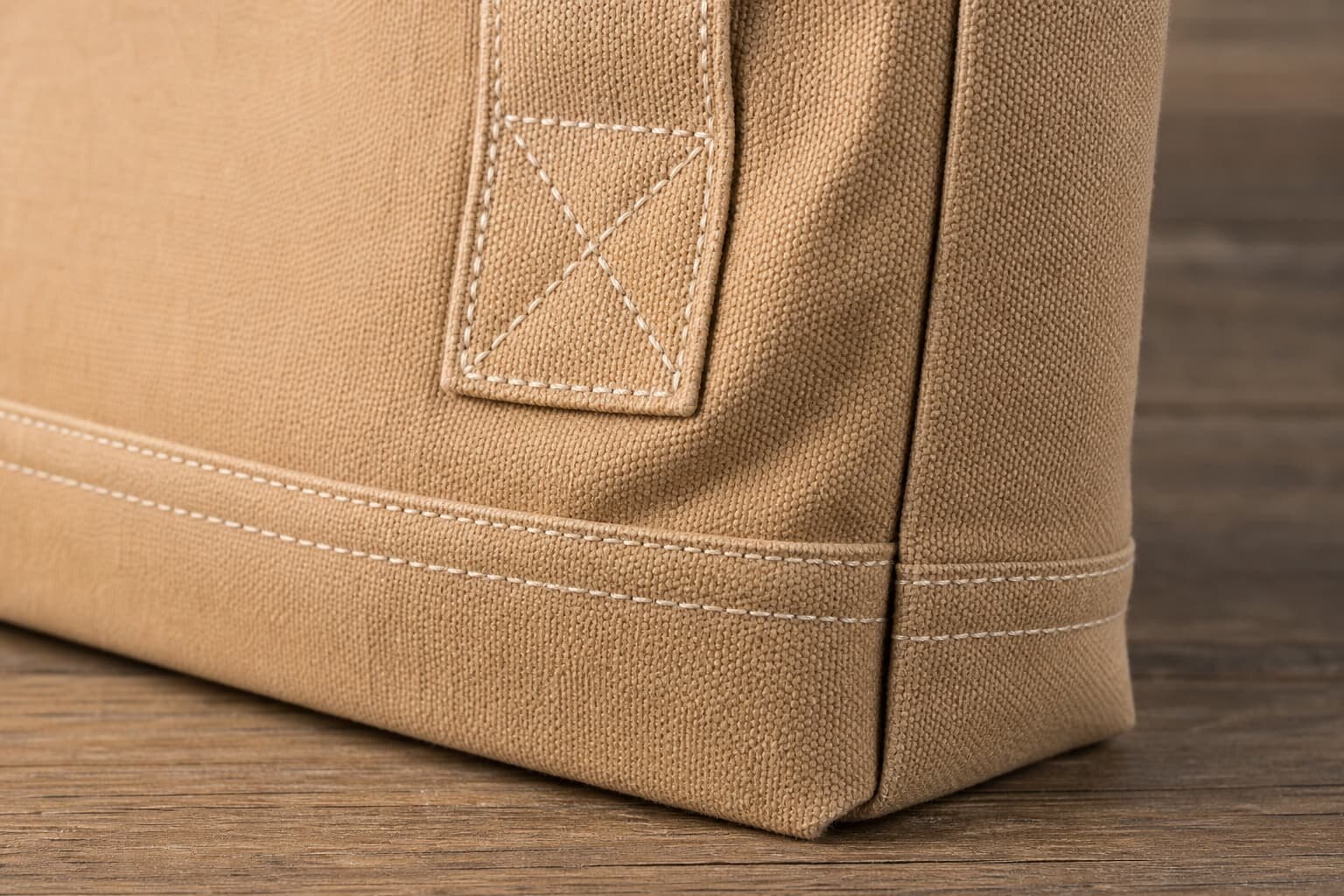
Why a Stitch Repair Record Matters for Canvas Tote Orders
A canvas tote bag stitch repair record is not paperwork for paperwork's sake. It is a production control tool that tells the buyer where sewing defects occurred, how the factory corrected them, and whether those corrected pieces are still acceptable for shipment. For a procurement team buying thousands of reusable bags, the issue is not one loose thread. The issue is whether the same side seam, handle joint, or bottom corner keeps failing across the order.
Canvas tote bags look simple, but they combine thick fabric, repeated folds, handle stress points, print placement, and fast sewing lines. Stitch defects may be caused by wrong needle size, unstable fabric feeding, poor thread tension, rushed trimming, or operators repairing seams after the logo has already been printed. If the repair record is vague, the buyer cannot tell whether the factory fixed the root cause or only cleaned up the visible problem.
- Use the record to separate random defects from repeated production issues.
- Track repair location, not only total repaired quantity.
- Review repaired units before final packing, especially if the tote has retail labeling.
- Require the record before shipment approval, not after goods arrive at the warehouse.
Define Repairable and Non-Repairable Stitch Defects
Before production starts, the buyer and factory should agree which sewing issues can be repaired. A short loose thread at the inside hem may be trimmed and accepted. A skipped stitch on the handle box stitch may need resewing and load testing. A large needle-hole scar across a printed front panel may require replacement because the repair will still be visible to the consumer.
This distinction affects cost, lead time, and dispute handling. If the purchase order only says 'good stitching required,' the factory may repair aggressively to save fabric, while the buyer may reject those same units during inspection. A clear repair classification protects both sides because it sets the commercial standard before the first bulk piece is sewn.
- Usually repairable: loose thread tails, missed trimming, short inside seam opening, minor top hem stitch run-off.
- Conditionally repairable: handle box stitch, side seam skip, bottom corner seam, woven label seam caught unevenly.
- Usually non-repairable: visible needle holes on front panel, damaged print from resewing, distorted fabric from repeated unpicking, weak handle after repair.
- Always document: defect code, bag location, repair method, re-inspection result, and quantity returned to packing.
Fabric Weight and GSM Change the Repair Risk
A stitch repair record should be read together with the fabric specification. A 6 oz promotional cotton tote behaves differently from a 16 oz heavy canvas shopper. Lightweight fabric can pucker when resewn, while heavy canvas can show permanent needle holes if the operator unpicks a seam and sews again slightly off the original line. This is why the fabric weight and GSM must appear on the quote and on the approved sample sheet.
For most retail and brand packaging tote bags, 10 oz to 12 oz canvas, roughly 280-340 GSM, is a common practical range. It has enough body for repeated use but is still manageable for screen printing and normal sewing equipment. For grocery, hardware, or premium retail use, buyers may move to 14 oz to 16 oz, roughly 380-450 GSM. At that level, the factory should confirm needle size, thread type, sewing speed, and whether handle reinforcement requires additional bartack machinery.
- 6 oz to 8 oz cotton: lower cost and easier folding, but more visible puckering after repair.
- 10 oz to 12 oz canvas: balanced option for reusable retail totes and stronger promotional bags.
- 14 oz to 16 oz canvas: stronger hand feel, but higher sewing difficulty and more visible repair marks.
- Washed canvas: softer feel, but repair marks and shade variation must be checked after garment washing or fabric washing.
- Dyed canvas: contrast between thread and fabric makes repair alignment more obvious.
Stitch Locations That Need Separate Tracking
Do not accept a repair summary that only states the number of repaired bags. A useful canvas tote bag stitch repair record separates the defects by location. A handle joint failure has a different risk profile from a loose top hem. A bottom gusset seam opening may point to poor folding or feed control. A side label seam problem may affect retail appearance more than strength.
Location tracking also helps buyers compare supplier quotes. One factory may offer a low unit price but plan a very fast sewing line with minimal in-line QC. Another factory may quote slightly higher because it includes in-line inspection at handle attachment and bottom closing. If you do not ask for repair location data, you cannot see which quote includes real process control.
- Handle attachment: highest stress area and should be checked after any resewing.
- Side seam: common place for skipped stitches when thick folded fabric enters the machine.
- Bottom seam or gusset: affects load capacity and shape when the bag is filled.
- Top hem: visible to the user and often affected by uneven folding.
- Label insertion seam: important for brand presentation and compliance labeling.
- Zipper seam or pocket seam: relevant if the tote includes an inner pocket or zipper business bag feature.
How Print Method Affects Stitch Repair Decisions
Print method matters because many stitch repairs happen after panels have already been printed. Screen printing is common for canvas tote bags with one to four solid colors. It is cost-effective for repeatable logos and larger quantities, but the printed surface can be scratched, stained, or pressure-marked during repair handling. Heat transfer can reproduce gradients or detailed artwork on shorter runs, but heat and pressure marks near a repaired seam can be unacceptable on premium retail bags.
The buyer should ask when the factory sews relative to printing. Some production routes print cut panels first, then sew the bag. Others sew blanks first, then print the finished tote. Panel printing can improve logo position but exposes printed fabric to sewing and repair handling. Finished-bag printing reduces panel handling but may limit print area near seams and handles. The repair record should note if the repaired area is near the printed logo.
- Screen print: check ink rub, cracking, and dirt transfer after seam repair.
- Heat transfer: check pressure shine, edge lifting, and heat marks near repaired seams.
- Digital print: confirm fabric handling cleanliness because stains are highly visible on light canvas.
- Embroidery: check backing, puckering, and thread pulls if the repaired seam is near the embroidery area.
- Woven side label: confirm label remains straight and is not resewn into the seam at an angle.
Build the Repair Record Into the RFQ, Not After the Problem
Many buyers ask for a repair record only after they see defects during final inspection. That is too late. The better approach is to include the repair record requirement in the RFQ and purchase order. This tells the factory that stitch repair is part of the quality plan, not a last-minute negotiation. It also helps the supplier quote the correct QC labor instead of hiding the work inside a low price.
A strong RFQ does not need to be long, but it must be specific. The factory needs to know fabric weight, bag size, handle size, seam construction, print method, packing method, inspection standard, and whether repaired pieces are acceptable. If you require photo evidence for repaired handle seams or a signed repair log by production line, say so at the quotation stage.
- State the target fabric weight in oz and GSM, not only 'heavy canvas'.
- Include finished bag dimensions, gusset size, handle width, handle drop, and seam allowance.
- Specify thread color, stitch density range, and handle reinforcement method.
- Define repair record fields before sample approval.
- Ask whether repair documentation is included in the quoted unit price.
- Confirm whether final inspection will review repaired goods as a separate sample group.
Sample Approval Should Include a Repaired Seam Example
A normal pre-production sample shows what the factory can make under controlled conditions. It may not show how the factory repairs a real sewing problem. For larger orders, especially retail programs or distributor stock, it is reasonable to ask the factory to prepare one repaired seam example using the same fabric, thread, and machine setup. The point is not to encourage defects; the point is to approve the repair standard before bulk production.
When checking the repaired sample, turn the tote inside out and look at both faces of the seam. Compare stitch density against the approved non-repaired sample. Check whether the old needle holes are visible, whether the seam is wavy, whether the fabric has been stretched, and whether loose threads remain inside the bag. If the bag carries a printed CTM-style sample logo or your brand logo, also check whether repair handling has marked the printed panel.
- Request one original approved sample and one repaired seam reference sample.
- Photograph the acceptable repair from outside, inside, and close-up views.
- Measure stitch density on both samples and record the approved range.
- Check repaired handle seams with manual tension or agreed load test method.
- Keep the repaired sample sealed or signed as the repair limit sample.
MOQ, Lead Time, and Cost Logic Behind Repair Control
Repair records have a cost impact, so buyers should not treat them as free administration. A low MOQ order using stock canvas, stock handle webbing, and one-color screen print may be easier for the factory to control because materials are familiar. A custom-dyed canvas order with contrast stitching, woven labels, inside pocket, and retail individual packing creates more sewing and handling steps. More steps mean more chances for stitch repair and more QC time.
Lead time also changes when repair documentation is required. The sewing itself may be fast, but the factory needs time for in-line inspection, repair, re-inspection, thread trimming, pressing, and carton repacking. If the buyer approves artwork late or changes the handle after sampling, the repair risk can increase because the production team is forced to adjust machines or materials under time pressure.
- Stock material MOQ: often lower because fabric and trims are already available, but confirm exact canvas weight.
- Custom dyed fabric MOQ: higher because dye lots and shade control are involved.
- Screen print MOQ logic: setup cost is spread across quantity, so very small runs may carry higher unit cost.
- Complex sewing MOQ logic: pockets, zippers, lining, and contrast trim increase operation count and inspection time.
- Lead time checkpoints: material booking, sample approval, print approval, sewing start, in-line QC, final packing, pre-shipment inspection.
Packing and Repacking Controls for Repaired Bags
A repaired tote is not ready for shipment until it has been cleaned, trimmed, checked, and packed to the same standard as other units. Repaired bags are often handled more than normal production pieces. That extra handling can create dust, wrinkles, thread residue, or inconsistent folding. For retail buyers, this can matter as much as the original stitch defect because the consumer sees the presentation first.
The repair record should connect to packing control. If repaired pieces are pulled from finished cartons, they need to be returned in the right carton sequence or counted separately. If the order uses individual polybags, belly bands, hangtags, barcodes, or carton assortments, the factory must prevent missing labels or mixed SKUs during repacking. A good repair process is not finished at the sewing machine; it is finished when the piece is correctly packed and counted.
- Re-trim all thread tails after repair and before folding.
- Re-press repaired seams only if pressing will not mark the print or change the fabric hand feel.
- Keep repaired pieces in a separate bin until re-inspection is complete.
- Record carton number if repaired pieces are removed from packed goods.
- Check hangtags, side labels, barcode stickers, and polybag warnings after repacking.
- Confirm carton quantity and gross weight after repaired units return to packing.
How to Read Supplier Quotes Using Repair Risk
When comparing canvas tote bag quotes, do not look only at unit price. Ask what the price assumes about fabric weight, seam construction, stitch density, print method, inspection process, and repair control. A cheaper quote may use lighter canvas, fewer stitches per inch, simple handle stitching, or limited in-line QC. Those choices may be acceptable for a budget event giveaway, but they are risky for a retail tote expected to carry books, groceries, or merchandise.
A professional supplier should be able to explain how repairs are prevented and recorded. Listen for practical details: machine setup for heavy fabric, needle and thread selection, in-line inspection at handle attachment, sample retention, re-inspection after repair, and packing reconciliation. If the factory only answers 'quality is good' without process details, the buyer has little protection when defects appear.
- Compare quoted GSM against the approved sample, not against a verbal description.
- Check whether the quote includes reinforced handle stitching or only basic sewing.
- Ask if repair recording is included for all production lines or only final inspection failures.
- Confirm whether printed and repaired pieces receive additional visual inspection.
- Request a blank repair record form with the quotation if the order is large or quality-sensitive.
- Treat unclear repair policy as a commercial risk, especially for distributor and retail orders.
Specification comparison for buyers
| Spec decision | Recommended option | When it fits | Buyer risk to check |
|---|---|---|---|
| Body fabric for standard retail tote | 10 oz to 12 oz cotton canvas, about 280-340 GSM | Reusable shopping bags, bookstore totes, event merchandise, brand packaging | Thin fabric can pucker after stitch repair; confirm shrinkage and seam slippage after washing if the bag is washable |
| Heavy canvas tote with larger capacity | 14 oz to 16 oz canvas, about 380-450 GSM | Grocery, hardware, lifestyle retail, premium promotional bags | Need stronger needle and slower sewing speed; repaired seams may show needle holes if the factory unpicks carelessly |
| Side and bottom seam construction | Inside overlock plus lockstitch top seam, or French seam for cleaner interior | Orders where the inside appearance matters or the bag carries heavier goods | Ask the factory to record whether repair was on lockstitch, overlock, or handle bartack because each has different failure reasons |
| Handle attachment | Box stitch with cross reinforcement or bartack plus box stitch | Most canvas tote bags over 8 oz fabric or any bag sold as reusable | Handle repairs often hide uneven stitch density; request pull test data after repair, not only before repair |
| Logo print method | Screen print for solid spot colors; heat transfer only for detailed or short-run artwork | Screen print fits repeat orders and stronger unit economics above low MOQ; transfer fits complex graphics | Stitch repair after printing can rub or stain the logo area; define whether repaired printed panels are acceptable |
| Repair record format | Defect code, location, machine line, operator, repair action, re-inspection result | Any bulk order where AQL inspection may find repeated seam defects | A vague repair log such as 'fixed stitching' does not help identify whether the same station caused the problem |
| Packing method after repair | Repaired bags re-pressed, loose threads removed, packed back by carton sequence | Retail orders, distributor stock, marketplace packaging | Mixed repaired and unrepaired units can create shade, crease, or cleanliness differences if repacking is not controlled |
Buyer checklist before sampling
- Define which stitch defects are repairable and which require replacement before bulk production starts.
- Ask the factory to separate stitch repair records by defect location: handle, side seam, bottom seam, hem, label seam, zipper seam if applicable.
- Require repaired samples from the same fabric weight and same sewing construction as the production order.
- Check repaired seams under normal viewing distance and by turning the bag inside out; do not inspect only the outside face.
- Confirm stitch density, thread color, thread count, and needle size are consistent between original sewing and repair sewing.
- Ask for photos of three repaired examples before approving the repair method for the full lot.
- Set acceptance criteria for needle holes, skipped stitches, loose thread tails, seam waviness, and print damage around repaired areas.
- Include repair record requirements in the purchase order, not only in email comments.
- Verify that repaired units are re-inspected and counted separately before they return to finished goods packing.
- Compare the factory quote against the expected repair risk: heavier canvas, contrast thread, complex handles, and printed panels need more QC time.
Factory quote questions to send
- What fabric weight and GSM are you quoting, and how does that affect needle size, thread type, and seam strength?
- Which seam types will be used for the side, bottom, top hem, handle attachment, and label insertion?
- What stitch defects do you classify as repairable, and what defects require making a replacement bag?
- Can you provide a sample stitch repair record format before we place the order?
- How will repaired units be identified, re-inspected, and returned to carton packing without mixing unverified pieces?
- Will your quote include extra QC time for repair recording, photo documentation, and re-inspection?
- What MOQ applies for this canvas weight, print method, handle color, and packing style?
- How many pre-production samples are included, and can one sample show an intentional repaired seam for approval?
- What is the estimated production lead time after artwork approval, fabric approval, and repair criteria approval?
- If AQL inspection finds repeated stitch repair in one location, what corrective action will you take before shipment?
Quality-control points to confirm
- Stitch density should match approved sample range, commonly around 7-10 stitches per inch depending on canvas weight and construction.
- Thread color must match the approved trim card; repaired contrast stitching is especially visible on natural and black canvas.
- No skipped stitches, broken thread, loose tails longer than the approved limit, or open seams after gentle manual stress.
- Handle attachment repairs must pass the agreed pull test or load test after repair, not only visual inspection.
- Needle holes from unpicking should not be visible on the outside face under normal retail viewing conditions.
- Printed panels must not show ink cracking, heat marks, dirt transfer, or pressure shine caused by repair handling.
- Side labels and woven labels must remain straight after seam repair and should not be partly caught or folded into the seam.
- Repaired pieces must be cleaned, thread-trimmed, re-pressed if needed, and packed with the same folding method as non-repaired pieces.
- Repair totals must be reviewed by production line and defect type so repeated machine or operator problems are corrected before final inspection.