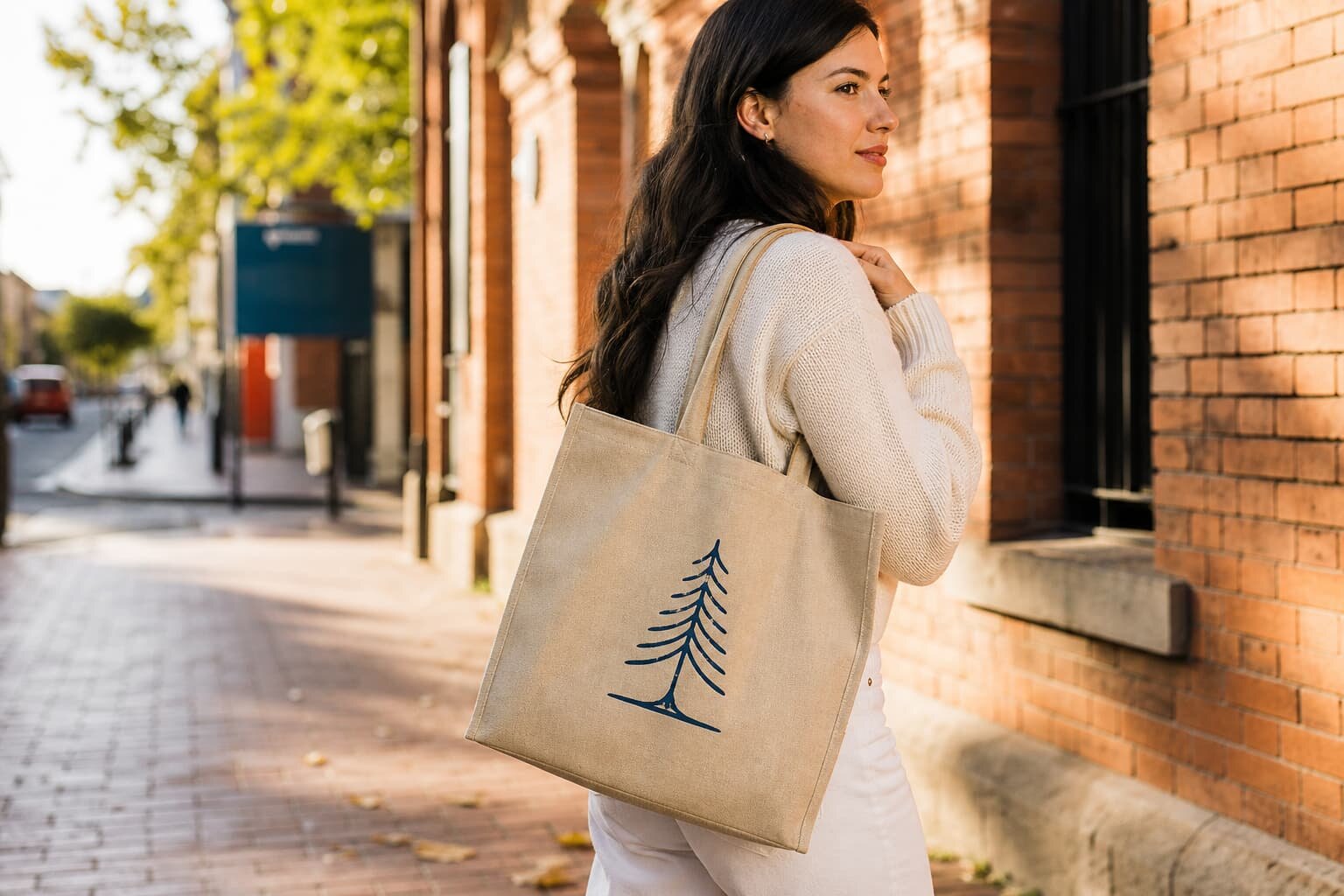
1. Start With the Commercial Job of the Tote
A canvas tote bag for startup brands should be specified from its use case, not from the word canvas. Factories can quote very different bags under the same general description: a light 8 oz event tote, a 12 oz retail tote with reinforced handles, or a 14 oz gusseted bag for grocery use. If the RFQ only says "canvas tote bag with logo," the buyer receives prices that look comparable but are built from different materials, sewing operations, and packing assumptions.
The first procurement decision is whether the bag is a giveaway, a paid merchandise item, a packaging component, or a durable everyday product. A launch giveaway may need low cost, fast production, and simple folding. A retail tote must feel substantial on a shelf or in an online unboxing. A grocery tote needs stronger handles and bottom stress control. This definition affects fabric weight, handle width, print method, carton weight, and inspection criteria.
Startup teams often overbuild the first order because they want the bag to feel premium, or underbuild it because they compare only unit price. Both paths can waste budget. The better approach is to set a target use, target price level, and target reorder plan before asking for quotes.
- Use 8-10 oz canvas only when the load is light, the bag is promotional, and a softer structure is acceptable.
- Use 10-12 oz canvas for many first merchandise programs because it balances hand feel, cost, printability, and freight weight.
- Use 14 oz and above when the bag must carry heavier goods or support a premium retail position.
- Do not ask factories to quote a generic tote; state the use case, expected load, size, print area, and packing requirement.
- If the first order is a market test, avoid custom fabric choices that create high MOQ before demand is proven.
2. Compare Oz and GSM Without Treating Weight as the Whole Quality Story
Canvas weight is usually quoted in ounces per square yard or grams per square meter. In common cotton canvas tote sourcing, 10 oz may sit around 280-300 GSM, 12 oz around 340-360 GSM, and 14 oz around 390-420 GSM. These ranges are useful for comparing quotes, but they are not universal standards. Yarn thickness, weave density, finishing, and mill practice can all change how a fabric feels and performs.
A frequent RFQ problem is assuming that higher GSM automatically means better quality. Two fabrics with similar GSM can behave differently if one uses a looser weave and thicker yarn while another uses a tighter weave and finer yarn. The tighter fabric may hold print edges better and resist distortion. The looser fabric may feel thick in the hand but stretch more at seams or show more texture through printed details.
Buyers should also ask when the fabric weight is measured. Greige fabric, finished fabric, dyed fabric, and washed fabric may not weigh the same. A supplier quoting 12 oz greige canvas may deliver a finished fabric that feels different from a supplier quoting 12 oz after finishing. For a canvas tote bag for startup brands material selection guide, this is one of the simplest ways to prevent quote confusion.
- 8 oz canvas is economical and light, but it has limited structure and lower perceived value for paid retail.
- 10 oz canvas works for many branded launch totes, event bags, and budget-conscious merchandise programs.
- 12 oz canvas is a strong default when the tote will be sold, gifted to important customers, or reused often.
- 14-16 oz canvas gives more structure and durability but increases fabric cost, sewing difficulty, and shipping weight.
- Always request a swatch card and compare hand feel, opacity, weave tightness, and fold behavior alongside the GSM number.
3. Choose the Fabric Finish With Claim and Color Risk in Mind
Natural cotton canvas is popular because it is familiar, versatile, and often easier to source at lower MOQ than custom dyed fabric. It suits black, navy, dark green, brown, and other solid logo colors. The buyer should understand that natural canvas normally includes cotton seed flecks and shade variation. These are not automatically defects. If the brand needs a cleaner cream tone with fewer visible specks, the RFQ should ask for bleached or semi-bleached canvas.
Dyed canvas gives stronger brand color expression but adds process risk. The supplier may need lab dip approval, a dye lot minimum, and extra lead time. Shade can vary between rolls, especially when order quantity is small or when fabric is washed after dyeing. Washed canvas creates a softer fashion feel, but shrinkage and wrinkles must be treated as part of the approved appearance, not discovered at final inspection.
Recycled cotton and organic cotton can be appropriate when they match the brand promise, but procurement should be careful with claims. Do not rely on a supplier message that says "eco" or "green cotton." Ask what documents support the claim, whether the factory and material source are certified for the relevant program, and whether the claim can legally appear on hangtags, labels, or product pages in the selling market.
- Natural canvas is a practical starting point for first orders, especially with simple dark screen printing.
- Bleached canvas improves background cleanliness and print contrast but may cost more than natural fabric.
- Custom dyed canvas needs lab dips, shade tolerance, dye MOQ, and approval under agreed lighting.
- Washed canvas needs shrinkage control, shade band approval, and sample review after the final wash process.
- Recycled or organic cotton requires proof documents before sustainability claims are used in marketing or packaging.
4. Match Fabric Weight to Construction, Handles, and Load
The fabric may be strong while the tote still fails at the handle, side seam, or bottom corner. Construction matters as much as material weight. A 14 oz tote with narrow handles and weak top stitching is not a premium product; it is a heavy fabric assembled with poor stress control. A lighter 10 oz tote with appropriate reinforcement may perform better for its intended job.
Handle specification should be quoted in detail. Buyers should confirm handle material, handle width, handle drop, stitch pattern, and reinforcement. Shoulder carry usually needs a longer drop than hand carry, and grocery use benefits from wider handles because they spread load more comfortably. A narrow handle may look minimal in product photos but feel cheap or painful when the tote is filled.
Side seams and bottom construction also need attention. Overlocked seams may be acceptable for simple promotional totes. Bound inner seams look cleaner and protect raw edges, but they add labor and cost. A gusset improves capacity but adds stress points where the body, side, and bottom meet. If the bag is expected to carry books, bottles, or boxed products, handle reinforcement and seam allowance should be stated clearly in the purchase order.
- Specify handle width, handle drop, and handle fabric instead of accepting a factory default.
- Use box stitching with cross reinforcement or bar tacks when the tote must carry heavier items.
- Ask for stitch density and thread thickness when quoting 12 oz, 14 oz, or heavier canvas.
- Confirm whether inner seams are overlocked, folded, bound, or left raw.
- Set a realistic load test based on the actual use case, such as books, grocery items, or event contents.
5. Select the Print Method Around Artwork and Fabric Texture
Canvas is textured, so artwork does not print like it does on coated paper or smooth polyester. Screen printing is usually the most stable option for simple logos, slogans, and one to four spot colors. It can produce strong opacity on natural canvas when the ink is selected and cured correctly. However, fine lines, small type, and tight registration need testing because the weave can interrupt edges.
Full-color artwork, gradients, and creator illustrations may require heat transfer, DTG, or digital print panels depending on order quantity and fabric. These methods can be useful for low MOQ artwork, but buyers must review surface feel, gloss, rub resistance, and wash behavior. Some transfers look too shiny on natural canvas, and some digital prints lose brightness on textured cotton.
Embroidery, woven labels, and sewn patches are useful when the brand wants a premium or minimal identity. Embroidery works best on stable fabric and smaller logo areas; dense embroidery on soft lightweight canvas can pucker. A woven side label can help startup brands maintain identity across several tote colors without printing a large logo on every panel.
- Use screen printing for solid logos, simple slogans, and repeat programs where color consistency matters.
- Use heat transfer, digital print, or DTG for gradients or small artwork runs, but approve a physical sample before bulk.
- Use embroidery on heavier canvas or small logo areas, with backing if needed to reduce puckering.
- Use woven labels or patches when the tote design should remain clean or when multiple colorways share one trim.
- Provide vector artwork, Pantone references, print size, placement, and acceptable print placement tolerance in the RFQ.
6. Understand MOQ: Fabric, Dyeing, Printing, Trims, and Packing Are Separate
MOQ is not only the number of finished tote bags. A supplier may accept 500 bags in natural stock canvas but require a higher minimum for custom dyed fabric, custom woven labels, heat-transfer artwork, hangtags, barcode stickers, or retail cartons. When a startup brand requests many colorways at low quantity per color, the order becomes more complex even if the total quantity looks reasonable.
A practical RFQ separates total order quantity from quantity per SKU. One thousand natural canvas totes with one black logo is very different from one thousand totes split across five body colors, five print colors, and several label versions. Each split can add setup time, cutting control, print setup, shade control, packing separation, and carton labeling work.
Buyers can often reduce MOQ pressure by starting with stock natural, black, or available dyed fabric, then adding custom fabric colors after reorder demand is clearer. Another option is to keep the bag body consistent and create brand variation through print color, woven label, or hangtag. The goal is not to remove customization, but to place it where the budget and production calendar can support it.
- Ask for MOQ by finished bag, fabric color, print design, print color, label, hangtag, and packing method.
- Check whether custom dyed fabric leaves unused balance that must be paid for by the buyer.
- Limit first-order SKU splits if the order is small and the launch timeline is tight.
- Use stock fabric colors when speed and MOQ flexibility matter more than exact brand color matching.
- Clarify whether sample charges, screen charges, label setup, and testing costs are included or separate.
7. Build an RFQ That Lets Suppliers Quote the Same Product
A quote is only useful when each supplier is pricing the same product. For canvas tote bags, the RFQ should include technical, branding, packing, and commercial details. If these fields are missing, a supplier may lower the quote by changing fabric weight, reducing bag dimensions, using narrower handles, removing reinforcement, excluding polybags, or packing more units per carton than the buyer expects.
The RFQ should define bag width, height, gusset, handle width, handle drop, canvas weight, finish, color, print method, print size, print colors, and packing. It should also ask for sample time, production lead time, payment terms, Incoterms, carton dimensions, gross weight, and exclusions. A clean RFQ saves time because suppliers can identify the cost drivers instead of guessing.
For startup brands, the most important comparison is not only unit price. A slightly higher quote may include stronger construction, clearer tolerances, better packing, and a more reliable sample process. A lower quote may still be valid if the bag is a giveaway, but the buyer should know exactly what has been simplified.
- List required quote fields: fabric weight, finish, color, size, gusset, handle, seam type, print method, and packing.
- Ask each supplier to state what is included and excluded from the price.
- Request price breaks at realistic quantities, such as 500, 1,000, 2,500, and 5,000 units if relevant.
- Ask for carton data early so landed cost and warehouse handling can be estimated.
- Compare specifications side by side before comparing unit prices.
8. Approve Samples as Production References, Not Just Photo Props
A tote sample is the production reference for fabric, construction, print, and packing. If the sample uses substitute fabric, available handle tape, or a different print process, that difference must be recorded. Otherwise the buyer may approve a sample that cannot be matched in bulk. The safest approval path is to review fabric swatches first, then approve a finished pre-production sample made with bulk material and final trims.
Sample review should be practical. Measure width, height, gusset, handle drop, handle width, and logo placement. Place realistic weight in the bag and check how the handles sit. Fold the tote in the intended packing method and inspect whether the logo cracks, creases, or transfers. For screen print, check edge sharpness, opacity, ink smell, and curing. For washed or dyed canvas, compare shade in daylight and indoor light.
The buyer and factory should each keep an approved sample. For repeat orders, keep a swatch card and trim card as well. This gives QC teams a clear reference when checking bulk fabric shade, handle tape, thread color, label position, and print result. Without a retained standard, reorder drift becomes much harder to challenge.
- Ask whether the sample fabric is actual bulk fabric or a substitute from the sample room.
- Check the sample against the written specification, not only against the product image.
- Measure dimensions and record tolerances before giving approval.
- Review print color, size, position, opacity, curing, and hand feel.
- Keep one approved sample with the buyer and one sealed sample at the factory for inspection reference.
9. Set QC Tolerances Before Production Starts
Quality control works best when standards are agreed before cutting and sewing. Canvas tote bags have natural variation, especially in cotton shade, fabric weight, washing result, and sewn dimensions. The buyer does not need unrealistic precision, but the purchase order should define what variation is acceptable. This prevents disputes where the factory treats an issue as normal production variation while the buyer treats it as a defect.
Useful tolerance examples include finished dimension tolerance, GSM tolerance, print placement tolerance, and shade tolerance. For example, the buyer may agree a dimension range for width, height, gusset, and handle drop; a fabric weight tolerance around the approved GSM; and a print placement tolerance measured from the top edge and side seams. For color, the buyer can use visual approval against a lab dip or approved bulk swatch, and for more controlled programs may define a color delta standard with the supplier or testing lab.
Inspection should cover both function and appearance. Critical defects might include broken handles, severe contamination, wrong artwork, or unsafe sharp objects. Major defects might include obvious shade panels, misprinted logos, open seams, weak bar tacks, or wrong packing labels. Minor defects might include small loose threads or slight natural fabric irregularities within the approved standard. AQL levels can be agreed with the inspection provider or supplier based on order size and buyer risk.
- Define dimension tolerance for width, height, gusset, handle drop, and handle width.
- Define GSM tolerance or acceptable fabric weight range from the approved material.
- Set print placement tolerance and color approval method before printing bulk panels.
- Inspect stitching, seam allowance, loose threads, skipped stitches, bar tacks, and handle attachment strength.
- Use agreed critical, major, and minor defect lists so final inspection is not based on opinion alone.
10. Plan Packing, Lead Time, and Claims Before the Purchase Order
Canvas totes look simple, but packing affects both quality and landed cost. A light flat tote may pack efficiently, while a 14 oz gusseted tote can fill cartons quickly and raise gross weight. If bags are folded across a large print before ink is fully cured, the logo can crease or transfer. If cartons are overloaded, handles and corners may deform before the shipment reaches the warehouse.
Lead time should be built from stages: sample, swatch or lab dip approval, material booking, dyeing or washing if needed, cutting, printing, curing, sewing, trimming, inspection, packing, and export preparation. Stock natural canvas with one-color screen print is usually simpler than custom dyed washed canvas with trims and retail labels. Startup launch teams should plan backward from the in-warehouse date, not the event date, because customs, delivery appointments, relabeling, or inspection findings can absorb the buffer.
Finally, confirm claim language before production. If the bag uses organic cotton, recycled cotton, low-impact dye, plastic-free packing, or any other sustainability message, the buyer should ask what documents support the claim and whether those documents cover the fabric, factory, and transaction. This is especially important when claims appear on hangtags, product pages, retailer submissions, or packaging. A material choice is not only a sourcing decision; it becomes part of the brand's public promise.
- Ask for units per bundle, units per carton, carton size, net weight, gross weight, and folding method.
- Avoid fold lines across large prints unless the print process and curing have been tested.
- Specify carton marks, SKU labels, barcodes, country of origin labels, and care labels early.
- Build a launch calendar that includes sample revisions, material preparation, inspection, shipping, and warehouse receiving.
- Request certificates and transaction documents before using organic, recycled, or other sustainability claims.
Specification comparison for buyers
| Material decision | Best-fit option | Cost, MOQ, and lead-time tradeoff | Buyer risk to check |
|---|---|---|---|
| Budget launch tote | 8-10 oz cotton canvas, about 230-300 GSM, plain weave | Lowest material cost and lighter freight; usually easier MOQ when using natural stock fabric; faster if paired with one-color screen print | Confirm load expectation, seam strength, and whether the fabric feels too thin for paid merchandise |
| Standard startup merchandise | 10-12 oz cotton canvas, about 280-360 GSM, reinforced handle stitching | Moderate cost with good perceived value; practical for first retail drops; stock natural canvas can shorten lead time | Ask whether GSM is measured before or after finishing and approve a physical swatch before sampling |
| Premium everyday tote | 12-14 oz canvas, about 340-420 GSM, wider handles, optional gusset | Higher unit cost and carton weight; sewing speed may be slower; still manageable for repeat SKUs if material is locked | Check handle comfort, bottom support, seam allowance, and whether the bag can fold without damaging the print |
| Heavy structured tote | 14-16 oz canvas, about 400-460 GSM, bound inner seams or stronger seam finish | Highest fabric and freight cost in common cotton canvas ranges; may require stronger needles, heavier thread, and more QC time | Printing may need higher ink deposit and longer curing; inspect skipped stitches and bulky seam corners |
| Soft fashion tote | Washed or enzyme-washed cotton canvas | Adds washing process, shrinkage control, and shade variation risk; lead time is longer than stock natural canvas | Approve shrinkage, color shade, wrinkle level, and hand feel on a pre-production sample made in the final process |
| Brand-color tote | Custom dyed cotton canvas | Fabric mill MOQ may be higher than bag MOQ; lab dips and dyeing add calendar time; leftover dyed fabric may be chargeable | Set color tolerance, lighting standard, and approval process before ordering bulk fabric |
| Natural eco-style tote | Unbleached natural cotton canvas with visible cotton specks | Often easier MOQ than custom dyed fabric; strong fit for simple dark logos and low-trim packaging | Cotton seed flecks are normal unless a cleaner grade is specified; verify sustainability wording with documents |
| Recycled or organic claim tote | Recycled cotton blend or certified organic cotton canvas | Material cost, MOQ, and documentation needs are usually higher; fabric availability may limit color and weight choices | Request transaction certificates, scope certificates, composition tests, and claim wording support before using claims on labels |
| Full-color artwork tote | 12 oz canvas with heat transfer, DTG, or digital print panel depending on artwork | Setup can be efficient for small artwork runs, but print cost per unit may exceed simple screen print; sampling is essential | Check rub, wash, color brightness, gloss, edge sharpness, and whether the print hand feel matches brand expectations |
Buyer checklist before sampling
- Define the tote use case first: giveaway, retail merchandise, grocery, books, event kit, product packaging, or fashion accessory.
- Set the target retail or promotional value before choosing fabric weight; a free insert and a paid merchandise tote should not share the same specification by default.
- State bag width, height, gusset, handle width, handle drop, and expected carrying load in the RFQ.
- Request fabric weight in both oz and GSM, plus the measurement stage: greige, finished, dyed, washed, or coated.
- Ask for physical swatches from the mill or fabric source planned for bulk production, not only reference swatches from the sample room.
- Confirm cotton type and claim basis: conventional cotton, recycled cotton blend, organic cotton, cotton-poly blend, or another composition.
- Check whether fabric shrinkage allowance is included for dyed, washed, or printed panels.
- Match print method to artwork: screen print for solid logos, heat transfer or digital print for gradients, embroidery or woven label for premium trims.
- Specify reinforcement details: handle box stitching, cross stitching, bar tack, seam type, thread thickness, and minimum seam allowance.
- Approve a pre-production sample made with bulk fabric, bulk thread color, correct handle tape, final logo process, and intended packing fold.
Factory quote questions to send
- What exact fabric are you quoting: yarn count if available, weave, oz or GSM, finished width, and whether it is natural, bleached, dyed, washed, or coated?
- Is the GSM measured before dyeing/washing or after finishing, and what tolerance do you control in bulk production?
- Can you provide swatches for 10 oz, 12 oz, and 14 oz canvas from the same mill or fabric source planned for production?
- What MOQ applies to the bag itself, and what separate MOQ applies to dyed fabric, washed fabric, printed panels, woven labels, hangtags, or custom packing?
- Which print method do you recommend for our artwork, and what are the print size limits, color limits, setup charges, curing requirements, and sample fees?
- Will the sample be made with available fabric or actual bulk fabric, and how will any difference be marked in writing before approval?
- What stitching construction is included in the quote: handle reinforcement, seam type, inner binding, bottom gusset, thread thickness, and stitch density?
- What tolerance can you accept for finished bag width, height, gusset, handle drop, print placement, fabric weight, and color shade?
- What is the estimated carton size, quantity per carton, gross weight, net weight, and folding method for the selected canvas weight?
- What lead time do you need for sampling, lab dip if applicable, material preparation, printing, sewing, QC, packing, and export documents after deposit and artwork approval?
Quality-control points to confirm
- Verify fabric weight by cutting and weighing a measured fabric area from production material, not only by checking the supplier specification sheet.
- Agree a GSM tolerance before bulk production, for example a percentage range or an accepted minimum and maximum for the approved material.
- Check finished bag dimensions after sewing and pressing, including width, height, gusset, handle drop, handle width, and top opening width.
- Set dimension tolerances by feature, such as tighter tolerance for logo placement and handle drop than for soft side panels on washed canvas.
- Inspect fabric defects such as slubs, oil marks, weaving bars, color shade panels, excessive cotton seeds beyond the approved standard, and needle damage.
- For dyed fabric, compare shade against the approved lab dip or standard under agreed lighting, and consider a color delta or visual shade band when appropriate.
- Perform print adhesion, dry rub, wet rub, scratch, and washing checks based on the print method and intended retail use.
- Check print placement against the approved artwork file and sample; include tolerance for distance from top edge, side edge, and centerline.
- Check handle strength with a realistic loading test based on intended product use, not only a quick pull by hand.
- Inspect stitching density, skipped stitches, loose threads, backstitch position, bar tack strength, seam allowance, and thread color consistency.