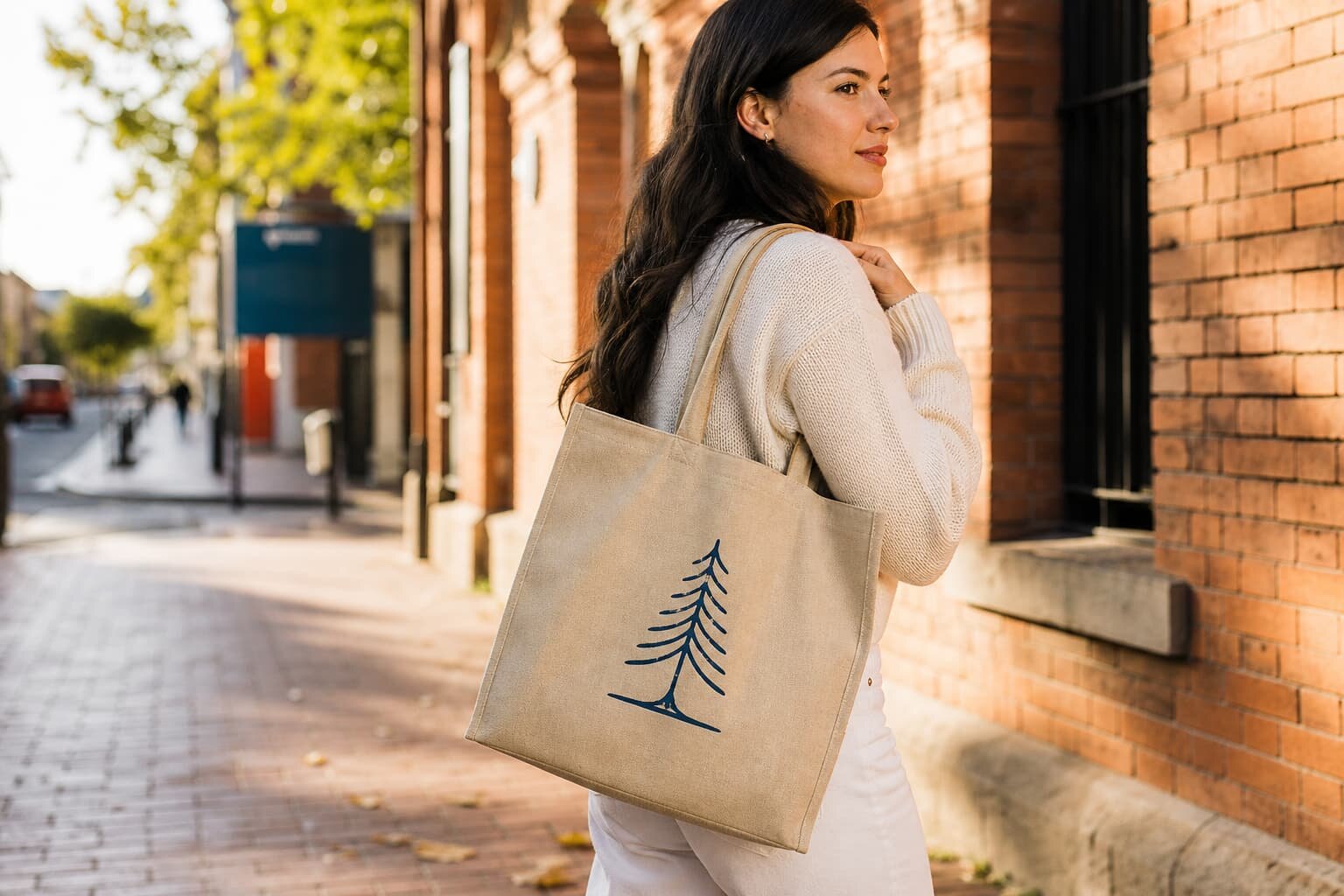
Why Side Seam Allowance Deserves Its Own Photo Packet
A canvas tote bag side seam allowance photo packet is not a decorative approval file. It is a buying control document. The side seam decides whether the tote hangs square, carries weight without opening, and looks clean after folding and packing. If the allowance is not visible in the RFQ stage, two factories can quote the same canvas tote bag with very different durability, labor time, and internal finish.
For procurement teams, the problem is usually not that the supplier refuses to follow instructions. The problem is that the instruction is incomplete. A line that says 12 oz canvas tote bag with reinforced seams does not tell the sewing line how much allowance to cut, whether the edge is overlocked, whether the allowance is hidden in a French seam, or how much variation is acceptable. A photo packet closes that gap before the buyer compares prices.
- Use the photo packet to control both cost and workmanship, not only appearance.
- Include measurement photos before bulk cutting approval, not only after shipment inspection.
- Attach the same packet to the RFQ, sample approval, PO, and final inspection criteria.
- Treat side seam allowance as a structural spec, especially for 12 oz and 14 oz canvas.
What to Photograph and Measure in the Packet
A useful packet should show the seam from the outside, the inside, and the seam allowance opened as flat as possible. The buyer should be able to see the raw edge treatment, stitch line, distance from stitch line to cut edge, and any trimming after overlock. One beauty photo of the finished tote is not enough because the outside can look acceptable while the internal allowance is too narrow.
For a standard unlined canvas tote, ask the factory to photograph the left and right side seams at three locations: top opening, middle body, and near the bottom corner. Cutting stack movement often shows up at the bottom or near the side-to-bottom transition. If the tote has a gusset, the packet must also show the seam where the side panel turns into the bottom fold because that is where needle deflection and bulk can reduce the real allowance.
- Outside finished seam photo showing straightness and puckering.
- Inside seam photo showing overlock, French seam, binding, or lining join.
- Ruler photo with seam allowance opened flat and measured in millimeters.
- Close-up of top opening where side seam meets hem fold.
- Close-up of bottom corner or gusset intersection under realistic lighting.
- Photo of the same area after the bag is lightly loaded to reveal seam strain.
Choosing a Realistic Seam Allowance for Canvas Weight
Side seam allowance should not be copied from a lightweight cotton shopper and applied to heavy canvas. A 6 oz cotton bag may survive with a narrow internal margin, but a 12 oz canvas tote carries more load and creates more resistance at the needle. For most 10-12 oz canvas totes, a finished allowance around 10-12 mm is a practical starting point when using lockstitch plus overlock. For 14 oz canvas or a large capacity tote, the buyer should discuss whether the allowance, stitch density, and seam method need adjustment.
Fabric weight should be written in both oz and GSM because factories and buyers often use different conversion habits. As a rough sourcing reference, 8 oz canvas may fall around 270 GSM, 10 oz around 340 GSM, 12 oz around 400 GSM, and 14 oz around 475 GSM, depending on yarn count and finishing. Do not use these figures as a substitute for a fabric swatch and supplier data sheet, but include both units in the RFQ so quotes are easier to compare.
- 8 oz canvas: useful for low-cost promotions, but side seams may look soft and less structured.
- 10 oz canvas: common for simple branded tote bags with moderate load expectation.
- 12 oz canvas: stronger retail feel and better body for screen printing.
- 14 oz canvas: heavier premium tote, but needs careful tension control to avoid puckering.
- Washed canvas: confirm shrinkage and seam behavior after washing before approving allowance.
Seam Construction Options That Change the Quote
A price difference of a few cents can come from a real construction difference, not only factory margin. Lockstitch plus overlock is common for cost-effective canvas totes. It is fast, strong enough for many orders, and easy to inspect if the inside seam is visible. A French seam hides the raw edge and gives a cleaner interior, but it uses more fabric allowance and more sewing time. A bound seam can look premium inside but adds tape cost and handling time.
The buyer should not ask for best seam quality without naming the method. That phrase invites inconsistent quoting. If a distributor compares three offers and one includes French seams while another includes basic overlock, the lowest price may not be the same product. Ask each supplier to mark the quoted seam construction in the offer sheet and send a photo from a previous sample or a quick mock-up if the design is not confidential.
- Lockstitch plus overlock: efficient and suitable for many promotional and retail orders.
- French seam: cleaner interior, better for unlined premium totes, but higher labor and allowance use.
- Bound seam: neat internal edge, useful for heavier canvas or design-driven retail styles.
- Lined seam: hides construction, but final inspection must check the seam before lining is closed.
- Double row stitching: may improve strength, but only if spacing and tension are controlled.
How Side Seam Allowance Affects Print and Branding
Side seam allowance is not only a sewing issue. It affects print placement, especially when the logo is wide or close to the edge. Screen printing on flat panels before sewing gives a cleaner print surface, but the sewing allowance removes part of the panel width. If the artwork is too close to the side seam, the finished print may look off-center or may disappear into the seam fold. Printing after sewing can avoid some placement uncertainty, but thick seam areas may create uneven ink deposit.
For most simple canvas tote bag orders, keep the main printed logo at least 25-35 mm away from the finished side seam unless a sample proves the design works closer. Large solid prints, pigment print, heat transfer, digital print, and discharge-style effects all behave differently near seam bulk. If the buyer wants a full-width design, request a printed pre-production sample with the side seam photographed from the outside and inside before bulk printing.
- Screen print: cost-effective for solid logos, but requires stable panel placement before sewing.
- Heat transfer: sharp for complex artwork, but may show edge lift near bulky seams if poorly pressed.
- Digital print: useful for color detail, but confirm fabric pretreatment and seam distance.
- Embroidery near side seam: usually not recommended unless the panel is embroidered before assembly.
- Woven side label: confirm it does not reduce seam allowance or create a hard lump at the edge.
MOQ Logic: Why Factories Push Back on Small Changes
Side seam allowance changes can affect MOQ because they may change cutting markers, sewing folders, operator training, thread consumption, and inspection time. A request to increase allowance from 8 mm to 12 mm seems minor, but it can reduce usable panel width or require a revised cutting layout. If the bag is already designed close to a fabric width limit, the change may affect fabric yield and therefore price.
For buyers, the best approach is to ask for MOQ by construction level. One MOQ may apply for a standard 10 oz overlocked tote with one-color screen print. A different MOQ may apply for 12 oz washed canvas, French seams, custom dyed fabric, woven labels, and retail inner packing. When the factory explains MOQ in terms of material purchasing and line setup, the buyer can decide which features are commercially necessary instead of removing quality controls blindly.
- Standard natural canvas with overlock seams usually supports lower MOQ than dyed or washed canvas.
- Custom fabric color can raise MOQ because dye lots and fabric mills have minimums.
- French seams may raise labor time even when material MOQ stays the same.
- Retail packing such as belly bands or individual polybags can add packing MOQ.
- Multiple print colors can affect screen setup, sample time, and small-order economics.
Sample Approval Workflow for the Photo Packet
The photo packet should be built during sampling, not after a problem appears in bulk production. Start with a counter sample or fit sample to confirm bag dimensions, fabric handfeel, seam method, and print location. Then use a pre-production sample made from actual bulk fabric or approved fabric substitute. The side seam allowance photo packet should be attached to that pre-production sample approval.
Ask the factory to keep one signed or tagged approval sample in the sample room and send the buyer the matching photos. If the buyer only approves a couriered sample without photo references, the production line may not know which detail mattered. A good packet reduces the risk that a merchandiser approves the outside appearance while the QC inspector later rejects the inside seam.
- Counter sample: confirm construction direction and discuss seam method.
- Fabric swatch: approve weight, color, weave, shrinkage, and handfeel separately.
- Print strike-off: approve ink color, coverage, curing, and placement tolerance.
- Pre-production sample: approve side seam allowance with ruler photos.
- Inline inspection: compare first bulk pieces against the approved packet.
- Final inspection: use the packet for defect classification and shipment release.
Quote Data Buyers Should Request Before Comparing Suppliers
A low quote is not useful if it hides construction differences. For canvas tote bags, the quote sheet should identify fabric weight, fabric type, bag dimensions, handle dimensions, print method, seam construction, side seam allowance, packing method, carton quantity, sample time, production lead time, and payment or shipment assumptions. Without those details, procurement teams may select a price that cannot pass the intended QC standard.
Lead time should be separated into sample time and bulk time. For example, a supplier may need several days for a counter sample after artwork and dimensions are clear, more time for print strike-off approval, and additional time for bulk cutting, printing, sewing, trimming, inspection, and packing. Do not treat lead time as one vague number if the order depends on event dates, retail launch windows, or distributor delivery commitments.
- Fabric: natural, bleached, dyed, washed, organic, recycled blend, or standard cotton canvas.
- Weight: quote in oz and GSM, with tolerance if available.
- Construction: seam type, allowance, stitch density, thread type, and reinforcement points.
- Printing: method, color count, print size, placement tolerance, and curing process.
- Packing: folding method, inner quantity, carton size, gross weight, and carton marks.
- Timing: sample days, approval cutoff, bulk production days, inspection window, and shipping readiness.
Packing and Transit Risks That Hide Seam Defects
Packing can make a good canvas tote look poor, and it can also hide weak side seams until the buyer unpacks cartons. Heavy canvas folded tightly through the side seam may develop a hard crease. If the carton is overfilled, side seams can be compressed unevenly and the bag may appear twisted. This matters for retail buyers because a tote that looks distorted on arrival may need steaming, repacking, or discount handling.
Ask for packing photos before shipment, especially for first orders. The photos should show how each tote is folded, how many pieces are in one inner bundle, carton quantity, and whether the side seams are aligned or crushed. For heavy 12 oz or 14 oz canvas, a lower carton quantity may protect appearance even if it slightly increases freight volume. The buyer should balance freight cost against labor needed to fix poor presentation at destination.
- Flat packing keeps side seams easier to inspect and reduces twisting.
- Tight roll packing can save space but may create seam memory in heavier canvas.
- Individual polybags protect clean fabric but add cost and may not fit every sustainability policy.
- Belly bands work for retail presentation but must not force an uneven fold at the side seam.
- Carton compression should be checked before final shipment release photos are accepted.
Acceptance Criteria for Production and Inspection
Acceptance criteria should be practical enough for factory QC to apply on the line. A buyer may set a target finished side seam allowance of 10-12 mm, with no section below an agreed minimum, depending on product design and fabric. The exact tolerance should be confirmed with the factory because too strict a range can create unnecessary rejection, while too loose a range makes the spec meaningless.
Classify defects before inspection. A side seam that opens under light pull, has missed overlock along the raw edge, or drops below the agreed minimum allowance at the load-bearing section should normally be treated as a major defect. Minor loose thread ends may be repairable if trimming does not damage the seam. Puckering should be judged with the tote laid flat and also lightly filled, because some puckering only appears under load.
- Measure allowance at top, middle, bottom, and gusset transition if applicable.
- Reject seams with open stitches, skipped sections, or raw edge escaping the overlock.
- Check seam strength with a realistic load test agreed before production.
- Confirm the finished bag width still matches tolerance after allowance adjustment.
- Compare print position to the finished side seam, not only to the cut panel edge.
- Record defects with photos using the same angles as the approved packet.
Specification comparison for buyers
| Spec decision | Recommended option | When it fits | Buyer risk to check |
|---|---|---|---|
| Side seam allowance | 10-12 mm after sewing for most 10-12 oz canvas totes | Standard flat tote bags, retail giveaway totes, bookstore bags, and promotional bags with light to medium loads | If allowance is too narrow, the seam may roll, fray, or open after washing and loading |
| Seam construction | Single-needle lockstitch plus overlock edge, or French seam for cleaner internal finish | Overlock works for cost-controlled orders; French seam fits premium retail or unlined bags | Quote must state the method because both can look similar from outside photos |
| Fabric weight | 10 oz, 12 oz, or 14 oz cotton canvas depending on load and print coverage | 10 oz for low-cost events; 12 oz for retail; 14 oz for heavier daily-use bags | Heavier fabric needs adjusted seam allowance and needle choice to avoid puckering |
| Photo packet angle | Outside seam, inside seam, seam opened flat, ruler close-up, and stress point close-up | RFQ comparison, pre-production sample approval, inline inspection, and shipment release | Without inside seam photos, suppliers may quote different sewing methods under the same item name |
| Print position near side seam | Keep main print at least 25-35 mm away from sewn side seam unless approved by sample | Screen print, heat transfer, pigment print, or digital print on assembled flat panels | Print distortion, ink cracking, or registration drift near thick seam areas |
| Packing method | Flat pack with side seam aligned, 50-100 pcs per export carton depending on fabric weight | Retail distribution, distributor repacking, and warehouse counting | Over-compression can crease the side seam and make allowance defects harder to detect on arrival |
Buyer checklist before sampling
- Define the measured side seam allowance in millimeters and state whether it is measured before or after sewing.
- Ask for photos of both left and right side seams because cutting stack shift may affect one side more than the other.
- Require one ruler photo with the seam allowance opened flat and one photo showing the finished outside seam.
- Confirm fabric weight in oz and GSM, because 8 oz canvas and 14 oz canvas cannot use the same sewing tension without adjustment.
- State the seam construction: overlock, bound seam, French seam, or lined bag internal seam.
- Approve the seam allowance on the pre-production sample before allowing bulk cutting.
- Set acceptance criteria for seam allowance variance, skipped stitches, puckering, loose threads, and frayed raw edges.
- Check print artwork distance from the side seam, especially for full-width logos or edge-to-edge graphics.
- Require carton packing photos that show whether seams are flattened, folded, or compressed.
- Keep the approved photo packet attached to the PO, tech pack, and inspection booking.
Factory quote questions to send
- What side seam allowance will you cut and what finished allowance should remain after sewing?
- Which seam method is included in your quote: lockstitch plus overlock, French seam, bound seam, or another construction?
- What fabric weight are you quoting in both oz and GSM, and is it greige, dyed, washed, or pre-shrunk canvas?
- What stitch density and thread type will be used on the side seam for the quoted fabric weight?
- Can you provide close-up photos of the inside seam, outside seam, and seam allowance with a ruler before we approve the sample?
- Will the bag be sewn after printing or printed after sewing, and how will you prevent print distortion near the side seam?
- What is the MOQ for this construction and does the MOQ change if we request French seams, lining, washing, or heavier canvas?
- How many days are needed for counter sample, pre-production sample, bulk production, and final packing after artwork approval?
- What packing method and carton quantity are included in the quote, and can cartons avoid crushing the side seams?
- Which side seam defects will be considered major defects during your internal QC before shipment?
Quality-control points to confirm
- Measure side seam allowance at top, middle, and bottom on both left and right sides.
- Compare bulk production seam photos against the approved pre-production photo packet, not only against a written tolerance.
- Check whether overlock stitches fully catch the raw edge without cutting too deeply into the seam allowance.
- Inspect side seam puckering after the tote is filled with a realistic load, not only while empty and flat.
- Confirm stitch density is consistent through thick areas where side seam meets bottom seam or gusset fold.
- Check that printed artwork does not crack or misalign where it approaches the side seam.
- Review loose thread trimming on inside seams because raw cotton canvas threads can shed into retail packaging.
- Verify packing does not force side seams into sharp creases that make the bag look twisted after unpacking.