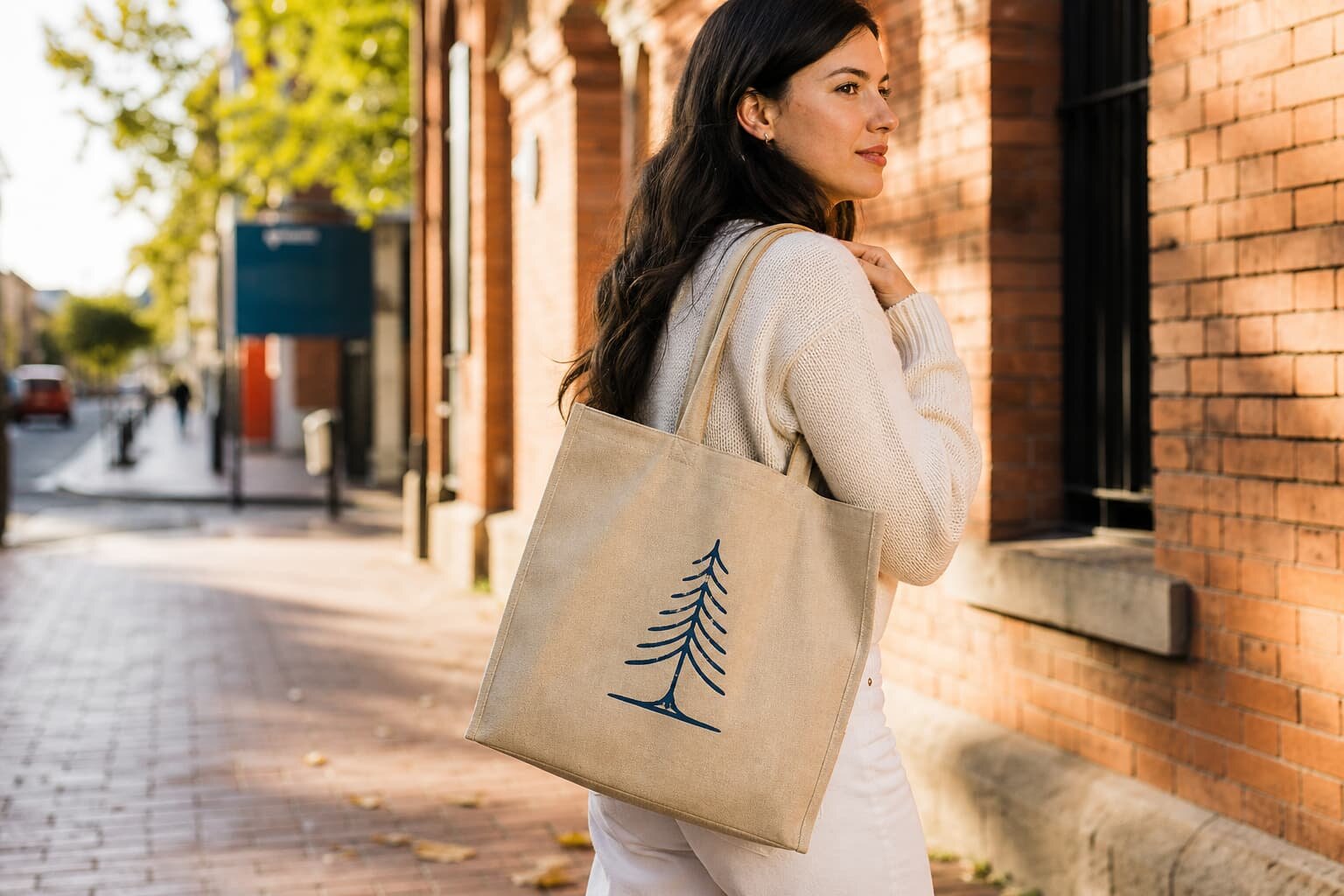
Why seam pull testing belongs in a canvas tote RFQ
A canvas tote bag can look acceptable on a showroom table and still fail when a buyer loads it with books, groceries, bottles, or retail merchandise. The most common failure is not the fabric panel tearing in the middle. It is the handle root opening, the side seam splitting, or the gusset corner breaking because fabric weight, stitch density, thread, and reinforcement were not specified together.
For procurement teams, a seam pull test is not a laboratory luxury. It is a practical way to make supplier quotes comparable. If one factory quotes 10 oz canvas with simple lockstitch handles and another quotes 12 oz canvas with cross box stitching and bartacks, the unit price difference may be reasonable. Without a seam strength requirement, the cheaper quote can hide a construction shortcut that only appears after shipment.
- Use seam pull testing when the tote is intended for resale, repeated use, grocery, books, bottles, or premium packaging.
- Do not rely only on fabric GSM; the seam construction decides whether the weight can actually be carried.
- Add the test requirement before sampling, not after bulk goods are already sewn.
- Ask the factory to test the same fabric, handle tape, thread, and print method used for production.
Define the real carrying load before choosing fabric weight
The first buying mistake is asking for a canvas tote bag by size only. A 38 x 42 cm tote can be a lightweight conference giveaway or a durable retail shopper. The same dimensions can be made with 6 oz, 8 oz, 10 oz, 12 oz, 14 oz, or 16 oz canvas, and each version behaves differently at the seams. A heavy-duty claim without a load target is too vague for a factory to engineer correctly.
For most promotional canvas totes, 8 oz to 10 oz cotton canvas may be acceptable if the expected load is light and the handle stitching is reinforced. For stronger retail or daily-use totes, 10 oz to 12 oz is a more common starting point. For grocery, bottle, or bookshop use, 14 oz to 16 oz may be needed, but it must be sewn with suitable needle size, thread tension, and reinforcement to avoid puckering or broken stitches.
- Light giveaway tote: often 6 oz to 8 oz canvas, lower load expectation, cost-sensitive MOQ.
- Standard retail tote: often 10 oz to 12 oz canvas, better hand feel and stronger seam base.
- Heavy shopper tote: often 14 oz to 16 oz canvas, higher fabric cost and carton weight.
- Washed canvas tote: confirm shrinkage and seam distortion because washing changes dimensions and hand feel.
- Dyed canvas tote: check colorfastness and whether dyeing affects fabric strength or print adhesion.
What a practical seam pull test should cover
A buyer does not always need an expensive third-party destructive test for every simple tote order. What matters is that the factory and buyer agree on where the force is applied, how long the load is held, what counts as failure, and whether the sample after testing still looks commercially acceptable. For many tote projects, a static hanging load test plus targeted seam inspection gives useful information before mass production.
The test should focus on real stress points. Pulling the bag body in a random direction does not represent normal use. The most important points are the handle attachment, the upper edge where the handle is sewn through folded fabric, the side seam near the top opening, the bottom seam, and the gusset corner if the bag has depth. If the tote will carry bottles or books, bottom seam and corner strength deserve special attention.
- Handle root: load the bag through both handles and inspect the stitch area after holding weight.
- Single handle stress: check whether one handle root opens when load shifts during carrying.
- Side seam: inspect the vertical seam for skipped stitches, seam slippage, and fabric tearing.
- Bottom seam: check load-bearing strength, especially on flat-bottom and gusseted totes.
- Gusset corner: inspect the point where side, bottom, and folded layers meet.
- Top hem: check that handle stitching does not cut through weak folded fabric.
Set acceptance criteria that inspectors can actually use
A useful seam pull requirement must be visible and measurable. If the purchase order only says 'strong stitching,' the factory, merchandiser, and final inspector may all interpret it differently. A better approach is to state the load, duration, sample quantity, test points, and failure definition. This helps both sides avoid arguments when production is already packed.
Acceptance criteria should not be limited to complete breakage. A tote may technically remain in one piece but show broken thread, open seams, stretched needle holes, or a handle root that has started to tear. Those defects usually become customer complaints after several uses. The approved sample should show what is acceptable after testing, and final inspection should compare bulk goods against that reference.
- No handle detachment or partial detachment after the agreed test.
- No fabric tearing at the handle root, side seam, bottom seam, or gusset corner.
- No broken bartack, broken lockstitch, or progressive seam opening.
- No major seam slippage or visible widening beyond the approved tolerance.
- No sharp thread ends, loose thread nests, or skipped stitches at stress points.
- Bag should still hang evenly without twisted handles or distorted top hem.
Handle stitching choices that change quote quality
Handle attachment is usually where factories save time. A simple straight stitch may be cheaper, faster, and neat enough in photos, but it often performs poorly when the tote is used with heavier contents. For retail and import orders, cross box stitching, bartacks, or dense reinforced backstitching are more reliable choices. The best option depends on fabric weight, handle width, desired appearance, and target price.
Buyers should ask suppliers to describe the handle construction in the quote instead of only saying 'standard sewing.' A wide handle made from the same canvas as the body may need different reinforcement than cotton webbing. A long shoulder handle puts different stress on the top hem than a short hand-carry handle. If the handle is dyed, printed, or made from recycled cotton blend tape, check whether the material stretches or frays under load.
- Cross box stitch: strong and visible, suitable for many reusable canvas totes.
- Bartack reinforcement: compact and strong, useful at the top and bottom of handle attachment.
- Double row lockstitch: acceptable for lighter use when stitch density is controlled.
- Self-fabric handle: good appearance match, but bulky at the seam if fabric is heavy.
- Cotton webbing handle: stable and efficient, but color and texture may differ from body canvas.
- Long shoulder handle: test load shifting because stress concentrates at the top hem.
How fabric GSM, thread, and stitch density work together
A heavier fabric does not automatically create a stronger bag if the factory uses weak thread, long stitches, or poor tension. In some cases, a 12 oz tote with good reinforcement performs better than a 14 oz tote with loose stitching. Procurement teams comparing quotes should look at the full construction package: fabric weight, weave, thread type, stitches per inch, seam allowance, and reinforcement method.
Stitch density is especially important on canvas. Too few stitches per inch can create weak points and visible gaps. Too many stitches can perforate the fabric like a tear line, especially near handle roots where several layers are sewn together. The factory should balance needle size, thread thickness, machine tension, and seam allowance based on the actual canvas, not just copy settings from a lighter tote.
- Ask for GSM or ounce weight with tolerance, not only 'heavy canvas.'
- Confirm whether the fabric is 100% cotton, cotton-poly blend, recycled cotton blend, or jute-cotton blend.
- Request stitch density range for stress seams, especially handles and side seams.
- Check thread colorfastness if the bag is dyed or washed.
- Inspect needle holes near handle roots; oversized needles can weaken tightly woven canvas.
- Compare seam allowance on samples because narrow seam allowance increases splitting risk.
Print method can affect seam strength and inspection results
Logo printing is often discussed separately from sewing, but it can affect seam performance. A thick screen print close to a seam may stiffen the fabric and create cracking when the bag is folded or loaded. Heat transfer near a handle root can be affected by pressure, temperature, and layered fabric thickness. Embroidery adds needle holes and thread weight, so it should be kept away from high-stress seams unless the construction is tested.
For a clean RFQ, include artwork size, placement, print method, Pantone references if needed, and distance from seam lines or handle attachment. If the buyer wants a large front print, the factory should confirm whether the print will be applied before sewing or after sewing. Printing before sewing can improve flatness, but registration must account for seam allowance and shrinkage. Printing after sewing may be harder on bulky gusseted totes.
- Screen print: common for canvas totes, but heavy ink layers can crack at folded areas.
- Heat transfer: useful for detailed artwork, but test adhesion on rough or washed canvas.
- Embroidery: premium appearance, but avoid placing it across stress seams.
- Digital print: good for multicolor designs, but confirm hand feel and abrasion resistance.
- Woven label: low impact on panel strength if placed away from seam corners.
- Inside label: check that label stitching does not weaken the side seam or top hem.
Sampling workflow before bulk production
A seam pull test is only useful if the sample represents real production. Many sourcing problems start when the approval sample is made from available fabric, hand-sewn carefully by a sample technician, and then bulk production uses a different fabric lot, different operator, or simplified reinforcement. Buyers should require the pre-production sample to use final fabric, final handle material, final print, and final sewing method.
The sample approval record should include photos of stress seams, measured dimensions, fabric weight, handle drop, print placement, and the result after load testing. If the sample fails, do not only ask the factory to 'make it stronger.' Ask what changed: wider seam allowance, denser bartack, heavier thread, different handle tape, changed top hem fold, or increased fabric weight. This information prevents the same failure from returning during mass production.
- Proto sample: useful for shape, size, and rough construction discussion.
- Print sample: confirms logo method, color, placement, and fabric compatibility.
- Pre-production sample: should be the approved standard for bulk sewing and inspection.
- Tested sample: keep one passed sample at the factory and one with the buyer or buying office.
- Sealed sample: mark date, version, fabric weight, and approved construction details.
- Revised sample: record exactly what changed from the failed version.
MOQ, lead time, and cost logic behind stronger seams
Seam strength is not free, but it is usually cheaper to build it correctly than to handle claims later. Stronger construction can increase sewing time, thread consumption, needle changes, operator skill requirements, and inspection effort. Heavier fabric also raises material cost and freight weight. When buyers understand these cost drivers, they can judge whether a supplier quote is realistic or simply missing important construction details.
MOQ depends on fabric availability, dyeing requirements, print setup, and whether the handle material is standard. Natural cotton canvas in common weights often has lower MOQ than custom-dyed canvas, custom webbing, or washed canvas. Screen printing may be economical at lower quantities than custom woven labels or special dye lots. If the order requires a specific seam pull standard, the factory may also need extra sample testing and production setup time before bulk cutting.
- Fabric MOQ: higher for custom dye, unusual GSM, organic or recycled blend, and washed finishes.
- Print MOQ: depends on screens, colors, artwork size, and whether printing is before or after sewing.
- Sewing cost: increases with bartacks, cross box stitching, binding, and heavy multi-layer seams.
- Inspection cost: increases when every carton requires stress seam checks or load test sampling.
- Lead time: add time for fabric arrival, print approval, pre-production sample, bulk sewing, inspection, and packing.
- Freight impact: heavier canvas and lower carton compression increase shipping cost per piece.
Packing and shipment issues that can hide seam problems
Packing is part of quality control for canvas tote bags. Heavy canvas totes may be folded tightly to reduce carton volume, but excessive compression can create permanent creases, damage printed panels, or stress handle attachment points. If bags are packed before ink is fully cured, print transfer and blocking can occur. If cartons are overloaded, bottom cartons can crush and distort the tote shape before the goods reach the buyer.
For importers and distributors, packing specs should be included in the RFQ. State whether each tote is bulk packed, individually polybagged, paper banded, or packed with recycled material requirements. Confirm carton quantity, carton dimensions, gross weight, moisture control, and pallet requirements if applicable. During final inspection, the inspector should pull samples from different carton positions, not only the top layer, because compression defects often appear in the lower layers.
- Avoid packing wet or uncured printed bags into sealed polybags.
- Set a maximum carton gross weight that warehouse teams can handle safely.
- Use carton liners or moisture control when shipping natural cotton canvas in humid seasons.
- Confirm fold method so handle roots are not sharply creased.
- Check whether hangtags, labels, or barcodes are attached before or after final seam inspection.
- Require carton marks to match PO, SKU, color, size, and quantity.
Specification comparison for buyers
| Spec decision | Recommended option | When it fits | Buyer risk to check |
|---|---|---|---|
| Fabric weight for general retail tote | 10 oz to 12 oz cotton canvas, about 340-407 GSM | Brand merchandise, bookshop totes, event resale, moderate daily carrying | Too light a fabric can pass appearance approval but tear near handle bartacks under load |
| Fabric weight for heavy-duty shopper | 14 oz to 16 oz canvas, about 475-542 GSM | Grocery, bottle carry, premium retail, repeated use programs | Higher GSM increases cost, carton weight, sewing difficulty, and possible seam puckering |
| Handle attachment | Cross box stitch plus bartack or dense backstitch reinforcement | Most bulk orders where buyers expect repeat use | Decorative stitching alone may look clean but fail pull testing at the handle root |
| Side and bottom seam construction | Inside overlock plus lockstitch, or bound internal seam for premium bags | Open-top canvas totes with gusset and heavier loading | Raw or weakly overlocked seams can fray after washing or during seam pull |
| Print method near stress areas | Screen print or heat transfer kept away from folded seams and handle roots | Logo-front totes where the artwork is not crossing construction points | Thick ink at folded seam areas can crack, stiffen fabric, or distort stitch tension |
| Testing load approach | Define static hanging load and seam pull acceptance before sampling | Importers comparing quotes from multiple factories | Factories may quote the same bag shape but use different stitching density and reinforcement |
Buyer checklist before sampling
- Confirm the intended load in kilograms and the real use case: giveaway, retail resale, grocery, books, bottles, or packaging.
- State fabric type, weight, tolerance, and finish, such as natural 12 oz cotton canvas with acceptable GSM tolerance.
- Specify which seams require pull testing: handle attachment, side seam, bottom seam, gusset corner, and inner binding if used.
- Request stitch type, stitches per inch, thread material, handle width, handle length, and reinforcement method in the quotation.
- Ask for a pre-production sample tested with the final fabric, final handle tape, final logo print, and final seam construction.
- Set visual acceptance rules after testing, including no broken stitches, no fabric tearing, no handle detachment, and limited seam opening.
- Check whether print placement interferes with handle stitching, side seam folding, bottom gusset pressing, or carton stacking.
- Confirm packing method, carton weight, moisture control, and whether heavy canvas totes will be compressed before shipment.
- Require the factory to keep tested samples and production reference samples for comparison during inline and final inspection.
- Include seam pull requirements in the purchase order, not only in email notes, so inspection criteria are clear.
Factory quote questions to send
- What fabric weight and GSM tolerance are you quoting, and is the canvas greige, bleached, dyed, or washed?
- What stitch construction will be used on the handle root, side seam, bottom seam, and gusset corner?
- How many stitches per inch will be used, and what thread count or thread type is included in the price?
- Can you perform a seam pull or hanging load test on the pre-production sample and provide photos or a short video?
- What load and duration do you recommend for this tote based on the fabric weight, handle size, and intended use?
- Will the final logo method affect seam strength, especially if the print is close to the handle or side seam?
- What is the MOQ for this fabric weight, color, handle length, and print method combination?
- What sample lead time and bulk lead time apply after artwork, fabric, and seam construction are approved?
- How many pieces per export carton will be packed, and what is the estimated carton weight and carton size?
- Which quality points are checked inline before final packing, and can failed seam pull samples be separated for review?
Quality-control points to confirm
- Handle root must not detach, tear the canvas, or open visibly after the agreed seam pull or static load test.
- Side seam and bottom seam should remain closed without skipped stitches, broken thread, or progressive fraying.
- Bartack or cross box reinforcement should be centered and fully sewn through all handle and body fabric layers.
- Stitch density should match the approved sample; loose tension or long stitches reduce seam strength.
- Printed areas must not crack, bleed, or distort because of seam folding, pressure, or heat setting.
- Bag size, gusset width, handle drop, and fabric weight should stay within the approved tolerance.
- Loose threads, needle holes, oil marks, uneven top edges, and twisted handles should be rejected or reworked.
- Cartons should not be overloaded; excessive compression can crease printed panels and deform gussets.