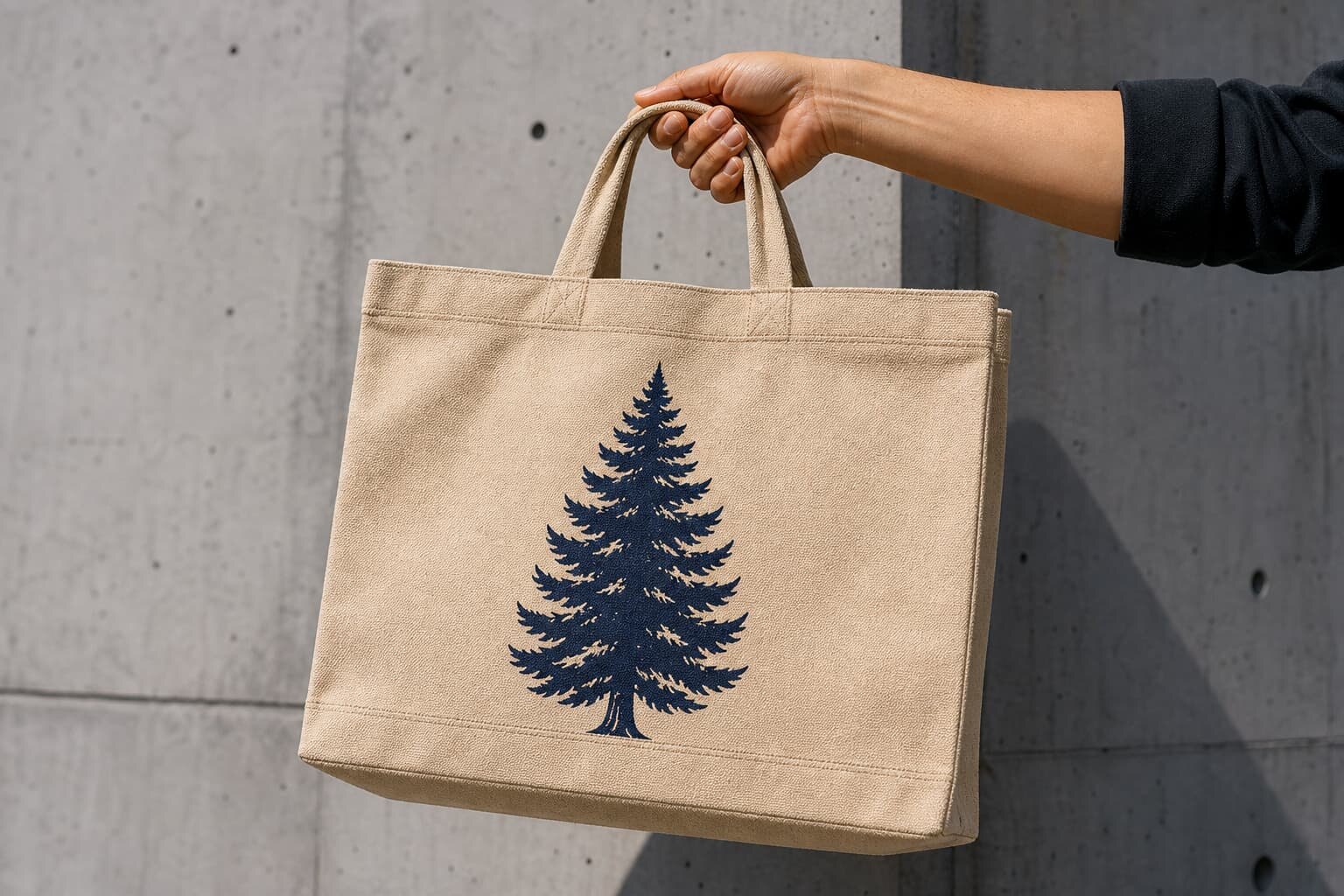
Why sample seal approval matters for canvas tote orders
A canvas tote bag looks simple until bulk cartons arrive with the wrong hand feel, uneven logo placement, short handles, or a fabric weight that does not match the buyer's expectation. The sealed sample is the buyer's physical contract with the factory. It should show exactly what will be produced, not only what the sales team hopes production can repeat.
For procurement teams and distributors, the approval risk is usually not one dramatic failure. It is a chain of small assumptions: 12 oz canvas quoted without GSM, logo approved from a digital proof only, handle drop measured before washing, or packing left to the factory standard. A proper sample seal approval process turns those assumptions into measurable acceptance criteria before fabric cutting starts.
- Use the sealed sample to control fabric, sewing, print, label, and packing decisions.
- Do not approve a showroom sample unless the factory confirms it can be repeated with bulk materials.
- Treat photos as communication tools only; they do not replace a physical sample for color, hand feel, or stitching.
Define the sample type before you approve anything
Buyers often say they need a sample, but factories may understand that in different ways. A reference sample can show shape and construction. A logo strike-off can confirm print color and ink behavior. A pre-production sample should be made with bulk fabric, bulk accessories, final artwork, and final sewing method. Only the last one is normally suitable for production seal approval.
If the order is urgent, a factory may offer to approve fabric from stock first and update the pre-production sample later. That can work for low-risk promotional bags, but it should be written clearly. The buyer must know whether bulk fabric will be identical, similar, or newly woven and dyed. For a retail tote bag, approving a sample made from substitute fabric is a common source of disputes.
- Reference sample: useful for size, construction, and general appearance only.
- Print strike-off: useful for logo color, registration, ink coverage, and curing checks.
- Fit or construction sample: useful for handle length, gusset, pocket, zipper, or reinforcement details.
- Pre-production sample: the correct sample to seal before bulk cutting.
- Packing sample: needed when retail presentation, carton weight, or warehouse compliance matters.
Lock fabric weight, weave, and color before bulk cutting
Canvas tote bag fabric should be specified by more than a casual oz number. A buyer may ask for 12 oz canvas, but factories may calculate ounces per square yard differently or offer a fabric that feels close but is not the same GSM. For RFQ clarity, ask for both oz and GSM, and request a fabric swatch from the same material planned for bulk production.
Natural canvas also has shade variation. Bleached canvas, dyed canvas, undyed cotton canvas, and washed canvas each behave differently in sewing and printing. Dark dyed canvas may need an underbase for screen printing. Heavy canvas may look premium but can make folded packing bulky and increase freight CBM. The sealed sample should confirm not just weight, but the commercial balance between hand feel, print result, packing volume, and target price.
- Common light promotional tote: around 6-8 oz, often about 180-240 GSM.
- Common mid-range retail tote: around 10-12 oz, often about 270-340 GSM.
- Premium heavy tote: around 14-16 oz, often about 380-450 GSM.
- Confirm tolerance, such as plus or minus 5 percent GSM, instead of expecting zero variation.
- Ask whether fabric is pre-shrunk, washed, or likely to shrink after customer washing.
Approve size and construction with measurable tolerances
Canvas tote dimensions are easy to misunderstand because buyers and factories may measure different points. A flat tote may be measured edge to edge. A gusseted tote may be measured before or after forming the bottom. Handle drop can change after sewing tension, washing, and pressing. Your sealed sample should include a measurement diagram, not only written dimensions.
Tolerance is not a weakness; it is a control tool. Cotton canvas is cut and sewn, not molded. If you need exact alignment for retail shelves, gift packaging, or insert cards, state the tolerance clearly. For many totes, a practical size tolerance may be around plus or minus 0.5 cm to 1 cm depending on dimension and fabric weight. The key is that the buyer, factory, and QC inspector use the same rule.
- Measure bag width at the top opening and lower body if the shape is tapered.
- Measure height from top edge to bottom seam or bottom fold, and define which one applies.
- Measure gusset depth after the bag is opened, not only while flat.
- Measure handle drop from top edge of bag to inside top curve of handle.
- Record handle width, handle material, and handle reinforcement method.
Control logo printing before it becomes a bulk defect
The sealed sample must show the final logo method, not a placeholder print. Screen printing is still the most common option for canvas tote bags because it gives strong color coverage and good cost efficiency on repeated bulk orders. Digital print can be useful for multi-color artwork or lower MOQ, but hand feel, wash resistance, and color matching may differ. Heat transfer can handle complex artwork, but the film edge and durability must be accepted in advance.
For logo approval, buyers should not rely only on a PDF proof. The proof can confirm artwork size and placement, but it cannot show ink absorption into canvas, edge bleeding, white underbase performance, or cracking after folding. Approve a physical print strike-off or a full sample with the logo applied to the same fabric type and color as bulk production.
- State print size in centimeters, not only as a percentage of the bag front.
- Define placement from top edge, side seam, or center line with tolerance.
- Use Pantone references where practical, but approve realistic results on actual canvas.
- Check rubbing with a dry white cloth and, when relevant, a damp cloth.
- Fold the printed area once to see whether ink cracks or transfer film lifts.
Review stitching and reinforcement like a load-bearing product
A canvas tote bag is often used to carry books, groceries, bottles, catalogs, or retail purchases. The handle attachment is therefore not a cosmetic detail. The sealed sample should show the exact reinforcement: bar tack, box stitch, box-X stitch, or folded-in handle seam. If a buyer approves a clean-looking sample but does not specify reinforcement, the factory may choose the lowest-cost sewing method for bulk production.
Stitch quality should be checked both visually and functionally. Loose threads can be trimmed, but skipped stitches, weak seam allowance, poor tension, and uneven handle placement can create real failure risk. Heavy canvas also needs suitable needle size and thread strength. A bag that looks acceptable in photos may fail after repeated loading if the handle stitch pattern is too small or too close to the fabric edge.
- Check that both handles have equal drop and are centered symmetrically.
- Look inside the bag for raw edges, overlock quality, binding, or folded seams.
- Confirm stitch density, such as stitches per inch, if the bag has a premium positioning.
- Pull handles firmly by hand during sample review to detect weak anchoring.
- Define whether loose threads are minor defects or require full trimming before packing.
Use MOQ logic to avoid misleading sample approvals
MOQ is not only the number of bags a factory is willing to sew. It can be driven by fabric weaving, fabric dyeing, printing setup, label production, zipper or accessory purchase, and carton printing. A sample may be easy to make from available fabric, while bulk production requires a higher MOQ or a different fabric lot. That difference should be exposed before approval.
For example, a buyer may request 500 canvas totes with a custom dyed body and two-color screen print. The sewing MOQ may be fine, but custom dyeing may require more fabric than the order consumes. The factory may either charge a dyeing surcharge, use stock color canvas, or suggest increasing quantity. A sealed sample is commercially useful only when the factory quote explains which MOQ rules support that exact sample.
- Ask whether the quoted MOQ is based on stock fabric or custom woven fabric.
- Separate MOQ for bag sewing, fabric dyeing, print setup, woven labels, and hangtags.
- Confirm whether sample cost is refundable, included, or separate from bulk order cost.
- Check whether reorder MOQ changes after screens, labels, or fabric are already prepared.
- Do not approve a custom color sample until the factory confirms bulk dye lot feasibility.
Connect sample approval to quote data, not just appearance
A good quote should read like a production summary. It should show fabric weight, size, handle specification, logo method, number of colors, label details, packing, carton quantity, lead time, payment terms, and validity period. If the quote only says canvas tote bag with logo, the buyer cannot compare suppliers fairly. A cheaper quote may be missing thicker fabric, reinforced handles, inner polybags, or proper print curing.
When comparing supplier quotes, align them against the sealed sample. If Supplier A quotes 12 oz canvas with screen print and box-X handles, while Supplier B quotes 10 oz canvas with simple handle stitching, the price difference is not a supplier advantage; it is a specification mismatch. The approval guide should force every supplier to quote the same controlled product.
- Request fabric weight in GSM and oz in the quotation.
- Ask for unit price by quantity tier, such as 500, 1000, 3000, and 5000 pieces.
- Separate tooling, screen, sample, label, and packing charges from unit price.
- Ask for estimated carton dimensions, gross weight, and CBM before freight comparison.
- Confirm whether quoted lead time starts after deposit, artwork approval, or sample seal approval.
Seal packing details when the tote is a retail or distribution item
Packing is often approved too late. A tote bag can be packed flat, half-folded, rolled, bundled, individually polybagged, packed by dozens, or placed into retail-ready cartons. Each method affects creasing, carton size, warehouse receiving, freight cost, and customer presentation. If the buyer needs a clean retail look, the packing sample should be approved together with the product sample.
For importers and distributors, carton data is also part of cost control. Heavy canvas totes can make cartons too dense if packed aggressively. Oversized cartons can increase CBM and local handling issues. The sealed packing standard should include units per inner pack, units per master carton, carton dimensions, gross weight limit, carton marks, and whether desiccants or recycled polybags are required.
- Confirm flat packing or half-fold packing before the factory orders cartons.
- Define individual polybag, master polybag, paper band, or no plastic requirement.
- Approve barcode label position if bags are sold through retail or marketplace channels.
- Keep carton gross weight within the buyer's warehouse handling rules.
- Request a carton drop or compression standard if long-distance freight handling is risky.
Set lead time gates around the approved sample
Lead time should not be stated as one vague number. A practical timeline separates artwork review, sample making, sample courier time, revision, bulk material booking, printing, sewing, finishing, inspection, and packing. If the buyer takes five days to approve a sample, that time should be visible. If the factory must wait for bulk fabric after approval, that should also be visible.
For canvas tote bags, a typical workflow may involve several gates: first quote confirmation, artwork file check, sample production, sample approval, deposit, bulk fabric preparation, print approval, sewing, inline check, final inspection, and shipment release. The sealed sample should be treated as the gate before irreversible bulk cutting or printing begins. This reduces the risk of paying for rework after materials are already consumed.
- Ask when lead time starts: deposit date, artwork approval date, or sealed sample approval date.
- Require a pre-production sample from bulk materials when fabric shade or print color is critical.
- Schedule inline inspection after first finished pieces, not only at final packed stage.
- Reserve time for sample courier transit and buyer internal approval.
- Avoid approving changes by chat message after the sample is sealed unless a revision number is issued.
Specification comparison for buyers
| Spec decision | Recommended option | When it fits | Buyer risk to check |
|---|---|---|---|
| Fabric weight for standard retail tote | 10 oz to 12 oz cotton canvas, about 270-340 GSM depending on weave | Brand campaigns, bookstore bags, subscription kits, light retail resale | Confirm whether supplier quotes oz per square yard or GSM; two factories may describe similar fabric differently |
| Fabric weight for premium reusable tote | 14 oz to 16 oz canvas, about 380-450 GSM | Heavy grocery use, fashion retail, paid merchandise, thick hand feel requirement | Higher fabric weight affects folding size, carton CBM, handle bulk, and print ink absorption |
| Logo print for large solid artwork | Screen print with approved ink color and cured rub test | One to four spot colors, bold branding, repeat orders | Check pinholes, edge sharpness, ink cracking on folded areas, and color under D65 light |
| Logo print for photographic or gradient art | Digital print or heat transfer after factory confirms wash and rub performance | Small MOQ, many colors, event artwork, complex gradients | Unit cost and hand feel may change; transfer film edge can be visible on canvas |
| Handle attachment for daily-use tote | Cross-stitch or box-X reinforcement with minimum stitch density approved on sample | Retail bags carrying books, apparel, bottled goods, or samples | Weak handle anchoring is often missed if the sample is only checked visually |
| Packing format for export cartons | Flat packed or half-fold packed with agreed polybag, carton size, and carton weight limit | Importer warehouse receiving, retail distribution, Amazon-style carton rules | A sealed sample does not control packing unless packing is also sealed or documented |
Buyer checklist before sampling
- Approve one physical sealed sample that includes final fabric weight, color, size, handle length, stitching, logo method, label, and packing format.
- Mark the sealed sample with buyer name, item code, revision number, date, and signatures or email approval reference.
- Measure bag width, height, gusset, handle drop, fabric GSM, and logo placement against the approved specification sheet.
- Check fabric hand feel, weave density, shrinkage expectation, dye lot risk, and whether the canvas is bleached, natural, dyed, or washed.
- Verify print color under consistent light and compare against Pantone, artwork file, or approved strike-off.
- Inspect stitching for skipped stitches, loose threads, seam allowance, handle reinforcement, side seam strength, and bottom corner shape.
- Confirm label content, barcode position, country-of-origin marking, warning label, and any retail hangtag before bulk cutting.
- Seal one packing sample if carton packing, folding direction, inner polybag, master carton marks, or retail presentation matters.
- Record accepted tolerances for size, logo position, color shade, and fabric weight so QC does not rely on opinion during inspection.
- Do not release deposit or bulk material booking until the factory confirms the sealed sample is the production standard.
Factory quote questions to send
- Which canvas weight are you quoting in GSM and oz, and is it greige, bleached, dyed, washed, or organic cotton canvas?
- Is the quoted sample made from bulk fabric or available stock fabric, and will bulk fabric hand feel and shade match the sample?
- What print method is included in the quotation: screen print, digital print, heat transfer, embroidery, woven label, or another process?
- How many logo colors, print positions, screens, setup charges, and artwork revisions are included before extra cost applies?
- What are the MOQ rules for this tote: fabric MOQ, dyeing MOQ, print MOQ, sewing MOQ, and packing material MOQ?
- What size tolerance, GSM tolerance, color tolerance, and logo placement tolerance will you accept in mass production?
- Can you provide a pre-production sample from bulk materials before cutting the full order?
- How many days are needed for sample making, sample revision, bulk fabric preparation, printing, sewing, inspection, and packing?
- What packing method is quoted, including units per polybag, carton dimensions, gross weight limit, carton marking, and pallet option?
- Which defects will be treated as major or minor during final inspection, and what AQL level can your factory support?
Quality-control points to confirm
- Fabric GSM, weave consistency, fabric color, odor, stains, slubs, and shrinkage risk
- Finished size, gusset depth, handle drop, handle width, and symmetry after pressing or folding
- Logo color, print placement, print size, edge sharpness, ink curing, rub resistance, and cracking after folding
- Stitch density, seam allowance, handle reinforcement, bar tack or box-X quality, loose threads, and skipped stitches
- Label accuracy, retail tag position, country-of-origin marking, barcode readability, and packaging warning text
- Folding method, polybag size, carton quantity, carton strength, carton marks, and total carton weight
- Pre-production sample approval, inline inspection timing, final inspection sampling plan, and defect classification
- Bulk production match against the sealed sample, not against memory, photos, or informal chat messages