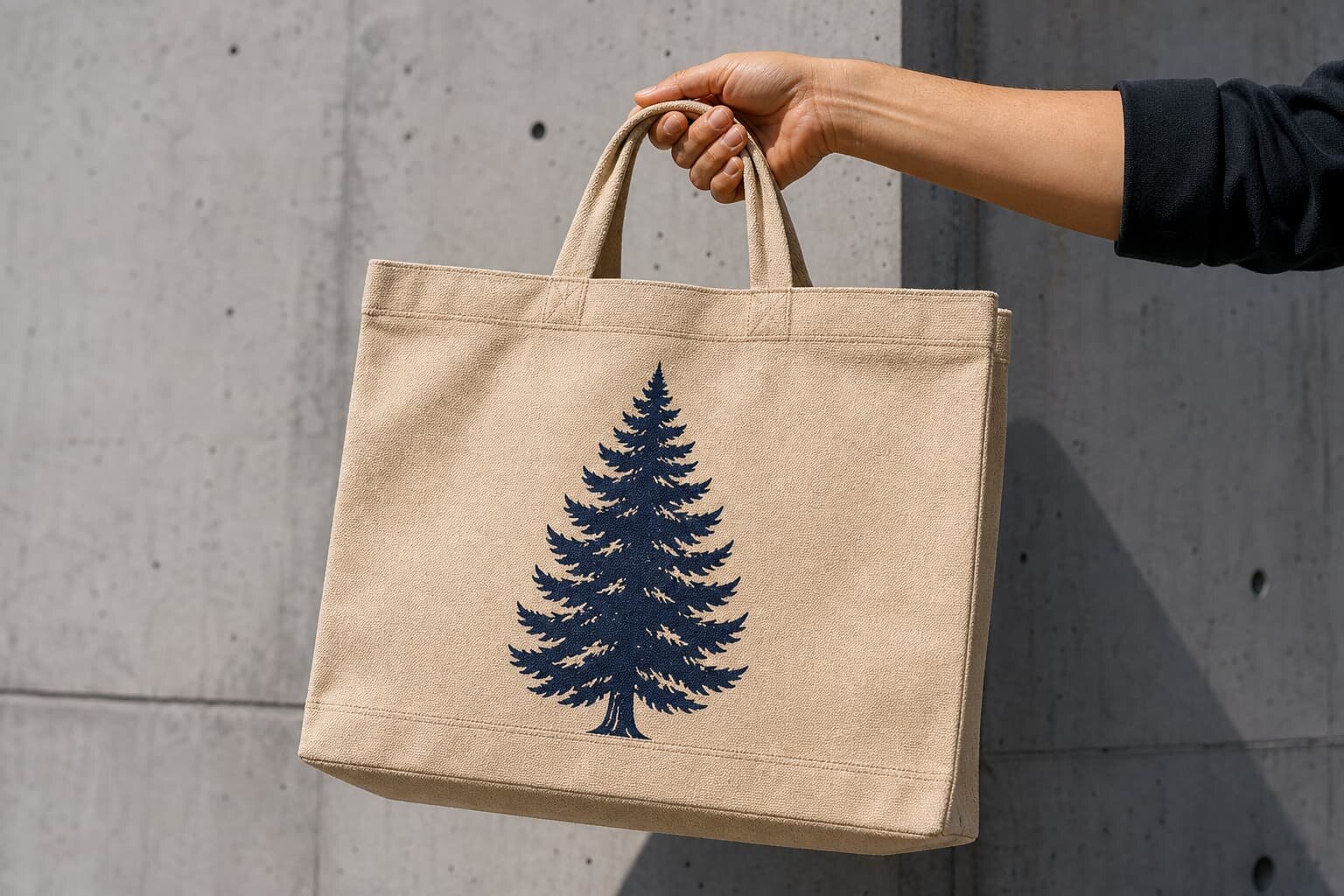
Why the sample return approval memo matters
A canvas tote bag sample return approval memo is not office paperwork. It is the buyer-side control document that tells the factory which physical sample is allowed to become bulk production. For procurement teams, it prevents a common dispute: the supplier says the sample was approved, while the buyer says only the concept was approved. The memo closes that gap by recording exactly what was returned, what was checked, what was accepted, and what still needs correction before cutting fabric.
This is especially important for canvas tote bags because many quality issues are physical and hard to judge from photos. Fabric stiffness, GSM, handle strength, ink hand feel, seam allowance, and folding marks are easier to verify on a returned sample than on a screen. A practical memo helps the importer compare supplier quotes fairly, because it ties the quote to real construction details instead of a loose description such as natural canvas tote with logo.
- Use the memo before purchase order release, not after bulk fabric is already cut.
- Reference the exact sample code, revision date, artwork version, and quote number.
- State whether the physical returned sample is approved as bulk standard or only approved for costing.
- Keep one approved sample at the buyer side and require the factory to seal one matching master sample.
Define the sample status before approving anything
The first mistake is treating every returned sample as an approval sample. A canvas tote bag sample may be a fabric feel sample, a print test, a pre-production sample, a packing sample, or a corrected sample. Each has a different meaning. If your memo does not define the sample status, the factory may use a rough development sample as the bulk standard, especially when the production schedule is tight.
For a branded tote, the approval memo should say what the returned sample is allowed to control. For example, a fabric sample may approve only the 12 oz natural canvas and not the final print position. A print strike-off may approve only logo color and curing, not bag size or handle length. A true pre-production sample should match the full specification, including fabric, dimensions, stitching, logo, label, packing, and carton method.
- Fabric reference sample: approve weight, shade, weave, shrinkage expectation, and hand feel only.
- Print strike-off: approve logo color, print size, print method, curing, and surface finish only.
- Construction sample: approve dimensions, gusset, handle type, seam allowance, and reinforcement only.
- Pre-production sample: approve all technical details before mass cutting and printing.
- Packing sample: approve folding, polybag, inner pack, carton quantity, carton mark, and moisture protection.
Fabric weight, shrinkage, and shade must be written, not assumed
Canvas tote bag buyers often write 10 oz canvas or 12 oz canvas in an RFQ and assume every supplier means the same material. In practice, mills, yarn count, weave density, finishing, and moisture content can make two fabrics with the same nominal ounce feel different. If the returned sample is acceptable, record the measured GSM or agreed fabric weight range in the memo. A typical 10 oz cotton canvas may sit around 280 GSM, while a heavier 16 oz canvas may be near 450 GSM, but the conversion is not universal enough to approve by name alone.
Shade control is also commercial, not cosmetic. Natural cotton canvas can vary from cream to grey-beige depending on cotton source and finishing. Dyed canvas adds another risk: a deep color may require higher MOQ because the mill needs to dye a minimum batch. If the buyer approves a returned sample without mentioning shade tolerance, the supplier may ship a bulk lot that is technically natural canvas but visibly different from the buyer sample. The memo should require lab dip or bulk fabric swatch approval when shade is important for retail display.
- Record fabric as natural, bleached, dyed, washed, recycled cotton blend, or organic cotton only if supported by the quote and documents.
- Use GSM or oz with tolerance, such as 340 GSM plus or minus 5 percent, when the supplier can control it.
- Ask whether shrinkage affects final bag size after steaming, washing, or humidity change.
- For dyed canvas, require color approval under agreed lighting and note whether bulk shade may vary by lot.
- For heavy canvas, confirm whether seams and handles can be sewn cleanly without needle holes, puckering, or broken thread.
Print approval needs method, curing, and position control
A returned canvas tote sample can look good on arrival but still fail in use if the print is not properly specified. Screen printing is common for simple logos because it gives clean spot color and reasonable durability at commercial quantities. Digital print, DTF, heat transfer, and embroidery may be useful for other artwork, but each changes cost, MOQ, hand feel, and lead time. The memo should identify the approved print method, not just say logo approved.
Position control is another frequent issue. A front logo that is centered on the sample may move during bulk if the factory prints panels before sewing without clear measurement points. The memo should state print width and height, distance from top opening, distance from side seam or center line, ink color reference, and acceptable tolerance. If print is done after sewing, confirm whether the bag shape, gusset, or handle position limits print area.
- For screen print, confirm ink type, color standard, mesh result, curing condition, and whether underbase is needed.
- For heat transfer or DTF, check edge lifting, plastic hand feel, fold marks, and temperature sensitivity during packing.
- For digital print, verify fabric pre-treatment, color sharpness, and whether the print changes fabric touch.
- For embroidery, check backing, thread color, stitch density, puckering, and minimum distance from seams.
- Keep a close-up photo of the print surface in the memo so later bulk defects can be compared to the approval sample.
Handle and seam approval should include strength criteria
For many end users, the handle is the first failure point. A canvas tote bag may be used for books, groceries, conference kits, or retail products. The returned sample should be checked for handle length, handle width, fabric layering, stitch density, thread color, reinforcement pattern, and seam allowance. If the buyer only approves the visual look, the supplier may choose a cheaper handle construction that looks similar in photos but fails under load.
A good approval memo uses measurable criteria. For example, it can state that handles are 2.5 cm wide self-fabric canvas, 60 cm total length, sewn with box-X reinforcement, minimum 1 cm seam allowance inside the top fold, no skipped stitches, and no visible twisting. The exact load test requirement depends on the product use, but the memo should at least record the test method used on the returned sample. Even a simple static hanging test with a defined weight and time is better than no strength reference.
- Measure handle drop, not only total handle length, because shopper comfort depends on drop.
- Check whether handles are inserted into a folded top hem or sewn directly to the outside panel.
- Specify bartack, cross-stitch, box-X, or straight stitch reinforcement in the approval memo.
- Inspect inside seam finishing for fraying, loose yarn, needle damage, and uneven folding.
- For heavy canvas, confirm the stitch length is suitable and not perforating the fabric like a tear line.
MOQ and quote logic should be tied to the approved sample
A canvas tote quote is only useful when it is connected to the same construction as the approved returned sample. MOQ can change because of fabric sourcing, dyeing, logo setup, label production, or packing requirements. A supplier may offer a low MOQ using stock natural canvas and one-color screen print, but that does not mean the same MOQ applies to custom dyed 14 oz canvas with inside pocket and individual retail packing.
The sample return approval memo should therefore ask the factory to confirm cost impact after corrections. If the returned sample uses 12 oz canvas but the buyer asks to upgrade to 16 oz, the quote must be revised for fabric cost, sewing difficulty, carton weight, and possibly freight. If the buyer changes from screen print to embroidery, setup cost and lead time change. Procurement teams should not approve the sample and negotiate price as if all changes are neutral.
- Fabric MOQ: stock canvas usually supports lower MOQ than custom dyed or special weave canvas.
- Print MOQ: screen printing has setup work, so unit cost improves as quantity increases.
- Label MOQ: woven labels, care labels, and barcode stickers can create separate minimums.
- Packing MOQ: custom printed cartons or retail belly bands may require a packaging supplier minimum.
- Correction cost: changes after sample return should be separated into material, labor, setup, and courier cost.
Packing approval protects the product after the sample looks right
Many canvas tote disputes happen after a technically correct bag is packed poorly. Heavy folding can crease print areas. Fresh ink can block if bags are packed before full curing. Natural canvas can absorb moisture during sea shipment, especially if cartons sit in a humid warehouse. A returned sample approval memo should not stop at the bag itself. It should record how the bag will be folded, grouped, protected, and marked for shipment.
Packing details also affect landed cost and warehouse handling. Individual polybags improve cleanliness but add material cost and may conflict with a buyer's packaging policy. Bulk packing reduces plastic but can increase rubbing, lint transfer, and carton compression. Carton size and gross weight matter for distributors because cartons that are too heavy are harder to handle and more likely to split. If the supplier quote does not include carton dimensions and gross weight, the buyer cannot compare freight or warehouse cost properly.
- Approve fold direction and whether the print area may be folded directly.
- Confirm bags per inner pack and bags per export carton.
- Set carton gross weight target if warehouse handling limits apply.
- Require moisture protection such as dry cartons, pallet control, or desiccant when shipping risk is high.
- Check carton marks against the PO, SKU, color, quantity, country of origin rules, and buyer routing requirements.
Lead time should start after sample approval, not after first email
Buyers often compare lead times without checking when the clock starts. A factory may quote 25 to 35 days, but that usually means after deposit, final artwork, material confirmation, and sample approval. If the returned sample is approved with correction, the production lead time may not start until the correction is confirmed. This matters for retail launch dates, event deadlines, and distributor replenishment orders.
The approval memo should include a lead time trigger. For example, production lead time starts after signed sample approval memo, deposit receipt, final artwork, and fabric availability confirmation. If fabric is stock, cutting can begin sooner. If fabric must be dyed or woven, the schedule must include mill lead time, lab dip approval, bulk fabric inspection, printing, sewing, packing, and pre-shipment inspection. Procurement teams should also ask the factory whether peak season, national holidays, or power restrictions could affect the schedule.
- Sample revision time: confirm days needed for corrected sample or photo confirmation.
- Material time: separate stock fabric timing from custom dyed or woven fabric timing.
- Printing time: include screen setup, ink matching, strike-off approval, and drying or curing time.
- Sewing time: allow for heavier canvas to sew slower than thin cotton sheeting.
- Inspection time: reserve time for inline inspection, final inspection, and corrective action before vessel booking.
How to write approval, conditional approval, or rejection
The memo should not use vague language such as looks okay or proceed if possible. Use one of three statuses: approved for bulk production, approved with correction before bulk, or rejected and resubmit sample. This keeps internal stakeholders and the factory aligned. If the sample is approved with correction, do not leave the correction open-ended. State exactly what must change and how it will be verified.
A useful memo can be short but must be precise. For example: approved with correction, front logo to move 15 mm lower, final position 90 mm from top opening to top of print, tolerance plus or minus 3 mm; handle reinforcement to change from two-line stitch to box-X stitch as attached drawing; factory to send corrected photo and retain master sample before bulk cutting. This type of memo gives the merchandiser and production line a real control point.
- Approved: no open technical issues; sample becomes the bulk master standard.
- Approved with correction: specific measurable changes required before or during production.
- Rejected: sample cannot be used as production reference and a new sample is required.
- For minor cosmetic issues, define whether correction is mandatory for all units or only future repeat orders.
- For safety, strength, or brand logo issues, do not release bulk until the correction is physically confirmed.
Evidence package for supplier comparison and claim prevention
A strong canvas tote bag sample return approval memo becomes useful again when comparing quotes. If Supplier A quotes 12 oz canvas with box-X handles, screen print, and bulk carton packing, while Supplier B quotes 10 oz canvas with straight stitch handles and individual polybags, the lower price may not be a better offer. The memo gives procurement a common baseline so pricing can be normalized by construction, material, packing, and test requirements.
The same evidence package helps if a claim appears later. Keep photos of the approved sample, measurement records, print close-ups, fabric weight check, packing method, and the factory's written confirmation. If bulk goods arrive with lighter fabric, shifted logo, weak handles, or wrong carton marks, the buyer can compare against the approved standard instead of arguing from memory. This is not about making the factory defensive; it is about removing ambiguity before production money is spent.
- Attach front, back, inside, handle, seam, print, label, and packing photos.
- Keep measurement data in millimeters or centimeters, not only pass or fail remarks.
- Store the approved sample in a sealed bag or carton to avoid dirt, fading, or handling damage.
- Ask the factory to send dated photos of the sealed master sample before mass production.
- Use the memo to compare supplier quotes line by line: fabric, print, sewing, packing, testing, and lead time.
Specification comparison for buyers
| Spec decision | Recommended option | When it fits | Buyer risk to check |
|---|---|---|---|
| Fabric weight for standard retail tote | 10 oz to 12 oz cotton canvas, usually around 280 to 340 GSM | Reusable promotional tote, bookstore tote, light retail merchandise, event merchandise | If the returned sample feels acceptable but bulk fabric is sourced from another roll, require GSM tolerance and shrinkage data in the memo. |
| Fabric weight for premium shopping tote | 14 oz to 16 oz canvas, roughly 400 to 500 GSM depending on weave | Higher perceived value, heavier gift sets, fashion or lifestyle retail | Heavier cloth increases carton weight and may require stronger handle reinforcement; confirm shipping carton gross weight before approval. |
| Print method for simple logo | Screen print with approved ink color and cured ink test | One to three spot colors, medium to large logo area, stable repeat orders | Returned samples may pass visually but fail rubbing or wash testing if ink curing is weak; record test method and acceptance result. |
| Print method for full color artwork | DTF, heat transfer, or digital print only after confirming hand feel and edge durability | Short runs, detailed graphics, multi-color campaign artwork | Transfer edge lifting and plastic hand feel can cause retail complaints; request a folded sample and rub result, not only flat photos. |
| Handle construction | Self-fabric canvas handles with cross-stitch or box-X reinforcement | Most retail and promotional canvas totes where carrying strength matters | The sample return approval memo should state handle length, width, stitching pattern, and load test result, not only say handle approved. |
| Packing method | Individual polybag only when required; otherwise folded by set quantity in export carton with moisture control | Retail buyers needing clean presentation or distributors handling warehouse resale | Extra folding lines, print blocking, carton compression, and moisture spots should be checked on the returned sample and pilot carton. |
| Sample approval route | Physical returned sample plus signed memo and photo record | Any branded tote where fabric shade, print hand feel, or stitch quality matters | Email approval based only on photos leaves weak evidence if bulk color, seam allowance, or print position is disputed later. |
Buyer checklist before sampling
- Confirm the returned sample is the same version referenced in the quote, tech pack, artwork file, and latest email revision.
- Record fabric weight in oz or GSM, fiber composition, weave type, dye or natural finish, and acceptable tolerance.
- Measure finished bag width, height, gusset, handle length, handle width, and print position against the approved specification.
- Check print method, ink color, print size, curing, rubbing resistance, and whether the logo edge remains clean after folding.
- Inspect handle stitching, side seam allowance, bottom seam, bartack or box-X reinforcement, loose threads, and inside finishing.
- Confirm sample return condition: clean, folded, labeled, and not damaged by courier handling before using it as approval evidence.
- State whether the sample is approved, approved with correction, or rejected, and list corrections with measurable acceptance criteria.
- Attach sample photos showing front, back, inside seam, handles, label, print close-up, and carton or packing method if available.
- Lock the bulk production reference: one sealed master sample at the factory and one retained sample at the buyer side.
- Require the factory to quote lead time, MOQ, packing unit, carton size, gross weight, and any cost impact caused by sample corrections.
Factory quote questions to send
- Which fabric will be used for bulk production: exact mill, yarn count if available, GSM or oz tolerance, and whether it is stock fabric or custom dyed?
- Can the bulk fabric match the returned sample shade under D65 light, and what is your acceptable color tolerance for natural or dyed canvas?
- What is the proposed MOQ for this canvas weight, print method, and handle style, and what cost changes if we order below that level?
- Which print method is included in the quote, and what are the setup costs, screen charges, plate charges, or artwork handling charges?
- What tests can you perform before shipment: fabric GSM, shrinkage, colorfastness to rubbing, print adhesion, seam strength, and handle load test?
- How many pre-production samples are included, how many days are needed after artwork approval, and who pays courier cost for returned samples?
- What is the production lead time after deposit and final sample approval, and does it change during peak season or before public holidays?
- What packing is included in the quote: folding method, inner pack quantity, individual polybag, carton marks, carton size, and maximum carton weight?
- Will bulk production follow the returned sample exactly, or are there any substitutions in fabric, ink, thread, label, or packing materials?
- Can you seal one master sample at your factory and provide date-stamped sample photos before cutting and before mass printing?
Quality-control points to confirm
- Returned sample identification must show style number, sample version, date, fabric lot reference if available, and buyer approval status.
- Fabric weight should be verified with a GSM cutter or agreed lab method, not judged by hand feel alone.
- Finished dimensions should be measured after the sample is laid flat and relaxed, with tolerance agreed for each dimension.
- Print position should be measured from top edge and side edge, because centered by eye can shift after sewing or folding.
- Screen print ink should be checked for curing, smell, surface cracking, rub resistance, and blocking after folded contact.
- Handle joint strength should be checked through stitching type, thread density, seam allowance, and practical load test.
- Inside seam finishing should be clean enough for the product tier, with no raw edge surprise if the buyer expects binding or overlock.
- Packing approval should include fold direction, polybag requirement, carton quantity, carton mark layout, and moisture control plan.
- The approval memo should separate visual acceptance from technical acceptance, especially for fabric shade, GSM, and print durability.
- Bulk release should not happen until the factory confirms correction responsibility, cost impact, and lead time impact in writing.