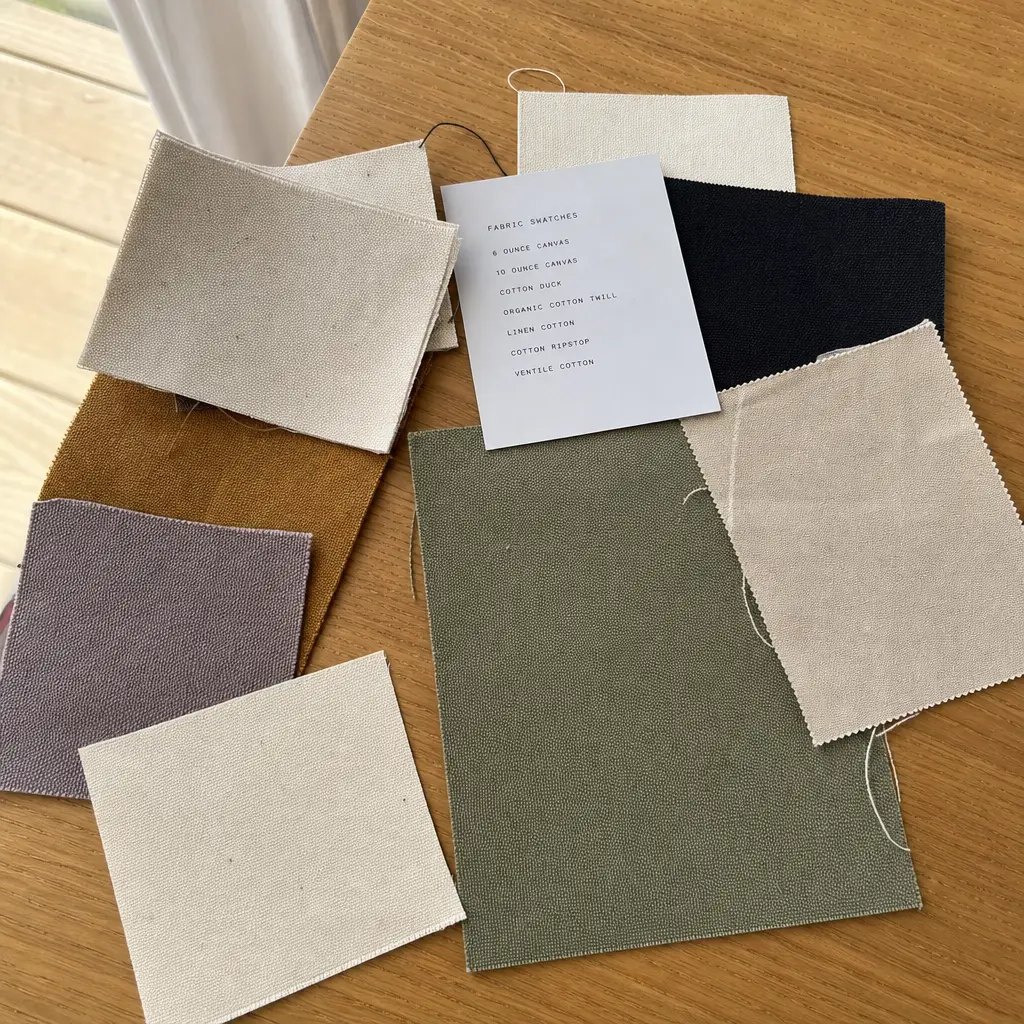
Why Sample Approval Is a Non-Negotiable for Spa Retail Totes
A canvas tote bag in a spa retail environment is a direct extension of the brand's promise of calm, cleanliness, and quality. Unlike a promotional giveaway, this bag sits beside high-margin skincare, robes, and aromatherapy products. A customer who notices yellowish fabric, uneven handles, a harsh plastic-feeling print, or carton dust on a natural canvas tote will subconsciously transfer that perception to the products inside. The sample approval stage is the procurement team's single most powerful tool to prevent this brand damage.
A rigorous approval process transforms a subjective concept like 'premium natural look' into an objective, measurable production standard. It locks down the fabric weight, handfeel, exact dimensions, logo placement, stitch density, and packing method before the supplier cuts a single meter of bulk fabric. A weak approval process, conversely, leaves these critical details open to interpretation, which almost always results in last-minute quote changes, shipment delays, or contentious arguments during a final inspection when the goods are already made and the launch deadline is imminent.
- Use the physical sample to confirm the full retail presentation, not just basic construction.
- Treat the signed and sealed approval sample as the single source of truth for bulk production quality control.
- Maintain a strict separation between prototype feedback and final pre-production approval comments to avoid confusion.
- Document every tolerance that would trigger a rejection if the bulk shipment arrives differently, no matter how minor it seems.
Engineering the Tote's Function Before Selecting the Canvas
The choice of canvas weight is an engineering decision, not just an aesthetic one. It must be dictated by the bag's intended function. A tote designed to hold a single lightweight aromatherapy kit at a checkout counter has vastly different structural requirements than a resort boutique tote meant to carry a heavy robe, slippers, and full-sized amenities. Starting with a clear weight and volume specification for the intended contents prevents the common mistake of approving a sample that looks beautiful empty but fails under real-world use.
For the majority of spa retail applications, a 10 oz canvas (280-300 GSM) is the reliable workhorse. It provides enough body to stand upright on a shelf without being so rigid that it becomes costly to sew and ship. For high-ticket gift sets, membership welcome kits, or luxury resort boutiques where perceived value must be maximized, upgrading to a 12 oz canvas (340-360 GSM) is a strategic investment. The heavier weight provides a more substantial handfeel and better durability, but it also increases material cost and freight weight, a trade-off that must be calculated. For low-cost, high-volume event giveaways, a 6-8 oz canvas might suffice, but it will lack the premium shelf presence required for most spa retail.
- 6-8 oz canvas: Suitable only for low-cost event giveaways; generally too flimsy for premium spa retail display.
- 10 oz canvas (280-300 GSM): The balanced standard for retail totes, checkout bags, and moderate reuse.
- 12 oz canvas (340-360 GSM): Provides stronger shelf presence and better durability, ideal for premium gift sets and heavy contents.
- Washed or enzyme-washed canvas: Delivers a softer, more relaxed drape but requires separate approval for post-wash shrinkage and color.
- Organic cotton canvas: Valuable for specific wellness brand stories, but GOTS or OCS certification scope and fabric availability must be verified early in the sourcing process.
Translating Spa Brand Aesthetics into Measurable, Inspectable Specifications
Spa branding relies on a vocabulary of softness, minimalism, and natural elegance. Terms like 'earthy,' 'soft,' and 'clean' are excellent for a marketing brief but are useless for factory quality control. The procurement team's role is to translate these subjective aesthetics into a technical specification sheet that leaves no room for misinterpretation. This sheet must state the exact finished bag dimensions, gusset width, handle drop length, fabric color reference (e.g., Pantone code for dyed canvas), print size, print location measured from fixed seams, thread color, internal seam finish type, and packing method.
A critical and common specification error is approving a bag based on its flat dimensions without testing its filled volume. A 38 cm x 42 cm tote without a gusset may appear generously sized on paper but will struggle to accommodate a boxed gift set. A 35 cm x 38 cm x 10 cm gusseted tote will look smaller when laid flat but will hold significantly more product and stand more neatly on a retail shelf. Procurement teams must physically test the pre-production sample with the actual product mix it is intended to carry, or at a minimum, with a weight and volume substitute, to validate the dimensional specifications.
- Define width, height, bottom gusset depth, and side gusset depth as separate, independently measurable values.
- Measure handle drop precisely from the top edge of the bag body to the highest inside curve of the handle.
- Specify whether the filled bag is required to stand upright unassisted on a flat surface.
- Clearly state the required internal seam finish: overlocked, French seamed, or bound with specific thread color.
- Mark logo placement with measurements from the top edge, side seam, or visual centerline so it can be objectively inspected.
Using the Sample to Expose and Control Hidden Cost Drivers
Significant price differences between supplier quotes often stem from specification details that are invisible in a product photo. Fabric weight, custom dyeing processes, the total ink coverage area of a logo, internal seam binding, the addition of a zipper or magnetic snap, individual polybagging, and export-grade carton strength are all powerful cost levers. When a quote appears attractively low, a skilled procurement professional will immediately investigate which of these cost items has been reduced or removed.
For spa retailers, the most insidious hidden cost driver is color control. 'Natural' canvas is not a single, stable color; it can vary significantly between cream, beige, oatmeal, and greyish tones depending on the cotton batch and finishing process. Achieving a consistent, brand-specific shade requires custom dyeing, which often increases the minimum order quantity (MOQ) and lead time because textile mills have minimum dye lot requirements. Washed canvas adds another layer of cost and complexity, requiring extra sampling to confirm the final shade, shrinkage rate, and softness after the washing process. Failing to account for these variables in the initial quote comparison leads to budget overruns and production delays.
- Large, solid logo prints consume more ink and require longer drying times, increasing both material and labor costs.
- Light fabric colors like natural and off-white require cleaner factory handling and more protective packing to prevent soiling.
- Internal seam binding significantly elevates retail quality but adds a direct labor and material cost per unit.
- Hardware like zippers and snaps increase the unit price and introduce new defect categories during quality inspection.
- Custom labels, hangtags, and barcode stickers should be itemized as separate quote lines if they are not included in the base unit price.
Approving Print Quality for Texture, Color, and a Spa-Grade Finish
Canvas is an inherently textured substrate, which means logo artwork will not render with the same sharpness as it does on coated paper or plastic packaging. Fine serif fonts, thin lines, small icons, and low-contrast ink colors are all high-risk elements that can lose definition. A spa logo in a muted sage, sand, or grey tone may look sophisticated on a digital screen but can appear weak and washed out when printed on natural canvas. The print sample must be evaluated at a normal customer viewing distance and under retail lighting conditions, not just in a close-up, brightly lit factory photo.
Water-based screen printing is generally the optimal method for achieving a soft, matte, 'spa-appropriate' finish that integrates with the fabric rather than sitting on top of it. Plastisol ink offers greater opacity and color vibrancy but can feel heavier and have an unwanted gloss. Heat transfer printing can handle complex, multi-colored artwork but may not deliver the quiet, fabric-integrated look that many spa brands require. Embroidery provides a premium, textured finish but can cause puckering on lighter canvas weights and is typically better suited for small, localized logos or woven labels.
- For screen printing, the approval must confirm artwork dimensions, Pantone color references, the exact number of colors, and print position.
- For artwork with fine detail, define and enforce a minimum line thickness (e.g., 1.5 pt) before screens are manufactured.
- For muted or pastel ink colors, always approve a physical strike-off on the actual bulk canvas color, not on a substitute fabric.
- For printing on dark-colored canvas, verify whether a white underbase is required and assess its impact on the print's handfeel.
- For embroidery, approve the stitch density, backing material, exact thread shade, and the acceptable level of fabric puckering.
A Systematic Construction Audit to Prevent Bulk Order Rejection
The first construction review of a sample must be a practical, functional test. Fill the tote with the intended product weight—robes, towels, candles, or skincare bottles—and lift it repeatedly by the handles. Observe the handle attachment points, top hem, side seams, and bottom corners for any signs of stress, twisting, or sagging. If the sample distorts or the handles feel narrow and uncomfortable under load, this failure mode will be amplified in bulk production as retail customers use the bags in unpredictable ways.
Stitching density and reinforcement must be specified to match the bag's functional demands. A simple promotional tote might pass with a basic lockstitch handle attachment, but a spa retail tote carrying heavy products must have X-box reinforcement or dense bar tacks at the handle bases. Thread color is a detail that can undermine an otherwise premium product; dark thread on natural canvas can be a deliberate design choice, but if it is unintentional, it makes the bag look unfinished and low-cost. The internal seam finish must also be audited for loose overlock ends or rough seam allowances that a customer might feel when reaching inside the bag.
- Check that the top hem is perfectly even and not wavy, especially across the front logo panel.
- Inspect X-box stitching for complete, uncut corners and zero skipped stitches under magnification.
- Confirm that all internal overlock thread ends are properly secured and trimmed, not left loose or hanging.
- Review the bottom corner shape and seam integrity after the tote has been filled with the intended product weight.
- Measure and compare the left and right handle lengths; even a small asymmetry (>0.5 cm) is visually obvious when the bag is displayed or carried.
Implementing a Tiered Approval System for Production Control
Not all samples serve the same purpose, and confusing their roles is a common source of production errors. A prototype sample is useful for confirming the basic pattern, size, and pocket layout, but it is often made from available stock fabric with an approximate print. A sales sample may be handcrafted with extra care and is not representative of mass production quality. The only sample that should control bulk production is the pre-production sample (PPS), which must be made using the actual bulk fabric, final approved print method, correct thread, final trims, and the intended commercial packing.
For spa retail programs with custom-dyed or washed canvas, or complex packaging requirements, a staged approval process is the most effective risk management strategy. This breaks the approval into discrete, manageable gates: first, approve the fabric lab dip or bulk cutting; second, approve the print strike-off; third, approve the full pre-production sample; and finally, approve the packing layout. This sequential approach prevents the disastrous scenario where a buyer approves a beautiful bag shape early on, only to discover weeks later that the final fabric shade or logo ink color is commercially unacceptable.
- Prototype Sample: Approve only the pattern, size, pocket layout, and handle length. Do not approve color or handfeel.
- Print Strike-Off: Approve the logo's color, opacity, edge sharpness, and handfeel on the correct canvas.
- Pre-Production Sample (PPS): The master reference. Approve the final fabric, sewing, print, trims, and packing method.
- Sealed Approval Sample: Two identical PPS units, one kept by the factory and one by the buyer or third-party inspection team.
- Bulk Cutting Approval: A formal, written release given only after all PPS comments are closed and the final spec sheet is updated.
Packing Engineering: Protecting Retail Appearance and Controlling Landed Cost
Packing is often treated as an afterthought in the quoting stage, but for spa retail, it is a critical factor that directly affects the product's shelf presentation and the total landed cost. A bag that is bulk-packed loose in a carton may arrive with dust marks, creases, and abrasions that are unacceptable for a retail environment. The packing specification must be engineered based on the sales channel: bags sold as standalone merchandise or included in gift sets require individual polybags, consistent folding, and often branded hangtags or barcode stickers, while bags used for backroom checkout may tolerate simpler bulk packing.
Packing decisions have a direct and calculable impact on cost. Individual polybags protect light-colored canvas from dust and moisture but add material and labor costs. The folding method is a critical detail; a fold placed directly across the main logo print will create a permanent crease that devalues the product. Carton dimensions and gross weight are not just logistical details—they are primary drivers of freight cost, especially for heavier, gusseted totes. Procurement must require carton specifications and estimated gross weight during the quoting phase to accurately calculate the total landed cost, not after production is complete.
- Define the precise folding method: flat, half-folded, or rolled, and specify the fold location relative to the logo.
- Prohibit any fold that passes directly through the main logo print area to prevent permanent creasing.
- Mandate an inner polybag or carton liner for all natural, white, or pastel canvas totes in export cartons.
- Confirm the final carton quantity, carton board strength (e.g., 5-ply corrugated), and any moisture protection measures.
- Include retail stickers, barcodes, and hangtags in the sample approval process if they are part of the purchase order.
Building a Realistic, Backward-Planned Approval and Production Schedule
Lead time failures rarely originate on the sewing floor; they almost always begin in the pre-production phase. Artwork revisions, fabric dyeing, print strike-offs, trim sourcing, and international courier transit times can easily consume one to three weeks before bulk cutting even begins. For orders tied to a hard deadline like a spa opening, a seasonal gift set launch, or a holiday retail window, the entire sample approval calendar must be built backward from the required in-store date, with buffer time allocated for each stage.
A realistic schedule explicitly separates sampling lead time from production lead time. A first prototype sample may take 7-10 working days after final artwork and specs are provided. A revised sample or a print strike-off adds another 5-7 days. Bulk production only becomes predictable after the final pre-production sample is approved and all materials are confirmed to be in stock. If a supplier promises an unusually short total lead time, procurement must verify whether that timeline includes fabric procurement, custom printing, packing, final inspection, and export booking, or if it only covers the sewing process.
- Reserve a minimum of 3-5 working days for artwork correction and approval before screen setup or embroidery digitizing begins.
- Allow an additional 7-14 days for sourcing custom-dyed, washed, or certified organic canvas.
- Never authorize mass fabric cutting based solely on digital photos if color accuracy and handfeel are critical acceptance criteria.
- Schedule the final random inspection to occur before the shipment leaves the factory, not after goods arrive at the destination warehouse.
- Set and enforce a firm decision deadline for each approval stage to prevent the overall launch calendar from slipping.
Normalizing Supplier Quotes for an Apples-to-Apples Comparison
The most effective way to compare canvas tote bag suppliers is to issue a single, detailed Request for Quotation (RFQ) document that mandates a uniform specification. If one supplier quotes based on 8 oz canvas with bulk packing and another quotes 12 oz washed canvas with individual polybags, the lower price is a false saving. Procurement teams must first normalize all quotes to the exact same specification before engaging in any price negotiation.
A complete and comparable quote must itemize the fabric weight and composition, finished dimensions, print method and number of colors, handle material, internal seam finish, all trims, packing format, carton data, MOQ, sample fee policy, sample lead time, production lead time, payment terms, and the applicable Incoterm. If any of these line items are missing, the buyer cannot calculate the true landed cost or accurately assess the risk profile of the supplier. A competent supplier will also proactively explain where cost can be reduced without compromising the bag's retail impact, demonstrating a partnership mindset.
- Compare unit prices only after the fabric, print, packing, and Incoterm have been aligned across all suppliers.
- Request exact carton dimensions and gross weight from each supplier to calculate the freight cost impact accurately.
- Clarify whether sample development charges are refundable against the bulk order or are a separate, non-refundable cost.
- Confirm whether the supplier controls the printing process in-house or subcontracts it, as this affects quality control and lead time.
- Record all specification changes and approvals in the final purchase order, not just in a chain of email comments.
Specification comparison for buyers
| Spec decision | Recommended option | When it fits | Buyer risk to check |
|---|---|---|---|
| Canvas weight | 10 oz / 280-300 GSM cotton canvas for standard retail totes | Good balance for spa gift purchases, robe or towel add-ons, and moderate reuse | Too light (<8 oz) collapses on shelf; too heavy (>12 oz) raises freight and may feel stiff for beauty retail |
| Premium fabric upgrade | 12 oz / 340-360 GSM washed or enzyme-washed canvas | High-ticket spa sets, resort boutiques, membership welcome kits | Washing changes shrinkage (±3-5%) and color; approve final washed sample, not only raw fabric swatch |
| Logo print method | Water-based screen print for soft spa-style branding | One to three solid colors, matte finish, natural or pastel canvas | Fine lines (<1.5 pt) may fill in on textured canvas; define minimum line thickness and ink color tolerance (ΔE ≤2.0) |
| Retail color direction | Natural, off-white, stone, sage, oatmeal, or custom dyed canvas | Matches skincare, wellness, hotel spa, and aromatherapy ranges | Different dye lots may shift; require lab dip approval and bulk fabric cutting approval for custom colors |
| Handle construction | Self-fabric handles with X-box reinforcement or cotton webbing handles | Self-fabric looks more premium; webbing improves comfort for heavier contents | Handle length must match use case; shoulder carry usually needs 55-65 cm total handle length with ±1 cm tolerance |
| Interior finish | Overlocked seams for cost control; bound seams for premium gift retail | Overlock suits promotional and mid-price retail; binding suits resort shop and gift bundle use | Loose overlock ends, rough seam allowance, or dark thread inside can reduce perceived quality |
| Closure and add-ons | Open top for low MOQ; magnetic snap or zipper for higher perceived value | Open top works for checkout bags; zipper or snap suits travel spa kits | Hardware adds sampling time, inspection points, and carton weight; confirm pull strength (≥5 kg for snaps) and corrosion risk |
| Packing format | Individual polybag with silica gel and carton inner protection for light colors | Needed for e-commerce, retail backroom storage, and gift kit assembly | Unprotected natural canvas picks up carton dust and humidity marks; define folding method to avoid logo creases |
| Sample approval level | Pre-production sample using bulk fabric, approved artwork, final packing method | Best before issuing deposit or before releasing full cutting | Proto samples made from substitute fabric are useful for size only; do not approve them as final color or handfeel standard |
Buyer checklist before sampling
- Approve bag dimensions after measuring the filled and unfilled sample, not only the flat pattern.
- Record fabric weight in oz and GSM, yarn appearance, shrinkage status, and whether canvas is raw, bleached, dyed, washed, or organic.
- Compare logo artwork against the approved vector file and define print size, placement from seams, ink color, and acceptable color tolerance.
- Test handle comfort with the expected retail contents: towel, robe, candle, skincare bottles, or gift set box.
- Inspect stitching density, X-box reinforcement, seam allowance, thread color, loose threads, and inside seam finish.
- Fold the sample as it will be packed and verify the logo is not creased across the main print area.
- Request one washed or rubbed sample if the bag may contact white towels, robes, or light spa uniforms.
- Keep one signed approval sample at the buyer side and one identical sealed sample at the factory before bulk production.
- Confirm carton quantity, carton dimensions, gross weight, and whether individual polybags are required for retail handling.
- Do not release bulk production until the supplier updates the quote with final fabric, print, packing, MOQ, lead time, and sample approval date.
Factory quote questions to send
- Is the quoted canvas weight stated in both oz and GSM, and is it measured before or after washing or dyeing?
- Will the production sample use actual bulk fabric and final print ink, or is it a prototype made from available stock fabric?
- What is the MOQ for the selected fabric color, and does the MOQ change if we need custom dyeing or washed canvas?
- Which print method is included in the quote, and how many colors, screens, or setup charges are included?
- What is your standard size tolerance for canvas tote bags, handle length, print placement, and print color?
- Can you provide carton size, pieces per carton, estimated gross weight, and packing photos before shipment?
- At what stage can we approve fabric cutting, logo printing, and final packing, and how many days does each approval add?
- What inspection standard will you use for loose threads, stains, broken stitches, print defects, and color variation?
- Are trims, snaps, zippers, labels, hangtags, and barcode stickers included in the unit price or quoted separately?
- What changes would reduce cost without damaging the retail look: fabric weight, size, print area, packing, or handle material?
Quality-control points to confirm
- Fabric weight tolerance should be agreed before production; for many canvas orders, a practical tolerance is ±5% (e.g., 10 oz ±0.5 oz) unless a stricter standard is contracted.
- Finished size tolerance should be defined separately for width (±1 cm), height (±1 cm), gusset (±0.5 cm), and handle drop (±1 cm); do not use one general tolerance for all dimensions.
- Print placement should be measured from fixed seams or bag centerline, with acceptable deviation (±3 mm) written on the approval form.
- Logo color should be compared under D65 lighting against Pantone, approved swatch, or signed print sample, not only a phone photo.
- Handle reinforcement must be checked by pull testing or load testing using the intended contents plus a safety margin (e.g., 150% of expected max load).
- Light canvas should be checked for oil stains, rust marks, carton dust, water marks, needle holes, and visible contamination before packing.
- Bulk cartons should be drop-resistant enough for export handling (e.g., pass a 1.2 m drop test) and must not crush the folded logo area.
- Final random inspection should include appearance, measurement, workmanship, packing, carton marks, and count verification per AQL 2.5 Level II.