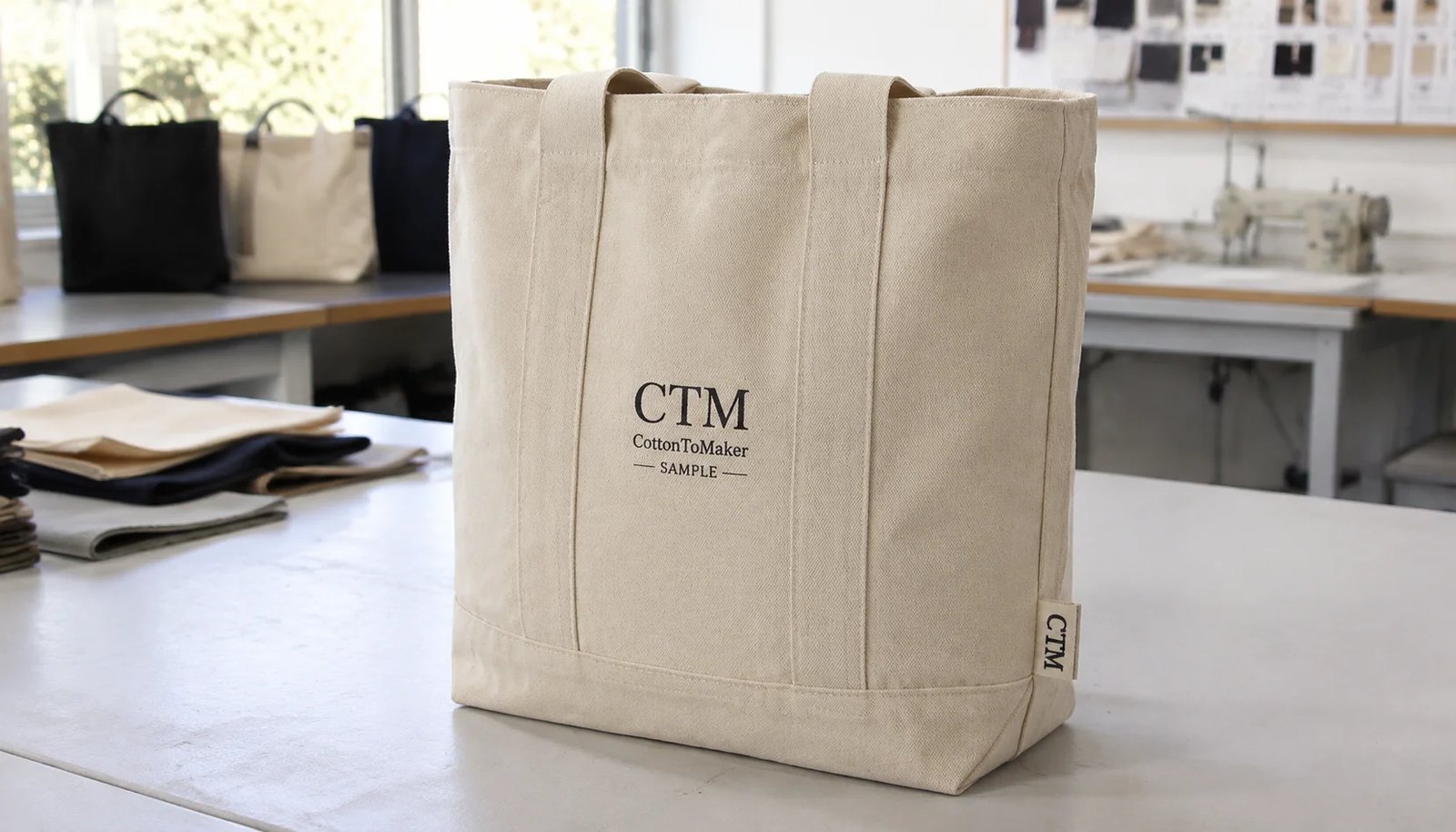
Why sample approval matters more for museum shops than for general promo totes
A museum shop tote is usually sold as merchandise, not handed out as a low-cost promotional item. That changes the approval standard immediately. The bag has to feel worth the shelf price, match the institution's visual identity, and perform well enough that a visitor sees it as a useful keepsake rather than disposable packaging. A sample that only looks acceptable in a phone photo is not enough for this category.
Museum retail also creates a more visible quality problem when something is off. If the print is crooked, the canvas feels limp, or the handles look uneven, the issue is seen by every shopper who touches the product wall or checkout display. In many museum stores, the tote sits next to books, stationery, and design-led gifts with stronger perceived value. A weak tote sample will look cheap in that context even if the unit cost seems attractive.
Sample approval is therefore the point where the buyer confirms whether the factory understands the product as retail merchandise. The sample should answer practical questions: Does the bag stand or fold neatly for display? Does it carry exhibition catalogues without stress at the handle joint? Does the artwork feel clean and intentional on textured canvas? Does the packed format support efficient receiving and replenishment?
For procurement teams, the goal is not to make the sample perfect in a subjective sense. The goal is to reduce uncertainty before the bulk order is released. An approved sample should lock down materials, construction, print method, tolerances, and packing so there is a shared production reference if quality drifts later.
This is why a canvas tote bag sample approval guide for museum shops needs more detail than a general tote article. Museum buyers often care about the exact handfeel of the canvas, the crispness of the print edge, and the way the bag supports a branded retail story. The sample must reflect that commercial reality.
- Treat the tote as a retail product with display value, not as event giveaway stock.
- Evaluate shelf appeal, carry performance, and artwork fidelity together during approval.
- Use the sample to remove ambiguity before unit price becomes the main decision driver.
- Assume the approved sample will become the quality reference for reorders as well as the first PO.
Start with the base specification before discussing price
The fastest way to create sample disputes is to begin with price before the base specification is clear. A supplier can quote a canvas tote that sounds comparable on paper while making different assumptions about fabric weight, weave, handle construction, print size, or packing. Museum buyers should define the core bag body first, then compare pricing on that common basis.
Fabric weight is usually the first anchor. For many museum shop programs, 12 oz canvas is the practical starting point because it balances structure, cost, and print stability. If the bag is positioned as a more premium gift item or expected to carry heavier books regularly, 14 oz canvas often gives better body and a more substantial handfeel. Lighter options such as 8 oz or 10 oz can still work for softer silhouettes or lower ticket-price programs, but the buyer should expect more drape and potentially more show-through of the canvas texture beneath the print.
Do not approve or compare a sample using fabric names alone. Ask for the weight in oz or GSM and confirm whether that figure refers to the finished fabric actually used in sampling. Two bags both described as canvas can behave very differently if one uses a looser weave, softer finishing, or lighter actual weight than stated. Those differences affect print opacity, seam bulk, fold memory, and how premium the item feels in store.
Dimensions must also be specific. Width and height are not enough. A buyer should confirm gusset depth, top opening width, bottom width if the body tapers, and handle drop. A museum shop tote often needs to fit catalogues, postcards, and flat gift items comfortably. If the body is too narrow or the gusset too shallow, the bag may look fine empty but perform poorly in real use.
Color specification deserves equal attention. Natural canvas is common and usually forgiving, but if the order uses dyed canvas or dyed handles, the buyer should define shade expectations and understand that slight lot variation may occur. Approval gets stronger when the sample spec sheet combines fabric weight, color, size, and handle details in one place rather than scattering them across emails.
- Set the common bag body specification before asking suppliers to compete on price.
- Use 12 oz as a practical benchmark; move to 14 oz when premium feel or heavier loads matter.
- Confirm finished size details beyond width and height, especially gusset depth and handle drop.
- Write the base spec into the quote request so supplier comparisons are actually comparable.
Review fabric, handfeel, and structure like a retail buyer
Fabric approval is not only about numeric weight. Museum shoppers pick up a tote and judge it within seconds by touch, body, and perceived durability. A sample should therefore be reviewed in hand, not just by measurement. The buyer should open the bag, pinch the fabric, flex the handles, and place realistic contents inside to see whether the tote maintains shape or collapses too easily.
Handfeel matters because it influences perceived value. A harsh canvas can feel overly industrial for a design-conscious museum shop, while a fabric that is too soft may read as underbuilt if the bag is meant to carry books. The sample helps the buyer decide whether the chosen finish supports the merchandising position. This is especially important when the same institution sells both lower-priced impulse items and more premium branded goods.
Structure should be checked with and without load. Empty, the bag should sit evenly, with balanced side seams and bottom corners. Loaded, it should distribute weight without pulling the top edge into a distorted wave or causing the bottom panel to collapse awkwardly. For a bag likely to carry a catalogue, test with similar weight during approval rather than guessing from appearance alone.
Weave and surface texture influence print outcome as well. A coarse canvas may suit some graphic styles but can make fine detail look broken or fuzzy if the print method is not matched carefully. The buyer should inspect the sample from normal shopper distance and close range. A logo that appears acceptable from two meters away may show poor edge definition in hand at checkout.
If the supplier proposes coatings, washes, or softening treatments, these should be documented because they can change body, color, and print response. Any finishing process that improves feel may also alter shrinkage or how the canvas accepts ink. Approval is stronger when the sample is tied to the intended finishing route rather than treated as a generic representation.
- Judge the sample by touch and load performance, not by fabric weight alone.
- Check whether the bag keeps an appropriate shape both empty and filled.
- Inspect canvas texture against the actual artwork style before approving print.
- Document any softening, washing, or finishing treatment that affects handfeel or structure.
Choose the print method by artwork type and durability risk
Print method decisions account for many tote sample failures because the wrong process can look good briefly and disappoint later. For museum shops, screen printing is usually the safest default when the artwork is a logo, title treatment, exhibition name, or simple graphic in one to three solid colors. Screen printing generally delivers better opacity, cleaner repeatability, and a more established durability profile on canvas than many shortcut methods.
The sample should be reviewed for print sharpness, consistency, and interaction with the weave. On natural or off-white canvas, a dark solid print should look sufficiently opaque and even, without excessive pinholing where ink falls into the fabric texture. Fine text and linework should remain legible. If the art includes thin strokes, reverse text, or large filled areas, those should be inspected closely because canvas texture can expose weaknesses quickly.
Heat transfer is sometimes offered when the buyer needs gradients, more colors, or smaller quantities that do not justify multiple screens. That can be commercially useful, but it changes the approval criteria. On canvas, transfer adhesion and flexibility must be checked at fold lines and high-contact areas. A transfer that appears smooth when laid flat may crack, wrinkle, or lift after repeated bending. Buyers should ask how the supplier validates adhesion and whether sample testing was done on the same fabric construction proposed for bulk.
Embroidery can work for small marks or monograms, but it is rarely the best route for large front-panel museum artwork. It adds thickness, can distort lighter canvas, and is less suited to text-heavy exhibit graphics. If embroidery is used, the sample should be checked for puckering around the stitched area and whether the backing affects the interior finish.
For any method, artwork placement must be measured, not visually estimated. Print distance from the top edge and side seams should be written into the approval record. Museum shops tend to care about alignment because the tote is both a functional item and a branded object. A few millimeters of drift may be acceptable, but that tolerance should be defined before production rather than debated after receiving.
- Use screen print as the default option for simple museum shop graphics on canvas.
- Approve heat transfer only after reviewing adhesion and flex behavior on the sample fabric.
- Measure print placement from seams and top edge instead of relying on visual centering.
- Check fine text, large fills, and edge sharpness under normal retail viewing distance and close inspection.
Lock down size, handles, and stitching with measurable checks
Construction details are where a tote either feels dependable or disappoints after brief use. During sample approval, the buyer should measure finished width, height, gusset depth, handle length, and handle drop, then compare those readings against the written spec. These are not minor workshop details. They affect comfort, carrying capacity, display presentation, and whether the product matches the store's intended price position.
Handle design deserves special scrutiny because it is both a comfort feature and a frequent failure point. Self-fabric handles are common for museum retail because they look integrated and support a cleaner branded presentation. The sample should show whether the handle width feels comfortable in hand and on shoulder, and whether the attachment area is reinforced appropriately. X-box stitching or secure bar-tack reinforcement at stress points is generally more credible than a minimal single-line join.
Handle symmetry should be checked carefully. When one handle is slightly longer or attached higher than the other, the bag hangs awkwardly and looks low quality even if it technically functions. Open the tote fully, hold it by both handles, and inspect whether the top line stays balanced. This simple handling test often reveals problems that are not obvious when the bag is laid flat on a table.
Stitch density and seam control should also be part of approval. Uneven stitching, skipped stitches, puckered seams, or inconsistent seam allowances can weaken the bag and reduce shelf appeal. The buyer does not need to micromanage machine settings, but the sample should establish a visible standard: straight seams, clean top edge finishing, secure corner construction, and no uncontrolled loose threads on visible surfaces.
If the bag includes a gusset, place weight inside and check whether the bottom forms properly. A tote intended to carry books should sit with reasonable stability and distribute load into the bottom corners without immediate distortion. This part of approval matters because a bag can pass a flat-table inspection but fail when used as customers actually use it.
- Measure width, height, gusset, and handle drop on the actual sample and record the results.
- Check handle comfort, reinforcement, and symmetry under real carrying conditions.
- Inspect seam straightness, top-edge finishing, and corner formation as visible retail quality points.
- Load the sample with realistic contents to verify bottom structure and handle performance.
Read the quote line by line so the sample and price match
A strong sample approval process is weakened if the quote remains vague. Museum shop buyers should expect the quotation to state the exact assumptions used to price the bag body, print, packing, and order quantity. If the supplier only gives a unit price without detailing the specification basis, the buyer cannot know whether the sample and commercial offer truly match.
The quote should identify fabric weight, dimensions, print method, color count, handle construction, and packing format. It should also separate one-time costs from repeating costs. Screen setup fees, sample charges, barcode application, custom hangtags, or carton marking requirements may not be included in the headline unit price. Without this separation, supplier comparisons become misleading and internal budget approval becomes harder.
MOQ needs to be read carefully. Some factories quote a low minimum by style but require separate minimums by fabric color, print artwork, or packing configuration. Museum shops that want multiple exhibition graphics on one common tote body should ask whether those variants can share the same base material order. Otherwise, what looks like a manageable MOQ may create fragmented production economics once each graphic is costed separately.
Lead time assumptions also belong in the quote review. A reasonable quoted schedule depends on final artwork readiness, material availability, and whether the sample has already been made from the intended production route. If a supplier's timing looks unusually fast, the buyer should ask whether stock fabric is being used for sampling and whether that shortcut could create mismatches later.
The most useful quote review question is simple: does every priced assumption match the approved sample? If the answer is unclear, the buyer is not yet comparing real offers. The procurement job is to turn the sample into a commercial control document, not to approve aesthetics in one conversation and cost in another.
- Require the quote to state the exact sample-based assumptions behind the unit price.
- Separate recurring unit cost from screens, setup, barcodes, and sample charges.
- Clarify MOQ by style, color, artwork, and packing before comparing suppliers.
- Match quoted lead time to actual sample readiness and production complexity.
Ask for supplier evidence that supports bulk approval
Procurement buyers should treat supporting evidence as part of the sample package, not as optional sales material. The most useful evidence is factual and production-linked: measured sample photos, a specification sheet, confirmation of the material route, and clear views of the bag's construction details. This is what helps later if the bulk order arrives with disagreements over quality.
Request front, back, side, inside, top edge, handle attachment, and bottom corner photos. Photos should be clear enough to judge stitching and construction, and measured images are even better. A tape measure visible against key dimensions reduces later debate about what was approved. For a museum shop tote, a simple front photo is not enough because many of the real failure points sit at the handle base, gusset corners, or interior seam finishing.
A specification sheet should identify the fabric weight, finished dimensions, handle measurements, print size, print placement, and packing plan. If the sample differs in any respect from intended bulk production, that exception should be disclosed explicitly. A sample made from substitute stock may still be useful for discussing shape or proportions, but it should not receive final production approval without the buyer understanding the gap.
Some buyers also request packing evidence, especially for warehouse-driven programs. A carton label example, fold method photo, or barcode mock-up can prevent receiving errors later. This matters when the museum shop allocates product across multiple locations or works with a 3PL that needs consistent carton identification.
Evidence is especially valuable for reorders. Museum shops often repeat a successful tote body with new exhibition artwork. If the first order is approved with a complete evidence set, future sourcing becomes faster and less subjective. The buyer can ask suppliers to quote against a documented baseline rather than recreating the product definition each season.
- Request measured photos showing key dimensions and construction points, not only beauty shots.
- Use a spec sheet that links the sample to fabric, print, and packing details.
- Disclose any difference between the sample route and intended production route before approval.
- Keep evidence files because repeat museum shop programs benefit from a stable technical baseline.
Set approval criteria that prevent common QC failures
The approval decision should end with measurable criteria, not a general statement that the sample looks good. Canvas tote production naturally includes some variation, but museum buyers should define what range is acceptable before the factory cuts bulk fabric. The most practical categories are dimensions, handle symmetry, print placement, print appearance, stitching quality, and visual cleanliness.
Dimensions should carry tolerances appropriate to the product. The exact numbers will depend on the bag size and construction, but the principle is consistent: the factory should know the acceptable variation on width, height, gusset, and handle length before production begins. Without agreed tolerances, the buyer may reject bags the supplier considers normal, or the supplier may ship a level of variation the buyer cannot merchandise confidently.
Print quality should also be described in concrete terms. Acceptable samples should show even coverage, reasonable opacity for the artwork, legible fine text where applicable, and no obvious registration shift on multi-color prints. If heat transfer is used, the approval should mention expectations around adhesion and resistance to visible edge lifting. These are the areas most likely to cause post-approval disputes.
Construction-related QC points should focus on retail-visible defects and functional risks. Uneven top edges, skewed side seams, severe puckering, exposed raw edges where not intended, weak handle reinforcement, and excessive loose threads should all be treated as avoidable issues. The sample inspection is the time to define what will be considered rejectable on visible surfaces.
A simple load test is worth adding to the approval checklist. Place the heaviest likely museum-shop contents in the sample, lift it several times, and observe the handle base, seam strain, and body distortion. This will not replace formal lab testing, but it is a practical buyer check that often reveals whether the chosen construction is aligned with intended use.
- Turn visual approval into written acceptance criteria with measurable tolerance categories.
- Define print expectations for coverage, alignment, and durability based on the chosen method.
- List rejectable construction defects before bulk production starts.
- Use a realistic load test during sample review to identify obvious structural weakness.
Approve packing and carton details with the same care as the bag
Packing details can look secondary during sampling, but they directly affect receiving cost, warehouse accuracy, and retail readiness. For museum shops, flat-packed totes are common because they store efficiently and are easy to allocate across locations. Even so, the exact fold, barcode placement, and carton labeling method should be approved deliberately rather than left to factory habit.
Start by deciding whether the bag will be packed loose, individually polybagged, sleeved, or supplied with extra retail components such as hangtags or inserts. Each option changes labor, material cost, carton cube, and unboxing time. A loose-packed bag may save cost, but if the retailer needs each unit protected or pre-labeled for stock intake, the savings can disappear in warehouse handling.
Fold orientation matters more than many buyers expect. If bags arrive folded inconsistently, staff may need to re-sort or refold them before merchandising. Deep crease lines can also affect how the print looks when the tote is first displayed. The sample stage is the right time to define how the bag should be folded and whether crease sensitivity is acceptable for the chosen print method.
Barcode and carton labeling need to fit the buyer's operational workflow. Ask where the unit barcode will be placed, what information appears on the master carton, and how the carton count sheet will be presented. Museum shops using external warehousing or multi-store replenishment benefit from standard carton marks that can be scanned and cross-checked quickly.
Carton quantity per master carton should also be reviewed with freight and handling in mind. Overpacked cartons may reduce freight cost per unit but create awkward receiving conditions or increase carton damage risk. Underpacked cartons can raise shipping cost and administrative complexity. Good sample approval connects product presentation with downstream operational efficiency.
- Define unit packing, fold method, barcode location, and carton marks before bulk release.
- Consider warehouse handling cost, not only factory packing cost, when choosing packing format.
- Review fold-induced creasing because it can affect first-display appearance of printed totes.
- Set practical carton counts that support both freight efficiency and receiving ergonomics.
Manage lead time with a clear approval workflow and record
Lead time problems on custom canvas totes are often caused by unclear approvals rather than slow sewing. Artwork revisions, print strike-off disputes, late packaging decisions, and undocumented sample changes can all delay production. Museum shops working against exhibition dates or seasonal traffic windows should treat sample approval as a formal schedule gate.
A realistic process usually starts with the quote and specification review, then the first sample, then revision comments if needed, followed by final sign-off on the production-intent sample. After approval, the factory moves into bulk production, inspection readiness, and shipment. The buyer should know which step they are in and what information is still missing before the next step can begin.
Written comments matter. If the first sample is close but not acceptable, the buyer should record exact revisions such as moving the print 10 mm lower, increasing handle drop, switching to heavier fabric, or correcting barcode position. Vague feedback like 'please improve quality' does not protect schedule or outcome because it leaves too much room for interpretation.
The approval record should be compact but complete. At minimum, keep the final artwork file, measured sample photos, key dimensions, material notes, print method, packing specification, dated approval status, and any agreed tolerances. This file becomes the reference for pre-shipment inspection and for future reorders.
For procurement teams, the value of this record is practical. It reduces repeat explanation, helps compare suppliers on the next program, and gives a factual basis if there is a dispute over whether the bulk run matches the approved canvas tote bag sample. In museum retail, where the same body may be reused across exhibitions, that discipline saves time and reduces avoidable quality variation.
- Treat sample approval as a production gate tied directly to schedule commitments.
- Record exact revision requests instead of broad qualitative comments.
- Maintain one approval file covering artwork, measurements, materials, packing, and sign-off status.
- Use the approved sample record as the control document for inspection and reorders.
Specification comparison for buyers
| Spec decision | Recommended option | When it fits | Buyer risk to check |
|---|---|---|---|
| Fabric weight | 12 oz or 14 oz canvas for most museum retail programs | Best for a bag that must feel premium, hold shape, and carry books, catalogues, and gift items | Lightweight substitutions can look acceptable in photos but feel thin in hand; confirm finished weight and handfeel from the actual sample fabric |
| Print method | Screen print for simple 1-3 color artwork; heat transfer only for short runs or complex gradients | Fits exhibit logos, wordmarks, commemorative graphics, and text-led museum shop artwork | Transfers can crack, silver, or lift on textured canvas if adhesion and cure are not verified on the sample |
| Sample route | Pre-production sample from the intended production fabric, thread, and print process | Use when color, structure, placement, and retail presentation are commercially important | Salesman samples made from stock fabric can hide shrinkage, seam bulk, and print absorption differences |
| MOQ route | One approved base body with MOQ linked to fabric color, print count, and packing format | Useful when the museum shop wants multiple graphics on one standard bag body | Low MOQ claims may exclude setup, screen, barcode, or special packing charges |
| Handle construction | Self-fabric handles with reinforced X-box stitching or bar-tack reinforcement at stress points | Best for book-heavy purchases and repeat shopper use | Weak handle attachment often fails first; confirm stitch density, reinforcement size, and symmetry |
| Closure choice | Open top for standard museum retail; zipper or snap only when travel use or loss prevention matters | Open top keeps cost and handling simple; closures suit premium or commuter-oriented programs | Closures add labor, alignment, and hardware risk, so the sample must confirm smooth function and neat finishing |
| Packing method | Flat packed with barcode label, count sheet, and master carton markings | Suitable for importers, multi-store allocation, and warehouse receiving efficiency | Loose or inconsistent folding increases creasing, miscounts, and relabeling work on arrival |
| Lead time model | 10-15 days sample lead time, 30-45 days bulk after approval, subject to artwork and trim readiness | Appropriate when artwork is final and fabric is available | Unapproved strike-offs, trim substitutions, or late packaging changes can add a full week or more |
| Supplier route | Factory-direct sample approval with written spec sheet, measured dimensions, and photo sign-off | Best when the buyer needs direct control over quality, consistency, and landed cost | Too many trading layers can blur responsibility when bulk production drifts from the approved sample |
Buyer checklist before sampling
- Final vector artwork with Pantone references, print size, and exact placement measured from top edge and side seams
- Approved fabric weight, weave, color, and any wash, coating, or softening requirement documented in writing
- Finished bag width, height, gusset depth, and tolerance accepted before production starts
- Handle length, handle width, attachment method, and reinforcement details tied to the approved sample
- Stitch quality standard covering seam straightness, stitch density, thread color, and loose-thread acceptance
- Print method approval with opacity, edge sharpness, adhesion expectations, and rub or wash test expectations
- Packing specification including fold method, barcode location, carton pack count, carton dimensions, and shipping marks
- Sample approval record with dated photos of front, back, inside, top edge, handle joints, side seams, bottom corners, and carton label
- Written confirmation that the sample uses the same intended production fabric, thread, and print process as bulk
- Internal sign-off from buying, visual merchandising, and operations if the tote affects display, storage, or receiving workflows
Factory quote questions to send
- What fabric weight are you quoting in finished oz or GSM, and does that reflect the exact fabric used for the sample?
- Is the sample made from the same body fabric, handle fabric, thread, and print method planned for bulk production?
- What is your MOQ by color, artwork, and packing configuration, and can multiple graphics share one base bag spec?
- Which charges are one-time items such as screens, setup, barcode labels, or sampling fees, and which are included in the unit price?
- What tolerance do you allow for bag dimensions, handle length, print placement, seam alignment, and shade variation?
- How will you test print adhesion, colorfastness, and abrasion resistance on canvas before bulk release?
- What carton pack, folding method, barcode format, and master carton markings are included in the quote?
- How many days are required for sample making, revision, bulk production, and pre-shipment inspection readiness?
- If the specified fabric is unavailable, what approved substitute process will you follow before changing material or print method?
- Can you provide measured sample photos and a specification sheet that will be used as the production control reference?
Quality-control points to confirm
- Finished canvas weight and handfeel match the approved sample and written specification, not only the supplier's raw fabric claim
- Bag width, height, gusset, and handle drop stay within the agreed tolerance range on inspected units
- Print position remains within the approved placement window and appears centered relative to seams and top edge
- Print surface shows solid coverage, clean edges, and no visible cracking, lifting, pinholes, ghosting, or registration shift
- Stitch density is even, seam lines are straight, and stress points at handles are reinforced as approved
- Handles are symmetrical in length, aligned evenly, and lie flat without twisting during normal opening and carrying
- Top edge is level, side seams are balanced, and bottom corners are properly formed without severe puckering
- Visible retail surfaces are free from oil marks, fabric snags, stains, broken stitches, excessive loose threads, and color contamination
- Load-bearing structure supports the intended retail contents without visible seam strain or handle distortion
- Carton labels, barcode labels, fold orientation, and pack counts match the approved packing specification