Why salon chains need a reorder plan, not just another tote quote
Canvas tote bags used by salon chains are rarely a one-off promotional purchase. The same bag may support retail hair-care bundles, gift-with-purchase campaigns, loyalty member offers, staff education kits, influencer mailers, new store openings, franchisee launch packs, and seasonal product pushes. When procurement treats each reorder as a fresh quote request with only a photo, suppliers often quote different fabric weights, handle lengths, carton counts, or print methods. The result can be a bag that technically matches the picture but does not match the previous customer experience.
A canvas tote bag reorder planning guide for salon chains should focus on repeatability. The buyer needs to define which details are fixed, which details can vary by campaign, and which details require a new sample. Size, gusset, canvas weight, handle construction, print placement, and carton packing are not minor style notes; they determine whether stores can use the bag efficiently and whether customers perceive the bundle as premium. A thin or poorly stitched tote beside high-value salon products can weaken the overall retail presentation.
Reorder planning is also a communication tool between procurement, marketing, retail operations, and suppliers. Marketing may care most about logo color and campaign message. Retail operations may care about store allocation and receiving dates. Procurement may care about MOQ, landed cost, and supplier accountability. The factory needs a clear technical specification, not a collection of informal comments. A strong reorder plan aligns all of these needs before the PO is placed.
- Use one master specification for the chain, then control campaign artwork, colorway, and store allocation as planned variables.
- Treat fabric weight, finished size, gusset, handle drop, print method, and packing as commercial and technical decisions, not afterthoughts.
- Keep the last approved production sample and compare every new quote against that sample before discussing price.
- Separate reorder planning from price negotiation; unclear specifications usually produce low quotes that are not truly comparable.
- Record why any change was made, such as heavier canvas for premium retail, smaller cartons for store handling, or new artwork for brand refresh.
Map salon tote use cases before forecasting the reorder quantity
A reliable quantity forecast starts with the way the tote will be used. Salon chains often have several internal demand streams that look similar at the purchasing level but behave differently in operations. A retail resale tote may need barcode control, stock replenishment, and consistent year-round availability. A gift-with-purchase bag may require a sharp launch date, controlled store allocation, and a planned end date. A new salon opening kit may need pre-packed cartons by branch, while staff training bags may be delivered to one event venue.
Repeating the previous PO quantity is only safe when the store count, campaign structure, product bundle, sales target, and leftover stock are similar. If the chain has opened more locations, added franchise partners, changed the number of products in each kit, or shifted from single-store promotions to national campaigns, last year’s quantity may be misleading. Procurement should request store-level demand assumptions from retail operations before confirming supplier MOQ and price breaks.
Buyers should also consider the life of the artwork. A generic logo tote can often carry safety stock because it remains usable across campaigns. A tote printed with a holiday slogan, year-specific anniversary message, discontinued product line, or limited collaboration artwork has a shorter usable window. Over-ordering dated graphics can lock money into stock that stores hesitate to use later.
- Build demand as store count x planned units per store x campaign duration, then add a defined safety stock percentage (e.g., 10-15%).
- Separate quantities for retail resale, gift-with-purchase, education events, PR seeding, distributor kits, and new salon openings.
- Check current warehouse inventory and store leftovers before placing a reorder; verify whether old stock is still brand-compliant.
- Ask marketing whether the logo, slogan, product line, or campaign color will change before the next reorder cycle.
- Keep generic evergreen totes separate from seasonal or region-specific totes in the purchasing plan.
Translate product bundles into bag size, gusset, and handle requirements
The best tote size is not determined by a catalog photo; it is determined by the items that stores will place inside. Salon bundles may include tall shampoo and conditioner bottles (e.g., 300 ml, 20 cm height), boxed styling tools, hair towels, brushes, samples, retail cards, and tissue paper. A flat canvas tote may be fine for brochures or a light giveaway, but it can look unstable when filled with round bottles. A gusseted canvas tote generally gives better product presentation because the base opens and allows the bag to stand more naturally.
A common planning range for salon retail kits is around 38 x 42 cm with an 8-12 cm gusset, but the final specification should be confirmed against the tallest bottle and the widest retail box. Buyers should test whether the top opening allows staff to pack the bundle quickly at the counter. If the bag is too narrow, staff may force products in at an angle and stress the seams. If it is too large, the gift set may look underfilled and less valuable.
Handle drop also affects customer experience. Short handles (e.g., 20 cm drop) may be acceptable for hand carry, but customers may expect to carry the tote over the shoulder when leaving the salon with multiple retail products. A handle drop of 25-30 cm is common for shoulder carry. The handle width (2.5-3 cm), fabric layers, stitch pattern, and attachment position all influence comfort and strength. Because liquids are heavy, salon totes should not be specified like lightweight conference bags.
- Measure the tallest bottle, widest retail box, and heaviest planned product set before confirming tote dimensions.
- Use an 8-12 cm gusset for bottle bundles when presentation and stability matter.
- Specify handle drop in centimeters (e.g., 25-30 cm), not only total handle length, because the finished drop determines carry comfort.
- Require reinforced handle attachment, such as cross-stitching or bartacks, for heavier retail kits (e.g., 3-5 kg load).
- Ask for loaded sample photos or a physical bottle-fit test when the bag will carry multiple liquid products.
Lock the canvas specification before comparing supplier prices
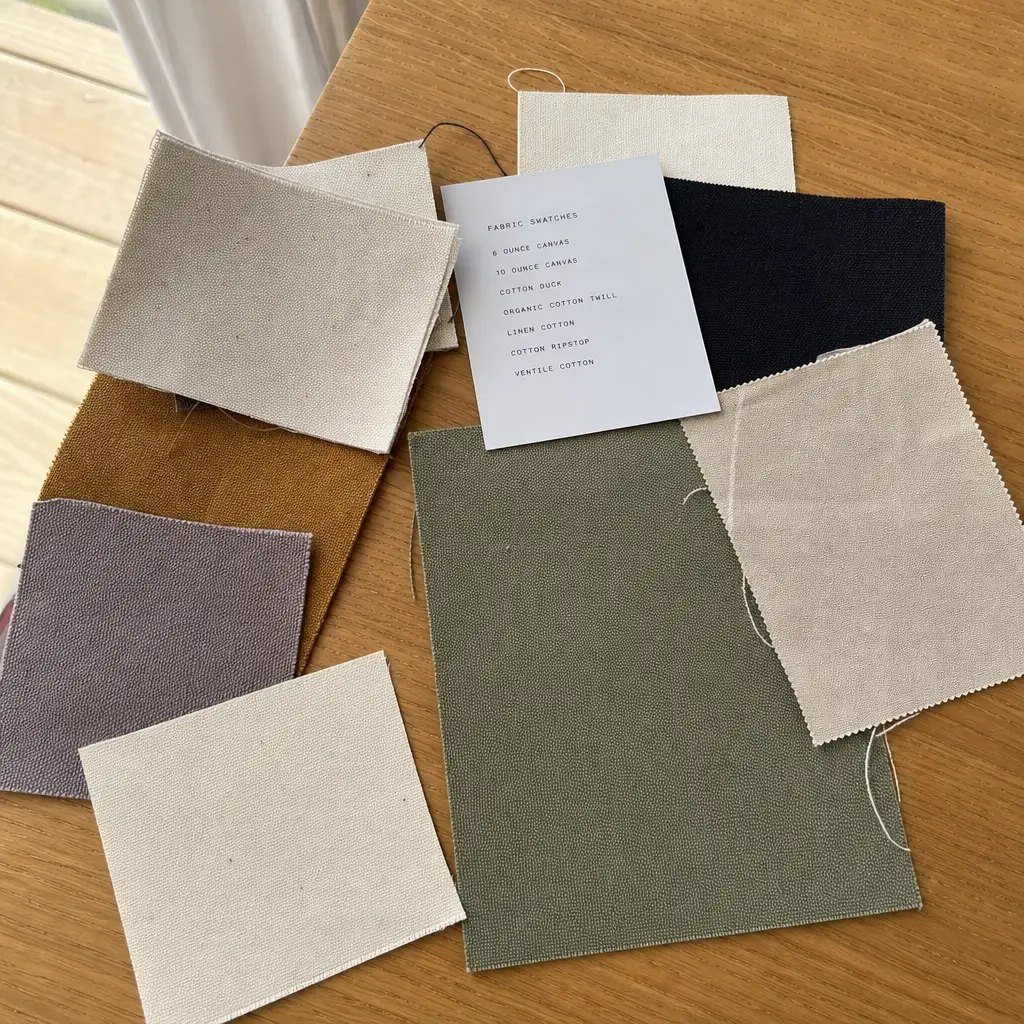
Canvas tote quotations can appear similar while the actual bags are very different. One factory may quote 8 oz cotton canvas (270 GSM), another may quote 12 oz canvas (410 GSM), and another may use a cotton-blend fabric or a looser weave that weighs less after finishing. A buyer comparing only unit price may choose a bag that feels thinner, wrinkles more, or does not support the intended product weight. For B2B salon procurement, the RFQ should define the canvas fabric before suppliers quote.
For many salon chain programs, 10 oz to 12 oz cotton canvas, or roughly 340-410 GSM depending on weave, is a practical starting point. This range usually has enough body for reusable retail and gift bags without becoming overly stiff or costly. Lighter 6 oz to 8 oz cotton (200-270 GSM) may suit low-cost events where the bag carries leaflets or samples, but it can look less premium beside salon retail products. Heavier 14 oz canvas (475 GSM) can work for premium resale programs, yet it increases cost, carton weight, sewing complexity, and freight impact.
Buyers should remember that ounce weight and GSM are useful but not the whole specification. Weave density, yarn quality, finishing, washing, dyeing, and bleaching all affect hand feel and shrinkage. A natural unbleached canvas may show cotton flecks and shade variation; that can be acceptable if approved, but it should not surprise stores. Dyed black or colored canvas requires additional attention to lint visibility, dye fastness, and print opacity.
- State fabric composition (e.g., 100% cotton), canvas weight in oz and GSM, fabric color, and finishing method on the RFQ and PO.
- Request the expected finished bag weight per piece (e.g., 150 g) so suppliers cannot hide a lighter construction behind similar dimensions.
- For natural canvas, approve the acceptable level of cotton flecks, shade variation (ΔE ≤ 1.5), and slubs.
- For black or dyed canvas, check dye rub (e.g., dry rub test with white cloth), lint visibility, and whether the logo print remains opaque.
- Avoid comparing a flat lightweight tote against a gusseted heavy canvas tote as if they were the same product.
Choose decoration methods for brand consistency across reorders
Salon chain artwork often needs to look clean, consistent, and recognizable across many branches. The most common decoration choice for repeat canvas tote bags is screen printing because it suits solid logos, simple campaign lines, and one to three print colors. Screen printing can be cost-efficient in bulk and can be controlled with Pantone references, approved ink drawdowns, and a signed print placement standard. For repeat orders, the screen file, ink formula, and curing settings should be archived.
Heat transfer is useful when artwork includes gradients, small details, or full-color designs that are difficult to screen print. However, buyers should test hand feel, edge adhesion, cracking, and heat press marks on actual canvas. A transfer that looks smooth on a sample may feel too plastic for a premium salon retail bag. Embroidery can elevate a boutique or limited-edition tote, but it adds cost and can cause puckering if the canvas, backing, or stitch density is not suitable. Digital printing offers flexibility for shorter runs and complex artwork, but buyers need to check color repeatability and pretreatment effects.
Decoration decisions should be made with reorder consistency in mind, not only first-order appearance. If a brand logo must match across seasons, the buyer should keep Pantone references, artwork files, print size, print location, and approved production sample together. A small change in logo scale or vertical placement can be visible when bags from two lots appear in the same store.
- Use screen print for solid salon logos, repeat brand marks, and simple campaign messages; specify Pantone color and print placement tolerance (±3 mm).
- Use heat transfer only after checking adhesion, flexing, edge lift, and hand feel on actual canvas; test at 20 wash cycles.
- Use embroidery for premium or limited runs where cost, stitch density, and potential puckering are acceptable; test on actual canvas with backing.
- Archive print files, color standards, ink notes, and approved photos with the reorder specification.
- For digital print, request color proof on actual canvas and check repeatability across production runs.
Understand MOQ logic before splitting colors, artwork, and packing versions
MOQ is often misunderstood because buyers think in total pieces while factories think in production versions. A salon chain may plan 10,000 total bags, but the order becomes more complex if it includes natural canvas, black canvas, three regional logos, two handle colors, different hangtags, and direct-to-store packing. Each split may require separate material preparation, printing setup, cutting control, label handling, and carton marking. The unit price may rise even when the total quantity is high.
The safest procurement approach is to identify fixed and variable elements. If the bag body, handle, gusset, and canvas color remain common, the factory can run production more efficiently while changing only print artwork or carton labels. If marketing wants several seasonal colors, procurement should ask early whether those colors require dyed fabric MOQ (e.g., 500 kg per color) or whether colored handles can create the desired look with lower production complexity. If franchisees need local artwork, confirm whether each artwork version meets print setup MOQ (e.g., 500 pieces per screen).
Buyers should request MOQ rules in writing before presenting options internally. Without that information, marketing may approve a version matrix that looks attractive but creates high setup costs or production delays. A clear MOQ map helps the chain decide whether to consolidate artwork, reduce colorways, or place separate staggered orders.
- Ask for MOQ per fabric color, bag size, handle color, artwork, print color count, label, hangtag, and packing version.
- Keep the core bag construction common across campaigns whenever possible to protect pricing and lead time.
- Consolidate regional artwork if small version quantities cannot meet efficient printing setup requirements (e.g., 500 pieces per screen).
- Separate store allocation labels from product design decisions; packing splits can create MOQ and labor impact.
- Confirm whether reorder pricing assumes the same artwork screens, labels, and cartons as the previous order.
Use physical samples to prevent common reorder surprises
A reorder can still fail if sample control is weak. Fabric stocks change, dye lots vary, artwork files are revised, and factories may substitute sewing details unless the approved sample is clear. A showroom tote or photo proof is not enough for a salon chain reorder. The most useful approval sample is a pre-production sample made with actual production canvas, actual handle construction, final print size, final print method, and proposed packing.
Procurement should review the sample from both technical and store-use perspectives. Measure the bag, load it with real salon products (e.g., 3-5 kg), carry it by the handles, fold the printed panel, check the top opening, and inspect the seams. If the bag is intended for retail sale, review barcode placement, hangtag attachment, and shelf presentation. If it is intended for gift-with-purchase, ask whether store teams can fill the bag quickly and whether it looks good when packed with tissue and product.
The buyer should also control sample approval language. Approving a sample for color only is different from approving it for all production details. If the sample has a correct print but incorrect handle length, the approval record should state what is approved and what must be corrected before mass production. A signed golden sample with dated approval notes prevents confusion during inspection and future reorder discussions.
- Require a pre-production sample when changing supplier, fabric weight, print method, artwork size, handle length, label, or packing.
- Load the sample with the heaviest planned retail bundle (e.g., 3-5 kg) and check handle comfort, seam stress, and bag shape.
- Measure actual finished size, gusset, handle drop, and print placement against the specification sheet; tolerance ±5 mm.
- Check print durability by bending, rubbing, and lightly flexing the printed area after curing; test at 20 wash cycles if applicable.
- Seal and store an approved golden sample; send matching approval notes to the factory before bulk production.
Build a reorder calendar around approval gates, not only sewing time
Lead time problems usually begin before sewing starts. Artwork freeze, internal approval, supplier quote alignment, sample making, sample shipping, sample revision, deposit payment, fabric booking, carton label approval, and inspection scheduling all take time. If procurement asks only for production lead time, the schedule may appear safe while the actual campaign is already at risk. Salon chains should plan backward from the required in-store date.
A practical reorder calendar separates decision gates from factory operations. Artwork must be final before screens or transfers are made. Fabric shade should be approved before cutting. Packing instructions must be confirmed before mass packing. Final inspection should happen when goods are packed but before shipment, with enough time for rework if defects or packing errors are found. Freight and destination handling should include export processing, customs clearance, warehouse receiving, and distribution to stores.
Seasonal campaigns need extra caution because many suppliers and freight lanes become congested before major holidays. New store openings also have fixed dates and limited back-room capacity. If tote bags are part of a larger retail kit, the tote delivery date must align with product availability, inserts, gift cards, and any other components. A late tote can delay the whole bundle even when the salon products are ready.
- Set an artwork freeze date for final logo file, Pantone color, print size, placement, and version list.
- Set a physical sample approval date before fabric cutting and mass printing begin; allow 7-10 days for sample making.
- Reserve time for fabric preparation (5-7 days), cutting (3-5 days), printing (5-7 days), sewing (10-14 days), trimming (2-3 days), ironing if required, packing (3-5 days), and carton marking.
- Book final inspection with enough buffer for sorting, rework, or replacement of defective pieces; allow 2-3 days.
- Include freight (2-4 weeks sea, 1 week air), customs clearance (3-5 days), warehouse receiving (2-3 days), internal allocation (3-5 days), and store delivery (3-5 days) in the launch schedule; total 8-12 weeks.
Control packing and carton labeling so distribution does not become the hidden cost
Packing is often treated as a minor quotation line, but for salon chains it can determine how smoothly the campaign launches. A factory may quote bulk export cartons of 100 pieces, while the buyer’s warehouse needs 25-piece inner bundles by store group. If the difference is discovered after arrival, the distributor must open cartons, count pieces, relabel cartons, and repack shipments. That labor can eliminate the savings from a lower unit price.
Packing should be designed around the distribution route. If all bags go to one central warehouse for later allocation, bulk cartons may be efficient. If bags are shipped to regional distributors, franchise operators, or directly to stores, the factory may need inner bundles, store code labels, carton sequence numbers, and version control. For multiple artwork versions, carton marking must be especially clear to avoid mixed shipments.
Carton weight and size also matter. Heavy canvas bags can make cartons difficult to lift, and oversized cartons can crush or waste pallet space. Warehouses may have maximum carton weight guidelines (e.g., 20 kg), and parcel carriers may apply dimensional weight charges. Buyers should ask for carton dimensions and gross weight before approving the packing method, not after production is finished.
- Specify pieces per inner bundle (e.g., 25), pieces per export carton (e.g., 100), and whether bundles use polybags, paper bands, or no inner packing.
- Require carton labels with PO number, SKU, artwork version, fabric color, quantity, carton number, gross weight, net weight, and destination code if needed.
- Check carton gross weight against warehouse, parcel carrier, and store handling limits (e.g., max 20 kg per carton).
- For store-ready shipments, provide the factory with the final allocation file before packing starts.
- Decide whether individual polybags are required, discouraged, or prohibited based on presentation, cleanliness, and sustainability policy.
Compare landed cost and supplier risk, not only the ex-factory unit price
A lower unit price can become more expensive after printing charges, packing changes, inland transport, inspection, freight, duties, storage, and repacking labor are included. Canvas weight affects both perceived quality and logistics cost. A heavier tote may be the correct choice for premium retail, but it can increase carton gross weight, reduce pieces per carton, and raise freight cost. A larger gusset can improve product presentation but may also increase carton cube.
Supplier quotes should be compared on the same basis. If one factory quotes FOB with export cartons and another quotes EXW without inland transport or export handling, the buyer does not have a true comparison. The quote should separate product cost, decoration cost, labels, packing, sample, mold or screen setup if any, inland transport, export charges, and freight basis. Procurement should also check quote validity (e.g., 30 days) because cotton prices, exchange rates, and freight costs can change.
Risk cost belongs in the comparison. A supplier with vague tolerances, no clear sample process, or unclear subcontracting may create inspection failure, launch delay, or inconsistent reorder quality. If the tote is tied to a national salon campaign, the cost of late or defective bags can exceed the small difference in unit price. A reliable quote is specific, traceable, and aligned with the approved sample.
- Compare quotes using the same Incoterm (e.g., FOB, CIF), packing method, fabric weight, print method, carton quantity, and inspection expectation.
- Calculate estimated carton cube and gross weight before approving heavier canvas or larger gussets; factor into freight cost.
- Include repacking labor if the factory packing does not match the chain’s store allocation process; estimate cost per carton.
- Ask whether printing, dyeing, washing, or packing is subcontracted and where inspection will occur (e.g., factory or third-party lab).
- Keep a contingency for sample revisions, additional inspection, or corrective production when changing suppliers; budget 5-10% of order value.
Specification comparison for buyers
| Planning decision | Recommended buyer action | Why it matters for salon chains | Risk to control before PO |
|---|---|---|---|
| Reorder demand model | Forecast by store count, campaign type, units per store, launch duration, and safety stock (e.g., 10-15% of total) | Salon chains often use the same tote for retail sets, loyalty gifts, events, franchise launches, and new branch openings; each use consumes inventory differently | Repeating last year’s PO can create shortages for new locations or excess obsolete bags with old artwork |
| Core fabric specification | Lock 10 oz to 12 oz cotton canvas (340-410 GSM) for most reusable salon retail bags; specify oz and GSM in RFQ | This range balances structure, perceived value, and cost for shampoo, conditioner, tools, towels, and styling products | Supplier may quote lighter canvas using similar photos; require fabric weight in oz and GSM plus finished bag weight per piece |
| Bag size and gusset | Use a body around 38 x 42 cm with an 8-12 cm gusset, adjusted to the tallest bottle or retail box; test fit with actual products | Gusseted totes help bottles sit upright and improve presentation when stores fill bags at the counter | Flat tote pricing may look attractive but can create poor fit, bulging seams, and unstable product bundles |
| Handle construction | Specify self-fabric handles 2.5-3 cm wide, handle drop of 25-30 cm, and cross-stitch or bartack reinforcement at attachment points | Liquid salon products make the bag heavier than ordinary paper inserts or flyers; handles must support 3-5 kg loads | Thin handles, weak attachment stitching, or short handle drop can cause returns, complaints, and poor user experience |
| Decoration method | Use screen print for solid logos and repeat campaigns; specify Pantone color, print size, and placement tolerance (±3 mm) | Salon chains need consistent brand color and logo placement across stores and reorder cycles | Color drift, under-cured ink, transfer peeling, embroidery puckering, or file changes can make a reorder look different from the approved lot |
| MOQ structure | Ask for MOQ by fabric color, bag size, artwork, print color count, label, and packing version; consolidate where possible | A high total order can still be inefficient when split across many regional logos, seasonal messages, or carton allocations | The buyer may assume 8,000 pieces meets MOQ while each version is too small for stable production pricing |
| Sample approval route | Approve a pre-production sample using actual canvas, final handle construction, final artwork size, and intended packing; measure dimensions and test load | A true sample catches fit, hand feel, print durability, shade, handle comfort, and carton presentation before bulk production | Photo approval alone cannot verify canvas thickness, stitching strength, odor, actual color, or bottle fit |
| Packing and distribution | Define pieces per inner bundle (e.g., 25), pieces per carton (e.g., 100), carton marks, store codes, barcodes, and carton gross weight before production | Totes often ship to central warehouses, regional distributors, franchisees, or direct-to-store allocations | Wrong packing creates hidden repacking labor, mixed artwork, late store launches, and avoidable warehouse handling costs |
| Lead time planning | Build a calendar from in-store date backward through artwork freeze, sample approval, fabric booking, production, inspection, freight, and store distribution; allow 8-12 weeks total | Campaign bags must arrive before product launch, holiday retail sets, education events, or new salon openings | Relying on sewing time only ignores delays from artwork revision, deposit, carton labels, inspection rework, export booking, and receiving queues |
Buyer checklist before sampling
- Create a master tote specification sheet from the last approved order: size (e.g., 38 x 42 cm), gusset (8-12 cm), fabric weight (10-12 oz, 340-410 GSM), finished bag weight, handle width (2.5-3 cm), handle drop (25-30 cm), stitch pattern, seam finishing, print method, ink color (Pantone), logo size, print placement, label, packing, carton size, and carton weight.
- Forecast reorder quantity by store count, expected units per store, campaign duration, retail bundle plan, online allocation, new store openings, franchisee requests, event requirements, and warehouse safety stock (10-15% of total) instead of copying the previous purchase quantity.
- Separate demand for resale tote bags, gift-with-purchase bags, staff training kits, stylist education events, influencer seeding, distributor sample packs, and new salon opening kits because timing, packing, and labeling can differ.
- Confirm whether the reorder uses the same artwork, updated logo, new slogan, revised product line graphic, seasonal color, regional artwork, or store-specific allocation labels.
- Ask marketing and retail operations whether existing stock has outdated artwork, old brand standards, discontinued product references, or seasonal messaging before rolling it into the next campaign.
- Request supplier quotes that clearly state fabric composition, canvas weight in oz and GSM, finished bag dimensions, gusset, handle details, printing charges, number of print colors, sample cost, MOQ logic, packing method, carton information, lead time, Incoterm, and quote validity (e.g., 30 days).
- Require an actual pre-production sample when changing fabric weight, supplier, print method, logo size, handle length, dye color, label, packing unit, carton size, or store allocation method.
- Define acceptable tolerance for finished size (±5 mm), handle drop (±5 mm), gusset depth (±3 mm), print position (±3 mm), print registration (±1 mm), fabric shade (ΔE ≤ 1.5), stitching (no skipped stitches), loose threads (max 2 per bag), odor (none), dirt marks (none), and carton labeling before mass production begins.
- Build a reorder calendar with artwork freeze date, sample dispatch date, sample approval date, deposit date, material booking date, production start, in-line check, final inspection, vessel or air booking, warehouse receiving, and in-store launch date; allow 8-12 weeks total.
- Check whether carton dimensions and gross weight (e.g., max 20 kg per carton) fit the receiving warehouse, parcel carrier rules, store back-room handling, palletization plan, and any distributor requirements.
Factory quote questions to send
- What is the exact canvas composition (e.g., 100% cotton), fabric weight in oz and GSM (e.g., 10 oz, 340 GSM), and expected finished bag weight per piece (e.g., 150 g)?
- Is the fabric greige, bleached, dyed, pigment dyed, washed, or unwashed, and how will you control shade repeatability (ΔE ≤ 1.5) for future reorders?
- What MOQ applies per bag size, fabric color, handle color, print artwork, print color count, woven label, hangtag, barcode, and packing version?
- Which print method are you quoting (e.g., screen print, heat transfer, embroidery), what ink or transfer type will be used, and what curing, adhesion, rub, or wash durability standard can you support (e.g., 20 washes at 40°C)?
- Can you produce a pre-production sample using actual production canvas, actual handle construction, final logo size, final print position, and proposed packing?
- What tolerances will you follow for finished width (±5 mm), height (±5 mm), gusset (±3 mm), handle drop (±5 mm), handle placement (±3 mm), print size (±2 mm), and print placement (±3 mm)?
- How many pieces will be packed per inner bundle (e.g., 25) and per export carton (e.g., 100), what are the carton dimensions and gross weight (e.g., 60x40x30 cm, 18 kg), and can cartons be marked by store code or distribution batch?
- Can you provide a carton layout or packing photo before mass packing so we can verify bundle quantity, label location, and carton mark format?
- What is the timing for artwork review (2-3 days), sample making (7-10 days), sample revision (3-5 days), fabric preparation (5-7 days), cutting (3-5 days), printing (5-7 days), sewing (10-14 days), trimming (2-3 days), packing (3-5 days), final inspection (2-3 days), and export after sample approval?
- Will any subcontracted printing, dyeing, washing, embroidery, labeling, or packing be used, and where will final inspection take place (e.g., factory or third-party lab)?
Quality-control points to confirm
- Fabric weight: verify GSM or ounce weight from production fabric before cutting, not only from the quotation or supplier showroom sample; tolerance ±5% of specified weight.
- Fabric composition and hand feel: compare the production fabric with the approved sample for thickness, weave density, stiffness, slubs, lint, and overall feel; reject if ΔE > 1.5 from approved shade.
- Finished dimensions: measure width, height, gusset, top opening, handle length, handle drop, and handle placement on a random sample set (e.g., 20 pieces per 1,000) before packing; tolerance ±5 mm for main dimensions.
- Handle strength: inspect cross-stitching or bartack reinforcement and perform a practical loaded hang test using realistic salon product weight (e.g., 3-5 kg for 30 seconds); reject if stitching pulls or bag deforms.
- Seam quality: check top hem, side seams, bottom corners, gusset seams, skipped stitches, broken threads, raw edges, seam slippage, and loose threads (max 2 per bag); reject if any seam fails under moderate tension.
- Print position: measure logo placement from top edge, side seam, and center line; confirm the image is level, centered, and within agreed tolerance (±3 mm).
- Print quality: inspect color coverage, pinholes, registration (±1 mm), edge sharpness, opacity on dark fabric, ink curing, heat press marks, cracking, peeling, and rubbing resistance (e.g., 10 rub cycles with dry cloth); reject if any defect is visible.
- Color consistency: compare canvas shade, handle shade, label color, and print color against the signed sample under consistent lighting (e.g., D65); reject if ΔE > 1.5.
- Odor and cleanliness: reject bags with strong chemical odor, mildew smell, oil spots, dirt marks, excessive lint, loose threads inside the bag, or damp packing; perform a sniff test on 5% of cartons.
- Label and artwork accuracy: confirm correct brand logo, campaign slogan, regional version, barcode, care label, woven label, hangtag, and any required legal or retail information; scan barcodes on 10% of cartons to verify readability.