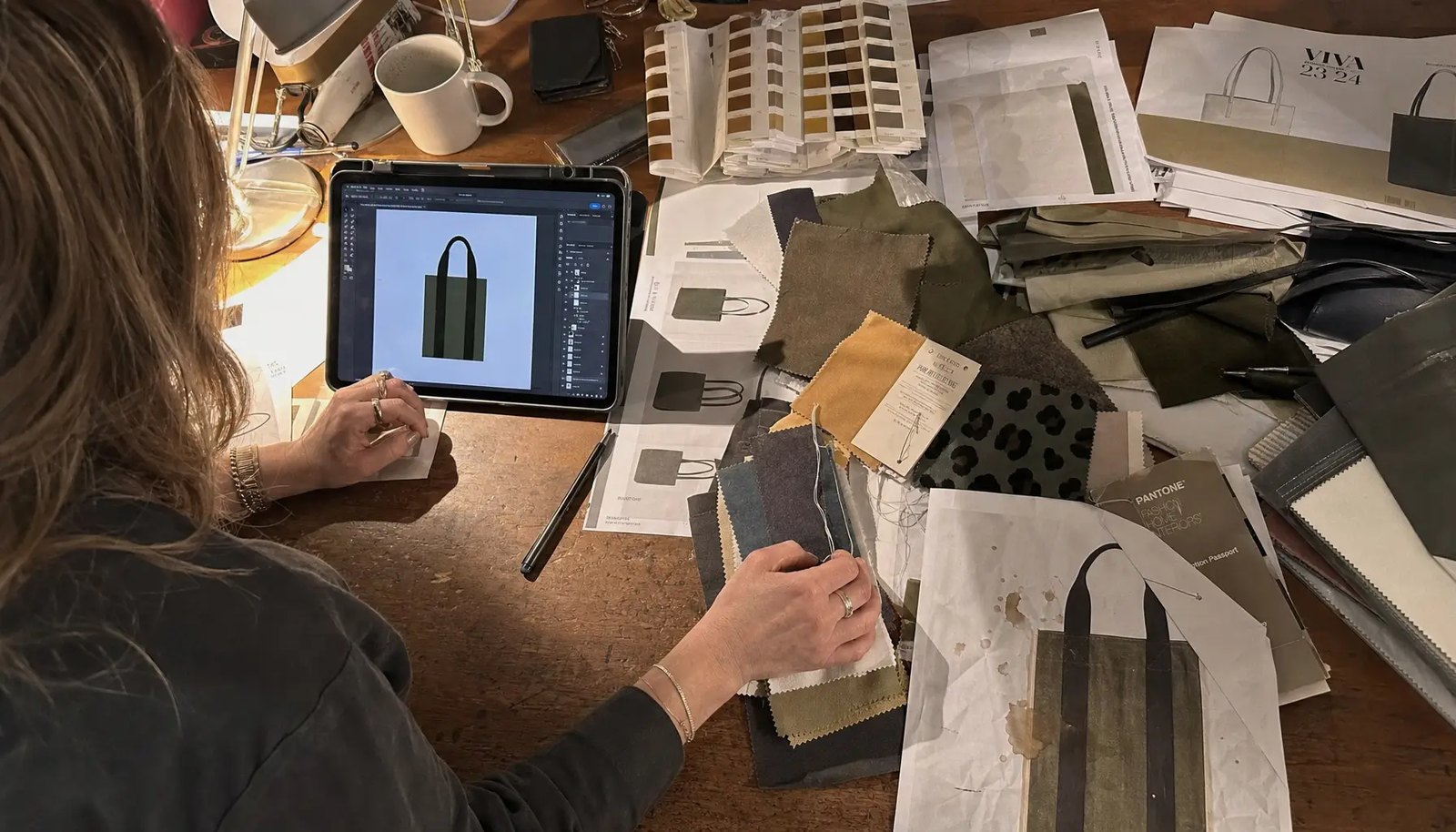
Why reorders fail in gift box programs
A canvas tote bag reorder for gift boxes should be a controlled repeat, but many teams treat it as a simple copy of the first purchase order. That is where avoidable problems start. The artwork may be unchanged, yet the fabric lot, handle drop, fold method, carton count, or print position can move enough to disrupt the gift box packout. A small tote change can create a larger downstream issue when the bag must fit an insert tray, sit inside a branded box, or move through a warehouse assembly line.
The highest-risk assumption is that the first order defines the second order. It does not. The new order is defined only when the retained master sample, current fabric lot, current quote, and current packing plan all match. For procurement buyers, the reorder file should include the approved sample, measurement sheet, artwork file, print placement diagram, packing instruction, carton specification, and target delivery date. Without those controls, suppliers may quote the same product name while changing the details that determine cost and usability.
Gift box buyers should also check whether the tote is part of the sellable presentation or only a packing component. A retail-facing tote needs better print placement, cleaner finishing, and tighter folding than a tote used as a secondary carrier. That distinction should be written into the RFQ because it affects inspection limits and unit price.
- Use the retained approved sample as the baseline for shade, hand feel, size, handle drop, and print position.
- Treat gift box fit as part of the tote specification, not as a warehouse problem to solve later.
- Freeze the fold method and folded size before quoting if the tote goes inside a rigid box or insert tray.
- Ask suppliers to identify every change from the prior order instead of quoting only by product name.
Freeze the technical specification first
The most useful reorder document is a short specification that removes interpretation. It should state finished width and height, gusset depth, handle width, handle drop, fabric weight, fabric composition, decoration method, print size, placement reference points, label details, fold method, inner count, carton size, and carton markings. Use millimeters for measurements where possible. A tote described as 14 x 16 in with long handles is too loose for repeat procurement; a tote described with finished dimensions and tolerances is quotable and inspectable.
Fabric weight deserves special attention. In canvas tote sourcing, buyers often use ounce weight as shorthand, such as 10 oz, 12 oz, or 14 oz. That can be useful commercially, but procurement should still ask how the supplier defines it and whether the quoted value is before finishing, after finishing, or converted from GSM. Finished GSM, weave, yarn, and finishing affect hand feel and print behavior. A reorder that is technically close on paper can still feel cheaper if the weave is looser or the finish is softer.
For most gift box programs, 10-12 oz canvas is practical because it balances cost, foldability, and perceived value. Move toward 14 oz when the tote carries heavier goods, rigid inserts, bottles, books, or premium retail positioning. Heavier fabric is not automatically better. It can increase sewing time, carton weight, freight cost, and folding bulk. Test the selected fabric with the actual gift box before committing.
- Quote finished measurements and tolerances, not only nominal body size.
- Ask for finished GSM or a clear ounce-to-GSM reference from the supplier.
- Check fabric shade and hand feel against the retained sample before bulk cutting.
- Avoid changing fabric weight unless the gift box load or brand positioning requires it.
Build an RFQ buyers can compare
A lower quote is useful only if it covers the same tote. Reorder RFQs should separate commercial variables from production variables. Commercial variables include quantity, price breaks, payment terms, sampling cost, and lead time. Production variables include fabric, cutting, printing, sewing, labels, packing, cartons, inspection, and ex-factory handoff. When those items are mixed into one line price, procurement cannot tell whether a supplier found a real saving or removed a required control.
Ask for at least three price levels that match your demand plan, such as 1,000, 3,000, and 5,000 units, or the quantities relevant to your program. The goal is to see where setup costs flatten. Screen printing, cutting setup, carton purchase, and packing labor can make a small reorder disproportionately expensive. That is normal, but it should be visible. If the supplier has leftover fabric, existing screens, or reusable labels, ask whether those savings are included and whether the materials still match the approved standard.
The RFQ should also state what cannot change. If the tote must fit a gift box insert, the folded size is not optional. If the brand requires print centering, the placement tolerance is not optional. If the warehouse needs a fixed carton count, carton loading is not optional. Put these constraints in the RFQ before negotiation so suppliers quote the real requirement.
- Request itemized pricing for fabric, decoration, labels, packing, cartons, samples, and setup charges.
- Compare suppliers on the same GSM, artwork size, print colors, fold method, carton count, and inspection plan.
- Ask whether lower pricing depends on substitute fabric, changed packing, wider tolerance, or longer lead time.
- Keep a quote comparison sheet that shows both unit price and carton density.
Choose the right reorder route
There are four practical reorder routes. The cleanest route is an exact repeat with the same factory, same fabric standard, same decoration method, same packing, and same carton. This is usually best for fixed launch dates because it reduces new approvals. The second route is a controlled repeat with a new fabric lot, where the buyer approves a pre-production sample before cutting. This is common when the first order was months earlier or natural canvas shade has shifted.
The third route is a cost revision. In this route, the buyer knowingly changes fabric weight, handle style, fold method, or packing to meet a margin target. That can be reasonable, but it should be treated as a new approval path, not a blind reorder. The fourth route is a second-source reorder with another factory. This may protect supply, but it requires stronger sampling because machines, sewing habits, print curing, and carton loading can differ even when the spec sheet is identical.
For gift box buyers, the right route depends on what matters most: date, margin, or match. If the retail window is fixed, reduce changes and focus on capacity reservation. If margin is under pressure, change only one variable at a time and test the gift box packout. If the tote must match an earlier shipment across stores or subscription waves, keep the retained sample in the approval process and define shade tolerance clearly.
- Use an exact repeat when timing is the main risk.
- Use a controlled repeat when fabric lots or production lines have changed.
- Use a cost revision only when the buyer signs off on the changed construction or packing.
- Use second sourcing only after sample comparison, not by spec sheet alone.
Control artwork and print repeatability
Decoration is one of the easiest places for reorder drift. Screen print is often the most stable method for bulk tote reorders with simple logos, spot colors, and repeat artwork. It still needs controls. The buyer should provide vector artwork, print size, color reference, placement diagram, and approval sample. A phrase such as same logo as last time is not enough because the print position may be interpreted from a different seam or panel edge.
Canvas is not a perfectly smooth substrate. Texture, weave openness, fabric finish, and moisture can affect edge sharpness and ink coverage. Fine text, thin lines, reversed-out logos, and multi-color registration need more care than bold one-color artwork. If the supplier changes cloth lot or ink system, request a strike-off or second-off production print on the actual fabric before mass printing. This is cheaper than sorting thousands of bags after sewing.
For heat transfer, DTG, or other short-run decoration methods, ask why the method fits the reorder. These methods may be useful for small quantities or complex artwork, but the buyer should check wash resistance, abrasion, hand feel, and whether the print changes the fold. Woven labels and side labels can reduce ink risk, but label MOQ, placement, and stitching quality become the new control points.
- Provide vector artwork, Pantone or approved color reference, print size, and placement measurements.
- Measure print placement from fixed points such as top hem, side seam, or center line.
- Set a print placement tolerance before production, such as +/- 3 mm or +/- 5 mm depending on program level.
- Approve a production strike-off when fabric lot, ink, artwork, or supplier changes.
Plan packing around the gift box
Packing is not a finishing detail for gift box programs; it is part of the product. The tote may need to fit inside a rigid box, sit under a product insert, wrap around an item, or arrive at a co-packer ready for fast assembly. If the fold is too bulky, handles are compressed, or the print panel creases in the wrong place, the warehouse loses time and the final presentation suffers.
Define whether the shipment is bulk packed, inner packed, individually bagged, tissue wrapped, or retail-ready folded. Bulk pack is usually cheaper and faster, but it may require more labor at the destination. Retail-ready folding can improve assembly speed, but it adds factory labor, may increase carton volume, and can introduce creases. The correct choice depends on where the tote is inserted into the gift box flow and who pays for repacking.
Carton planning should include units per carton, inner count, folded dimensions, carton dimensions, gross weight, carton marks, SKU, lot code, and pallet requirements if applicable. A carton that is too full can crush handles or damage print. A carton that is too loose wastes freight space and allows product movement. Ask the supplier for a packed carton photo and carton loading measurement before final approval.
- Test the folded tote inside the actual gift box, insert tray, or assembly fixture.
- Lock fold direction so the print panel and handles are not damaged in transit.
- Confirm carton count and carton size with the warehouse or co-packer before production packing starts.
- Use carton marks that support receiving: SKU, color, quantity, lot code, PO number, and country of origin where required.
Use QC standards without overcomplicating the order
A useful QC plan for canvas tote reorders is specific, measurable, and short enough for the factory to follow. It should identify critical, major, and minor defects. Critical defects might include unsafe contamination, mildew, sharp objects, or incorrect product that cannot be sold. Major defects can include wrong fabric weight, wrong size outside tolerance, severely off-center print, broken seams, missing labels, incorrect packing, or carton count errors. Minor defects might include small thread tails, slight shade variation within tolerance, or small cosmetic marks outside the visible retail area.
For sampling, many buyers reference ISO 2859-1 for acceptance sampling by attributes. The standard does not define your product quality by itself; it gives a sampling structure. The buyer still needs to set AQL levels and defect definitions. A common approach is stricter limits for critical defects, moderate limits for major defects, and more allowance for minor cosmetic issues, but the exact AQL should reflect the sales channel and contract.
For physical checks, reference recognized methods where useful. Tensile or seam-related testing may be discussed using ASTM textile test methods such as ASTM D5034 for breaking strength of textile fabrics when a lab test is justified. For cartons, ASTM D5276 covers free-fall drop testing, while ASTM D4169 covers performance testing of shipping containers and systems through distribution cycles. Not every reorder needs full lab testing, but the RFQ should state which checks are required and who pays for them.
- Define critical, major, and minor defects before final inspection.
- Use ISO 2859-1 or an agreed AQL plan for random inspection instead of subjective approval.
- Reference ASTM D5276 for free-fall carton drop testing and ASTM D4169 when broader distribution simulation is required.
- Keep the QC checklist tied to buyer risk: fit, print, handle strength, carton count, and shipment condition.
Set practical tolerance guardrails
Tolerance language should be realistic for sewn canvas goods. Fabric moves during cutting, printing, sewing, pressing, and folding. A buyer can demand zero variation, but it will either be ignored or priced as a special project. Better procurement practice is to set tolerances that protect the gift box function and retail appearance. For example, overall body size may allow +/- 0.5 cm for premium programs or +/- 1.0 cm for value programs, while print placement may need a tighter visual tolerance if the logo is centered on a small panel.
Handle drop is another important tolerance. If the handle is too short, the tote may not function as intended; if it is too long, it may not fit the box or carton. Define handle drop as a finished measurement from the top edge of the bag to the peak of the handle, and specify the tolerance. Handle centering and bar-tack placement should be checked because uneven handles make the product look careless even when the body size is correct.
Shrinkage should be handled with a clear test expectation. Some gift box totes are not intended for washing, but fabric can still shrink during finishing, print curing, steaming, or conditioning. If wash performance matters, state the wash method and acceptable shrinkage. If wash performance does not matter, at minimum confirm finished size after production handling so the tote still fits the gift box packout.
- Set body size, gusset, handle drop, and print placement tolerances in the spec sheet.
- Measure handle drop and handle centering on finished bags, not loose cut parts.
- Agree on shade tolerance against a retained sample, lab dip, or approved swatch.
- Reject vague terms such as approximate size or standard tolerance when the tote must fit a gift box.
Build the reorder calendar backward
Seasonal gift box programs should be planned backward from the date the tote is needed at the assembly site, not from the purchase order date. Work backward through receiving, customs clearance, freight, final inspection, packing, sewing, printing, cutting, fabric booking, sample approval, and quote negotiation. A factory production quote of 25 or 30 days is only one part of the timeline. If fabric booking starts late or print capacity is full, the order can miss the launch even though the sewing time looked acceptable.
For controlled reorders, many buyers should start 6-10 weeks before the required handoff date, and more when retail-ready folding, new artwork, new fabric color, or ocean freight is involved. The key is to get stage dates in writing. Ask when cloth is booked, when printing starts, when first inline inspection can happen, when packing begins, and when the goods are available for final inspection. These dates give procurement a way to spot schedule drift before it becomes a freight emergency.
Keep landed cost visible during scheduling. Rush production, air freight, repacking, and destination sorting can erase any savings from a cheaper unit price. A tote reorder for gift boxes should be judged by delivered cost and launch readiness, not only ex-factory price.
- Start from the required warehouse or co-packer arrival date and work backward.
- Add buffer for sample approval, inspection, customs, and destination receiving.
- Ask for lead time by stage instead of one production number.
- Compare delivered cost per usable unit, including freight, cartons, repacking, and late-order risk.
Run a clean buyer sign-off
Before production release, procurement should hold one simple sign-off package: approved sample photos, measurement sheet, artwork proof, print strike-off if required, packing instruction, carton specification, quote, production timeline, and QC plan. This package protects both sides. The supplier knows what to make, and the buyer has a clear basis for inspection and dispute handling if the shipment does not match.
Sign-off should also capture what changed from the previous order. If nothing changed, state that the reorder is an exact repeat subject to current fabric lot approval. If something changed, name it clearly: fabric weight, handle length, print size, fold method, carton count, label, or delivery schedule. This prevents internal confusion when merchandising, procurement, quality, and warehouse teams each remember a different version of the order.
After shipment, keep one approved production sample and the final carton record for the next reorder. Reorder planning becomes faster and more accurate when the buyer maintains a controlled sample library instead of rebuilding the spec from emails every season.
- Release production only after sample, quote, timeline, packing, and QC plan align.
- Record every change from the previous order in a short change log.
- Keep one master sample and one packed-carton record for future reorders.
- Do not approve mass production from supplier photos alone when fit, shade, or packing is critical.
Specification comparison for buyers
| Spec decision | Recommended option | When it fits | Buyer control point |
|---|---|---|---|
| Fabric weight | 10-12 oz canvas for standard gift box programs; 14 oz if the tote carries bottles, books, or rigid inserts | Retail gift sets, subscription boxes, promotional kits, and seasonal bundles | Confirm finished GSM, fabric composition, shade tolerance, and whether the weight is quoted before or after finishing |
| Print method | Screen print for repeat logos; woven label for low-ink branding; heat transfer or DTG only when artwork or quantity requires it | Programs with recurring artwork, fixed brand colors, and repeat replenishment | Require artwork size, Pantone or lab dip target, placement tolerance, and a production print strike-off on the current fabric lot |
| Handle style | Cotton webbing handles for comfort and repeat strength; self-fabric handles when cost is the main constraint | Gift boxes carried by hand, retail take-away programs, and e-commerce inserts | Lock handle width, finished drop length, bar-tack pattern, and attachment position because changes affect cost and carton packing |
| Gusset depth | Flat tote for slim inserts; 4-6 in gusset for rigid boxes or irregular product sets | When the tote must hold a pre-packed gift box or stand upright during presentation | Measure opened dimensions and confirm the folded footprint, not only the nominal body width and height |
| MOQ route | Repeat the existing spec where possible; treat new colorways, artwork, labels, or packing as separate quote lines | Buyers who need stable unit cost and less sampling time | Ask whether MOQ is driven by cloth roll minimum, print setup, label minimum, carton purchase, or sewing-line booking |
| Packing method | Bulk pack for distributors; inner pack or retail-ready fold only when downstream handling requires it | Importers, warehouse teams, subscription box assemblers, and retail-ready gift programs | Specify fold size, inner quantity, polybag or no polybag, insert-card placement, carton count, and lot coding before quote approval |
| Carton strategy | Use a master carton with stable inner count, moisture protection where needed, and no compression on print or handles | Ocean freight, humid storage lanes, warehouse dwell time, and high-volume fulfillment | Confirm carton board grade, dimensions, gross weight, stack height expectation, and drop-test method such as ASTM D4169 or ASTM D5276 |
| Quality route | Approve a pre-production sample from the actual fabric lot and inspect against the retained master sample | Reorders placed months after the first run, supplier changes, or seasonal replenishment | Set AQL level, size tolerance, print tolerance, seam checks, handle pull test, and carton inspection before mass production |
| Lead time planning | Reserve fabric and print capacity 6-10 weeks before need date for controlled seasonal reorders | Gift box launches with fixed retail, event, or warehouse assembly windows | Get stage-by-stage dates for material booking, printing, sewing, packing, inspection, ex-factory handoff, and freight buffer |
Buyer checklist before sampling
- Match the RFQ to the last approved tote sample, not only the old PO or artwork file.
- Confirm finished width, height, gusset, handle width, handle drop, fabric weight, and print placement in millimeters.
- State whether the reorder must match the prior fabric shade or whether a controlled shade tolerance is acceptable.
- Ask for price breaks at planned quantities and separate fabric, print setup, label, packing, carton, and sampling costs.
- Require a pre-production sample made from the actual production fabric lot before bulk sewing begins.
- Define size tolerance, print placement tolerance, color tolerance, seam defects, skipped stitches, and carton packing defects before inspection.
- Confirm the exact fold method and folded dimensions so the tote fits the gift box insert or assembly station.
- Check carton size, units per carton, gross weight, inner count, carton marks, and lot code format against warehouse requirements.
- Ask whether carton testing follows ASTM D4169 distribution simulation or ASTM D5276 free-fall drop testing, and specify a 1-meter drop where appropriate for your lane.
- Use ISO 2859-1 or an agreed AQL plan for final random inspection instead of relying only on supplier photos.
Factory quote questions to send
- Is the quote based on the same finished size, fabric weight, weave, handle construction, print method, and packing as the last approved order?
- Which items are excluded from the unit price: sample fee, screen fee, color matching, woven labels, insert cards, inner bags, carton upgrades, inspection, or export handling?
- What is the MOQ for the exact repeat spec, and does the MOQ change if we revise only the artwork, colorway, label, or packing method?
- What finished GSM range and dimensional tolerance will you commit to in writing for bulk production?
- Can you provide a pre-production sample from the actual cloth lot, with print strike-off, fold sample, and carton loading photo before mass production?
- What artwork controls do you need: vector file, Pantone reference, print size, placement diagram, ink type, and curing condition?
- What are your standard tolerances for print placement, handle drop, handle centering, gusset depth, and finished body size?
- Which inspection plan do you use for bulk orders, and can we specify ISO 2859-1 sampling with agreed AQL levels for critical, major, and minor defects?
- What handle strength or seam-strength check can you perform, and will the result be recorded with photos or a QC sheet?
- What carton test can you support for this packout: 1-meter drop, ASTM D5276 drop, or ASTM D4169 distribution cycle?
Quality-control points to confirm
- Finished size tolerance: set measurable limits before production, commonly +/- 0.5 cm for tighter retail programs and +/- 1.0 cm for value programs unless the buyer approves otherwise.
- Fabric weight and composition: verify finished GSM from the production lot and compare hand feel, weave density, and shade against the retained master sample.
- Print placement: measure from the top hem, side seam, or center line; use an agreed tolerance such as +/- 3 mm for premium logo placement or +/- 5 mm where acceptable.
- Print color and durability: compare against the approved Pantone or color standard under controlled light, and check for ink cracking, poor curing, smudging, or weak adhesion.
- Stitching and seam quality: inspect skipped stitches, broken threads, uneven stitch density, loose thread trimming, side seam puckering, and reinforcement at stress points.
- Handle attachment: confirm handle drop, centering, width, bar-tack location, and reinforcement consistency; apply a load check appropriate to the packed gift set weight.
- Gusset and standing shape: measure gusset depth after opening and confirm the tote accepts the actual gift box without twisting, bulging, or deforming the printed panel.
- Shrinkage control: test a sample after the agreed wash or conditioning method and confirm that finished dimensions remain within the buyer-approved tolerance.
- Carton packing: verify units per carton, inner count, fold direction, carton marks, SKU, lot code, gross weight, and protection against print creasing or handle compression.
- Carton drop and distribution testing: for shipment risk control, specify a 1-meter drop where relevant and reference ASTM D5276 for free-fall drops or ASTM D4169 for broader distribution simulation.