Why a Production Hold Release Matters
A canvas tote bag production hold release is the buyer's controlled approval to let the factory move from one production stage to the next. It is not only a signature on a sample tag. For bulk canvas tote orders, the release should confirm that fabric, print, construction, packing, and commercial data are aligned before the factory spends money on irreversible work.
Most costly tote bag problems start when the factory receives a loose approval such as "sample okay" or "please proceed." The merchandiser may treat that as permission to cut all fabric, the printing room may begin mass printing, and the sewing line may follow an old packing instruction. A clear hold release separates decisions. You may release fabric booking but hold cutting, release cutting but hold mass printing, or release sewing but hold packing until labels and carton marks are final.
- Use a hold release when artwork, fabric color, packing, or delivery date is still being checked internally.
- Do not let a digital artwork approval become a full production release unless that is written clearly.
- Define who can release each stage: buyer, brand owner, importer QC, or distributor merchandiser.
- Keep release evidence in one file so later claims are judged against the same approved data.
The Buying Problem: Too Much Is Approved Too Early
Canvas totes look simple, but a bulk order has several linked decisions. A 12 oz natural canvas tote with one-color screen print, self-fabric handles, inside overlock seams, and flat carton packing is not the same production job as a dyed black 16 oz tote with long handles, zipper top, woven label, and individual retail packaging. If the buyer releases production before those details are frozen, the factory will make practical assumptions to protect schedule and line capacity.
Those assumptions may be reasonable from a factory point of view but wrong for your retail channel. A factory may choose available 280 GSM canvas instead of the expected 300 GSM, fold the bag through the printed logo to reduce carton volume, or pack mixed designs in the same carton because the PO did not say otherwise. The purpose of the hold release is to stop these silent decisions from becoming finished inventory.
- Hold cutting if final GSM, dyed shade, or bag dimensions are not approved.
- Hold printing if Pantone, artwork size, print position, or ink type is not approved.
- Hold sewing if handle drop, reinforcement, label position, or seam finish is not approved.
- Hold packing if barcode, carton mark, SKU split, or retail presentation is not approved.
Build the Release File Around Physical Evidence
A proper release file should contain physical-sample evidence and quote data, not only email approvals. For canvas tote bags, the most important evidence is the approved PP sample, approved fabric swatch or lab dip, print strike-off, packing sample, and final purchase order. The PP sample should be made as close as possible to production condition, using the real canvas weight, final handle material, actual stitching method, intended label, and confirmed print process.
If the factory cannot make the PP sample with final bulk fabric because the fabric is not yet booked, label the sample correctly. For example, "construction approved, fabric pending" is much safer than "sample approved." A buyer can then release fabric booking while still holding cutting until the bulk fabric lot is checked. This wording prevents the production team from treating a substitute sample as permission to produce the full order.
- Name each approval clearly: construction approval, fabric approval, print approval, packing approval, or shipment release.
- Attach dated photos of the approved sample from front, back, inside seams, handles, label, and folded packing view.
- Record sample measurements, not only visual approval.
- Keep supplier quote version, PO version, artwork version, and packing instruction version together.
Fabric GSM and Canvas Weight Release
Fabric weight is one of the first release points because it affects cost, strength, print handfeel, sewing speed, carton weight, and perceived product value. Many buyers compare quotes using words like 10 oz, 12 oz, or heavy canvas, but factories may convert differently between ounces and GSM. Some quote greige fabric weight before dyeing, while buyers expect finished fabric weight. This difference can create a lighter bag than intended even when the supplier believes the quote is correct.
For most promotional and retail canvas totes, 8 oz to 12 oz cotton canvas covers a large share of orders. Higher weight canvas such as 14 oz or 16 oz may be suitable for premium retail bags, but it needs stronger needles, slower sewing, more carton weight, and sometimes a different handle reinforcement. The release file should state both the accepted GSM or ounce range and the method of checking. If the order is dyed, washed, coated, or laminated, ask whether the quoted weight is before or after that process.
- State fabric weight as both ounces and approximate GSM when possible.
- Ask for finished fabric weight tolerance, such as an agreed range rather than a single unrealistic number.
- Approve fabric shade and handfeel from the bulk lot before cutting.
- Check whether natural canvas has seed flecks, slubs, or shade variation acceptable for your brand.
- Do not approve a premium retail tote based on a thin salesman sample made only to show size.
Print Release: Screen, Transfer, Digital, or Embroidery
Print approval is often the highest-risk hold point because artwork is visible and hard to repair after mass production. For canvas tote bags, screen printing is common for solid logos and larger quantities. It gives good coverage and a competitive unit cost, but it needs screen setup, ink matching, curing control, and print placement discipline. A print strike-off on the actual fabric color is much more useful than a digital proof on a white background.
For small quantity runs, gradient artwork, or many design variations, a factory may suggest heat transfer, DTF, or digital printing. These methods can solve setup and color-count issues, but they create different risks: thicker handfeel, heat marks, edge visibility, cracking on folds, or reduced wash resistance. Embroidery can look premium but may pull or pucker on lighter canvas and usually changes lead time. The hold release should name the print method and acceptance criteria, not just approve the artwork file.
- Confirm artwork size in centimeters or inches, not only as a percentage in the file.
- Set print placement from bag top edge, side edge, or center line with tolerance.
- Require Pantone reference or approved color standard for brand-critical logos.
- Check print opacity on dark or dyed canvas, especially white ink on black or navy fabric.
- Approve curing or rub test result before allowing mass packing.
Construction Release: Size, Handles, Seams, and Load Use
A tote bag construction release should define how the bag will be used, not only how it looks on a table. A small event tote may only need light documents and giveaways. A supermarket or bookstore tote may carry heavier products and needs stronger handle attachment. A premium retail canvas tote may require cleaner inside finishing, better shape control, and a handle drop that fits over the shoulder. These use cases change the sewing requirement and should appear in the RFQ before the factory quotes.
Key construction details include finished width, height, gusset, handle length, handle drop, handle width, seam allowance, seam finish, reinforcement stitch, thread color, and label position. If the tote has zipper closure, inner pocket, snap button, or lining, those are separate release points because they affect both material purchasing and sewing time. Buyers should not assume a factory will automatically add cross-stitch reinforcement or inside binding unless it is specified.
- Measure handle drop on the finished bag, not just total handle length before sewing.
- Define whether the tote is flat, bottom gusseted, side gusseted, or boxed bottom.
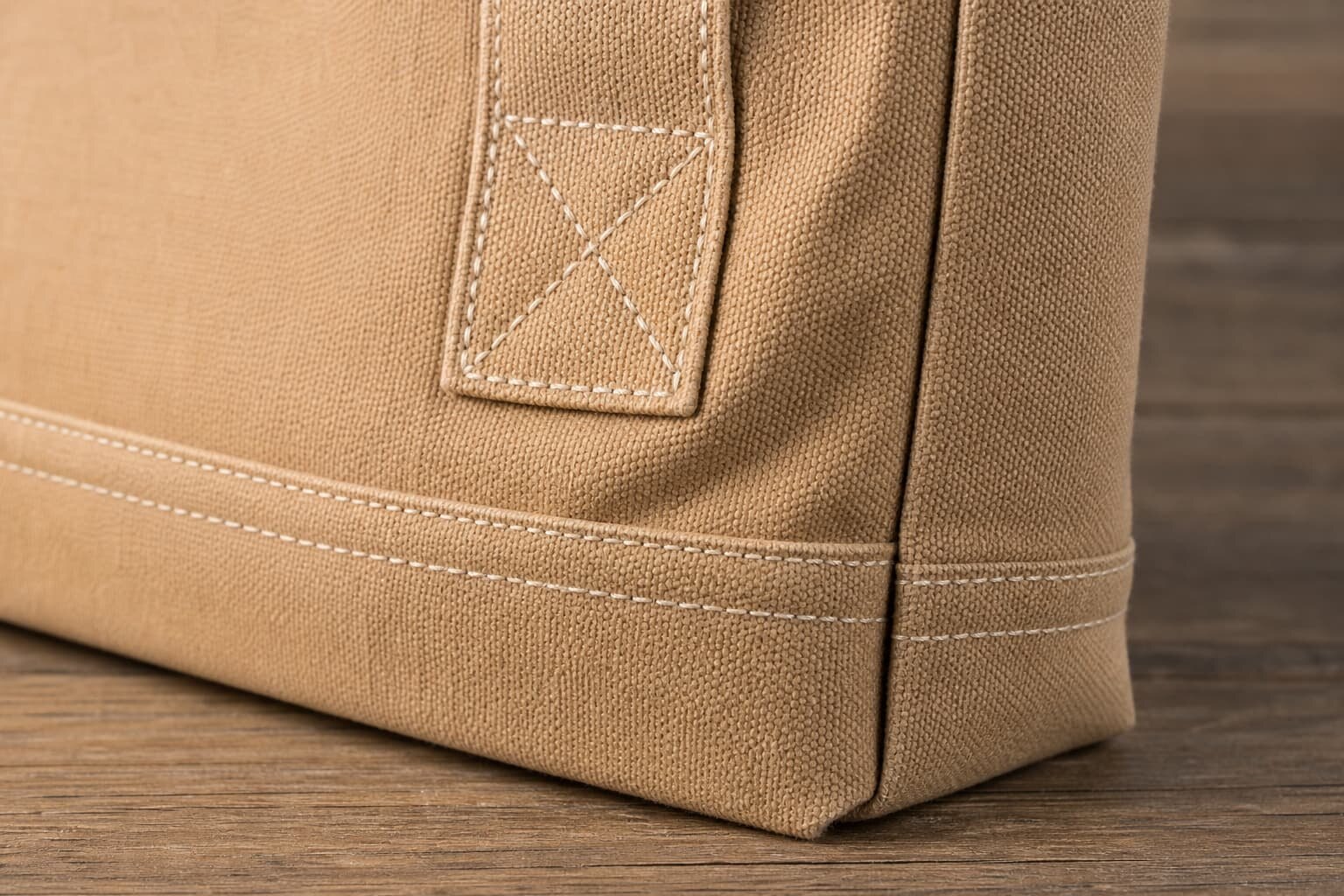
- Specify cross-stitch, bartack, or other reinforcement method at handle joins.
- Approve thread color and stitch density where contrast stitching is visible.
- Check inside seam finish if the bag will be sold open on retail shelves.
MOQ Logic and Quote Data Buyers Should Lock
MOQ for canvas tote bags is not always one simple number. A supplier may have one MOQ for standard natural canvas, a higher MOQ for custom dyed canvas, another minimum for screen printing, and another for woven labels or custom packaging. If a buyer asks for 500 bags across five colors and ten artworks, the factory may quote one attractive unit price but later add charges or extend lead time once the split is understood.
A clean production hold release should match the final quote assumptions. Confirm whether the quote includes fabric, cutting, printing, sewing, trimming, labels, inner packing, export cartons, and normal inspection support. Also confirm what is charged separately: sample making, courier, print screens, custom dyed fabric, barcode stickers, hangtags, FSC paper packaging if required, palletizing, or special carton strength. The release should not proceed if the PO description is less detailed than the quote.
- Ask for MOQ by fabric color, not only total order quantity.
- Ask for print setup charge by artwork and color count.
- Confirm whether size changes create a separate cutting batch and price.
- Check whether split shipment, mixed cartons, or retail packout changes the unit cost.
- Make sure quote validity and raw material assumptions are dated.
Packing Release Before the Sewing Line Finishes
Packing is often treated as an end-of-line detail, but it should be released before the order is fully sewn. The way a canvas tote is folded can affect print appearance, crease marks, retail presentation, carton size, and warehouse handling. If bags are folded through a fresh screen print or packed too tightly, the buyer may receive good sewing with poor presentation. This is especially important for dark canvas, large ink coverage, coated fabric, and retail display packs.
Packing instructions should include individual pack method, inner quantity, carton quantity, carton marks, barcode placement, SKU separation, and any distributor routing requirements. If the buyer needs plastic-free packing, kraft paper bands, hangtags, or retail-ready cartons, the factory must know early enough to source those materials. A packing hold release prevents the common mistake where finished goods sit in bulk piles while the buyer is still confirming labels.
- Approve a folded packing sample with the actual print facing and crease position.
- Confirm carton quantity and gross weight so warehouse limits are not exceeded.
- State whether mixed SKUs are allowed in one carton or must be separated.
- Check barcode readability after bag folding and polybag sealing.
- Release carton marks before the factory prints or stickers all export cartons.
Lead Time Control and Practical Hold Points
A production hold protects quality, but it also affects lead time. Buyers should understand where time is consumed: fabric sourcing or dyeing, sample making, strike-off approval, cutting, printing, curing, sewing, trimming, inspection, packing, and export documents. If approvals are slow, the factory may lose a reserved production line. If approvals are rushed, the order may move forward with unresolved details. The release plan should balance both risks.
For RFQ purposes, ask the factory to separate sample lead time from bulk lead time and to state when the clock starts. Some factories count lead time from deposit, some from PP sample approval, and others from receipt of all materials and artwork. For canvas tote bags with custom print and standard fabric, the schedule is usually simpler than dyed fabric or multi-SKU retail programs. Still, a buyer should not accept a general delivery promise without a release calendar.
- Set planned dates for fabric approval, print strike-off, PP sample approval, inline check, final inspection, and shipment release.
- Ask whether public holidays, dyeing queue, or print room capacity affect the production window.
- Confirm if the factory can start fabric booking while holding print approval.
- Do not release mass printing until final artwork and actual fabric are both approved.
- Keep a written record when buyer delay changes the shipment schedule.
Acceptance Criteria for Releasing Mass Production
Before releasing mass production, define what is acceptable and what must be corrected. Without acceptance criteria, the buyer and factory may argue after production about issues that could have been settled at sample stage. For example, natural canvas may have minor cotton seed flecks, but large oil stains are not acceptable. A small print placement tolerance may be normal, but a logo visibly tilted on the front panel should not pass.
Acceptance criteria do not need to be complicated, but they must be specific. Include tolerances for finished size, handle drop, print placement, shade, GSM, stitching, and packing. If your company uses AQL inspection, state the inspection level and defect classification. If you do not use formal AQL, still define critical defects such as wrong artwork, broken handles, wrong fabric color, mold odor, wet cartons, missing labels, and unsafe packing.
- Size tolerance should cover width, height, gusset, and handle drop separately.
- Print placement tolerance should be measured from fixed bag edges or center lines.
- Fabric shade approval should compare to a physical swatch, not only photos.
- Handle strength should be checked by pull test or agreed load test method.
- Packing defects should include wrong SKU mix, unreadable barcode, and crushed cartons.
Specification comparison for buyers
| Spec decision | Recommended option | When it fits | Buyer risk to check |
|---|---|---|---|
| Fabric weight for standard retail tote | 10 oz / approx. 280-300 GSM cotton canvas | Good balance for giveaways, bookstore totes, and daily carry bags that need better handfeel than plain cotton sheeting | Confirm actual finished GSM after dyeing or washing, not only greige fabric weight quoted by the mill |
| Fabric weight for premium branded tote | 12-16 oz / approx. 340-455 GSM cotton canvas | Fits higher ticket retail, corporate merchandise, and bags with heavier contents | Check handle attachment strength, needle size, seam bulk, and carton weight because heavier fabric changes sewing speed and freight cost |
| Print method for solid logo under 4 colors | Screen print with approved ink drawdown | Best for large repeated artwork, clean brand color, and lower unit cost at bulk quantity | Require Pantone tolerance, rub test, and first production print photo before mass printing |
| Print method for detailed artwork | DTF, heat transfer, or digital print after lab sample approval | Useful for gradients, small artwork, or mixed SKU designs where screens are inefficient | Check heat mark, wash resistance, handfeel, and whether print area cracks on folded canvas |
| Handle construction for repeat retail use | Self-fabric canvas handles with cross-stitch reinforcement | Works for most branded totes and gives a clean retail look | Measure handle drop and stitch box size; weak bartacks cause claims even when fabric weight is correct |
| Packing for distributor warehouse | Flat packed by inner polybag or paper band, export carton with SKU label | Best when cartons are opened and repacked by a distributor or 3PL | Confirm carton quantity, carton dimensions, gross weight, barcode position, and whether individual bags need suffocation warning |
| Production release point | Release after PP sample, fabric lot, print strike-off, and packing method are all approved | Protects buyers who have multiple internal stakeholders or strict retail delivery windows | Do not release cutting based only on digital artwork approval; fabric and print behave differently in bulk |
Buyer checklist before sampling
- Confirm approved canvas GSM, color, shrinkage allowance, and fabric lot reference before cutting release.
- Approve one physical PP sample that includes final size, handle drop, gusset, stitching, label, print, and packing fold.
- Require print strike-off approval under the actual bulk fabric color, not on substitute fabric.
- Check whether MOQ is calculated by fabric color, print design, bag size, or packing style, because each can create a separate production batch.
- Ask the factory to separate hold points for cutting, printing, sewing, packing, and shipment instead of giving one vague production approval.
- Record accepted tolerances for bag size, handle drop, print placement, GSM, color shade, and carton quantity before deposit or fabric booking.
- Verify carton marks, SKU labels, barcode rules, polybag or paper band requirements, and pallet limits before packing starts.
- Request first production photos and measurement report before authorizing the factory to continue beyond the pilot batch.
- Hold shipment release until final inspection, carton count, packing list, and invoice data match the purchase order.
- Keep all approvals in one release file so the merchandiser, QC inspector, freight forwarder, and accounts team work from the same version.
Factory quote questions to send
- Which canvas weight are you quoting in GSM and ounces, and is it greige fabric weight or finished fabric weight after dyeing or washing?
- What MOQ applies separately to fabric color, bag size, print design, label, and packing method?
- Can you provide a PP sample using the real bulk fabric, handle construction, label, print process, and final packing method?
- Which print method are you quoting, and what are the artwork size limit, color limit, setup charge basis, and approved Pantone tolerance?
- What is your normal tolerance for bag width, height, gusset, handle drop, print placement, and fabric shade?
- At what points do you require buyer release before continuing: fabric booking, cutting, printing, sewing, packing, and shipment?
- How many days are needed for sample making, fabric sourcing or dyeing, printing, sewing, inspection, and export packing after approval?
- What carton quantity, carton size, gross weight, and carton mark format are included in the quote?
- Will you send first production photos, inline inspection data, and packing photos before the order is completed?
- What quote items are excluded, such as sample courier fee, print screen charge, custom label, barcode sticker, inner polybag, palletizing, or third-party inspection support?
Quality-control points to confirm
- Measure finished bag size and handle drop against the approved PP sample and stated tolerance.
- Weigh cut fabric or finished bag samples to verify that the bulk material matches approved GSM.
- Check fabric shade under consistent light and compare it with the approved swatch or lab dip.
- Inspect print color, placement, opacity, edge sharpness, ink curing, rubbing resistance, and cracking on folded areas.
- Pull test handle seams and review cross-stitch, bartack, thread trimming, skipped stitches, and seam allowance.
- Check inside seam finishing, gusset alignment, bottom corners, label position, and whether the bag stands or folds as expected.
- Confirm that packing fold does not damage the print or create heavy crease marks on coated or dark canvas.
- Verify carton count, inner packing quantity, SKU sequence, barcode readability, carton marks, and packing list data.
- Review random cartons from early, middle, and late production to avoid accepting only the best top-layer samples.
- Hold shipment if invoice quantity, carton quantity, PO reference, or product description does not match the final approved release file.