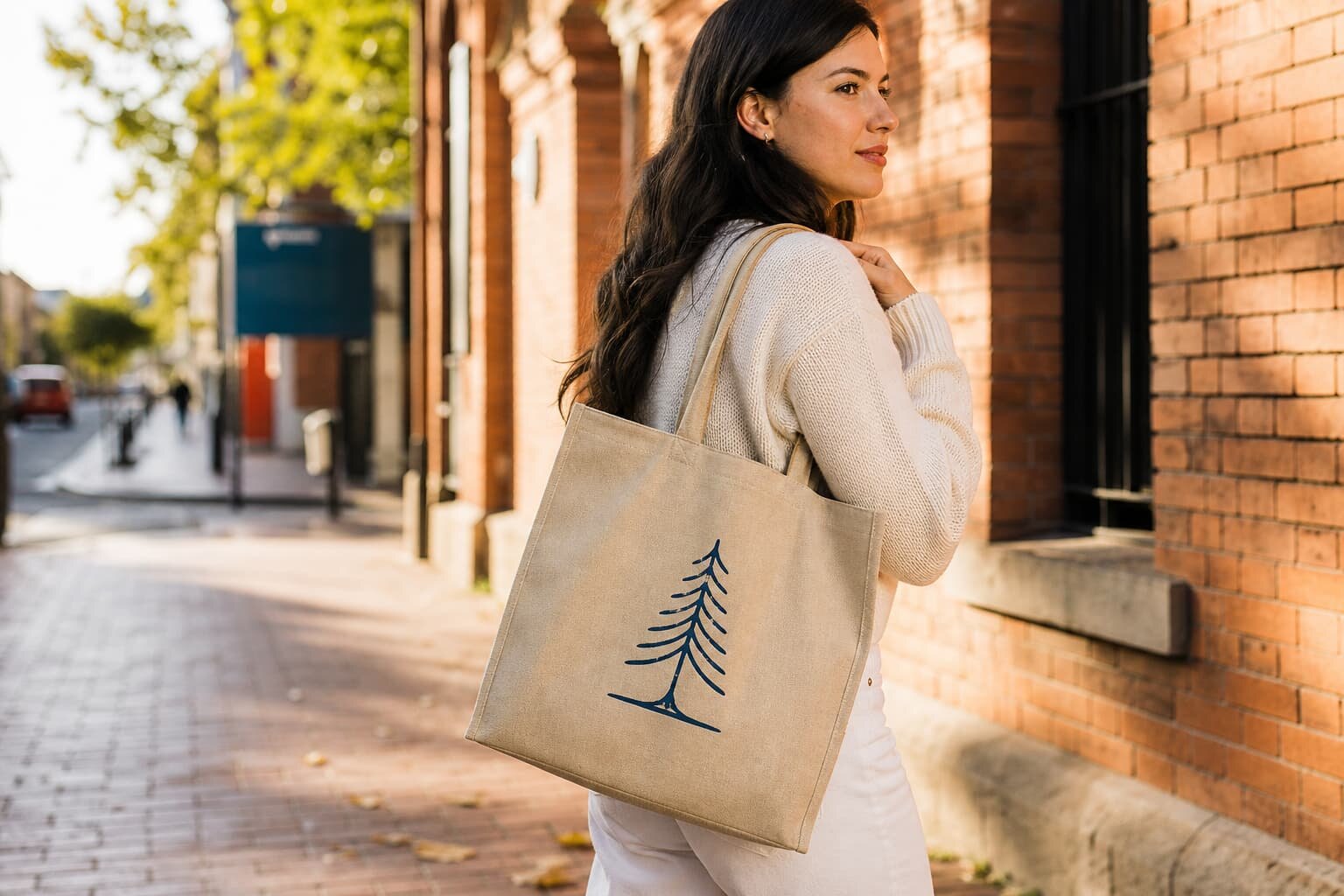
Why Private Label Canvas Tote Specs Need More Than a Size and Logo
A canvas tote bag private label RFQ often starts with a sketch, a logo file, and a target quantity. That is not enough for a factory to quote accurately. Canvas fabric, handle construction, print method, label placement, and packing format all affect cost and production risk. If these points are missing, suppliers will fill the gaps with their own assumptions, and the cheapest quote may simply be quoting a different bag.
For procurement teams, the goal is not to make the RFQ complicated. The goal is to remove the grey areas that create re-sampling, quote revisions, and claims after delivery. A strong spec lets you compare suppliers on the same basis and helps the factory engineer the bag for your intended sales channel, whether it is a bookstore tote, retail merchandise item, trade show bag, subscription box insert, or reusable shopping bag.
- Use finished dimensions, not only flat pattern dimensions.
- Define canvas weight and finish before comparing unit prices.
- Specify handle reinforcement because it drives both durability and labor cost.
- Treat logo execution and private label components as separate spec lines.
- Request carton data early if freight cost is part of your landed cost decision.
Start With the Use Case Before Choosing Canvas Weight
Canvas weight is one of the most important decisions because it changes the feel, structure, print surface, sewing speed, carton weight, and landed cost. Many buyers ask for a cotton canvas tote and then compare quotes where one supplier uses 8 oz fabric and another uses 12 oz fabric. Those two bags may look similar in a small photo but will feel different in hand and perform differently under load.
For private label programs, the right choice depends on how the tote will be sold or distributed. A lightweight promotional tote can use 8 oz canvas if the bag is intended for documents, apparel, or giveaways. A retail tote normally benefits from 10 oz or 12 oz canvas because it holds shape better and supports a higher perceived value. Heavy 14 oz or 16 oz canvas is useful for premium retail, but it can increase seam bulk, sewing difficulty, carton weight, and price.
- 8 oz canvas: often used for cost-sensitive promotions and high-volume events.
- 10 oz canvas: common balance for branded merchandise and repeat retail programs.
- 12 oz canvas: stronger handfeel for retail, gifting, and bookstore-style totes.
- 14 oz to 16 oz canvas: premium structure but higher material and sewing cost.
- Always ask for approximate GSM because ounce descriptions can vary by supplier and fabric source.
Define Finished Bag Construction, Not Only the Outer Look
A buyer photo usually shows the front panel, but production cost is hidden in the construction. The top hem width, side seam method, bottom gusset, handle attachment, thread type, and reinforcement stitches all influence durability. If the RFQ only says 38 x 42 cm canvas tote with logo, factories may quote a basic folded tote while the buyer expects a retail-grade bag with strong handle stitching and clean internal finishing.
For a practical RFQ, define the finished structure in measurable terms. State the bag width, height, and gusset if any. State whether the tote is flat, bottom gusseted, side gusseted, or boxed. Confirm whether seams are lockstitched, overlocked, bound, or French seamed. For most canvas tote bags, a clean overlocked internal seam is acceptable, but higher retail programs may prefer more refined finishing if the inside of the bag is visible to the customer.
- Finished size example: 38 cm W x 42 cm H, tolerance plus or minus 1 cm.
- Gusset example: 10 cm bottom gusset for retail shopping or grocery use.
- Top hem example: 2.5 cm folded hem with double stitch.
- Handle attachment example: box-X reinforcement or cross stitch at all four handle ends.
- Thread example: matching cotton-color thread or contrast black thread as a design choice.
Handle Specs Are a Common Source of Claims
Handle problems are easy for consumers to notice and difficult to repair after shipment. The handle may be too short for shoulder carry, too narrow for comfort, too weak at the attachment point, or twisted because of poor sewing control. A factory can only quote and sample correctly if the handle length, handle drop, width, fabric type, and reinforcement method are clear.
For retail and brand programs, self-fabric canvas handles usually look more consistent than webbing if the body is canvas. However, cotton webbing can improve comfort and simplify production for some styles. The handle drop should match the intended use: a short hand-carry tote may use around 12-15 cm drop, while shoulder carry often needs around 25-30 cm drop depending on bag height and market preference. Do not approve a sample only by flat photo; test it on the shoulder with expected contents.
- Handle width: 2.5-3.0 cm is common for general canvas totes.
- Handle length: confirm total length and finished drop after sewing.
- Reinforcement: box-X, cross stitch, or bar tack depending on load expectation.
- Comfort: heavier bags need wider or softer handles to reduce pressure.
- QC: check all handle ends for skipped stitches, loose threads, and uneven placement.
Choose Print Method Based on Artwork, Fabric, and Repeat Orders
Screen print is usually the most practical method for private label canvas tote bags with solid logos, slogans, and simple spot colors. It provides good opacity, good repeatability, and reasonable cost when the artwork is stable. For unbleached natural canvas, buyers should remember that the base fabric is not pure white. Ink colors can look warmer or duller than the Pantone book, so the RFQ should specify Pantone target, ink type, and whether the color is matched on natural canvas or white reference paper.
Digital print and heat transfer are useful for full-color artwork, gradients, short runs, and campaign graphics. They are not automatically better. They can change the handfeel, show edge film, or create durability concerns if the wrong process is selected. Embroidery can work for small premium logos but may pucker lightweight canvas and increase cost. For large filled areas, embroidery also adds weight and stiffness. The safest approach is to ask the factory to recommend the method, then verify it through a strike-off or pre-production sample.
- Screen print: best for solid logos, spot colors, and repeat programs.
- Heat transfer: useful for detailed artwork but check handfeel and cracking.
- Digital print: useful for multicolor designs but check color depth on natural canvas.
- Embroidery: premium effect for small marks, less suitable for large filled graphics.
- Approval sample: include print size, placement from seams, color standard, and curing check.
Private Label Details Must Be Quoted as Separate Components
Private label does not only mean printing a logo on the front of the bag. Many retail buyers also need a woven side label, inner care label, hangtag, barcode sticker, size or color sticker, tissue insert, individual polybag, or retail-ready carton mark. Each component has its own MOQ, lead time, artwork approval, and quality risk. If these items are not listed separately, one supplier may include them while another excludes them, making the quote comparison misleading.
The most common private label setup for canvas totes is a front print plus a small woven side label or inner label. A woven label gives a more retail-oriented finish but needs clear artwork, label size, fold type, background color, edge finish, and stitch position. Care labels need correct material content and market-specific wording. If the bag will be sold in stores, barcode placement and scannability should be part of the packing approval, not a last-minute warehouse problem.
- Woven label: specify size, fold type, yarn colors, and sewing position.
- Care label: confirm fiber content, care symbols, country-of-origin needs, and language.
- Hangtag: define paper weight, string type, attachment point, and barcode requirement.
- Sticker: confirm SKU, color code, barcode format, and placement on polybag or hangtag.
- Carton mark: include PO number, item number, quantity, gross weight, net weight, and carton sequence.
MOQ Logic: Fabric, Color, Print, and Label Minimums Are Different
A common buyer question is, what is your MOQ for canvas tote bags? The better question is, what drives the MOQ for this specific spec? A factory may be able to sew a small quantity if stock fabric is available, but custom dyed canvas, custom webbing, woven labels, special print colors, or individual retail packing can create higher minimums. One total MOQ number does not explain the constraint.
For procurement planning, separate the MOQ by material and process. Natural canvas in common weights may be easier to source in lower quantities than custom Pantone-dyed canvas. A one-color screen print may be practical for smaller runs, while multiple print colors add screens, setup time, and approval steps. Woven labels may have their own minimum order quantity, and the unused balance may need to be stored or charged. Clear MOQ logic helps buyers plan launch quantities, reorder quantities, and SKU consolidation.
- Stock natural canvas usually supports lower and faster production than custom dyed fabric.
- Custom fabric color may require a higher fabric dye lot or mill minimum.
- Each print color may add setup cost, screen charge, and approval time.
- Woven labels may have a label MOQ separate from the bag MOQ.
- Multiple bag sizes or colors can split production efficiency and raise unit cost.
Sampling: Approve the Bag, Not Just the Logo
A pre-production sample is not a decoration sample only. It is the control standard for fabric, size, handle feel, stitching, print placement, private label details, and packing direction. Buyers sometimes approve a sample because the logo looks correct, then later find that the bag body is too soft, the handle drop is wrong, or the inside seam finish is not acceptable for retail. The sample review should follow a written checklist.
For canvas tote bags, ask the supplier to provide sample measurements, sample weight, close-up photos of seams, print close-ups, and label close-ups. If the order involves a large print area, request a print strike-off before the full sample or before bulk printing. If the fabric is dyed, approve a lab dip or fabric swatch under controlled lighting. If the bag is for heavy use, perform a simple loading check with the expected product weight and carry time.
- Measure width, height, gusset, handle length, and handle drop.
- Weigh the finished sample and keep the result with the approved sample record.
- Check print color under daylight or agreed light source, not only phone photos.
- Review inside seam finish and top hem consistency.
- Confirm label spelling, position, orientation, and stitching before bulk.
Packing and Carton Data Affect Landed Cost More Than Buyers Expect
Canvas tote bags are soft goods, but packing still matters. A heavy canvas tote with long handles can create bulky cartons if packed loosely, while over-compression can crease the printed panel or distort the handles. For importers and distributors, carton dimensions, carton weight, and pieces per carton affect freight cost, warehouse handling, pallet planning, and retailer routing compliance.
The RFQ should ask for estimated carton dimensions, gross weight, net weight, and CBM per carton or per 1,000 pieces. If the goods are printed, confirm whether printed panels are protected from ink transfer. For humid shipping routes or long storage periods, discuss moisture control, especially for natural cotton canvas. Individual polybags may protect the product but add cost, plastic compliance questions, and unpacking labor. Retail buyers should decide whether polybags are necessary or whether bulk flat packing is acceptable.
- Common bulk packing: 25-50 pieces per export carton depending on fabric weight and size.
- Flat packing reduces distortion and makes final inspection easier.
- Individual polybags protect against dirt but add material cost and compliance review.
- Desiccants may be useful for long ocean transit or humid seasons.
- Carton marks should match the PO, SKU, quantity, and destination warehouse rules.
Lead Time Should Be Broken Into Production Stages
A single lead time number can hide the real schedule risk. Canvas tote production includes fabric sourcing, cutting, printing, sewing, trimming, inspection, packing, and cargo handover. If the project uses custom dyed fabric, woven labels, special packing, or multiple logo approvals, the schedule depends on more than sewing capacity. Buyers should ask for a stage-by-stage lead time instead of only asking when the order can ship.
A practical timeline separates sample development from bulk production. The sample stage may include artwork review, fabric swatch, lab dip, print strike-off, and finished sample. Bulk production should not start until the approved sample and final PO details are aligned. If the delivery window is fixed, identify the long-lead items first: dyed fabric, custom labels, hangtags, barcode data, and print screens. Late label approval can delay a finished bag as much as late fabric.
- Confirm days needed for fabric booking or dyeing before cutting.
- Confirm sample lead time separately from bulk lead time.
- Ask when print screens, labels, and hangtags must be approved.
- Reserve time for final inspection and possible rework.
- Confirm whether lead time is counted from deposit, artwork approval, sample approval, or material arrival.
Specification comparison for buyers
| Spec decision | Recommended option | When it fits | Buyer risk to check |
|---|---|---|---|
| Fabric weight | 10 oz to 12 oz cotton canvas, roughly 340-407 GSM | Retail totes, gift-with-purchase bags, bookstore bags, and brand merchandise needing structure | Different mills may call the same fabric by ounce while GSM and shrinkage differ; request cut swatch and finished sample weight |
| Entry-level fabric | 8 oz canvas, roughly 270 GSM | Promotional programs, event giveaways, lower freight budgets, large quantity distribution | May feel too soft for retail; dark prints can show fiber texture and handle attachment may need reinforcement |
| Premium fabric | 14 oz to 16 oz canvas, roughly 475-540 GSM | High-value retail, laptop-friendly totes, boutique merchandise, long-life reusable bags | Higher sewing time, thicker seam bulk, higher carton weight, and higher MOQ for dyed fabric |
| Handle construction | Self-fabric handles, 2.5-3.0 cm width, cross-stitched or box-X at attachment | Most private label programs where durability and clean appearance matter | Handle drop, stitch density, and reinforcement area must be approved before bulk; weak handle seams cause the most visible failures |
| Printing method | Screen print for solid logos and spot colors | Clean brand marks, 1-4 colors, repeat orders, Pantone-controlled artwork | Pantone target must be specified by fabric color and ink type; unbleached canvas changes perceived color |
| Logo detail | Heat transfer or digital print for gradients and small artwork | Full-color artwork, campaign graphics, or low-volume seasonal designs | Transfers may change handfeel and crack if wrong film is chosen; request wash and rub test result |
| Private label position | Woven side label plus inner care label | Retail buyers, distributors, and brands needing visible ownership without large front branding | Label material, fold type, stitch position, and local compliance wording must be confirmed before sampling |
| Packing format | Flat packed 25-50 pcs per export carton with moisture control | Lower crease risk, easier QC counting, retail-ready handling after arrival | Carton size and gross weight affect freight quote; over-compressed packing can distort handles and printed panels |
Buyer checklist before sampling
- Define finished bag size with tolerance, not only fabric cutting size.
- State fabric weight in both ounce and approximate GSM, and confirm whether fabric is natural, bleached, dyed, or washed.
- Specify handle width, handle length, handle drop, reinforcement stitch type, and thread color.
- Send editable artwork plus Pantone references, logo dimensions, position from seams, and print method preference.
- Confirm all private label items: woven label, care label, hangtag, barcode sticker, polybag warning, and carton mark.
- Ask for sample weight, fabric swatch, print strike-off, and photos of inside seams before mass production.
- Set acceptance criteria for size tolerance, print position tolerance, color deviation, stains, loose threads, and carton condition.
- Request a quote sheet separating bag cost, print cost, label cost, packing cost, sample fee, tooling or screen fee, and freight-ready carton data.
- Confirm MOQ by fabric color and print method, not just total order quantity.
- Agree on lead time by stage: material booking, pre-production sample, bulk production, final inspection, and cargo handover.
Factory quote questions to send
- What fabric construction will you use for this canvas tote bag: ounce, GSM, yarn count if available, and shrinkage range?
- Is the quoted fabric stock fabric or custom woven, bleached, dyed, washed, or finished for this order?
- What is the MOQ for the bag body color, handle color, print color count, woven label, and individual packing?
- What stitch type and stitch density will be used on side seams, bottom seam, top hem, and handle reinforcement?
- Which print method do you recommend for this artwork and fabric color, and what are the limits for line thickness and color matching?
- Can you provide a print strike-off or full pre-production sample before bulk fabric cutting?
- What are the finished size tolerances, print position tolerances, and acceptable color deviation you can control in production?
- How many pieces per carton, what carton dimensions, gross weight, net weight, and expected CBM per 1,000 pieces?
- Which costs are included in the unit price and which are separate: labels, hangtags, barcodes, polybags, cartons, screens, sample fee, and inland delivery?
- What is the normal production lead time after sample approval, and what part of the schedule depends on fabric dyeing, label production, or print curing?
Quality-control points to confirm
- Check finished bag width, height, gusset, handle length, and handle drop against the approved sample and tolerance sheet.
- Weigh random finished bags to identify fabric substitution or major construction differences.
- Inspect handle attachment with a visual pull and load check based on the intended use, especially for heavy retail or grocery applications.
- Check print color, print position, ink coverage, edge sharpness, curing, rub resistance, and cracking risk.
- Inspect fabric surface for oil stains, weaving slubs beyond agreed standard, dye marks, yellowing, odor, and shade variation between panels.
- Check seams for skipped stitches, broken threads, raw edge exposure, seam puckering, and uneven top hem width.
- Verify private label placement, label spelling, care label content, barcode readability, and carton mark accuracy.
- Confirm packing count, carton strength, moisture protection, desiccant use when needed, and whether printed panels are protected from transfer.