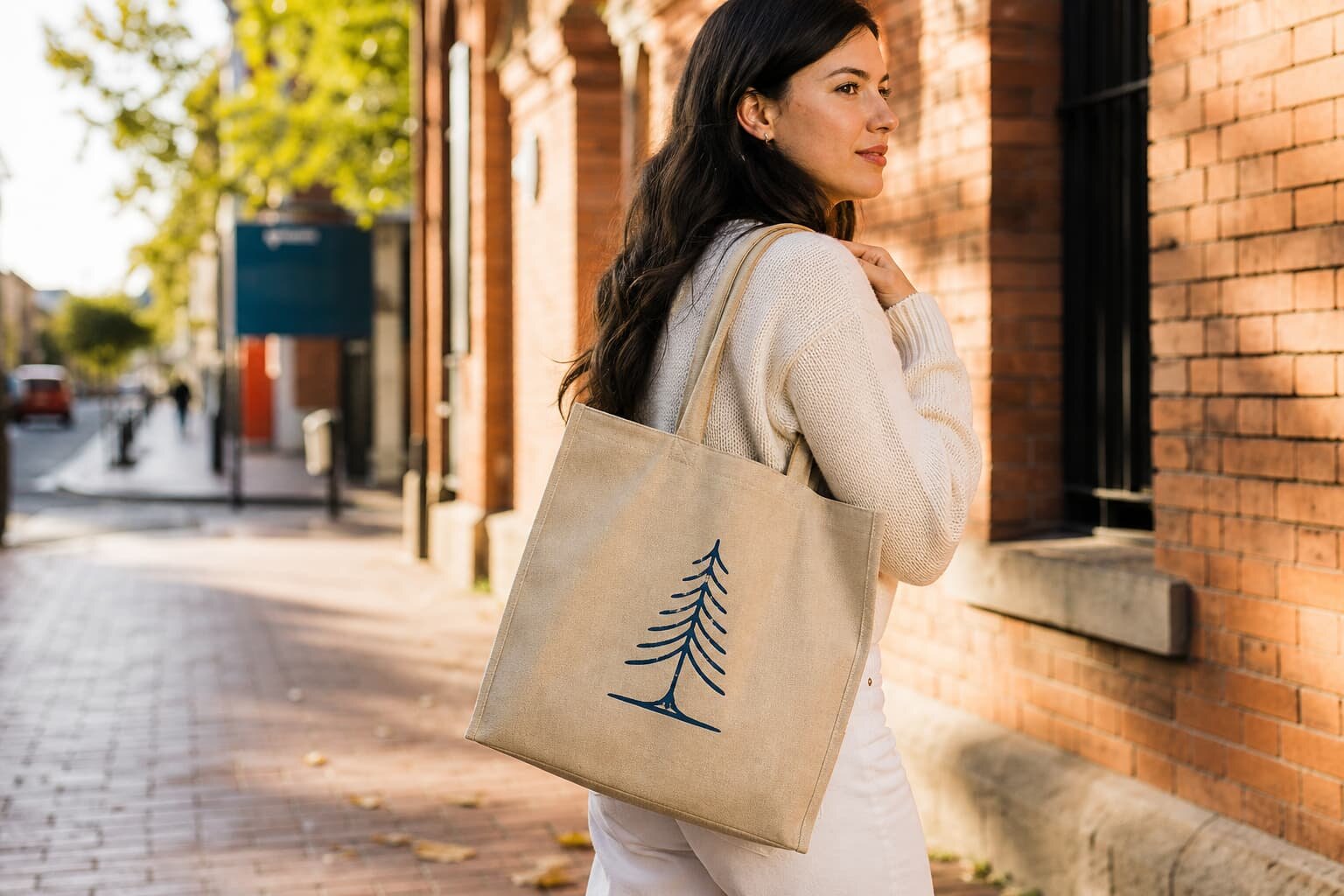
Why strike-off approval matters on canvas totes
A canvas tote bag print strike off approval is the last point where a buyer can control how the logo actually behaves on cloth, not on a screen. Canvas is forgiving in one sense and stubborn in another: its weave, thickness, and absorbency can make a clean digital file look different once ink, heat, or pressure hit the fabric. If the buyer approves only a PDF, the factory can still print a bag that technically matches the artwork but fails on opacity, placement, or hand feel.
For procurement teams, the real value of the strike-off is not artistic. It is commercial control. A signed sample becomes the reference for bulk, and it prevents the common argument that the supplier followed the file while the buyer expected the physical result to look different. That matters even more on tote programs because the bag body is often simple, so the print becomes the brand identity. When the print is wrong, the whole product looks wrong.
- Treat the strike-off as a bulk freeze point, not a nice-to-have sample.
- Use the sample to lock the artwork, print method, fabric lot, and placement together.
- Require a physical reference sample for the line, not only a photo in email.
- Reject any approval process that skips the actual canvas base or print recipe.
Lock the bag body before you discuss print
The most common mistake is approving decoration before the bag spec is stable. A 8 oz promotional tote, a 10 oz retail tote, and a 12 to 16 oz premium canvas tote all take ink differently because the surface, stiffness, and weave density change the way the print sits. If the factory strike-off is done on a lighter or smoother fabric than the bulk order, the logo may look flatter, darker, or sharper than the real production run. That creates a false approval and a rework risk the buyer only sees after the first bulk cartons open.
In the RFQ, ask the supplier to quote the full bag spec before the print conversation starts. Typical canvas programs use about 250 to 280 GSM for light promo bags, around 340 to 400 GSM for midweight retail totes, and roughly 450 GSM plus for heavier utility or premium bags. Those are not just comfort numbers; they change the print result, the bag drape, and the way the logo distorts across seams. If the handles are stitched into a seam or the bag has a gusset, the print placement must be planned around those construction points.
- State the target fabric weight in both oz and GSM if the supplier works across regions.
- Specify whether the canvas is bleached, natural, enzyme-washed, or pre-shrunk.
- Confirm body size, handle width, handle drop, and seam allowance before print setup.
- Ask the supplier to note the exact fabric lot used for the strike-off.
Choose the print method with the approval test in mind
Different print methods fail in different ways, so the strike-off has to test the right risk. Screen print is usually the workhorse for canvas tote bags because it gives strong opacity on solid logos and scales well once the design is stable. Water-based ink can give a softer, more retail-friendly hand feel, but it can also show more fabric texture and needs tighter control on curing and color consistency. Digital transfer methods are useful for short runs or artwork with gradients, but they can introduce edge lift, gloss, or a plasticky feel that buyers should check before bulk.
The best method is the one that fits both the artwork and the order profile. A buyer ordering a simple two-color logo for a chain program should usually push for a print method that can be repeated consistently across lots. A buyer testing a new brand launch may accept a transfer method for the first order if it shortens sampling and keeps MOQ lower. The strike-off should prove not just that the art looks right, but that the method can survive handling, folding, and the buyer's expected shelf standard.
- Screen print: best for bold logos, spot colors, and repeat orders.
- Water-based print: best when hand feel and textile look matter more than surface gloss.
- DTF or heat transfer: best for complex art, low MOQ, or urgent launch samples.
- Embroidery or woven patch: best when the buyer wants texture instead of ink, but still needs placement control.
What a proper strike-off sample must show
A proper strike-off should be a full usable sample, not a partial print on a scrap swatch. The buyer needs to see the artwork on the actual bag body, at the final size, in the final position, with the same number of print locations that will be used in bulk. If the tote has a center front print, a side print, and a woven side label, each element should be visible on the sample or it is not a true approval sample. If the design crosses a seam, pocket, gusset, or fold line, the sample must show that exact condition, because this is where misalignment usually happens.
The sample packet should also carry the control data that makes the approval meaningful. At minimum, ask for the approved artwork version, Pantone or lab dip reference, fabric lot, print method, ink type, and the intended placement dimensions measured from the top edge and centerline. If the factory cannot tell you which screen, transfer film, or print recipe was used, then the sample is hard to reproduce in bulk. The best approval samples are boring in a good way: they are documented, repeatable, and easy for both sides to match later.
- Require full-size placement on the actual tote, not a loose fabric swatch.
- Confirm whether the sample used the same fabric lot and finishing process.
- Keep the approved artwork file name and revision number on record.
- Mark the sample with date, approver name, and supplier reference code.
Set acceptance criteria before the sample arrives
A buyer should never judge a strike-off by saying it looks fine. Define what fine means. For small logos, placement tolerance may need to stay within about 3 mm from the approved location; for larger front graphics, 5 mm may be acceptable if the shape reads correctly. Color should be judged against a physical reference under daylight or a neutral indoor light source, because screens and warm office lighting hide problems. If the brand uses a specific Pantone target, the supplier should confirm whether the chosen print method can hold that tone on the exact canvas shade.
Acceptance criteria should also cover durability and appearance after handling. A canvas tote is folded, stacked, shipped, and sometimes worn against clothing, so the print should pass a dry rub test and, if relevant, a wet rub or light wash test. Buyers should look for cracking along fold lines, edge lift on transfer prints, pinholes in solid fills, and bleeding around fine letters. If the logo is close to a seam or stitch line, inspect the area after pressing and after the bag has rested for a few hours, because some defects only show once the fabric relaxes.
- Write the allowable placement tolerance in millimeters.
- State the color reference source: Pantone swatch, master sample, or approved lab dip.
- Define the minimum opacity level for solid fills and small type.
- Add a simple pass or fail rule for rub resistance and fold cracking.
How MOQ and cost change once the strike-off is real
Strike-off approval affects cost more than many buyers expect. Screen printing usually needs setup work for each color or location, so a one-color logo on a 1,000 piece order can carry a very different cost structure from a three-color design with front and back prints. If the order is small, the factory may push DTF or another transfer method because it reduces setup burden, even if the hand feel is less premium. Buyers comparing quotes should separate the sample fee, the print setup, the bulk unit cost, and any revision charge so they can see where the money really moves.
MOQ logic follows the same pattern. A simple one-color screen print may be comfortable at a lower MOQ, but once the buyer adds metallic ink, oversized coverage, or multiple placements, the supplier often needs more pieces to absorb the setup. If the quote does not explain this clearly, the buyer may think one factory is expensive when it is really quoting for a more stable process. A useful comparison is to ask each supplier to quote the same bag body, same fabric weight, same print method, same packaging, and the same number of strike-off rounds. That is the only way to compare apples to apples.
- Compare sample fee, screen setup, print run, packing, and carton charges separately.
- Ask whether the strike-off cost is credited back after bulk order confirmation.
- Watch for revision charges if artwork changes after the first sample.
- For low MOQ orders, check whether a transfer method is being used to avoid setup fees.
Use a clear sample approval workflow
The approval process should be simple enough that the buyer can repeat it on every order. Start by receiving the sample and checking it against the RFQ, not against memory. Then review the bag under daylight, warehouse light, and a quick close-up inspection of the logo edges and stitching. If more than one internal stakeholder is involved, ask each person to mark issues on the same control sheet so the supplier gets one consolidated response instead of scattered opinions. That keeps the revision cycle short and stops the factory from making different changes for different reviewers.
After approval, the buyer should seal the approved sample, save the signed control sheet, and send both back to the supplier line or keep one sealed reference on the buyer side. If the supplier changes the print recipe, fabric lot, or placement after approval, the sample is no longer valid and the process should restart. That may sound strict, but it is cheaper than explaining why the bulk looks different from the signed sample. For seasonal retail orders, it is also wise to record the approval date and the version of the artwork file so the next reorder is not based on a stale reference.
- Compare the sample to the RFQ line by line before giving feedback.
- Use one consolidated approval sheet instead of scattered comments.
- Keep one sealed golden sample for reorders and factory reference.
- Restart approval if the factory changes fabric lot, print method, or placement.
Protect the bulk order after the sample is approved
Many buyers focus on strike-off approval and then lose control during bulk production. Once the sample is approved, the packing spec, carton count, polybag style, and retail insert should all be frozen as part of the same order file. If the buyer needs barcodes, hangtags, or individual folds, those details should be listed in the same approval packet because they affect how the printed bag is handled and where scuffing can appear. A clean print can still be ruined if the bags are packed too tightly, folded over a fresh print, or stored before the ink has fully cured.
The factory should also know how the buyer wants bulk production checked against the approved sample. On larger orders, a first-article inspection at the start of the line is often more useful than waiting for the finished carton audit. That way, if the print shifts, the logo sits too low, or the ink cures poorly, the team can correct the process before a large quantity is made. For repeat programs, this control is one of the easiest ways to keep reorders consistent across seasons and suppliers.
- Freeze packaging, fold method, carton count, and carton marks after approval.
- Require a first-article check against the golden sample at line start.
- Confirm the ink cure time before bags are packed tightly or shipped.
- Document any retail inserts or barcode labels in the same spec pack.
Avoid the mistakes that create rework and quote disputes
Most rework starts with a bad assumption. Buyers often approve a print on a light sample and later discover that the bulk canvas is darker, rougher, or more absorbent. Others approve from a JPEG on email and expect the factory to guess the final look. Another common issue is ignoring seam interaction: a logo that looks centered on a flat panel can appear crooked once the tote is stitched, pressed, and folded. These are not minor cosmetic issues; they are the kind that trigger chargebacks, delayed shipments, or forced discounts in retail programs.
To reduce disputes, the buyer should ask the supplier to state the limits openly in the quote. If the print method cannot hold micro text, say so up front. If a three-color print will show more texture on 12 oz canvas than on 8 oz canvas, write that into the sample notes. The best suppliers do not promise a perfect image; they explain the production reality clearly enough that the buyer can choose the right tradeoff. That is exactly what a good RFQ should force.
- Do not approve from digital artwork alone when the bag body is not fixed.
- Do not accept a sample on the wrong fabric weight or finish.
- Do not ignore seam lines, folds, or handle stitch areas near the logo.
- Do not let the quote hide setup, revision, or packaging charges.
Write the RFQ so suppliers quote the same thing
If the RFQ is vague, each factory will quote a different product and the buyer will spend the whole comparison stage translating their assumptions. The RFQ should name the bag dimensions, canvas weight in GSM or oz, print method preference, number of colors, artwork size, placement, sample expectation, packaging spec, and target delivery window. It should also say whether the buyer wants one strike-off round included or expects a second revision if the first sample misses the target. That small line can save days of back-and-forth and make the quote much easier to compare.
The most useful RFQ questions are the ones that expose process differences, not just price. Ask how the supplier handles a fabric lot change, whether the print setup is reusable for reorders, how many sample rounds are included, and what QC checks happen before bulk packing. If the supplier answers clearly, you can tell whether their price is low because they are efficient or because they left out a critical step. For a procurement team, that is the real job of the strike-off approval process: it turns a decorative sample into a commercial decision tool.
- State the exact artwork file version and color reference in the RFQ.
- Ask for a line-item quote that separates body, print, sample, and packing costs.
- Request the supplier's standard tolerance on print placement and color variation.
- Tell suppliers whether reorder consistency or first-order speed matters more.
Specification comparison for buyers
| Spec decision | Recommended option | When it fits | Buyer risk to check |
|---|---|---|---|
| Screen print on 10-12 oz canvas | Best for 1-4 solid colors and repeat programs | Retail promos, brand merch, simple logos | Check mesh count, ink opacity, cure, and registration on seams |
| Water-based print | Softer hand and lower surface build | Natural canvas, fashion retail, eco positioning | Check show-through, fade risk, and rub resistance after curing |
| DTF or heat transfer | Good for small MOQ and complex artwork | Launch tests, gradients, fine details, rush samples | Check edge lift, heat marks, and whether the hand feel is acceptable |
| Embroidery or woven patch | Premium branding with texture | Gift packs, premium totes, structured bodies | Check puckering, backing material, and placement repeatability |
Buyer checklist before sampling
- Confirm the bag body spec before any print approval: fabric weight, weave, size, handle length, stitching, and lining if any.
- Ask for the strike-off on the same fabric lot or a clearly matched lot with the same finish and color.
- Approve artwork only after the supplier confirms the exact print method, number of colors, and placement dimensions.
- Compare the sample in daylight and under warehouse or store lighting, not only on a screen photo.
- Check color against the approved Pantone reference or master physical swatch, not a PDF alone.
- Inspect print edges, registration, ink coverage, and any bleed into the canvas weave.
- Do a dry rub check and, if relevant, a wet rub or fold test on the printed area.
- Freeze packaging, carton count, and label position before bulk starts, especially for retail orders.
- Record who approved the sample, on what date, and which physical sample was sealed as the reference.
- Require a new strike-off if the factory changes fabric lot, print recipe, placement, or packaging after approval.
Factory quote questions to send
- What exact fabric weight in GSM or oz are you quoting, and is it the same base fabric used for the strike-off?
- Which print method are you recommending, and what are the setup charges, screen charges, or transfer charges by color or placement?
- How many strike-off rounds are included before bulk, and what happens if we need a third revision?
- What placement tolerance can you hold for the logo relative to the top edge, side seam, and handle stitch line?
- What ink type or transfer film will you use, and is it suitable for the target hand feel and wash or rub requirement?
- What is the MOQ per colorway and print method, and how does MOQ change if we add a second print location?
- What is the typical lead time for strike-off approval, bulk production, and packing after final sign-off?
- How will you pack the approved sample reference so the production line can compare against it?
- Which packaging spec is included in the quote: polybag, insert card, bundle count, and carton marks?
- If the fabric lot changes, what approval step do you require before continuing bulk printing?
Quality-control points to confirm
- Fabric weight and weave match the approved sample, including any washed or softened finish.
- Print location matches the agreed spec from top edge, side seam, and centerline.
- Color matches the approved reference under daylight and standard indoor light.
- Print opacity is sufficient and no canvas texture shows through in an unacceptable way.
- Edges are clean with no feathering, bleed, ghosting, or double image on registration marks.
- Ink or transfer is fully cured and passes dry rub testing without smearing.
- No cracking appears when the bag is folded along the normal pack line.
- No puckering, distortion, or seam pull occurs around the printed area.
- Packaging count, carton marks, and inner packing match the approved quote.
- The production team keeps a sealed golden sample or signed reference sheet at the line.