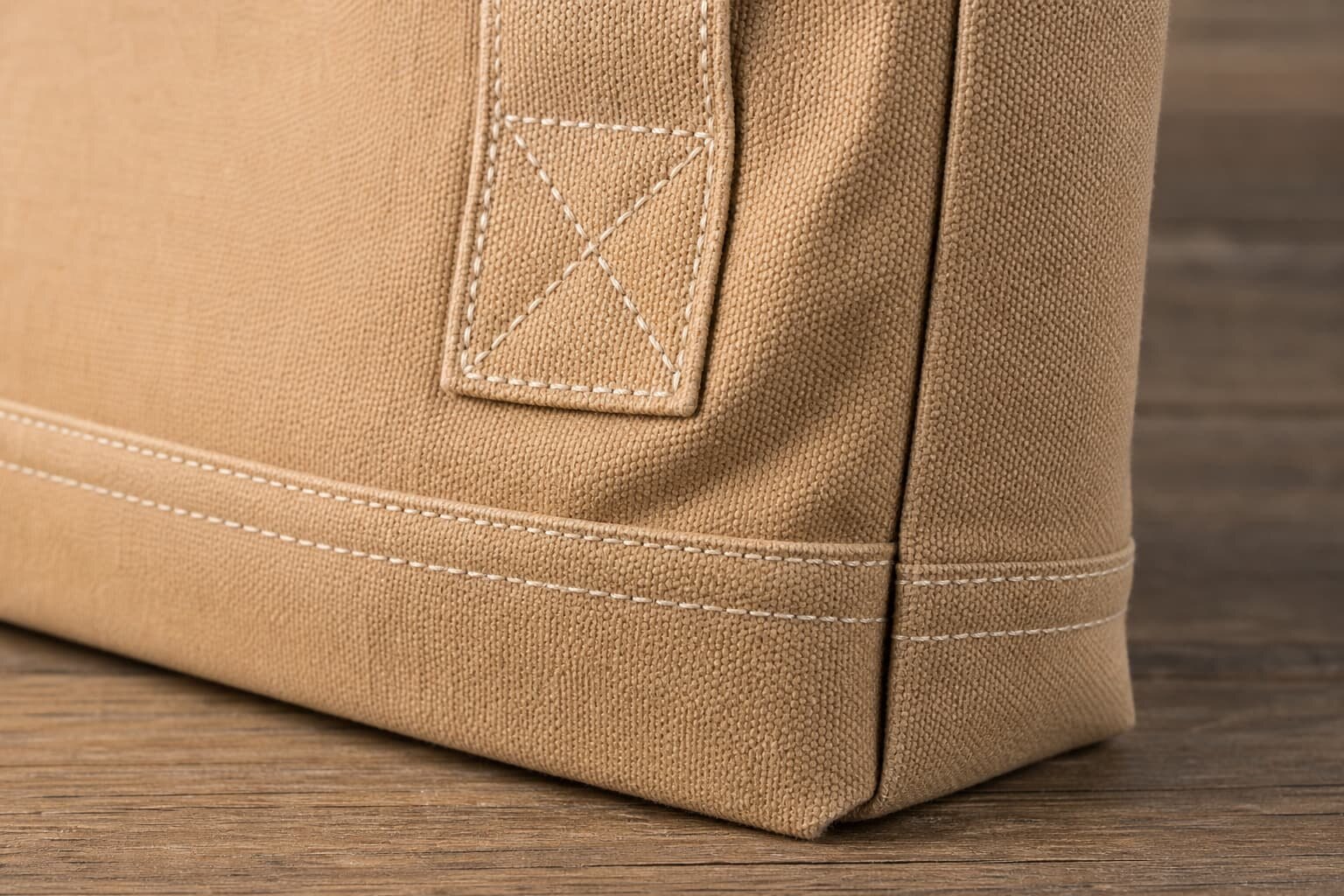
Why panel curing variance matters on canvas tote orders
A canvas tote bag print curing panel variance tracker is not paperwork for its own sake. It is the fastest way to prove whether the print line stayed inside the approved cure window from sample to shipment. On canvas, small changes in fabric absorbency, ink load, belt speed, and cooling time can show up as dull color, tacky surfaces, cracked edges, or offset in the carton. If the buyer only approves a photo, those defects often appear later, after the factory has already packed and shipped the goods. For procurement teams, the problem is simple: one uncontrolled print panel can turn into a lot-level claim if the lot has no traceable record.
This matters more on tote bags than many buyers expect because the bag is a sewn product with seams, folds, and stress points that affect print behavior. A front panel printed on 8 oz canvas does not behave the same way as the same artwork on 10 oz or 12 oz canvas, and a one-color logo near a seam cures differently from a centered field print. The tracker gives the factory and buyer one shared record of what was printed, where it was printed, and how it was cured. That is what lets you compare quotes on the same basis and catch process drift before bulk becomes rework.
- Use the tracker to connect the approved sample to the bulk run.
- Record cure settings at panel level, not just machine level.
- Treat panel variance as a production control issue, not only an inspection issue.
Start from the approved sample, not from the artwork file
The biggest buyer mistake is to treat the artwork file as the final reference. In tote bag sourcing, the approved sample should be the anchor because it captures the real fabric handfeel, print opacity, seam position, and cure result on actual material. Ask the factory to submit a pre-production sample made from the same canvas lot or the closest booked lot, with the same ink system and the same print line that will run bulk. If the sample was printed on a different press or cured on a different dryer, the approval is weaker than it looks. The sample record should state fabric GSM, bag size, handle length, print size, and the exact date it was produced.
A good tracker also keeps the sample version clear. Label the retained sample with artwork revision, print placement, fabric lot, and finish. That way, when the buyer inspects bulk or receives a claim report, everyone is comparing the same reference. For basic promotional totes, a one-color strike-off may be enough to prove color and placement. For retail or distributor programs, the buyer should ask for a first-article bag from the real production line, not just a flat panel. The difference matters because seams, folds, and bag assembly can alter how the print dries and how the surface rubs in packing.
- Lock artwork revision, fabric lot, and print position before bulk release.
- Keep one retained sample at the factory and one in buyer files.
- If the factory changes fabric or ink, require a fresh approval.
What the tracker should record on every printed panel
The tracker should be simple enough for the factory to use on a busy line and detailed enough for a buyer to audit later. At minimum, it should record panel ID, print side, bag style, fabric lot, GSM, ink type, print method, cure temperature, dwell time, belt speed or press time, and the date and shift. If the bag has front and back prints, log them separately. If the order uses more than one color, track each color set and note whether the print was done wet-on-wet or with a flash stage. That level of detail helps you see whether one shift, one operator, or one dryer lane is causing the drift.
The tracker should also capture what happens after cure. Many tote claims are not caused by the print itself but by poor handling after the print has dried enough to look fine. Add cool-down time, stacking method, carton load count, and whether interleaf paper or polybagging was used. For higher-risk programs, include a quick rub test, a tape test, and a simple fold test after the bag has fully cooled. If the front panel passes but the back panel does not, or if the left lane of the dryer is hotter than the right, you will see it in the data before you see it in the buyer complaint.
- Track one panel as one record, even if the bag has multiple print locations.
- Include cooling and packing data, not only cure data.
- Separate shift, lane, and operator information so drift can be traced quickly.
How canvas weight and fabric finish change cure behavior
Canvas weight is one of the first details that should sit in the RFQ because it changes how the print sits on the fabric. A lighter 8 oz canvas, often around 230 GSM, usually absorbs more ink and may need tighter control of viscosity and print pressure to avoid bleed or a soft edge. A 10 oz canvas, often around 300 to 340 GSM, is common for corporate and retail totes because it balances body, print clarity, and cost. Heavier 12 oz canvas can hold a sharp logo well, but it can also make thick ink layers more vulnerable to cracking along folds if the cure is too aggressive or if the print lands near a stress point. The same artwork can look acceptable on one GSM and fail on another.
Surface finish matters almost as much as weight. Raw canvas, washed canvas, calendered canvas, and dyed canvas all take ink differently. A more open weave can pull ink down into the fabric, which affects opacity and drying time. A smoother calendered surface can give a cleaner edge but may need a different curing profile. Buyers should ask the factory whether the fabric is pre-shrunk, whether it has been surface finished, and whether the print test was done on the same finish that will be used in bulk. If the answer is vague, the cure tracker cannot protect you later because the base material itself is moving.
- 8 oz canvas tends to absorb more ink and needs tighter print control.
- 10 oz canvas is often the safest middle ground for repeat programs.
- 12 oz canvas needs attention to fold lines, seam stress, and cure harshness.
Pick the print method and cure window before you compare quotes
A buyer cannot compare tote quotes fairly unless the print method is fixed first. Screen print is still the most common option for canvas tote bags because it gives strong coverage, clear edges, and predictable unit cost on repeat orders. Water-based inks work well for a softer handfeel, while plastisol or other higher-build systems can be more forgiving on color density but may need tighter packing controls after cure. Heat transfer or DTF can help on small runs or detailed artwork, but the buyer should expect a different risk profile around edge lift, feel, and carton blocking. The tracker should reflect the print method because the cure behavior is not the same across methods.
The cure window should be described in production terms, not vague quality language. Ask the factory to state the measured surface temperature, dwell time, and how they verify the cure at the print layer. For example, a quote might say the factory targets a certain temperature range for a set dwell time, but the real buying question is whether that setting was proven on the same canvas GSM and the same ink. Ask for the method of verification, such as tape test, rub test, or a control panel held aside for 24 hours. If the factory cannot explain how it knows the print is fully cured, the quotation is not yet comparable.
- Screen print is usually the best reference point for bulk tote programs.
- Heat transfer can suit short runs, but it changes the risk profile.
- Ask how the factory verifies cure, not only what temperature it claims.
Write acceptance criteria that a factory can actually inspect
The best RFQs do not just ask for a pretty sample. They define what must pass and how it will be checked. For print curing, write acceptance criteria for color match, placement, cure, and packing. Color should be compared against the retained sample or approved strike-off under a controlled light source. Placement should be measured from the top hem, side seam, or centerline, not judged by eye alone. Cure should pass a simple buyer-agreed test after full cool-down, such as no tackiness, no visible offset onto kraft paper, and no cracking when the print area is folded several times. These rules are more useful than a sentence saying the print must look good.
Acceptance criteria should also cover what happens if the line drifts. State whether the factory must stop the line, rework the panel, or notify the buyer before continuing. If the buyer program is retail-facing, add a condition for front and back panel consistency and a maximum acceptable shade shift across the same lot. For claims work, the key is traceability. If the factory can show that a sample passed the same tests, the same panel count, and the same cure window before bulk was released, the buyer can separate a real process failure from an isolated handling issue. Without those criteria, every dispute becomes a debate over opinion.
- Define pass/fail tests for adhesion, offset, cracking, and placement.
- Use measured points from seams and hems, not visual estimates.
- State the factory action required when one panel falls outside tolerance.
Compare supplier quotes on the same production basis
Quote comparison is where many tote buyers lose money. A lower unit price may hide a different canvas GSM, a weaker cure step, or a packing method that creates claims later. Ask every supplier to quote the same fabric weight, the same bag dimensions, the same print size, the same number of colors, and the same packing format. Then ask for a clear breakdown of screen fees, setup fees, sample fees, unit price by MOQ tier, and any extra charge for a second cure pass or a front-and-back print. If the factory is only quoting one price, you do not yet have a real comparison; you have a guess.
MOQ logic matters because print curing cost is not linear. A one-color logo on a single side may be economical at 500 to 1,000 pcs if the factory has fabric in stock and the press setup is simple. If you add a second color, a larger print area, or both front and back panels, the factory may need more screens, more passes, and more handling time, so the MOQ should rise or the unit price should move. That is normal. What is not normal is a quote that looks cheap because it omits the sample stage, the curing verification, or the packing controls. Use the tracker to force every supplier onto the same scope.
- Request pricing at 500, 1,000, and 3,000 pcs if your program may scale.
- Separate screen/setup fees from unit price so the real cost curve is visible.
- Check whether the quote includes extra curing passes or special packing.
Control samples, packing, and lead time so cured prints stay stable
Sample planning should be built around risk, not around convenience. A practical sequence is artwork proof, strike-off, pre-production sample, first-article check from the bulk line, and retained sample sign-off. For a simple one-color cotton canvas tote, a factory may quote a short sample cycle if fabric is already in stock, but buyers should still leave enough time for cure verification and a physical review. Bulk lead time often depends on fabric booking, printing queue, and packing queue, so do not let the factory merge them into one vague date. Ask for separate sample lead time and bulk lead time in the quote. That keeps schedule risk visible before you commit to a ship date.
Packing is the last place where a good print can be damaged. Cured prints should cool fully before stacking or bagging, because warm ink can transfer to the next bag or to the carton liner. For longer programs, ask whether the factory uses polybags, kraft interleaf, bundle ties, or carton dividers, and whether cartons are packed tightly enough to cause blocking. If the tote is printed on both sides, the risk of offset increases if the bags are stacked without enough cooling time. The tracker should note packing time and carton code so any issue can be traced back to the print batch instead of being treated as a general shipping problem.
- Separate sample lead time from bulk lead time in the quote.
- Require full cool-down before polybagging or carton loading.
- Record carton code and packing date beside the print lot.
The mistakes that cause claims after the bags leave the factory
Most tote print claims are preventable. One common mistake is approving a sample that was cured under one setting and then letting the factory switch to a faster line speed in bulk. Another is checking the print right after it leaves the dryer, when it looks dry but has not stabilized. Buyers also get caught when the factory changes fabric lot, ink batch, or operator without updating the record. Those changes are not always bad, but they must be visible in the tracker. If they are not visible, the buyer has no way to tell whether a defect came from printing, curing, packing, or storage.
A second group of mistakes happens in the quote stage. Some buyers ask only for one price and one sample, then discover later that front and back prints have different tolerances, or that the factory only quoted a single lane of the dryer. Others accept a photo proof, even though a canvas tote can pass a photo and still fail a rub test or block in carton. The cure tracker protects against those mistakes by forcing the supplier to write down what was actually controlled. The buyer does not need more paperwork; the buyer needs fewer surprises.
- Do not allow hidden changes in fabric lot, ink batch, or dryer speed.
- Do not approve a print before it has fully cooled and been rechecked.
- Do not accept a quote that ignores packing and carton behavior.
How to use the tracker from PP sample through final receiving
The tracker is most useful when it becomes part of the production rhythm. Start with the PP sample, then review the first production panels against the same sheet, then keep the same record through the lot. The factory should attach the lot code to the print record and keep a control panel or bag from each relevant run. If the buyer wants a stronger receiving process, the inspection team should open cartons by lot, check a few bags from each lot, and compare them to the retained reference sample under the same light. This is especially useful on orders with multiple colors, multiple print locations, or split shipments. The tracker turns each shipment into a traceable set of print decisions instead of one mixed box of assumptions.
For the buyer, the goal is not to inspect every bag. The goal is to know which lot needs attention when something drifts. A clean tracker lets procurement teams answer practical questions quickly: Was the issue on the front panel only? Did the second shift use a different cure profile? Did the color shift only appear in the heavier cartons? Once you have that record, claim review becomes evidence-based. That is why this tool belongs in the RFQ stage, not after the shipment lands. If the supplier knows the cure data will be reviewed, it usually takes the process more seriously from the start.
- Keep the tracker active from PP sample to final carton seal.
- Inspect by lot, not by mixed shipment, whenever possible.
- Use the record to isolate whether the issue is print, cure, or packing.
Specification comparison for buyers
| Spec decision | Recommended option | When it fits | Buyer risk to check |
|---|---|---|---|
| Fabric weight | 8 oz to 10 oz canvas, usually around 230 to 340 GSM | Promotional and retail tote programs that need a clean print surface without excessive bag weight | Ask whether the factory is quoting raw, washed, or calendered canvas because absorbency changes cure behavior |
| Print method | One-color or limited-color screen print with controlled curing | Most repeat tote programs where logo sharpness and unit cost matter | Confirm mesh count, ink system, and whether the cure is measured at the print layer or only at machine settings |
| Curing setup | Conveyor or tunnel cure with recorded belt speed, temperature, and dwell time | Bulk orders that need consistent panel-to-panel results | Do not accept a quote that names only a target temperature without the actual production dwell and loading density |
| Sampling method | Approved strike-off plus pre-production sample and first-run panel check | Any order that needs brand approval before bulk | A photo-only approval can miss tackiness, smell, or edge cracking after cooling |
| Packing method | Fully cooled, stacked by lot, polybagged or bundled with interleaf if needed | Export cartons and distributor programs where print transfer or blocking is a risk | Check whether warm packing, carton compression, or humid storage can mark the print surface |
Buyer checklist before sampling
- Confirm the canvas GSM, weave, finish, and whether the fabric is pre-shrunk or calendered.
- Lock the artwork version, print size, print position, and panel location on the approved sample.
- Ask for the exact ink system, cure method, belt speed or press dwell time, and actual measured cure temperature.
- Request a first-article sample from the same fabric lot and the same print line that will run bulk.
- Define a simple pass/fail test for tackiness, rub resistance, and visible cracking after cooling and folding.
- Ask for lot traceability on panels, print runs, and packing date so claims can be isolated fast.
- Quote 3 MOQ tiers, not just one unit price, so you can see screen, setup, and packing logic.
- Check whether front and back prints, multiple colors, or oversized logos trigger extra cure passes or extra handling.
- Require carton and polybag instructions that prevent offset, blocking, or compression marks.
- Keep a retained sample from the approved PP stage and label it with fabric lot, artwork version, and date.
Factory quote questions to send
- What is the exact canvas GSM, weave count, and surface finish you are quoting?
- Which print method are you using, and is the ink water-based, plastisol, discharge, or transfer film?
- What are the recorded cure settings for the sample and bulk run, including belt speed, dwell time, and measured surface temperature?
- How many screens, color separations, or print passes are included in the quoted price?
- What is the MOQ by artwork, by color, and by print location on the bag?
- Does the quote include pre-production sampling, strike-off approval, and first-article checks?
- What is the packing method after curing, and do you allow cooling time before polybagging or carton loading?
- How do you handle front and back panel variation, print placement tolerance, and misprint allowance?
- What lead time applies to sample approval, fabric booking, and bulk production separately?
- Which quote items are extra, such as screen fees, setup fees, remake fees, overrun limits, or carton mark changes?
Quality-control points to confirm
- Measure and record the actual fabric lot, GSM, and width before printing starts.
- Check the first panel after curing for tackiness, edge lift, cracking, or shade shift against the approved sample.
- Verify print placement from the top hem and side seam, not from the bag edge alone.
- Run a tape or rub test after full cool-down, not immediately after the tote leaves the dryer.
- Track cure settings by batch: operator, machine, belt speed, dwell time, and measured temperature.
- Keep front and back panels separate during inspection if they are printed differently or on different shifts.
- Inspect packed cartons for offset, blocking, odor, and compression marks before seal-up.
- Retain one sealed reference bag per lot for later claim review.