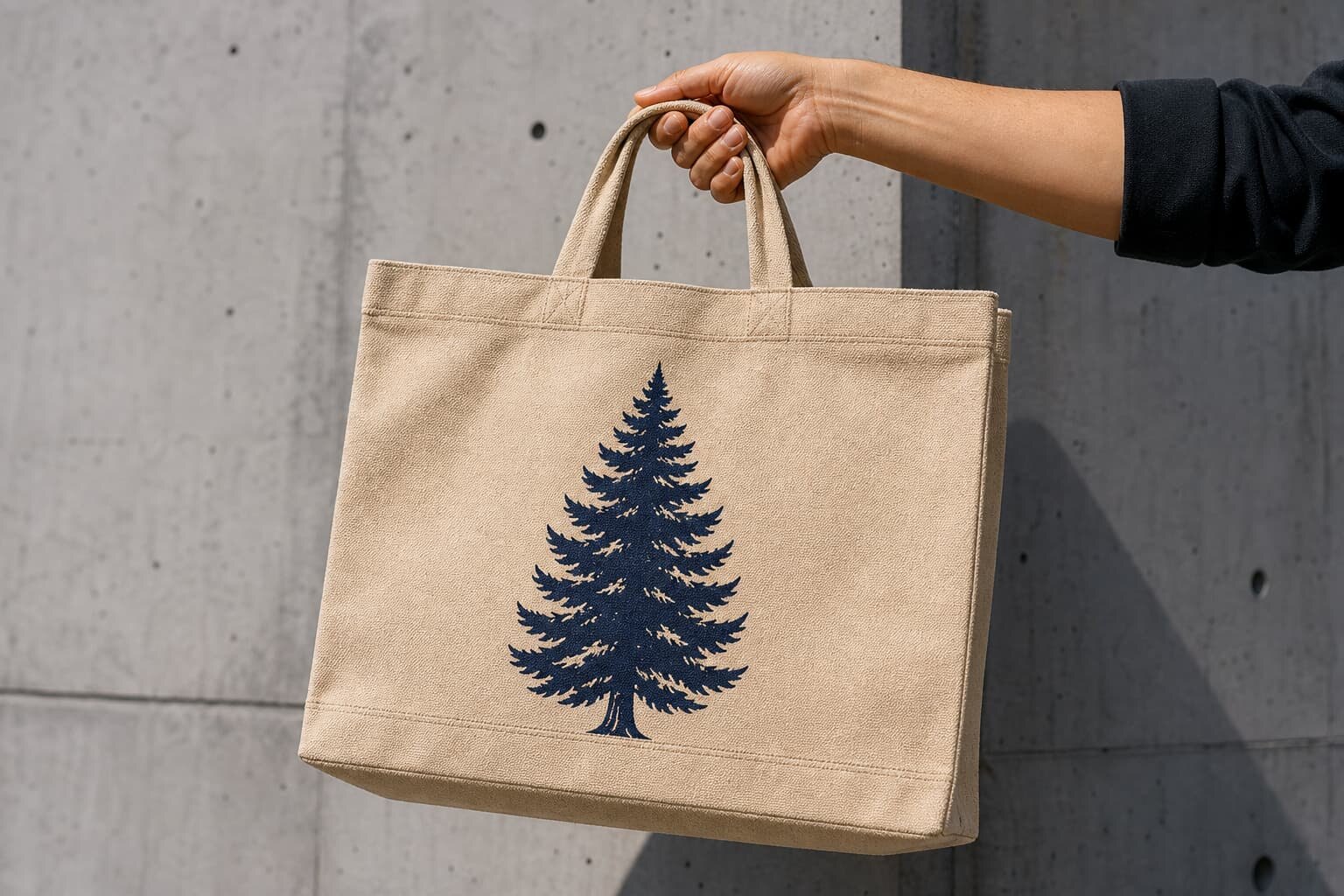
Why Buyers Need a Print Curing Panel
A canvas tote bag can look acceptable in a photo and still fail after packing because the print was not cured correctly. Under-cured ink may feel slightly sticky, smell strong, transfer to the opposite panel, or crack when the bag is folded. Over-cured ink can become brittle, scorched, or too rough for a retail tote. A print curing panel is a controlled sample that lets the buyer approve the ink, fabric, heat setting, and handling process before the factory prints the full order.
For procurement teams, the curing panel is not an art sample only. It is a production control record. It should show the exact canvas weight, ink type, print size, color, curing condition, and test result that the factory will repeat in bulk. When quotes from suppliers look similar, the factory that can explain curing control usually gives a more reliable answer than the factory that only says the logo will be printed clearly.
- Use the panel to approve ink adhesion before bulk printing starts.
- Keep the signed panel as a reference for bulk inspection.
- Compare supplier capability beyond unit price and bag dimensions.
- Prevent claims caused by ink transfer, cracking, odor, or poor color consistency.
Define the Canvas Before Discussing Print
Print curing depends heavily on the canvas base. A 6 oz promotional cotton bag behaves differently from a 12 oz retail canvas tote. Heavier canvas absorbs and holds ink differently, and a rough open weave can make edges look less sharp. If the RFQ only says natural canvas tote bag, suppliers may quote different fabric grades while using the same product photo. That makes print performance and price comparison unreliable.
For most branded canvas tote bags, buyers commonly review 8 oz, 10 oz, and 12 oz cotton canvas. In GSM terms, that may fall roughly around 230 GSM, 280 GSM, and 340 GSM, depending on the mill and weave. Ask the supplier to state both oz and GSM when possible, because some markets buy by ounce while factory purchasing may control fabric by GSM. If the order uses recycled cotton, organic cotton, dyed canvas, or washed canvas, curing tests should be made on that exact material.
- Light giveaway tote: 6-8 oz cotton canvas, usually lower cost but less premium hand-feel.
- Standard brand tote: 10 oz canvas, often a good balance for screen print and retail use.
- Heavier retail tote: 12 oz or above, stronger body but more attention needed for folding and carton weight.
- Dyed canvas: check ink opacity, migration, and color contrast before bulk approval.
- Washed canvas: test after washing process because surface texture and shrinkage affect print.
Choose the Right Print Method for the Artwork
The curing panel should match the selected print method. Screen printing is often the practical choice for cotton canvas tote bags with one to four solid colors. It gives good coverage and stable cost at volume, but curing must be controlled. Water-based ink can give a softer hand-feel, while plastisol can give stronger opacity on some grounds. The right choice depends on logo size, fabric color, brand feel, and compliance requirements.
Digital print, heat transfer, embroidery, woven labels, and sewn patches can also be used, but they solve different problems. Digital print may be useful for complex artwork or short runs, while heat transfer can produce sharp graphics but may feel like a film on canvas. Embroidery is durable but not suitable for very small text on coarse canvas. If suppliers quote different print methods under the same RFQ, the unit prices are not truly comparable.
- Use screen print for solid logos, repeat programs, and controlled Pantone colors.
- Use digital print when artwork has gradients or many colors, but check wash and rub behavior.
- Use heat transfer only after checking edge lift, hand-feel, and folding lines.
- Use embroidery or woven labels when the buyer wants texture rather than large graphic coverage.
- State maximum print area and number of colors in the RFQ to avoid quote revisions.
What the Curing Panel Should Include
A useful print curing panel is not a random small swatch with a logo corner. It should be large enough to show ink coverage, edge definition, color density, and reaction to folding. For a canvas tote bag with a front logo, an A4-size fabric panel may be enough for simple marks, but a full front bag panel is better when the artwork is large or close to seams. If the print runs across a pocket, gusset, or near the bottom fold, test on the actual sewn construction or a cut panel with the same seam allowance plan.
The factory should mark the panel with the basic production data. This does not need to be complicated, but it must be traceable. A signed panel without data becomes a visual sample only. A signed panel with fabric GSM, ink type, curing date, print method, color reference, and approval status becomes a working production standard for the printing room, sewing line, final QC, and buyer inspection.
- Bag style and size, for example 38 x 42 cm with 10 cm gusset.
- Fabric weight, such as 10 oz or 280 GSM natural cotton canvas.
- Print method, ink type, number of colors, and Pantone or brand color reference.
- Artwork size and print position from top hem, side seam, and bottom edge.
- Curing process reference, such as conveyor dryer, heat press, or tunnel drying method.
- Buyer approval date, factory sample keeper, and revision number.
Acceptance Criteria Buyers Can Actually Use
Do not approve a curing panel only because the print looks good in a bright sample room. The panel must be handled the way bulk bags will be handled. That means rubbing the print after it cools, folding it where the export pack will fold it, pressing printed surfaces together, and checking whether the ink transfers. A simple practical test is often more useful than a vague promise that the ink is durable.
Acceptance criteria should be written before the sample is made. If the buyer asks for tests only after seeing a problem, the factory may treat the problem as a special complaint rather than a production requirement. For most commercial canvas tote bag orders, practical pass/fail checks can be enough, unless the buyer has a formal lab standard. If lab testing is required, state the test method and responsibility for cost in the RFQ.
- Rub test: dry white cloth rubbed across print should not show obvious color transfer.
- Tape pull: standard tape pressed and removed should not lift visible ink from the canvas.
- Fold check: normal packing fold should not create cracking across the logo.
- Blocking check: printed face pressed against canvas should not stick or transfer after cooling.
- Odor check: strong solvent or uncured ink smell should be rejected before packing.
- Color check: compare against approved panel under consistent daylight or light box conditions.
Quote Data That Changes the Real Unit Cost
Print curing control affects cost because it adds setup, testing, handling time, and sometimes slower production speed. A supplier quoting only bag size and logo print may miss important cost drivers. For example, a one-color logo on natural 10 oz canvas is usually easier to quote than a large white print on black dyed canvas, because opacity, ink layer, drying time, and reject risk are different. Procurement teams should ask for the data behind the price, not just the final FOB number.
MOQ also needs careful reading. A factory may accept a small sewing quantity but still charge screen setup, ink mixing, and sample work. If the fabric is custom dyed or the handle webbing is custom colored, the MOQ may come from the material supplier rather than the tote bag workshop. Good RFQs separate bag MOQ, print MOQ, sample charges, and material minimums so the buyer can decide whether to reduce logo colors, use stock fabric, or increase quantity for better cost efficiency.
- Bag body: size, gusset, handle length, fabric GSM, stitching level, and inside finishing.
- Print: number of colors, print area, ink type, screen count, curing method, and artwork complexity.
- Sampling: artwork proof, curing panel, pre-production sample, and courier cost.
- Packing: individual polybag or bulk pack, carton quantity, carton size, and moisture protection.
- Commercial terms: MOQ, price break quantities, lead time, payment terms, and validity of quote.
- Inspection: inline print check, final AQL inspection, and retained approved sample.
Sample Workflow Before Bulk Release
A controlled workflow reduces delays. Start with artwork confirmation and fabric selection, then make the curing panel, then move to a finished pre-production sample. If the buyer skips directly to a finished bag sample, the factory may spend time sewing a bag before print issues are solved. If the buyer approves only the curing panel and never checks the finished bag, the print may still land too close to the handle seam, side seam, or bottom fold.
For complex orders, use two approvals. First approve the curing panel for ink behavior and color. Second approve the pre-production tote for construction, print position, handle length, stitching, and packing. This prevents the common argument where the factory says the print was approved but the buyer complains the logo placement is wrong after sewing.
- Step 1: Confirm bag drawing, fabric GSM, print artwork, Pantone reference, and packing plan.
- Step 2: Factory makes curing panel on approved fabric and records the curing method.
- Step 3: Buyer checks rub, fold, tape, odor, color, and hand-feel.
- Step 4: Factory makes pre-production sample using approved print standard.
- Step 5: Buyer signs or digitally approves sample with clear comments.
- Step 6: Bulk production starts only after approval status is clear to merchandising and production teams.
Common Production Mistakes to Prevent
The most expensive print problems often come from small process gaps. Bags may be packed while the ink is still warm. Operators may change dryer speed to increase output. Fabric from a second lot may absorb ink differently. A logo approved on a flat panel may become distorted when printed too close to a gusset or seam. These are not unusual factory issues; they are normal risks if the buyer does not define the control points.
The worksheet should force both sides to discuss these risks before mass production. A good supplier will not be offended by specific curing questions. In fact, detailed questions help the factory protect its own production. The buyer should also avoid impossible requirements, such as demanding very soft hand-feel, perfect opacity on dark fabric, very low MOQ, fast delivery, and zero setup cost at the same time.
- Warm stacking: causes blocking, shine marks, and ink transfer inside cartons.
- Wrong fabric lot: changes ink absorption, color depth, and print edge sharpness.
- Large solid ink area: increases cracking risk if folded through the artwork.
- Unclear position tolerance: creates disputes when logo appears slightly off center.
- Phone photo approval: hides tackiness, odor, ink thickness, and real surface texture.
- Late packing change: new fold line may cross the logo and reveal curing weakness.
Packing and Lead Time Considerations
Packing is part of print quality. Canvas tote bags are often folded, stacked, compressed, and kept in cartons for weeks during export transport. If the printed face touches another printed face, or if the logo is folded sharply while the ink is not stable, the buyer may receive bags with marks that did not exist during final inspection. Ask the factory to show the folded packing sample and confirm how long printed bags cool before folding.
Lead time should include sample approval and curing validation, not only sewing days. A realistic schedule may include artwork checking, fabric purchasing, cutting, printing, curing, sewing, trimming, inspection, packing, and booking. If the buyer needs a launch date, the RFQ should identify which approval delays are buyer-side and which steps are factory-side. Fast orders are possible only when fabric, ink, screens, and packing materials are available.
- Confirm whether printing happens before sewing on cut panels or after sewing on finished bags.
- Ask whether each tote is bulk packed, individually polybagged, belly banded, or retail tagged.
- Avoid folding directly across a thick logo when the design allows another fold position.
- Check carton weight for heavy canvas, especially 12 oz and above.
- Allow extra time for revised curing panels if the first ink color or hand-feel is rejected.
- Make sure the approved packing method is used again during final production, not changed to save space.
How to Use This Worksheet in an RFQ
Send the worksheet with your first RFQ instead of waiting for problems during sampling. The supplier should return the quote with fabric details, print method, setup cost logic, sample plan, curing control, packing method, and lead time. This makes supplier comparison cleaner because each quote answers the same production questions. It also reduces the risk that a low quote is based on lighter fabric, smaller print area, weaker packing, or skipped sample testing.
When reviewing supplier replies, look for specific answers rather than polished sales language. A strong factory answer may mention conveyor dryer control, print position tolerance, cooling time, retained approved panel, and carton packing direction. A weak answer may only say good quality, durable print, and fast delivery. For branded canvas tote bags, the buyer should reward process clarity because it protects the launch date and reduces claim risk.
- Attach artwork file with dimensions, not only a logo screenshot.
- State target quantity and forecast quantity separately if repeat orders are possible.
- Ask for quote options by fabric weight, such as 8 oz, 10 oz, and 12 oz canvas.
- Request sample photos plus physical curing panel when color and hand-feel matter.
- Record every approved revision so factory, buyer, and inspector use the same standard.
- Do not release bulk printing until the curing panel and pre-production sample are both approved.
Specification comparison for buyers
| Spec decision | Recommended option | When it fits | Buyer risk to check |
|---|---|---|---|
| Canvas body fabric | 10 oz to 12 oz cotton canvas, about 280-340 GSM | Retail giveaways, bookstore totes, brand merchandise, and daily carry bags with medium logo coverage | Loose weave or heavy shrinkage can distort print edges after curing and pressing |
| Print method | Screen print with water-based or plastisol ink, approved by artwork color and hand-feel target | Simple logos, bold graphics, repeat promotional orders, and volume import programs | Ink film too thick may crack on folded packing lines; ink film too thin may fail rub testing |
| Curing panel size | Same fabric, same print area, same ink, minimum A4 panel or full front tote panel | Pre-production approval before cutting all bulk fabric or printing finished bags | Small swatches may not show edge bleeding, registration drift, or heat press marks |
| Curing approval test | Rub test, tape pull, wash reference if needed, stretch/fold check, and color comparison under standard light | Buyer wants a practical pass/fail record before releasing bulk printing | Approval based only on photos can miss tacky ink, odor, poor cure, and surface cracking |
| Packing after print | Fully cooled bags, single direction folding, print-to-print contact avoided or protected | Natural canvas bags with front logo and carton export packing | Warm ink stacked too early can block, transfer, or leave pressure marks inside cartons |
| MOQ and print setup | MOQ tied to fabric procurement plus print screen setup, not only bag sewing quantity | Custom logo orders with Pantone colors, special ink, or repeated purchase planning | Very low MOQ can increase unit cost because screen, ink mixing, sampling, and curing tests are fixed costs |
Buyer checklist before sampling
- Confirm canvas weight in oz and GSM, and ask whether the quoted fabric is greige, dyed, washed, or pre-shrunk.
- Specify print method, ink type, artwork size, print position tolerance, Pantone reference, and whether hand-feel is soft or high-opacity.
- Request a curing panel made on the same canvas lot or approved bulk fabric, not on a random cotton swatch.
- Define curing acceptance checks: rub test, tape pull, fold/crack check, odor check, and color comparison after full cooling.
- Approve both flat panel print and finished bag print when the seam, gusset, and handle placement affect artwork position.
- Ask the factory to record curing temperature range, belt speed or dwell time, and whether the panel passed before bulk printing starts.
- Check packing method so printed faces do not press against each other before the ink is stable.
- Require quote data for bag size, fabric GSM, handle spec, print area, number of colors, packing quantity per carton, sample charge, MOQ, and lead time.
Factory quote questions to send
- Which canvas weight and construction are included in your quote: oz, GSM, yarn count if available, and shrinkage expectation?
- Will the curing panel be printed on the same fabric as bulk production, and can you keep one signed panel at the factory for comparison?
- What print method are you quoting for this canvas tote bag: screen print, digital print, heat transfer, embroidery, woven label, or another method?
- For screen print, how many colors, how many screens, what ink type, and what curing equipment will be used?
- What is your normal print position tolerance from top hem, side seam, and bottom fold for this bag size?
- How long after curing do you wait before stacking, sewing if printed before assembly, folding, and carton packing?
- What sample stages are included: artwork proof, printed curing panel, pre-production sample, and packed sample?
- What production MOQ applies to the bag body, the printed logo, and any dyed fabric or custom handle color?
- What is the estimated lead time for sampling, buyer approval, bulk material preparation, printing, sewing, inspection, and packing?
- Can you provide photos or a simple inspection record showing rub test, tape test, fold test, and final packed carton method?
Quality-control points to confirm
- Ink is fully cured before stacking: no tacky touch, no odor from under-cured ink, and no transfer when pressed face to face.
- Print color matches the approved curing panel within agreed lighting conditions, not only a phone photo.
- Print edges are clean on the selected canvas weave, with no excessive bleeding into the cotton yarns.
- Artwork position is checked from fixed bag references such as top hem edge, side seam, bottom fold, and handle centerline.
- Logo does not crack across normal folding lines used for export packing.
- The approved panel, pre-production sample, and bulk inspection sample use the same fabric weight, ink type, and curing setup.
- Printed bags are cooled before folding and are packed to prevent print-to-print blocking during ocean freight or warehouse storage.
- Carton markings, polybag choice if used, and inner packing protect natural canvas from dirt, moisture, and ink abrasion.