Why salon chain tote pricing needs a worksheet
A salon chain usually buys canvas tote bags for a specific commercial job: carry retail haircare sets, promote a membership program, support a grand opening, or give stylists a branded event bag. The pricing problem is that many quotes look similar on the first line but are not pricing the same bag. One supplier may quote 8 oz stock cotton canvas with short handles and one-color print. Another may quote 12 oz canvas, gusseted bottom, reinforced handle stitching, individual packing, and PMS-controlled screen print. The unit price gap may look like negotiation room, when it is actually a specification gap.
A useful canvas tote bag pricing worksheet forces every supplier to price the same construction, fabric, decoration, packing, and schedule. It also helps procurement explain cost differences to brand, retail, and operations teams. The goal is not to make every bag expensive. The goal is to know which choices save money safely and which choices reduce the bag’s retail value or create complaints at salon level.
- Treat the tote as packaging, promotion, and customer-facing merchandise at the same time.
- Do not compare quotes until fabric weight, finished size, print method, and packing are aligned.
- For salon chains, test the bag with real bottles and retail kits, not only paper weight.
- Keep one approved worksheet version so purchasing, marketing, and the factory work from the same specification.
Start with the bag’s job before choosing fabric
The first line in the worksheet should be the intended use. A tote used as a free event giveaway can accept lighter fabric and simpler packing. A tote sold at reception or used for a premium product set needs better body, cleaner stitching, and more controlled printing. For salon chains, the load is often awkward: bottles are tall, heavy, and sometimes have pump tops. A bag that looks fine flat may tip over or sag badly when loaded with two 300 ml bottles and a brush.
Fabric weight is the most visible cost driver. In common factory language, canvas tote fabric may be described in ounces or GSM. Light cotton canvas around 6 oz to 8 oz can work for low-cost handouts, but it usually feels thin for a salon retail bundle. A practical range for chain salon promotional or retail-grade totes is often 10 oz to 12 oz, roughly 340 to 410 GSM depending on construction. Heavier canvas around 14 oz gives a stronger premium feel but increases material cost, sewing difficulty, carton weight, and freight.
- Budget giveaway: 6 oz to 8 oz canvas, simple flat shape, one-color print, limited load expectation.
- Standard salon campaign tote: 10 oz canvas, gusseted bottom, reinforced handles, one or two print colors.
- Premium resale or membership tote: 12 oz to 14 oz canvas, stronger structure, cleaner finishing, possibly inner pocket or label.
- Avoid vague specifications such as “thick canvas” or “eco cotton bag”; they do not allow accurate comparison.
The core pricing worksheet fields
A buyer-friendly worksheet should separate bag body, decoration, packing, and trade terms. When all information is mixed into one product description, suppliers may fill the gaps differently. The finished size must be clear: width, height, gusset, and whether dimensions are measured flat after sewing. Handle length should be shown as total length or drop length. For shoulder-carry salon totes, a total handle length around 55 to 65 cm is common, but the right choice depends on bag height and target user.
Artwork details also need separate rows. A one-color logo printed on one side is not the same quote as a two-side design, a large coverage slogan, a gradient, or a dark fabric bag requiring white underbase. A worksheet should also show if the buyer requires branded woven labels, care labels, hangtags, barcode stickers, or retail-ready folding. These details may be small individually, but they affect labor flow, sampling, carton count, and inspection.
- Finished bag size: width x height x gusset, with tolerance.
- Fabric: material composition, weight in oz/GSM, color, dyed or natural, stock or custom.
- Handles: material, width, length/drop, stitch type, load expectation.
- Decoration: print method, number of colors, print size, position, one side or two sides.
- Brand trims: woven label, side label, hangtag, barcode, care label, inside pocket if any.
- Packing: flat fold, bundle pack, individual polybag, carton quantity, carton mark.
- Trade data: MOQ, lead time, Incoterm, payment term, quote validity, sample cost.
Cost drivers that change the quote more than buyers expect
Fabric consumption is the largest base cost, but it is not only about GSM. A deeper gusset, longer handle, large pocket, or wider seam allowance consumes more fabric. Natural unbleached canvas is often more economical than custom dyed canvas because it avoids dyeing MOQ and color-matching time. However, unbleached fabric has natural specks and shade variation. If the salon brand expects a clean cosmetic retail look, the worksheet should define acceptable natural cotton marks or choose a bleached or dyed fabric.
Decoration can shift pricing quickly. Screen printing is usually efficient for solid salon logos and simple campaign artwork, especially at 500 pcs and above. Each color normally needs a separate screen and setup. Heat transfer can handle gradients and fine detail, but the handfeel, durability, and edge behavior must be approved by sample. Embroidery on canvas gives a premium look but may pucker lighter fabric and is slower for large logos. For cost control, keep print size realistic and avoid changing artwork after screen making.
- Higher GSM increases material cost, sewing resistance, carton weight, and sometimes needle breakage risk.
- Custom fabric color adds dyeing lead time, shade approval, and often a higher MOQ.
- Large print coverage uses more ink and may need longer curing time.
- Dark fabric with light logo may require underbase, adding setup and ink layers.
- Individual polybagging increases labor and material cost and can raise carton volume.
- Retail labels, hangtags, and barcode stickers add handling steps that should be priced before order confirmation.
MOQ logic for salon chains and distributors
MOQ is not a random number. It comes from fabric availability, cutting efficiency, printing setup, sewing line changeover, and packing work. If the salon chain can use natural canvas, common tote size, and one-color print, a factory may support a lower custom order quantity than a dyed fabric bag with several regional artworks. A realistic starting point for custom printed canvas totes is often 300 to 500 pcs per artwork, while better unit pricing normally appears at 1,000 pcs and above.
For multi-location chains, the worksheet should show whether the quantity is one artwork shipped to one warehouse or split into many salon groups. A 3,000 pc order with one print is very different from 3,000 pcs split across 12 location-specific prints of 250 pcs each. Every artwork may require setup, proofing, screens, line separation, and packing control. If regional personalization is needed, consider a main canvas tote produced in bulk with a smaller variable element, such as hangtag, sticker, or insert card, instead of changing the printed bag for every location.
- Best MOQ efficiency: one fabric color, one size, one artwork, one packing method.
- Moderate complexity: same bag with two or three print colors or two shipping destinations.
- High complexity: many regional artworks, custom dyed fabric, individual barcode labels, or store-level carton sorting.
- For distributor programs, quote price breaks at 300, 500, 1,000, 3,000, and 5,000 pcs to see the real cost curve.
- Do not assume a repeat order will match the first price if fabric market, exchange rate, or packing requirement changes.
Print method choices for salon branding
Salon brands often have clean logos, muted colors, and high expectations for cosmetic presentation. Screen print remains the workhorse for canvas totes because it gives strong color, stable repeatability, and good cost at volume. It works best for solid shapes, simple typography, and limited colors. On natural canvas, ink absorbs differently than on smooth synthetic fabric, so the approved sample is more reliable than a digital proof.
Heat transfer is useful when the design includes gradients, photographic detail, or many colors in a small area. The tradeoff is handfeel and durability behavior. Transfers can feel like a film on the bag surface, and corners may lift if the transfer type, heat, pressure, or washing expectation is wrong. Embroidery may suit a premium salon sub-brand, but it is not the cheapest way to print a large front-panel campaign message. If the tote is expected to carry haircare products rather than be washed often, the worksheet should still define rub resistance and print adhesion checks.
- Use screen print for one to three solid brand colors and repeat orders where consistency matters.
- Use heat transfer for gradient artwork, fine multi-color graphics, or short runs with detailed art.
- Use embroidery for smaller premium logos, not large promotional slogans on light canvas.
- Specify PMS references, but approve a physical print because canvas texture changes color perception.
- State the maximum print area and distance from seams or gusset folds to avoid distortion.
Sample approval that prevents expensive rework
A pre-production sample is not a courtesy item; it is the physical contract for the bulk order. For a canvas tote bag pricing worksheet, the sample line should state what the sample must represent. A blank sample confirms size and sewing only. A printed sample on substitute fabric confirms almost nothing about final color, ink coverage, or handfeel. The most useful sample uses bulk fabric, final handle construction, final print process, and the intended packing fold.
Procurement should route the sample to the right internal reviewers. Marketing checks logo size and color. Retail or operations checks whether the bag holds the intended products. Warehouse or distribution checks carton and barcode needs. If feedback comes after production starts, the factory may have already cut fabric or made screens. The worksheet should include a sample approval deadline and define who has authority to approve final production.
- Measure finished width, height, gusset, handle width, and handle drop on the sample.
- Load the sample with real salon products and carry it by the handles for a practical stress check.
- Compare print color against the approved target under stable lighting.
- Rub the print with a dry white cloth after curing to check obvious ink transfer.
- Review the fold line and packing method because tight folds can mark printed areas.
- Keep one sealed approved sample at the buyer side and one at the factory side.
QC thresholds to write into the purchase order
Canvas is a natural woven material, so the purchase order should not demand impossible perfection. It should define acceptable and unacceptable variation. Natural cotton specks, minor shade variation, and small slubs may be normal for unbleached canvas. Oil stains, dirty hand marks, broken seams, skipped stitches, severe print misalignment, and strong odor are not acceptable for a salon-facing retail item. Clear thresholds reduce argument during final inspection.
For size tolerance, many standard totes can be controlled around +/-1 cm on width and height, with handle length tolerance agreed separately. Print placement tolerance should be measurable from the bag edge, not judged by eye only. Handle strength should match the intended load. If the bag will carry two or three bottles, the handle attachment should be reinforced with cross-stitch, box stitch, or bar tack depending on the construction. Random inspection should include both loose bags and packed cartons so carton count, folding, labels, and shipping marks are also verified.
- Major defects: broken handle seam, wrong fabric weight, wrong artwork, wrong bag size outside tolerance, stains on front panel, print peeling.
- Minor defects: small loose thread, minor natural cotton speck, slight shade variation within approved range.
- Print tolerance: define horizontal and vertical placement tolerance, such as within 5 mm to 10 mm depending on artwork size.
- Stitching: require no skipped stitches at stress points and no open seams.
- Odor: reject strong chemical or mildew smell, especially for bags packed in polybags.
- Carton inspection: verify quantity, carton mark, gross weight, and carton condition before shipment.
Packing and freight details that affect landed cost
A low ex-factory unit price can be misleading if packing creates unnecessary volume or damage risk. Canvas totes are usually flat packed, often 50 pcs per export carton depending on size and fabric weight. Heavier canvas and gusseted bottoms reduce how tightly bags can be packed without deep creases. If the print is large, folding across the logo may leave pressure marks, especially when cartons are stacked for long transit. The worksheet should show the proposed folding method, pieces per inner bundle, and whether individual polybags are required.
For landed-cost comparison, carton dimensions and gross weight are not optional. Ocean freight, domestic trucking, and warehouse handling all depend on CBM and weight. Individual polybags may be required by some retail distribution systems, but they add cost, increase plastic use, and can trap odor if bags are packed before ink is fully cured. If salon-level distribution is needed, carton marks can be organized by region or campaign, but store-level sorting should be priced as an extra handling service.
- Request carton size, pieces per carton, net weight, gross weight, and total CBM in the quote.
- Keep carton gross weight practical for warehouse handling; very heavy cartons increase damage and labor complaints.
- Avoid folding directly through thick printed ink where possible.
- Use inner bundle packing when full individual polybags are not necessary.
- For chain rollout, decide carton marks before production: campaign name, PO number, SKU, destination, and quantity.
- If barcodes are needed, specify label size, barcode type, placement, and scan test requirement.
Lead time and schedule risk for campaign rollouts
Canvas tote production looks simple, but schedule risk often comes from decisions before sewing starts. Artwork revisions, unclear PMS targets, late label files, delayed sample approval, or custom dyed fabric approval can consume more time than cutting and sewing. A practical schedule for a standard custom printed canvas tote may include 7 to 10 days for sample after artwork approval and about 20 to 35 days for bulk production after sample approval, depending on quantity, fabric availability, and factory season. These are planning ranges, not universal promises.
Salon chains should build backward from the in-hands date, not the event date. Goods need time for final inspection, export packing, vessel or air booking, customs clearance, domestic delivery, warehouse receiving, and salon distribution. If the tote supports a product launch, late delivery can force expensive air freight or separate shipments. The worksheet should make schedule ownership clear: when artwork is due, when sample approval is due, when deposit is due, when bulk completion is expected, and when shipping documents must be ready.
- Fastest path: stock natural canvas, standard size, one-color print, one delivery destination.
- Slower path: custom dyed fabric, multiple artwork versions, woven labels, individual barcode labels, store-level packing.
- Add buffer before holidays, trade shows, and peak export season.
- Do not book promotions based on verbal lead time before sample and artwork are approved.
- If air freight is the backup plan, compare the cost before confirming a risky production schedule.
Specification comparison for buyers
| Spec decision | Recommended option | When it fits | Buyer risk to check |
|---|---|---|---|
| Fabric weight | 10 oz to 12 oz canvas, roughly 340 to 410 GSM | Salon retail gift-with-purchase, product bundle tote, membership welcome kit, or resale bag that needs a firm handfeel | Quotes using only “canvas” may hide 6 oz to 8 oz fabric; require ounce or GSM, yarn count if available, and approved fabric swatch |
| Construction style | Flat tote with gusseted bottom and reinforced handle cross-stitch | Holds shampoo bottles, retail haircare sets, towels, or styling tools without looking bulky | A non-gusset flat bag may price lower but carries less; weak handle stitching can fail when liquid products are packed |
| Handle specification | Self-fabric handles, 2.5 to 3 cm wide, 55 to 65 cm total length | Comfortable shoulder carry for salon retail customers and staff event distribution | Handle length changes fabric consumption; short handles reduce cost but hurt user experience |
| Printing method | Screen print for 1 to 3 solid colors; heat transfer for gradients or small detailed art | Most salon chain logos, simple campaign messages, or location-neutral branding | Screen setup charges, PMS matching, underbase on dark canvas, and print area limits must be separated in quote |
| MOQ structure | 300 to 500 pcs per artwork as a practical starting point; better fabric efficiency at 1,000 pcs+ | Regional salon rollouts, new product launches, staff training events, and distributor programs | Very low MOQ may use stock bag blanks with limited size/color control; custom dyeing or custom fabric needs higher MOQ |
| Packing method | Flat packed 50 pcs per export carton with inner polybag by bundle if required | Keeps carton CBM predictable for sea freight and reduces deep creases compared with tight compression | Individual polybags add labor, material cost, waste, and carton volume; carton size and gross weight must appear on quote |
| Sample approval | Pre-production sample using bulk fabric, correct handle length, and final print method | Before paying balance or releasing production for multi-location salon distribution | A digital mockup or blank sample does not verify ink coverage, shrinkage, seam strength, or real fabric handfeel |
| Lead time | 7 to 10 days for sample after artwork approval; 20 to 35 days bulk after sample approval for normal quantities | Planned retail calendar, grand opening kits, education events, and holiday salon promotions | Peak season, fabric dyeing, custom labels, and artwork revisions can add 1 to 3 weeks if not built into the schedule |
| Quote comparison basis | Unit price plus tooling, sample fee, carton data, Incoterm, payment term, and validity period | Procurement teams comparing factories, trading companies, and domestic decorators | Lowest unit price can lose after setup charges, rework risk, air freight recovery, or missing export packing details |
Buyer checklist before sampling
- Define the tote use case: retail sale, gift-with-purchase, salon membership kit, distributor sample bag, or staff event bag.
- Specify finished bag size, gusset depth, handle length, fabric weight in oz or GSM, fabric color, and expected load weight.
- Separate artwork details from bag details: logo size, print position, PMS colors, number of print sides, and required print method.
- Require the quote to show unit price, sample fee, screen or plate charge, label charge, packing method, carton size, gross weight, and Incoterm.
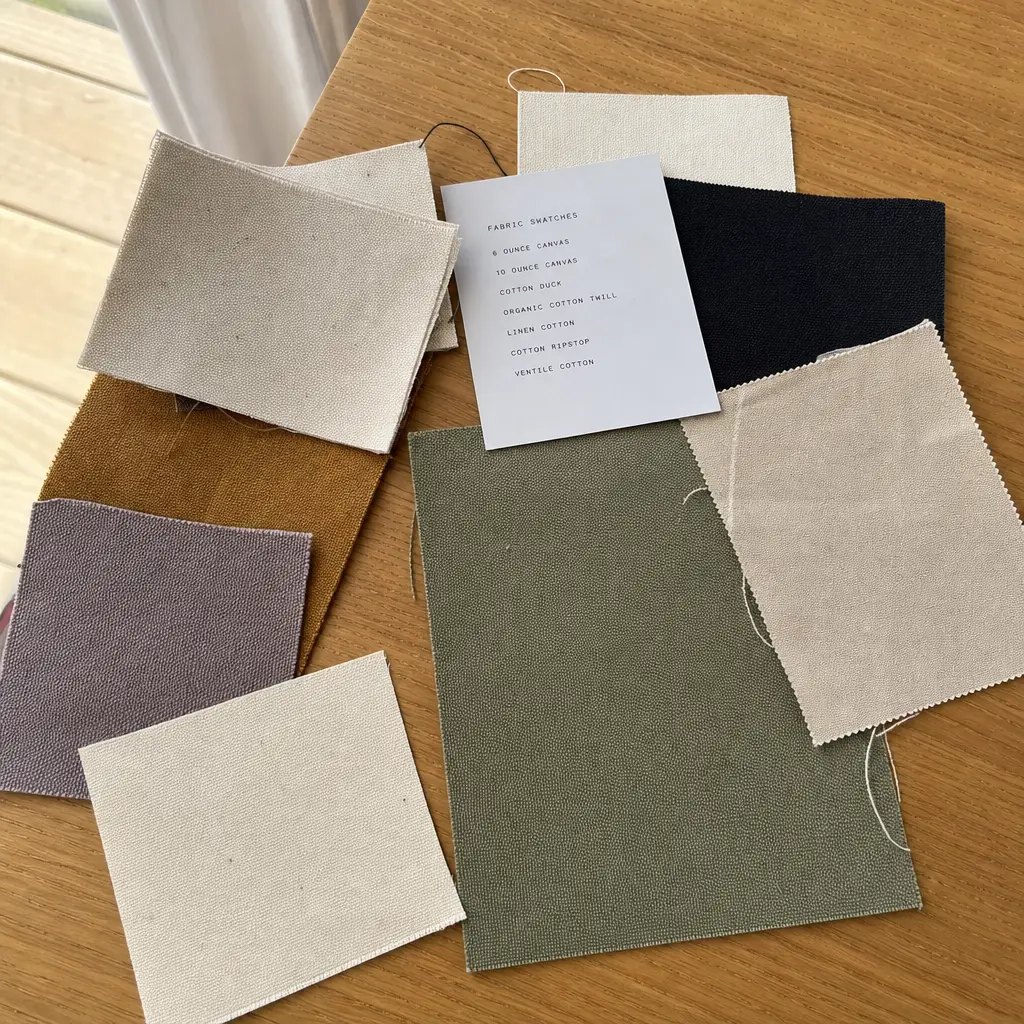
- Request a fabric swatch and pre-production sample made with the same fabric, same stitching, and same print process as bulk production.
- Set acceptance criteria for size tolerance, fabric weight tolerance, print placement tolerance, color difference, and handle pull strength.
- Compare landed cost by carton CBM and gross weight, not only ex-factory unit price.
- Lock the approved sample, artwork file, carton mark, and packing instruction before production starts.
- Build calendar buffer for artwork revision, sample shipping, peak-season fabric lead time, and inbound warehouse receiving.
- For chain rollout orders, decide whether all bags ship to one warehouse or are carton-marked by region, event, or salon group.
Factory quote questions to send
- What exact fabric weight will be used for the quoted canvas tote, in oz and GSM, and is it stock fabric or woven to order?
- Is the quoted size finished size after sewing, and what tolerance do you apply to width, height, gusset, and handle length?
- What stitching is included at the handle joint: single stitch, cross-stitch, bar tack, or reinforced box stitch?
- Which print method is included in the unit price, and are screen charges, film charges, PMS matching, and setup waste listed separately?
- Can the pre-production sample be made with bulk fabric and the final print method instead of a substitute fabric or digital mockup?
- What is the MOQ per fabric color, per artwork, and per print color, and how does the unit price change at 300, 500, 1,000, 3,000, and 5,000 pcs?
- What is the standard packing: pieces per carton, inner bundle method, individual polybag option, carton dimensions, gross weight, and net weight?
- What is the estimated production lead time after sample approval, and which steps can delay the schedule?
- Which Incoterms can you quote, and can you provide FOB port, EXW, and DDP estimate data if our team needs landed-cost comparison?
- What QC checks do you perform for fabric defects, size, print adhesion, print registration, seam strength, carton drop risk, and packing count?
Quality-control points to confirm
- Fabric weight should be checked against the approved swatch, with a practical tolerance agreed before production rather than disputed after shipment.
- Finished size tolerance should normally be controlled within about +/-1 cm for width and height on standard canvas totes, unless the design is very large.
- Handle length should be measured from seam to seam and tested for shoulder usability, not only checked visually on the table.
- Handle attachment should use reinforced stitching suitable for the expected load, especially for shampoo, conditioner, and liquid retail kits.
- Print placement should be measured from bag edges, with clear tolerance for vertical and horizontal alignment.
- Print color should be compared under consistent lighting against approved PMS target or approved physical sample.
- Ink adhesion should be tested by rub test and light scratch test after curing; heat transfer should be checked for edge lifting.
- Loose threads, oil marks, weaving slubs, needle holes, and dirty folding marks should be classified before inspection begins.
- Carton count, carton marks, barcode labels, and inner packing must match the buyer’s warehouse receiving requirements.
- Random inspection should include packed cartons, not only loose pieces from the sewing line.