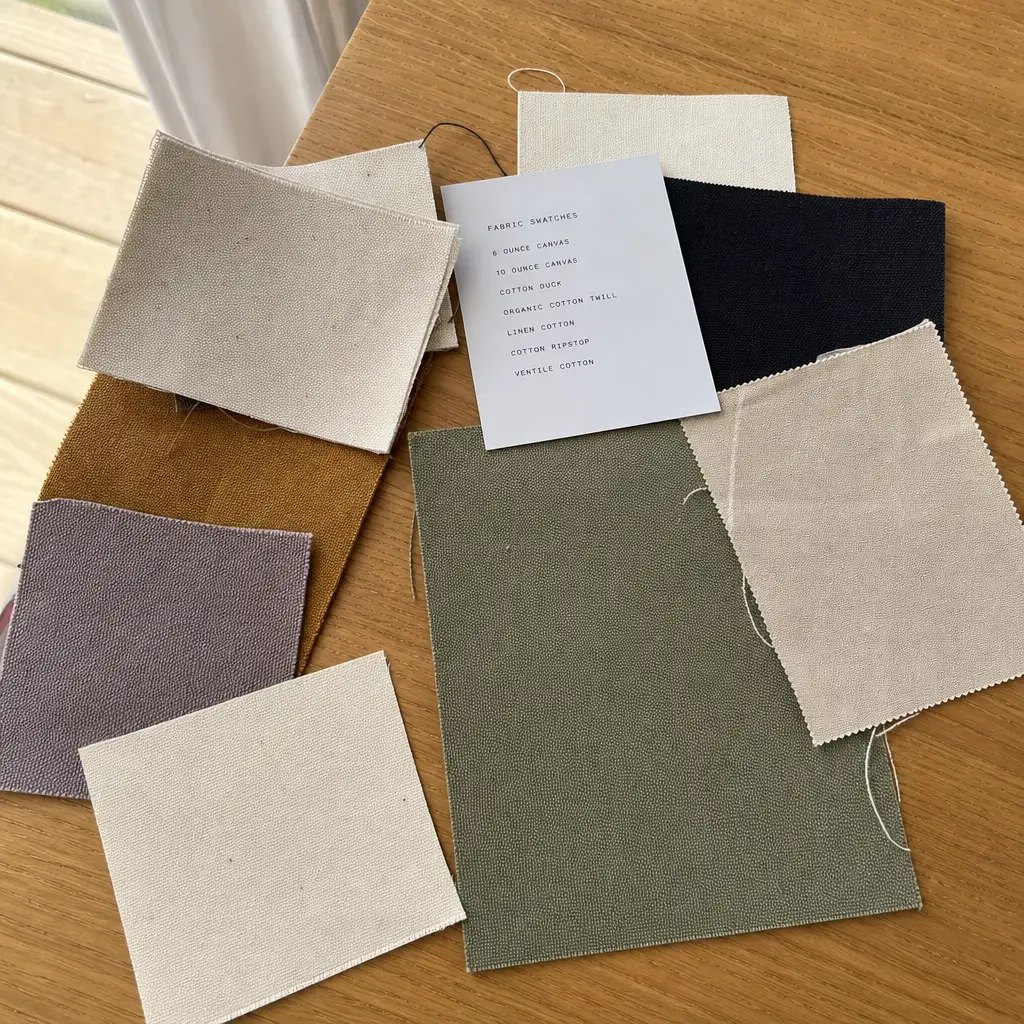
Start with a worksheet, not a logo file
Canvas totes look easy to buy until the quotes arrive. One supplier may price a lightweight natural canvas bag with short handles and bulk packing. Another may include heavier finished fabric, shoulder-length handles, a woven label, barcode sticker, individual polybag, and FOB export handling. Both offers may say custom canvas tote bag, but they are not comparable.
For pet brands, the tote may be an event giveaway, retail add-on, adoption campaign item, subscription insert, sample kit carrier, or launch pack for treats and grooming products. Each use has different load, presentation, barcode, and timing requirements. A canvas tote bag pricing worksheet for pet brands keeps those requirements in one place before sourcing starts.
The worksheet should do two jobs. First, it should tell the factory exactly what to quote. Second, it should let procurement compare supplier offers on total landed cost, not only headline unit price. That means finished size, GSM, handle construction, print scope, packing, carton data, freight basis, MOQ, lead time, and quality standards all need to be visible.
- Use one worksheet version for all suppliers so quote assumptions stay consistent.
- Treat the worksheet as the starting point for RFQ, sample approval, QC, and reorder control.
- Do not rank suppliers until construction, packing, trade term, and freight volume are normalized.
Define the physical tote precisely
Canvas is a material category, not a complete specification. A useful tote spec starts with finished measurements after sewing. Record width, height, gusset depth, handle width, handle drop or total handle length, seam construction, and any opening or flat-base requirement. If the tote must hold a known pet-product kit, place the real items into the sample before approval.
Fabric weight needs the same precision. Many promotional or retail-support totes sit around 280 to 340 gsm. Buyers often move toward 340 to 410 gsm when they want a heavier hand feel, more structure, or better perceived retail value. These are practical sourcing ranges, not universal rules. Load testing, brand positioning, print performance, and approved samples should decide the final specification.
Ask for finished GSM and fiber composition. Ounce descriptions can be useful shorthand, but suppliers may reference greige fabric, dyed fabric, washed fabric, or finished fabric. Dyeing, washing, softening, and printing can affect the final feel and measurement. A quote that states finished GSM, composition, and tolerance is easier to check during production.
- Write dimensions as finished size after sewing, for example 380 W x 420 H x 100 mm bottom gusset.
- Use finished GSM and composition, not only ounce wording or general descriptions such as heavy canvas.
- When the bag carries product samples, test the approved sample with actual pouches, cans, toys, or grooming items.
Use a numeric pricing worksheet
For this keyword intent, the most useful tool is a numeric worksheet that buyers can copy into a spreadsheet. Keep the specification data separate from the cost model. The specification tab prevents quote drift. The costing tab shows whether the cheapest factory unit price remains cheapest after setup, packing, freight volume, and destination cost.
At minimum, include columns for supplier name, quoted quantity, effective MOQ, unit price, currency, Incoterm, base bag cost, setup charge, setup allocation per unit, print adders, label and packing adders, carton count, CBM, freight estimate, duty or import fees if used, destination delivery, sample charge, inspection charge, lead time, and delivered cost per unit.
A simple formula is: delivered unit cost equals base unit price plus per-unit decoration and packing adders plus setup cost divided by order quantity plus allocated freight, duty, destination handling, and inspection. The exact fields depend on your company, but the logic should stay consistent across suppliers.
- Column examples: Supplier, Qty, Effective MOQ, Unit Price, Setup, Setup/Unit, Packing/Unit, Cartons, CBM, Freight, Duty, Delivered Cost/Unit.
- Use the same destination endpoint for every supplier, such as delivered to your warehouse or delivered to a 3PL receiving point.
- Keep quote validity and lead time in the same row as price so timing risk is visible.
Separate the cost drivers
A blended tote price hides the reasons quotes differ. Ask suppliers to separate base bag, decoration, setup, trims, packing, and freight basis. If a supplier cannot provide line detail, procurement should at least request clear inclusions and exclusions.
The largest drivers are usually fabric consumption, fabric weight, handle construction, print scope, and packing. A deeper gusset, wider body, heavier GSM, longer shoulder handle, or reinforced attachment all add material or labor. A second print side, larger print area, extra color, underbase, or fine registration adds setup and production risk.
Pet-brand retail details also matter. Woven side labels, care labels, hangtags, barcode stickers, individual polybags, cardboard inserts, and SKU-specific carton marks may be necessary. They should be priced at RFQ stage, not added after internal approval.
- Request separate prices for base tote, print setup, print unit cost, label, tag, barcode, polybag, carton, and inspection support.
- Ask for quantity breaks that match actual demand, not only supplier-friendly round numbers.
- Compare total commercial scope before negotiating unit price.
Control size, tolerances, and load points
Tolerances are useful only when they match the product and approval method. For a simple canvas tote, plus or minus 5 mm can be a practical working tolerance for finished body dimensions, handle drop, or print placement. That tolerance should not be treated as automatic permission for poor fit. If the tote must hold a rigid box, align with retail display, or present a centered logo in photography, tighter controls or sample-based approval may be needed.
Handle attachment is the main stress point. Specify whether handles are self-fabric or webbing, finished width, drop, placement, and reinforcement type. X-box stitching, bartacks, and back-tacking should be agreed before costing. A low quote may remove reinforcement or shorten handles if the RFQ does not lock the details.
If your team needs confidence on load performance, define a simple internal load check or request supplier test support. Avoid vague instructions such as strong enough for pet products. State the expected contents or target load, then verify the approved sample under realistic use.
- State measurement method: laid flat, finished after sewing, measured at defined points.
- Use plus or minus 5 mm only where it suits the bag and does not conflict with functional fit or brand approval.
- Document handle reinforcement because small construction changes can create large durability differences.
Price print and branding correctly
A logo file does not give a factory enough information to quote accurately. The worksheet should list print method, artwork size, number of colors, number of sides, placement, Pantone references, and whether the artwork includes fine text, halftones, large solid areas, or mascot detail.
Screen printing is often a practical option for one-color or two-color canvas tote designs at volume. It is not automatically the best answer for every artwork. Natural canvas texture can soften small type, and dark canvas may require an underbase or extra pass for light ink. Those choices affect cost, hand feel, appearance, and approval time.
Branding beyond the front logo belongs in the worksheet. Side labels, interior labels, hangtags, stickers, barcode labels, and carton marks can affect unit cost and factory workflow. For pet retail programs, barcode accuracy and SKU separation are operational requirements, not decoration.
- Send vector artwork and specify exact print dimensions and placement from top edge and side seams.
- Ask whether underbase, extra pass, or alternate print method is required for dark fabric or light ink.
- Approve a strike-off on the actual canvas when print method, fabric color, ink color, or artwork changes.
Make MOQ visible by variable
MOQ is often more complicated than the first number in the quote. A supplier may offer 1,000 pieces, but that may mean one body color, one artwork, one label, one handle construction, and one packing method. If the pet brand wants three seasonal designs, two barcodes, or separate carton marks for different retailers, the effective MOQ can be higher.
The worksheet should ask for MOQ by fabric color, print artwork, label type, handle variation, packing style, and destination. This prevents a common sourcing problem: procurement approves a total volume, then learns later that each SKU is below the factory minimum.
Negotiation is easier when the constraint is clear. If dyed fabric minimums create the issue, reducing artwork count will not solve it. If print setup is the issue, grouping designs in one production window may help. If retail packing is the bottleneck, standardizing labels or carton marks may reduce labor and errors.
- Record headline MOQ and effective MOQ separately.
- Ask whether mixed artworks can share one fabric lot and what setup charge applies to each design.
- Standardize bag construction before adding multiple colors, labels, or packing versions.
Request carton and freight data early
Packing affects more than presentation. It changes unit cost, carton volume, freight estimate, warehouse receiving, barcode scanning, and SKU separation. Bulk bundle packing may be right for centralized repacking or event distribution. Individual polybags, hangtags, barcode stickers, and inner packs may be right for retail or 3PL handling. The worksheet should make that choice deliberate.
Request pieces per carton, carton dimensions, gross weight, net weight, total carton count, and total CBM for every quote quantity. Without those numbers, a buyer cannot compare landed cost accurately. A lower unit price can lose its advantage if carton volume is high or if missing packing services must be added later.
Canvas also needs clean, dry packing. Ask how the supplier prevents dampness, odor, carton weakness, and contamination during storage and shipment. This is especially important for ocean freight, humid seasons, or longer warehouse dwell time.
- Define fold method, unit pack, inner pack, master carton quantity, barcode placement, and carton marks in the RFQ.
- Add CBM and gross weight columns to the pricing worksheet before freight estimates are requested.
- Confirm whether retail-ready packing is required by the sales channel or only assumed by the brand team.
Compare lead time with landed cost
Factory unit price is only one part of the buying decision. Procurement should compare sample fees, setup charges, packing adders, freight basis, duties or import costs, destination handling, and delivery to the required warehouse or 3PL. EXW, FOB, CIF, and DDP quotes cannot be ranked until they are converted to the same endpoint.
Lead time should sit beside cost in the worksheet. Track blank sample time, strike-off time, pre-production sample time, bulk production after approval, inspection window, and transit estimate. For pet-brand campaigns tied to trade shows, launches, adoption events, or retail resets, a small unit-price saving may not justify uncertain timing.
Payment terms and quote validity also matter. Currency movement, cotton price movement, and open-ended artwork revisions can change the commercial picture. Keep the final quote date, validity period, deposit terms, and approval deadline visible.
- Normalize all offers to a delivered-cost basis before supplier selection.
- Track sample approval date because bulk lead time usually starts after final approval, not after the first quote.
- Record currency, payment terms, quote validity, Incoterm, loading port, and destination in the worksheet.
Turn the worksheet into QC control
The final worksheet should become the quality-control file. If it states finished dimensions, GSM, handle construction, print placement, packing method, and tolerances, inspectors and suppliers have a shared standard. If those details are missing, inspection becomes subjective and disputes become harder to resolve.
Core QC checks are measurable. Inspect finished body size, gusset, handle width, handle drop, canvas appearance, odor, seam strength, gusset corners, handle joins, thread trimming, print placement, print opacity, registration, color, barcode readability, fold method, carton marks, carton count, and SKU separation. Use the approved sample as a visual reference, but keep written measurements and tolerances as the acceptance basis.
Define severity before shipment. Wrong artwork, wrong barcode, mixed SKU cartons, severe odor, weak handle attachment, major size error, or materially different fabric weight should not be treated like a loose thread. Save the worksheet, signed artwork, approved sample notes, final quote, inspection findings, and accepted deviations. That file protects repeat orders from silent changes.
- Use the same checkpoints during sampling, production review, final inspection, and reorder approval.
- Separate critical, major, and minor defects in plain language before production starts.
- Ask suppliers to disclose any changes in fabric source, trim source, print method, packing, or carton setup before repeat orders.
Specification comparison for buyers
| Worksheet column | Supplier A quote | Supplier B quote | Buyer check before ranking |
|---|---|---|---|
| Quoted quantity | 2,000 pcs | 2,000 pcs | Confirm whether both quotes use the same artwork count, body color, handle type, and packing method. |
| Effective MOQ | 1,000 pcs per artwork; 2,000 pcs per fabric color | 2,000 pcs per artwork and per fabric color | Use the highest constraint that affects your real order plan, not only the headline MOQ. |
| Base bag unit price | USD 1.42 EXW, natural canvas, 340 gsm | USD 1.28 FOB, natural canvas, 300 gsm | Do not compare unit price until GSM, finished size, handle reinforcement, and Incoterm are normalized. |
| Print and setup | USD 80 screen setup; one-side one-color print included at quoted size | USD 50 screen setup; print area capped at 220 x 220 mm | Check whether second side, larger artwork, underbase, or extra color changes both setup and unit price. |
| Labels and retail packing | Woven side label USD 0.08; individual polybag USD 0.05; barcode sticker USD 0.03 | Hangtag included; no barcode sticker; bulk bundle packing | Match packing to the selling or distribution channel. Missing barcode or polybag cost can shift the landed comparison. |
| Carton and CBM | 100 pcs/carton; 48 x 42 x 32 cm; estimated 1.29 CBM for 2,000 pcs | 150 pcs/carton; 55 x 45 x 38 cm; estimated 1.88 CBM for 2,000 pcs | Higher carton quantity is not always lower freight volume. Request carton dimensions, gross weight, and total CBM at each quote quantity. |
| Freight basis | EXW factory; buyer handles inland, export, ocean/air, destination charges | FOB Ningbo; buyer handles international freight and destination charges | Normalize to the same landed-cost endpoint, such as delivered warehouse cost, before selecting a supplier. |
| Estimated landed cost formula | Unit price + allocated setup + labels + packing + inland/export + international freight + duty/fees + destination delivery | Unit price + allocated setup + missing barcode/polybag if required + international freight + duty/fees + destination delivery | Use formulas in the worksheet so added services and freight volume are visible per unit. |
| Lead time assumption | 7-10 days sample; 25-35 days bulk after approval | 5-7 days sample; 35-45 days bulk after approval | Put sample approval date and bulk lead time next to cost. Event and launch timing can outweigh a small unit-price difference. |
Buyer checklist before sampling
- Create one worksheet tab for specifications and one tab for quote comparison so suppliers price the same finished tote and procurement can calculate landed cost consistently.
- Enter finished bag size after sewing, including width, height, gusset depth, handle width, handle drop, print size, and print placement from fixed reference points.
- Specify finished fabric GSM and composition, such as 300 gsm 100% cotton canvas or 340 gsm recycled-cotton blend, and ask whether tolerance is based on finished fabric.
- State when practical working tolerances apply. For simple canvas totes, plus or minus 5 mm may be acceptable for body dimensions or print placement, but approved samples and buyer testing should override generic tolerances.
- Separate cost lines for base bag, print setup, extra print color, second-side print, label, hangtag, barcode sticker, individual polybag, export carton, inspection support, and freight basis.
- Request quantity breaks at realistic order volumes, such as 500, 1,000, 2,000, and 5,000 pieces, and ask for effective MOQ by artwork, fabric color, label set, packing style, and destination.
- Add numeric landed-cost columns for unit price, setup allocation per unit, packing cost, total CBM, freight estimate, duty or import fees if applicable, destination delivery, and delivered cost per unit.
- Require carton data with every quote: pieces per carton, carton dimensions, gross weight, net weight, total carton count, and total CBM for the quoted quantity.
- Approve a print strike-off on the actual canvas when artwork, ink color, body color, or print method is new. Approve a pre-production sample when construction, packing, or supplier is new.
- Keep the final worksheet, quote, signed artwork, approved sample notes, packing standard, inspection report, and accepted deviations in one reorder file.
Factory quote questions to send
- Is the quoted price based on finished dimensions after sewing, and what tolerances apply to width, height, gusset, handle width, and handle drop?
- What finished GSM and fiber composition are included in the quote, and is the GSM measured before or after dyeing, washing, printing, or softening?
- Which handle construction is included: self-fabric or webbing, finished width, total length or drop, attachment position, and reinforcement method such as X-box or bartack?
- How many print colors, sides, positions, and square centimeters of artwork are included in the unit price?
- Are screen charges, artwork adjustment, strike-off fees, underbase, extra pass, or second-side print costs included or quoted separately?
- What is the MOQ by fabric color, print artwork, label type, handle variation, packing method, and shipment destination?
- Can multiple artworks share the same bulk fabric lot, and if yes, what setup charge and minimum run apply to each design?
- What packing is included: bulk bundle, individual polybag, barcode sticker, hangtag, inner pack, desiccant if used, export carton, and carton mark printing?
- For each quantity break, what are the pieces per carton, carton dimensions, gross weight, net weight, total carton count, and total CBM?
- Which Incoterm, loading port, currency, payment terms, quote validity, sample lead time, bulk lead time, and shipment-ready date does the offer assume?
Quality-control points to confirm
- Finished measurement control: inspect width, height, gusset depth, handle width, and handle drop against the approved worksheet. A plus or minus 5 mm working tolerance may suit simple totes, but buyer-approved testing and signed samples should take priority.
- Fabric verification: confirm bulk fabric matches quoted finished GSM, composition, color, and hand feel. For weight-sensitive programs, request lot confirmation or third-party fabric testing rather than relying only on touch.
- Canvas appearance: check for stains, oil marks, holes, yarn contamination, dye streaks, heavy slubs beyond the approved sample, weave bars, loose fibers, and objectionable odor under consistent lighting.
- Shrinkage and processing: if fabric is dyed, washed, softened, or printed before assembly, confirm patterns allow for shrinkage so finished dimensions remain within tolerance.
- Handle strength and symmetry: inspect handle length match, drop, attachment placement, reinforcement pattern, loose ends, skipped stitches, and whether both handles sit evenly when the bag is laid flat.
- Seam construction: review side seams, bottom seams, gusset corners, back-tacking, seam allowance consistency, thread tension, puckering, open seams, and thread trimming. Handle joins and gusset corners deserve extra attention for loaded sample kits.
- Print placement and appearance: measure logo size and distance from top edge and side seams. Check centering, opacity, registration, edge sharpness, pinholes, voids, and color match on the actual canvas surface.
- Print durability: for screen print, heat transfer, or other decoration, check rub resistance, cracking, peeling, and cure before bulk approval and during final inspection if ink, fabric, or supplier process changed.
- Shade approval: use an approved swatch, Pantone reference, or signed sample under neutral light. Do not approve fabric color or ink color from phone photos alone, especially on natural canvas.
- Packing accuracy: verify fold method, unit count, SKU separation, barcode readability, hangtag or label position, carton marks, carton count, carton strength, and that goods are dry and clean before shipment.