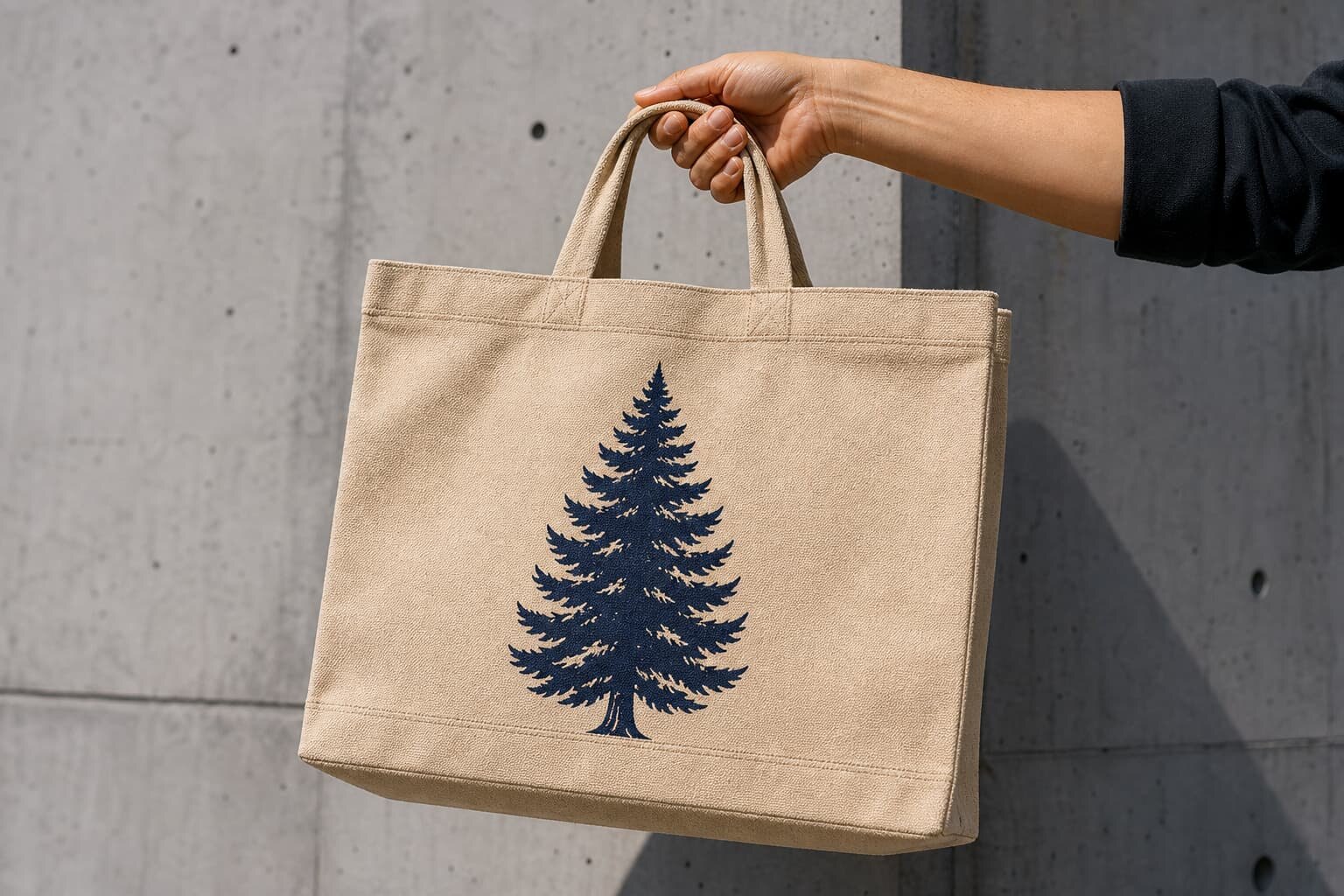
Why preorder allocation fails on canvas tote bags
Canvas tote bag preorder allocation sounds like a merchandising task, but it becomes a production problem as soon as the buyer sends one large quantity without SKU-level detail. A factory cannot reserve fabric, print time, sewing output, packing material, or cartons accurately from a statement such as 20,000 natural canvas totes with assorted logos. The allocation must show what will actually be made: finished size, fabric weight, fabric color, handle color, artwork, print method, packing style, destination, and delivery date.
The most common failure is that sales forecasts are converted into purchase orders too late, while the factory has already assumed a simpler structure. Buyers then discover that one retailer needs 12 oz natural canvas with black screen print, another needs 10 oz dyed navy canvas with white print, and an e-commerce channel needs individual polybags and barcodes. Those are not small administrative differences. They affect fabric booking, ink opacity, print curing, sewing speed, carton CBM, inspection sampling, and sometimes MOQ.
- Treat each finished SKU as a production unit, not a spreadsheet color line.
- Separate firm quantity from forecast quantity before asking for factory capacity.
- Lock allocation before fabric cutting, not after sample approval only.
- Ask the factory which variables create separate MOQ or setup charges.
Define the allocation unit before asking for price
A useful preorder allocation starts with a clear unit of production. For canvas tote bags, that unit is not only the bag style. It is the combination of bag dimensions, canvas specification, color, handle construction, logo process, label package, packing method, and delivery destination. If any one of these changes, the factory may need a separate material batch, print setup, sewing instruction, packing line, or carton mark.
Procurement teams should ask merchandisers and sales channels to provide allocation in a format the factory can cost directly. For example, one SKU might be 38 x 42 cm natural 12 oz canvas tote, 2.5 cm self-fabric handles with 28 cm drop, one-color black screen print on one side, folded 50 pieces per export carton, destination Rotterdam. Another SKU with the same size but red handles and individual retail polybag should be quoted separately because handle fabric, sewing preparation, and packing labor differ.
- Use finished dimensions in centimeters or inches and state the measurement tolerance.
- List handle drop, handle width, material, color, and attachment stitch type.
- Identify whether the bag is flat, bottom-gusseted, side-gusseted, lined, zippered, or pocketed.
- Assign a buyer SKU code and factory item code so changes do not get lost in email threads.
- Mark each allocation line as firm, optional, replenishment, or forecast.
Fabric GSM and canvas weight change the whole allocation
Canvas tote bag quotes often compare 8 oz, 10 oz, 12 oz, or 16 oz fabric as if the only difference is price. In production, fabric weight changes cutting yield, sewing difficulty, print absorption, folding thickness, carton quantity, and final freight cost. A 12 oz canvas, roughly in the 340 GSM range depending on weave and finishing, can feel very different from a lighter 8 oz promotional tote. If the preorder is for retail resale, the buyer should request a physical swatch or sample from the actual fabric quality, not a generic natural canvas reference.
The buyer should also understand whether the fabric is ready stock, greige fabric to be dyed, or custom woven. Natural and black canvas may be easier to source, while exact brand colors can require custom dyeing and a higher MOQ. If the preorder allocation includes six fabric colors at low quantities, the factory may quote a higher unit cost because each dye lot, shade approval, and cutting batch is separated. This is why a quote should show the MOQ logic, not just the final unit price.
- 8 oz to 10 oz canvas is common for lighter promotional and event totes.
- 10 oz to 12 oz canvas is a practical range for many branded retail totes.
- 14 oz to 16 oz canvas suits heavier use but increases sewing bulk and freight.
- Dyed canvas needs shade approval and may show more visible print opacity issues.
- Recycled or organic cotton canvas may have different availability, texture, and color consistency.
Match print method to preorder structure
Print allocation is often where a neat preorder spreadsheet becomes unworkable. A one-color screen print on 10,000 natural canvas bags is straightforward. Ten artwork versions across five bag colors and three delivery dates is a different job. The factory must prepare screens, mix inks, arrange print sequence, cure prints, control registration, and prevent shade contamination. If buyers do not separate artwork versions early, the quote may understate setup cost and lead time.
Screen printing is usually efficient for solid logos and larger quantities. Digital printing, DTF, heat transfer, or embroidery may fit smaller artwork variants, full-color designs, or premium branding, but each method has its own risk. Screen print needs opacity and curing checks. Transfer needs adhesion and edge feel review. Digital print needs color and hand-feel approval on the actual canvas. Embroidery needs stitch count, backing, thread color, and puckering control. The allocation should say which process is required for each SKU, not leave the factory to assume the cheapest option.
- For screen print, state color count, Pantone reference if required, print size, position, and sides printed.
- For digital or transfer, ask for wash, rub, cracking, and hand-feel comments before approval.
- For embroidery, provide artwork size, stitch count estimate, thread colors, and placement tolerance.
- For woven labels or side labels, confirm label size, fold type, sewing position, and MOQ.
- Do not approve bulk printing from a computer mockup alone; request a strike-off or pre-production sample.
MOQ logic: what the factory is really protecting
When a factory gives an MOQ for canvas tote bags, buyers should ask what is driving it. Sometimes MOQ is based on fabric roll purchase. Sometimes it is the dye house minimum, print setup efficiency, sewing line arrangement, or packing material order. If the buyer understands the MOQ driver, it becomes easier to negotiate allocation. Increasing one color, combining print runs, using stock canvas, or standardizing packing may reduce cost more effectively than asking for a general discount.
For preorders, the practical question is not only minimum order quantity but minimum order quantity per variant. A supplier may accept 5,000 pieces total, but not 100 pieces per artwork across 50 designs at the same price. Small fragmented allocations create hidden labor in artwork checking, screen changes, production planning, packing separation, and inspection. A reliable quote should show whether unit price changes when quantities drop below a certain level per fabric color, per print design, or per packing style.
- Ask for MOQ by fabric color, print artwork, handle color, label type, and packing method.
- Check whether sample fees, screen charges, mold charges, or label setup costs are separate.
- Ask whether overage or underage is allowed, especially for custom dyed or printed goods.
- Confirm whether the factory can hold extra fabric for repeat orders and for how long.
- If preorder demand is uncertain, request tiered pricing instead of one fixed price.
Samples and approvals that prevent allocation disputes
The sample stage should prove the allocation, not just show a nice bag. A sales sample made from available fabric can help with style direction, but it should not be treated as final approval for a preorder with custom GSM, dyed fabric, or exact logo placement. For commercial production, the stronger approval is a pre-production sample made with the intended fabric, handle construction, print process, label, and packing method. If timing does not allow this, at least separate approvals should be collected for fabric swatch, print strike-off, and packing layout.
Buyers should define what sample differences are acceptable before bulk production starts. Canvas is a woven fabric, so minor slubs and shade differences may be normal depending on grade. However, wrong handle drop, logo positioned too high, weak print opacity, incorrect label, or carton count mismatch can cause real receiving problems. A signed sample, dated approval photo, and written tolerance list are better than a vague email saying sample approved.
- Check finished bag size after pressing and after folding simulation.
- Measure handle drop because it affects shoulder use and retail feel.
- Review print position from bag edge, not only by visual center.
- Confirm seam allowance, inside finishing, loose threads, and reinforcement stitching.
- Approve one packed sample if the goods go to retail distribution or e-commerce fulfillment.
Build the lead time from real production steps
A factory lead time should not be a single number without assumptions. For preorder allocation, buyers need the critical path: material booking, fabric inspection, dyeing if needed, cutting, printing, curing, sewing, trimming, packing, final inspection, and export documentation. A quote that says 30 days after deposit and artwork approval may be reasonable for a simple stock-fabric order, but not for custom dyed canvas, multiple print versions, retail packing, and split shipments.
Lead time also depends on approval speed. If the buyer takes seven days to approve a strike-off, the factory may lose the reserved print slot. If barcode data arrives after packing materials are ordered, the packing line may stop. Procurement teams should issue a preorder calendar that includes buyer-side deadlines, not only factory-side completion dates. This is especially important when seasonal launch dates, distributor warehouse appointments, or retailer routing guides are involved.
- Ask which date starts the clock: deposit, PO, artwork approval, fabric approval, or sample approval.
- Request separate timing for sampling, material preparation, bulk production, inspection, and shipping handover.
- Confirm whether partial shipment is allowed by SKU or only after the full order is complete.
- Ask when allocation changes become impossible without cost or delay.
- Reserve time for inspection rework, carton relabeling, or document corrections.
Packing and carton allocation are not afterthoughts
Canvas tote bag packing has a direct impact on cost, freight, warehouse receiving, and customer complaints. A flat-packed tote may ship efficiently, while a folded retail bag with insert card, hangtag, barcode sticker, silica gel, and individual polybag requires more labor and may reduce pieces per carton. If allocation is split by retailer or marketplace channel, each channel may require different carton marks, barcodes, polybag warnings, or mixed-carton rules.
Buyers should ask for packing data during quotation, not after production. Carton dimensions, pieces per carton, gross weight, net weight, and carton mark format are needed for freight estimates and warehouse booking. If the buyer changes from bulk pack to individual polybag after price approval, the factory may need new materials and extra packing time. For distributors, the allocation should also say whether cartons must be single-SKU, mixed by purchase order, or palletized by destination.
- State flat pack, half fold, roll pack, individual polybag, belly band, or retail insert requirements.
- Confirm carton quantity and whether heavy canvas exceeds warehouse handling limits.
- Provide barcode files and carton mark rules before packing material is ordered.
- Ask for carton drop strength or edge crush requirements if retailers specify them.
- Use packed sample photos to prevent disputes over folding marks or label position.
Quote data buyers should require before comparing suppliers
A low unit price is not useful if the quote hides assumptions. For canvas tote bag preorder allocation, each supplier quote should include fabric specification, estimated GSM or ounce weight, bag dimensions, handle details, print method, setup charges, sample cost, MOQ per variant, packing method, carton data, production lead time, and validity period. Without these fields, procurement teams may compare one supplier quoting 10 oz bulk pack against another quoting 12 oz retail pack and think the cheaper supplier is more competitive.
The best comparison format is a line-by-line quote matrix. Require suppliers to state what is included and what is excluded. For example, does the unit price include print setup, woven label, hangtag stringing, carton marks, export carton, inner polybag, pre-shipment inspection support, or local delivery to port? Also ask what will change if allocation shifts after the preorder closes. This shows whether the supplier understands production planning or is only trying to win the first price round.
- Request a quote by SKU with a total value and not only one average price.
- Ask for material composition, canvas weight, fabric color process, and any finishing process.
- Require print size, color count, and process to be named in the quote.
- Collect carton CBM and gross weight to compare landed cost, not only ex-factory price.
- Set a quote validity date because cotton fabric and freight-related costs can change.
Acceptance criteria for preorder shortages and defects
Preorder programs are sensitive because sales teams often allocate nearly every unit before goods are made. If the buyer orders exactly the forecast quantity with no buffer, normal production defects, inspection rejection, or carton shortages can create channel disputes. The PO should state whether overage or underage is acceptable. For custom printed canvas bags, a small production overage may be useful if the brand needs replacement stock, but it must be approved because printed goods cannot always be sold elsewhere.
Quality criteria should be tied to the approved sample and written inspection standard. Buyers should define major defects such as wrong print, wrong size, broken handle stitching, severe stains, holes, mislabeling, and incorrect carton count. Minor defects may include small loose threads, tiny slubs, or slight measurement variance within tolerance. If inspection is required, the allocation should state whether sampling is by total order, by SKU, by destination, or by production batch. This prevents one good SKU from hiding problems in a smaller but important allocation line.
- Set measurement tolerance for bag body, gusset, handle width, and handle drop.
- Define acceptable print position tolerance, usually measured from top edge and side edge.
- State whether shade variation between panels, handles, and body is acceptable.
- Agree on AQL level or inspection method before production starts.
- Keep defect photos and inspection records linked to SKU codes and carton numbers.
Specification comparison for buyers
| Spec decision | Recommended option | When it fits | Buyer risk to check |
|---|---|---|---|
| Fabric weight for standard retail tote | 10 oz to 12 oz canvas, roughly 280-340 GSM depending on weave | Good balance for retail merchandise, events, gift-with-purchase, and reusable shopping programs | Confirm finished bag weight, not only fabric GSM, because handle length, lining, and pocket details change carton weight and freight cost |
| Fabric weight for heavy promotional or bookstore tote | 14 oz to 16 oz canvas, roughly 380-450 GSM | Fits premium brand programs, books, beverage items, and heavier retail use | Higher GSM may reduce daily sewing output and increase needle marks, folded seam bulk, and carton CBM |
| Print method for one to three solid colors | Screen print with approved strike-off before bulk cutting | Best for larger preorder runs where logo color consistency matters | Allocate print capacity by artwork version and bag color; do not treat all SKUs as one print slot |
| Print method for full-color artwork | DTF, digital pigment, or heat transfer depending on hand feel and wash requirement | Useful for short runs, seasonal graphics, or many artwork variants | Check adhesion, cracking, edge feel, and color shift on the actual canvas shade before confirming allocation |
| Preorder allocation unit | Allocate by finished SKU: size, fabric color, handle color, print artwork, packing method, and destination | Necessary when distributors or retailers split one forecast across several delivery windows | A total quantity forecast is not enough for fabric booking, print setup, carton planning, or final inspection sampling |
| Packing plan for retail distribution | Flat packed or folded with agreed insert, polybag, hangtag, and carton marks | Fits store delivery, marketplace fulfillment, and warehouse receiving requirements | Packing changes can alter carton quantity, CBM, barcode placement, and labor time after price approval |
| Sample stage before bulk preorder | Pre-production sample with exact fabric, print, handle length, label, and packing if timing allows | Best for brand owners and importers with repeat programs or retailer compliance needs | A photo sample made from substitute fabric is not enough to lock allocation, especially for dyed canvas and printed logos |
Buyer checklist before sampling
- Freeze the allocation by SKU, not by total order quantity: size, fabric color, GSM, handle color, print artwork, label, packing, destination, and delivery window.
- Separate firm PO quantity from forecast quantity and ask the factory which materials can be reserved before deposit, artwork approval, or sample approval.
- Confirm whether fabric is greige stock, ready-dyed stock, or custom dyed canvas, because each one changes MOQ, shade risk, and lead time.
- State finished bag dimensions with tolerance, handle drop, seam construction, bottom gusset, and whether the tote must stand, fold flat, or carry weight.
- Match print method to allocation: screen print by color count and artwork size, digital or transfer by artwork variant, embroidery by stitch count and placement.
- Approve a physical sample or at minimum a fabric swatch plus print strike-off before bulk cutting, especially for dyed canvas or high-coverage artwork.
- Request carton quantity, carton size, gross weight, net weight, packing method, and barcode or carton mark requirements before confirming freight or warehouse slots.
- Build a preorder buffer for defects, inspection rejection, retailer shortages, and e-commerce replacements; do not rely on exact ship quantity if no overage is allowed.
- Agree on inspection level, AQL, measurement points, print tolerance, stain standard, and needle damage standard before production starts.
- Ask the factory to show the critical path: fabric booking, dyeing, cutting, printing, sewing, trimming, packing, inspection, and export documents.
Factory quote questions to send
- Is the quoted MOQ based on fabric purchase, dye lot, print setup, sewing line efficiency, packing labor, or a combination of these?
- Can you quote each preorder SKU separately, including bag size, fabric GSM, color, handle specification, print method, packing, and destination?
- What canvas weight is available from stock now, and what weight or color requires a new fabric booking or dye lot?
- What is the expected fabric shrinkage or shade variation after dyeing, washing, steaming, or pressing, if any process is used?
- How many print screens, digital files, transfer sheets, or embroidery programs are needed for this allocation?
- What sample will be provided before bulk production: fabric swatch, print strike-off, prototype sample, pre-production sample, or packed sample?
- What daily capacity applies to this order after considering printing, curing, sewing, trimming, and packing rather than sewing only?
- What is the carton plan for each SKU, including pieces per carton, carton dimensions, gross weight, and whether cartons can be mixed or must stay single-SKU?
- What data do you need from us before you can reserve material and production capacity?
- If we increase or reduce one SKU after preorder closes, which cost, MOQ, or lead time item will be affected first?
Quality-control points to confirm
- Check fabric GSM or ounce weight against the approved sample, allowing for normal mill tolerance but rejecting obvious substitution.
- Measure finished width, height, gusset, handle width, and handle drop after pressing and packing simulation, not only on an unfinished sewing piece.
- Inspect handle attachment strength, X-stitch or box-stitch size, bartack position, and thread breakage at the load-bearing points.
- Compare print position, print size, color, opacity, curing, adhesion, and registration against the approved strike-off or pre-production sample.
- Check panel shade difference, dirty marks, slubs, holes, loose threads, skipped stitches, needle cuts, and seam puckering on both sides of the bag.
- Verify label content, care label position, brand label stitching, hangtag attachment, barcode readability, and country-of-origin marking if required.
- Confirm packing count, folding method, polybag warning text if used, carton marks, carton strength, mixed-SKU rules, and pallet instructions.
- Record inspection photos by SKU and defect type so allocation shortages can be traced before goods leave the factory.