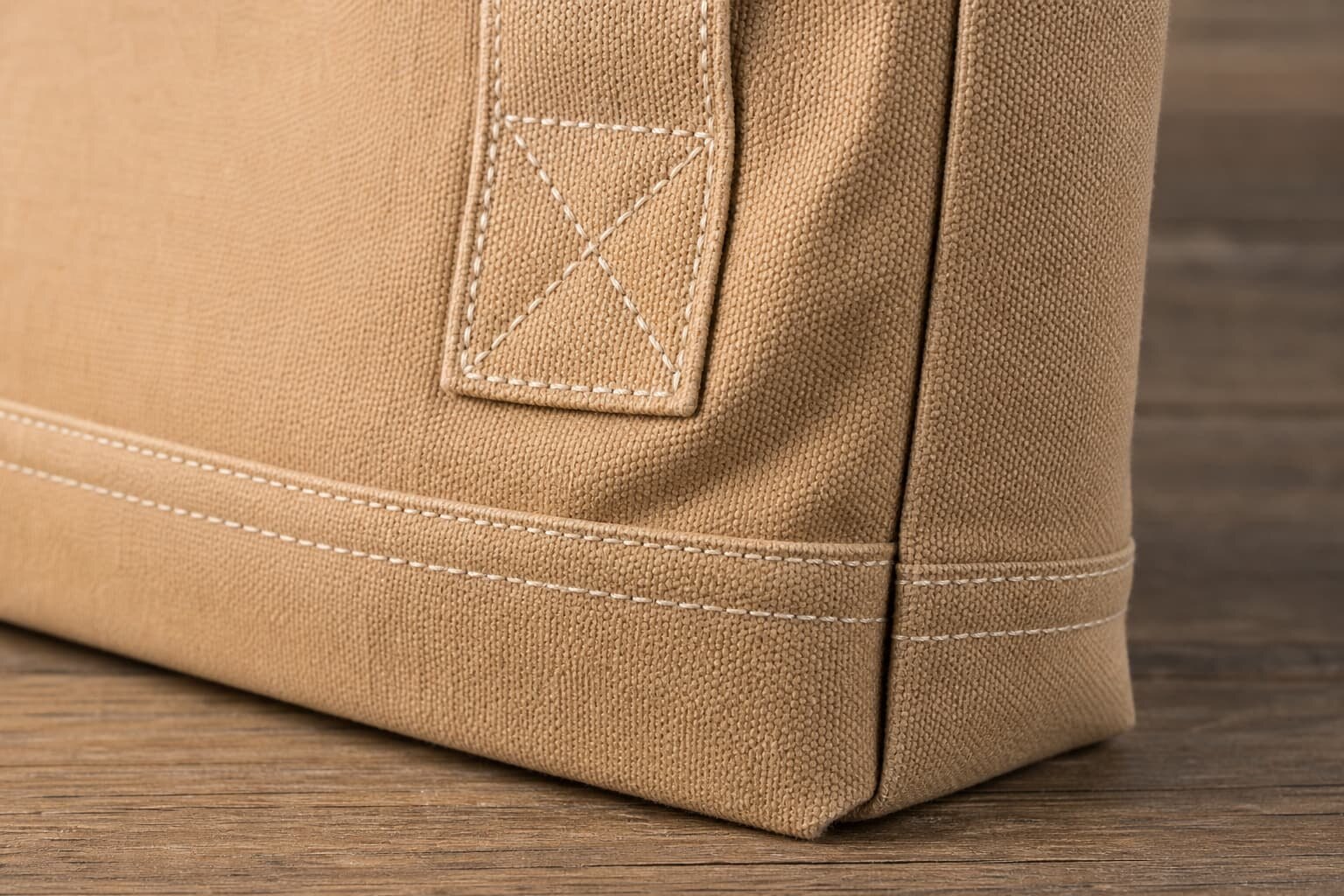
Why pre-shipment inspection matters for canvas tote bags
Canvas tote bags look simple, but they create a high number of avoidable disputes because many defects are visible only after bulk production is finished. A buyer may approve a clean sample, then receive a shipment with lighter fabric, weak handle reinforcement, shifted logo placement, dirty panels, or carton labels that do not match the retailer routing guide. Pre-shipment inspection is the last practical checkpoint before the goods leave the factory and become much more expensive to correct.
For procurement teams, the goal is not to reject goods for small cosmetic differences. The goal is to confirm that the factory produced the same bag you bought, packed it correctly, and did not hide known issues inside sealed cartons. A useful checklist should connect commercial specifications with physical inspection points: fabric GSM, size tolerance, print method, stitching strength, packing, lead time status, and quote assumptions. If those items are not controlled, comparing supplier prices becomes unreliable because each quote may represent a different product.
- Use inspection to verify the purchase order, not to redesign the bag at the last minute.
- Treat logo errors, wrong fabric weight, unsafe packing, and mixed carton labels as commercial risks, not small factory mistakes.
- Confirm the inspection plan before production starts so the supplier knows which details will be checked.
- Keep one approved sample at the factory and one with the buyer or inspection company for comparison.
Start with the approved sample and written specification
The inspector cannot judge a canvas tote bag correctly if the only instruction is a product photo. A photo does not confirm fabric weight, handle drop, seam allowance, ink type, or carton quantity. Before inspection, prepare a simple technical pack or final purchase order sheet that lists finished size, material, GSM or ounce weight, color, handle construction, logo method, packing, and accepted tolerance. This document should match the pre-production sample that was approved for bulk.
Many disputes happen because the buyer approves a sample verbally, then later expects a different detail. For example, the sample may have 12 oz canvas, but the quote may have been based on 10 oz. The sample may show box-X handle stitching, while the purchase order only says reinforced handles. At inspection stage, the supplier will usually defend what was written in the order. The buyer should therefore lock the sample and the specification together before mass production.
- Record finished bag width, height, bottom gusset, side gusset, handle drop, and handle width in centimeters or inches.
- Write fabric as both ounce and GSM where possible, such as 12 oz cotton canvas, approximately 340 GSM.
- State whether natural cotton shade variation is acceptable or whether a dyed Pantone target is required.
- Attach the final artwork file with print size, placement distance from top edge, and color reference.
- Include packing instruction: flat pack, folded pack, individual polybag, paper band, master carton quantity, and shipping marks.
Fabric checks: GSM, construction, shrinkage, and surface defects
Fabric is the biggest cost driver in most canvas tote bag quotes, so it is also a common area where misunderstandings reduce quality. Canvas may be described by ounce weight, GSM, yarn count, weave density, or simply as light, medium, or heavy. For buying control, GSM and approved hand feel are more useful than vague descriptions. A 6 oz promotional tote and a 12 oz retail tote can both be called canvas, but they do not perform or price the same way.
During pre-shipment inspection, random pieces should be checked against the approved sample for thickness, stiffness, shade, odor, and surface cleanliness. If a GSM cutter and scale are available, test fabric from a retained production cutting or an agreed sacrificial sample. If not, compare fabric hand feel and weight carefully with the approved sample. Natural cotton canvas can have slubs and seed marks, but stains, oil marks, mold smell, heavy weaving bars, or obvious shade panels should be classified according to the agreed defect standard.
- For lightweight giveaways, 5-8 oz canvas may be acceptable if the load is low and the buyer wants lower freight weight.
- For regular retail canvas tote bags, 10-12 oz is more stable and gives better perceived value.
- For premium structured totes, 14-16 oz can work, but MOQ, sewing difficulty, and carton weight increase.
- Dyed canvas needs colorfastness attention because rubbing, washing, and moisture can transfer color to clothing or packing.
- Washed canvas should be checked for uneven shrinkage, twisted panels, and size loss after finishing.
Size, shape, and handle inspection criteria
A tote bag can pass visual inspection but still fail in use if the dimensions drift too far. Finished bag measurements should be checked after sewing and pressing, not only on cut panels. Canvas fabric can shrink during washing, dyeing, printing, steaming, or pressing, so the factory needs to manage pattern allowance. A normal tolerance may be acceptable, but it should be agreed before production. Without tolerance, an importer may receive cartons containing several slightly different bag sizes that look inconsistent on retail shelves.
Handles need more attention than many buyers give them. The bag body may look clean, but a weak handle attachment becomes a claim after consumers load books, groceries, drink bottles, or event materials. Check handle drop, handle width, handle fabric direction, stitch pattern, and reinforcement position. Twisted handles are a common defect on fast production lines and make the bag look cheap even when the fabric is correct.
- Measure bag width at the top and bottom if the style has no gusset or has soft corners.
- Check handle drop from top edge to highest point of handle, not total handle length only.
- Compare box-X, cross-stitch, bar tack, or double-row stitching with the approved sample.
- Pull-test handles on sampled units using a practical load related to the intended use.
- Reject handles that are visibly twisted, uneven in length, loose at the seam, or sewn too close to the fabric edge.
Logo print inspection: screen print, heat transfer, embroidery, and labels
For canvas tote bags, logo quality often matters more to the buyer than a small dimension difference. The inspection should confirm print method, color, position, size, ink coverage, curing, and durability. Screen printing is usually the most economical choice for solid brand artwork and larger MOQs. Heat transfer can handle gradients or photographic designs, but it may change the hand feel and needs close checking for edge lifting and cracking. Embroidery creates a premium effect but adds cost, weight, needle tension risk, and possible puckering on lighter canvas.
A print proof or strike-off should be approved before bulk printing. At pre-shipment inspection, compare random units with the approved proof under consistent lighting. Do not rely only on one top piece from an opened carton. Check the first, middle, and last production batches if available because ink viscosity, screen pressure, operator setting, or heat press temperature may change during the run. For brand buyers, a wrong logo shade can make an otherwise usable bag unsellable.
- Measure logo distance from top edge, side seam, and bottom edge to catch shifted placement.
- Rub the print with a dry cloth and, if agreed, a slightly damp white cloth to check ink transfer.
- Fold the printed panel gently to see whether heavy ink cracks on canvas texture.
- Check small letters, registration, pinholes, missing ink, blurred edges, and print-through to the back panel.
- For woven labels, confirm label size, fold type, sewing position, spelling, and whether the label is inside or outside.
Stitching, seams, trims, and functional details
The sewing line is where small production shortcuts become visible. Inspect side seams, bottom seams, top hem, handle attachments, zipper ends, pocket seams, and label stitching. Common defects include skipped stitches, loose thread tails, broken threads, puckering, uneven seam allowance, needle holes, and raw edges not covered properly. These problems are not only cosmetic; they can reduce load capacity and make the bag fail during normal use.
If the tote includes a zipper, snap, lining, inside pocket, key loop, metal eyelets, or webbing handles, inspect those trims separately. A zipper tote has a different cost and inspection profile from a basic open-top canvas tote. Zipper tape color, slider function, puller direction, end stops, and top opening width should match the sample. Metal trims need rust and sharp-edge checks, especially when bags will be stored in humid warehouses or shipped by sea.
- Check stitch density against the approved sample, especially around handles and stress points.
- Confirm thread color, thread thickness, and contrast stitching style before judging appearance.
- Open and close zippers several times to check smoothness, jamming, and end security.
- Look inside the bag for loose threads, trapped fabric, exposed raw seams, and untrimmed labels.
- Separate functional defects from minor thread trimming so rework can be managed efficiently.
Packing and carton checks before shipment release
Packing is not a secondary detail for canvas tote bags. Poor folding can crease the printed logo, dirty packing tables can mark natural canvas, and overfilled cartons can deform handles or corners. The inspection should confirm the exact packing method from the purchase order: flat packed, half-folded, individual polybag, paper sleeve, belly band, hangtag, barcode sticker, desiccant, and master carton quantity. If the buyer has plastic reduction rules, paper band or bulk inner bag options should be confirmed before quoting, not at shipment stage.
Export cartons should be checked for strength, moisture, quantity, dimensions, gross weight, and shipping marks. Retailers and distributors often reject or delay inbound goods because carton labels or barcodes do not match the booking data. For sea freight, cartons should not be too weak or too heavy. For courier or air shipment, carton size and weight affect freight cost directly. A low unit price can disappear if the carton cube is inefficient.
- Confirm pieces per inner pack and pieces per master carton match the packing list.
- Check whether printed panels are protected from rubbing against zipper pulls, metal snaps, or dark fabric.
- Verify carton marks include item number, PO number, color, quantity, carton number, gross weight, net weight, and destination if required.
- Open cartons from different pallet positions, not only cartons selected by the factory.
- Photograph final sealed cartons after inspection to reduce the risk of repacking errors.
MOQ, lead time, and quote data that affect inspection risk
Pre-shipment inspection works best when the quote is already specific. If the supplier quote only says canvas tote bag with logo, the buyer has limited protection. MOQ can apply to several separate components: greige fabric, dyed fabric, custom color canvas, screen print setup, zipper color, woven label, hangtag, and export carton printing. A factory may accept a low order quantity by using stock fabric and standard trims, but a custom color or special print may need a higher MOQ and longer lead time.
Lead time also affects inspection quality. Rushed production increases the chance of wet ink, incomplete curing, poor thread trimming, mixed cartons, and late packing. Buyers should ask when bulk fabric will arrive, when cutting starts, when printing starts, when sewing starts, and when packing will be finished. Inspection should not be booked while the factory is still sewing the last units unless the buyer understands the risk and agrees to a partial inspection plan.
- Ask whether the quoted MOQ is for one design, one color, one size, or combined styles.
- Confirm whether sample cost includes one logo proof or multiple artwork revisions.
- Request carton size and estimated gross weight at quote stage for freight comparison.
- Ask the supplier to list excluded costs such as label setup, screen mold, special packing, testing, or inspection support.
- Build rework time into the shipping plan instead of inspecting one day before vessel closing.
A practical acceptance workflow for import buyers
A good inspection result should lead to a clear business decision: ship, hold for rework, sort, replace, or reinspect. Do not let the decision depend only on a pass or fail stamp. Review the defect type, defect quantity, defect location, and buyer impact. A few loose threads may be trimmed. Wrong logo color, wrong fabric GSM, weak handles, or incorrect carton labels may require shipment hold because the cost of receiving defective branded goods is higher than the cost of correcting them in the factory.
Procurement teams should align inspection authority before the report arrives. If the distributor, brand owner, and importer all need to approve the shipment, assign one final decision maker. Also define who pays for sorting, rework, replacement pieces, and re-inspection when defects are confirmed. This avoids losing several days while cartons sit packed and vessel booking deadlines approach.
- Pass the shipment when critical points match the order and defects stay within the agreed level.
- Hold shipment when defects affect brand logo, safety, load function, packing compliance, or retailer receiving.
- Allow factory rework for thread trimming, spot cleaning, repacking, or relabeling when the fix is controlled.
- Request replacement or remake for wrong fabric, wrong color, poor print curing, or structural sewing failure.
- Require re-inspection after major rework so rejected goods are not mixed back into approved cartons.
How to use this checklist when comparing suppliers
The same pre-shipment inspection checklist can improve supplier selection before an order is placed. Send the key inspection points with your RFQ and ask each factory to quote against the same fabric, size, print method, packing, and tolerance. A supplier that asks detailed questions about GSM, print proof, carton packing, and inspection standard is usually easier to manage than a supplier that responds only with a low price and fast lead time.
When comparing quotes, look for missing data. If one supplier includes 12 oz canvas, box-X handle stitching, individual packing, screen print setup, and export cartons, while another supplier quotes only a general canvas tote, the cheaper offer may not be cheaper for the same bag. Ask for a line-by-line quote breakdown so you can compare fabric, labor, printing, trims, packing, sample, testing, and freight assumptions. This also gives the inspector a better standard to verify before shipment.
- Reject quotes that do not state fabric weight, logo method, packing quantity, and sample approval process.
- Use the approved sample as the physical contract for hand feel and workmanship.
- Ask for production photos at fabric arrival, printing, sewing, packing, and final carton stages.
- Compare carton cube and gross weight because freight can change the real landed cost.
- Keep inspection photos and defect records for future supplier scorecards.
Specification comparison for buyers
| Spec decision | Recommended option | When it fits | Buyer risk to check |
|---|---|---|---|
| Fabric weight | 10-12 oz cotton canvas, about 280-340 GSM | Retail gift bags, brand merchandise, bookstore totes, daily reusable shopping bags | Supplier may quote lighter plain weave fabric unless GSM, ounce weight, and tolerance are written clearly |
| Handle construction | Self-fabric handles with cross-stitch or box-X reinforcement | Orders carrying books, cosmetics kits, bottles, or event packs above light promotional use | Handle length, stitch density, and reinforcement size often vary if not confirmed on approved sample |
| Logo printing | Screen print for solid logos; heat transfer only for detailed multi-color artwork | Screen print fits most clean brand logos and keeps unit cost predictable at MOQ | Ink color, print position, curing, rubbing fastness, and cracking after folding must be checked before shipment |
| Bag opening | Open top with optional magnetic snap or zipper depending on retail use | Open top works for low-cost giveaways; zipper fits paid retail or travel use | Zipper color, zipper length, end stops, and opening width can change the bag feel and packing thickness |
| Packing method | Flat pack in inner polybag or paper band, then export carton with moisture control | Best for clean retail receiving and efficient carton cube | Over-compression can crease printed panels; loose packing can deform corners and increase carton damage |
| Inspection level | AQL general inspection with added critical checks for logo, fabric, and seam strength | Most import orders where buyer cannot inspect each unit | Generic AQL alone may miss brand-critical problems such as wrong print shade or twisted handles |
Buyer checklist before sampling
- Confirm the inspection is booked only after at least 80% of the order is packed and 100% of goods are produced or clearly segregated.
- Check the approved pre-production sample, artwork file, Pantone or brand color standard, and final purchase order are available at the inspection table.
- Measure finished bag size, gusset, handle length, handle width, and print placement against tolerance, not only against the visual sample.
- Verify fabric weight by GSM test or supplier lab record, and compare hand feel with approved sample to catch substituted lighter canvas.
- Inspect stitching at side seams, bottom seam, handle attachment, zipper ends, labels, and inner pocket areas if included.
- Rub, scratch, fold, and tape-test the printed logo on random pieces, especially on dark ink, metallic ink, puff print, or large solid print areas.
- Check dirt, oil marks, needle holes, broken yarns, slubs, shade variation, panel skew, twisted handles, and uneven washing if the bag is dyed or washed.
- Review unit packing, polybag warning text if required, carton quantity, carton dimensions, carton weight, shipping marks, barcodes, and destination labels.
- Separate major defects from minor cosmetic issues before deciding pass, hold, rework, or re-inspection.
- Ask the factory to photograph failed samples, reworked cartons, and final sealed cartons before container loading.
Factory quote questions to send
- What fabric construction are you quoting: cotton canvas or blended canvas, ounce weight, GSM range, yarn count, and shrinkage expectation?
- Is the quoted bag based on our drawing, physical sample, or your standard pattern, and what finished size tolerance will you accept in writing?
- Which print method is included in the price, how many colors are included, and are screen setup, film, ink matching, and strike-off samples charged separately?
- What MOQ applies to the bag body, dyed fabric, custom fabric color, printed logo, zipper color, woven label, and retail packing?
- What is the sample lead time for blank sample, logo proof, pre-production sample, and revised sample if the first approval fails?
- What production lead time starts after which approval point: deposit, artwork confirmation, fabric arrival, or pre-production sample approval?
- How many pieces per carton, what are the estimated carton dimensions and gross weight, and can the carton pass courier or sea freight handling?
- Which inspection standard will you support before shipment, and will packed cartons be opened and repacked during third-party inspection?
- If defects are found, who pays for sorting, rework, replacement pieces, and re-inspection before shipment release?
Quality-control points to confirm
- Fabric GSM and hand feel match the approved sample within agreed tolerance.
- Finished bag size, gusset, handle drop, and panel symmetry meet written specification.
- Handle attachment uses the agreed stitch pattern and does not tear under reasonable pull testing.
- Logo color, position, print area, ink coverage, and curing match the approved logo proof.
- Seams are straight, not puckered, skipped, loose, or split at stress points.
- Panels are clean, with no unacceptable stains, oil marks, mold smell, dye migration, or excessive slubs.
- Zippers, snaps, labels, pockets, and trims are correct if included in the style.
- Packing quantity, folding method, inner packing, carton marks, and barcode labels match the shipping instruction.
- Cartons are dry, sealed, not over-weight, and strong enough for the transport mode.
- Rejected goods are clearly segregated and not mixed back into passed cartons.