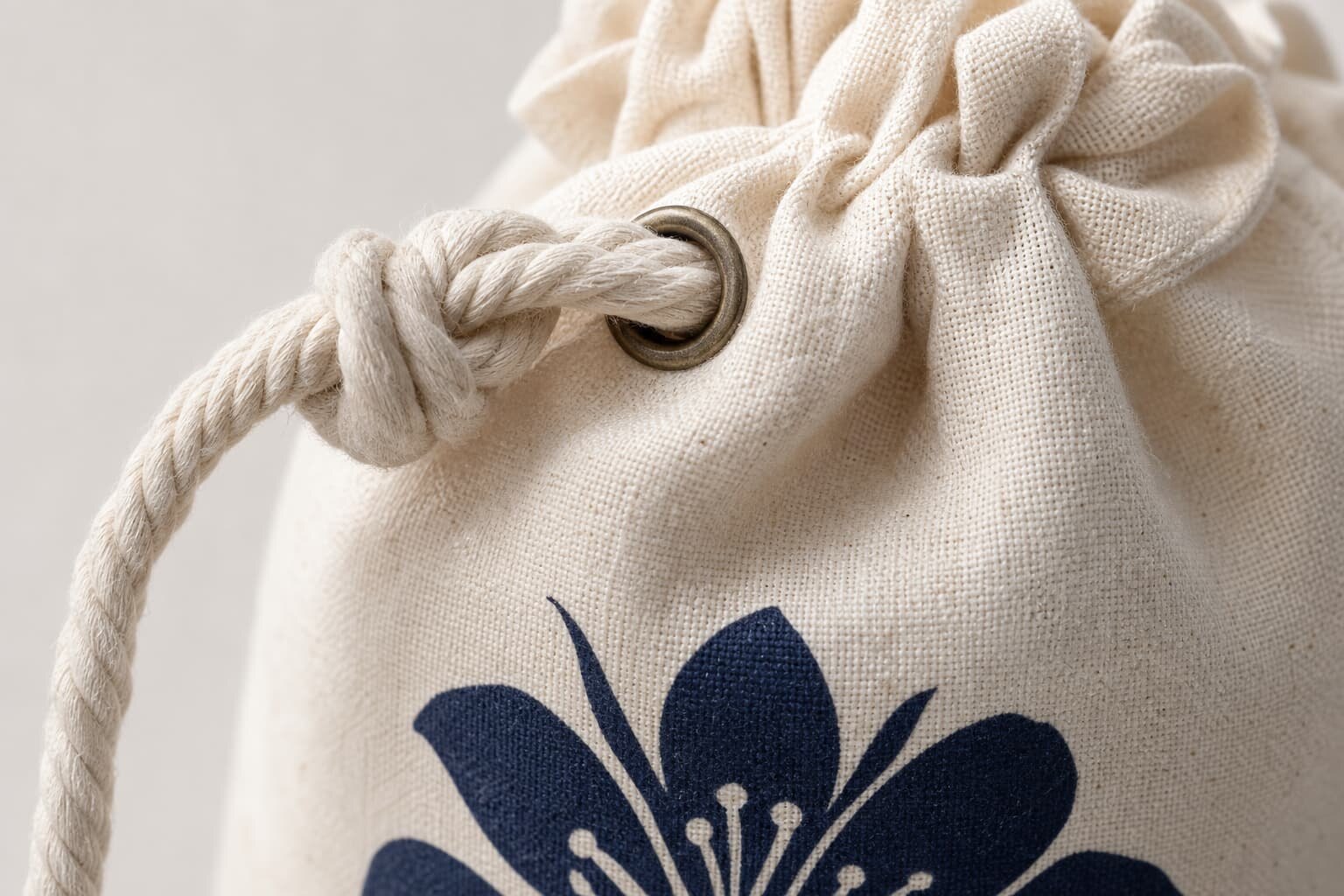
Why the pouch pocket needs separate approval
A canvas tote bag pouch pocket looks simple, but it changes the product in three ways buyers feel immediately: function, cost, and defect risk. The pocket can make the tote more useful for retail shoppers, trade shows, or daily commuting, but it also adds a second panel to approve, a second set of stitches to inspect, and a new surface for print alignment. If the pocket is treated as an afterthought, the factory may build it with a different canvas weight, a looser tolerance, or a faster sewing method that does not match the rest of the bag.
Procurement teams often lose time because the tote body is approved, but the pocket is not described clearly enough in the RFQ. Then the first sample arrives with the wrong pocket depth, a weak opening, or a print that sits too low to use. Approving the pocket separately keeps the program controlled: the buyer can confirm the pocket's job, the amount of load it must carry, and the finish expected in bulk. That reduces rework, avoids quote disputes, and gives both sides a cleaner approval path.
- Treat the pocket as a functional component, not just decoration.
- Approve the pocket before bulk so the factory cannot interpret it loosely.
- Use the sample to test real use, not just visual appearance.
Start with the pocket job: carry, display, or both
Before you compare quotes, define what the pouch pocket must do. If the tote is meant for retail use, the pocket may need to hold a phone, a shopping list, or a loyalty card. If it is a promotional tote, the pocket may mainly carry branding and only need light storage. If it is for premium gifting or travel retail, the pocket may need a closure and stronger shape retention. The function determines the size, seam structure, and price far more than the artwork does.
Write the job into the RFQ in practical terms. Instead of saying 'front pocket,' specify whether the pocket should accept a standard smartphone, a small notebook, or a folded brochure. If the buyer does not define the item the pocket must carry, the factory will guess based on its own standard pattern. That is where many problems start: a pocket that looks acceptable flat on the table but is too narrow in real use, or a pocket that is oversized and pulls the front panel down.
- State the intended contents: phone, pen, card, booklet, or travel accessory.
- Decide whether the pocket is decorative, functional, or both.
- If the pocket must hold weight, request load stress testing at sample stage.
Choose the right canvas weight and pocket construction
For most canvas tote bag programs, the body weight and pocket weight should be chosen together. A common range is 8 oz to 12 oz canvas for the body, with many buyers favoring 10 oz or 12 oz when the pocket needs structure. If the pocket uses the same cloth as the body, the front panel usually looks cleaner and the pocket edge holds shape better. If the pocket uses lighter fabric, the tote may cost less, but the pocket can collapse, wrinkle, or appear underbuilt next to the main bag.
Construction matters as much as GSM. A flat patch pocket is cheaper and faster, but it offers less volume. A gusseted pouch pocket gives the user more usable space and can make the tote feel more premium, though it adds sewing operations and more variation risk. Reinforcement at the top corners, bar-tacks at stress points, and a consistent seam allowance are worth asking for in the sample phase. If your buyer spec includes a heavy insert, a water bottle, or a wide phone case, the pocket needs enough depth and opening width to stay practical after sewing allowance is removed.
- Match body and pocket GSM when you want a firm, unified front panel.
- Use gussets only when the pocket must hold real volume.
- Ask how many seam passes are used at the pocket opening and corners.
Approval rules for print, label, and branding on the pocket
The pocket is often the most visible brand area, so print approval has to be tighter than the rest of the tote. Screen print usually works well for bold one-color or two-color artwork on cotton canvas, especially when the design sits on the pocket front. Heat transfer may be useful for small runs or detailed art, but it can feel less integrated on coarse canvas if the film is too stiff. Embroidery or woven labels can look premium, but they change labor cost, add stitch density, and can distort a thin pocket if the backing is not planned carefully.
The buyer should approve three things together: artwork size, artwork placement, and the visual relationship between the print and the pocket edge. If the design sits too close to the top hem, it may fold out of sight when the bag is packed. If it sits too low, the logo can be interrupted by hand placement or loading. A simple approval sheet with exact dimensions, print color reference, and a photo of the approved sample makes bulk production easier to police. Do not let the factory treat 'logo on pocket' as a general instruction.
- Lock the artwork position in millimeters from the pocket top and side seams.
- Confirm whether the print sits on the pocket only or crosses pocket and body.
- Ask for color density and wash or rub expectations if the bag will be handled often.
What to ask for in the quote so the numbers are comparable
A quote for a canvas tote bag pouch pocket is only useful if every supplier prices the same build. Buyers should ask for body fabric GSM, pocket fabric GSM, pocket style, stitch count, print method, packing method, and the exact piece count per carton. If one factory quotes a flat pocket in 8 oz canvas and another quotes a gusseted pocket in 12 oz canvas, the lowest number is not a real comparison. The quote must separate the cost drivers that the buyer can later control: fabric, labor, printing, accessories, and packing.
MOQ logic matters as well. Some factories price by fabric color minimum, print color minimum, or sewing setup minimum. A pocket with two-color print and a woven label may need a higher MOQ than a plain pocket with no branding. Ask the supplier to break out optional items so you can see what changes if you remove the closure, reduce the print to one color, or use standard cotton webbing for handles. That gives procurement teams room to negotiate without diluting the spec.
- Request separate pricing for body, pocket, print, label, closure, and packing.
- Ask whether the MOQ changes when the pocket style or print color changes.
- Compare quotes only after each supplier confirms the same materials and dimensions.
Use a sample checklist that measures the pocket, not just the look
The first sample should be judged with real items, not only by eye. Put a phone, pen, folded flyer, and any other intended insert into the pocket and see whether the opening is easy to access, whether the bag tips when loaded, and whether the front panel wrinkles in a way that would bother your end customer. A pocket can look neat when empty and still fail when the user needs to pull something out quickly at checkout or on the move. The sample must show usable depth and opening tension, not just stitched appearance.
Record acceptance criteria in measurable terms. For example, agree that the pocket opening should stay within an approved tolerance, the print should remain centered after pressing, and the top edge should not curl or flare. Ask the factory to provide a pre-production sample after any corrections, then sign it only after the dimensions, stitching, and artwork all match. If the buyer signs an incomplete sample, the bulk order usually inherits the same problems and turns them into a claim instead of a correction.
- Test the pocket with the actual items your customer will carry.
- Measure pocket width, depth, and placement against the approved artwork sheet.
- Do not release bulk until the revised sample is rechecked and documented.
Typical cost drivers buyers should watch
A pouch pocket is one of those details that can move price in ways that are easy to miss. The biggest cost drivers are usually canvas weight, pocket size, number of sewing operations, print complexity, and whether any closure or lining is added. A simple open patch pocket on the same canvas as the body is usually the leanest option. A gusseted pocket with a zipper, woven label, or multi-color print can move the quote materially because it adds labor and often slows the line.
Buyers should also watch hidden cost effects. A pocket that sits across a seam may require more careful positioning and slower sewing. A larger print may reduce yield because the artwork cannot be nested tightly in production. Dark pocket colors can affect dye lot matching and require more careful inspection. Even packing can add cost if the pocket must be protected from crushing or if each bag must be folded a specific way to show the print in retail presentation.
- Ask the factory which detail increases labor time the most.
- Confirm whether print setup is charged per color or per design.
- Check if the pocket design changes fabric utilization and offcut waste.
Packing, folding, and carton approval should not be skipped
The pocket can be damaged after sewing if packing is handled carelessly. When a canvas tote bag with a pouch pocket is folded too tightly, the pocket edge can crease permanently, the print can crack if decoration is stiff, and the front panel can look distorted on arrival. That matters for retail programs where the first impression comes from the carton opening, not just the sewn bag. Ask the factory to show the intended fold and inner packing before bulk starts, especially if the product is sold folded with the pocket facing outward.
Carton approval should cover more than dimensions. Confirm piece count per carton, inner polybag or no polybag, desiccant if needed, carton labeling, and whether the pocket is protected from abrasion during transit. If the tote is intended for shelf display, the buyer may want a specific fold that keeps the pocket visible without adding extra packing cost. If the bag is for export distribution, the packing method should balance space efficiency with crease prevention. These details affect damage rates as much as sewing quality does.
- Approve the fold method with the sample, not after shipment.
- Make sure the pocket print survives the planned packing pressure.
- Confirm carton counts and outer marks before production release.
Common approval mistakes that create avoidable claims
The most common mistake is approving the tote body and assuming the pocket will follow automatically. That usually leads to a pocket that is too shallow, too low, or too loose for the intended use. Another frequent issue is approving artwork from a flat digital file without checking how it sits on a sewn panel with seams, top stitch, and edge turn-ins. Once the pocket is sewn, small errors become visible and expensive to correct.
A second class of mistakes comes from vague language. 'Good quality,' 'standard size,' and 'normal packing' are not manufacturing instructions. The factory needs numbers and examples. Buyers should also avoid changing the pocket print, fabric, or closure after the sample is approved unless the new requirement is written into a revised spec sheet. If change control is weak, the production team may build different versions of the same order, and the buyer ends up sorting the difference at arrival.
- Do not assume the pocket dimensions will mirror the body proportions.
- Do not approve artwork before checking how seams affect the visible area.
- Do not change the spec without updating the written approval record.
Lock the final approval workflow before you send the PO
A clean approval workflow saves more money than a late-stage discount. Start with a written product spec, ask for a sample against that spec, review the sample with real loading and packing checks, and then issue a purchase order only after the corrected sample is signed. The PO should reference the approved sample date, artwork file name, fabric weight, pocket construction, packing method, and any tolerance notes. That way, the factory knows exactly what it is building and the buyer has a clear record if questions arise later.
For most programs, sample lead time and bulk lead time depend on fabric sourcing, print setup, and line workload. A simple custom tote may move faster than a complex pocket with closure or special label work. Rather than asking for a promise, ask the supplier to map the timeline by stage: confirmation of artwork, sample sewing, sample revision if needed, pre-production approval, bulk sewing, packing, and final inspection. That is the level of detail procurement teams need to protect launch dates and avoid rushed approvals.
- Reference the approved sample in the PO so there is no spec drift.
- Track timeline by stage instead of relying on a single delivery date.
- Hold the final approval until the revised sample matches all agreed points.
Specification comparison for buyers
| Spec decision | Recommended option | When it fits | Buyer risk to check |
|---|---|---|---|
| Pocket style | Flat patch pocket with top edge bar-tack | Best for light daily carry and lower cost programs | Items can fall out if the opening is too loose or too low |
| Pocket style | Gusseted pouch pocket | Best when the pocket must hold a phone, notebook, or cosmetic kit | Higher sewing complexity and more shape variation between samples |
| Pocket closure | Open top | Best for quick access and simple retail positioning | Confirm the opening tension and whether the pocket sags when loaded |
| Pocket closure | Zipper or flap closure | Best for travel, security, or premium gifting | More parts, more labor, and more risk of zipper alignment issues |
| Pocket fabric | Same canvas as body, usually 10 oz to 12 oz | Best for a unified look and stronger pocket support | Heavier pocket adds cost and may distort the front panel |
| Pocket branding | One-color screen print or woven label | Best for repeatable bulk production and clear branding | Multi-color art or embroidery may push up MOQ and sample rounds |
Buyer checklist before sampling
- Confirm the pocket job: storage, branding, or both, before asking for a quote.
- Approve exact pocket size, usable opening width, depth, and any gusset depth in millimeters.
- State tote body GSM, pocket fabric GSM, and whether the pocket uses the same cloth as the body.
- Lock the print method, artwork placement, print size, and color count before sample sign-off.
- Ask the factory to show stitch type, seam allowance, bar-tack points, and reinforcement at pocket stress areas.
- Review the sample with real fill items such as phone, notebook, pen, and small retail insert.
- Check foldability, flat packing method, and whether the pocket traps wrinkles in transit.
- Request lead time by stage: sample, pre-production, bulk, and packing.
Factory quote questions to send
- What canvas GSM are you quoting for the tote body and for the pouch pocket?
- Is the pocket a flat patch pocket, a gusseted pouch, or a pocket with a closure?
- How many stitch operations are required for the pocket, and where are the reinforcement points?
- What print method do you recommend for the pocket artwork, and how many colors are included in the quote?
- What size tolerance will you hold for pocket width, depth, and placement from the side seam or hem?
- What is the MOQ by fabric color, print color, and pocket construction?
- What is the expected sample lead time and bulk lead time for this construction?
- How will the tote be folded, packed, and cartoned for shipment?
- What files or approvals do you need from us before you can start the pre-production sample?
- Which elements of the quote are optional extras, such as lining, zipper, woven label, or hangtag?
Quality-control points to confirm
- Pocket opening matches the approved width and stays usable after stitching and pressing.
- Pocket sits level on the tote front and the top edge is not twisted or waved.
- Bar-tacks or reinforcement stitches are present at the pocket stress points and match the approved sample.
- Stitch density is even, with no skipped stitches, loose thread tails, or seam puckering.
- Print registration, color density, and placement match the approved artwork sheet.
- Pocket capacity is acceptable without tearing the front panel or deforming the tote shape.
- Fabric shade, weave, and hand feel are consistent across body, pocket, and handles if they are the same material.
- Folding and packing do not crush the pocket into a permanent crease or shift the print out of position.
- Carton labeling, inner packing, and piece count match the purchase order and packing list.
- The pre-production sample is signed off with dated comments before bulk release.