Start MOQ planning from the spa program, not the factory minimum
A canvas tote bag MOQ is not just the smallest quantity a factory is willing to produce. For spa retailers, the better starting point is how the bag will be used: a resale item at the reception area, a gift-with-purchase bag for skincare sets, a membership welcome tote, a seasonal treatment package, or an amenity bag for hotel spa guests. Each use has a different acceptable cost, print quality expectation, and reorder risk. A tote that sits on a retail shelf next to premium skincare must meet a higher visual standard than a bag handed out at a one-day wellness event.
If procurement only asks for the lowest MOQ, the order may become fragmented into many small versions that are expensive to print and hard to replenish. A stronger approach is to define one common tote body first, then decide how many artwork splits or branch allocations can fit inside that production run. This helps the factory price fabric, cutting, sewing, printing, and packing as one controlled order instead of many inefficient mini orders. The goal is to reach a quantity where the unit cost, setup charges, and freight per piece make sense for the spa's margin structure.
Procurement teams should also map the order against the spa's promotional calendar. If the tote is tied to a holiday gift set, the delivery date becomes non-negotiable, and the MOQ must be achievable within the required lead time. Rushing a small order through air freight can erase any savings from a low MOQ. Conversely, ordering too far above actual demand ties up warehouse space and working capital. The MOQ conversation should therefore begin with the commercial plan, not the supplier's minimum.
- Retail resale totes need better fabric hand-feel, cleaner stitching, and stricter print appearance than free event giveaways.
- Gift set totes must be sized around the actual product bundle, not only the logo layout.
- Branch-specific logos can be useful, but each artwork split may add screens, setup time, and packing separation.
- A practical MOQ plan usually includes launch quantity, allocation by store or distributor, safety stock, and reorder trigger point.
Translate spa use cases into a realistic bag specification
Most spa retail programs do not need an oversized shopping tote. A medium canvas tote around 38 x 35 x 10 cm is often enough for boxed skincare, a folded towel, slippers, candles, and printed treatment materials. The gusset matters because many spa products are rigid boxes or bottles. A flat tote may look elegant, but it can distort when loaded with square retail packaging, creating an unflattering shape at the point of sale.
Handle length also affects customer experience. Around 55-65 cm total handle length usually allows shoulder carry for a medium tote, while shorter handles create a hand-carry shopping bag feel. For a premium spa environment, self-fabric handles usually look more consistent than low-cost webbing, but they consume more fabric and may increase unit cost. Reinforcement at the handle joint should be specified because spa totes often carry liquids or glass containers. A bartack or cross-stitch that fails under load can damage the brand perception more than a slightly higher unit cost ever would.
Beyond dimensions, the specification should address interior finishing. Overlocked seams are standard and cost-effective for most retail totes. Bound seams add a cleaner interior look and are worth considering when the tote is part of a high-value gift set where the customer will inspect the inside. The thread color for overlocking should be approved on a sample, as a contrasting thread on natural canvas can look unintentional rather than decorative. Every specification choice should be tested against the question: does this detail support or undermine the spa's brand positioning?
- Common retail tote size: approximately 38 x 35 x 10 cm for mixed skincare and textile bundles.
- Small gift tote size: approximately 30 x 32 x 8 cm for candles, sachets, trial kits, or travel-size skincare.
- Premium robe or towel tote: approximately 42 x 38 x 12 cm when bulky folded goods are included.
- Recommended handle detail: self-fabric handles with cross-stitch or bartack reinforcement at the upper seam.
Choose canvas weight by retail value and freight impact
Canvas weight is one of the biggest specification decisions because it affects appearance, durability, folding, sewing speed, carton weight, and freight cost. For spa retailers, 10 oz to 12 oz canvas, roughly 340-410 GSM, is a balanced range for branded retail totes. It feels more substantial than a thin promotional cotton bag but remains flexible enough for flat packing and store handling. A 10 oz tote can hold a typical skincare gift set without sagging, while a 12 oz version adds perceived value for higher-priced merchandise.
Heavy canvas such as 14 oz or 16 oz can create a more structured bag, but it also raises fabric consumption cost and shipping weight. It may be suitable for a premium merchandise line, but not always for a free gift-with-purchase program. On the other side, very light cotton may reduce the unit price but can make the spa brand look promotional instead of retail-ready. Buyers should compare quotes at the same GSM, not just the same bag size. A supplier quoting 8 oz canvas at a lower price is not offering a comparable product to a 12 oz specification.
Freight impact is often underestimated. Canvas is dense, and a carton of 12 oz totes can weigh significantly more than a carton of 10 oz totes of the same dimensions. For sea freight, this affects the cost per cubic meter. For air freight, the chargeable weight may jump. Procurement should request carton weight estimates early and factor freight into the landed cost comparison. A slightly higher unit price on a lighter canvas can sometimes yield a lower total landed cost when freight is included.
- 6-8 oz canvas: better for low-cost promotions, less suitable for premium spa retail packaging.
- 10-12 oz canvas: practical standard for spa retail, welcome kits, and gift sets.
- 14 oz and above: stronger structure, higher cost, heavier cartons, and more visible fold memory.
- Always request both oz and GSM because suppliers may use different regional fabric descriptions.
Understand why MOQ changes by fabric color and printing method
MOQ is usually lower when the factory can use stocked natural canvas. Natural or ecru canvas is common, easy to source, and suitable for many spa brands that use clean, botanical, or wellness-oriented packaging. Dyed canvas is different. Custom dyeing may require a fabric mill minimum, color lab dip approval, and longer lead time. Even if the sewing factory accepts a small order, the fabric supplier may not. A spa buyer requesting 500 pieces in a specific shade of sage green may find that the fabric mill minimum is 1,000 meters, which far exceeds the bag order requirement.
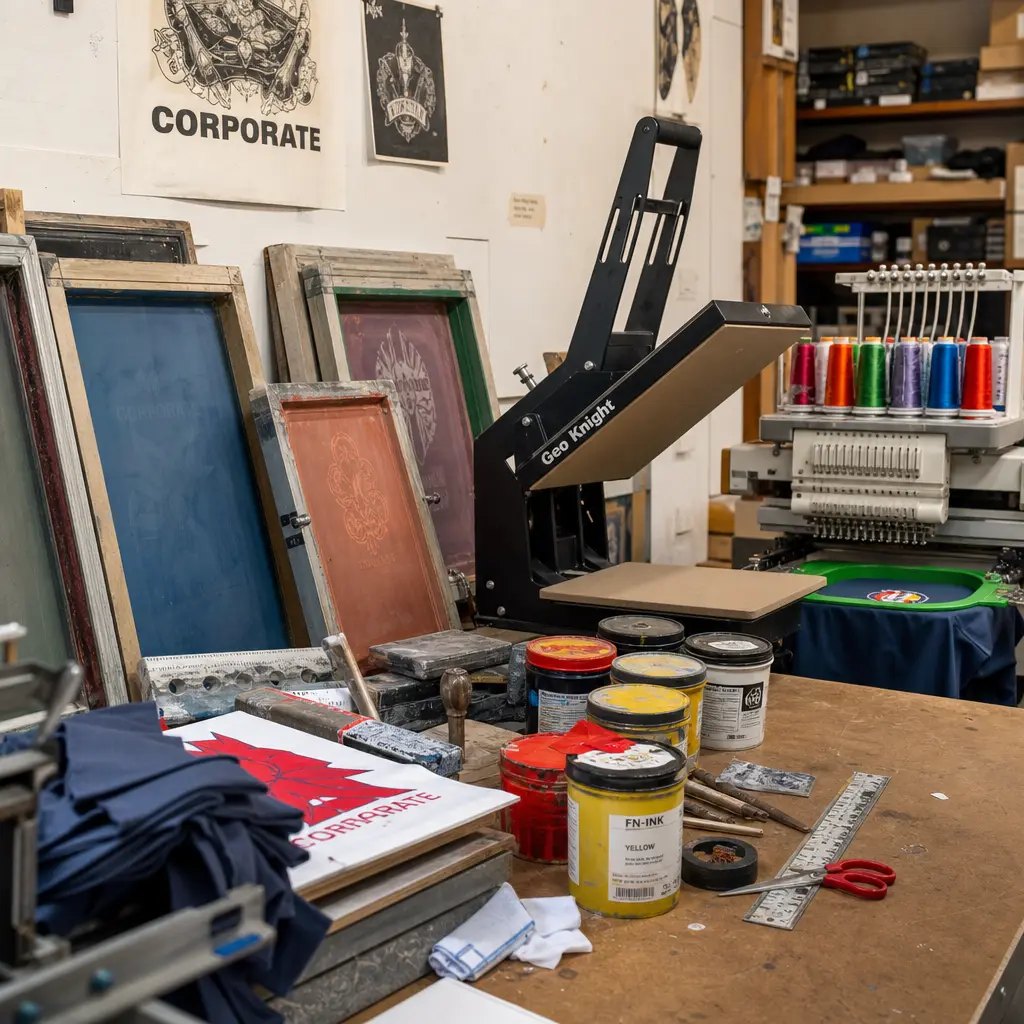
Printing also changes MOQ logic. A one-color screen print on natural canvas is efficient and predictable. A three-color logo requires multiple screens, more registration control, and more setup time. Digital print can support multicolor artwork but may not always deliver the same sharpness or hand-feel on textured canvas. Heat transfer may look clean at first, but the buyer should evaluate flexibility, edge feel, and wash or rub performance if the tote is expected to be reused. For spa retail, where the bag may be kept and reused by the customer, print durability directly affects brand perception over time.
The interaction between fabric color and print method also matters. A white or light ink on dark dyed canvas may require an underbase layer, increasing print cost and complexity. Metallic inks or foil effects add another layer of approval and cost. Procurement should discuss the full combination of fabric, color, and print with the supplier before locking in an MOQ, because a change in any one element can shift the minimum quantity, setup charges, and lead time.
- Lowest MOQ path: stock natural canvas, standard size, one-color screen print, flat export packing.
- Higher MOQ path: custom dyed canvas, Pantone-matched fabric, multiple artwork versions, special labels, individual packaging.
- Screen print is usually efficient for simple spa logos and solid brand colors.
- Digital print may be useful for complex artwork, but a physical strike-off is important on real canvas.
Build the order quantity from allocations and reorder timing
A spa retailer with ten locations may think 1,000 pieces is enough because it matches a supplier MOQ. But after allocation, that may be only 100 pieces per store. If each store uses 25 totes per week for retail gift sets and treatment packages, the inventory disappears in one month. The procurement team then faces air freight, rushed reorders, or inconsistent second-batch color. This scenario is common and avoidable with a simple allocation-based planning method.
A more useful MOQ calculation starts with monthly usage by channel. Separate paid retail sales, gift-with-purchase campaigns, membership kits, hotel partner allocations, and event stock. Then add a buffer for damaged cartons, marketing tests, and new store openings. For imported canvas totes, reorder planning should include sample confirmation if there is a spec change, production queue time, ocean freight or air freight timing, customs clearance, and domestic distribution. A realistic reorder cycle for imported canvas totes can range from 8 to 14 weeks, depending on fabric availability and shipping mode.
The allocation plan should also consider carton-level distribution. If each carton holds 75 pieces, and a small spa branch needs only 50, the buyer must decide whether to open cartons at a central warehouse or ship whole cartons and accept slight overstock. Carton-level planning reduces handling labor and packing waste, but it requires the order quantity to be divisible into practical carton counts. This detail should be discussed with the supplier during the quoting stage, not after production.
- Basic planning formula: monthly usage x replenishment months + safety stock + launch display stock.
- For multi-branch retailers, allocate by actual sell-through, not equal quantities by location.
- Keep one master tote spec if possible so reorders can be faster and more consistent.
- Use carton-level allocation when shipping directly to regional warehouses or distributors.
Compare quotes with the same data, not only the unit price
Two canvas tote bag quotes can look similar but include different assumptions. One may use 10 oz canvas while another uses 12 oz. One may include screen setup charges and export cartons, while another lists them separately. One may quote flat packing, while another includes individual polybags. If procurement compares only the unit price, the cheapest line can become more expensive after sample fees, print screens, packing changes, and freight. A disciplined RFQ process prevents this.
A clean RFQ should make suppliers quote against the same specification. Include fabric weight, bag dimensions, gusset, handle length, seam finish, print size, print colors, label requirements, packing method, carton marking, inspection requirement, and delivery term. For landed cost comparison, request carton size and gross weight early. Canvas is not extremely expensive per piece, but it can occupy carton space quickly, especially with gussets and heavier fabric. A 40-foot container may hold a very different number of 10 oz flat totes versus 14 oz gusseted totes.
Beyond the unit price, procurement should compare the cost structure line by line. Setup charges for screens, sample fees, lab dip costs, and packing surcharges should be itemized. Some suppliers amortize setup costs into the unit price for larger orders, while others charge them separately. Understanding this structure helps the buyer evaluate whether a higher MOQ truly reduces the per-piece cost or simply spreads fixed charges over more units. A transparent quote also makes it easier to negotiate and to compare future reorder pricing.
- Quote line should state fabric weight in oz/GSM, not only cotton canvas.
- Print charges should show setup cost, screen cost, and whether repeat orders reuse screens.
- Packing should state pieces per carton, carton dimensions, and gross weight.
- Delivery term should be clear, such as EXW, FOB, CIF, DAP, or another agreed Incoterm.
Use samples to lock the expensive details before bulk cutting
For canvas tote bags, a sample is not just a shape confirmation. It should prove that the fabric weight feels right, the print color works on the actual canvas, the handle length is comfortable, and the packing fold does not damage the logo. A digital mockup can confirm placement, but it cannot show ink absorption, canvas slub texture, seam bulk, or the real finished size after sewing. Skipping the physical sample stage is one of the most expensive risks in canvas tote procurement.
The most important approval sample is the pre-production sample made with bulk materials. If the factory first provides a rough prototype using substitute cloth, that can help confirm size and construction, but it should not be treated as final approval. Before bulk cutting, procurement should sign off on the pre-production sample, strike-off print, thread color, label, seam finish, and packing method. This approval should be documented with dated photos and measurements so both parties share the same reference.
Sample evaluation should be systematic. Measure width, height, gusset depth, and handle drop with a ruler and compare against the specification. Place actual spa products inside the tote to test fit, balance, and handle comfort under load. Rub the printed area with a clean dry cloth to check for obvious ink transfer after curing. Fold the sample as it will be packed and review whether crease lines cross the main logo or distort the bag's retail appearance. Any deviation found at this stage is far cheaper to correct than after 5,000 pieces are cut and printed.
- Measure sample width, height, gusset, handle drop, and print placement with a ruler.
- Place actual spa products inside the tote to test fit, balance, and handle comfort.
- Rub the printed area with a clean dry cloth to check obvious ink transfer after curing.
- Fold the sample as it will be packed and review whether crease lines cross the main logo.
Set QC thresholds that match retail presentation
Spa retailers usually care about visual consistency because the tote becomes part of the customer-facing brand experience. A slightly crooked logo, stained natural canvas, or uneven handle length can make the whole gift set look discounted. QC standards should define what is critical, major, and minor before production starts. Without this, factory and buyer may disagree at final inspection, leading to shipment delays or acceptance of substandard goods.
For most retail canvas totes, critical defects include unsafe contamination, broken handles, large holes, or wrong artwork. These should trigger automatic rejection of the affected pieces. Major defects include obvious stains, print color mismatch, misaligned logos, open seams, severe size deviation, and weak handle attachment. The acceptable quality limit for major defects should be agreed in advance, often 2.5% or 4.0% depending on the brand's retail standard. Minor defects may include small natural slubs or slight thread ends within the agreed tolerance. Natural canvas can have some fiber variation, so the buyer should define what level of slub or speck is acceptable with reference photos.
The inspection should also cover packing quality. Cartons should be dry, undamaged, and correctly marked. Random pieces should be pulled from multiple cartons, not just the top layer. The inspector should check that the quantity per carton matches the packing list and that no mixed artwork versions appear in the wrong carton. For spa chains with branch-specific logos, a carton-level audit prevents the costly error of shipping the wrong logo to the wrong location.
- Finished size tolerance: commonly +/-1 cm unless a tighter standard is agreed.
- Print position tolerance: commonly +/-0.5 cm to +/-1 cm depending on logo size.
- Handle reinforcement: no loose corners, skipped stitches, or weak bartacks at stress points.
- Natural canvas appearance: agree on acceptable slubs, specks, and shade variation before bulk approval.
Plan packing for warehouse handling and store replenishment
Packing can affect both landed cost and retail usability. Flat packing is common for canvas totes because it keeps cartons neat and supports efficient warehouse counting. However, heavy compression can create deep creases, especially on thicker canvas or bags printed with large solid logos. If the tote is sold as a premium retail item, buyers may choose fewer pieces per carton to reduce pressure marks, even though this increases the number of cartons and possibly the freight volume.
Individual polybags protect each tote but add material cost, packing labor, and sustainability concerns. Many spa brands prefer bulk packing with paper bands, carton liners, or grouped bundles instead. The best choice depends on whether the goods go to a central warehouse, direct to spa branches, or into pre-packed gift sets. Carton markings should identify SKU, artwork version, quantity, purchase order, and destination when multiple branch allocations are involved. A clear marking system reduces receiving errors and speeds up distribution.
Procurement should also discuss pallet configuration with the supplier. Standard export pallets have weight and height limits, and the number of cartons per pallet affects unloading labor and warehouse storage density. If the spa chain uses a third-party logistics provider, the pallet spec may need to match the 3PL's racking system. These details are easier to adjust during the quoting stage than after cartons are already packed and waiting at the port.
- Typical export packing: 50-100 pieces per carton depending on size, GSM, and fold method.
- Request carton dimensions and gross weight to estimate sea freight, air freight, and warehouse pallet planning.
- Use inner bundles or carton dividers if multiple artwork versions are packed in one shipment.
- Avoid overfilled cartons that crush gussets, distort handles, or create permanent print creases.
Protect the lead time by controlling changes after approval
Lead time risk usually comes from late decisions, not only factory capacity. Changing fabric color after lab dip, increasing print colors after the strike-off, adding branch-specific labels, or changing packing after carton testing can push the order back by weeks. For spa retailers planning seasonal promotions, these changes can be more expensive than the original unit price difference between suppliers. A missed holiday delivery can mean the totes sit in storage until the next season, tying up capital and potentially missing the marketing window entirely.
A realistic production schedule should include artwork review, fabric sourcing, sample making, sample shipping, buyer approval, bulk fabric preparation, cutting, printing, sewing, trimming, inspection, packing, and export booking. If custom dyed fabric or special labels are involved, add time before sewing starts. Procurement should freeze the specification before the factory buys fabric and cuts panels because changes after cutting often create waste or rework charges. The frozen spec should be documented in a signed technical sheet that both parties reference.
Reorder efficiency depends on how well the first order is documented. Buyers who keep the approved pre-production sample, artwork files, Pantone references, carton specifications, and inspection reports can place a reorder with minimal back-and-forth. The supplier can reference the previous production record, reducing the risk of color drift or construction changes between batches. This documentation discipline turns a one-time purchase into a repeatable supply chain process.
- Standard stock-fabric orders are usually faster than custom dyed canvas orders.
- Print strike-off approval should happen before bulk printing, not during sewing.
- Branch allocation lists should be finalized before packing starts to avoid carton rework.
- Reorders run smoother when the buyer keeps approved samples, artwork files, Pantone references, and carton data.
Specification comparison for buyers
| Spec decision | Recommended option | When it fits | Buyer risk to check |
|---|---|---|---|
| Fabric weight for spa retail totes | 10 oz to 12 oz cotton canvas, approximately 340-410 GSM | Suitable for retail gift sets, folded towels, slippers, skincare boxes, and membership welcome packs | Below 10 oz may feel too light for premium spa positioning; above 14 oz can raise freight and make the bag stiff for folding |
| Minimum order quantity structure | One base MOQ per fabric color, then smaller internal splits by print artwork if the factory allows | Works for spa chains using one natural canvas body with different location logos, treatment categories, or seasonal prints | Too many artwork splits can increase screen charges, packing complexity, and inspection workload even when the total quantity looks high |
| Bag size | Medium retail tote around 38 x 35 x 10 cm with 60 cm handles | Good for spa retail shelves, robe or towel sets, and gift-with-purchase programs without becoming a beach bag | Oversized bags increase fabric consumption and carton volume; undersized bags may not hold boxed skincare or folded apparel |
| Print method | Water-based or plastisol screen print for solid spa logos; digital print only for gradients or low-detail multicolor art | Screen print is usually the most stable choice for 500-5,000 pieces with one to three brand colors | Digital print on rough canvas can look less sharp than artwork files; metallic or pale inks need lab dip or strike-off approval |
| Handle construction | Self-fabric canvas handles with cross-stitch reinforcement at the top seam | Best for premium retail use where the tote may carry liquids, candles, glass jars, or folded textiles | Cheap webbing handles may not match the body fabric; weak bartack placement can cause handle pullout during use |
| Inside finishing | Overlocked seams for standard retail; bound seams for higher-value spa gift packaging | Overlock controls cost for everyday sales bags, while binding improves interior appearance for premium sets | Bound seams add labor and may affect MOQ or lead time; overlock thread color should be approved before bulk production |
| Packing method | Flat packed in export cartons, 50-100 pieces per carton depending on fabric weight and bag size | Useful for warehouse receiving, retail replenishment, and carton-level allocation by spa branch | Over-compressed cartons can create deep fold marks; individual polybags add cost and may conflict with sustainability targets |
| Sample approval path | Pre-production sample using actual fabric, final print color, final handle length, and confirmed packing fold | Necessary when the tote will be sold as merchandise or included in a premium treatment package | Approval based only on a digital mockup can miss shrinkage, ink hand-feel, stitch density, and finished size tolerance |
Buyer checklist before sampling
- Define the commercial use first: retail resale, gift-with-purchase, membership kit, hotel spa amenity, event giveaway, or branch uniform packaging.
- Select one main bag body that can serve most spa programs before adding special sizes or artwork versions.
- Confirm target fabric weight in oz and GSM, not only the word canvas, because canvas can range from light promotional cloth to heavy structured fabric.
- Decide whether natural canvas, dyed canvas, or organic cotton is required before requesting MOQ, because fabric availability changes the minimum.
- Group artwork by print color count and print position so the factory can quote screen charges and setup time correctly.
- State whether the tote must hold boxed skincare bottles, candles, towels, slippers, robes, or mixed retail kits.
- Set acceptable finished size tolerance, handle length tolerance, print position tolerance, and stitch reinforcement requirements.
- Request carton dimensions, gross weight, net weight, pieces per carton, and carton marking details with the quote.
- Plan order quantity against sell-through, branch allocation, warehouse buffer, and expected replenishment lead time, not only the lowest quoted MOQ.
- Approve a physical pre-production sample before bulk cutting, especially when using dyed canvas, Pantone-matched printing, or premium packaging.
Factory quote questions to send
- What is your MOQ for this exact fabric weight, fabric color, bag size, and print method?
- Can the total MOQ be split across multiple print artworks or spa branch logos, and what is the minimum per artwork?
- Is the quoted canvas stock fabric or does it require custom weaving, dyeing, or pre-washing?
- What is the actual GSM tolerance of the canvas fabric, and can you provide a fabric swatch before sample making?
- Which print method do you recommend for our logo file and Pantone colors, and what are the setup charges?
- Will the sample use the same fabric, ink, thread, handle construction, and packing fold as bulk production?
- What are the finished size, handle length, and print placement tolerances you will follow during production?
- How many pieces are packed per export carton, what are the carton dimensions, and what is the estimated gross weight?
- What is the production lead time after sample approval and deposit, and which steps could extend the schedule?
- Can you provide photos of inline inspection, finished goods inspection, carton packing, and random bulk pieces before shipment?
Quality-control points to confirm
- Finished tote size should normally stay within +/-1 cm unless a tighter tolerance is agreed before cutting.
- Handle length should remain consistent within +/-1.5 cm across inspected pieces to avoid a mixed retail appearance.
- Print position should be centered and within the agreed tolerance, commonly +/-0.5 cm to +/-1 cm depending on design size.
- Screen print color should match the approved strike-off under consistent lighting, not only the digital artwork file.
- Ink should pass a basic dry rub and hand-scratch check after curing, especially for dark ink on natural canvas.
- Seam allowance should be consistent, with no open seams, skipped stitches, broken threads, or raw edges outside the approved finish.
- Handle attachment should include reinforced stitching such as cross-stitch or bartack, with no loose top corners.
- Canvas panels should be free from major stains, oil marks, yarn defects, holes, heavy slubs, and obvious shade variation within the same carton.
- Cartons should be dry, export-grade, correctly marked, and not overfilled to the point of crushing or permanent creasing.
- Final inspection should separate critical, major, and minor defects so procurement can make a clear shipment decision.