Why MOQ Planning Matters
For hotel boutiques, the wrong canvas tote bag MOQ creates two different problems. Too low, and the unit price can jump because fabric cutting, print setup, and packing labor are spread over too few pieces. Too high, and the buyer ties up cash in a seasonal design, a location-specific logo, or a bag size that guests may not actually buy.
A practical MOQ plan starts with how the tote will be used: retail resale, welcome amenity, spa shop packaging, event merchandise, or a mixed-use guest bag. Each use changes the acceptable fabric weight, print durability, packing method, and reorder timing. The supplier's MOQ is only one number; the buyer's real minimum is the lowest quantity that protects price, quality, shelf presentation, and replenishment risk.
- Retail resale usually needs cleaner finishing, hang tags, barcode labels, and more controlled packing.
- Amenity use may tolerate simpler packing but often requires tighter delivery dates by hotel opening or event schedule.
- Multi-location hotel groups should avoid splitting the first order into too many logo versions unless each location can absorb its own MOQ.
- A first order should prove sell-through and guest response before adding custom dye colors, zippers, linings, or multiple sizes.
Build MOQ From Demand
Do not begin with a random 500-piece or 1,000-piece target. Build the quantity from the sales channel. A boutique with one display table, a front desk counter, and a spa retail shelf may need only a modest launch quantity, while a resort group with several outlets and in-room gifting can move through inventory faster. The MOQ should cover launch display, opening back stock, expected monthly sales, and a reserve for damaged cartons or internal use.
For example, if one hotel boutique expects to sell 80 bags per month and wants three months of cover, the commercial demand is around 240 pieces before display and reserve stock. If the supplier's efficient MOQ is 500 pieces, the buyer should decide whether the improved unit price justifies six months of inventory. If the artwork is evergreen and the bag is not dated, that may be reasonable. If the logo includes a seasonal campaign, it may be better to accept a higher unit cost at a smaller quantity.
- Calculate launch quantity per outlet, not only total group quantity.
- Separate retail stock from marketing giveaway stock so actual sell-through is visible.
- Keep reserve stock around 5-10 percent for replacement, display damage, and internal requests.
- Avoid dated artwork on the first MOQ unless the event quantity is already committed.
Keep The First Spec Simple
The fastest way to lose MOQ control is to treat one tote project as several small projects. One body size, one fabric color, one print, and one packing style can often be produced as one clean lot. Two sizes, three fabric colors, separate hotel logos, and different barcode labels may be counted as separate SKUs, even if the total order quantity looks large on the purchase order.
For a hotel boutique launch, a simple open-top canvas tote is usually the most efficient starting point. A flat tote is easy to cut, print, sew, fold, and pack. A gusseted or boxed-bottom tote gives better shelf shape and more carrying capacity, but it increases fabric use, sewing operations, carton volume, and inspection points. That does not make it wrong; it just means the buyer should add it because the boutique needs the function, not because the sample photo looks more substantial.
- Use one common tote body across several hotel properties if only the printed logo changes later.
- If multiple logos are unavoidable, quote each logo quantity separately so the MOQ impact is visible.
- Avoid changing handle length, label position, and packing format between locations without a real retail reason.
- Treat each fabric color as a separate MOQ unless the factory confirms the same stock fabric is available.
Choose Fabric Weight Correctly
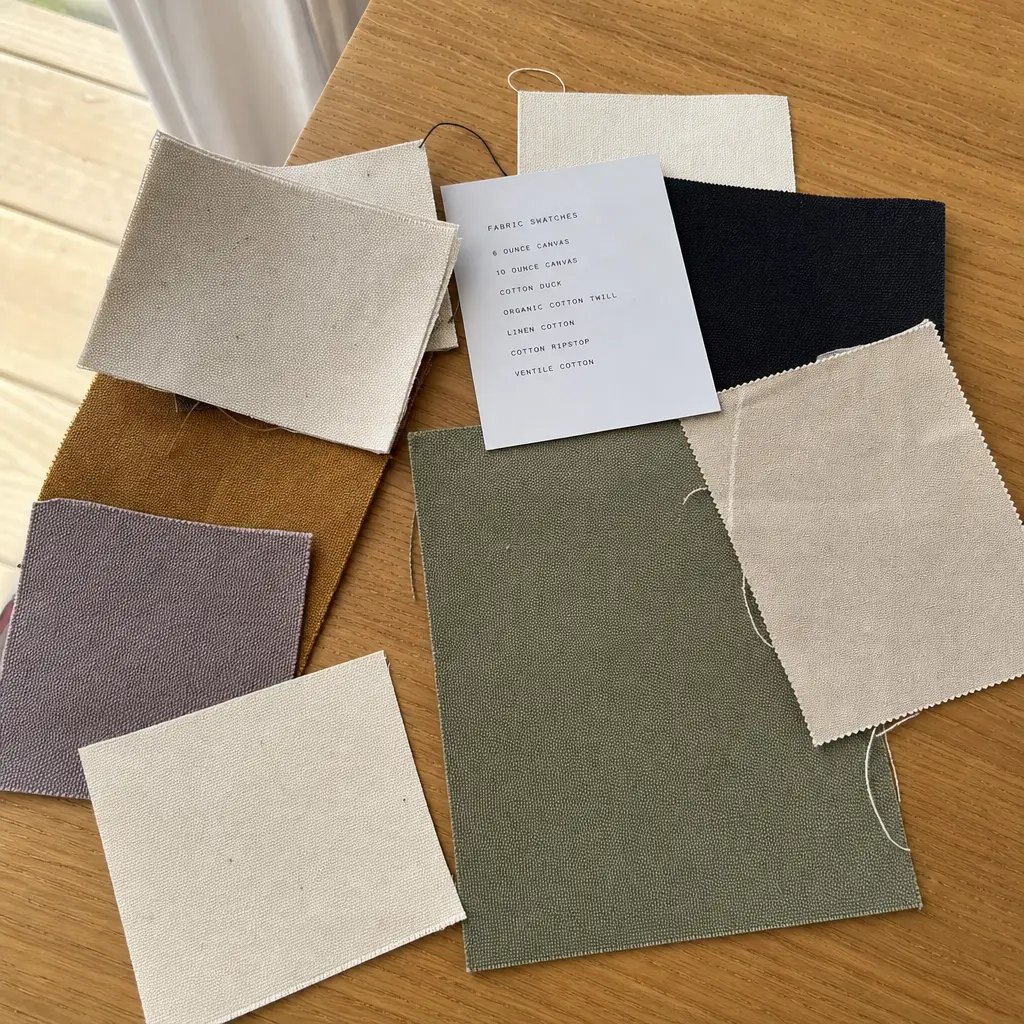
Canvas weight is one of the biggest drivers of both perceived value and cost. For hotel boutique canvas tote bags, 10 oz to 12 oz canvas, roughly 280-340 GSM depending on weave and finishing, is a common practical range. It feels more retail-ready than thin promotional cotton but does not become as bulky or expensive as very heavy canvas. For premium retail lines, 14 oz canvas can work, but it raises fabric cost, sewing resistance, shipping weight, and folding volume.
Quotes should not simply say cotton canvas. Ask for oz, GSM, fabric width, color, and finishing. Natural canvas may have seed specks and shade variation, which many boutique buyers like because it looks authentic. Bleached or dyed canvas gives cleaner color control but can require additional fabric MOQ and lab dip approval. If the supplier quotes a low price without fabric details, another supplier quoting heavier canvas may look expensive even though the bag is not equivalent.
- 8 oz canvas can work for low-cost amenity bags but may feel too light for boutique resale.
- 10 oz canvas is a balanced starting point for retail tote programs with controlled cost.
- 12 oz canvas improves body and durability but increases landed cost and carton weight.
- 14 oz canvas should be reserved for premium positioning where the buyer accepts higher MOQ and freight impact.
Match Print Method To Artwork
Most hotel boutique canvas tote bags use screen printing because hotel logos, resort marks, and simple graphic layouts often use one to three solid colors. Screen printing has setup cost, but the unit cost becomes efficient when the quantity reaches a practical MOQ. It is also durable when ink, curing, and fabric surface are controlled correctly.
Heat transfer, digital print, or embroidery may fit certain designs, but they change the MOQ logic. Transfers can handle gradients and complex artwork, yet the hand feel may be different and large prints can affect fold lines. Embroidery looks premium on smaller marks but can pucker lighter canvas and becomes costly on large logos. For artwork with fine lines, large solid blocks, metallic ink, or printing near seams, approve a strike-off before bulk production.
- Screen print is efficient for solid logos and repeat orders using the same screens.
- Embroidery suits small chest-style marks, side labels, or premium minimalist branding.
- Heat transfer suits complex artwork but should be tested for hand feel and wash resistance.
- Large prints on natural canvas need color approval because fabric shade affects final appearance.
Understand Cost Drivers
MOQ and price move together because the factory has fixed work before the first bulk piece is packed. Fabric sourcing, fabric inspection, cutting setup, screen making, ink mixing, sample making, line setup, label preparation, and carton marking all require time. When the order is small, those costs are spread across fewer bags. When the order is split into several SKUs, the same setup pattern repeats.
A clean quote should show what is included and what is not. The unit price alone is not enough for comparison. One supplier may include individual polybags, hang tags, and carton marks, while another quotes loose bulk packing. One may include one print color on one side, while another includes two print positions. The lowest unit price can become more expensive after adding setup charges, label costs, extra packing labor, and higher freight volume.
- Fabric cost increases with GSM, dyed color, washing, shrinkage control, and fabric MOQ.
- Sewing cost increases with gussets, linings, pockets, zippers, reinforced handles, and binding.
- Printing cost increases with color count, print size, print positions, special ink, and registration difficulty.
- Packing cost increases with individual bags, hang tags, barcode stickers, inserts, tissue, and sorting by location.
- Freight cost increases with heavier fabric, boxed bottoms, rigid packing, and low carton density.
Sample Approval Controls Risk
The sample stage should prove the real production path, not only the visual idea. A photo sample made from available fabric can help with early design review, but the approval sample should use the nominated fabric weight, actual print method, final handle construction, final label, and intended packing. Otherwise, the buyer may approve a bag that the factory cannot reproduce at the quoted price or within the planned lead time.
For hotel boutiques, the most common sample mistakes are handle length that looks good flat but feels short on the shoulder, logo placement that shifts after folding, natural canvas shade that differs from the brand expectation, and packing that creates heavy creases across the print. A useful sample review records measurements, photos, color references, and written comments. Verbal approval is weak protection when bulk production starts.
- Measure width, height, gusset, handle length, handle drop, and print position on the physical sample.
- Compare fabric hand feel and thickness against the approved swatch, not only against the sample photo.
- Fold the bag the same way it will be packed and check whether fold lines cross the main logo.
- Review the hang tag, care label, barcode label, and carton mark together before bulk approval.
Set QC Thresholds Early
Canvas tote bags look simple, but small production differences are visible on a boutique shelf. Uneven top edges, twisted handles, weak handle stitching, off-center logos, loose threads, and dirty natural canvas all reduce retail value. The purchase order should define what is acceptable before production, especially if the bags will be sold to guests rather than given away.
A practical QC plan uses measurable tolerances. Size can be checked within an agreed range. Print placement can be measured from the top edge and side seam. Handle strength can be tested with a specified load for a defined time. Color can be compared against Pantone, lab dip, or approved sample under consistent light. For most orders, final random inspection before shipment is more useful than discovering problems when cartons arrive at the hotel warehouse.
- Classify broken seams, missing labels, wrong artwork, and major stains as serious defects.
- Define acceptable natural cotton specks separately from dirt, oil marks, or mildew.
- Use the approved pre-production sample as the reference for stitching density and print hand feel.
- Require carton count and packing verification as part of inspection, not only bag appearance.
Plan Packing And Cartons
Packing is often treated as a small detail until the hotel team receives crushed, dusty, or hard-to-count bags. For boutique resale, individual folding and a protective bag or paper band can improve shelf handling. For internal giveaway programs, loose bulk packing may be acceptable if the cartons are clean, dry, and clearly marked. The right answer depends on how the hotel receives, stores, and distributes inventory.
Carton data also affects landed cost. Heavy canvas totes can produce high gross weight even when the unit price is attractive. Boxed-bottom bags and stiff fabric increase CBM, which can raise ocean or air freight cost. Before approving the order, get estimated carton quantity, pieces per carton, carton dimensions, gross weight, net weight, and total CBM. This makes the MOQ decision more realistic because a larger order also means more storage and freight exposure.
- Use carton marks that include SKU, color, logo version, quantity, PO number, and destination if split shipping is needed.
- Confirm whether individual packing is recyclable polybag, paper band, glassine bag, or loose fold.
- Avoid overly tight cartons that create permanent creases across printed areas.
- For multi-property hotel groups, request packing by location only if the supplier includes the sorting labor in the quote.
Manage Lead Time Risk
Lead time starts before the factory sewing line begins. Artwork cleanup, sample making, sample shipping, buyer comments, revised sample approval, fabric booking, print screen preparation, bulk cutting, sewing, inspection, packing, and export documents all take time. Hotel boutique buyers often focus on the final ship date and underestimate the approval calendar.
MOQ changes can also change the schedule. A small order using stock natural canvas may move quickly. A larger order using custom dyed canvas, multiple logos, individual barcode labels, and location sorting can require more preparation. Air freight can solve some timing problems but may erase the savings gained from a higher MOQ. The cleaner approach is to set an approval deadline for artwork, sample, packaging, and carton marks before the production slot is booked.
- Separate sample lead time from bulk production lead time in the quote.
- Add buffer for sample shipping, internal hotel approvals, and artwork revision.
- Custom fabric color requires lab dip approval before bulk fabric is ordered.
- Peak season orders need earlier booking because printing and sewing capacity can tighten.
Specification comparison for buyers
| Spec decision | Recommended option | When it fits | Buyer risk to check |
|---|---|---|---|
| MOQ planning base | Start with one body size, one fabric color, one print artwork, and one packing method | Best for first hotel boutique order where sell-through is unproven and storage space is limited | Mixing sizes, colors, or prints may split the order into separate production lots and raise the true MOQ |
| Fabric weight | 10 oz to 12 oz cotton canvas, roughly 280-340 GSM depending on construction | Suitable for boutique retail totes, welcome gifts, spa retail, and light shopping use | Quotes using only oz without GSM or fabric width may not be directly comparable |
| Bag construction | Open-top flat tote with boxed bottom only if the product must stand better on shelf | Flat tote keeps cost and MOQ lower; boxed bottom improves retail presentation | Boxed bottom adds stitching time, carton volume, and sample approval details |
| Handle length | 60-65 cm shoulder handle in same canvas, reinforced with cross stitch | Works for resort shops, city hotels, and general guest shopping use | Short hand-carry handles may look premium but reduce practical use for guests |
| Print method | Screen print for 1-3 solid colors; heat transfer only for detailed gradients or photo artwork | Screen print gives stable unit cost and good durability for simple hotel branding | Thin lines, metallic ink, and large solid blocks need print strike-off approval before bulk |
| Color strategy | Natural, black, or dyed canvas as one base color for the first MOQ | Natural canvas supports a lower-risk launch and usually has easier fabric availability | Custom dyed canvas often needs higher fabric MOQ, lab dip approval, and extra lead time |
| Retail finishing | Hang tag plus inner care label; barcode sticker only if required by the boutique POS system | Good balance for hotel gift shops selling through a small retail counter | Each added label, tag, or sticker creates artwork files, approval steps, and packing labor |
| Packing method | Individually folded in recyclable polybag or paper band, then master carton by style | Useful when totes are sold as retail units or distributed to multiple hotel locations | Loose bulk packing lowers cost but can create creasing, dust exposure, and counting disputes |
Buyer checklist before sampling
- Define the first order by sellable unit: one canvas tote style, one size, one color, one artwork, and one packing format.
- Estimate opening quantity by location count, monthly boutique traffic, launch display quantity, and reserve stock instead of using only a supplier's minimum.
- Specify fabric weight in oz and GSM where possible, and require the quote to state whether the canvas is washed, unwashed, natural, dyed, or bleached.
- Lock the bag dimensions, gusset or flat-bottom choice, handle length, handle width, and reinforcement stitch before sample making.
- Choose the print method based on artwork complexity, not only on unit price; request a print strike-off for large logos, fine lines, and special inks.
- Separate one-time sample, setup, screen, mold, label, and testing charges from the unit bag price in the quote.
- Confirm carton quantity, folded bag size, carton dimensions, gross weight, and whether retail packing is included in the quoted price.
- Approve a pre-production sample with real fabric, real print, real labels, and final packing before authorizing bulk cutting.
- Set measurable QC tolerances for size, handle strength, print placement, print color, seam strength, and carton marking.
- Plan reorder timing using fabric availability and print setup lead time, not only the final sewing lead time.
Factory quote questions to send
- What is the MOQ for this canvas tote bag if we keep one size, one fabric color, one artwork, and one packing method?
- If we split the same total quantity across two hotel logos or two colors, what MOQ and unit price apply to each version?
- What fabric weight are you quoting in oz and GSM, and is the quoted fabric stock fabric or custom dyed fabric?
- Is the canvas pre-shrunk, washed, bleached, natural, or dyed, and what color tolerance applies between sample and bulk?
- Which print method is included in the unit price, and how many print colors, print positions, and setup charges are included?
- Can you provide a print strike-off before bulk production, and what artwork format is required for accurate screen or transfer preparation?
- What handle reinforcement is included: single stitch, cross stitch, box stitch, or bartack, and what loading test can you perform?
- What are the estimated carton dimensions, carton quantity, gross weight, and CBM for our planned order quantity?
- What is the sample lead time, bulk lead time after sample approval, and latest artwork approval date to meet our target delivery window?
- Which inspection standard will you use, and what defects will be classified as critical, major, and minor?
Quality-control points to confirm
- Bag size tolerance should be agreed before bulk, commonly within plus or minus 1 cm for width and height and tighter for handle placement.
- Fabric weight should be checked against the approved swatch; do not approve bulk based only on visual thickness.
- Print placement should be measured from fixed bag edges, not judged by eye on a folded sample.
- Print color should be compared under consistent light using Pantone or approved sample reference, especially on natural canvas.
- Handle attachment should use the approved reinforcement and pass a practical load test suitable for retail use.
- Seams should be checked for skipped stitches, loose threads, open seams, puckering, and uneven top edges.
- Packing inspection should verify folded size, individual bag material, carton marks, carton count, barcode position if used, and moisture protection.
- AQL levels and defect definitions should be written into the purchase order before production starts.