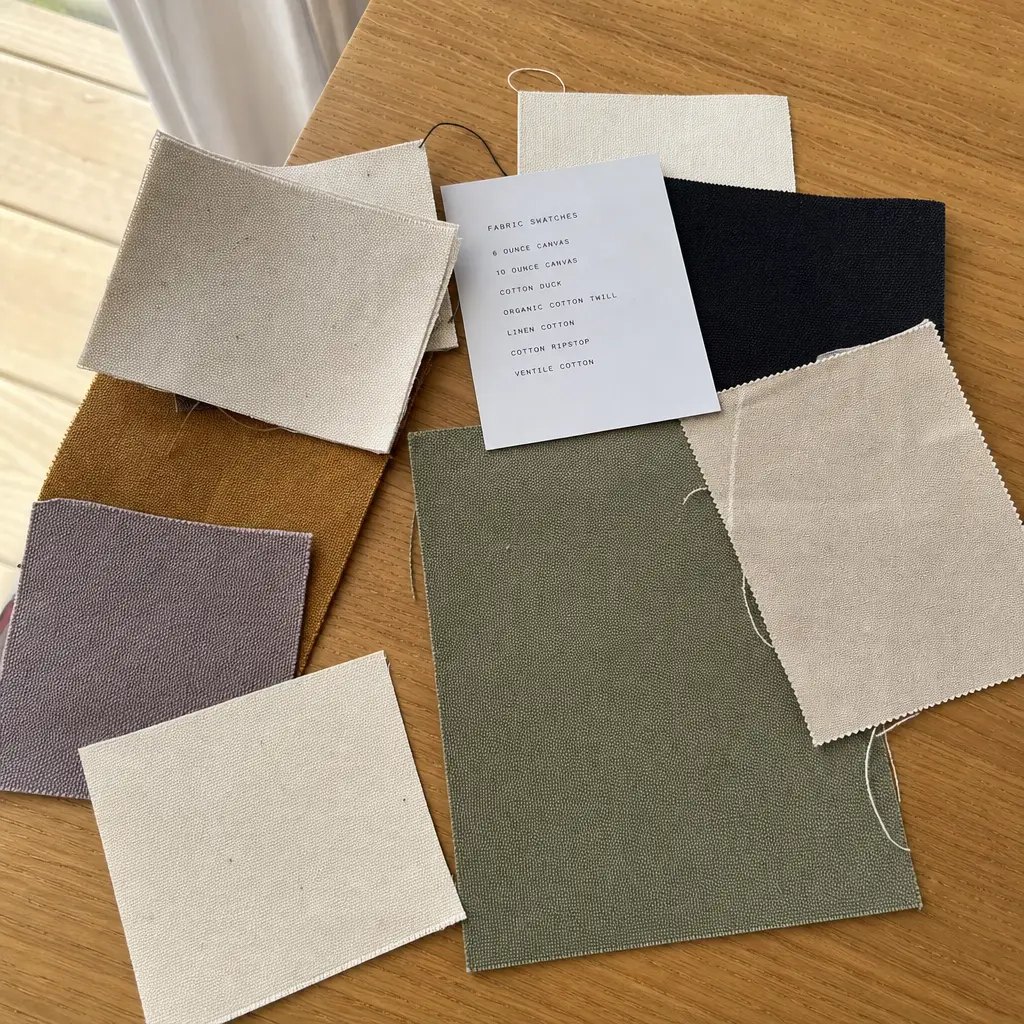
1. Define the tote's job before choosing the material
Tea brands buy canvas totes for very different reasons, and the material choice should follow that job. A lightweight event giveaway for loose tea sample sachets has a different requirement than a retail tote sold next to tea tins, brewing tools, and premium gift boxes. Procurement problems usually start when the tote is described only as "canvas bag with logo" instead of being tied to a real load, selling environment, and packing plan.
For tea brands, the use case affects nearly every commercial decision. A tote used to carry two metal tins and a printed gift carton needs better body, cleaner seams, and stronger handle reinforcement than a bag used once at a tasting event. A tote packed into subscription shipments also needs to fold efficiently so freight cost stays reasonable. The right specification is not the most expensive one; it is the one that matches load, display, and reorder expectations without introducing unnecessary cost.
Tea-specific context matters here. Tea packaging often includes hard-edged cartons, cylindrical tins, glass accessories, and aromas that buyers want kept clean and presentation-ready. That means the tote has to do more than carry weight. It needs to look tidy on shelf, avoid visible distortion when loaded, and arrive without dust, odor, or print smearing that would undermine premium packaging around it.
- Retail resale beside tea tins and accessories: prioritize structure, clean print, reinforcement, and consistent shade.
- Gift-with-purchase for boxed tea sets: prioritize mid-range cost with a polished appearance.
- Trade show, sampling, or launch event: prioritize speed, lower MOQ, and acceptable print clarity.
- Subscription and bundle insert: prioritize foldability, carton efficiency, and stable dimensions around packed inserts.
2. Choose canvas weight with load and retail perception in mind
Canvas weight is the first specification most buyers look at, but it should be tied to the actual product load and desired hand feel. In tea-brand sourcing, 8 oz canvas often works for promotional programs, tasting events, or simple brand merch where low cost matters most. For retail resale or structured gift presentation, 10 oz to 12 oz is usually the more commercially reliable range because the bag feels more substantial, prints more cleanly, and holds its shape better around boxed tea assortments.
Heavier is not automatically better. A 12 oz bag adds fabric cost, sewing resistance, and carton weight. If the bag is mainly carrying sachets, a folded tasting leaflet, and perhaps one small pouch, 10 oz may be enough. If it will carry ceramic mugs, metal tea tins, or dense premium gift packs, a sturdier fabric helps reduce sagging and early seam stress. Buyers should estimate the intended net load and test a sample with that real load before approving bulk.
The RFQ should name both oz and GSM, then state tolerance. A practical control point is fabric weight tolerance within +/-5% of approved specification. Without that, a supplier can quote a nominal 10 oz bag and still deliver a lighter-feel fabric lot that changes the product's appearance and durability. For repeat tea programs where shelf presentation matters, that difference becomes visible immediately.
- 6 oz to 8 oz: lower-cost promo route, soft hand feel, less structure, usually not the strongest retail option.
- 10 oz: balanced choice for many tea gift sets, tea-sachet assortments, and entry retail merch.
- 12 oz: stronger body and better premium feel for heavier gift formats, with higher cost and freight impact.
- Always define weight tolerance, not only a single target number.
3. Fabric construction, surface, and shrinkage control matter as much as weight
Two bags can share the same nominal weight and still perform differently because weave density, yarn regularity, and finishing change the surface and behavior. Tea brands frequently need logos, line art, small text, or packaging-matched graphics to print clearly. A smoother plain canvas with more even yarn appearance is usually easier to print and easier to repeat than a heavily slubbed or rustic-looking cloth.
Natural canvas remains popular because it fits many tea-brand aesthetics, especially brands using kraft boxes, muted greens, botanical graphics, or minimalist packaging. But natural cloth also brings more visible lot variation than many buyers expect. If the tote sits alongside exact-color retail boxes, that variation should be reviewed under daylight conditions before bulk approval. Bleached or optically lighter fabric may improve print brightness, but it can slightly change sourcing cost and visual feel.
Shrinkage is another under-specified area. Reusable tea totes may be hand-washed by end customers, and even unwashed bags can react to humidity and finishing differences. A practical procurement rule is to request a stated shrinkage result, such as no more than 3% after one gentle hand-wash or agreed care test. If the supplier cannot describe expected shrinkage in warp and weft direction, the sample approval is incomplete.
Tea-related staining and cleanliness also matter. Dark tea splashes, masala blends, and flavored teas can leave visible marks more quickly on untreated natural canvas. That does not mean avoiding natural fabric, but it does mean the buyer should decide whether the bag is meant as durable retail merchandise or short-cycle packaging support. That end use affects how much wash performance and surface neatness need to be controlled.
- Use smoother plain canvas for logos with small text, fine lines, or QR-style elements.
- Use rustic or slub-heavy fabric only when the brand intentionally wants that look and print detail is limited.
- Request shrinkage expectation and approval-test method for reusable bags.
- Review body shade and surface under daylight, especially if matching tea cartons, labels, or gift sleeves.
4. Compare material options and supplier routes on the same commercial basis
A useful sourcing comparison separates material decisions from commercial route decisions, then looks at how both affect MOQ, print quality, durability, and repeatability. Tea-brand buyers often compare quotes that look similar on price but are based on different assumptions: one supplier may quote a stock 8 oz body with a simple screen print, while another quotes a custom 12 oz body with a reinforced handle and retail packing. Without normalizing those details, the comparison is not commercially useful.
Stock-base programs can be attractive for launches, seasonal gifting, or early product testing because MOQ is often lower and lead times can be shorter. The tradeoff is lower control over exact fabric shade, handle options, or future replenishment consistency. Factory-direct custom production usually makes more sense once the tote becomes a repeat retail SKU or a recurring gift format. In that case, the buyer benefits from locking construction details, inspection criteria, and reorder references more tightly.
For tea brands, the real decision is rarely just 'which canvas is better.' It is 'which combination of fabric, print route, MOQ, and packing method fits this specific program without creating avoidable reorder risk.' That is why the quote sheet should ask every supplier to price the same size, same print area, same handle spec, and same carton logic.
- Normalize quote inputs before comparing unit prices.
- Treat stock-base and fully custom routes as different risk profiles, not only different prices.
- Prioritize repeatability for core retail items; prioritize speed and MOQ flexibility for campaign items.
5. Match print method to artwork, fabric surface, and tea-brand presentation
Print method should support both the artwork and the cloth. For most tea-brand totes, screen printing remains the most dependable commercial option because it handles simple logos well, works across common 8 oz to 12 oz canvas weights, and is usually the easiest method to repeat on future orders. One-color and two-color tea-brand artwork often performs well here, especially when the body fabric is smooth enough to hold clean edges.
Heat transfer or digital-style approaches may be useful for short runs, multicolor art, or rapid sampling, but they need durability checks before retail approval. Some low-cost print routes look acceptable in a sample room yet lose quality through rubbing, folding, or warehouse handling. If the tote will be sold rather than simply given away, the buyer should ask for dry-rub review, print adhesion review, and at least one wash or handling simulation on the approved sample.
Embroidery and woven labels can suit premium tea brands, especially where the design is minimal and tactile branding matters more than large front-panel graphics. But embroidery adds needle time, cost, and the possibility of puckering on lighter canvas. A small woven label near the side seam or top edge can sometimes create a more premium look than forcing detailed print onto a textured body fabric.
Tea brands also need to consider packaging color matching. If the tote accompanies a gift sleeve, tea tin band, or subscription insert card, the print color should be approved against those materials, not in isolation. Even simple black or deep green logos can appear different depending on the canvas base shade.
- Screen print: strongest default option for repeat tea-brand logos and bulk consistency.
- Heat transfer or digital route: useful for short runs or complex art, but test rub resistance and visual durability.
- Embroidery or woven label: premium option for smaller branding areas, with higher sewing cost.
- Approve print on the actual body fabric and approved shade, not only on a paper proof.
6. Build an RFQ that suppliers can quote without interpretation
A good RFQ reduces later argument. Procurement buyers should write the tote specification so the supplier does not need to guess. That means naming the finished dimensions, fabric weight and tolerance, body color, print method, artwork size, handle width and drop, reinforcement method, seam finish, packing method, and inspection standard. When an RFQ stays vague, suppliers fill gaps differently, and quote comparisons become unreliable.
For tea brands, the RFQ should also describe the intended contents. A tote carrying two 100 g tins and a folded brochure is not the same as a tote used with a rigid holiday gift box, ceramic infuser, and tissue wrap. That load description helps the supplier judge handle build and body structure correctly. It also forces the buyer to think through whether a flat tote is enough or whether a gusseted body will improve fit and retail appearance.
Quote structure matters as much as product spec. Ask suppliers to separate unit price into fabric, print, sewing, labels, packing, and carton components where possible, and ask for setup or screen charges separately. This exposes where one quote is lower only because it assumes thinner cloth, no reinforcement, fewer pieces per carton, or a less protective packing format. It also helps buyers identify the true cost drivers on reorders.
The RFQ should explicitly ask for MOQ by variant. Tea brands often run more than one print design, seasonal message, or gift campaign. MOQ can change by body color, artwork count, and packing format, so those variables need to be priced up front.
- State dimensions in centimeters and include tolerance requirements.
- Describe the intended product load so handle and seam decisions are tied to real use.
- Request separated quote elements to expose hidden cost shifts.
- Ask MOQ by colorway, print version, and pack format, not only one headline MOQ.
7. Sampling should test fit, load, presentation, and packing efficiency
Sample approval should do more than confirm that the bag looks acceptable on a table. For tea-brand procurement, the sample should be checked with the actual contents or a close load simulation. Place the intended tea tins, sachet cartons, or gift set components inside and evaluate whether the bag mouth opens cleanly, whether the side walls collapse too much, and whether the handles remain comfortable and stable under weight.
This is especially important for tea gift formats. Boxed assortments can create pressure points at corners, while cylindrical tins may shift and change how the bag hangs. A bag that looks fine empty can appear awkward once packed. Gusset depth, body width, and handle drop all affect that result. If the tote will be sold at the register or displayed on shelf, visual balance under load matters because the customer sees the bag as part of the brand package.
Sampling should also include packing review. Procurement teams should confirm how the tote folds, how many pieces fit into a carton without over-compression, whether the print rubs during transit, and whether the packed format aligns with warehouse handling requirements. For subscription-style tea programs, high carton efficiency can matter more than a small unit-price saving on the bag itself.
A practical sample review includes measurement against the tech pack, visual review under daylight, handle pull check under expected load, print rub check, and a quick fit trial with the intended tea packaging. That process catches most commercial problems before bulk production starts.
- Measure actual sample dimensions against the approved drawing.
- Load the sample with real or simulated tea items, not only empty handling.
- Check whether print stays clean after folding and unpacking.
- Review carton fit and folding method before giving bulk approval.
8. Set concrete QC tolerances instead of broad quality language
Many tote-bag quality issues are predictable, but they remain expensive because buyers do not define acceptance thresholds in advance. A procurement-oriented spec should convert general expectations into measurable standards. For example, size tolerance can be stated as +/-1.0 cm on width and height, +/-0.5 cm on gusset depth, and +/-0.5 cm on handle drop. Print placement can be limited to +/-0.5 cm from approved reference point. Multi-color registration can be held within 1.0 mm to 1.5 mm depending on artwork complexity.
Handle reinforcement should be specified by method and expected performance. If the bag will carry retail tea gift packs, the handle attachment should include the approved reinforcement pattern, such as X-box or bartack plus stitch rows, and pass a stated static load check. Many buyers use a practical benchmark such as 10-12 kg static load for 1 minute with no seam opening, broken threads, or obvious distortion. The exact number can be raised or lowered based on use case, but it needs to be written.
Seam quality should also be described in terms the inspector can apply. Open seams, skipped stitches, severe puckering, twisted body panels, raw unraveling beyond approved finish, and uneven handle placement should all be classified before production. For retail tea brands, visual defects matter because the bag is not hidden shipping support; it is part of the customer-facing package.
Inspection method should be agreed before shipment. A common starting point is final random inspection using AQL 2.5 for major defects and AQL 4.0 for minor defects. Major defects may include open seams, major size deviation, severe print misplacement, or failed handle reinforcement. Minor defects may include light soil, slight cosmetic weave variation outside the print area, or minor thread ends within approved limits. This standard gives both buyer and supplier a common basis for shipment decisions.
- Write numeric tolerances for size, handle drop, print placement, and registration.
- Tie handle reinforcement to a stated load test relevant to the bag's real use.
- Define defect categories before production, not after problems appear.
- Use agreed AQL sampling to govern final inspection and shipment release.
9. Packing, carton planning, and landed cost often decide the better quote
Tea-brand buyers sometimes focus on ex-factory unit price and overlook the cost impact of folding method, piece count per carton, and carton dimensions. This is a mistake because tote bags are low-value, space-consuming items relative to many tea products. A heavier or bulkier bag can become the more expensive option after freight is normalized, especially if it reduces carton efficiency or creates extra warehouse handling time.
Packing should be specified with the same care as the tote itself. State whether the bags should be flat packed or folded, whether individual polybags are allowed or prohibited, how many pieces go in each inner pack, and the maximum carton gross weight your warehouse or forwarder accepts. For some tea brands, avoiding individual polybags may support sustainability positioning; for others, a protective bag is necessary to prevent dust or transfer during mixed-container shipping. The right answer depends on the route and product presentation.
Carton labeling also matters. If the totes feed into a retail or subscription packing operation, barcode labels, item codes, seasonal identifiers, and carton marks need to be correct so receiving does not slow down. This is particularly important when multiple tea campaigns or gift formats are shipping together. Mislabeling can create operational cost that far exceeds a small savings on the initial quote.
The best commercial comparison is landed cost under the same packing assumptions. Ask each supplier to provide carton dimensions, carton gross weight, and pieces per carton based on the approved fold. Then compare freight impact alongside unit cost. A slightly higher bag price can still be the better procurement decision if the spec improves packing density, reduces damage risk, or lowers reorder inconsistency.
- Request pieces per carton, carton size, and gross weight on every quote.
- Confirm whether individual polybag, bulk pack, or inner bundling is required.
- Align carton labeling with your warehouse, retail, or subscription fulfillment workflow.
- Compare landed cost and handling impact, not only ex-factory price.
10. Plan for reorder control from the first order
Tea brands often start with a small campaign order and later turn the tote into a repeat item. Reorder problems usually come from insufficient documentation on the first run. If the approved sample does not lock fabric weight tolerance, weave appearance, print placement, handle spec, fold method, and carton plan, the second order can drift even when the supplier says it is the same bag.
The first order should therefore create a reorder record. Keep the approved sample, measurement sheet, print reference, packing photo, and final approved quotation together under one version-controlled spec. If the tote is meant to match tea tins, gift cartons, or a recurring holiday program, note those reference items in the record as well. This makes future price discussions more efficient and reduces the risk of spec substitution.
For a tea brand building a dependable tote program, a practical default is often 10 oz to 12 oz plain canvas for retail or gift use, and 8 oz for lower-cost promotional use, with screen printing for simple artwork and reinforced handles for any bag carrying boxed or metal-packed tea products. That is not a rule for every project, but it is a commercially sensible starting point. From there, the buyer can adjust based on load, sales channel, MOQ, and freight model.
The procurement objective is simple: source a tote that matches the brand's packaging level, survives expected use, ships efficiently, and can be repeated without surprises. When the RFQ, sample approval, QC standard, and packing plan all point to the same spec, suppliers can quote more honestly and buyers can compare options on the basis that actually matters.
- Create a first-order spec pack that can govern reorders, not only the launch shipment.
- Keep approval records for fabric, print, measurement, and packing in one controlled version.
- Treat repeatability as part of cost, especially for retail tea programs.
- Choose the supplier route that fits both the current order and the likely replenishment path.
Specification comparison for buyers
| Material / sourcing option | Typical MOQ and cost position | Durability and retail fit | Print compatibility and buyer tradeoffs |
|---|---|---|---|
| 8 oz stock plain canvas + 1-color screen print | Usually the lowest MOQ route; often suitable for test orders, events, and seasonal campaigns | Light to medium durability; acceptable for giveaway use, lighter for resale beside premium tea tins | Good for simple logos; lowest entry cost, but softer body, higher perceived promo feel, and less control over exact shade or handle spec |
| 10 oz stock or semi-custom plain canvas + screen print | Mid-range MOQ and mid-range unit cost; practical for first retail programs | Balanced durability for tea sachet sets, loose-leaf pouches, and lighter gift bundles | Reliable print clarity on simple art; good balance of cost, structure, and reorder practicality |
| 12 oz custom plain canvas + screen print or woven label | Higher MOQ and higher fabric cost; better suited to repeat programs | Better body, shelf presence, and reuse performance for tea tins, ceramic accessories, and premium gift packs | Strong option for retail resale; cleaner presentation, but freight and carton volume increase |
| 10 oz to 12 oz canvas + gusseted construction + reinforced handles | MOQ depends on size and gusset complexity; sewing cost rises versus flat bag | Better for tea subscription kits, boxed samplers, and gift assortments that need stable carrying shape | More functional for heavier or boxier loads; check folding efficiency, carton count, and seam consistency |
| Natural canvas base + dark print | Usually lower dye risk and simpler sourcing than custom dyed body fabric | Practical for many tea brands using kraft, cream, green, or black brand palettes | Good for logo readability, but natural shade variation must be controlled if matching printed tea cartons closely |
| Bleached / optically lighter canvas + color logo print | Often slightly higher cost than natural base depending on finish and fabric availability | Cleaner retail look for bright color branding and premium shelf display | Print colors appear clearer, but body shade consistency and rub resistance should be confirmed across lots |
| Factory-direct custom production | MOQ usually tied to full production efficiency; stronger value on repeat volume | Best fit when the tote is a repeat retail SKU and material consistency matters across reorders | More control over spec, inspection, and change management; requires tighter tech pack and longer planning |
| Trading-company or stock-program route | Can support faster quoting, lower MOQs, or mixed-SKU consolidation | Useful for launches, urgent timelines, or buyers managing multiple packaging items in one shipment | Convenient and sometimes faster, but quote transparency, fabric substitution risk, and spec drift need closer control |
Buyer checklist before sampling
- Confirm the tote's exact commercial role: retail resale, gift-with-purchase, tea subscription add-on, event giveaway, or packaging for tea tins and boxed sets.
- Define finished size in centimeters, including width, height, gusset, and handle drop; state acceptable tolerance, such as +/-0.5 cm for handle drop and +/-1.0 cm for body dimensions.
- Lock fabric by both oz and GSM, and state a weight tolerance such as +/-5% to avoid quote ambiguity.
- Specify fabric appearance: natural or bleached, plain weave, slub tolerance, and whether irregular yarn or rustic texture is acceptable in the print area.
- State shrinkage expectation after washing or humid storage; for reusable retail bags, request maximum residual shrinkage such as warp/weft within 3% after one gentle hand-wash test.
- Define the load case: for example 2 tea tins, 1 mug, and 1 gift carton, or 12-20 sachet boxes plus insert card.
- Specify handle construction, stitch count, reinforcement method, and minimum pull-test expectation before approval.
- State print method, print size, artwork colors, placement dimensions, and acceptable print registration tolerance.
- Request quote breakdown by fabric, cutting and sewing, print, labels, polybag or no polybag, inner pack, master carton, and any screen or setup charges.
- Confirm MOQ by colorway, print version, size, and packing configuration; ask separately for MOQ on first order and repeat orders.
Factory quote questions to send
- What exact fabric are you quoting in both oz and GSM, and what weight tolerance will you accept in bulk production?
- What is the weave structure and yarn construction, and do you classify this fabric as smooth plain canvas, slub canvas, or another surface type?
- Is the fabric natural, bleached, dyed, or pre-shrunk, and what shrinkage range should we expect after printing and after one gentle wash test?
- What finished size tolerance can you commit to for width, height, gusset depth, and handle drop?
- What handle reinforcement is included: X-box, bartack, double stitch row, or another method, and what minimum pull strength can you verify?
- Which print method is included in the unit price, and how does pricing change between 1-color, 2-color, and 3-color artwork?
- What print registration tolerance and print placement tolerance do you control in production?
- What is the MOQ by fabric color, print color count, and packaging format, and does the MOQ change for repeat orders?
- Will the pre-production sample use the same bulk fabric lot or the same construction as bulk, and how many sample revisions are included?
- How are bags packed: folded or flat, individual polybag or bulk pack, pieces per inner, pieces per carton, and what are the carton dimensions and gross weight?
Quality-control points to confirm
- Fabric weight: measured bulk fabric must stay within the approved tolerance, such as +/-5% of specified GSM; reject lots with obvious thin panels, oil marks, holes, heavy slubs in the logo area, or visible contamination.
- Finished size: width and height should stay within +/-1.0 cm of approved spec; gusset within +/-0.5 cm; handle drop within +/-0.5 cm. For gift sets that fit boxed tea assortments closely, tighter body tolerance may be required.
- Print placement: logo centerline or referenced placement should stay within +/-0.5 cm from approved location. Left-right skew, top-edge offset, and rotation should be visibly controlled across the lot.
- Print registration: for multi-color work, registration variance should remain within 1.0 mm to 1.5 mm based on artwork complexity; reject obvious misregistration visible at normal viewing distance.
- Color consistency: approved print shade and body shade should remain visually consistent under daylight-equivalent inspection. If matching branded tea cartons, use approved reference swatch and reject clearly off-tone cartons.
- Handle attachment strength: each handle attachment point should be reinforced as approved and withstand a pull test appropriate to the use case; a common buyer benchmark is no seam opening, thread break, or distortion after a static load test of 10-12 kg for 1 minute on retail-use bags.
- Seam quality: no open seams, skipped stitches, raw unraveling beyond approved seam finish, severe puckering, twisted side panels, or exposed thread nests. Seam allowance should be visually even and structurally secure.
- Stitch consistency: SPI and stitch rows should match sample approval. Reinforcement locations must be consistent from bag to bag, especially at handle joins and gusset corners.
- Rub and crocking performance: dry rub on printed area should show no obvious flaking or major color transfer after repeated strokes on white cloth; where wash durability is required, include wet-rub and post-wash print review in the approval standard.
- Wash result: if the tote is sold for reuse, one gentle hand-wash or agreed care-method test should not cause unacceptable print cracking, seam distortion, or shrinkage beyond the agreed limit such as 3%.