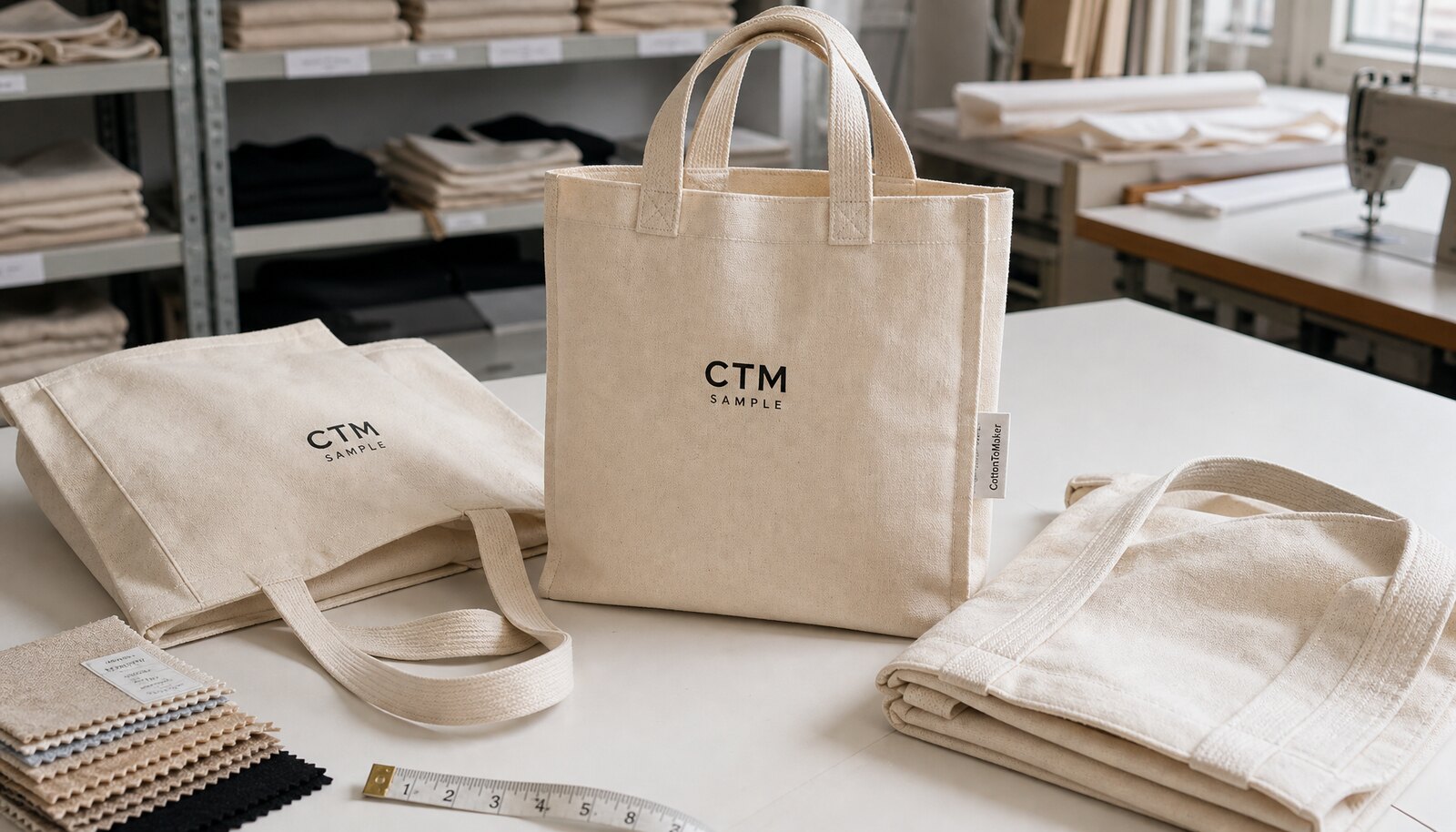
1. Start with the buying brief, not the heaviest canvas
The strongest canvas tote bag for brand owners is not automatically the heaviest one. Procurement problems usually start when the RFQ says only "canvas tote bag, 12 oz, with logo" and leaves the supplier to guess the sales channel, load, finish, and approval standard. A 16 oz tote can feel impressive in the hand, but it also raises material cost, carton weight, sewing difficulty, freight cost, and the risk of hard creases in packing. A 6 oz tote may be perfectly acceptable for brochures at an event, but it will disappoint if customers expect a reusable shopping bag.
Before comparing prices, define the job of the bag in business terms. Is it a low-cost giveaway that will carry leaflets for one day, a retail shopping tote that should survive repeated use, a paid merchandise item, a grocery bag, or a premium gift-with-purchase? The answer changes the fabric weight, handle construction, print method, packing standard, and inspection criteria. A procurement-ready brief gives suppliers a shared target, which makes quotations easier to compare and reduces the temptation to hide cost reductions in fabric quality.
For B2B buyers, material selection should connect to landed cost and complaint risk. A heavier tote may reduce product complaints in a bookstore or grocery program, while the same upgrade may waste budget for a short promotion. A smoother canvas may be worth paying for if the logo has small letters. A natural rustic canvas may be acceptable for an eco-style brand, but only if the buyer accepts visible cotton specks and shade variation. The buying brief should make these priorities explicit before sampling begins.
- State the sales channel: event, wholesale, retail store, e-commerce packaging, subscription box, corporate gifting, or paid merchandise.
- Define expected load in plain terms, such as brochures only, apparel, cosmetics, books, groceries, or tools.
- List the brand priority: lowest unit cost, premium hand feel, strict color matching, detailed printing, durability, or low freight weight.
- Ask each supplier to quote to the same finished bag size, fabric weight range, handle type, print method, packing method, and QC expectation.
2. Translate oz and GSM into a controllable fabric spec
Canvas weight is usually discussed in ounces in export tote bag sourcing, while mills and many technical teams use GSM. The conversion is not always communicated cleanly because some factories refer to traditional canvas ounce categories while others report measured fabric weight. As a practical guide, 6-8 oz is light promotional canvas, 10-12 oz is a common range for branded shopping totes, 14-16 oz is a heavier retail or premium range, and 18 oz or above is moving toward utility construction. These ranges are useful, but they are not a substitute for a measurable specification.
A procurement specification should state both oz and approximate GSM, then define a tolerance. For example, a buyer may specify a 12 oz canvas around 360 GSM with an agreed production tolerance. The exact tolerance should be confirmed with the supplier because fabric finishing, dyeing, washing, moisture, and lot variation can shift measured weight. If a factory quotes only "12 oz canvas" with no tolerance, two suppliers may be offering noticeably different fabric while appearing to meet the same request.
Buyers should also ask when the weight is measured. Greige fabric weight, finished fabric weight, dyed fabric weight, and washed fabric weight may differ. A bag that is enzyme washed or garment washed can shrink, soften, and change apparent density. A dyed fabric may feel slightly different from natural canvas of the same nominal weight. For repeat programs, the most useful reference is a signed swatch with the measured GSM, surface finish, shade approval, and supplier lot information recorded.
- Include both units in the RFQ, such as 10 oz / about 300 GSM or 12 oz / about 360 GSM, with final confirmation by the supplier.
- Ask whether the quoted weight is greige, finished, dyed, washed, or coated fabric.
- Set a practical fabric weight tolerance before order confirmation and record how it will be checked.
- Keep a physical approved swatch, not only a photograph, for repeat order comparison.
3. Compare fabric surface, weave, and hand feel before approving price
Two canvas fabrics with the same GSM can perform differently. A tight plain weave made with finer yarns can feel smoother and print more cleanly. A coarse canvas with heavier yarns can look more rustic, but the raised yarn texture may break fine logo edges. A stiff unfinished canvas may help a tote stand upright in product photos, while a washed canvas can feel softer and more fashion-oriented but may have more wrinkles, shrinkage, and shade variation.
For brand owners, hand feel is not a cosmetic afterthought. It shapes how the customer reads the brand. A cosmetics, museum, apparel, or bookshop tote often benefits from a cleaner and more controlled fabric surface. A market, outdoor, natural food, or craft brand may prefer visible cotton texture. The issue is not which fabric is universally better; the issue is whether the buyer and supplier have the same standard before bulk fabric is purchased.
Procurement teams should request fabric swatches early, especially when comparing suppliers. Photos can hide looseness in the weave, seed specks, uneven slubs, and rough hand feel. A supplier offering a lower unit price may be quoting a looser fabric with lower actual yarn density, which can affect print opacity, seam strength, and durability. The swatch review should include surface smoothness, fabric body, odor, shade, lint, and how the fabric folds or creases.
When the tote will be sold as merchandise, the hand-feel approval should be as formal as the artwork approval. Mark the approved swatch with date, fabric code, weight, color, finish, and project name. If the supplier later proposes an alternative fabric to save cost or shorten lead time, ask for the tradeoff in measurable terms: actual GSM, shrinkage, shade risk, print result, and MOQ.
- Smooth tight-weave canvas is usually better for detailed logos and clean retail presentation.
- Coarser rustic canvas can support a natural brand image but needs clear tolerance for slubs, seeds, and uneven texture.
- Stiff canvas improves structure but can crease more strongly during packing and shipping.
- Washed canvas improves softness but requires extra control for shrinkage, twisting, and shade variation.
4. Select natural, bleached, dyed, or washed canvas by channel risk
Natural unbleached canvas is common because it is versatile, familiar, and often easier to source at lower MOQ than custom dyed fabric. It works well with black logos, simple brand marks, and eco-positioned packaging. It is also naturally variable. Cotton seed specks, yarn lot, finishing, and storage can make one production batch look cream, beige, greyish, or slightly warmer than the previous one. A buyer who wants natural canvas should approve a shade range, not one perfect color target.
Bleached canvas gives a cleaner and brighter base, which can help with certain print colors and a more polished retail look. It can also make stains, yellowing, dust, and handling marks more visible. If the tote is for cosmetics, apparel, or a white-heavy brand palette, bleached canvas may be worth testing. The QC standard should define how visible marks are judged and whether slight shade variation is acceptable between cartons.
Dyed canvas gives brand owners more control over seasonal colors and branded palettes, but it changes the procurement model. Custom dyed fabric usually requires lab dips, dye lot approval, higher fabric MOQ, and longer lead time. Colorfastness matters because tote bags rub against clothing and hands. Dry and wet crocking tests are especially relevant for dark dyed canvas, pigment dyed canvas, and washed finishes. Buyers should ask whether the factory will cut all bags from one dye lot or how it will separate lots if multiple rolls are used.
Washed canvas adds another layer of style and risk. A washed tote may feel softer and more premium, but washing can shrink the bag, soften edges, increase wrinkles, and create shade variation. Measurements must be checked after washing, not before. If the final look is intentionally casual, define the acceptable wrinkle and shade range so inspection teams do not reject normal variation or accept excessive inconsistency.
- Natural canvas: good for simple branding and lower complexity, but requires approved shade range and speck tolerance.
- Bleached canvas: cleaner base for bright presentation, but needs tighter stain and yellowing control.
- Dyed canvas: better color direction, but requires lab dips, dye lot control, colorfastness checks, and MOQ planning.
- Washed canvas: softer and more fashion-led, but finished size, twisting, and shade variation must be checked after processing.
5. Let the artwork influence the canvas choice
Artwork is part of material selection. A bold one-color logo can print well on many canvas surfaces. Small serif lettering, thin line illustration, gradients, halftones, or QR-style details need a smoother and more controlled surface. Heavy rustic canvas may look attractive in lifestyle photos, but the yarn peaks and valleys can interrupt fine print edges. If the brand mark must look sharp, the buyer should not choose fabric from weight alone.
Screen printing remains a practical option for solid spot colors, strong opacity, and repeat production. It is often suitable for cotton canvas totes when artwork is simple and color count is controlled. The buyer should confirm ink type, curing method, print size, print placement, and whether the print can pass a basic rub and flex check. For dark fabric, underbase printing may be needed to maintain opacity, which can affect cost and hand feel.
Heat transfer can support detailed multi-color artwork, photographic effects, or lower quantities where screen setup is less efficient. On canvas, the main procurement concerns are hand feel, edge durability, cracking, peeling, and whether the transfer looks too plastic for the brand position. A supplier should provide a real transfer strike-off on the selected fabric, then the buyer should bend, rub, and inspect the print after cooling and packing.
Embroidery gives a premium effect for small logos, initials, patches, or corporate gifting, but it is not automatically better. Dense embroidery on light canvas can pucker the fabric. Large embroidered areas can make the tote stiff or expensive. Buyers should confirm stitch count, backing, thread color, placement tolerance, and whether the back side needs covering. For detailed logos, a woven label or printed patch may sometimes be more practical than direct embroidery.
The safest approval path is a print strike-off on the actual production fabric. A digital mockup only confirms layout. A previous sample only confirms that the factory has printed something similar before. A procurement-ready approval confirms the real artwork size, fabric surface, ink or thread, curing or backing, color reference, and placement.
- Send vector artwork, print dimensions, placement measurements, Pantone references if required, and any minimum legibility requirement.
- For fine artwork, request a smoother tight-weave canvas rather than only a heavier canvas.
- Approve opacity, edge sharpness, registration, rub resistance, cracking, and hand feel before mass printing.
- Record print placement tolerance, commonly measured from the top edge, side seam, or centerline of the bag.
6. Specify handles, gussets, and reinforcement with the fabric
A canvas tote's material performance depends on more than the front and back panels. Handle material, handle drop, handle width, seam construction, gusset design, and reinforcement determine whether the bag feels reliable in use. A premium 14 oz body with narrow weak handles is not a premium tote. A light promotional tote with long shoulder handles may stretch or distort if users carry catalogs, bottles, or books.
Self-fabric handles are common and visually consistent with the bag body. Cotton webbing handles may offer more regular width and a firmer grip. For heavier use, buyers should discuss folded handles, additional layers, bar tacks, cross-stitch reinforcement, and binding. The correct choice depends on expected load, design language, and sewing cost. Reinforcement should be visible on the approved sample and described in the specification, not assumed from a product photo.
Handle drop should match the carrying mode. A short hand-carry tote may need a lower drop, while a shoulder tote needs enough clearance to sit comfortably over clothing. If the tote is for winter markets or grocery use, shoulder comfort matters more than in a one-day event bag. Procurement teams should measure handle drop on the finished bag after sewing and pressing, because fabric thickness and seam folding can change the final dimension.
Gussets increase capacity and change the cost structure. A flat tote is easier to sew and pack. A bottom gusset or side gusset allows the bag to hold boxed products, apparel, books, or groceries more naturally, but it increases fabric consumption, sewing steps, folding complexity, and carton space. For retail packaging, the gusset may be worth it because the bag functions better and photographs better. For low-cost giveaways, the added construction may not be necessary.
For acceptance criteria, buyers should define stitch density, seam allowance, reinforcement size, and practical load testing. The test does not need to be overcomplicated, but it should relate to use. A brochure tote and a grocery tote should not be judged by the same load expectation. After loading, inspect whether stitches pop, fabric tears around the handle, seams distort, or the handle becomes uncomfortable.
- State handle material: self-fabric canvas, cotton webbing, dyed webbing, contrast handle, or reinforced specialty handle.
- Measure handle width and handle drop on the finished sample, not only in the pattern.
- Define reinforcement type: cross-stitch, bar tack, box stitch, folded seam, binding, or another approved construction.
- For gusseted totes, confirm finished capacity, folding method, carton impact, and bottom seam strength.
7. Read MOQ as a set of component minimums
MOQ for canvas tote bags is not only the number of finished bags. It is built from fabric availability, dyeing minimums, print setup, label production, packing materials, and sometimes trim or webbing minimums. A supplier may be able to produce a low quantity in stock natural canvas with one-color printing. The same tote in custom dyed 16 oz canvas with woven labels and individual retail packaging may require a much higher MOQ because each component has its own production threshold.
Stock natural canvas is usually the simplest path for smaller branded orders and faster sampling. Stock dyed canvas can work when the factory already has an acceptable shade, but the buyer should confirm whether enough fabric is available from the same lot. Custom dyed canvas requires lab dip approval and fabric dyeing minimums. Custom woven canvas, special yarn blends, recycled cotton blends, organic cotton certifications, unusual webbing, metal trims, or washed finishes can all add separate minimums and lead time.
This is where many quote comparisons become misleading. One supplier may quote based on available stock fabric while another quotes custom dyed fabric. One may include individual polybags and carton labels while another assumes bulk packing. One may quote a stronger handle construction while another assumes a basic stitch. The unit price difference is not meaningful until the buyer understands what minimums and assumptions sit behind it.
Procurement teams should ask suppliers to separate MOQ by component and to list any surcharge for lower quantities. This helps brand owners decide whether to simplify the design, increase order quantity, accept a stock color, or split the program into phases. It also prevents late-stage surprises after the sample is approved but before bulk materials are purchased.
- Ask for finished bag MOQ and fabric MOQ separately.
- Confirm whether custom color MOQ is based on dyeing fabric weight, fabric length, or finished bag quantity.
- Check label, hangtag, barcode sticker, polybag, belly band, and carton marking minimums before final costing.
- For mixed-color orders, ask whether MOQ applies per color, per design, per print color, or per total order.
8. Build sample approval around measurable material checks
A good-looking sample is not enough for bulk approval. The sample should prove that the selected material, printing, sewing, labeling, and packing can work together. If the supplier uses substitute fabric for a quick prototype, that should be clearly stated. A sample made from available fabric can help confirm size and construction, but it cannot approve hand feel, shade, print result, shrinkage, or final cost if the production fabric will be different.
The most useful sample for procurement is the pre-production sample. It should use the intended canvas weight, finish, color, handle construction, print method, label, packing fold, and any washing process. If the canvas is custom dyed, approve the lab dip first and then a pre-production sample using the approved shade. If artwork is important, approve the print strike-off before mass printing. If the bag is packed folded, review the sample after it has been folded long enough to show realistic creasing.
Sample checks should be simple but concrete. Measure finished width, height, gusset depth, handle width, and handle drop. Compare fabric to the approved swatch for weight, surface, shade, and hand feel. Rub the print with a dry white cloth and a slightly damp white cloth to screen for obvious curing or crocking issues. Load the bag with a realistic weight and hang it long enough to see whether the handles distort, seams open, or the bag loses shape.
For repeat orders, do not rely on memory. Compare the new sample to retained references: approved swatch, approved pre-production sample, approved print strike-off, and previous shipment sample. Note any difference before bulk cutting. Small differences may be acceptable, especially in natural cotton, but they should be acknowledged and approved rather than discovered after shipment.
- Mark every approved sample with date, project name, supplier, fabric code, weight, color, and approval status.
- Reject sample approval language that says only "same as photo"; use measurable size, fabric, print, and packing references.
- If the sample fabric is not production fabric, record what is provisional and require a second approval before bulk production.
- Keep signed samples available for inspection teams and future replenishment orders.
9. Define QC thresholds before production starts
Quality control should be part of material selection, not a final warehouse formality. Different canvas choices require different inspection focus. Natural canvas needs shade, speck, and stain standards. Dyed canvas needs colorfastness and dye lot control. Heavy canvas needs seam, needle, and carton crease checks. Printed canvas needs curing, rub resistance, placement, and opacity checks. Washed canvas needs finished measurements after processing.
Buyers should agree on tolerances before bulk cutting. Finished measurements can be controlled within a practical range depending on bag size, fabric thickness, and whether washing is involved. A small flat promotional tote can usually be held more tightly than a heavy washed tote. The purchase specification should define tolerance for width, height, gusset, handle width, handle drop, print placement, and label placement. It should also define which defects are critical, major, or minor.
A practical inspection plan may use AQL sampling if the buyer's organization requires it, but the most important point is that both sides know what will fail. Critical defects may include mold, serious contamination, broken needles, wrong artwork, wrong country of origin marking, severe color mismatch, or unsafe components. Major defects may include open seams, weak handle attachment, obvious stains, misprinted logos, severe measurement deviation, and incorrect packing. Minor defects may include small loose threads or slight natural slub variation within the approved standard.
Numeric checks help avoid subjective arguments. Buyers can specify stitch density per inch or centimeter, minimum seam allowance, maximum print placement deviation, acceptable finished size tolerance, and agreed load test weight based on use. The exact numbers should be realistic for the design and confirmed with the supplier. The goal is not to over-engineer a simple tote; it is to prevent a supplier and buyer from using different definitions of acceptable.
- Set finished measurement tolerances for bag body, gusset, handle width, handle drop, print position, and label position.
- Define fabric defects: unacceptable stains, holes, weaving faults, severe slubs, shade outside approved range, oil marks, and odor.
- Define sewing defects: open seams, skipped stitches, broken stitches, loose reinforcement, uneven handles, puckering, and exposed raw edges if not approved.
- Define print defects: wrong color, poor opacity, misregistration, cracking, tacky curing, heavy smearing, peeling, and placement outside tolerance.
10. Connect packing, carton data, and landed cost to material weight
Canvas weight affects freight and packing more than many first-time buyers expect. A 16 oz tote is not just more expensive at the sewing table; it also increases carton gross weight, carton volume, labor during folding, and the chance of pressure creases. A light natural tote packed without adequate protection may arrive dusty or stained. If the buyer compares only unit price, the selected material may create a landed cost problem after carton data is confirmed.
Quotation should include pieces per carton, carton dimensions, net weight, gross weight, packing method, and whether individual packing is included. This information helps importers estimate freight, warehouse handling, and retailer compliance costs. For heavy totes, carton gross weight may need to stay within handling limits. For retail programs, inner cartons, barcode labels, hangtags, belly bands, or individual polybags may be required. Each item changes both cost and lead time.
The fold method should be approved along with the bag. Flat packing reduces creases but takes more carton space. Folding once or twice improves carton efficiency but may mark stiff or heavy canvas. Individual polybags protect clean retail presentation but add material, labor, and sustainability considerations. Paper bands or bundle packing may suit certain brands, but they must hold the bag securely during transit. For e-commerce or retail replenishment, barcode and carton marking accuracy can be as important as the tote itself.
Moisture and cleanliness matter for cotton canvas. Natural and bleached canvas can pick up dust, odor, and stains from cartons, floors, or damp storage. Ask the factory how finished goods are stored before inspection, whether cartons use liners or inner bags, and how cartons are protected during loading. If the destination climate or transit route creates moisture risk, discuss desiccants, carton quality, and container loading practices.
A complete canvas tote RFQ should therefore end with a comparable quote sheet. The supplier should confirm fabric, finish, measurements, handles, printing, labeling, packing, MOQ, sample lead time, production lead time, carton data, inspection standard, and any assumptions. When all suppliers answer the same structure, procurement can compare real value instead of guessing why one quote is lower.
- Require carton dimensions, pieces per carton, net weight, and gross weight in the quotation.
- Approve the folding and packing method before bulk production, especially for heavy, stiff, dyed, or retail-packed totes.
- Confirm carton marks, barcode labels, country of origin markings, and retail packaging against the purchase order.
- Use carton data and packing labor in landed cost comparison, not only the factory unit price.
Specification comparison for buyers
| Procurement decision | Typical specification range | Best fit | Acceptance points to confirm |
|---|---|---|---|
| Light promotional giveaway tote | 6-8 oz cotton canvas, about 180-240 GSM, plain weave, simple seams | Events, brochures, sample drops, short campaign giveaways where freight cost matters | Actual GSM within agreed tolerance, no severe show-through, handle stitching suitable for light loads, carton weight controlled |
| Standard branded shopping tote | 10-12 oz canvas, about 300-380 GSM, reinforced handles, optional bottom gusset | Retail packaging, bookstore bags, lifestyle brand shopping totes, reusable customer bags | Finished size tolerance, handle pull test, print edge clarity, shrinkage if washable claim is made |
| Premium retail tote | 14-16 oz canvas, about 430-550 GSM, heavier seams, gusset or binding as needed | Paid merchandise, gift-with-purchase, corporate retail programs, higher value brand packaging | Machine capability for heavy seams, needle marks, carton creasing, print curing, higher landed cost |
| Heavy-duty utility tote | 18-24 oz canvas, often reinforced with binding, bar tacks, webbing, or specialty finish | Market bags, tool bags, outdoor lifestyle products, durable grocery or utility use | Load test method, seam allowance, handle anchoring, fabric availability, carton gross weight, production speed |
| Natural cotton look | Unbleached cotton canvas with approved shade range and controlled slubs | Eco-positioned branding, black or single-color logos, minimalist retail programs | Shade band approval, cotton seed speck tolerance, stain control, lot-to-lot variation notes |
| Bleached canvas | Bleached cotton canvas with cleaner base and lower visible seed content | Bright prints, clean cosmetic or apparel packaging, lighter brand palettes | Whiteness range, yellowing risk, dirty marks, print opacity, separate storage from dyed goods |
| Dyed canvas | Reactive dyed or pigment dyed canvas with lab dip and bulk shade approval | Seasonal colors, brand color tote programs, fashion retail collections | Lab dip approval, fabric MOQ, crocking, colorfastness, shade lot separation, extra lead time |
| Washed canvas | Garment-washed or fabric-washed canvas after dyeing or sewing, usually softer hand feel | Vintage look, softer fashion totes, premium casual merchandise | Shrinkage, twisting, shade variation, wrinkle standard, finished measurement after wash |
| Detailed logo printing | 10-12 oz smoother tight-weave canvas, screen print or transfer selected by artwork | Small text, fine line logos, QR-style graphics, retail-facing brand marks | Real print strike-off on production fabric, registration tolerance, rub test, curing test, artwork size locked |
Buyer checklist before sampling
- Define the tote's job before selecting fabric weight: event giveaway, retail packaging, paid merchandise, grocery, utility, or fashion accessory.
- Specify fabric in both oz and GSM, and ask whether the number refers to greige fabric, finished fabric, dyed fabric, or washed fabric.
- Set a practical GSM tolerance in the purchase specification instead of accepting only a catalog name such as 12 oz canvas.
- State the required fabric finish: natural unbleached, bleached, stock dyed, custom dyed, washed, recycled cotton blend, or certified organic cotton if applicable.
- Approve a physical shade range for natural canvas and a lab dip or bulk swatch for dyed canvas before cutting.
- Confirm finished bag width, height, gusset depth, handle width, handle drop, seam type, and reinforcement method on the sample and specification sheet.
- Match artwork to fabric surface and process: screen print for solid spot colors, transfer for detailed multi-color artwork, embroidery for small premium marks.
- Require a print strike-off on the actual selected canvas, not only a digital mockup, catalog sample, or previous order photo.
- Ask suppliers to separate quotation lines for fabric, sewing, printing, labeling, accessories, packing, carton data, and estimated gross weight.
- Clarify MOQ by component: finished bag MOQ, fabric color MOQ, dyed fabric MOQ, print setup MOQ, label MOQ, and packing material MOQ.
Factory quote questions to send
- What is the actual fabric weight in GSM and oz, and what production tolerance do you apply for bulk fabric?
- Is the quoted canvas stock greige, stock finished fabric, stock dyed fabric, custom dyed fabric, or custom woven fabric?
- Is the stated fabric weight measured before or after finishing, dyeing, washing, or coating?
- Can you provide composition, weave type, yarn count or construction reference, and shrinkage test method for the proposed canvas?
- What MOQ applies separately to finished bags, fabric color, dye lot, print setup, labels, trims, and packing materials?
- Which fabric finish do you recommend for our sales channel, and what tradeoff does it create in cost, hand feel, shade control, and lead time?
- Which print method do you recommend for this artwork on this fabric, and can you explain the risk for fine lines, opacity, registration, and hand feel?
- Can you make a print strike-off on the same fabric weight, shade, finish, and print size planned for bulk production?
- What handle reinforcement is included as standard: cross-stitch, bar tack, folded seam, binding, webbing, or another construction?
- What finished measurement tolerance do you normally control for bag width, height, gusset depth, handle width, and handle drop?
Quality-control points to confirm
- Verify fabric weight by cutting and weighing a measured fabric area from bulk material before mass cutting, then record the result against the approved tolerance.
- Check fabric composition, weave, surface texture, and hand feel against the approved swatch instead of relying only on color photos.
- Inspect natural canvas shade under an agreed light source and compare against an approved shade band, not a single unrealistic perfect sample.
- For dyed canvas, check lab dip approval, bulk shade continuity, dry crocking, wet crocking, and separation of different dye lots during cutting.
- Measure finished bag width, height, gusset depth, handle width, and handle drop after sewing, pressing, and any washing process.
- Use practical finished measurement tolerances, commonly tighter for small promotional totes and slightly wider for heavy washed canvas where shrinkage is expected.
- Check seam allowance, stitch density, skipped stitches, loose threads, needle holes, seam puckering, and whether reinforcement sits symmetrically at handle attachment points.
- Perform a handle pull or loaded hang test that reflects the bag's intended use, then inspect for tearing, stitch popping, fabric elongation, and seam distortion.
- Check print position, color, opacity, registration, curing, rub resistance, cracking after flexing, and edge sharpness on textured fabric.
- For embroidery, inspect stitch count, backing, puckering, loose thread, thread color, placement, and whether the fabric distorts around dense areas.