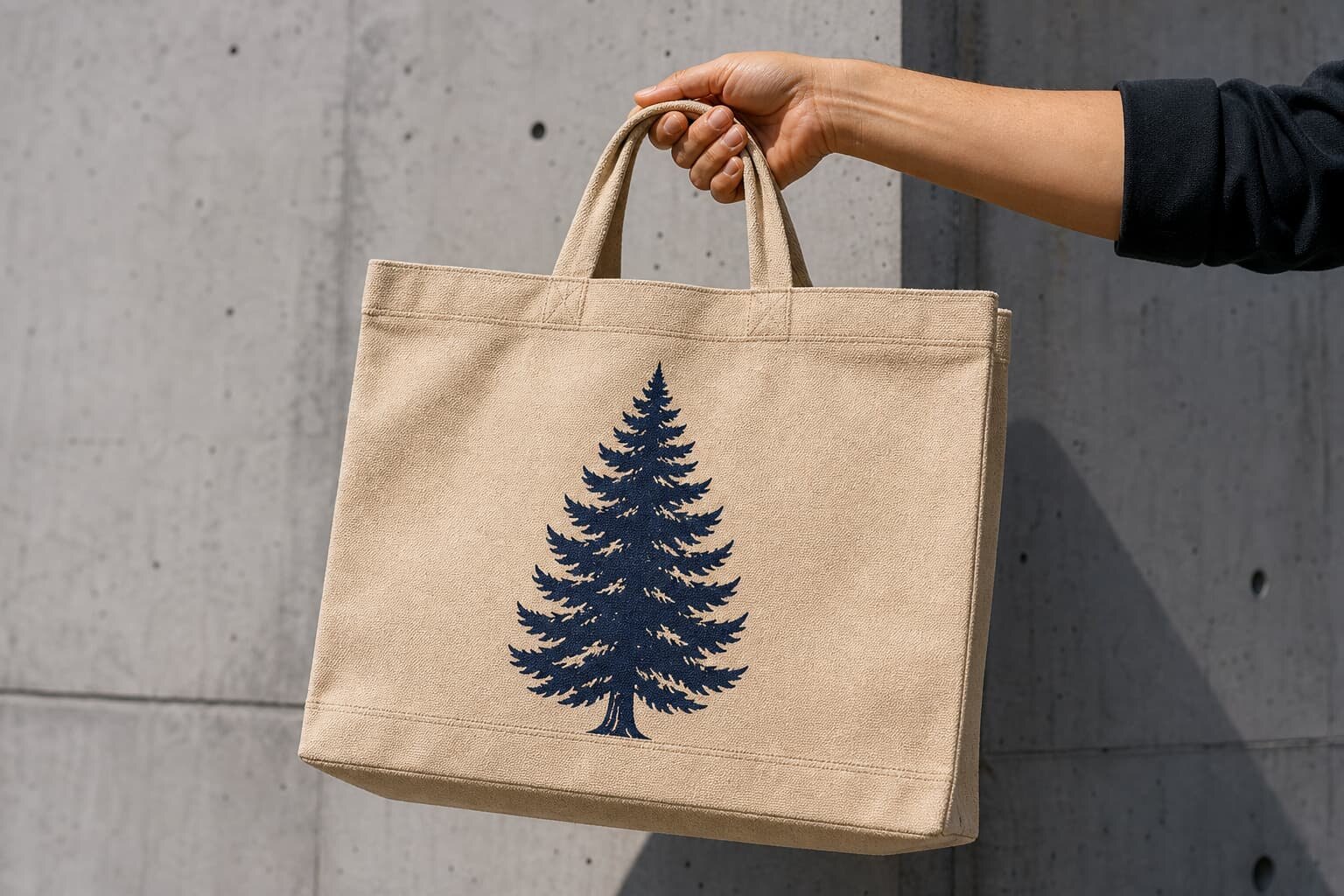
1. Start With the Event Workflow, Not the Bag Photo
A canvas tote bag can look simple in a reference photo, but event procurement should start with the job the bag must perform. A registration-table delegate bag, sponsor giveaway, retail pop-up tote, and VIP welcome kit may share the same silhouette, yet they carry different loads, require different branding control, and move through different packing and warehouse processes. If the RFQ only says “natural canvas tote with logo,” suppliers will fill in the blanks differently and the quotes will not be comparable.
Write the event use into the specification before asking for price. For leaflet-and-pen giveaways, buyers may prioritize low unit cost, clean bulk packing, and carton efficiency. For conferences with catalogs, drink bottles, apparel, or product samples, fabric weight and handle reinforcement become more important. For VIP kits or paid merchandise, print sharpness, fabric shade, seam finishing, and presentation may justify a higher specification.
The workflow also affects logistics. Bags handed out by volunteers should arrive in cartons that open quickly, count easily, and show clear carton marks. Bags shipped to several venues need destination labels and packing lists that match the receiving plan. Bags used for retail activation may need barcode labels, hangtags, or individual packaging. These details are operational, not cosmetic, because they affect cost, lead time, carton volume, and receiving accuracy.
- For brochure-only giveaways under about 2 kg load, 8–10 oz canvas may be enough if the budget is tight.
- For conference bags carrying catalogs, bottles, apparel, or sponsor inserts around 2–5 kg, specify 10–12 oz canvas and reinforced handles.
- For VIP kits, paid merchandise, or retail gift-with-purchase programs, consider 12–16 oz canvas with tighter finishing and print standards.
- For multi-location distribution, define destination codes, carton labels, split quantities, and packing lists before production starts.
- For registration-table use, choose packing that lets staff open cartons, count bags, and distribute quickly without repacking.
2. Translate Fabric Weight Into a Real Specification
Canvas weight is one of the main drivers of price, feel, print behavior, and freight cost. Phrases such as “thick canvas,” “premium cotton,” and “standard tote quality” are not production specifications. A supplier needs the weight in ounces or GSM, the fabric composition, fabric color, finishing, and whether the material is stock or custom made. Without those details, one quote may be based on 8 oz natural canvas and another on 12 oz bleached canvas, even though both are described as canvas tote bags.
For many event orders, 10–12 oz canvas, roughly 280–340 GSM, is the practical center point. It has enough structure for a reusable tote, usually prints more cleanly than thin cotton, and still packs efficiently. An 8 oz canvas can suit very large campaigns where the load is light and the priority is cost. Heavy 14–16 oz canvas gives a stronger retail feel, but it increases unit price, carton weight, sewing difficulty at thick seams, and freight cost.
Fabric color affects logo appearance. Natural canvas has a warm tone and may show cotton seed flecks, which can suit casual or sustainability-led branding but is not a white print base. Bleached canvas gives stronger contrast for bright logos. Dyed canvas requires shade approval because the ground color changes how the print is perceived. Recycled and organic cotton options may be valuable, but buyers should confirm documentation, availability, MOQ, and shade variation before treating them as direct substitutes.
- Ask each supplier to quote fabric weight in both oz and GSM, plus the allowed production tolerance.
- Confirm whether the canvas is stock fabric, custom woven, custom dyed, washed, or specially finished.
- Approve natural canvas shade, seed flecks, and logo contrast on the actual fabric.
- For dyed canvas, approve a swatch or lab dip before bulk production.
- For recycled or organic cotton, ask what documentation is available and whether it changes MOQ or lead time.
3. Match Logo Printing Method to Artwork and Quantity
A strong canvas tote bag for event buyers logo printing checklist separates artwork needs from production assumptions. Screen printing is usually the best fit for simple event branding: one to three solid colors, sponsor marks, bold slogans, and medium to large quantities. It can produce a clean and durable result on canvas when the artwork is suitable and the ink is properly cured. The buyer still needs to specify color count, print size, print location, print side, Pantone targets, and fabric color.
Digital printing is better when the artwork includes gradients, photos, illustrations, or many colors that would be expensive to separate into screens. It may also suit short runs or campaign artwork that changes often. The tradeoff is that color brightness, production speed, and hand feel depend on the machine, pretreatment, and canvas surface. Heat transfer can produce sharp detail and may work for small urgent batches, but buyers should check film feel, edge durability, folding behavior, and suitability for large print areas.
The print method should also match the deadline. If the event date is fixed and the artwork is simple, one-color screen print on stock natural canvas is usually easier to control than custom dyed fabric with full-color artwork and special packaging. If brand color is critical, do not approve from a screen proof alone. Request a printed strike-off or pre-production sample on the final canvas.
- Use screen print for one to three solid colors, bold logos, sponsor marks, and stable artwork.
- Use digital print for detailed art, gradients, photos, or short runs with many colors.
- Use heat transfer for sharp small-batch graphics only after approving hand feel, edge adhesion, and fold durability.
- For dark canvas, ask whether a white underbase is required and whether it is included in the price.
- For small text, QR codes, or fine lines, ask the supplier to confirm minimum readable size on the selected canvas.
4. Lock Logo Size, Position, and Tolerance Before Setup
Many logo disputes come from vague placement instructions. “Centered on front” is not enough for a sewn textile product. The factory needs the printed logo width and height, print side, distance from the top opening or bottom edge, and whether the logo is centered on the full bag width or only on the flat front panel excluding the gusset. On a gusseted tote, that distinction changes how the finished bag looks when filled.
Define the acceptance tolerance before production starts. Canvas is flexible, cut in layers, sewn by operators, and printed on fabric that can stretch slightly. Small variation is normal. For a standard event giveaway, several millimeters may be reasonable if the logo remains visually straight and centered. For premium merchandise or sponsor-approved artwork, the buyer may need tighter tolerances and inline checks after the first printed panels.
Artwork files should be production ready. Vector files in AI, PDF, EPS, or SVG format reduce fuzzy edges and scaling errors. Pantone references should be included for each solid color. If the artwork contains legal text, thin lines, QR codes, or sponsor logos, ask the factory to check printability on the chosen canvas and print method. The layout drawing should show final bag dimensions, seam lines, handle position, pocket if any, and logo box.
- State print area clearly: front, back, both sides, gusset, pocket, inside panel, or label.
- Give exact logo dimensions, for example 220 mm wide x proportional height, not just “large logo.”
- Define placement, for example logo center 120 mm below the top opening and centered on the flat front panel.
- Confirm whether handle stitching, pockets, gussets, or seam allowances reduce the available print area.
- Approve one layout drawing before screens, transfers, or digital production files are prepared.
- Set written tolerances for logo position, logo size, registration, and visible skew.
5. Understand MOQ Before Comparing Supplier Prices
MOQ is not only a sales preference. It usually reflects fabric sourcing, dyeing minimums, cutting efficiency, print setup, sewing line planning, label materials, and packing. A supplier may accept a lower MOQ for a stock natural canvas bag with one-color screen print because the materials and process are simple. The same supplier may require a higher MOQ for custom dyed fabric, heavy canvas, multiple artwork versions, woven labels, barcode packing, or split shipments.
When quotes differ sharply, ask what controls the MOQ. If the fabric mill requires a minimum quantity for dyeing, the factory may need to price unused fabric into the order. If the artwork has four screen colors, each color may require a separate screen and setup. If the buyer wants ten sponsor logos on separate versions, that is not one production run; it is multiple print setups, often with separate packing and labeling.
Ask suppliers for comparable options. Quote the same quantity with stock natural canvas and one-color screen print, then quote custom dyed canvas and two-color print separately. If the order is below MOQ, ask whether a standard size, stock color, one-side print, simplified logo, or bulk packing can make the order viable without distorting the price.
- Separate MOQ by fabric type, color, bag style, print method, artwork version, label, and packing method.
- Ask whether multiple event destinations can share one production MOQ while being packed in separate marked cartons.
- Confirm whether assorted logo versions create extra screen charges, setup time, or minimum quantities per design.
- Do not compare a stock natural canvas quote with a custom dyed canvas quote as if they are the same product.
- For small orders, ask about standard sizes, stock colors, one-side printing, and bulk packing.
6. Build Quotes Around Landed Cost
The lowest unit price may simply be the quote with missing details. Fabric weight, bag size, handle length, print color count, ink type, sample fees, label requirements, carton marks, packing method, inspection, and export carton dimensions all affect final cost. If these items are not defined, the buyer may receive change charges after artwork approval or discover freight costs too late.
Event buyers should review landed cost, not only factory unit price. Incoterms matter. EXW may look cheap but leaves local pickup, export handling, customs documents, and freight coordination to the buyer. FOB usually includes delivery to the export port and export clearance, but not ocean or air freight. CIF may include freight to the destination port but not import duty, tax, customs clearance, port charges, or local delivery. DAP or DDP can be easier for some teams, but the quote must state what is included and excluded.
Rush orders need extra caution. Air freight can exceed the value of bulky canvas bags if cartons are large or heavy. Sea freight is usually more economical for planned events, but it requires buffer for booking, port congestion, customs, and warehouse receiving. Sample shipping, screen charges, inspection fees, pallet requirements, and destination appointments should be visible in the budget.
- Ask for base bag cost, print cost, screen/setup charges, sample cost, packing adders, and label or barcode adders separately.
- Request carton quantity, carton dimensions, gross weight, net weight, and total CBM before choosing air or sea freight.
- Clarify Incoterms and named place, such as FOB Shanghai, CIF Los Angeles, DAP warehouse address, or DDP event venue.
- Confirm whether export cartons meet the receiving warehouse’s weight, labeling, pallet, and appointment requirements.
- Budget for sample shipping, inspection, rush surcharge, and possible rework time if the deadline is tight.
7. Approve Samples Like a Production Buyer
A sample is the production control reference, not just a marketing photo. Problems often happen when buyers approve a blank tote and a separate digital artwork proof, then assume the printed bulk order will match both. For event orders where brand approval matters, request a pre-production sample or printed strike-off made with the final canvas, final logo size, final print method, final handle construction, and proposed packing method.
Review the sample with measurements and the actual event contents. Measure finished width, height, gusset, handle drop, handle spacing, logo size, and logo position. Put brochures, catalogs, a water bottle, apparel, or sample products inside the bag to check shape and carry comfort. A handle that looks fine on an empty bag may feel too short for shoulder carry or weak when loaded. A logo that looks centered when flat may shift visually when the gusset is filled.
Sample approval should be written and specific. List what is approved and what must change: fabric shade, GSM, handle length, stitch type, print color, print position, packing, and carton label. The factory QC team should keep an approved sample or signed reference photo set near production. If the event has multiple stakeholders, collect approvals before mass printing.
- Check fabric shade under consistent lighting and compare natural, bleached, or dyed canvas against the approved standard.
- Measure the finished bag after sewing, not only the flat cut panels.
- Compare Pantone targets against the printed canvas sample, not only against the digital proof.
- Fold and rub the printed area to check stiffness, cracking, transfer, and curing quality.
- Confirm whether the approved sample stays with factory QC as the bulk production standard.
- Record approval by email with photos, measurements, and accepted tolerances.
8. Plan QC With AQL, Defect Classes, and Timing
Quality control should be agreed before the purchase order is released. For many promotional textile orders, final random inspection can follow General Inspection Level II with AQL 2.5 for major defects and AQL 4.0 for minor defects. Buyers with retail resale, VIP delivery, or strict brand requirements may choose tighter levels. The important point is to agree on the inspection standard before production, not after a dispute.
Inspection timing matters. Incoming fabric inspection should happen before cutting so the factory can identify wrong GSM, shade variation, stains, holes, odor, or excessive moisture. Inline print inspection should happen after the first panels are printed and cured, not after the whole order is printed. Sewing checks should confirm dimensions, handle reinforcement, skipped stitches, open seams, and loose threads during production. Final random inspection should verify finished product and packing before shipment release.
Defect classification avoids arguments. A critical defect may include the wrong logo, mold, unsafe contamination, severe ink transfer, or a broken handle under normal load. A major defect may include a visibly crooked logo, wrong bag size outside tolerance, open seam, missing label, obvious stain, or significant print misregistration. A minor defect may include a short loose thread, slight wrinkle, approved natural-canvas slub, or small position variation inside tolerance.
- Incoming fabric check: GSM, shade, width, defects, odor, moisture, and roll-to-roll consistency.
- Inline print check: first print approval, Pantone target, position, registration, coverage, curing, rub/tape/fold performance.
- Inline sewing check: dimensions, gusset, handle drop, stitch density, reinforcement, open seams, and loose threads.
- Final random inspection: use agreed AQL, measure samples, inspect logo, review labels, count cartons, and verify packing.
- Carton checks: strength, carton marks, PO number, destination code, quantity per carton, moisture protection, and desiccant if required.
9. Define Packing, Carton Marks, and Receiving Rules
Packing should match the event operation. For simple handouts, clean bulk flat packing in strong export cartons is often the most efficient choice. It keeps cost lower, reduces plastic use, and allows volunteers to open cartons quickly. For VIP kits, retail display, e-commerce fulfillment, or warehouse picking, individual polybags, hangtags, barcode labels, insert cards, or tissue may be necessary. These choices should be quoted and sampled because they affect labor, carton volume, plastic use, and receiving procedures.
Carton data is part of the sourcing specification. Procurement, freight forwarders, and event warehouses need pieces per carton, carton dimensions, gross weight, net weight, and total CBM. Cartons that are too heavy may be rejected or slowed by receiving teams. Cartons without clear marks can be misplaced at large venues. If the order ships to several cities or halls, carton labels should show destination code, PO number, item number, color, quantity, carton number, and total carton count.
Printed canvas bags need packing discipline. If ink is not fully cured, logos can transfer onto the next bag in the stack. If heavy canvas is packed too tightly, bags can arrive deeply creased. If cartons are underfilled, bags can rub and shift during transit. If the route includes sea freight, humid storage, or rainy-season handling, discuss desiccants, inner liners, and moisture checks.
- Use bulk flat packing for registration-table giveaways, simple sponsor bags, and lower packing cost.
- Use individual polybags only when cleanliness, retail presentation, VIP kitting, or warehouse picking requires them.
- Specify carton marks including PO number, event name, destination, item code, bag color, quantity, carton number, and gross weight.
- Ask for packing photos before shipment, including open carton, carton marks, product stack, and inner protection.
- Confirm warehouse requirements for pallet height, maximum carton weight, barcode labels, appointment booking, and delivery window.
- For two-sided printing, confirm full curing or separation method to prevent print transfer during transit.
10. Work Backward From the In-Hand Date
Event dates do not move easily, so lead time should be managed backward from the required in-hand date. A realistic schedule includes artwork checking, sample production, sample shipping, approval time, fabric procurement, cutting, printing, curing, sewing, trimming, inspection, packing, export booking, international freight, customs clearance, local delivery, and warehouse receiving. The order is not truly in production until specifications are complete, artwork is usable, payment or deposit terms are settled, and material availability is confirmed.
If the deadline is close, reduce variables. Choose stock natural or bleached canvas, a standard bag size, one print side, one-color screen print, standard handles, and bulk packing. Avoid custom dyeing, many sponsor versions, unusual inks, complex retail packaging, and late changes. Rush production can be possible, but it increases the risk of skipped sampling, limited rework time, higher freight cost, and overtime charges.
The final buyer action is to issue a production-ready RFQ and purchase order. Attach the specification sheet, artwork files, layout drawing, packing requirements, inspection standard, Incoterms, delivery address, and event deadline. Ask the supplier to confirm every assumption in writing. Once the pre-production sample or strike-off is approved, freeze artwork and construction unless all parties accept revised cost and timing.
- Build a schedule from the in-hand date, not from the preferred production start date.
- Confirm sample lead time separately from bulk lead time and freight lead time.
- Check whether production lead time includes fabric procurement and dyeing or only cutting, printing, and sewing.
- Add inspection and rework buffer before freight pickup, especially for brand-critical orders.
- Freeze artwork before screens, transfers, or digital production files are prepared.
- Keep procurement, brand, logistics, and event operations aligned on one approved specification version.
Specification comparison for buyers
| Spec decision | Recommended option | When it fits | Buyer risk to check |
|---|---|---|---|
| Budget event fabric | 8 oz cotton canvas, roughly 230–260 GSM, usually natural or bleached | High-volume one-day giveaways, brochure bags, light inserts, and low load weights under about 2 kg | Lower perceived value, more wrinkling, less shape retention, and weaker print coverage on loose weave |
| Core conference specification | 10–12 oz cotton canvas, roughly 280–340 GSM, natural, bleached, dyed, recycled, or organic depending on brief | Delegate bags, sponsor bags, trade show handouts, retail pop-ups, and reusable event bags carrying 2–5 kg | Confirm actual GSM tolerance, fabric shade, handle reinforcement, shrinkage expectations, and carton weight before comparing unit prices |
| Premium merchandise fabric | 14–16 oz canvas, roughly 380–450 GSM, often with heavier handles and cleaner finishing | VIP kits, paid event merchandise, museum shop totes, brand activations, and gift-with-purchase programs | Higher unit cost, higher freight weight, bulkier cartons, slower sewing at thick seams, and possible higher MOQ |
| Screen printing | 1–3 solid colors, Pantone-targeted inks, one or two print sides | Most event logos, sponsor marks, slogans, bold typography, and medium to large production runs | Screen/setup charges, registration tolerance, ink curing, color shift on natural canvas, and cracking if ink is too heavy |
| Digital printing | Full-color artwork, gradients, photos, complex illustrations, or many colors without separate screens | Shorter runs, campaign graphics, tonal artwork, and designs that change often | Color brightness on cotton, surface hand feel, print speed, wash/rub resistance, and pretreatment marks |
| Heat transfer | Sharp multi-color graphics applied by transfer film or paper depending on process | Small batches, urgent logo changes, detailed artwork, or designs needing clean edges on smoother canvas | Plastic-like hand feel, edge lifting, heat marks, fold durability, and suitability for large solid print areas |
| Handle construction | Cotton webbing or self-fabric handles, 25–40 mm wide, with box stitch, cross stitch, or bartack reinforcement | Reusable event bags carrying catalogs, drink bottles, apparel, samples, or VIP kits | Handle drop too short for shoulder carry, weak attachment, seam bulk on heavy canvas, and inconsistent handle length |
| Packing format | Bulk flat packed in strong export cartons; individual polybag, barcode, or hangtag only when operationally required | Registration tables, distributor receiving, VIP kitting, retail display, or multi-location event shipping | Over-packing raises cost and plastic use; under-packing causes dirt, moisture, print transfer, or warehouse picking errors |
| Approval sample | Pre-production sample or printed strike-off using final canvas, artwork size, print method, and proposed packing | Any order with sponsor approval, brand color control, paid resale, tight deadline, or multiple stakeholders | Digital proof alone does not prove fabric shade, ink behavior, logo placement, handle strength, or carton packing performance |
Buyer checklist before sampling
- Confirm the event use: giveaway, paid merchandise, VIP kit, conference delegate bag, retail gift-with-purchase, sponsor package, staff kit, or exhibition sample bag.
- Estimate the real load: brochures only, catalog set, laptop, apparel, water bottle, product samples, or packed VIP kit; use this to choose fabric weight and handle reinforcement.
- Specify exact bag size in width x height x gusset, and state whether dimensions are measured flat, finished, or excluding seam allowance.
- Choose fabric weight in oz and GSM, and confirm whether the canvas is natural, bleached, dyed, recycled cotton, organic cotton, or blended canvas.
- State handle material, width, total length, handle drop, attachment position, and reinforcement method such as box stitch, cross stitch, or bartack.
- Send vector logo artwork in AI, PDF, EPS, or SVG format with Pantone references, minimum line weight, small-text warnings, and brand rules if available.
- Define logo size, placement, print side, print method, acceptable position tolerance, acceptable color tolerance, and whether the logo is centered to the flat panel or full bag width.
- Request a pre-production sample or strike-off made with final fabric, final print method, final print size, final handle, and proposed packing method.
- Confirm MOQ by fabric type, fabric color, print method, artwork color count, label requirement, and packing requirement, not only total order quantity.
- Ask for carton dimensions, gross weight, net weight, pieces per carton, total CBM, palletization limits if any, and loading estimate for freight planning.
Factory quote questions to send
- What canvas weight are you quoting in both oz and GSM, and what GSM tolerance will production follow?
- Is the fabric natural, bleached, dyed, recycled cotton, organic cotton, or blended canvas, and is it in stock or custom produced?
- What is the real MOQ for this exact bag with one-color screen print, two-color screen print, digital print, or heat transfer?
- What finished bag size, gusset, handle width, handle drop, and reinforcement stitch are included in your quoted price?
- What logo size, print position, print side, and number of print colors are included, and what is the tolerance for placement?
- Which print method are you quoting, what ink or transfer process will be used, and is underbase printing required for dark fabric?
- Can you target our Pantone colors on this fabric, and can you provide a printed strike-off before bulk production?
- Is the pre-production sample included, and will it use final fabric, final logo size, final handle construction, and final packing?
- What are the sample cost, sample lead time, bulk lead time after approval, and latest artwork approval date for our event deadline?
- Does the bulk lead time include fabric procurement, dyeing, cutting, printing, curing, sewing, inspection, and export carton packing?
Quality-control points to confirm
- Incoming fabric weight verified against approved sample or agreed GSM tolerance before cutting, with checks recorded by roll or batch.
- Canvas shade checked under consistent light against approved swatch or production sample, with attention to natural flecks, dyed-lot variation, and visible shade bands.
- Incoming fabric checked for stains, oil marks, holes, broken yarns, excessive slubs, odor, moisture, and fabric width before cutting begins.
- Inline cutting check confirms panel size, grain direction, gusset allowance, pocket position if any, and avoidance of visible fabric defects in logo areas.
- First print or strike-off checked for Pantone target, coverage, registration, edge sharpness, ink thickness, curing, hand feel, and contrast on the actual canvas.
- Inline print position checked from top edge, side seam, and panel center before full production continues; production should stop if drift exceeds agreed tolerance.
- Rub test, tape test, scratch check, or fold check performed where relevant to confirm ink adhesion and curing before stacking or packing printed panels.
- Bag dimensions measured after sewing, including width, height, gusset, handle total length, handle drop, handle spacing, and pocket dimensions if applicable.
- Handle attachment checked for box stitch, cross stitch, bartack, skipped stitches, loose threads, seam strength, and symmetry between left and right handles.
- Final random inspection should follow an agreed AQL plan, commonly General Inspection Level II with AQL 2.5 for major defects and 4.0 for minor defects, unless the buyer specifies stricter levels.