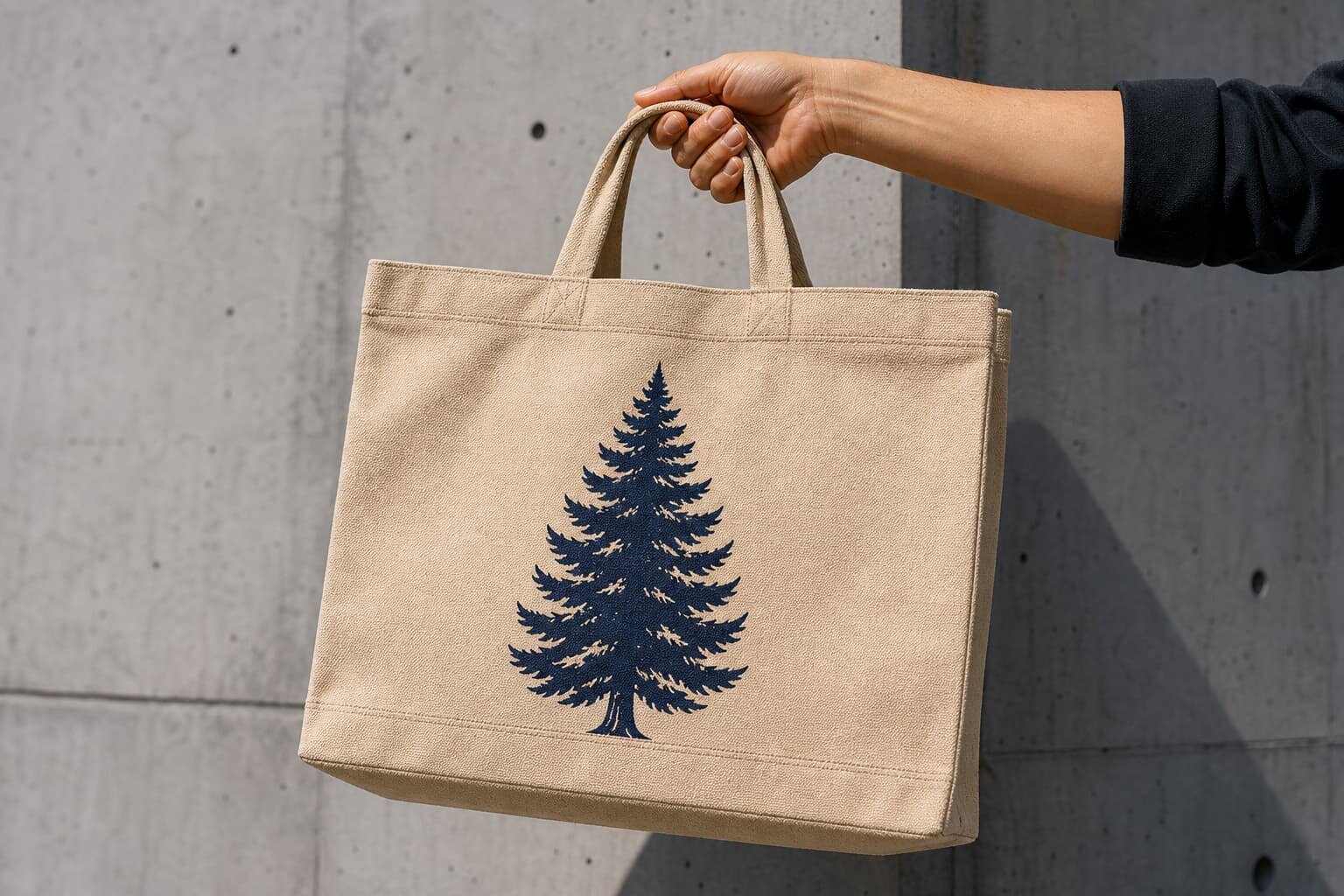
Why Line Release Matters Before Bulk Sewing Runs
A canvas tote bag factory line release inspection is the buyer's last practical chance to stop a wrong bulk run before hundreds or thousands of pieces are cut, printed, sewn, and packed. Final inspection can reject goods, but it cannot recover lost fabric, missed vessel dates, or printed logos placed 15 mm too low on every panel. Line release is not a ceremonial startup photo. It is a controlled approval gate at the moment the factory moves from sample approval into repeatable production.
For procurement teams and importers, the line release checklist should connect the approved sample, purchase order, artwork file, packing instruction, and quote assumptions. If the quotation says 12 oz canvas with screen print and reinforced handles, the first production pieces must prove those details in physical form. This is especially important for canvas tote bags because small changes in fabric weight, folding, handle drop, and print curing can change both unit cost and user experience.
- Use line release when the order uses a new fabric lot, new artwork, new color, new sewing team, or new packing format.
- Do not let the factory start full sewing until the first acceptable pieces are measured and photographed.
- Treat the approved sample as the commercial reference, but treat the line release record as the production reference.
- Ask for correction before full-line continuation, not after final inspection when cartons are already packed.
Define the Approved Reference Before the Factory Starts
Many tote bag problems begin because the buyer, merchandiser, and production line are not using the same reference. One person follows the sales sample, another follows the revised artwork PDF, and the sewing supervisor follows a local paper pattern. Before line release, the factory should place the sealed sample, current PO, artwork file, size chart, fabric swatch, print strike-off, and packing instruction together at the line. Each item should show a revision date or approval note.
For a canvas tote bag, the reference needs more than length and width. It should define the finished bag size, gusset depth, handle drop, handle width, seam allowance, stitch type, fabric GSM, print method, logo placement, thread color, label position, folding method, and carton quantity. If the buyer approved a natural canvas sample, confirm whether natural shade variation is acceptable and whether the factory will mix fabric lots in one shipment.
- Mark one approved sample as the master sample and keep it clean, signed, and dated.
- Record tolerances for finished size, print placement, handle drop, and carton weight before production starts.
- Confirm whether the factory may substitute similar fabric, thread, handle tape, or carton board.
- Reject old artwork files from the production table if a newer version has been approved.
Fabric Weight, GSM, Shrinkage, and Cutting Checks
Fabric weight is one of the most common quote comparison traps. One factory may quote 10 oz canvas based on greige fabric before dyeing, while another quotes finished dyed fabric around 300 GSM. A buyer comparing only unit price may think both offers are equal, but the finished tote can feel very different. During line release, check the fabric roll label, supplier batch, width, color, and measured GSM. If the bag is washed, dyed, or heavily printed, ask whether the GSM and shrinkage have been checked after that process.
Cutting accuracy is also part of line release. Canvas is more stable than many lightweight fabrics, but thick canvas can still shift during layered cutting. If the panels are cut too narrow, the sewing line may still make a neat bag, but the finished size will be under tolerance. Check cut panels before sewing, not only finished bags. This helps identify pattern, cutting, or seam allowance issues early.
- Common promotional canvas tote: 8 oz to 10 oz, about 230-300 GSM depending on construction.
- Common retail canvas tote: 10 oz to 12 oz, about 280-340 GSM with better body and print surface.
- Heavy retail canvas tote: 14 oz to 16 oz, about 390-540 GSM, usually slower to sew and bulkier to pack.
- Measure fabric width because narrow usable width can increase consumption and change MOQ logic.
- Check shade consistency if panels, handles, and pocket pieces are cut from different fabric rolls.
Print Release: Placement, Color, Curing, and Hand Feel
For branded canvas tote bags, print mistakes are usually more expensive than sewing mistakes. A crooked seam can be repaired in small quantities, but an incorrectly placed logo on cut panels may turn the full order into seconds. The factory should release the first bulk print before sewing begins. The buyer or merchandiser should check logo size, distance from top edge, distance from side seam, color, opacity, registration, and ink surface.
Screen print is usually the right method for solid logos, bold artwork, and repeat orders because it gives good cost control at volume. DTF or digital print can fit low MOQ or multi-color artwork, but the buyer must check film edge, hand feel, wash rub, and cracking on folded canvas. Heat transfer may be suitable for some event orders, but it can feel less integrated than ink printed directly on fabric. The line release record should show the real print method used, not only the sales description.
- Measure print placement from fixed seams or top edge using millimeters, not by visual balance only.
- Check print color under consistent light, especially natural canvas where fabric shade affects perception.
- For screen print, confirm ink curing to reduce tackiness, odor, poor rub fastness, and later blocking in cartons.
- For large solid prints, check whether heavy ink changes the bag's flexibility or causes cracking at folds.
- Keep one approved first-print panel as a reference for the sewing line and final inspection.
Sewing Line Release: Handles, Seams, and Reinforcement
The first 20 to 50 sewn pieces should be treated as production evidence, not as random samples. Canvas tote bags fail in predictable places: handle attachment, side seam, bottom seam, gusset corner, and top hem. A line release inspection should open the bag, turn corners, pull handles by hand, and check stitching on both outside and inside. The goal is not to destroy the bag but to confirm that operators, folders, needles, thread, and stitch settings are correct.
Handle construction deserves special attention because buyers often specify handle drop but forget handle length before sewing. A small cutting difference can change the finished handle drop enough to make the tote uncomfortable over the shoulder. Reinforcement also affects buyer perception. A clean box stitch with cross stitch may fit a premium retail tote, while a bar tack or simple reinforced row may be enough for a low-cost event tote. The quote must match the actual reinforcement used.
- Check stitch density and consistency; many canvas totes use roughly 7-9 stitches per inch, but the approved standard should control.
- Confirm seam allowance at side and bottom seams so the finished size does not drift after bulk sewing.
- Look for skipped stitches, broken thread, exposed raw edges, puckering, and needle holes on heavy canvas.
- Measure handle drop on a flat table and by hanging the bag, because thick canvas can change the apparent drop.
- Inspect thread color and thickness; low-grade thread can make a strong canvas bag look cheap.
MOQ Logic and What Line Release Reveals About Cost
Canvas tote bag MOQ is not only a number printed in a catalog. It comes from fabric procurement, dyeing minimums, printing setup, cutting efficiency, packing materials, and line scheduling. A factory may accept a small MOQ for natural canvas with one-color screen print because fabric is in stock and setup is simple. The same factory may require a higher MOQ for custom dyed canvas, heavy 16 oz fabric, multiple logo versions, or special retail packing.
Line release can reveal whether the quote was built on realistic production assumptions. If the order requires several artwork versions but the factory plans one cutting lot and several print changes, the buyer should confirm waste, setup charges, and sorting control. If the bag uses custom color canvas, ask whether extra fabric has been reserved for replacement panels, QC rejects, and sample needs. A low quote with no waste allowance often becomes a delivery or quality problem later.
- Natural canvas usually supports lower MOQ than custom dyed canvas because fabric availability is easier.
- Multiple print colors can add screen charges, setup time, and line cleaning even when the bag body is the same.
- Heavy canvas can reduce pieces per carton and increase freight cost, so compare landed cost, not only unit price.
- Small orders with retail packing may have high label, barcode, and carton setup cost per piece.
- Ask the factory to separate bag cost, print setup, packing upgrade, sample cost, and inland freight where possible.
Packing Release: Folding, Carton Marks, and Retail Readiness
Packing is often checked too late. For canvas tote bags, folding method can affect print appearance, carton volume, creasing, barcode placement, and store presentation. A large print folded through the center may show a pressure line after long storage. A heavy canvas tote packed too tightly can arrive with hard creases that retail buyers notice immediately. During line release, approve one packed carton if possible, or at least one complete inner packing method.
The buyer should decide whether individual polybags are necessary. For many bulk promotional totes, master carton packing is enough and reduces cost and plastic use. For ecommerce, retail shelf handling, or light-colored bags shipped in humid conditions, individual packing may be useful. If polybags are used, confirm thickness, warning text, ventilation holes if required, barcode label placement, and whether the bag is folded with print protected.
- Confirm pieces per carton, carton dimensions, gross weight, net weight, and carton board strength.
- Check carton marks against PO, SKU, color, quantity, country of origin rules, and buyer routing guide.
- Verify hangtag, belly band, care label, woven label, and barcode placement before bulk packing materials are printed.
- Pack a sample carton and check whether handles, corners, or prints are crushed by the folding layout.
- Use the same packing approval for final inspection so carton count and marking errors are not debated later.
Lead Time Control and Approval Gates
A realistic canvas tote bag lead time depends on fabric status, artwork approval, sample approval, print method, order quantity, packing complexity, and factory capacity. Buyers often ask for the fastest ship date before locking the specification. That creates a weak schedule because the factory may reserve line space but cannot start without fabric, approved artwork, and confirmed packing data. A line release checklist should be tied to a clear approval calendar.
For example, a simple natural canvas tote with one-color screen print may move quickly if fabric is in stock and the buyer approves a strike-off without delay. A custom dyed heavy canvas tote with retail labels, barcode stickers, and multiple print positions needs more control points. Procurement teams should ask the supplier to state the latest date for artwork lock, sample approval, fabric approval, packing file approval, line release, final inspection, and shipment booking.
- Separate sample lead time from bulk production lead time in the quote.
- Ask whether lead time starts after deposit, artwork approval, fabric approval, sample approval, or all of these.
- Build time for print strike-off approval if logo color is important.
- Do not approve bulk fabric and print on the same day unless the factory has already proven fabric stability.
- Request line release photos within the first production shift, not after the full batch is already sewn.
Quote Data Buyers Should Require Before Approval
A useful factory quote should allow a buyer to compare risk, not only price. For canvas tote bags, the quotation should include fabric composition, ounce weight or GSM, finished size, gusset, handle material, handle drop, print method, print size, number of colors, label details, packing method, carton quantity, sample cost, mold or screen charge, MOQ, lead time, and payment terms. If any of these are missing, the buyer is comparing assumptions.
The line release inspection should confirm that the quoted data became the production reality. If the quote says 12 oz canvas but the line uses lighter fabric, that is a commercial issue. If the quote includes reinforced handle stitching but the first pieces use a simpler stitch, that is a specification issue. If the quote includes individual polybags but the carton packing has no polybags, that is a packing issue. The checklist protects both the buyer and a professional factory by reducing arguments after shipment.
- Ask for fabric GSM with tolerance, not only fabric name.
- Ask for logo print size in millimeters and print position from fixed bag edges.
- Ask whether quote includes pre-production sample, print strike-off, and revised sample if first sample fails.
- Ask for export carton details because carton size affects freight and warehouse planning.
- Ask for defect classification and inspection standard before placing the order.
Acceptance Criteria for a Practical Line Release Checklist
The best checklist is short enough for a production merchandiser to use on the factory floor but detailed enough to stop expensive mistakes. It should include measurable items, photo evidence, pass or fail status, and corrective action. Avoid vague items such as good quality, nice printing, or strong handle. Replace them with values: finished bag width within tolerance, print centered within agreed millimeters, no open seam, handle drop within tolerance, carton mark matches PO.
Buyers should also define what happens when line release fails. A minor thread trimming issue may be corrected while the line continues. Wrong fabric weight, wrong print color, wrong logo position, or incorrect handle drop should pause production until the root cause is fixed and new first pieces are approved. This discipline may feel slow for one hour, but it is faster than sorting rejected cartons for two days.
- Critical fail: wrong artwork, wrong fabric, wrong color, unsafe packing, missing required warning, or incorrect buyer label.
- Major fail: open seam, weak handle reinforcement, print misplacement, wrong size outside tolerance, heavy stains, or poor curing.
- Minor fail: loose thread, slight washable chalk mark, small packing wrinkle, or correctable trimming issue within agreed limits.
- Photo record should include fabric roll, cut panel measurement, print measurement, seam detail, handle reinforcement, and packed carton.
- Approval should name the responsible factory merchandiser or QC person and the buyer-side approver when required.
Specification comparison for buyers
| Spec decision | Recommended option | When it fits | Buyer risk to check |
|---|---|---|---|
| Fabric weight | 10 oz to 12 oz canvas, about 280-340 GSM | Retail promotion, reusable shopping, bookstore, event merchandise | Confirm finished GSM after washing or dyeing, not only greige fabric weight |
| Budget fabric | 8 oz canvas, about 230-260 GSM | High-volume giveaway where freight and unit cost matter | Bag may collapse, print may show less coverage, handles need reinforcement |
| Premium fabric | 14 oz to 16 oz canvas, about 390-540 GSM | Lifestyle retail tote, heavy books, gift set, work bag positioning | Higher needle marks, slower sewing speed, thicker folded seams affecting carton count |
| Print method | Screen print for solid logos and simple artwork | 1-4 spot colors, stable repeat orders, strong cost control | Check ink hand feel, curing, registration, and color tolerance under D65 light |
| Detailed artwork | DTF or digital print on approved fabric surface | Gradients, many colors, small MOQ test orders | Check wash rub, edge cracking, color shift, and whether print film changes bag hand feel |
| Handle construction | Self-fabric canvas handles with cross-stitch reinforcement | Most branded totes needing durable daily use | Measure handle drop after sewing; wrong drop changes retail usability |
| Packing | Flat fold with individual polybag only when needed | Ecommerce, retail cartons, humidity-sensitive dyed colors | Avoid unnecessary polybag cost; verify suffocation warning and carton compression |
| Line release timing | First 20-50 pieces inspected before full-line continuation | New artwork, new fabric lot, new operator team, or changed sewing folder | Do not wait for final inspection to find print placement or handle alignment defects |
Buyer checklist before sampling
- Approved sample is on the line and matches the signed sample tag, revision number, size, print position, fabric, handle drop, and packing method.
- Bulk fabric roll label, GSM, color, width, shrinkage record, and fabric defects are checked before cutting starts.
- Cut panels are measured against tolerance before sewing, especially bag width, height, gusset, and handle length.
- Print strike-off or first bulk print is checked for logo size, placement, color, curing, ink hand feel, and rub resistance before sewing.
- First 20-50 sewn pieces are inspected for seam allowance, stitch density, handle reinforcement, thread trimming, symmetry, and inside cleanliness.
- Finished bag weight and hand feel are compared with the approved sample, not judged from the fabric spec sheet only.
- Packing materials are released only after carton size, folding method, label content, barcode, warning text, and carton mark are confirmed.
- The inspection record includes photos, measurement values, defect samples, approval name, date, and corrective action if any point fails.
- Production is paused when any critical item changes: fabric lot, ink batch, sewing guide, handle tape, carton size, or packing layout.
- Final inspection AQL plan is linked to the same line release criteria so the factory cannot approve one standard at startup and another standard before shipment.
Factory quote questions to send
- Which canvas GSM and ounce weight are you quoting, and is the weight based on greige fabric, dyed fabric, washed fabric, or finished bag fabric?
- What is the minimum cutting quantity for this fabric color and width, and how does it affect MOQ if we order multiple artwork versions?
- Which print method are you quoting for our artwork, and what is the maximum print size, color count, curing method, and expected hand feel?
- Can you include first-line release inspection photos for bulk fabric, cut panels, first print, first sewn pieces, and packed carton?
- What measurement tolerances are included in the quote for bag size, gusset, handle drop, print placement, and carton weight?
- Will you use self-fabric handles, cotton webbing, or another handle material, and what reinforcement stitch is included?
- What packing method is included in the unit price: bulk pack, individual polybag, belly band, hangtag, retail label, or export carton only?
- What is the sample lead time, bulk lead time after approval, and the latest date for artwork, fabric color, and packing data lock?
- What defects are considered critical, major, and minor during your inline and final inspection for canvas tote bags?
- What quote items are excluded, such as mold charge, screen charge, lab dip, print strike-off, barcode label, carton drop test, or third-party inspection support?
Quality-control points to confirm
- Fabric GSM and color are checked against approved swatch and buyer tolerance before cutting.
- Panel size and handle length are measured after cutting and again after sewing to control shrinkage and seam loss.
- Print placement is measured from top edge and side seam, not judged by eye only.
- Ink curing is checked by rub test, tape pull where suitable, and visual cracking check on folded canvas.
- Handle attachment is inspected for box stitch or cross stitch shape, back tack density, loose thread, and needle damage.
- Side seam, bottom seam, and gusset corners are checked for skipped stitches, open seams, puckering, and uneven allowance.
- Bag opening, handle drop, and overall symmetry are checked on a flat table and hanging position.
- Packing count, carton mark, barcode, gross weight, and carton strength are verified against the buyer packing instruction.