Why Invoice Variance Happens on Canvas Tote Bag Orders
A canvas tote bag invoice variance file is not an accounting form only. For bulk buyers, it is a working control file that explains why the final invoice is the same as, or different from, the first supplier quote. Canvas tote bags look simple, but the cost can move when fabric weight, print method, handle construction, packing, carton size, or delivery terms change after the RFQ stage.
The common problem is that sales, merchandising, finance, and logistics each hold part of the truth. The buyer remembers approving a 12 oz tote. The supplier quoted a 10 oz natural canvas base. The designer changed from one-color screen print to full-front DTF. The warehouse asked for smaller cartons. By the time the final invoice arrives, nobody can quickly see which changes were approved, which were supplier corrections, and which are real overcharges.
- Use the file to compare quote version, proforma invoice, approved sample, packing list, and commercial invoice.
- Track variances by SKU, not only by order total.
- Separate buyer-driven changes from factory-driven changes.
- Do not approve balance payment until quantity, unit price, and extra charges are reconciled.
Set the Baseline Before You Compare Any Quote
A clean variance file starts before the first quotation is accepted. The baseline should include the exact canvas tote bag specification sent to every supplier. If one factory quotes 10 oz canvas with single-side printing and another quotes 12 oz canvas with two-side printing, the cheaper quote may not be cheaper. Procurement teams should lock the comparison format before negotiating price.
For canvas tote bags, the baseline needs more than size and logo. Include finished width and height, gusset type, handle material, handle drop, fabric weight, fabric color, print artwork size, print method, stitch reinforcement, label position, packing count, carton limit, and shipping term. If the buyer leaves these open, the supplier may quote the lowest workable interpretation, then add charges later when the real specification is clarified.
- Record finished size, for example 38 cm W x 42 cm H x 10 cm gusset.
- State fabric as 12 oz cotton canvas or target GSM, not just medium weight.
- Define print as one-side screen print, two-color logo, print area size, and Pantone reference.
- Specify packing such as 50 pieces per export carton, flat packed, no individual polybag unless required.
- List the Incoterm, port, currency, and quote validity date.
Use Fabric Weight Correctly in the Variance File
Fabric weight is one of the largest drivers of invoice variance. Many buyers use oz as a quick market term, while factories may calculate fabric cost by GSM, width, yield, and wastage. A 10 oz canvas tote and a 12 oz canvas tote can look similar in a photo but differ in hand feel, load performance, sewing behavior, and freight weight. If the order later moves to heavier canvas, the cost increase is usually legitimate, but it must be documented.
Ask the factory to state both the trade ounce and approximate GSM. Also ask whether the fabric is natural, bleached, dyed, washed, or coated. Dyeing and washing can change shrinkage, shade tolerance, and lead time. A variance file should show the original quoted fabric, the approved sample fabric, and the mass production fabric reference. This prevents a final invoice dispute where the buyer argues the price moved, while the factory argues the material changed.
- Light promotional tote: often 6 oz to 8 oz cotton canvas, lower cost but less structure.
- Standard retail tote: often 10 oz to 12 oz canvas, better balance of cost and durability.
- Premium heavy tote: often 14 oz to 16 oz canvas, stronger feel but higher sewing and freight cost.
- Dyed canvas: check MOQ by color and possible lab dip or dye lot charges.
- Washed canvas: check shrinkage, color variation, and longer finishing lead time.
Print Method Changes That Create Hidden Cost Differences
Print changes are a frequent reason for invoice variance because artwork approval often happens after the first commercial discussion. A quote for one-color screen printing cannot be fairly compared with a revised order using two-side printing, full-coverage artwork, gradient graphics, metallic ink, or heat transfer. The variance file should record the print method, number of colors, print position, print area, setup cost, and sample approval status.
For most canvas tote bags, screen printing is efficient for solid logos and repeat orders. Digital print, DTF, or heat transfer may fit complex artwork or lower MOQ designs, but the hand feel and durability should be checked. Embroidery can look premium but may pucker lighter canvas and adds backing, stitch count, and setup considerations. If the buyer changes print method after deposit, the file should show the reason, cost impact, and whether lead time changes.
- Screen print: confirm number of colors, sides, print size, ink type, and screen charges.
- DTF or heat transfer: check edge feel, wash resistance, pressing marks, and artwork resolution.
- Digital print: confirm fabric suitability, minimum print area charge, and color matching limits.
- Embroidery: confirm stitch count, backing, thread color, and fabric puckering risk.
- All methods: keep approved strike-off photos and physical sample reference.
MOQ Logic: Why Unit Price Moves Across Quantities
Canvas tote bag MOQ is not only a factory preference. It is linked to fabric sourcing, dyeing lots, cutting efficiency, printing setup, sewing line arrangement, inspection, and packing labor. A buyer may request 300 pieces across six colors and expect one bulk price, while the factory calculates six small runs. The invoice variance file should show whether MOQ applies by style, color, artwork, size, or shipment.
Unit price often improves when quantity increases, but not every cost scales the same way. Screen setup may be fixed per design. Fabric may require a minimum roll quantity. Custom woven labels may have their own MOQ. Carton marks and barcodes may add handling time when there are many SKUs. A good variance file separates fixed charges from variable unit cost, so procurement can see whether a price increase is caused by low volume, customization, or a supplier quoting error.
- MOQ per fabric color affects dyed canvas and custom color orders.
- MOQ per print design affects brand campaigns with many artwork versions.
- MOQ per size affects assortments with small, medium, and large totes.
- MOQ per label affects woven label, care label, barcode, and retail hangtag programs.
- MOQ per packing format affects distributor orders with mixed carton requirements.
Sample Checks Before You Accept a Revised Invoice
The approved sample is the bridge between the quote and the final invoice. If the sample contains details that were not included in the original quote, the invoice may change. Examples include heavier handle webbing, inner pocket, zipper closure, magnetic snap, bottom board, individual polybag, retail hangtag, or reinforced stitching. Buyers should not treat sample approval as only a quality step; it is also a commercial confirmation step.
Before deposit or before mass production, compare the sample against the proforma invoice line by line. The file should record what was approved, what was rejected, and what requires re-costing. If the sample is approved with comments, those comments must be commercial as well as technical. A comment such as make handles stronger may affect handle width, stitch pattern, reinforcement fabric, labor time, and fabric consumption.
- Measure sample dimensions after the bag is sewn, not from pattern data.
- Weigh the full sample to estimate carton gross weight and freight exposure.
- Check whether handle drop matches intended use: hand carry, shoulder carry, or both.
- Confirm print placement with measurement from top edge and side seam.
- Photograph the sample next to the spec sheet and attach it to the variance file.
Build the Invoice Variance File by Cost Bucket
A useful file does not only compare old total and new total. It breaks the canvas tote bag cost into buckets: base bag, fabric upgrade, print, trims, labels, packing, sampling, setup, testing, inland delivery, and freight-related charges if applicable. This structure helps finance approve legitimate changes and challenge unexplained charges. It also helps buyers compare suppliers with different quote formats.
For example, one supplier may include screen charges in the unit price, while another lists them separately. One may include export cartons, while another adds carton cost after packing confirmation. One may quote EXW and another FOB. Without cost buckets, procurement may select the wrong supplier or approve a variance that is actually a quote format difference.
- Base bag cost: fabric, cutting, sewing, standard thread, standard handles.
- Decoration cost: print setup, screen charge, ink, transfer film, embroidery setup, extra print side.
- Trim cost: zipper, snap, inner pocket, woven label, care label, hangtag, barcode sticker.
- Packing cost: polybag, tissue, inner bundle, carton, carton mark, pallet if required.
- Commercial cost: sample fee, testing fee, bank charge, inland trucking, document fee if applicable.
Packing and Carton Details That Affect the Final Invoice
Packing changes often look small but create real invoice movement. A flat-packed canvas tote in master cartons is different from individually polybagged retail packing with barcode sticker and carton sorting by SKU. If a buyer adds retail-ready packing after sample approval, the factory may need more labor, more materials, more inspection time, and more carton volume. The invoice variance file should include the packing specification used for the quote and the packing specification approved for production.
Carton dimensions and gross weight also affect logistics. Heavier canvas, larger gussets, and stiff handles can increase carton size. If the freight forwarder charges by volume weight, a small packing change can create a larger landed cost issue even when the factory invoice changes only slightly. Buyers should ask for estimated carton data before final booking, then compare it with the actual packing list.
- Confirm pieces per inner bundle and pieces per master carton.
- State whether each tote needs individual polybag, recycled polybag, paper belly band, or no single packaging.
- Confirm carton mark content: SKU, PO number, quantity, destination, carton number, and country of origin if required.
- Ask for estimated carton size and gross weight before production packing starts.
- Check if mixed-size or mixed-color cartons are allowed by your warehouse.
Lead Time Variance and Payment Approval
Invoice variance is not only about money. Timing changes can also create cost exposure. If artwork approval is late, fabric color is changed, sample is rejected, or packing instruction arrives after production starts, the supplier may need to rearrange the line or use faster logistics. Your variance file should record which party caused the timing change and whether any extra charge was approved.
A practical canvas tote bag timeline includes RFQ, quote approval, sample development, sample approval, deposit, material booking, cutting, printing, sewing, inline inspection, final inspection, packing, final invoice, balance payment, and shipment release. When the final invoice arrives, procurement should check not only the price but also the milestones. This prevents a supplier from adding rush charges without approval, and it prevents the buyer from blaming the factory for delays caused by late approvals.
- Record the lead time start point: deposit received, artwork approved, or pre-production sample approved.
- Track buyer approvals with date and responsible person.
- Track factory delay notices with reason and recovery plan.
- Do not accept rush freight or overtime charges unless approved before they occur.
- Align balance payment review with inspection report and packing list, not only invoice date.
Acceptance Criteria for Closing the Variance
Before paying the balance, the buyer should close each variance line as accepted, rejected, pending credit, or pending replacement. This is more reliable than discussing a total deduction at the end. If the factory shipped 5,000 pieces instead of 5,100 pieces, the file should show whether this is within the agreed quantity tolerance. If a print setup fee appears twice, the file should show whether there were two designs or one duplicated charge.
For canvas tote bag programs, acceptance criteria should cover commercial, production, and packing points. Finance can then approve payment without asking the merchandiser to search through emails. The supplier also benefits because approved changes are documented, reducing payment delay caused by unclear cost history.
- Quantity variance accepted only if within written overrun or underrun tolerance.
- Unit price variance accepted only if linked to approved specification change or quote revision.
- Setup charge accepted only if linked to design count, print color count, or sample approval record.
- Packing charge accepted only if packing material, label, or carton requirement changed after the quote.
- Defect deduction or replacement accepted only if supported by inspection evidence and agreed remedy.
Specification comparison for buyers
| Spec decision | Recommended option | When it fits | Buyer risk to check |
|---|---|---|---|
| Fabric weight for general retail tote | 10 oz or 12 oz cotton canvas, normally around 280-340 GSM depending on weave | Brand giveaways, bookstore bags, retail merchandise, light grocery use | Do not compare only ounce labels; request GSM, weave, shrinkage, and finished bag weight |
| Fabric weight for premium or heavy use | 14 oz to 16 oz canvas, often above 380 GSM | Higher price point retail, workwear brands, trade show kits with heavier contents | Heavier fabric can raise freight cost, sewing difficulty, and carton weight variance |
| Print method for solid logo | Screen printing with Pantone reference and approved strike-off | One to four spot colors, bold logos, repeat orders needing stable cost | Invoice variance often starts when the factory counts colors, print sides, or coverage differently |
| Print method for photo or gradient artwork | DTF, heat transfer, or digital print after artwork review | Small batches, many colors, promotional artwork, complex graphics | Check wash feel, edge durability, pressing mark risk, and whether setup cost is per design |
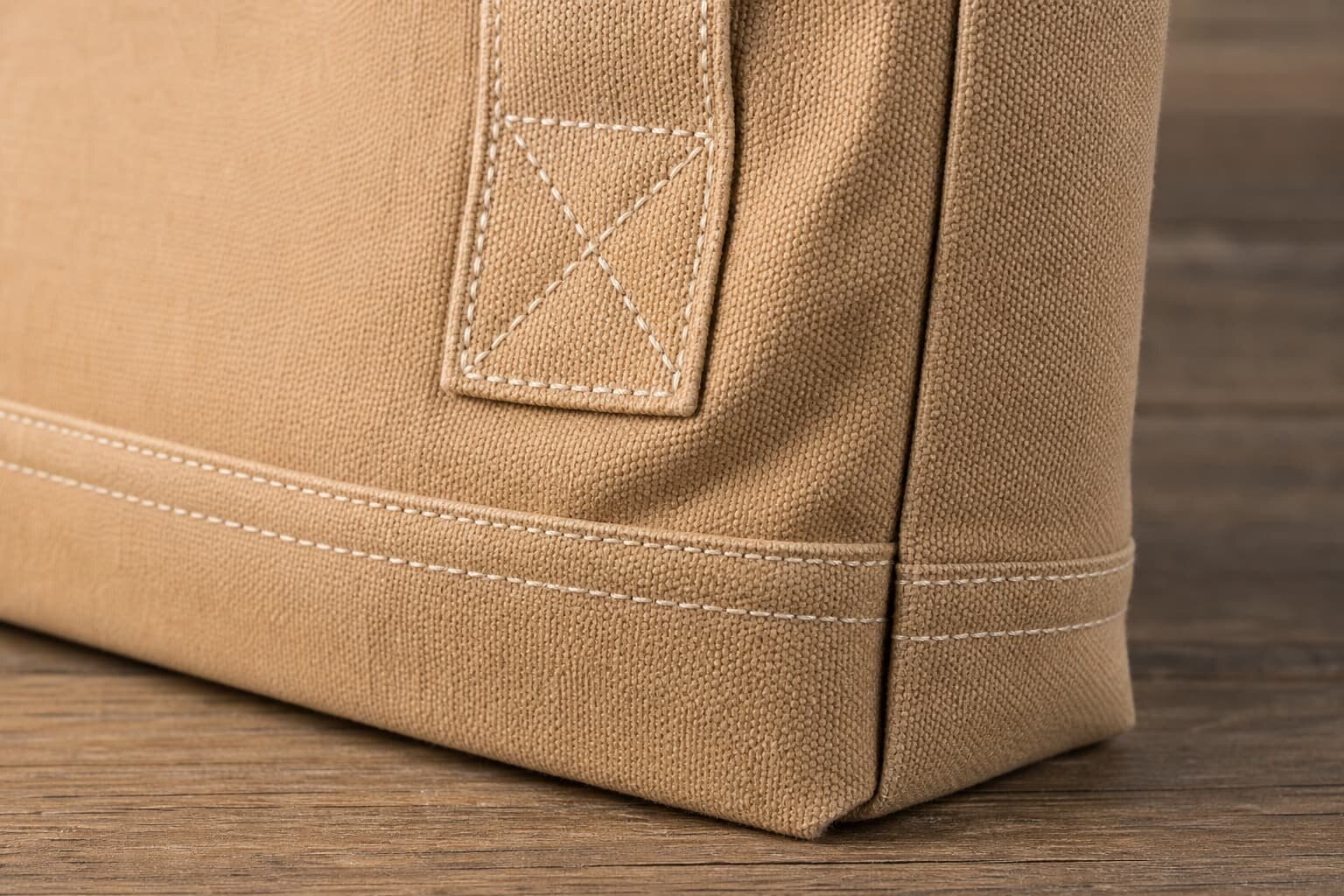
| Handle construction | Self-fabric canvas handles with cross-stitch or reinforced box stitch | Most retail canvas tote bags and heavier promotional totes | Confirm handle length, width, reinforcement method, and whether measurement is finished or before sewing |
| Packing format | Flat pack with counted inner bundles and export carton markings | Importer warehouse receiving, distributor split shipment, retail DC delivery | Loose carton packing can create count disputes and repacking charges after final invoice |
| Invoice control document | One variance file tracking original quote, revised quote, PI, sample approval, packing list, and final invoice | Any multi-SKU or repeat canvas tote bag order where cost changes are possible | If changes are approved by email only, finance may reject the final invoice or miss real overcharges |
Buyer checklist before sampling
- Record the original RFQ date, quote version, currency, Incoterm, validity period, and supplier contact before price comparison.
- Enter each tote bag SKU separately with fabric GSM or oz, finished size, gusset, handle length, print position, print method, and packing method.
- Separate tooling, screen, sampling, artwork, testing, carton, label, and inland delivery charges from the unit price.
- Check whether fabric weight is quoted as greige fabric, finished fabric, or approximate market ounce; ask for GSM if the quote only states oz.
- Compare approved sample details against the proforma invoice before paying deposit.
- Track every buyer change and factory change with date, reason, cost impact, lead time impact, and written approval.
- Reconcile final invoice quantity against packing list quantity, carton count, overrun or underrun allowance, and accepted defect replacement plan.
- Check if freight-related cost changes are caused by carton dimension, carton weight, palletization, split shipment, or late booking.
- Keep screenshots or PDF copies of revised quote sheets, sample comments, and artwork approvals inside the same invoice variance file.
- Require finance, merchandising, and logistics to review the same file before balance payment or shipment release.
Factory quote questions to send
- Is the quoted canvas weight stated in oz, GSM, or both, and is it measured before or after dyeing, washing, or finishing?
- What is the finished bag weight per piece for each SKU, including handles, inner pocket, zipper, label, and reinforcement?
- Which cost items are included in the unit price, and which are charged separately on the proforma invoice?
- Does the MOQ apply per style, per fabric color, per print design, per size, or per shipment?
- How many print colors, print positions, and print passes are included in the quote?
- What sample types are included: blank size sample, print strike-off, pre-production sample, packing sample, or sealed approval sample?
- What variance tolerance do you apply for fabric GSM, finished dimensions, print placement, carton weight, and shipped quantity?
- If the buyer changes artwork, handle length, packing, or carton mark after deposit, how will you issue and approve the revised cost?
- What is the production lead time after deposit and final sample approval, and what delays can reset the lead time?
- Can the final invoice show SKU-level quantity, unit price, setup charges, packing charges, and approved variance notes?
Quality-control points to confirm
- Confirm fabric weight by GSM test or approved swatch comparison, not only by supplier description.
- Measure finished tote width, height, gusset, handle drop, handle width, and seam allowance on pre-production and final samples.
- Check print color against Pantone reference or approved strike-off under consistent lighting.
- Inspect print placement from top edge, side seam, and bottom fold because small placement differences affect retail presentation.
- Review seam strength at handle attachment, side seams, bottom gusset, and stress points with realistic load testing.
- Check shrinkage or distortion if the bag is washed, dyed, enzyme treated, or heat pressed.
- Verify inner label, side label, hangtag, barcode, care label, and carton mark against the buyer packing file.
- Count pieces per polybag, inner bundle, master carton, and pallet if applicable.
- Compare actual carton dimensions and gross weight with the logistics booking before shipment.
- Keep a sealed approved sample and final inspection photos as evidence for any invoice variance discussion.